On the night of March 30–31, 1990, Belgian F-16s were dispatched after reports from the ground, turning a sequence of sightings into a documented military response. The scramble is a useful starting checkpoint: it establishes that officials acted on reports, not what the pilots were attempting to identify or the origin of anything observed.
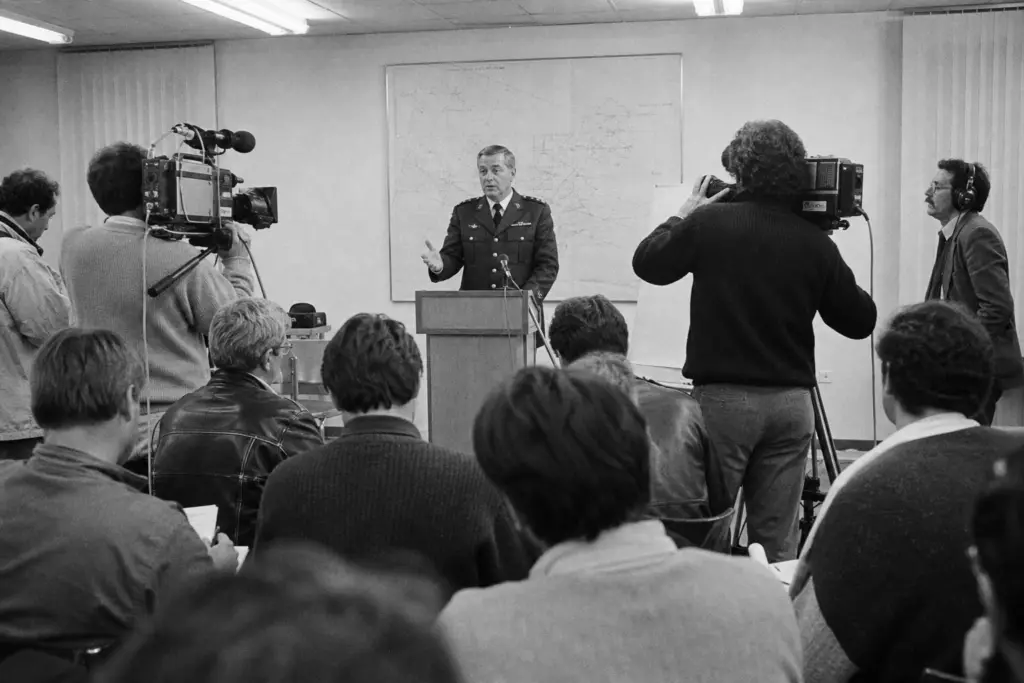
General Wilfried De Brouwer became central to the public account through briefings that separated very different kinds of material: witness descriptions, the Belgian Air Force’s operational response, radar-related reports, and conclusions that could not responsibly be drawn from any of them. An interception effort establishes that officials acted on reports; it does not, by itself, establish the nature or origin of the object sought.
This article follows that boundary carefully. It distinguishes recorded actions from contested interpretations and treats famous imagery on its own evidentiary merits, including the later admission that a widely circulated triangle photograph was a hoax. Belgium’s openness made the case historically important, but an unresolved aerial report was never official confirmation of aliens, non-human intelligence, or a concealed program.
Why General Wilfried De Brouwer Became the Public Face of Belgium’s UFO Response
De Brouwer’s importance lay less in a claim to have solved the sightings than in his willingness to describe how the Belgian Air Force handled them. As an officer speaking publicly about an active and controversial episode, he gave journalists and citizens a named military representative rather than a vacuum filled solely by witness testimony, newspaper speculation, or private UFO organizations. The reports did not arise from one isolated night: they accumulated from late 1989 through 1990, creating pressure for an institutional response.
That response became especially visible after the night of March 30–31, 1990, when the Air Force sent F-16 fighters in response to reports from the ground. General Wilfried De Brouwer discussed that action and the still-unsettled information surrounding it in public briefings. His role therefore belongs to a narrow form of UFO disclosure: public discussion of an official response, not disclosure of a hidden alien program. A military decision to investigate establishes that officials considered reports worth assessing; it does not transform reported lights, radar indications, or an unsuccessful interception into proof of an extraterrestrial craft. That distinction is the key to understanding both De Brouwer’s credibility and the enduring debate around the case.
The 1989-1990 Timeline: Reports of Triangular Lights and a Growing Public Case
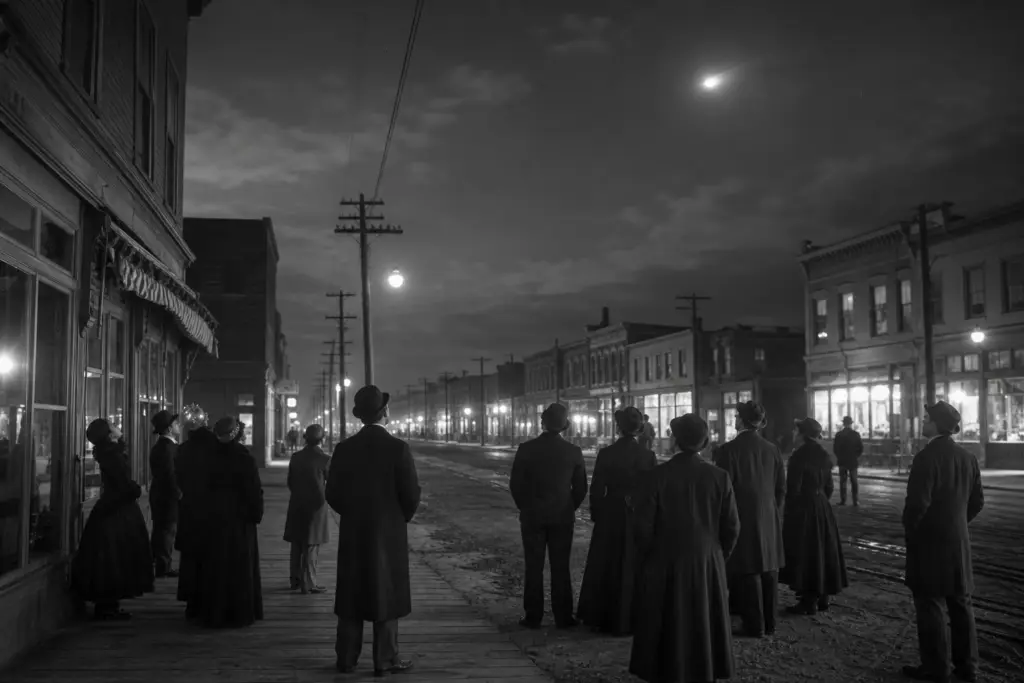
The chronology begins with a mounting pattern of civilian reports in November 1989. Witnesses in different parts of Belgium described unusual lights in the night sky, often arranged in a triangular pattern, while others emphasized a dark or angular form seen against the sky. Those descriptions overlap, but they are not interchangeable measurements: an observer’s account of three lights does not by itself establish the size, shape, altitude, direction, or identity of a single object.
Through the following months, the Belgian UFO wave of 1989–1990 became a growing public case as reports were collected, discussed in the press, and circulated through SOBEPS, the civilian Belgian UFO research group. Its role was to gather witness testimony and organize reports, not to provide military identification. The accumulation made the episode more visible, yet a high volume of accounts can show public concern and recurring perceptions without demonstrating that every witness tracked the same phenomenon or flight path.
The best-known episode occurred on the night of March 30–31, 1990. Ground reports prompted the Belgian Air Force response that would later place the event at the center of public discussion. For the timeline, the crucial distinction is simple: the reports came first, the military action followed, and later interpretations grew around both. Recurring accounts of triangular lights help explain why the Belgian UFO wave 1989–1990 acquired its enduring label; they do not settle what, if anything, produced each observation.
What Happened During the March 1990 Belgian F-16 Scramble
The operational question was whether the reported activity could be located before it moved beyond the fighters’ search area. On March 30–31, 1990, ground reports led to an F-16 scramble: fighters were launched to investigate a reported aerial presence, not because a target had already been found or identified. A scramble is a rapid response intended to search, observe, and, if possible, correlate reports with an airborne contact.
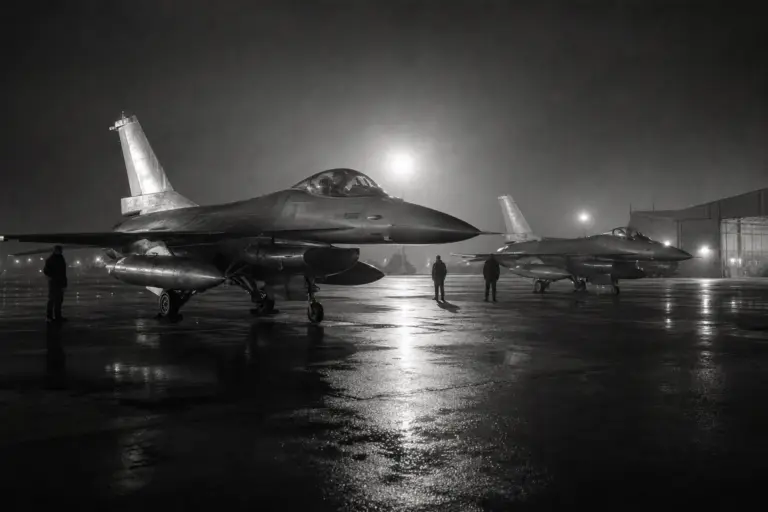
The pilots then tried to acquire a contact with onboard radar and by visual observation. Accounts of the Belgian F-16 UFO interception often emphasize radar returns recorded during the mission. A radar contact is an electronic return or track treated by the system as a possible target; it can give pilots a direction for further pursuit, but it is not a photograph, physical evidence, or an automatic determination of what caused the return.
The important dividing line is between attempting an intercept and achieving identification. The fighters reportedly tried to acquire and follow contacts while controllers worked with changing information from observers on the ground. No conclusive visual identification resulted, and the mission did not end with the F-16s escorting, photographing, or otherwise establishing the identity of a craft. Describing the episode simply as an “intercept” risks implying a successful encounter that the record does not show.
The March mission therefore gave the Belgian UFO wave a concrete military episode without providing a final explanation. Dispatching fighters showed that the reports warranted an operational response; it did not demonstrate that crews encountered an alien vehicle, one triangular object, or any particular technology. General Wilfried De Brouwer’s subsequent public explanations would place that gap, between a real response and an unresolved identification, at the center of the case.
De Brouwer’s Official Briefings: Radar, Ground Reports, and the Limits of the Record
The force of a Wilfried De Brouwer UFO briefing came from putting several kinds of information before the public without pretending they carried equal weight. The Air Force could describe its response, the reports reaching controllers, and the radar-related episodes encountered by the F-16 crews. That openness gave audiences material normally confined to an operational setting, but it also invited many readers to treat every reported element as confirmation of the same object.
A useful hierarchy begins with the official statement itself. It establishes that the Belgian Air Force took particular reports seriously enough to respond and discuss them publicly. It does not establish the identity of what witnesses saw. Civilian accounts can show that an unusual light or form was reported by more than one person, yet they remain descriptions shaped by distance, darkness, viewing angle, and expectation. Pilot observations would carry particular weight if they produced a clear visual identification; in this episode, that conclusive identification was absent.
Radar evidence occupies an important middle ground. A raw recording can preserve timings, track behavior, and system indications for later examination. A briefing summary is less direct: it conveys what operators and officials understood the display to show, rather than allowing every technical assumption to be tested independently. Neither form supplies an object’s origin merely because a contact appeared.
Intermittent contacts and unsuccessful lock attempts are especially easy to overread. A lock is the radar’s effort to maintain a usable track on a selected return; losing it may reflect changing geometry, range, signal quality, filtering, clutter, or the character of the return. It does not independently demonstrate extreme acceleration, extraordinary maneuvering, or unfamiliar technology.
De Brouwer’s public language mattered because it left the case unresolved while acknowledging the information available at the time. The Belgian Air Force UFO investigation was therefore evidence of institutional engagement, not official confirmation of aliens, non-human intelligence, or a concealed program. That distinction would become harder to maintain once the briefing material entered a wider public argument.
How the Briefings Shaped Public Discussion, and Skepticism
Once the briefings entered newspapers, television coverage, UFO publications, and later online retellings, the military’s decision to speak became part of the story’s meaning. Supporters treated that openness as significant in itself: a national air force had acknowledged reports, dispatched fighters, and allowed a senior officer to discuss an unresolved episode. For them, the absence of a final identification made the case more, not less, suggestive.
Skeptics drew a different lesson from the same material. A large collection of testimony can document that many people reported something unusual, but it does not automatically show that every witness observed one object. Reports can be linked through timing and location, yet still describe separate lights, conventional aircraft, astronomical objects, or impressions altered by darkness and expectation. The practical distinction is between a pattern of reports and a securely correlated event.
The radar account generated a similar divide. In popular retellings, intermittent returns and unsuccessful attempts to maintain a track were often compressed into a single narrative of a craft displaying extraordinary performance. A more cautious reading keeps the reporting chain visible: ground observers reported activity, controllers relayed information, F-16 crews searched, and radar systems produced indications that did not culminate in a visual identification. Each step is meaningful, but none converts the sequence into proof of an exotic vehicle.
This gap between official restraint and public imagination helped give the Belgian UFO wave its lasting force. Later interest in alien disclosure or a government UFO cover-up often treated military transparency as evidence that Belgium knew more than it released. De Brouwer’s public record supports a narrower conclusion: officials described an investigation and its uncertainties, not alien contact, a hidden recovery program, or a confirmed non-human craft.
The Famous Triangle Photograph, the Hoax Admission, and What It Changes
The single image that became most closely associated with the case deserves a narrower judgment than its reputation received. The famous Belgian triangle photograph, showing three bright points arranged around a dark triangular form, circulated for years as apparently striking visual support for the sightings.
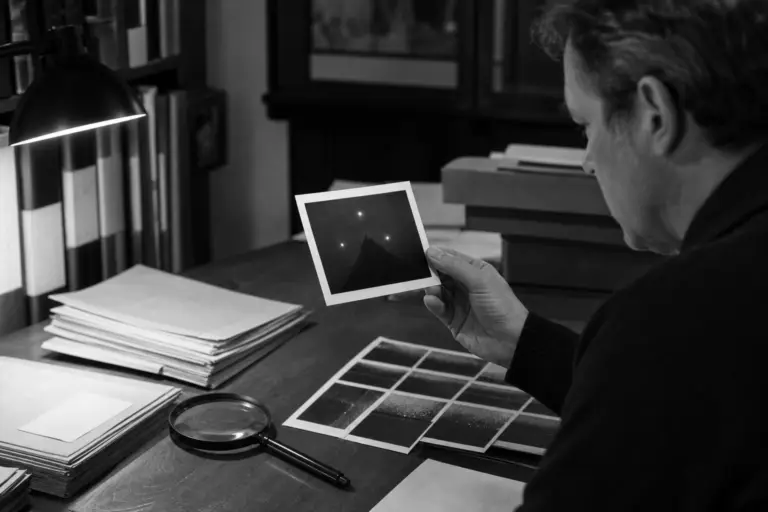
Its creator, Patrick Maréchal, later acknowledged that the photograph was a hoax: he had made the effect with a cut-out model and lights. That admission makes the image unusable as evidence for an object seen over Belgium. It also illustrates the central weakness of an isolated photograph: without secure provenance, original material, and independent authentication, an arresting image can acquire authority through repetition rather than verification. The Belgian UFO photograph hoax is therefore a correction to one artifact, not a retrospective explanation for every report made during the wider episode of black-triangle sightings.
A practical evidence hierarchy keeps those conclusions separate. Recorded Air Force actions and contemporaneous operational records establish what the institution did; near-contemporaneous witness accounts establish what people said they saw; later recollections carry less weight; fabricated material has none as proof of the claimed event. Some Belgian triangle sightings may remain unresolved in the limited sense that the available information does not yield a firm identification. An unresolved case is inconclusive, however, not evidence that the unidentified observation was extraterrestrial.
Why the Belgian Case Still Matters in Modern UAP Discussion
Its continuing value lies in the discipline the case demands. General Wilfried De Brouwer became a durable reference point not because he revealed a hidden answer, but because his public role made the categories of evidence easier to see: an Air Force response was documented; people reported unusual observations; radar-related information was discussed; and no settled identification followed. Those categories can coexist without being converted into a single claim about what was in the sky.
That distinction remains useful in UAP news. Official attention can show that an institution considered a report worth recording or investigating; it does not establish the origin, capabilities, or intent of the reported phenomenon. De Brouwer was not a whistleblower asserting that Belgium had confirmed non-human intelligence. His more consequential legacy is a public model, imperfect but unusually candid, of discussing uncertainty without dismissing witnesses or overstating what military involvement proves. The Belgian UFO wave therefore remains a benchmark among unresolved UAP cases for separating a documented official response from the much larger speculation that can grow around an unresolved event.
What the Belgian UFO Wave Shows About Official UAP Cases
A useful final checkpoint is to ask whether a claim records an action, an observation, or an inference. The March 30–31, 1990 fighter scramble is an action: authorities responded to reports. De Brouwer’s briefings are also part of the record: a senior officer publicly discussed the response and the information available. Witness accounts and radar-related episodes are observations or reported indications; an extraterrestrial craft is an inference that those materials did not establish.
That ordering explains the case’s durability in UAP discussion. Public engagement with many reports gave the Belgian UFO wave unusual institutional visibility, yet visibility is not identification. The triangle photo hoax supplies an equally important test: Patrick Maréchal’s admission removes that image as reliable support, but it does not erase the separate record of reports and the military response. A strong official UAP case is therefore one in which records show what an institution did, sources distinguish observation from interpretation, and unresolved elements remain unresolved rather than being promoted into proof.
Frequently Asked Questions
Who was General Wilfried De Brouwer in the Belgian UFO Wave?
General Wilfried De Brouwer was the senior Belgian Air Force officer who publicly discussed the military response to UFO reports during the 1989 to 1990 Belgian UFO Wave. He explained the Air Force’s actions, ground reports, and radar-related information without claiming that the sightings had been identified as extraterrestrial.
What happened during the Belgian F-16 UFO scramble on March 30 to 31, 1990?
Belgian F-16 fighters were launched after reports from people on the ground of unusual aerial activity. The crews attempted radar acquisition and visual observation, but they did not obtain a conclusive visual identification, photograph, or confirmed identity for a craft.
Did Belgian F-16 radar contacts prove extraordinary UFO maneuvers in 1990?
No. Radar contacts and unsuccessful lock attempts showed that the systems registered possible returns, but they did not prove extreme acceleration, extraordinary maneuvering, or exotic technology. Lost radar locks can result from range, geometry, signal quality, filtering, clutter, or the nature of the return.
Was the famous Belgian triangle UFO photograph authentic?
No. Patrick Maréchal later admitted that the famous image was a hoax made with a cut-out model and lights. The admission makes the photograph unusable as evidence for an object seen over Belgium, although it does not erase separate witness reports or the documented F-16 response.
What should you look for when evaluating claims about the Belgian UFO Wave?
Separate recorded actions, such as the March 30 to 31, 1990 F-16 scramble, from observations, such as witness accounts and radar indications, and from conclusions about an object’s origin. Give the most weight to contemporaneous operational records and authenticated source material, and do not treat an unresolved report as proof of extraterrestrial activity.