The Belgium 1990 UFO wave stands out not because Belgian authorities announced a solution, but because the military response became unusually visible to the public. Reports that began in late 1989 and continued into 1990 drew police attention, military involvement, and, in March 1990, an Air Force response to reports from the ground. Rather than leaving the episode solely to rumor, Belgian officers discussed parts of their actions and the limits of what they could identify.
General Wilfried De Brouwer became the most recognizable official voice in that public account. As a senior Belgian Air Force officer, he described an institution responding to reports and examining available information, not a military asserting that it had established an extraterrestrial or non-human presence. That distinction is the essential starting point for this history.
This article separates four different things that are often collapsed into one story: what witnesses reported seeing; what police and military personnel recorded; what radar-related observations were said to show during the March response; and the interpretations later attached to those events. An unresolved sighting can justify reporting and investigation, while still falling far short of identifying its cause. Belgium publicly acknowledged uncertainty; it did not officially confirm an extraterrestrial explanation.
What Belgium Officially Acknowledged, and What It Did Not
The official record is strongest when it is read as an account of response rather than revelation. Belgian Air Force personnel acknowledged that they had received reports, assessed information available to them, and launched fighters during the March 1990 episode. An attempted interception means aircraft were tasked to investigate a possible aerial target; it does not mean the target was identified, reached, or shown to possess exceptional capabilities.
That distinction also separates public transparency from what would now be called UFO disclosure or UAP disclosure. Belgium’s authorities discussed an unresolved operational incident and parts of the evidence considered at the time. They did not announce recovered material, establish a non-human origin, identify an extraterrestrial vehicle, or describe a covert state program handling such craft.
“Unidentified” is a limited classification: it records that the available observations did not yield a firm identity. It is not a positive label for a particular explanation. A witness description, a police log, a pilot’s observation, and a radar-related return can each be important pieces of an inquiry, but none automatically converts the others into conclusive proof.
For readers assessing later claims, the useful checkpoint is simple. A strong claim distinguishes what an official said or did from an interpretation added afterward; a weak claim treats the Air Force’s willingness to discuss uncertainty as confirmation of an extraordinary answer. The Belgian case warrants attention precisely because the public record preserves that boundary.
The Belgian UFO Wave: The Reports That Put the Issue in Public View
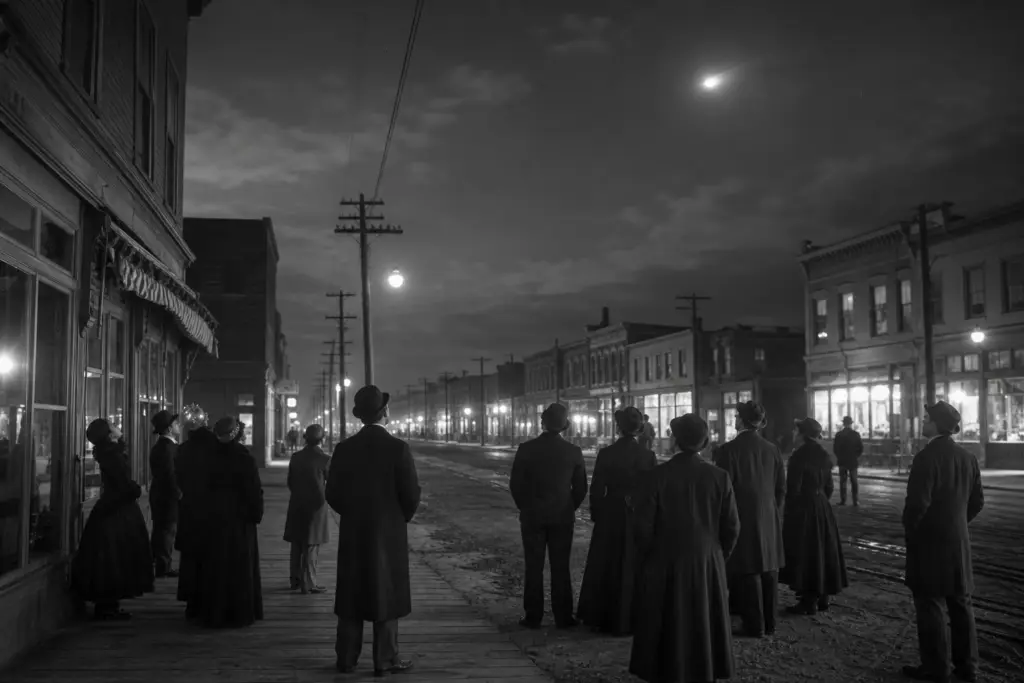
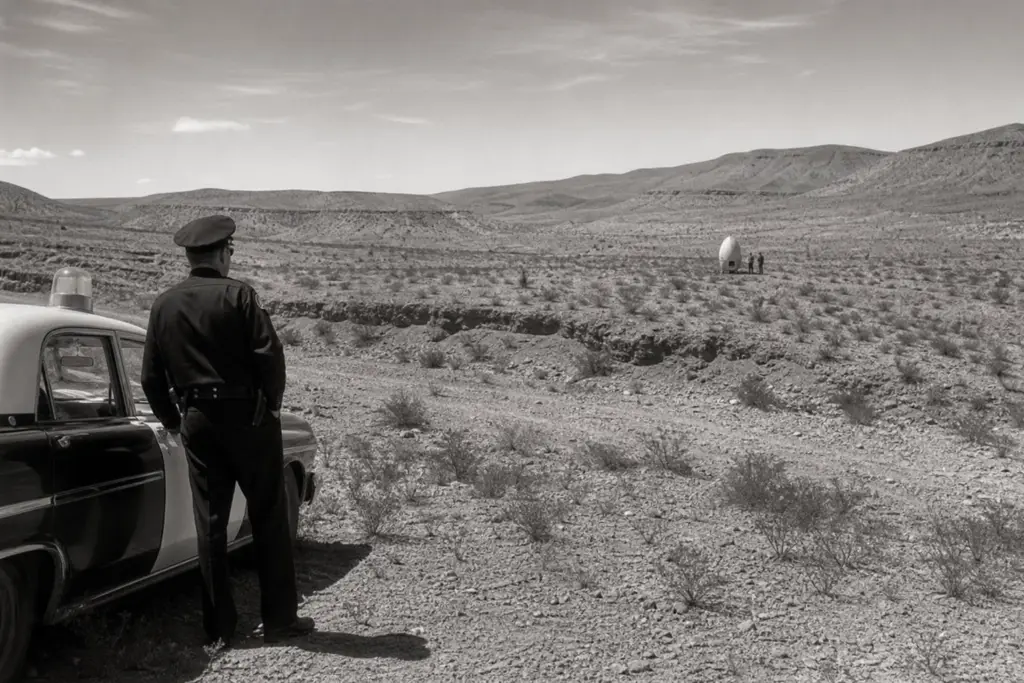
The pattern that reached the public was visual before it was technical: people on the ground repeatedly described a large, dark, triangular or triangular-looking form marked by bright lights, often moving slowly or seeming to hover. Reports clustered chiefly in French-speaking Wallonia, beginning in late November 1989 and continuing intermittently through 1990. Descriptions were not identical, some emphasized three corner lights, others a central light or a silent, low-moving object, so “triangle” is best understood as a recurring witness motif, not a measured aircraft shape.
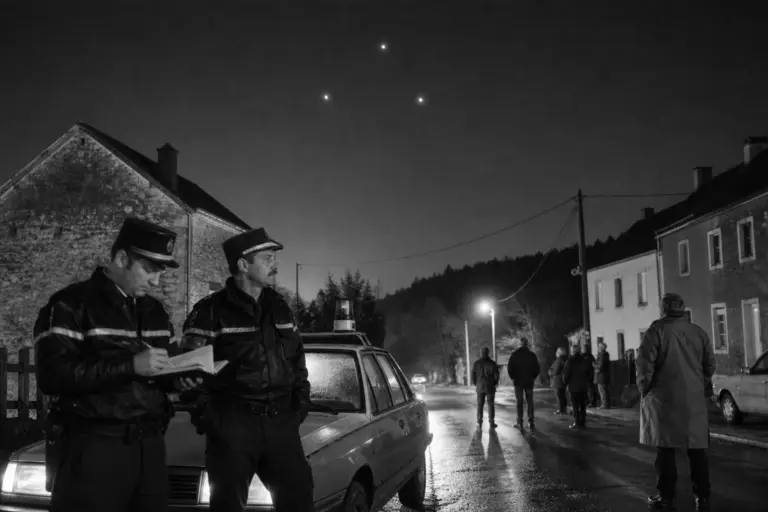
During the early phase of the Belgian UFO wave, local residents contacted police and gendarmerie posts as well as newspapers and civilian investigators. Gendarmerie involvement matters because it created official incident records and helped relay some reports through public-security channels. It does not turn every reported observation into an independently established aerial object: an officer may document what a caller or observer described without having seen the same thing, and multiple reports can reflect either separate observations or public awareness spreading through a community.
Public attention grew as accounts accumulated. The civilian organization SOBEPS, the Belgian Society for the Study of Space Phenomena, collected witness statements, pursued follow-up interviews, and became an important archive for the Belgian UFO wave 1989 1990. Its files preserve the scale and recurring character of civilian testimony, but SOBEPS was not a state investigative body and its compilations should not be read as official findings or as instrumented evidence.
By the opening months of 1990, Belgium UFO sightings had become a national story rather than a set of isolated local calls. That environment gave later ground reports added operational significance, including those that prompted the March military response. The chronology shows expanding attention to unusual reports; it does not, by itself, establish what produced them.
General Wilfried De Brouwer’s Role in Public Briefings
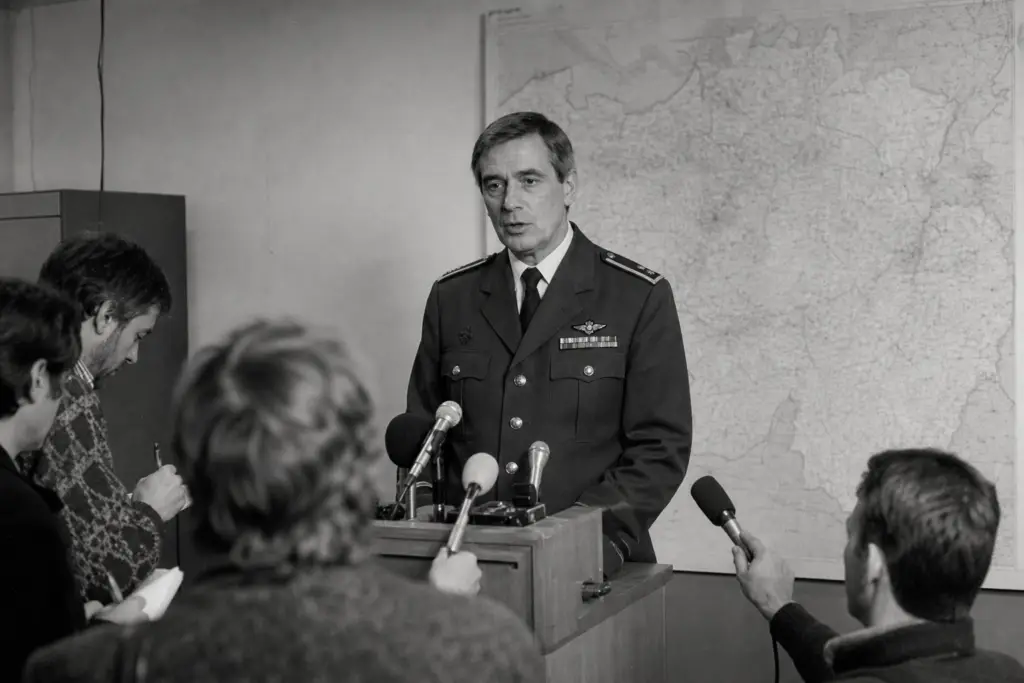
For many members of the public, the institutional face of the episode was Wilfried De Brouwer, a senior Belgian Air Force officer whose remarks connected a stream of reports to the military’s visible response. His importance rests less on a claim to have solved the sightings than on the fact that he spoke openly about how the Air Force had handled information that remained incomplete.
A Wilfried De Brouwer public briefing gave the case an official vocabulary. He described an Air Force response built from incoming reports, coordination with relevant services, and the information available during an unfolding event. That is materially different from endorsing the contents of every witness account. A reported triangular form, a police record of that report, and a radar-related observation are separate items of evidence; they can be considered together without becoming one verified description of a single craft.
De Brouwer’s public-facing role also made transparency part of the story’s reputation. Sharing selected details of the response allowed journalists and civilian researchers to compare the military timeline with public testimony rather than treating the matter as entirely secret. Cooperation of that kind can widen the record, but it does not give civilian case files the status of an Air Force finding, nor does it eliminate the gaps between recollection, reporting, and measurement.
The careful boundary in General Wilfried De Brouwer UFO discussions is therefore essential. The Air Force could acknowledge that it had received unusual reports, evaluated them, and in at least one prominent instance mounted an operational response. It could also say that available information did not yield a firm identification. Neither statement establishes an extraterrestrial or non-human origin, confirms exceptional technology, or validates every later interpretation of the events.
That restrained posture is why De Brouwer’s comments remain central to the Belgium 1990 UFO wave. They are strongest as evidence of what Belgian authorities were prepared to discuss publicly: their actions, the uncertainty they faced, and the limits of their conclusion. The next question is what the March 1990 fighter response itself can, and cannot, add to that record.
The March 30, 1990 F-16 Scramble: What the Record Shows
The night of March 30–31, 1990 is best read as a chain of reports and attempted correlation, not as a single, continuous chase. Ground observers and police reports prompted the Belgian Air Force to launch F-16 fighters to investigate possible aerial activity. That decision establishes that the reports were treated seriously enough to warrant an operational response; it does not establish that every witness, radar return, and aircraft crew was observing the same object.
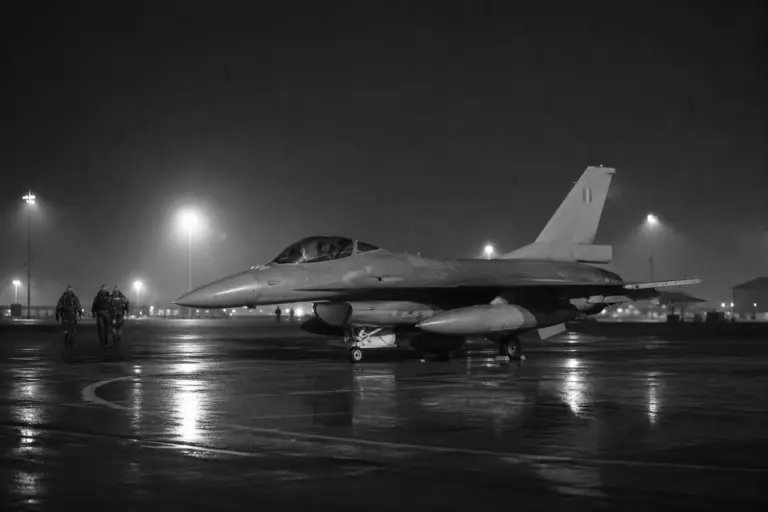
Ground-control radar and an airborne fighter radar serve different purposes. A ground controller can direct an aircraft toward a return or a reported area, while the fighter crew must acquire a sufficiently stable contact and, ideally, make a visual identification. Those stages matter because a radar indication is not a photograph or a physical inspection: its significance depends on persistence, position, altitude, speed, and whether it can be correlated with another observation. The later-famous Belgian F-16 UFO intercept is therefore more accurately described as attempts to investigate intermittent reported or radar-related contacts than as a verified pursuit of one identified target.
The operational accounts associated with the March 30 1990 Belgium UFO incident describe pilots trying to obtain an acquisition after vectors from ground control, with radar contacts reported during the episode. The important negative result is equally clear: the crews did not achieve a visual identification of an aircraft, object, or vehicle that could tie the varied observations together. A pilot’s inability to see a target does not disprove that something was present; nor does a radar contact, by itself, supply the missing identification.
This distinction also disciplines familiar claims about dramatic maneuvers. Later retellings often combine separate radar plots, witness descriptions, and pilot actions into a narrative of an extraordinary craft evading fighters. The record supports a narrower conclusion: Belgian F-16s were scrambled in response to reports, radar-related information was part of the effort to investigate, and the mission ended without a confirmed visual identification. That unresolved outcome is historically significant, but it is not evidence that Belgium established extraterrestrial or non-human technology.
Official Discussions, Civilian Cooperation, and the Limits of the Record
Beyond the fighter mission, the public-facing issue was how institutions handled reports that could bear on airspace awareness. A citizen account, a Belgian gendarmerie entry, and a military assessment were not interchangeable records: the first preserved an observation, the second documented a call and response, and the third addressed whether the information required an air-defense or flight-safety action. Keeping those layers separate prevents a police report from being mistaken for an identification.
SOBEPS, the civilian Belgian Society for the Study of Space Phenomena, gathered witness accounts and helped give recurring reports a durable archive outside the state. That role could be useful where many people described events independently, but it did not turn the group’s interpretations into Belgian government findings. Cooperation, whether officials received civilian-collected reports, answered questions, or released selected operational information, shows an effort to compare available accounts, not a transfer of authority over the evidence.
The Belgian UFO wave official response was notable for allowing parts of this process to be discussed publicly. A strong reading distinguishes released material, such as descriptions of reporting and Belgian Air Force military action, from claims about material that was never shown; a weak reading treats every unresolved gap as proof of a hidden file. Neither public openness nor contact between the Belgian Air Force, police services, and civilian investigators establishes that Belgium disclosed a classified UFO or non-human intelligence program. The available record supports institutional engagement with uncertain reports, while leaving their ultimate explanation open.
Why the Belgian Case Still Appears in UAP Disclosure Debates
Modern discussion of UAP sightings often turns on a question the Belgian episode makes unusually clear: what should a public institution say when it has acted on reports but cannot identify their cause? The useful standard is neither silence nor speculation. Belgian authorities made aspects of their response discussable, while De Brouwer’s public posture kept the conclusion narrower than the mystery. That combination gives the case continuing value as a model of communicating uncertainty without converting it into an extraordinary finding.
The distinction changes how later claims should be assessed. Official acknowledgment means an institution recognized reports, considered them relevant enough to address, and described some of its actions. Official confirmation would require evidence establishing what the reported phenomenon was. The first occurred in the Belgium 1990 UFO wave; the second did not. Eyewitness descriptions, police and military reporting, and radar-related observations can each be meaningful records, but they answer different questions and cannot automatically be fused into one proven event.
The durable evidence hierarchy is concise: reported, officially discussed, unresolved, and unproven. Nothing in the public record establishes an extraterrestrial or non-human origin, extraordinary technology, physical recovery, or a Belgian alien-disclosure program.
A Public Record of Uncertainty, Not a Final Answer
One useful checkpoint is whether a claim keeps the record’s layers intact: recurring civilian observations entered police channels; the March 30–31 response produced an identifiable military action; and De Brouwer gave the public a senior officer’s account of what could, and could not, be concluded. Those layers do not carry equal weight, but preserving their differences makes the case more useful than a single dramatic story assembled after the fact.
The F-16 episode is the clearest test of that discipline. A scramble demonstrates that reports prompted an air-defense response. Radar-related observations and pilot efforts add operational detail. Neither, however, supplies a continuous, independently resolved track tied conclusively to one visual object or an identified craft. Civilian collections can preserve testimony and timing, while military discussion can show how authorities evaluated the reports; neither turns an unresolved correlation into a demonstrated cause.
De Brouwer’s public briefings therefore matter as an example of bounded candor. Belgium acknowledged uncertainty, described elements of its response, and left room for evidence that did not fit a firm identification. The lasting conclusion is straightforward: transparency about an unexplained event is not proof of extraterrestrial, non-human, or any other particular explanation.
Frequently Asked Questions
What did General Wilfried De Brouwer say about the Belgian UFO wave?
General Wilfried De Brouwer said the Belgian Air Force received unusual reports, assessed available information, and responded operationally when warranted. He did not claim that Belgium had identified extraterrestrial, non-human, or exceptionally advanced technology.
Did Belgium officially confirm that the 1990 UFOs were extraterrestrial?
No. Belgian authorities publicly acknowledged reports, investigations, and an unresolved March 1990 fighter response, but they did not confirm an extraterrestrial origin, recover material, or disclose a non-human intelligence program.
Did Belgian F-16s chase a UFO on March 30, 1990?
Belgian F-16s were scrambled on March 30 to 31, 1990 after ground reports and radar-related information prompted an investigation. The pilots attempted radar acquisitions after ground-control vectors but did not obtain a visual identification of an aircraft, object, or vehicle.
What evidence was discussed during Belgian UFO-wave public briefings?
Public discussions included witness reports of dark triangular or triangle-like forms, police and gendarmerie records, civilian SOBEPS case files, and radar-related observations from the March 1990 response. These sources documented reports and investigative actions, but they did not establish a single identified craft or cause.
What should you look for when evaluating claims about the Belgian UFO wave?
Separate eyewitness descriptions, police records, radar-related contacts, and military actions rather than treating them as proof of one event. Strong claims recognize that the F-16 scramble showed an operational response to uncertainty, while weak claims treat unresolved observations as confirmation of an extraordinary explanation.