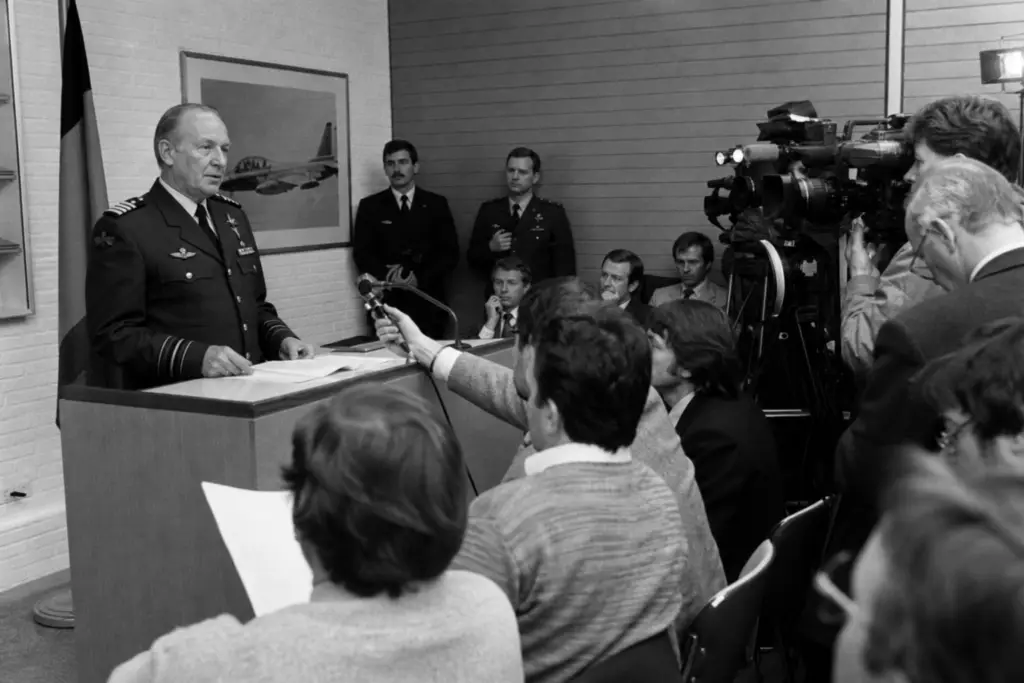
In the 1989–1990 Belgian UFO wave, the unusual story was not merely that citizens reported strange lights and triangular forms. It was that Major General Wilfried De Brouwer of the Belgian Air Force became a visible public voice on the matter: acknowledging reports, describing the military’s response, and declining to turn uncertainty into a declared explanation.
That distinction gives the General Wilfried De Brouwer Belgian UFO wave its lasting historical interest. Official acknowledgment means an institution accepts that people reported an event and that personnel may have responded. It does not identify the object, validate every witness interpretation, or establish an extraterrestrial cause. De Brouwer’s public posture occupied that narrow but important space between dismissal and overclaiming.
This account follows the reports that drew national attention, the night of March 30–31, 1990, when Belgian F-16s were sent to investigate, and the evidence discussed in public: eyewitness accounts, radar-related observations, and military activity. Each category can show that something was reported or detected; none, by itself, supplies a conclusive identity. The later admission that the celebrated Petit-Rechain triangle image was a hoax further illustrates why a memorable photograph cannot carry an entire case.
De Brouwer’s UFO public briefings remain relevant because they offer a disciplined model for communicating unresolved aerial incidents: disclose the response, separate observation from inference, and state plainly where the record stops.
Why General Wilfried De Brouwer’s Briefings Still Matter
The decisive checkpoint was public attribution: reports drawing broad attention from late 1989 into 1990 were met by an identifiable Belgian Air Force voice rather than left solely to witnesses, journalists, or civilian UFO groups. In briefings surrounding the March 30–31 response, De Brouwer explained that the military had treated the reports as operationally relevant and had dispatched fighter aircraft.
That was not a declaration that Belgium had identified an extraordinary craft. It was a narrower form of public accountability. An official spokesman can establish that a report entered military channels, that an operational decision followed, and that personnel recorded observations. None of those steps identifies a physical object or endorses a witness’s conclusion about origin. Public discussion often collapses them into a single claim of proof; this account will not.
The chronology, testimony, and later analysis therefore need to remain distinct. Contemporary reporting and military activity establish parts of the timeline. Eyewitness accounts describe what individuals believed they saw. Radar-related reports and pilot observations provide operational context, not automatic identification. Subsequent technical criticism, and the admitted fakery of the famous Petit-Rechain image, can substantially weaken a particular item of evidence without resolving every report from the wave. That discipline is why the episode still informs UAP disclosure debates: openness about an unresolved incident is not confirmation of a non-human explanation.
The Belgian UFO Wave: What Was Being Reported
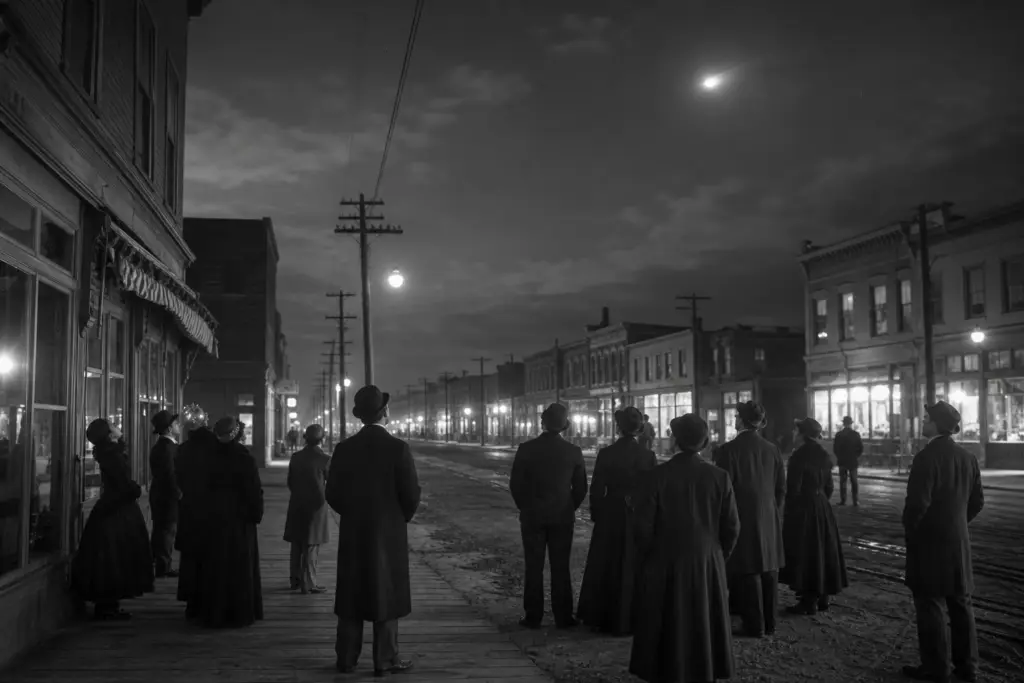
From November 1989 through 1990, civilian accounts accumulated across Belgium rather than describing one uniformly observed event. Witnesses often reported bright lights at night, sometimes three lights arranged in a triangular-looking pattern, and, in some accounts, a dark or indistinct form behind or between them. Other descriptions emphasized apparent silence, low altitude, slow movement, or abrupt changes of position. These were observations made in particular conditions, not measurements establishing an object’s shape, size, distance, speed, or identity.
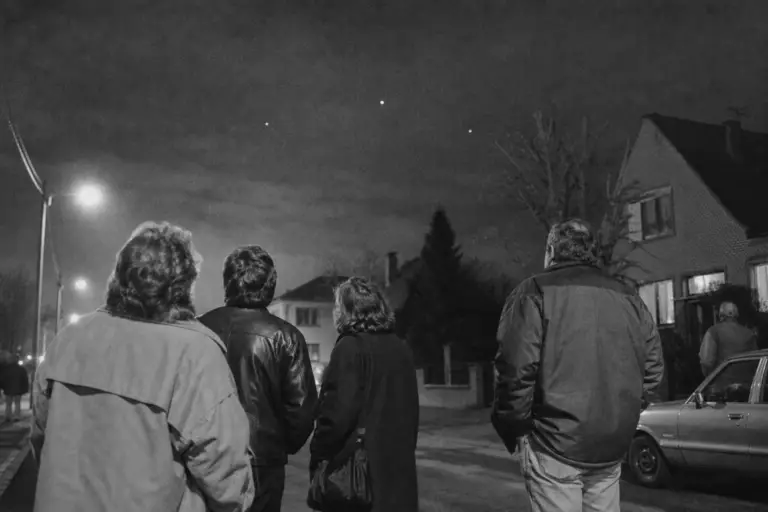
That distinction matters in accounts of the Belgian UFO wave. Several people describing a triangle can mean that they saw a similar configuration of lights; it does not establish that they viewed the same object from the same position, or that a triangular vehicle was independently verified. The recurring descriptions nevertheless gave the reports a recognizable public character during the 1989 to 1990 Belgian UFO wave and formed the background to the military attention that became especially visible on March 30–31, 1990.
SOBEPS, the Société Belge d’Étude des Phénomènes Spatiaux, or Belgian Society for the Study of Space Phenomena, was central to the civilian side of the story. It received and organized witness reports, interviewed observers, assembled case material, and circulated its analyses. That made SOBEPS an important repository for testimony, but not a Belgian government office, Air Force unit, or military investigative command. Its files document what civilians reported and how the group interpreted those reports; they do not constitute an official identification.
For readers assessing these UAP sightings, the institutional separation is consequential. A detailed account may help reconstruct where and when an observer perceived unusual lights, while still leaving the cause unresolved. The later public briefings added a separate layer to a narrative already shaped by witnesses and SOBEPS: recorded military awareness and operational action, rather than an endorsement of every civilian interpretation.
What De Brouwer Told the Press and Public
On the night of March 30–31, 1990, F-16 fighters were dispatched after reports of unusual aerial activity, giving De Brouwer a specific military action to address publicly. His account drew a practical line between acknowledging that response and claiming that the services knew what witnesses had seen. Reports reaching military channels could warrant attention; they did not, by themselves, establish an object’s shape, origin, or cause.
That boundary defined the Wilfried De Brouwer UFO briefings. He was prepared to put selected operational facts into the public record: reports had been received, personnel had assessed the available information, and aircraft had been sent up on the March 1990 night. An interceptor launch is a decision to investigate a possible airspace concern, not a successful identification of a target. The same distinction applied to the material discussed around the episode. A witness account records a perception; a radar return records a sensor event; a pilot report records an aircrew observation. None automatically supplies a reliable identity.
For journalists, the consequential feature was a named senior officer explaining both action and uncertainty. The record supports the narrower conclusion that Belgian military authorities treated some reports seriously enough to respond. It does not support the stronger claim that the response confirmed an alien or non-human craft. De Brouwer’s public posture preserved that difference: he described an unresolved episode rather than turning incomplete observations into an extraordinary official finding.
The limits also matter when later imagery is folded into the story. The widely circulated Petit-Rechain “triangle” photograph, presented as having been taken in 1990, was later admitted by its creator to be a hoax. That admission removes the image as evidence for the wave, but it neither identifies every witness report nor erases the documented March 30–31 response. These Belgium UFO wave public briefings were not an early alien-disclosure program; they were bounded transparency, sharing reports and selected actions while leaving identification open where the record did not support one.
The March 30–31, 1990 F-16 Intercept: Response, Radar, and Limits
The key operational fact is the gap between a scramble and an interception: Belgian air-defence authorities launched F-16 interceptors during the night of March 30–31, 1990, yet the mission ended without an identified aircraft, vehicle, or object. That outcome makes the episode a record of attempted investigation under uncertainty, rather than a completed visual intercept.
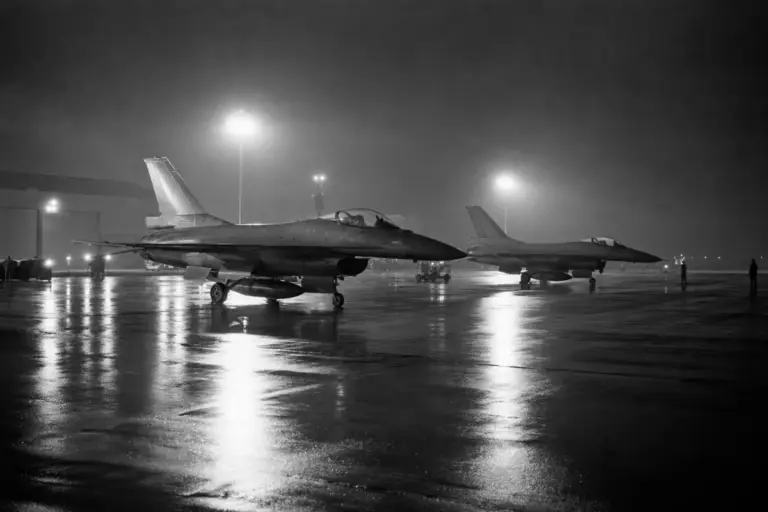
The public account involved several distinct evidentiary layers. Civilian observers had reported lights and apparent movement from the ground; ground-control personnel used the information available to direct the fighters; and the F-16 crews reported radar-related contacts while attempting to investigate. These are not competing versions of one measurement. A witness report records what a person perceived at a particular place and time, whereas a radar contact is a sensor return that still requires interpretation.
The distinction is crucial to later claims about exceptional speed, altitude, or manoeuvring. A radar track is a sequence of returns processed into an apparent path on a display; it is not an image that independently establishes a target’s physical form, dimensions, propulsion, or identity. Intermittent returns, tracking geometry, atmospheric effects, clutter, interference, and the handling of returns by the system can all affect how an apparent track is read.
Later technical discussion of the radar contacts therefore matters because it tests whether dramatic performance claims can safely be inferred from the reported observations. It weakens any effort to treat the contacts as self-validating proof of extraordinary flight characteristics. It does not, however, remove the historical fact that Belgian authorities publicly described civilian reports, an F-16 response, and sensor observations that did not yield a conclusive identification.
For General Wilfried De Brouwer, the March 30–31 event provided the most concrete example behind his public remarks: the Air Force had acted, could describe selected elements of that action, and could not responsibly name the object of the investigation. The F-16 interceptors had attempted to investigate a reported aerial presence; they had not confirmed an extraordinary craft.
What Belgian Authorities Documented, and What They Did Not Confirm
A useful checkpoint is whether a claim describes an official action or merely attaches an interpretation to it. The documented record includes a sustained 1989–1990 reporting wave, Belgian Air Force attention to reports judged relevant to air-defence awareness, the dispatch of F-16s on March 30–31, 1990, and public remarks by a senior Air Force officer about those events. It also includes an important remainder: some observations and sensor-related reports were not definitively identified.
None of those points amounts to a Belgian governmental confirmation of an extraterrestrial craft or non-human intelligence. Nor does the public record establish crash retrievals, recovered materials, or a government UFO cover-up. A military response establishes that officials considered an aerial report worth investigating; it does not establish the cause of the report.
- Official material is strongest for institutional actions: what the Air Force did, what senior officers publicly discussed, and what identification was not announced.
- Contemporaneous reporting and witness accounts help reconstruct timing and perceived appearance, but cannot independently settle distance, size, speed, or origin.
- Civilian investigations and retrospective technical commentary can preserve leads or challenge interpretations, yet should not be treated as Belgian government findings merely because they concern the same incidents.
The widely circulated Petit-Rechain “triangle” photograph illustrates why that hierarchy matters. Its maker later acknowledged that the image was a hoax, which removes it as credible visual evidence for an extraordinary craft. That admission does not show that every separate report in the Belgian wave was fabricated; it does mean the photograph cannot properly be used to strengthen claims drawn from the March scramble, radar-related accounts, or De Brouwer’s briefings.
The practical discipline is to assess each later photograph, testimony, and interpretation on its own provenance rather than attaching it to the official record by association. The Belgian episode supports a history of acknowledged reports and an unresolved operational incident, not an alien-disclosure narrative.
Why De Brouwer’s Approach Is Still Cited in UAP Disclosure Debates
A public account of an inconclusive operation is the relevant precedent here. De Brouwer’s remarks after Belgian F-16s were dispatched on March 30–31, 1990 showed how officials could describe a response without converting it into a claimed identification. In present-day UAP disclosure debates, that sequence remains useful because it keeps reports, operational action, observations, and conclusions distinct.
- Acknowledge the concern: the 1989–1990 wave had generated sustained civilian reports before the March response. Recognizing that reports reached official attention did not endorse an explanation for them.
- Describe the response: the concrete fact was the launch of F-16s on March 30–31, not a completed interception. That distinction tells the public what the Air Force did while retaining the mission’s inconclusive result.
- Release supportable detail: the date, interceptor deployment, and separation of witness testimony from radar-related and pilot observations give the public material it can assess. They are more informative than treating every observation as evidence of one identified craft.
- Preserve uncertainty: no final identification in the March event limited what could responsibly be claimed about origin, technology, or intent. The later Petit-Rechain photo-hoax admission also shows why each item requires separate evaluation.
That discipline can disappear in rapid UFO news and UAP news cycles, where a radar reference, a pilot account, and a striking image are compressed into an implied conclusion. Belgium offers a contrary example: a military scramble and public comments by a named senior officer, but no official identification of an extraordinary vehicle.
Searches for “UFO sightings 2025” or “UFO sightings 2026” cannot update the Belgian record or validate an interpretation of events from 1989–1990. They concern different reports, places, sensors, and institutions. De Brouwer’s lasting relevance is therefore a communications standard: transparency about an unidentified report is not confirmation of an extraordinary explanation.
The Lasting Lesson of De Brouwer’s Briefings
The practical test is whether each link in the record can bear the conclusion placed on it. Civilian accounts establish that people reported unusual observations; radar-related observations can register a detection or track without establishing an object’s physical identity; and the March 30–31, 1990 F-16 scramble records an attempted investigation rather than a completed intercept. Pilot observations add operational context, but they do not by themselves settle origin. The later collapse of the Petit-Rechain photograph as evidence sharpens the same distinction: discrediting one vivid image neither proves nor invalidates every other report.
General Wilfried De Brouwer’s enduring contribution was to make that evidentiary discipline visible in public. A strong briefing separates a report from a finding, a military response from a successful identification, and an unresolved remainder from a claim of exotic technology. A weak briefing lets those categories blur until public interest supplies conclusions the available material cannot support.
That is the lasting lesson for modern official communication: public openness is most credible when authorities explain what was reported, what was investigated, and what remains unproven, without overstating any of those categories.
Frequently Asked Questions
Who was General Wilfried De Brouwer during the Belgian UFO wave?
Major General Wilfried De Brouwer was a senior Belgian Air Force officer who publicly addressed reports during the 1989 to 1990 Belgian UFO wave. He confirmed that the military received reports and responded operationally, while avoiding claims that the objects had been identified.
What did Wilfried De Brouwer say about the 1990 Belgian UFO incidents?
De Brouwer said Belgian authorities treated some aerial reports seriously enough to investigate and publicly described the Air Force response. He did not claim that Belgium had confirmed an alien, non-human, or otherwise extraordinary craft.
What happened during the Belgian F-16 UFO intercept on March 30 to 31, 1990?
Belgian air-defence authorities launched F-16 interceptors after reports of unusual aerial activity on the night of March 30 to 31, 1990. The crews reported radar-related contacts during the investigation, but the mission ended without identifying an aircraft, vehicle, or object.
Did Belgian Air Force radar confirm an extraordinary UFO over Belgium?
No. Radar-related contacts recorded sensor events and apparent tracks, but they did not establish an object’s shape, size, propulsion, speed, altitude, or origin. Intermittent returns, tracking geometry, atmospheric effects, clutter, interference, and system processing can affect how radar tracks are interpreted.
What should you look for when evaluating evidence from the Belgian UFO wave?
Separate official actions, witness testimony, radar-related observations, and later interpretations instead of treating them as proof of one conclusion. Check each item’s provenance, especially because the widely circulated Petit-Rechain triangle photograph was later admitted by its creator to be a hoax.