The Case Against UFO Disclosure Claims
Examine UFO disclosure claims, official UAP reports and whistleblower testimony, and learn what evidence would verify non-human technology.
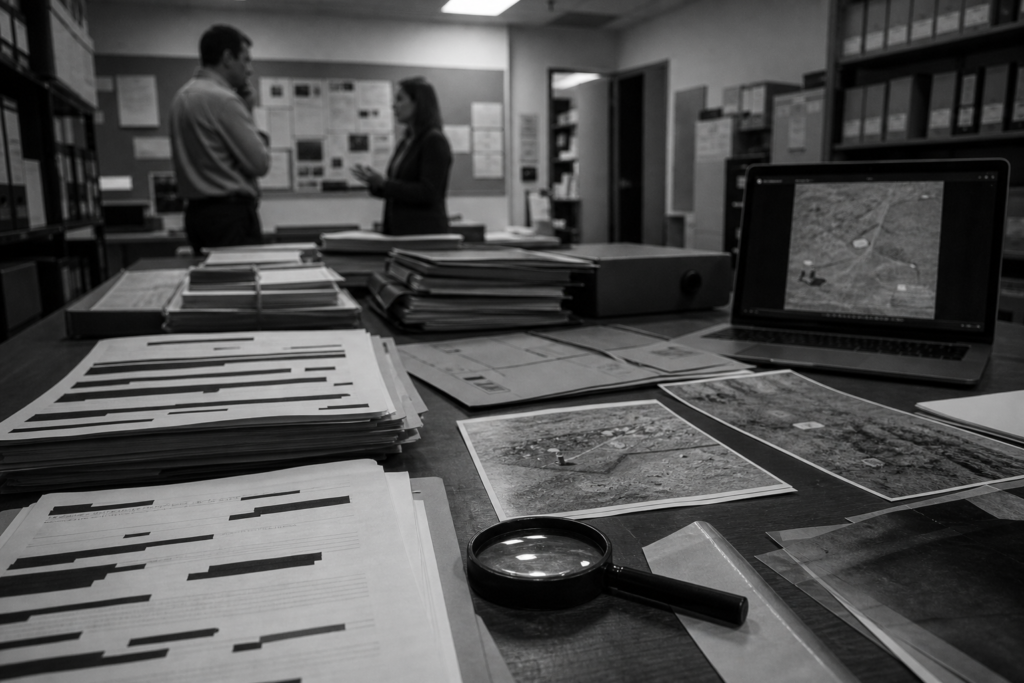
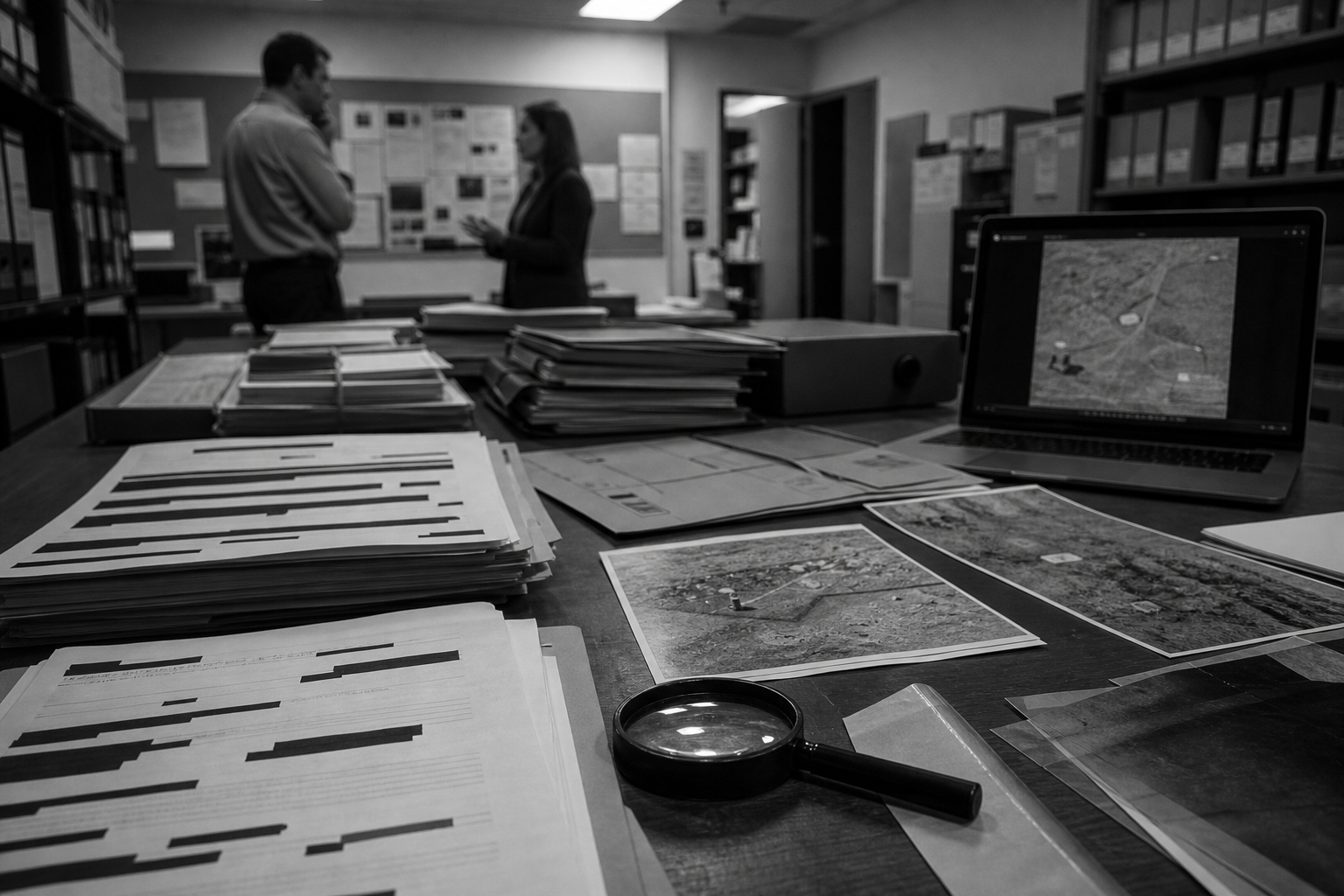
UFO disclosure commands serious attention because the subject now includes military reports, official investigations, public hearings, and firsthand allegations of hidden programs. Those developments justify scrutiny. They do not, however, collapse three very different propositions into one: that people observed something unusual; that available information has not resolved every case; and that a government possesses verified non-human craft or biological material.
An unresolved observation is a gap in information, not positive identification. A brief video with uncertain range, speed, sensor settings, or chain of custody may be genuinely puzzling while still carrying little evidentiary weight about its source. By contrast, a claim of recovered non-human technology would require material whose provenance is documented, whose underlying data are accessible, and whose properties can be independently tested and corroborated.
This is not an argument for dismissing unidentified anomalous phenomena or impugning witnesses. Testimony can identify leads, and official attention can show that a question matters. But neither substitutes for evidence that outside investigators can examine. The pages that follow assess UFO disclosure claims at that dividing line: what has been alleged, what public actions actually establish, what evidence would materially strengthen the case, and what remains unproven.
What Would Count as UFO Disclosure, and What Would Not
The decisive question is not whether an event was strange, but what proposition the available evidence can actually bear. A report establishes that someone perceived or recorded something. An unresolved case establishes only that the information reviewed has not yielded a confident identification. An official acknowledgement establishes that an institution received, retained, or examined such material. Each is a meaningful but limited finding.
Confirmed non-human technology is a different class of claim. It asserts not merely an anomaly but an origin: that a specific object is real, recovered, non-human, and held by the government. A crash-retrieval claim adds further particulars, physical custody, a recovery operation, a program, and often biological material. Every added particular creates a separate evidentiary burden; documented military UAP reports cannot establish them by implication.
A strong disclosure case would therefore make the crucial evidence testable beyond the circle making the allegation: authenticated material with a documented recovery history, independently reproducible laboratory results, relevant sensor data with known settings and context, and corroboration from witnesses whose accounts can be checked against records. Accessible underlying data matters because it allows competing explanations, instrument artifact, misidentification, terrestrial technology, error, or fabrication, to be tested rather than simply asserted.
By comparison, a compelling personal account, a low-information clip, or confirmation that a case remains unidentified may justify further investigation. It does not establish the extraordinary conclusion attached to it. The appropriate standard for UFO disclosure is not certainty about every sighting; it is public, independently assessable evidence proportionate to the claim that has been made.
Why Official UAP Acknowledgement Is Not Alien Confirmation
Institutional authentication can be important without being dispositive. When a defense body releases a video or acknowledges that personnel submitted an incident report, it establishes that the file or report entered an official system; it does not identify the object depicted, establish the accuracy of every interpretation, or reveal everything relevant to the event.
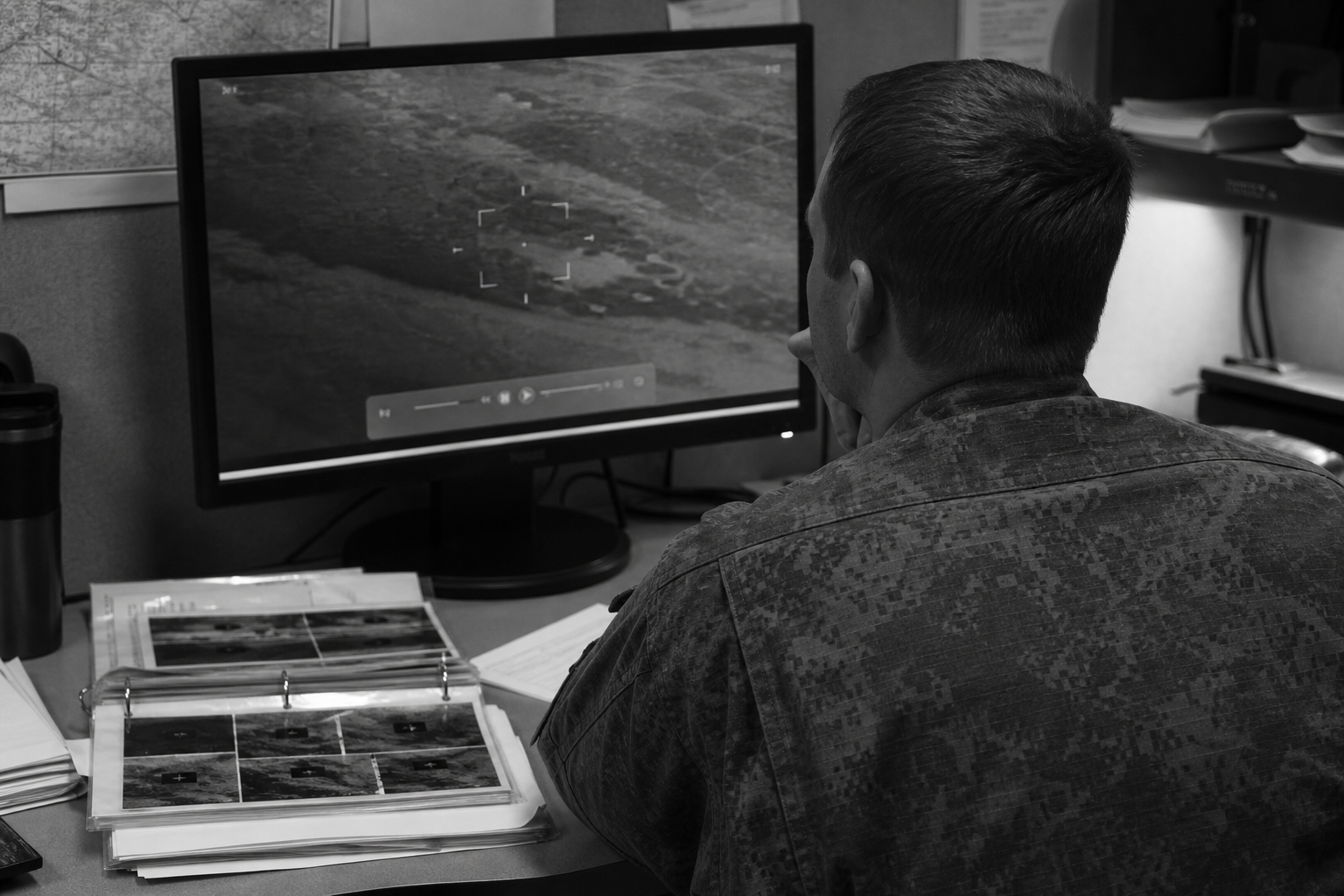
The strongest version of the official-acknowledgement argument is that trained personnel, military sensors, and intelligence review deserve more weight than an ordinary anecdote. They do. Military reporting channels can preserve time, location, platform, and sensor information, while review can flag a possible aviation-safety, counterintelligence, or national-security concern. Some UAP sightings remain difficult to resolve because the available record is partial: a short clip may omit range, altitude, lens settings, radar correlation, weather, the aircraft’s own motion, or the broader sequence before and after the recorded moment.
That limitation matters because apparent speed, turning, or size can depend on geometry and sensor interpretation. A video that shows an object whose identity is unknown is a weak signal about origin; a full, synchronized record from multiple calibrated sensors is stronger, but still requires analysis. Classification may prevent the public from seeing all contextual data, yet withheld context cannot itself supply the missing conclusion.
Official language about “unidentified” therefore performs a narrow function: it records an unresolved assessment, not a positive finding of extraordinary performance or extraterrestrial provenance. The same distinction applies to the Pentagon UFO office’s review of reports. An open case can warrant continued collection and protection of airspace without demonstrating that the government possesses non-human technology. For UFO disclosure claims to cross that line, the official acknowledgement would need to be joined by accessible underlying data, reliable provenance, and independent corroboration capable of testing the claimed origin.
How to Assess David Grusch and Other Whistleblower Claims Fairly
David Grusch’s public allegations deserve a more exact reading than either instant acceptance or casual dismissal permits. In his July 2023 House testimony, Grusch alleged that the United States had long concealed a UAP crash-retrieval and reverse-engineering effort, and he said he had been told that “non-human” biological material had been recovered in connection with some cases. Those are consequential claims: if independently established, they would concern not merely unexplained sightings but physical evidence of a non-human intelligence.
The crucial limitation is the basis of knowledge. Grusch did not testify that he had personally seen recovered craft or biological material. He presented much of the allegation as information supplied by people he described as having direct knowledge, and said he had provided relevant details to intelligence authorities through protected channels. That can make testimony a serious investigative lead. It does not turn secondhand reporting into publicly demonstrated fact, even when the witness is articulate, credentialed, or testifies under oath. A whistleblower process can address whether a person was entitled to report information and whether retaliation occurred; it is not, by itself, a public finding that every underlying assertion is true.
The evidentiary divide is practical. A weak signal is an unnamed account that cannot be independently assessed, however sincerely offered. A materially stronger signal would include identifiable firsthand witnesses whose roles and accounts can be checked; contemporaneous program records that establish authorization, location, personnel, and dates; and physical material available for testing. For a claimed recovered object, provenance means a documented chain of custody: who recovered it, where it was held, who transferred it, how it was secured, and whether samples can be traced to the same object without unexplained breaks.
Independent corroboration matters because it lets investigators test a claim rather than decide whether a narrator seems persuasive. Multiple witnesses repeating the same unverified story are not equivalent to separate evidence; their accounts must be demonstrably independent and capable of comparison with records or material. The fair conclusion from the David Grusch UFO testimony is therefore neither that the allegations have been disproved nor that disclosure is complete. They identify specific claims that would merit rigorous investigation, while leaving the public proof burden where it belongs: on accessible, authenticated, and independently examinable evidence.
AARO, Crash-Retrieval Allegations, and the Public Evidence Gap
A claimed program’s compartmentalization is the strongest reason not to treat the absence of public access as decisive. A deeply restricted effort could distribute knowledge among small groups, limit records to classified channels, and prevent an outside investigator from seeing the full picture. That possibility justifies persistent, properly authorized inquiry into a purported UFO crash-retrieval program. It does not, however, supply the missing program, artifact, or chain of evidence.
AARO’s published historical assessments and public responses to allegations belong in that inquiry as institutional findings with defined limits. An office can review records, interview personnel, and report that it did not locate verifiable evidence for a claimed hidden effort; that conclusion is relevant because it describes the result of an official search. It is not self-proving proof that no compartmented activity could ever have existed, since the scope of access, record retention, classification, and witness cooperation all affect what any review can establish.
The appropriate question is therefore more demanding than whether AARO UAP investigators accepted or rejected an allegation. What underlying material can be examined? A persuasive case would connect a specific claimed recovery to dated authorization or budget records, identifiable contractors or facilities, custody logs, and personnel accounts that can be independently compared. If physical material is central, qualified laboratories must be able to test it, establish its provenance, and reproduce meaningful findings rather than merely receive an assertion about its origin.
The weaker alternative is a closed loop: former officials report that a program exists; public bodies report that they heard the allegation; observers infer confirmation from the seriousness of the attention. Each step may warrant further investigation, but none independently demonstrates the conclusion. Nor does an agency denial settle every question. The public evidence gap remains symmetrical: secrecy can explain why evidence is inaccessible, while inaccessible evidence cannot yet establish that the extraordinary claim is true. That is the restraint required by UFO disclosure claims, not trust in any single office, but evidence that can survive scrutiny beyond it.
Congressional Interest and Disclosure Laws Do Not Verify the Underlying Claim
A hearing is an oversight mechanism, not an evidentiary verdict. A UAP congressional hearing can place allegations under oath, require agencies to answer questions, and create a public record of what witnesses did and did not claim. It cannot, by its occurrence alone, establish that a witness had direct access to a recovered craft, biological material, or a hidden program. Congressional interest shows that lawmakers consider the matter worth examining; it does not resolve the examination.
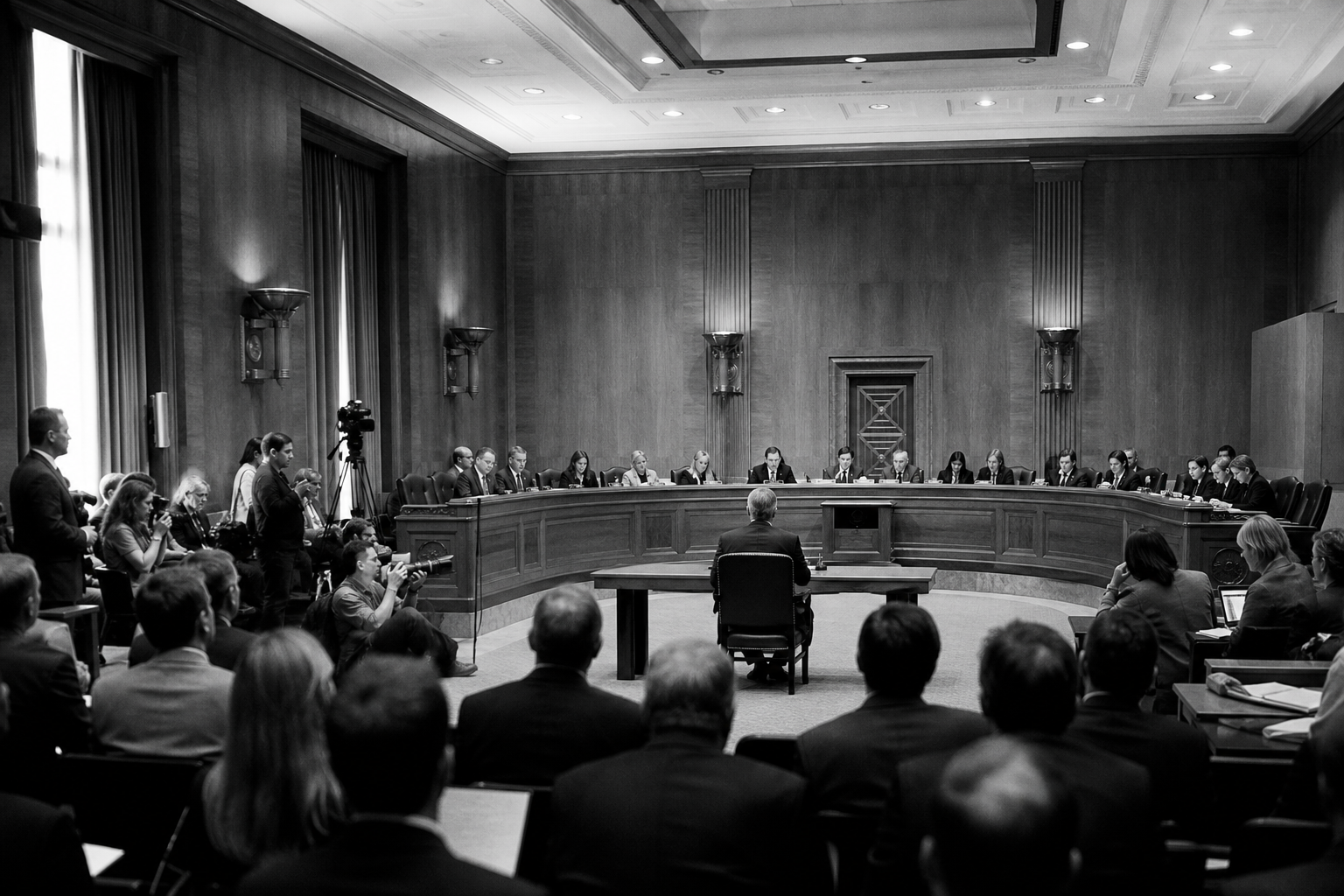
The Schumer-Rounds UAP Disclosure Act language is frequently invoked as if it reflected an official conclusion about concealed non-human technology. Its significance is more limited and more useful: disclosure proposals can create procedures for identifying, preserving, reviewing, and eventually releasing records that may bear on UAP allegations. The crucial distinction is between proposed expansive disclosure machinery and the narrower records procedures that actually become law. Neither form is a legislative finding that any particular allegation is true.
The same limit applies to the UAP Records Collection. An archive can preserve a memorandum, report, photograph, interview, or referral so that it is less likely to disappear and more available for later scrutiny. Inclusion means a record has been collected as potentially relevant; it does not certify the accuracy of its contents. A dated custody log, accessible underlying sensor data, and independently testable material would be strong signals. An archived assertion that such evidence exists remains only an assertion unless those underlying items can be examined.
National-security classification complicates public evaluation because it can withhold sources, methods, capabilities, and operational details. That constraint can create genuine uncertainty and can justify persistent oversight. But secrecy has multiple possible explanations, including ordinary defense and intelligence interests. It cannot do the logical work of proving a cover-up. The proper result is neither dismissal nor declaration: preserve the records, press for lawful review and release, and judge UAP disclosure claims by the evidence that ultimately becomes independently assessable.
The Evidence Standard That Keeps Inquiry Open Without Declaring Disclosure Complete
The next dramatic clip, leak, hearing, or official release should be sorted by the evidence it adds, not by the attention it attracts. Reports filed under labels such as “UFO sightings 2025” or “UFO sightings 2026” may merit preservation and serious analysis, particularly where multiple sensors or trained observers are involved. Growing UAP case totals may provide important reporting context, but they do not by themselves establish extraordinary conclusions. A classified setting may also prevent immediate public access. Those conditions justify interest and provisional uncertainty; they do not identify an origin.
A major claim moves materially closer to establishment only when its support converges across independent routes:
- Provenance: the item, image, sample, or file has a known source and history rather than an unexplained appearance online.
- Chain of custody: dated records show who possessed the evidence, when, and under what conditions, limiting substitution or contamination.
- Complete data: original sensor files, settings, timing, location context, and relevant surrounding footage are available, not a cropped clip or summary.
- Direct, checkable testimony: witnesses describe firsthand involvement and their accounts can be compared with records, rather than repeating a shared allegation.
- Independent replication: qualified analysts can examine material or data and reach reproducible results.
- Alternative-explanation testing: investigators actively test error, misidentification, spoofing, geometry, and human technology before assigning an extraordinary cause.
That is the standard UFO disclosure claims must meet to establish confirmed non-human intelligence or a recovery program: not an intriguing remainder, but accessible evidence that survives adversarial examination. Until then, transparency and investigation remain warranted, while certainty remains premature.
Disclosure Requires Evidence, Not Implication
The burden of proof rises with the conclusion. An unexplained observation may remain unresolved; an allegation may warrant protected reporting and investigation; an official proceeding may expose gaps in oversight. None of those steps transforms implication into proof that a concealed extraterrestrial craft or biologics program exists.
The practical dividing line is whether the central claim can leave its advocates’ circle. A persuasive hearing statement is a lead. A released video is a data point. An archival record can establish that an agency created or retained a document. Stronger evidence would permit independent parties to inspect the original material, reconstruct its custody and context, test competing explanations, and compare results without relying on a single authority’s interpretation.
That standard is demanding because the claim is demanding. It does not require assuming that every report has a mundane explanation, nor does it treat secrecy as proof of a hidden extraordinary one. It asks the same question of every future leak, official statement, or alleged artifact: what new, testable evidence has actually become available?
UFO disclosure remains a legitimate subject for transparency, preservation, and rigorous inquiry. It is not complete merely because institutions acknowledge uncertainty or prominent witnesses describe what they were told. Keep the inquiry open; withhold the conclusion until the underlying evidence and independent corroboration are available for public examination.
Sources
Frequently Asked Questions
-
Has the U.S. government confirmed alien technology?
No. Official UAP acknowledgements and released military videos confirm that reports or files exist and that some cases remain unresolved, but they do not verify that the government possesses non-human craft or biological material.
-
Does an unresolved UAP sighting prove non-human intelligence?
No. An unresolved sighting means the available information did not support a confident identification, often because key details such as range, altitude, sensor settings, weather, radar correlation, or full video context are missing.
-
What did David Grusch actually claim in his UFO testimony?
In July 2023, David Grusch alleged that the United States had concealed a UAP crash-retrieval and reverse-engineering program and that non-human biological material had been recovered in some cases. He did not testify that he personally saw recovered craft or biological material, presenting much of the claim as information from people he said had direct knowledge.
-
Did AARO find evidence of a UFO crash-retrieval program?
AARO’s published historical assessments reported that it did not locate verifiable evidence supporting a hidden crash-retrieval program. That finding reflects the result of its review, but it does not by itself prove that no highly compartmented activity could ever have existed.
-
What evidence should I look for before accepting a UFO disclosure claim?
Look for authenticated physical material or original sensor data with documented provenance, dated chain-of-custody records, known sensor settings and context, and identifiable firsthand witnesses whose accounts can be checked against records. Strong claims also require independent laboratory testing or analysis that qualified investigators can reproduce while testing alternatives such as error, misidentification, spoofing, geometry, and terrestrial technology.