Pentagon Authorizes Release of Three Navy UAP Videos in 2020
Explore Pentagon UAP videos 2020: what FLIR1, GIMBAL and GOFAST show, why the Navy footage was released, and what unidentified means.
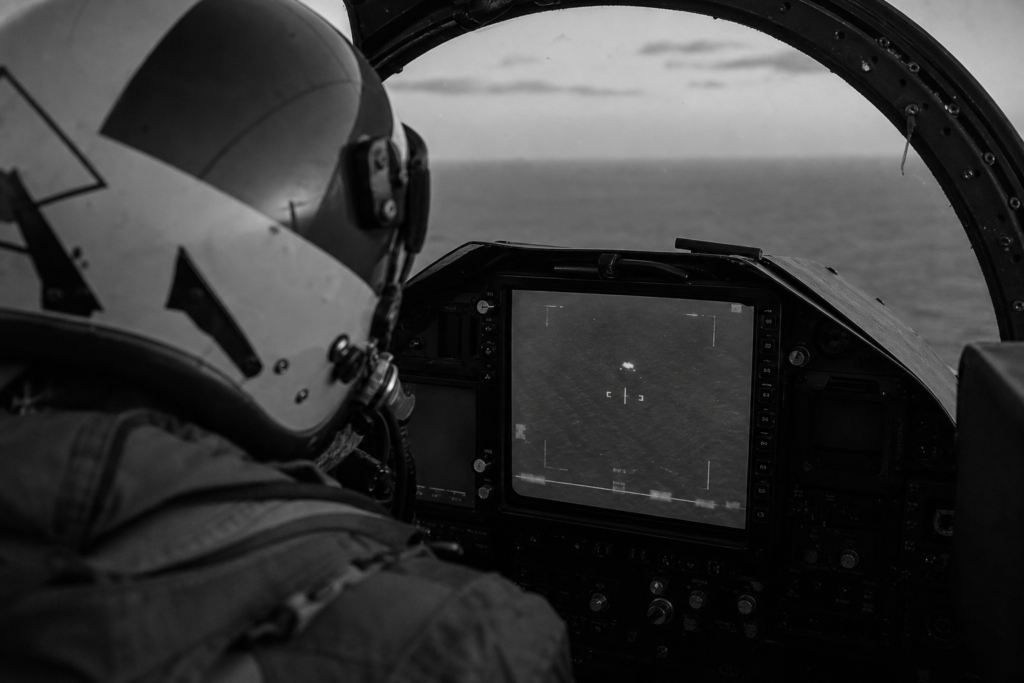
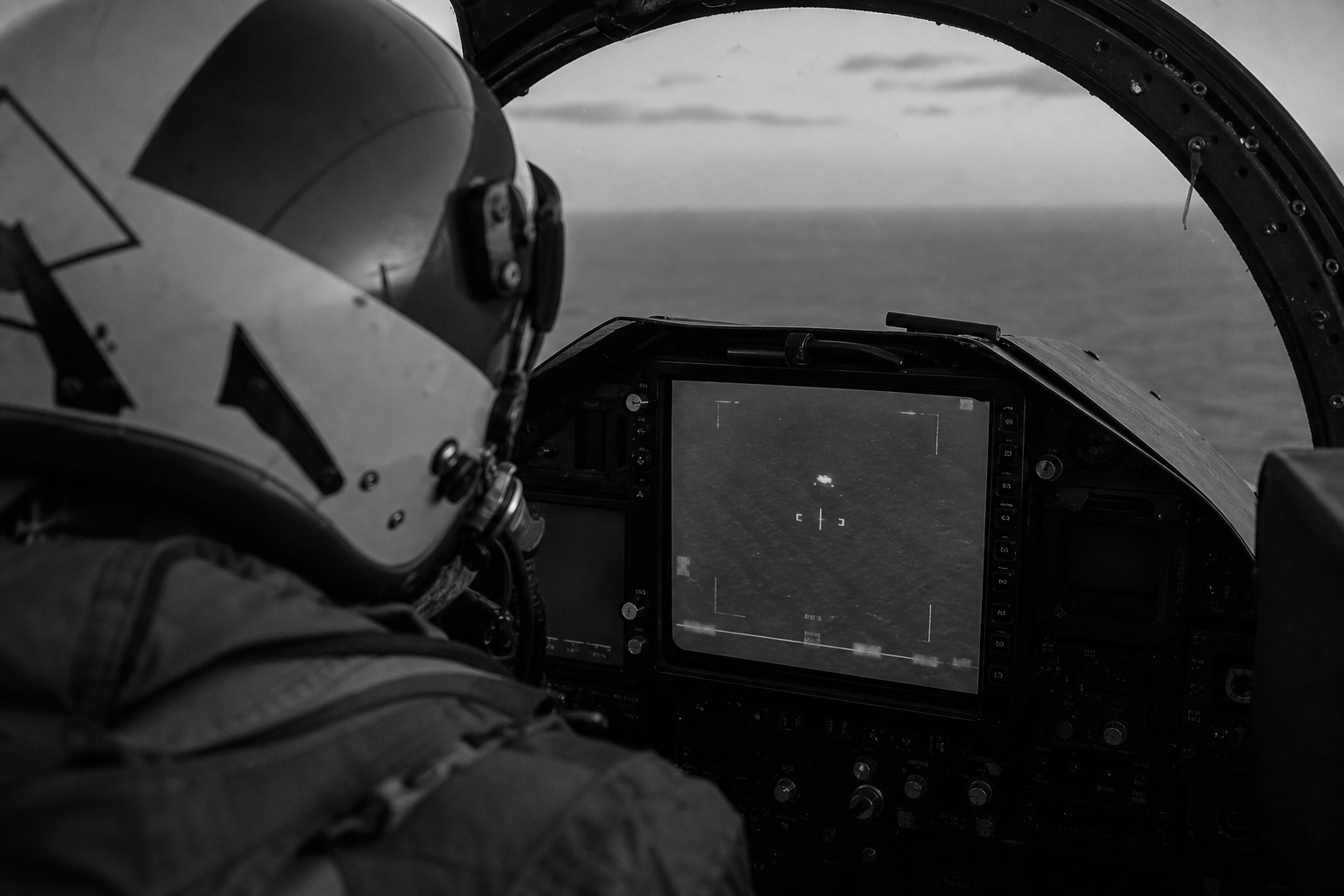
On April 27, 2020, the Pentagon formally authorized the public release of three Navy-recorded UAP videos, FLIR1, GIMBAL, and GOFAST, turning widely discussed footage into an unambiguous official record. That mattered. It established that the clips were authentic military material and that the Defense Department had cleared them for release. It did not establish what the objects were.
The distinction is the key to understanding the Pentagon UAP videos 2020. “Unidentified” describes an unresolved identification based on the information available; it is not a finding that an object was extraterrestrial, non-human, or technologically beyond known capabilities. Official authentication answers whether the footage came from Navy systems. It does not, by itself, answer the origin, nature, speed, distance, or intent of what appears in frame.
This article follows the evidence in order: the videos’ earlier public circulation, the Navy’s acknowledgment, and the Pentagon’s 2020 release. It separates FLIR1’s connection to the 2004 Nimitz encounter from GIMBAL and GOFAST, which arose from later East Coast operations, then examines what each clip shows, and what it cannot settle.
What the Pentagon’s 2020 Release Did, and Did Not, Establish
The official action was an authorization to release, not a newly announced discovery. On April 27, 2020, the Department of Defense released FLIR1, GIMBAL, and GOFAST through an official channel after the clips had already circulated publicly. The Pentagon said the videos showed “unidentified aerial phenomena” and that it had authorized their release to clear up public misconceptions about whether the footage was real and whether additional videos existed.
That action settled a provenance question: these were Navy-recorded videos, not fabricated clips falsely attributed to the military. It also made the Department of Defense responsible for the public release. “Declassified,” often used in headlines, is therefore less precise than the Pentagon’s own phrase, “authorized release”; the announcement did not provide a full classification history for each clip.
It did not settle the identification question. FLIR1 is associated with the 2004 Nimitz encounter, while GIMBAL and GOFAST relate to later East Coast Navy operations. Official release established neither an alien, extraterrestrial, nor non-human explanation for any object shown. Nor did it validate claims about extraordinary performance drawn from the brief clips alone. The meaningful UAP disclosure was narrower: authentic military footage was made official, while the objects’ identities remained unresolved.
The Timeline: Why the Videos Were Not Newly Discovered in 2020
The relevant dates begin with the recordings themselves. FLIR1 is tied to the November 2004 Nimitz operations off Southern California. GIMBAL and GOFAST came from separate Navy operations off the East Coast in 2015. Treating all three as one incident obscures the record: they are three clips from two different operational settings and years.
Long before the 2020 Pentagon action, To The Stars Academy had put the material into public circulation. FLIR1 and GIMBAL appeared in December 2017, alongside reporting that brought the Navy encounters broad attention; GOFAST followed publicly in March 2018. The clips were therefore familiar to UAP researchers, journalists, and online audiences before they appeared on a Defense Department website.
In September 2019, Navy spokesperson Joseph Gradisher told reporters that the videos showed what the Navy called “unidentified aerial phenomena.” That acknowledgment mattered because it connected the already-public clips to the Navy’s terminology without supplying an identity for the objects. “Unidentified” described an unresolved assessment, not a finding about origin or capability.
The April 27, 2020 authorized release of the Navy UAP videos was the final step in that public chronology: the Pentagon formally posted FLIR1, GIMBAL, and GOFAST and said it had determined the authorized release would not reveal sensitive capabilities or interfere with investigations. Headlines calling the 2020 Pentagon UFO videos “declassified” capture the official character of the event only imperfectly. The Pentagon’s own wording was “authorized release,” and it did not portray the clips as a newly discovered archive or provide a complete classification history for each one.
What the Three Navy Videos Show: FLIR1, GIMBAL, and GOFAST
FLIR1: the Nimitz-associated infrared clip
The FLIR1 video is associated with the November 2004 Nimitz encounter off Southern California. It presents a monochrome infrared view from an F/A-18’s targeting pod, a sensor system that can detect and track contrast in heat rather than providing an ordinary visual-camera image. A small object remains near the center of the display while the pod’s tracking symbology and readouts change around it. Cockpit voices capture the aviators’ immediate reactions. The clip documents a sensor track and an encounter, but its imagery alone does not establish the object’s size, distance, speed, construction, or origin.
GIMBAL: a 2015 East Coast recording
The GIMBAL video comes from later Navy F/A-18 operations off the U.S. East Coast in 2015, not from the Nimitz event. Its infrared display shows a bright object against a darker background, accompanied by targeting-pod symbols and cockpit conversation. The aviators react to what they are seeing and discuss other contacts, making the recording valuable as a contemporaneous account of an operational observation. But the GIMBAL video does not, by itself, identify the object or demonstrate a particular performance capability; interpretation requires context beyond the short clip.
GOFAST: a separate 2015 East Coast clip
GOFAST also relates to 2015 East Coast Navy operations. The video shows a tracked object over water through an infrared sensor, with display data and cockpit audio present as the crew follows it. Unlike an ordinary handheld recording, the image is framed by an aircraft sensor’s interface, useful evidence of what the crew was tracking, but not a self-contained measurement of the object’s motion. Apparent movement on screen can reflect the aircraft, sensor angle, range, and tracking geometry as well as the object itself. The three Navy videos therefore preserve observations from two settings, rather than supplying a definitive object type for any of them.
What “Unidentified” Means in the Pentagon’s Statement
“Unidentified” describes the status of an observation, not the nature of the object observed. In the Pentagon’s April 2020 wording, the aerial phenomena in the released material remained unidentified: the available information had not resolved them to a specific aircraft, balloon, drone, atmospheric effect, or other known category. That is an object-identification outcome, an answer not yet reached, not a positive finding that the object was alien or technologically exceptional.
This distinction matters because the public clips are excerpts, not complete investigative case files. An infrared image and cockpit audio can establish that aircrew encountered and tracked something, while still leaving essential questions open. A reliable identification may require the underlying sensor data, aircraft position and heading, range estimates, radar returns, flight plans, weather conditions, intelligence context, and corroborating observations from other personnel or systems.
Those inputs can change how a brief recording is understood. A good identification rests on information that independently constrains what was present and where it was moving; a weak one infers size, speed, or intent from the apparent motion of a distant point in a short video. The absence of a settled public identification for FLIR1, GIMBAL, or GOFAST therefore does not turn any one explanation into the default.
“Unidentified aerial phenomena” was deliberately a category broad enough to preserve uncertainty. It allowed officials to acknowledge an unresolved observation without attaching a conclusion about origin. The 2020 release did not confirm extraterrestrial craft, non-human intelligence, or any extraordinary capability; it preserved the narrower, evidence-based conclusion that the objects had not been identified in the information made public.
Why the Defense Department Authorized Public Release
The decision was framed as a limited public-information measure. In its April 27, 2020 statement, the Department of Defense said it authorized release of FLIR1, GIMBAL, and GOFAST to clear up public misconceptions about two points: whether the circulating clips were authentic and whether the government possessed additional footage.
“Authorized release” is the important operative phrase. It means officials reviewed the material for public disclosure and concluded that publishing these excerpts would not reveal sensitive military capabilities or compromise ongoing investigations. That determination explains why the Pentagon could place the videos on an official website even though they originated in operational Navy settings. It does not, by itself, describe the videos’ earlier classification history or open the full underlying records to public scrutiny.
The action also fit a narrower transparency problem surrounding reports by military aviators. Aviation-safety concerns arise when crews encounter objects they cannot readily identify in or near operating airspace: the immediate issue is awareness and reporting, not a conclusion about what the object ultimately is. Making three already-public clips official helped separate documented Navy footage from altered copies, rumors, and claims of a larger hidden archive.
That is a more modest purpose than a comprehensive disclosure program. The release addressed the status and releasability of specific videos; it did not promise that every UAP report, sensor record, assessment, or explanation would be made public.
Confirmed Facts, Open Questions, and Claims the Videos Cannot Settle
A useful way to read the record is to separate provenance from identification. The confirmed portion is limited but meaningful: Navy personnel recorded FLIR1 during the 2004 Nimitz-related operations and GIMBAL and GOFAST during separate 2015 East Coast operations; the Pentagon formally released all three on April 27, 2020; and officials still described the observed phenomena as unidentified.
- Confirmed: the clips are authentic Navy material cleared for public release, rather than fabricated videos or newly discovered footage.
- Open: the precise identity of each observed object, and whether associated radar, aircraft, intelligence, or other nonpublic records would narrow that identification.
- Not established: the videos alone do not demonstrate a government UFO cover-up, crash-retrieval programs, extraterrestrial technology, or alien disclosure.
That last distinction is especially important because an unresolved observation can invite theories without supplying evidence for them. A short released excerpt may document that an aircrew encountered something it could not immediately classify; it cannot, on its own, establish the contents of programs, archives, or events outside the recording.
Later U.S. review work follows a similarly non-presumptive approach. The Pentagon’s 2020 UAP review structure evaluates reports against multiple possible categories, including airborne clutter, natural phenomena, conventional systems, and other unresolved cases. “Unresolved” therefore remains an analytical result: it identifies a gap in the available evidence, not a preferred extraordinary explanation.
The Bottom Line: A Genuine Official Release, Not Proof of an Alien Explanation
A reliable checkpoint is to ask what an official act actually changed. The April 27, 2020 Pentagon action put FLIR1, GIMBAL, and GOFAST into an official public record; it resolved the question of whether they were genuine Navy material, not the identity of the objects recorded in them.
That distinction also preserves the footage’s separate contexts. FLIR1 is linked to 2004 Nimitz-related operations off Southern California; GIMBAL and GOFAST come from distinct 2015 East Coast Navy operations. Calling all three “the Nimitz videos,” or treating the authorization as a newly discovered event, blurs a more specific record.
- Start with the official statement: distinguish an agency’s authentication of footage, authorization of public release, identification of an object, and acknowledgment of a report. Each is a different act with different evidentiary weight.
- Ask what data are public: a short sensor clip can document an encounter while omitting contextual records that could affect identification, including additional sensor information or operational reporting.
- Test the claimed conclusion: decide whether an explanation follows from the released material or adds assumptions beyond it. “Unidentified” does not mean extraterrestrial, non-human, or technologically extraordinary.
That is the useful lens for later UAP news and UFO news alike. The Pentagon UAP videos 2020 were a genuine transparency event: officially released Navy footage tied to real military operations, with identities still unresolved. The uncertainty is real; it is not a license to treat speculation as proof.
What the 2020 Pentagon Release Actually Tells Us
For readers weighing the next viral UAP clip, the decisive question is not whether the image looks unusual; it is what, precisely, an official institution has affirmed. The 2020 record supports three separate conclusions: FLIR1, GIMBAL, and GOFAST were Navy footage; the Pentagon authorized their public release on April 27; and the objects visible in the released excerpts had not been identified.
Those conclusions carry different weight. Authentication addresses provenance, whether footage genuinely came from the claimed military system. Authorized release addresses whether it could be publicly shared. Identification would require an agency to resolve what the observed object was. Neither of the first two steps automatically supplies the third.
The chronology matters as well. FLIR1 belongs to the 2004 Nimitz-related operations, while GIMBAL and GOFAST relate to separate 2015 East Coast operations. Their public circulation and Navy acknowledgment also came before the Pentagon’s 2020 posting. A claim that erases those dates or combines all three clips into one event is already weakening its own evidentiary foundation.
A sound assessment therefore begins with the original release record and its exact wording, then asks what underlying data are available beyond a short clip. It distinguishes an unresolved observation from a demonstrated extraordinary cause. That standard leaves room for genuine uncertainty without converting uncertainty into a conclusion.
Sources
Frequently Asked Questions
-
When did the Pentagon officially release the Navy UAP videos?
The Department of Defense authorized the public release of FLIR1, GIMBAL, and GOFAST on April 27, 2020. The action made the videos official public Navy footage, but did not identify the objects shown.
-
What are the three Pentagon UAP videos released in 2020?
The three videos are FLIR1, GIMBAL, and GOFAST. FLIR1 is linked to the November 2004 Nimitz-related operations off Southern California, while GIMBAL and GOFAST came from separate 2015 Navy operations off the East Coast.
-
Were the Navy UAP videos already public before the Pentagon release?
Yes. FLIR1 and GIMBAL entered public circulation in December 2017, and GOFAST followed in March 2018. The Pentagon’s April 2020 action formally authorized release of videos that had already been widely discussed.
-
Did the Pentagon say the objects in the Navy UAP videos were aliens?
No. The Pentagon described the footage as showing unidentified aerial phenomena, meaning the objects had not been resolved to a specific identity using the information made public. It did not confirm extraterrestrial craft, non-human intelligence, or extraordinary technology.
-
What should you look for before concluding a UAP video shows extraordinary technology?
Look for underlying data beyond a short infrared clip, including range estimates, aircraft position and heading, radar returns, weather, flight plans, and corroborating observations. Apparent motion in videos such as GOFAST can be affected by aircraft movement, sensor angle, tracking geometry, and distance.