Pentagon Announces AOIMSG in November 2021 as Successor to the Navy UAP Task Force
Learn why the Pentagon created AOIMSG in November 2021, how it succeeded the UAP Task Force, and why AARO later superseded it.
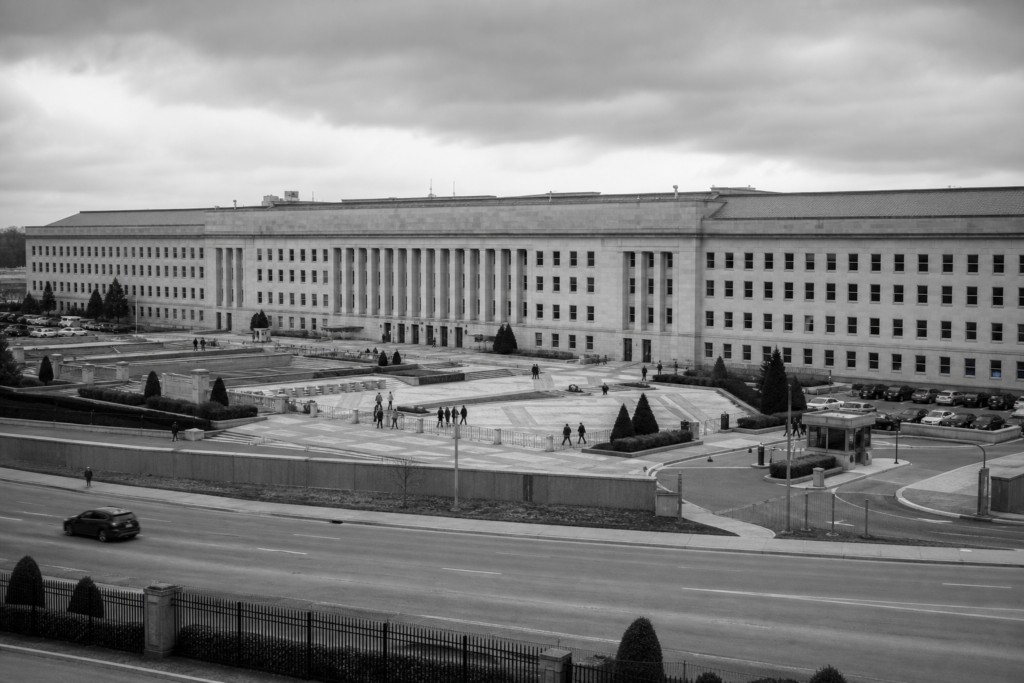
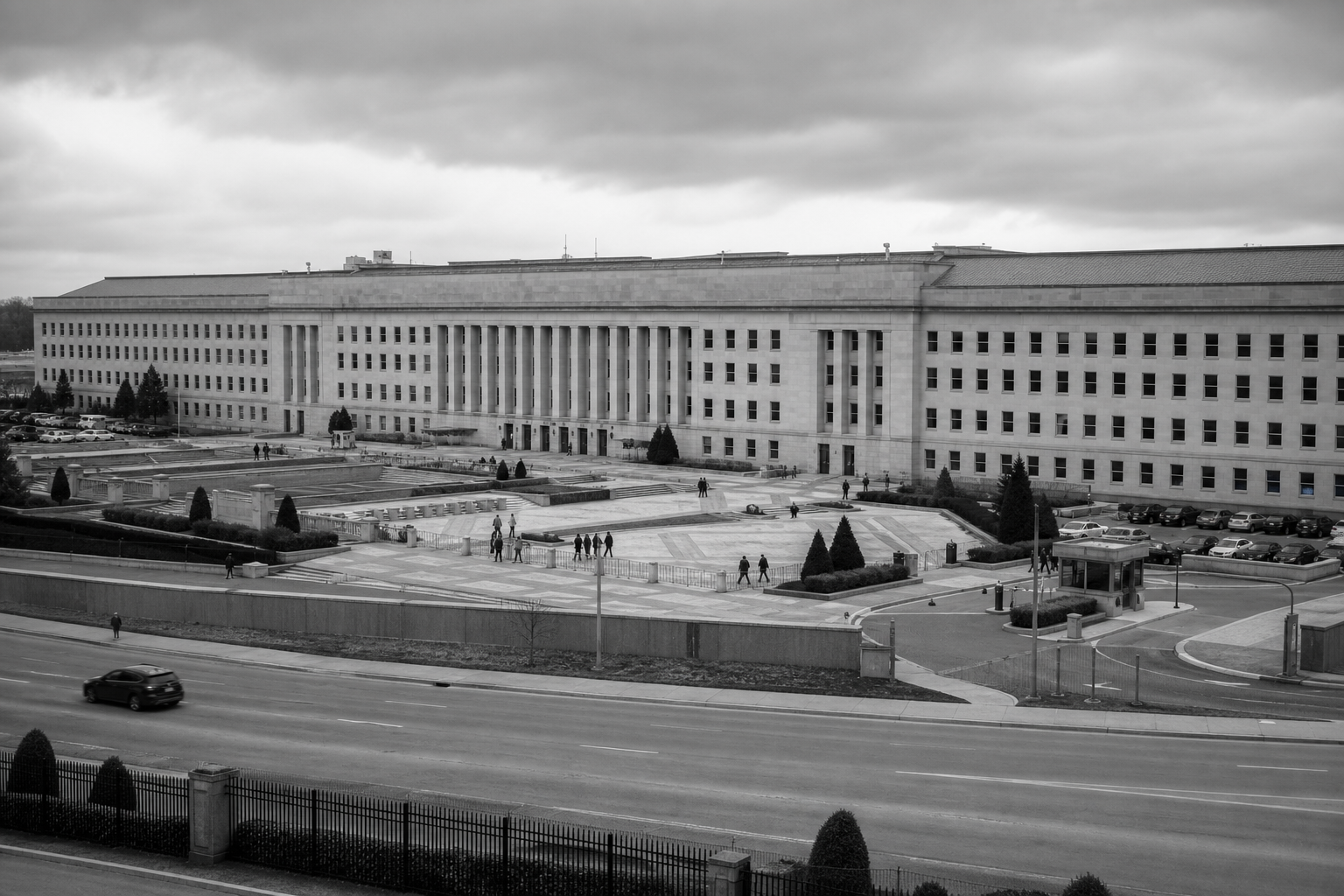
On November 23, 2021, the Department of Defense announced a targeted change in how it would organize work on unidentified aerial phenomena: Deputy Secretary of Defense Kathleen Hicks directed creation of the Airborne Object Identification and Management Synchronization Group, or AOIMSG. The move was administrative, but consequential. It shifted the mission from a Navy-led task force toward a structure intended to synchronize identification and management efforts across the Defense Department and with other federal agencies.
That distinction matters. The announcement did not resolve what reported objects were, nor did it substantiate claims about non-human intelligence, recovered material, or concealment. It set out a coordination mission: improve the department’s ability to identify airborne objects of interest and assess potential flight-safety and national-security concerns.
This article follows the short institutional sequence carefully: the Navy-led UAP Task Force, the 2021 creation of AOIMSG, and Congress’s subsequent direction for a broader all-domain office that became the All-domain Anomaly Resolution Office, or AARO. “Replacement” is therefore best understood as a phased transfer and expansion of Pentagon-level responsibility, not a single announcement that settled every question surrounding UAP reports.
What the Pentagon Announced on November 23, 2021
The public artifact was a short Pentagon news release, not imagery, an encounter report, or an operational dispatch. Dated November 23, 2021, it recorded a headquarters decision by the department’s second-ranking civilian official.
Deputy Secretary of Defense Kathleen Hicks directed the establishment of the Airborne Object Identification and Management Synchronization Group. Its stated purpose was to align efforts to identify and manage objects of interest in special-use airspace and assess associated flight-safety and national-security concerns.
This was a Washington, DC, governance function: it addressed how reporting, assessment, and coordination with federal partners would be organized, rather than a field mission involving a particular object, crew, or location. An operational event produces information about a specific encounter; this action assigned responsibility for handling reports and coordinating the Defense Department response. It did not attribute any explanation to reported phenomena.
The Pentagon also presented the new group as broader than the Navy-led arrangement associated with the UAP Task Force. Its scope and successor relationship continued to develop after the announcement, rather than being completed by one administrative act.
The Navy-Led UAP Task Force Before the Transition
The earlier task force provided a focused home for an issue that had become difficult to handle through isolated service reporting. The Unidentified Aerial Phenomena Task Force was Navy-led and concentrated on improving how military encounters were collected, assessed, and communicated rather than on assigning extraordinary explanations to individual reports.
Its reporting role mattered because a useful record requires more than a pilot’s initial observation. Position, time, sensor data, operating conditions, and any potential effect on training or operations can help distinguish an unresolved observation from a report that lacks enough information for assessment. The June 2021 preliminary assessment from the Office of the Director of National Intelligence reflected that broader analytic challenge: reported incidents drew on multiple sensor types and involved more than one part of the Defense Department.
That cross-service reality exposed the limit of a Navy-led structure. A task force can concentrate expertise and improve a defined reporting process; a Pentagon-level coordinating mission is meant to align participation, analysis, and response across military components and relevant federal partners. The November announcement therefore described AOIMSG as succeeding the task force’s efforts, not as proof that every UAPTF activity, record, or personnel function ended on a publicly specified day.
Why the Defense Department Created AOIMSG
The practical problem was not simply that some reports remained unresolved; it was that an object encountered near sensitive military activity could demand rapid, coordinated attention before its identity was known. In the November 23, 2021 announcement, the Defense Department described the new group’s purpose as synchronizing efforts across DoD and with other federal departments and agencies to identify and manage airborne objects of interest.
Its focus on special-use airspace gave that mission operational meaning. This is airspace reserved for particular military activities, where an unexpected aircraft, balloon, drone, sensor return, or other object may affect training, operations, or access. Identification is therefore more than assigning a label: it brings reporting, available sensor information, analysis, and response decisions into a common process. A weak response leaves each organization to interpret an encounter separately; a synchronized one is intended to establish whether the object presents a flight-safety or national-security concern.
The Airborne Object Identification and Management Synchronization Group was designed around that broader coordination need. Moving the effort beyond a Navy-led task force reflected the fact that relevant information and responsibilities could reside with multiple military components and federal partners. The formal rationale was administrative and risk-focused: improve the department’s ability to recognize and manage objects operating in consequential airspace, rather than leave the issue within one service’s reporting structure.
Public interest in 2021 official UAP reporting and military reports formed part of the surrounding political and media context, but it was not the mission the Pentagon announced. The announcement did not present evidence of non-human intelligence, recovered craft, or a concealed program. Such claims concern interpretations beyond the group’s stated function; the documented purpose was coordination, identification, aviation safety, and national security.
How AOIMSG Was Designed to Coordinate the Pentagon Response
Leadership was deliberately split between the Office of the Under Secretary of Defense for Intelligence and Security, which was to direct the effort, and the Joint Staff, which was to help align it with military operations. That pairing joined intelligence oversight, the collection and assessment of information, with the operational perspective needed when an unknown object affects training, surveillance, or activity in restricted military airspace.

The group was intended to draw participation beyond a single service. The Pentagon described coordination across the Office of the Secretary of Defense, the military departments, the Joint Staff, the intelligence community, and other federal departments and agencies; it specifically said the department would work closely with the Department of Homeland Security. That arrangement mattered because a report may involve military sensors and airspace authorities while also raising homeland-security, aviation, border, or domestic-response questions. The practical aim was a common government process rather than separate assessments that could leave relevant data disconnected.
Its mission centered on synchronized detection, identification, and attribution. Detection asks whether an object or signal was observed; identification tests what it is using available reporting and sensor information; attribution seeks to determine its source or operator when the evidence permits. These are sequentially related but not interchangeable: an object can be detected without being identified, and identified without a confident attribution.
Later Pentagon usage broadened the discussion to cross-domain and transmedium reporting: observations associated with more than one environment, such as air, sea, space, or an apparent transition between them. Those categories describe the setting or reported behavior that investigators must assess, not a conclusion about origin. A cross-domain or transmedium report can reflect incomplete sensor data, a conventional object, or an unresolved event; it does not itself establish non-human intelligence. The AOIMSG UAP office concept was therefore about assembling the right operational and analytical participants to resolve, or responsibly retain, such cases.
In What Sense AOIMSG Replaced the UAP Task Force
The key checkpoint is whether “replaced” means a change in responsibility or proof that every predecessor activity ended on one date. Here it means the former: on November 23, 2021, the Pentagon announced a successor structure for the Pentagon-level work associated with the Navy-led UAPTF.
The important change was the sponsoring level. A Navy-led task force could organize expertise and reporting around a service with extensive operational experience of these encounters. The new arrangement placed the matter within a Defense Department framework directed through the Office of the Under Secretary of Defense for Intelligence and Security, with Joint Staff participation. In practical terms, the responsibility was no longer framed chiefly as one military department’s task-force mission; it was intended to be a department-wide coordinating function.
Its scope also changed. The successor group was designed to connect military departments, defense leadership, intelligence participants, and relevant civilian agencies around identification and management of objects of interest. That is a broader administrative role than collecting or assessing reports within a single service-led structure. The sound reading of the transition recognizes both continuity, the underlying operational problem remained, and expansion, the Pentagon sought a more centralized mechanism for handling it.
What the announcement does not establish is an instantaneous, fully documented shutdown of every task-force function on that date. Nor does an organizational succession resolve underlying cases or validate extraordinary explanations for them. The most precise formulation is that AOIMSG replaced the UAP Task Force’s Pentagon-level mission as the intended coordinating structure, while the department’s formal UAP office architecture continued to change afterward.
How AOIMSG Was Superseded by AARO
Congress soon gave the mission a statutory foundation. Section 1683 of the National Defense Authorization Act for Fiscal Year 2022, enacted on December 27, 2021, directed the Secretary of Defense, working with the Director of National Intelligence, to establish an office to address unidentified aerial phenomena. The law did not use the later name All-domain Anomaly Resolution Office; instead, it prescribed duties including coordinating collection and reporting, standardizing reports, assessing UAP-related information, and coordinating across the Defense Department and intelligence community.
That matters because the two bodies arose differently. AOIMSG was created through a November 2021 Defense Department direction and was focused on synchronizing the handling of airborne objects of interest. The congressional mandate required a more formal office with defined responsibilities and a broader interagency role. Its “all-domain” approach meant that the office’s remit was not limited to aerial observations: it could address unidentified phenomena reported in air, sea, space, or transmedium contexts where an observation appears to involve more than one domain.
On July 15, 2022, Deputy Secretary of Defense Kathleen Hicks directed the establishment of AARO within the Office of the Under Secretary of Defense for Intelligence and Security, in coordination with the Office of the Director of National Intelligence. The department described the new office as superseding AOIMSG. The sequence is therefore phased but clear: the Navy-led UAPTF gave way to the Pentagon’s interim coordination structure, and Congress’s FY2022 NDAA UAP provisions led to the more durable office architecture implemented as AARO. AOIMSG is a historical part of that transition, not the current Pentagon UAP office.
This institutional progression identifies who was assigned to collect, coordinate, and assess reports; it does not determine what any particular report represents. A change in office name, authority, or scope is evidence of administrative reorganization, not evidence for extraordinary explanations of unresolved cases.
What This Brief Pentagon Transition Does, and Does Not, Establish
The useful conclusion is institutional rather than sensational: AOIMSG signaled a more centralized Pentagon response to reports involving unidentified objects, at a time when official reporting and congressional scrutiny were increasing. Its practical significance lay in assigning coordination across defense components and federal partners, not in supplying a finding about the origin of any object.
That boundary is essential when reading the November 2021 announcement. It did not constitute alien disclosure or establish non-human intelligence, crash retrievals, reverse engineering, or a government UFO cover-up. Those allegations require evidence independent of an office’s creation; an organizational mandate to collect, identify, and manage reports is not such evidence.
Readers assessing later disclosure proposals should keep the timelines separate. The UAP Disclosure Act belongs to a later policy debate over records and disclosure, not to the limited administrative action that created AOIMSG in 2021.
AOIMSG’s Place in the Pentagon’s UAP Reorganization
The decisive change was the level at which responsibility was organized. On November 23, 2021, the Defense Department established a group to synchronize identification and management efforts across its components and other federal agencies, work previously centered in the Navy-led UAP Task Force.
That made it the announced Pentagon-level successor mechanism, not proof that every task-force activity ended at once or that the underlying reports had acquired a new explanation. The practical difference was broader sponsorship and coordination: a department-wide structure was intended to connect operational, intelligence, and interagency responsibilities that a service-led task force could not fully consolidate.
Its role was also short-lived. The Fiscal Year 2022 National Defense Authorization Act, enacted December 27, 2021, directed a more formal office with statutory duties spanning collection, reporting, analysis, and coordination. The Defense Department subsequently established AARO in July 2022. The precise takeaway is chronological: the UAPTF supplied the earlier Navy-led mission, the November 2021 group marked the Pentagon’s coordination transition, and AARO became the broader congressionally directed framework. None of those institutional steps, by themselves, resolves what any particular unidentified report was.
Sources
Frequently Asked Questions
-
What was AOIMSG?
AOIMSG was the Airborne Object Identification and Management Synchronization Group, established by the Department of Defense on November 23, 2021. It was created to coordinate identification and management of airborne objects of interest, especially those affecting flight safety or national security.
-
When did the Pentagon announce AOIMSG and who created it?
The Pentagon announced AOIMSG on November 23, 2021. Deputy Secretary of Defense Kathleen Hicks directed its establishment as a Pentagon-level coordinating group.
-
Why was AOIMSG created?
AOIMSG was created to synchronize reporting, detection, identification, attribution, and response across the Defense Department and other federal agencies. Its mission focused on objects in special-use airspace that could affect military operations, aviation safety, or national security.
-
Did AOIMSG replace the Navy’s UAP Task Force?
AOIMSG replaced the UAP Task Force’s Pentagon-level coordinating mission, shifting responsibility from a Navy-led structure to a department-wide framework. The November 2021 announcement did not establish that every UAP Task Force activity or personnel function ended immediately.
-
What is the difference between AOIMSG and AARO?
AOIMSG was an interim Defense Department group focused on airborne objects of interest, while AARO is the broader All-domain Anomaly Resolution Office covering air, sea, space, and transmedium reports. Congress directed the more formal office through Section 1683 of the FY2022 NDAA, enacted December 27, 2021, and the Pentagon established AARO on July 15, 2022.