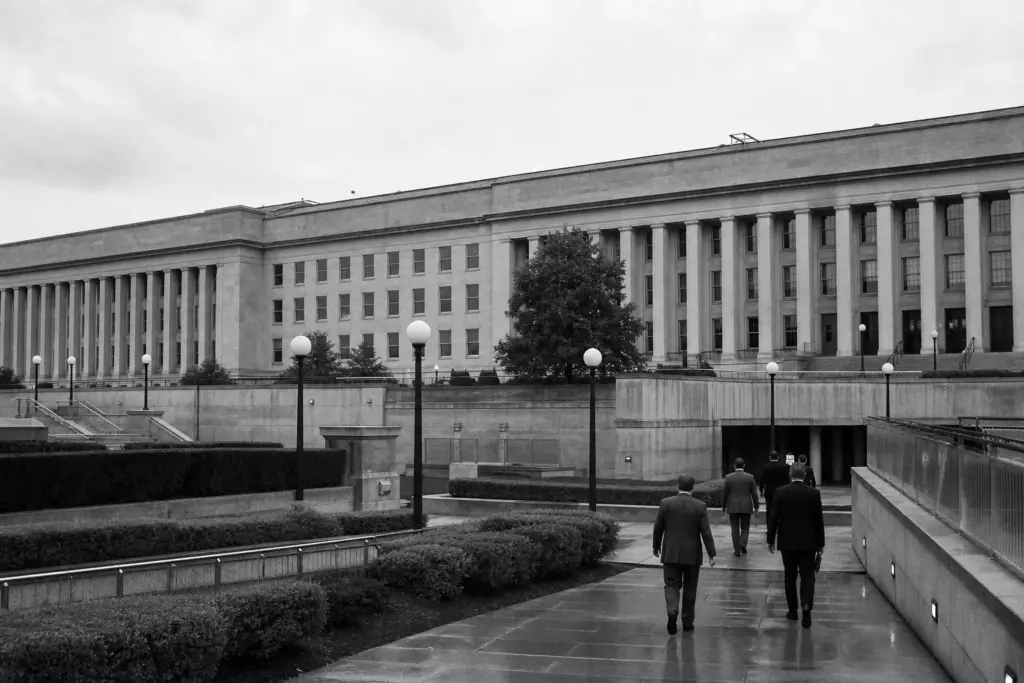

In May 2021, the Department of Defense Office of Inspector General announced the Evaluation of the DoD’s Actions Regarding the Unidentified Aerial Phenomena Task Force. The DoD OIG UAP evaluation put a narrow but consequential question inside the Pentagon’s formal accountability system: how had the Department organized and carried out actions connected to the UAP Task Force?
An inspector general evaluation is an administrative oversight tool. It can examine whether offices coordinated responsibilities, managed information, and followed established processes; it is not the same thing as an incident-level inquiry that identifies an object, validates a witness account, or determines the origin of a reported UAP. That distinction matters. Effective management may improve the Department’s ability to collect and assess reports, but it does not by itself answer what any particular sighting was.
This article follows the public record: the announced scope, the UAP Task Force’s place in the 2021 institutional landscape, and the limits on what can responsibly be inferred from an announced review. It also separates the OIG’s role from Congress’s oversight and from later UAP offices, including AARO, so that later disclosure debates do not obscure what this specific evaluation was designed to address.
What the Pentagon Inspector General Announced in 2021
May 3, 2021, is the key checkpoint in the public record: the DoD Office of Inspector General posted a project announcement under the formal title Evaluation of the DoD’s Actions Regarding the Unidentified Aerial Phenomena Task Force.
The title identifies the object of scrutiny as the Department’s support for the Task Force, not the identity of any individual sighting. The Pentagon Inspector General UAP evaluation was therefore directed at institutional performance, how relevant DoD organizations coordinated, managed responsibilities, and supported the Task Force’s work. The UAP Task Force was the contemporary DoD body focused on improving understanding of reported UAP; the OIG was a separate oversight office assessing the Department’s handling of that mission.
That division of roles is essential when reading 2021 UAP news. A review could identify gaps in reporting, information-sharing, or accountability, while effective procedures could show a better-managed framework. Neither result would establish that a particular UAP was extraterrestrial, non-human, or otherwise extraordinary. The announcement recorded a formal Pentagon accountability exercise, not a determination about what unexplained objects were.
Why the DoD Inspector General Launched the Evaluation
Congressional attention to UAP reporting made internal accountability a practical concern: a UAP Task Force could not fulfill its purpose if the offices supplying reports, data, analysis, and administrative support worked to different priorities. Its role as a focal point for bringing those inputs together made the Department’s lines of responsibility consequential.
That is the setting in which the 2021 UAP oversight evaluation made sense. Inspector general work tests the management architecture around a mission: whether responsibilities are assigned, controls exist, information reaches the right decision-makers, and component actions are coordinated. A strong signal is a defined process connecting reports and analysis to accountable offices; a weak one is fragmented activity in which no office can identify who owns a decision or whether required information reached the task force.
The practical importance was not limited to any single report. Congress could seek information and require reporting, while the task force could conduct its assigned work; the DoD OIG could examine whether the Department’s management of that work was functioning as intended. Those roles overlap in subject matter but not authority. The review could illuminate process gaps affecting UAP reporting and transparency without serving as a scientific inquiry into the origin, nature, or explanation of reported phenomena.
What the Evaluation Was Designed to Examine
A single reporting chain can show whether a task force operates as an integrated Department effort or merely receives disconnected inputs. The announced scope of the May 2021 DoD OIG project pointed to the support structure around the task force, rather than providing a public blueprint for examining individual UAP cases.
In practical terms, the DoD Inspector General UFO evaluation was positioned to assess whether offices and military services connected to the effort had clear roles and workable ways to carry them out. Support includes personnel, data, expertise, and administrative capacity. Coordination asks whether those inputs cross organizational boundaries instead of remaining in separate service or office channels. Management concerns who assigns responsibilities, resolves conflicts, tracks work, and can account for decisions. A strong arrangement would show an identifiable route from a report or data holding to the task force and then to an accountable decision-maker; a weak one would leave handoffs, ownership, or escalation unclear.
Reporting pathways mattered because a task force cannot assemble a coherent picture from material that is delayed, inconsistently routed, or held in disconnected systems. Interagency coordination is especially consequential when information involves intelligence, operations, or several DoD components: the issue is not simply whether information exists, but whether an authorized recipient can receive, assess, and use it within an accountable process.
Classified information adds a governance constraint. Controls must protect sensitive sources, methods, and operational details while allowing appropriately cleared personnel to share material needed for the assigned mission. The public announcement did not disclose detailed investigative methods, particular records reviewed, or findings. Its stated focus supports a limited conclusion: the evaluation was designed to examine how the Department organized and managed UAPTF-related work, not to publicly determine what reported phenomena were.
What an Oversight Evaluation Could, and Could Not, Establish
The decisive boundary is between judging a process and judging the object that process handles. An oversight evaluation could test whether reporting channels, assignments, recordkeeping, coordination, and supervisory controls gave the UAP Task Force a workable basis for its mission. It could identify a management gap, for example, unclear ownership when information passed between components, without resolving the meaning of a single sighting.
That is different from a scientific or intelligence assessment of an incident. Such an assessment would weigh the underlying observations, sensor data, operational context, and competing explanations to decide whether an event was likely a foreign system, a misidentification, a natural phenomenon, or remained unresolved. The announced DoD OIG UAP evaluation was not publicly framed as an inquiry designed to make any of those determinations, and it did not confirm or adjudicate claims involving non-human intelligence.
The distinction matters because a sound administrative finding and a sound explanation for an anomaly answer separate questions. Better procedures may make reports more complete, preserve data more reliably, and clarify accountability; they do not by themselves establish what caused the reported event. Conversely, a poorly managed reporting system may expose an institutional weakness without proving that extraordinary explanations are correct.
UFO disclosure debates often compress these questions into one: whether the Pentagon possessed decisive knowledge and was releasing it. But UAP disclosure also concerns whether an agency has built an accountable system to receive, protect, analyze, and report information. The 2021 review addressed that second issue. Its significance lies in the possibility of measuring institutional performance, not in treating an oversight project as evidence about the origin of UAP.
Was the Evaluation Completed or Publicly Released?
The evidentiary threshold changes once an announced project is treated as a completed review. A project announcement establishes that the DoD OIG opened the evaluation; it does not, by itself, establish a completion date, final findings, recommendations, cancellation, or a public release.

The strongest public-record signal would be a final DoD OIG report bearing the evaluation title or project number, a closure notice, or a later official document that expressly identifies the outcome. A report provides conclusions and any recommendations; a closure notice can establish disposition without revealing substantive work. Neither should be inferred merely from the passage of time or from later UAP-related activity elsewhere in government.
For this 2021 effort, the responsible formulation is therefore narrow: the announcement is confirmed, while claims about a final public result require a separately identifiable official record. If a final product is absent from publicly releasable records or the OIG’s public report collections, that absence limits what outside readers can know about the evaluation’s outcome. It does not demonstrate that no work occurred, that a particular conclusion was reached, or that recommendations were made and ignored.
Classification can further restrict public visibility. Oversight work may involve classified information, protected operational details, or internal deliberative material; a public version, if issued, may omit those details. That possibility is a reason to distinguish an incomplete public trail from a documented result, not a basis for treating the lack of detail as proof of a government UFO cover-up.
The practical checkpoint is simple: attribute only what an official, dated record actually establishes. The DoD OIG UAP evaluation remains meaningful as a documented accountability initiative, but public transparency about its ultimate disposition must be assessed from any final or closure record that is actually available.
How the 2021 UAP Task Force Review Differed From AARO
A date-and-mandate checkpoint prevents the records from being collapsed into one program. The 2021 project concerned the Department’s actions in support of the task force then operating; it did not assess the performance of a successor office.
The All-domain Anomaly Resolution Office emerged later through a different statutory and organizational path. The fiscal year 2022 National Defense Authorization Act directed establishment of a more formal UAP-related office, and DoD subsequently organized that work as AARO. Unlike the time-limited task-force structure at issue in 2021, AARO was designed as a continuing office to synchronize unidentified anomalous phenomena work across domains. The practical takeaway is chronological as well as institutional: AARO activity cannot be read backward as a finding, recommendation, or outcome of the earlier OIG evaluation.
Later congressional hearings, public whistleblower allegations, and proposed UAP-disclosure measures belong to the broader accountability debate, but none was part of the announced 2021 scope. Those mechanisms do different work: Congress legislates and conducts oversight hearings; witnesses may submit allegations through designated channels; and disclosure proposals can seek reporting or declassification procedures. The OIG project instead focused on the Department’s management of the task-force-era effort, not later allegations about programs, later legislative proposals, or AARO’s subsequent work.
Why the 2021 Review Still Matters for Pentagon Accountability
Accountability begins before any public conclusion is issued. By placing UAP Task Force-related management within the Inspector General’s oversight framework, the 2021 announcement made the Department’s own administrative choices a legitimate subject of scrutiny: who receives reports, who is responsible for moving them, how offices coordinate, and whether public-facing statements faithfully describe what can be released.
Those controls are the practical foundation of transparency. A durable reporting system preserves information; defined responsibility makes omissions traceable; coordination reduces the risk that relevant material remains isolated; and credible communication distinguishes known facts, protected details, and unresolved questions. The value of the DoD OIG UAP evaluation lies in that accountability premise, not in an unsupported claim that it settled the nature of UAP or produced a publicly documented final result.
Evidence-based transparency questions therefore remain institutional: whether reporting pathways work, whether responsible offices can be held to account, and what official records establish. Predictions tied to UFO sightings 2025 or UFO sightings 2026, claims of imminent alien disclosure, and definitive explanations for particular cases are separate propositions. They cannot be inferred from a 2021 management evaluation announcement.
The Lasting Meaning of the 2021 Oversight Review
The absence of a publicly available final report is the practical checkpoint that keeps the 2021 announcement in proper perspective. The May 3 notice establishes that the DoD Inspector General opened the Evaluation of the DoD’s Actions Regarding the Unidentified Aerial Phenomena Task Force; it does not establish findings about particular incidents, the origin of UAP, or a publicly confirmed final disposition.
That distinction protects the accountability debate from two opposite errors. A weak reading treats the announcement as proof of extraordinary underlying facts; another dismisses it because no public outcome is identified. The stronger reading recognizes a formal mechanism for examining whether the Department managed Task Force-related responsibilities coherently and accountably, while limiting conclusions to what the public record supports.
Timeline discipline matters as well. AARO belongs to a later institutional arrangement, not to the announced object of the 2021 review. Its subsequent work, like congressional hearings or whistleblower allegations, may shape broader questions about UAP transparency, but it cannot supply unreported findings from the earlier OIG effort.
The enduring significance of the 2021 review is therefore neither confirmation nor dismissal of UAP claims. It is a documented indication that Pentagon management of the Task Force had become an appropriate subject for independent internal oversight, and that transparency claims must distinguish carefully among announced scope, recorded outcome, and later developments.
Frequently Asked Questions
Why did the Pentagon Inspector General review the UAP Task Force?
The review addressed whether DoD offices had clear responsibilities, effective coordination, and workable information-sharing processes to support the UAP Task Force. Congressional attention to UAP reporting made the Department’s management and accountability systems a practical oversight concern.
What did the DoD OIG UAP evaluation investigate?
The evaluation was designed to assess management controls around the UAP Task Force, including reporting pathways, assigned responsibilities, recordkeeping, coordination, data access, and administrative support. It focused on whether information could move from reports and data holdings to authorized, accountable decision-makers.
Did the 2021 DoD Inspector General UAP evaluation find evidence of extraterrestrials?
No publicly documented finding from the evaluation established that any UAP was extraterrestrial, non-human, or extraordinary. The announced project was an administrative oversight review, not a scientific or intelligence investigation into the origin of individual sightings.
How was the 2021 UAP Task Force evaluation different from AARO?
The 2021 OIG evaluation reviewed DoD support for the UAP Task Force that existed at that time, while AARO was established later through the fiscal year 2022 National Defense Authorization Act. AARO is a continuing office that coordinates unidentified anomalous phenomena work across domains, so its later activities are not findings or outcomes of the 2021 review.