Non-Human Biologics: What Grusch Actually Claimed
Learn what David Grusch claimed about non-human biologics, what he knew firsthand, and why his testimony is not public proof of alien life.
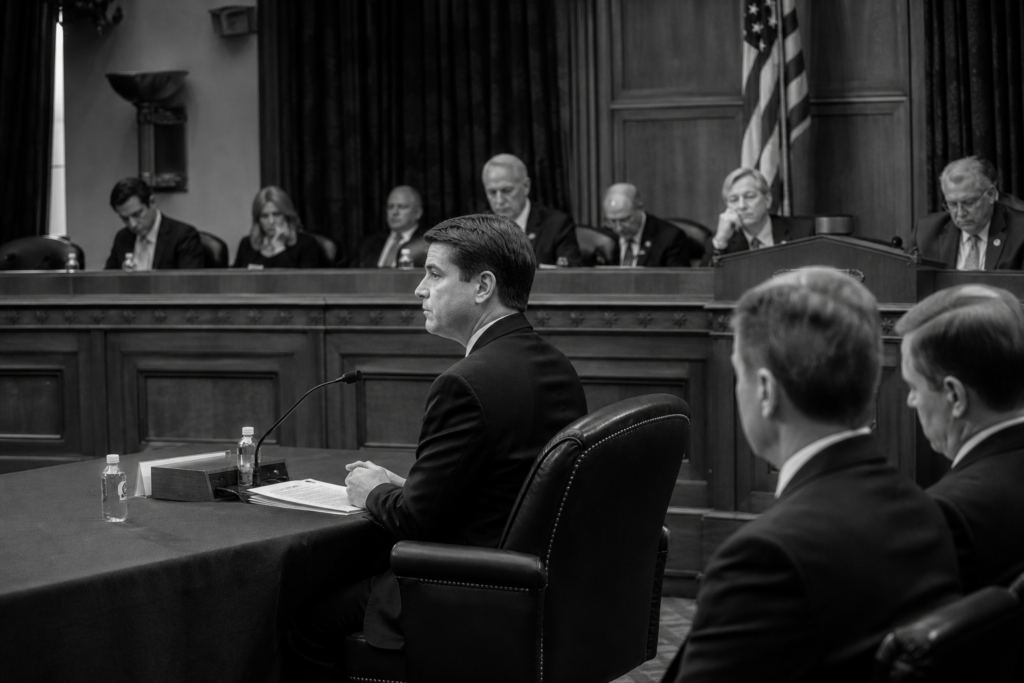
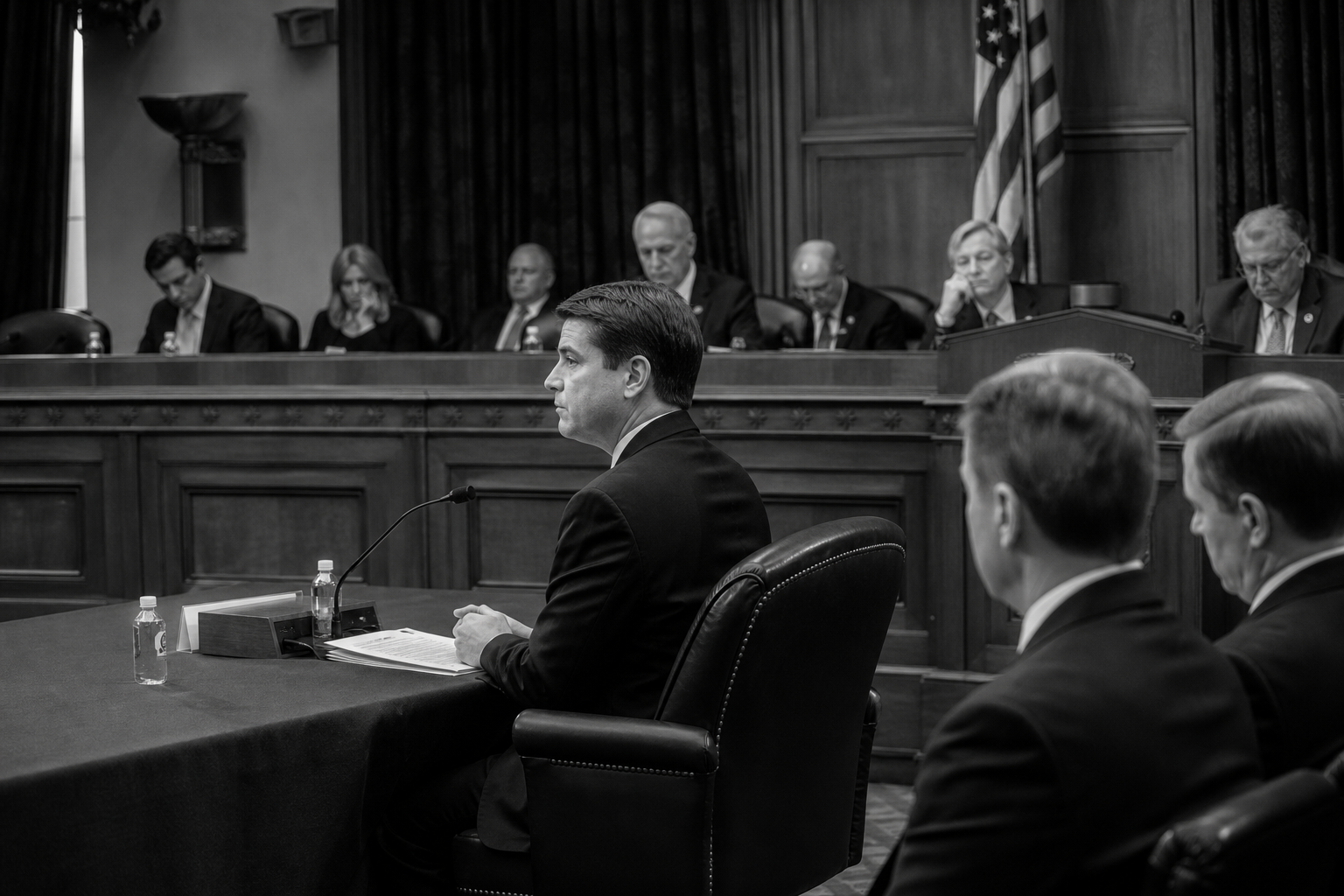
At the July 26, 2023 House Oversight subcommittee hearing, a brief exchange produced the phrase “non-human biologics.” David Grusch said he had been told that biologics accompanied some alleged recovered craft and characterized the assessment as “non-human.” He also made clear that he was relaying information from people he described as having direct knowledge, rather than describing material he had personally observed.
That distinction governs what the hearing established. Sworn congressional testimony records what a witness asserts; it does not by itself disclose a specimen, laboratory results, provenance, chain of custody, or independent testing. Nor is “non-human biologics” interchangeable with “alien bodies.” The former is an ambiguous asserted classification, while the latter adds conclusions about identity and origin that the public record has not substantiated.
This article examines the pivotal exchange in full context, separates Grusch’s firsthand knowledge from the claims he relayed, and distinguishes official handling of his retaliation complaint from confirmation of an extraordinary recovery program. The central question is not whether the allegation was newsworthy, but what precisely was claimed and what evidence has been made public.
What David Grusch Actually Claimed About “Non-Human Biologics”
Grusch’s public assertion was that he had been informed that “biologics came with some of these recoveries“, meaning alleged recovered UAP craft. When Rep. Nancy Mace asked whether those biologics were human or non-human, he answered: “Non-human.” It was a serious allegation made under oath, but it was not publicly verified evidence of alien life, and Grusch did not testify that he had personally examined bodies, tissue, or any biological sample.
The David Grusch biologics claim therefore has two levels that must not be collapsed. First, Grusch personally made the statement to Congress. Second, the underlying assessment was information he said had come from people with direct knowledge of the alleged program and recoveries. His testimony put that allegation into the public congressional record; it did not make him a firsthand laboratory witness.
“Non-human” also answered a narrower question than headlines about “alien bodies” often imply. It conveyed the reported assessment of the material’s classification, not a publicly disclosed determination of extraterrestrial origin. No specimen, test result, custody record, imagery, or independently reviewable analysis was introduced at the hearing. The claim is consequential enough to merit scrutiny, but the available public record does not establish what any alleged biologics were, where they came from, or whether they existed as described.
The July 26, 2023 Testimony: The Question and Answer in Context
At the July 26, 2023 House hearing on unidentified anomalous phenomena of the House Oversight Committee’s Subcommittee on National Security, the Border, and Foreign Affairs, David Grusch appeared alongside Ryan Graves and David Fravor and gave sworn testimony. The hearing’s subject was unidentified anomalous phenomena and their implications for national security, public safety, and government transparency.
Rep. Nancy Mace first asked Grusch whether, if the government possessed crashed craft, it also had “the bodies of the pilots who piloted this craft.” He replied, “Biologics came with some of these recoveries, yeah.” Mace then asked the more specific follow-up: “Were they human or non-human biologics?” Grusch answered, “Non-human,” before immediately adding that this “was the assessment of people with direct knowledge on the program I talked to, that are still on the program.”
That final sentence is not a minor caveat; it identifies the evidentiary level of the exchange. Grusch was testifying to what he said program-connected people had assessed and told him, rather than reporting his own examination of a specimen or firsthand observation of a recovery. His sworn status makes the wording and attribution consequential, but it does not turn a relayed assessment into publicly demonstrated biological evidence. Reading only the one-word answer removes the very qualification that explains what Grusch claimed to know personally.
What Grusch Knew Firsthand, and What He Reported From Sources
His job history establishes access to intelligence channels, not personal observation of the alleged material. In his opening statement to the subcommittee, Grusch described nearly 14 years in the U.S. Air Force and intelligence community, including work with the National Geospatial-Intelligence Agency and the National Reconnaissance Office. He said he served as the National Reconnaissance Office’s representative to the UAP Task Force from 2019 to 2021 and later co-led UAP analysis at the National Geospatial-Intelligence Agency.
Those roles could place him in contact with classified reporting and officials claiming direct involvement or knowledge. Grusch said he had interviewed people connected to an alleged multi-decade crash-retrieval and reverse-engineering effort, including people he said remained associated with the purported program. His account was therefore a report of what those people told him and assessed, not a claim that he handled the material himself.
The distinction has a practical evidentiary consequence. Firsthand knowledge means an asserted direct observation: personally inspecting a specimen, observing a recovery, taking an image, or controlling an item whose custody can be traced. A witness relaying insider accounts can provide investigators with names, dates, locations, and leads, but the underlying observation remains the original witness’s claim. Grusch’s own public account belongs in that latter category.
Indeed, when Rep. Tim Burchett asked at the hearing whether Grusch had personally seen anything, Grusch replied that he had not “witnessed anything myself.” Nothing in his public testimony established that he saw a recovered craft, visited a recovery site, inspected bodies, or examined biological material. That boundary does not determine whether the people he described were accurate; it identifies what the David Grusch whistleblower publicly claimed from firsthand knowledge versus what he reported from sources.
What “Non-Human Biologics” Means, and What It Does Not Prove
The operative word is “assessment.” In the hearing, “non-human” functioned as a reported classification of alleged material, not as the public presentation of a scientific conclusion. It did not identify a species, describe anatomy or tissue, disclose a laboratory method, or establish that a specimen existed in a form available for outside examination.
That difference is substantial. A publicly testable biological finding would ordinarily begin with an identifiable sample and its provenance: where it was collected, who controlled it, how it was preserved, and whether its connection to a purported recovery could be authenticated. It would also require disclosed testing methods and results, such as microscopy, genetic or biochemical analysis, contamination controls, and qualified independent review. None of those elements was placed into the public record through Grusch’s testimony.
“Non-human biologics” is therefore much narrower, and more ambiguous, than “alien bodies.” On the available public record, the phrase cannot determine whether any alleged material was biological rather than synthetic; authentic rather than mistaken or misdescribed; connected to a craft rather than merely said to be; engineered or naturally occurring; terrestrial or extraterrestrial; or associated with non-human intelligence. Each is a separate evidentiary question, and an asserted answer to one does not answer the others.
The appropriate takeaway is not that the allegation has been disproved, but that its most consequential terms remain untested in public. The hearing preserved Grusch’s account of what purportedly knowledgeable people told him; it did not release the physical evidence needed to independently establish the nature or origin of the alleged material.
What the Inspector General and Congress Did, and Did Not Confirm
A separate chain of events has often been conflated with the substance of Grusch’s allegations: his whistleblower complaint. Public reporting described the Inspector General of the Intelligence Community as finding that complaint “credible and urgent.” That characterization concerned Grusch’s allegations that he faced retaliation and that information he sought to provide to Congress had been improperly handled, not a public Inspector General finding that a crash-retrieval program existed or that biological material had been authenticated.
The distinction is procedural as well as evidentiary. An inspector general can assess whether a complaint warrants attention, investigation, or transmission to appropriate oversight bodies. That action addresses the treatment of the complainant and the handling of disclosures. It is different from an adjudication of every underlying claim contained in, or associated with, those disclosures. Treating “credible and urgent” as confirmation of non-human biologics converts a complaint-status determination into a scientific and factual conclusion it did not publicly provide.
Congress likewise did something important but limited at the July 2023 hearing: it received sworn testimony and put Grusch’s allegations into the congressional record. A hearing is a venue for questioning witnesses and developing oversight leads; it is not itself an authentication process for physical evidence. The public hearing produced no announced congressional finding identifying a biological sample, establishing its custody or testing, or determining that it was non-human. The institutional record therefore shows that the allegations were heard and treated as worthy of oversight attention, not that Congress or the Inspector General publicly verified them.
What Evidence Has Been Released Publicly?
The public test is straightforward: an extraordinary biological claim needs material that qualified outsiders can examine and trace. For the allegation at issue, no publicly available specimen, laboratory report, authenticated imagery, chain-of-custody documentation, named firsthand witness testimony, or independently reproducible analysis has been released that substantiates the alleged biologics as non-human. That leaves the claim in the category of an unverified allegation in the public record, rather than a demonstrated finding.
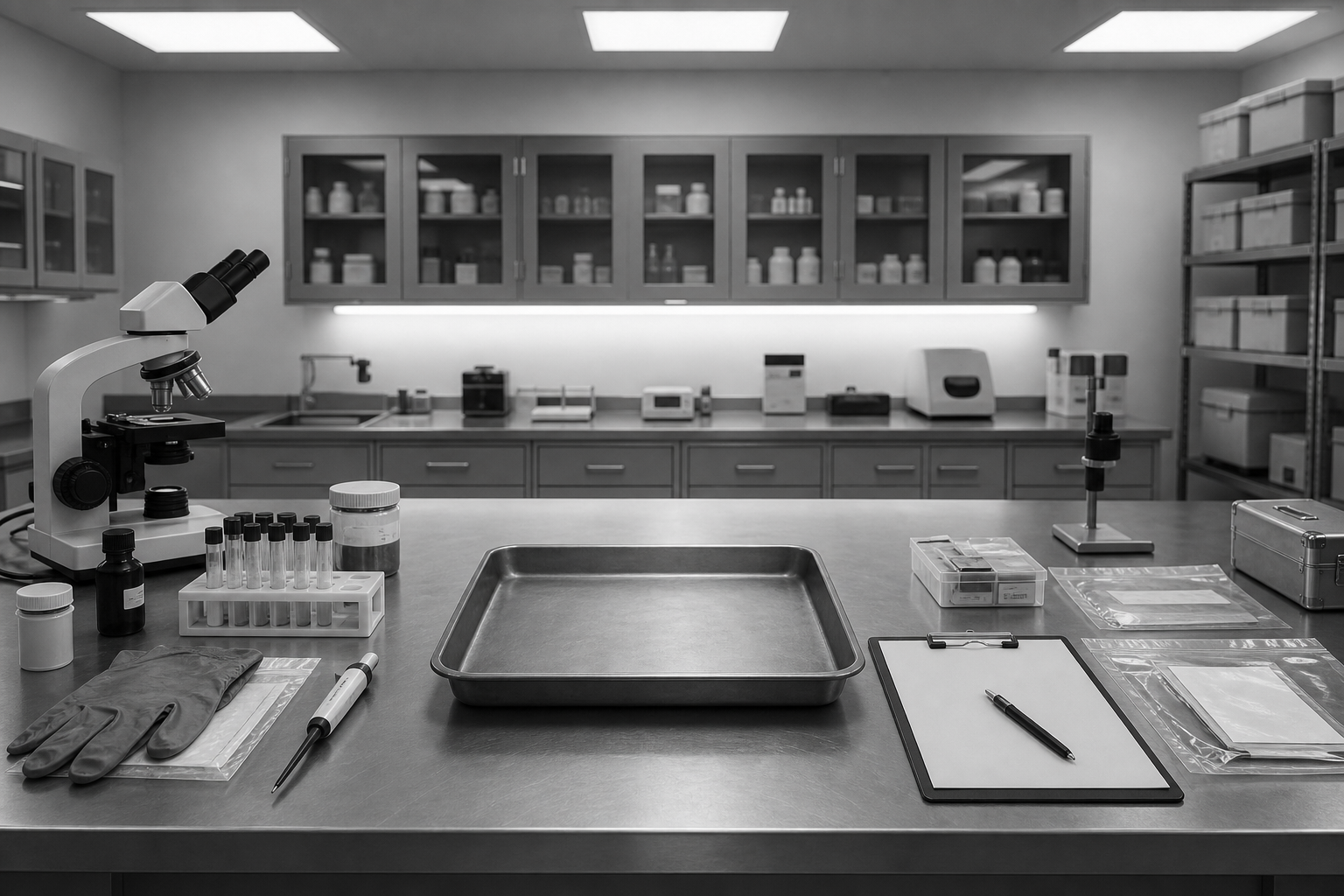
Each missing element answers a different question. A specimen permits physical examination; a laboratory report identifies methods, controls, and results; custody records show where material came from and whether it could have been altered; and independent replication tests whether a reported result holds outside the original handling group. Imagery without provenance would be weaker than a traceable sample, while an on-record firsthand witness could strengthen the source chain but would not substitute for scientific testing.
AARO’s historical review likewise reported no verifiable evidence that the U.S. government or private industry had possessed extraterrestrial technology or operated a hidden extraterrestrial crash-retrieval program. That is official context, not a declaration that every UAP case has been solved. An unresolved observation may reflect incomplete data, sensor limitations, or an unidentified conventional object; it does not, by itself, establish the existence or origin of biological material. Public corroboration of Grusch’s specific assertion would require evidence connecting an actual sample to the claim and allowing independent assessment of both its provenance and its nature.
Bottom Line: A Notable Allegation, Not Public Proof
A useful way to weigh future UFO news is to keep the evidence ladder intact. First, it is established that Grusch gave the July 2023 testimony under oath. Second, his statement about biologics was source attribution: he said people claiming direct knowledge had provided the assessment. Third, his public account was not firsthand inspection of a sample, body, or recovery. Fourth, and most important for the underlying proposition, no biological material or independent analysis has entered the public record for outside testing.

Those levels do different work. Sworn testimony makes a witness accountable for what he says; it does not authenticate what unnamed informants told him. A named, firsthand witness would strengthen the account of an event, but a traceable specimen and reproducible testing would be the stronger signal for a biological claim. An assertion without those materials remains less evidentially weighty, however consequential the allegation may be.
The responsible conclusion is therefore neither automatic belief nor reflexive dismissal. Grusch made a notable allegation about non-human biologics, based on information he said came from direct-knowledge sources. In the public record, it remains unverified and awaits testable evidence, the standard that should also guide assessments of future UAP disclosure claims.
The Accurate Takeaway on Grusch’s Claim
The key discipline is to keep four records separate. Grusch’s sworn words establish that he made the allegation; the accounts he relayed describe what others purportedly knew; congressional and inspector-general actions record oversight and complaint handling; and independently reviewable evidence would establish whether the underlying material exists and what it is. These are not interchangeable forms of support.
For future UAP claims, corroboration means more than multiple retellings of the same unexamined account. Strong corroboration adds a named firsthand witness, contemporaneous records, and a traceable physical item. The decisive category for a biological assertion is evidence qualified independent researchers can inspect, test, and reproduce, not a label applied to material that remains unavailable for examination.
That standard leaves room for uncertainty without promoting inference into fact. Grusch’s testimony warrants accurate reporting as a consequential allegation made under oath. It does not, by itself, establish that non-human biologics exist, identify an origin, or justify treating the phrase as synonymous with alien bodies. Until publicly reviewable material closes that gap, the claim remains a report of alleged information, not a demonstrated biological discovery.
Sources
Frequently Asked Questions
-
What did David Grusch mean by “non-human biologics”?
At the July 26, 2023 House hearing, Grusch said he had been told that biologics accompanied some alleged UAP craft recoveries and that they were assessed as non-human. The phrase did not identify a species, establish extraterrestrial origin, or provide publicly testable biological evidence.
-
Did David Grusch say the U.S. has alien bodies?
Grusch said “biologics came with some of these recoveries” when asked about alleged crashed craft, then answered “non-human” to a follow-up question. He did not publicly testify that the government possesses confirmed alien bodies or present evidence establishing extraterrestrial identity.
-
Did David Grusch personally see non-human biologics or recovered craft?
No. Grusch told Rep. Tim Burchett that he had not “witnessed anything myself,” and he said the non-human assessment came from people with direct knowledge whom he had interviewed.
-
Did Congress or the Intelligence Community Inspector General confirm Grusch’s biologics claim?
No public congressional finding or Inspector General determination confirmed a crash-retrieval program or authenticated non-human biologics. The reported “credible and urgent” assessment concerned Grusch’s retaliation and disclosure-handling complaint, not verification of the underlying biological allegation.
-
What evidence should you look for to verify claims of non-human biologics?
Look for a traceable specimen, documented provenance and chain of custody, disclosed laboratory methods and results, contamination controls, and independent reproducible testing. No publicly released specimen, lab report, authenticated imagery, custody record, or independently reviewable analysis has substantiated Grusch’s claim.