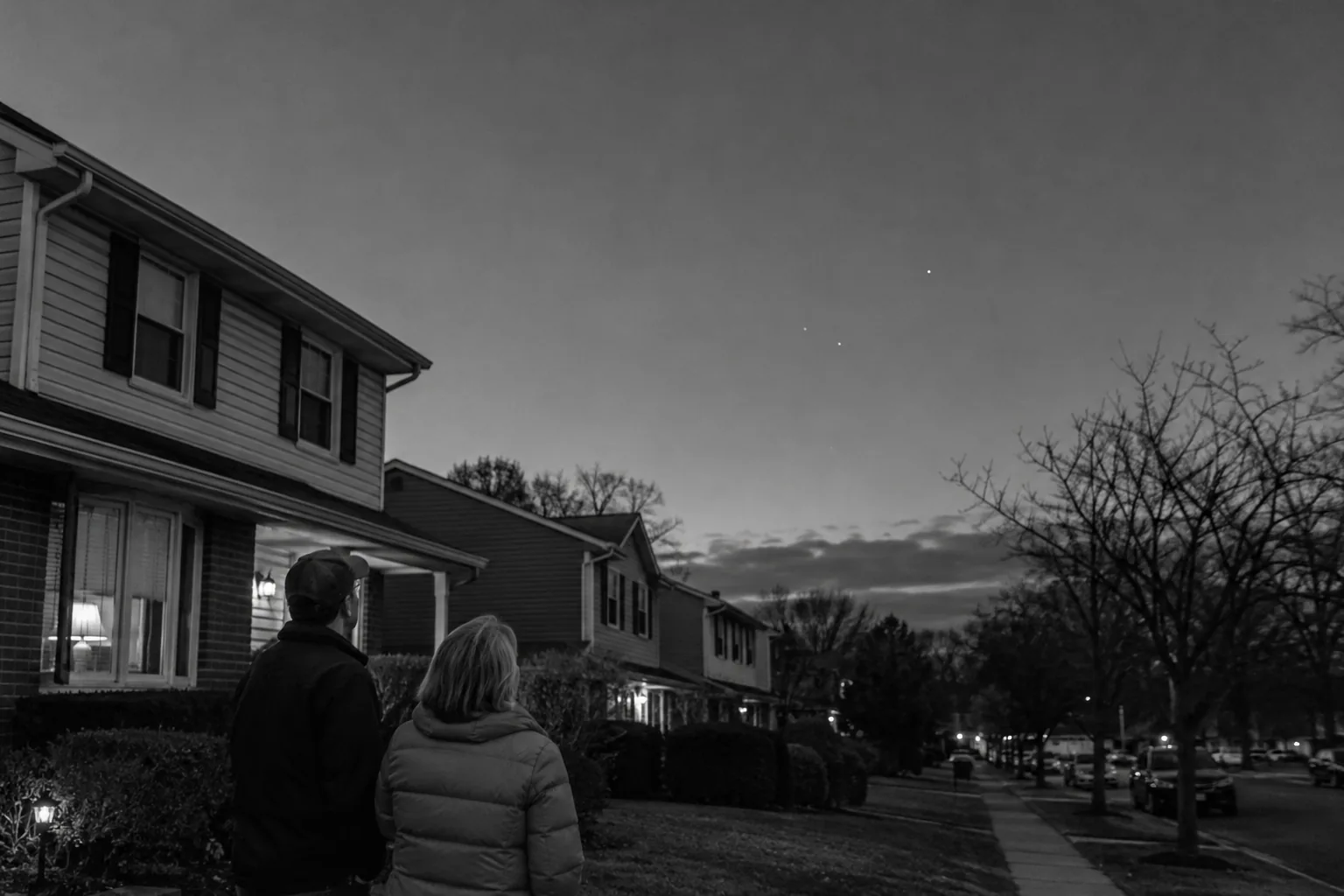
The December 12, 2024 DHS/FBI statement reported no evidence that the New Jersey drone sightings posed a national-security or public-safety threat or had a foreign nexus. This document guide separates that day’s findings from the later four-agency response.
What the December 12 record said
According to the joint statement:
- Federal personnel and technology were deployed in coordination with New Jersey State Police.
- Electronic detection had not corroborated the reported visual sightings.
- Available imagery suggested many reports were lawful manned aircraft.
- No drone sightings in restricted airspace had been reported or confirmed.
- Investigators had uncovered no malicious activity or intent at that stage.
These were dated investigative findings, not a case-by-case identification of every reported object.
The policy point at the end
The statement’s closing sentence also argued that the reports highlighted insufficient existing authorities. It paired that policy concern with its finding of no known malicious activity in New Jersey. The two points should not be conflated: asking for stronger authorities is not itself evidence of a hostile operation.
Why the date matters: December 12 versus December 16
The December 16 statement came from DHS, FBI, FAA and the Department of Defense. It described a mix of lawful commercial, hobbyist and law-enforcement drones, manned aircraft, helicopters and misidentified stars. It also acknowledged limited visual drone sightings over military facilities, including within restricted airspace.
That later wording makes the date essential when citing the December 12 restricted-airspace finding. Readers comparing the documents should preserve both the issuing agencies and the release dates rather than combining their conclusions into a single undated account.
For coverage of the wider episode, see DHS and FBI on New Jersey drones in 2024. This page focuses instead on the earlier document and the change in restricted-airspace wording.
Reading the record as a UAP source
A useful citation should identify the document, date and particular assessment being discussed. Keep the threat assessment separate from object identification, and distinguish an agency’s policy argument from its investigative findings. Those distinctions let readers follow the record without treating every reported drone as an established anomalous craft.
For a broader framework, use our guide to evaluating a UAP claim.