
Germany’s October 2026 UAP response said the Federal Government had no knowledge concerning unidentified anomalous phenomena (UAP). It reported no dedicated UAP reporting channels or interdepartmental assessment groups. This was an answer to a parliamentary inquiry, not an announcement of a new investigation. Those are the government’s statements, translated here from its German answer; they are not a finding about the origin of any particular observation.
Who asked, and what did the government answer?
Fifteen members of the Alternative für Deutschland (AfD) and the AfD parliamentary group submitted the written inquiry, Bundestag Drucksache 21/8323. The document is dated 2 October 2026; its closing line bears the earlier date of 30 September. The MPs asked about responsibilities, reporting and assessment procedures, records, coordination, and how a possible signal of non-human origin would be handled.
The Federal Ministry of Defence transmitted the Federal Government’s answer, Drucksache 21/8662, dated 16 October 2026. A separate Bundestag parliamentary-news summary appeared on 22 October. The inquiry posed questions; the answer states the government’s position; the later news item summarizes it. The Bundestag’s procedure record provides a place to look for related parliamentary documents.
What were the answers to the UAP questions?
The questions ranged from the government’s knowledge of UAP to the procedures that might apply to reports. In Bundestag Drucksache 21/8662, some questions received combined replies; the account below preserves those groupings.
- For questions 1, 1a, 1b and 9, which the government answered together, it said it had no knowledge concerning UAP. That describes what the government said it knew, not what any sighting was.
- Asked about UAP- or UFO-related terminology and uniform federal definitions or rules, the government answered no. It did not establish a common definition in its reply.
- On reporting, it said there were no dedicated channels for UAP reports. It also said it did not have the requested information on the number of relevant reports over the preceding ten years; that answer supplies no count.
- On assessment, it reported no interdepartmental structure or working group for evaluating such events.
- In its combined answer to questions 7 and 8, the government said it regularly exchanges information with international allies and partners on relevant security-policy matters, generally does not disclose details, and referred back to its answer to question 1. It identified no UAP-specific international exchange.
- On observation capabilities, the answer discussed existing airspace and space-surveillance arrangements, including comparison of detected space objects with the public two-line-element (TLE) catalogue and access to partners’ sensor-measurement data. It did not describe those arrangements as a dedicated UAP investigation.
- For question 11’s hypothetical signal of non-human origin, the government said there were no responsibilities or procedural rules within the meaning of the question.
Which reporting and oversight responsibilities did the response describe?
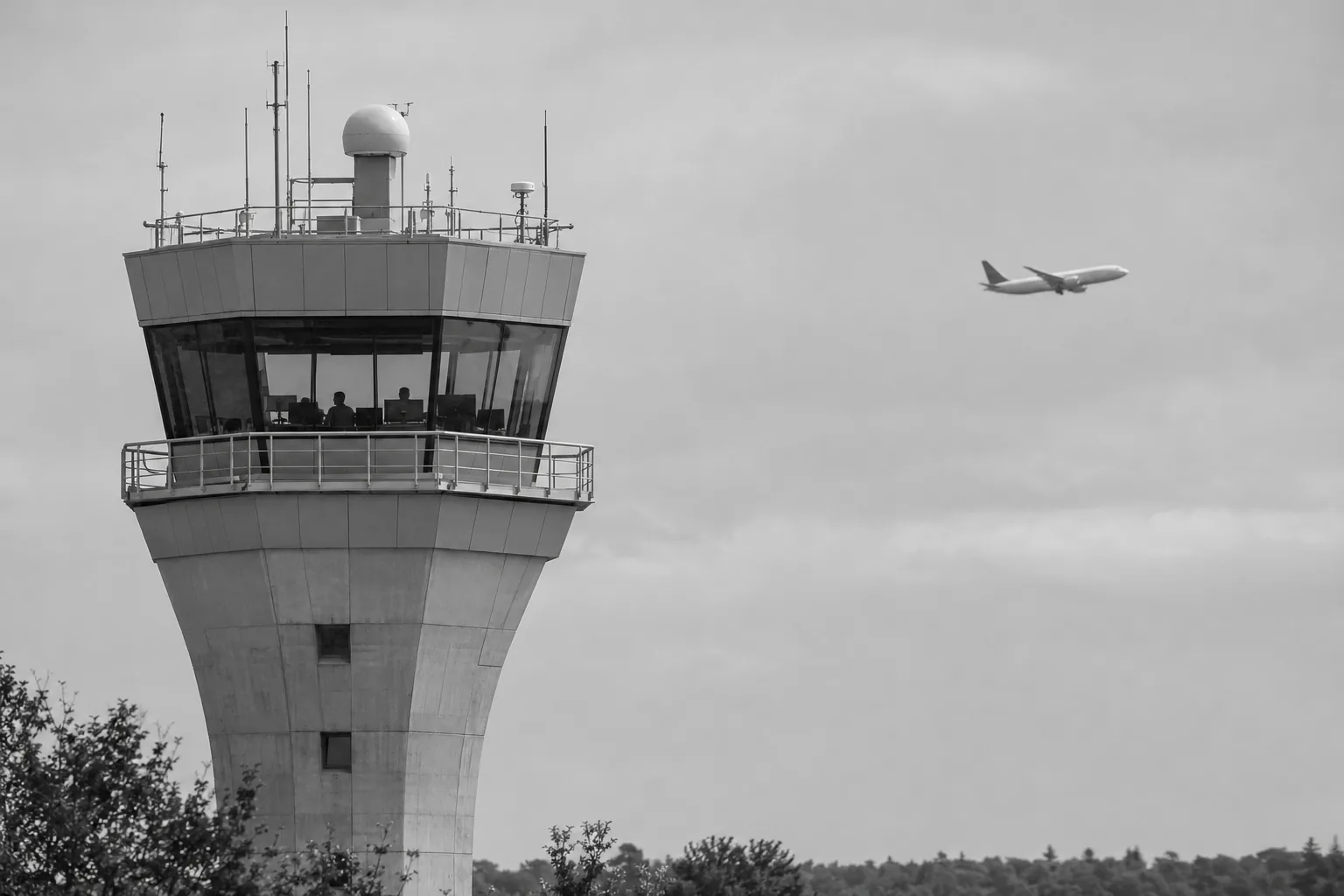
The response assigns surveillance of German airspace to the Federal Ministries of the Interior, Transport and Defence. It assigns the detection, assessment and cataloguing of near-Earth space objects to the Federal Ministry of Research, Technology and Space and the Federal Ministry of Defence. Those are distinct existing responsibilities: assessing a detected space object is not the same as receiving and resolving a UAP report. The answer describes general airspace and space-surveillance systems, rather than assigning one office responsibility for every UAP report.
The distinction also matters for parliamentary oversight. MPs can ask the government what its bodies do and what information they hold; the government’s written reply becomes part of the public Bundestag record. Here, that scrutiny produced an account of existing responsibilities alongside the government’s statements that it had neither a special UAP reporting channel nor an interdepartmental evaluation group. The parliamentary question itself did not create either one.
Does the response announce an investigation or explain UAPs?
No new UAP investigation is announced in Drucksache 21/8662. In answer to question 10, the government said no revision of existing procedures was currently planned. Its statements about lacking knowledge, dedicated guidance, reporting channels and assessment structures describe its information and arrangements at the time of the reply. They do not say that UAP reports have been concealed, and they do not confirm an extraterrestrial or non-human explanation.
How can readers check for a later Bundestag update?
To check for developments, open the Bundestag’s DIP procedure record, then search DIP separately for the exact numbers 21/8323 and 21/8662. Open the linked original documents and check for later Drucksachen or Bundestag parliamentary-news notices citing either number. Read any later item for what it actually adds: a citation to the October documents does not, on its own, revise the government’s answer.

Related reading
For broader context, see our UAP disclosure timeline and guide to evaluating a UAP claim.
Frequently Asked Questions
Does the absence of a ten-year report count mean Germany received no relevant reports?
No. In answer 4, the government said it did not have the requested information; it supplied no total.
Did the government endorse the factual claims made in the MPs’ inquiry?
No. In its introductory statement, the government explicitly declined to endorse the MPs’ assessments or confirm their factual assertions.
Does having no dedicated UAP reporting channel mean no ministry oversees German airspace?
No. Answers 1 and 3 identify the Interior, Transport and Defence ministries’ airspace-surveillance responsibilities while reporting no separate UAP reporting channel.