Multiple Lights Seen Moving East and Disappearing Over Orem, Utah on February 7, 2020
Examine the Orem Utah UFO sighting February 7, 2020, multiple eastbound lights, evidence gaps, and possible conventional explanations.
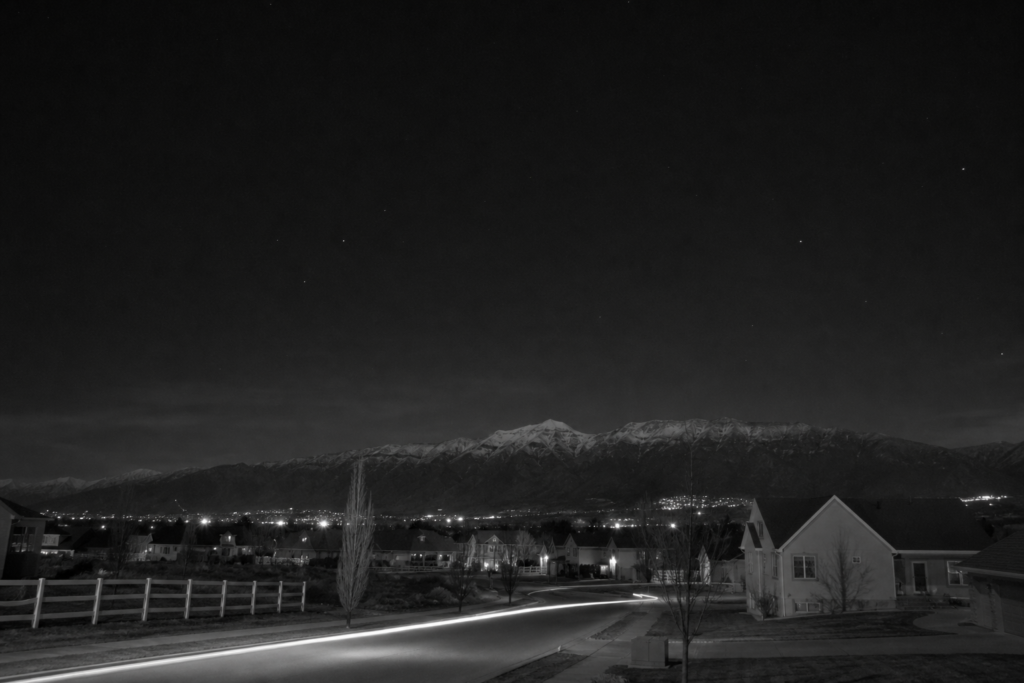
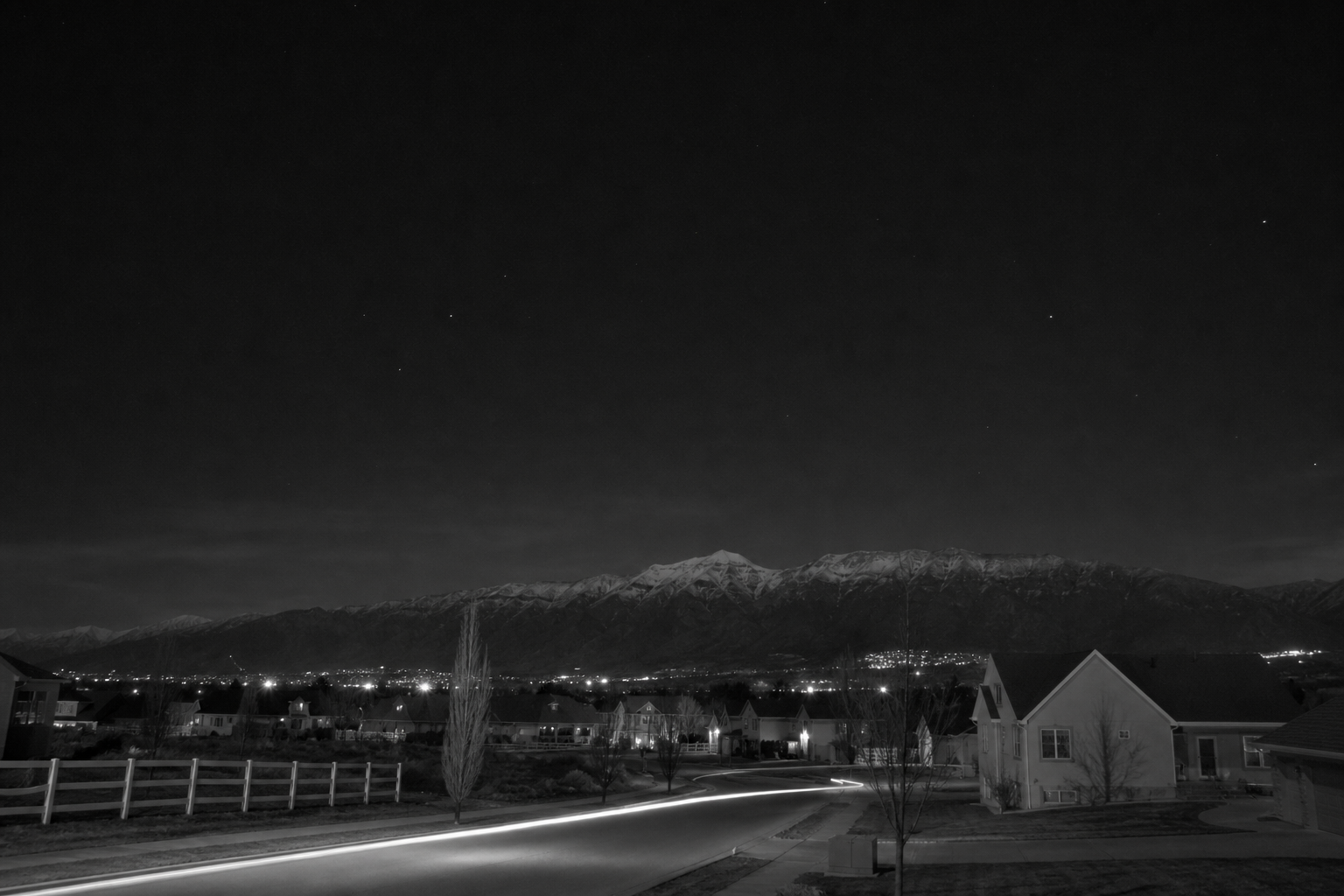
The Orem Utah UFO sighting reported for February 7, 2020 begins with a limited claim: multiple lights were reportedly seen moving east before disappearing from view. That description records an observer’s account of an event over or near Orem, not a confirmed identification of objects in the sky. No conclusion about the lights follows from the label “UFO,” which here is best understood in its literal sense, an unidentified observation, pending enough detail to identify it.
This case file keeps three layers separate. First is the report itself: its stated date, location, eastward movement, and apparent disappearance. Second is interpretation: whether those features fit aircraft, satellites, lanterns, drones, or another ordinary source. Third is the conclusion that the surviving record can support. A useful explanation must match more than the presence of lights; it should also account for their number, apparent direction, timing, brightness behavior, and why they ceased to be visible.
Important observational details are not established merely by the short description. Without a precise time, duration, viewing direction, elevation, photographs or video, and independently recorded witnesses, the event cannot be reconstructed with high confidence. The aim is therefore not to turn an incomplete report into a mystery or to force a conventional answer. It is to identify what is actually documented, test reasonable possibilities against that narrow record, and state plainly what remains unresolved because the evidence is limited.
What Was Reported Over Orem on February 7, 2020
The surviving case description is brief: on February 7, 2020, an observer reported multiple lights over Orem, Utah that appeared to travel east and then disappeared from view. Those are the report’s central observational claims. They describe what the observer believed was visible in the sky, rather than establishing the lights’ distance, physical nature, or source.
The wording matters. “Multiple” indicates more than one visible light, but does not establish a formation, spacing, or whether the lights were connected. “Moving east” records an apparent direction from the observer’s perspective, not a measured flight path. Likewise, “disappearing” means the lights were no longer seen; it does not by itself show that they stopped, departed abruptly, or behaved beyond ordinary aerial or astronomical causes.
No named original database entry, witness narrative, media file, or archival link accompanies the material available for this case file. The Orem Utah UFO sighting of February 7, 2020 should therefore be treated as an unidentified-light report with a narrow documented description, not as confirmation of an extraordinary craft or event.
What the Source Record Documents, and What It Does Not
The available record functions as a case summary rather than a full investigative file. It preserves an event date, February 7, 2020, and a location, Orem, Utah, along with the condensed claim that multiple lights moved east and disappeared. It does not preserve the underlying witness report in the observer’s own words, so it is not possible to separate direct description from any later editorial summarizing.
- No submission date is available. That matters because a report filed during or soon after an event generally retains more reliable timing and sequence details than one recalled later.
- No clock time, time zone, duration, viewing position, compass bearing, or elevation angle is recorded. “East” is therefore a reported impression, not a track that can be compared precisely with a flight path or celestial pass.
- No coordinates identify either the observer’s position or the lights’ apparent location. Orem supplies a general geographic setting, but not a triangulation point.
- No photograph, video, original file, or provenance information is available. Media can sometimes preserve timestamps, lens data, and a frame-by-frame record; none is present here to assess.
- No named follow-up inquiry, instrument reading, air-traffic correlation, or independently submitted nearby account accompanies the source record. The available material consequently provides no corroboration beyond the single reported observation.
Those absences set a clear evidentiary boundary. A witness report can establish that someone reported seeing lights, but it cannot by itself establish what the lights were or calculate their distance, physical size, altitude, speed, or spacing. Those measurements require reference points, calibrated imagery, multiple viewpoints, or other independently recorded data. For this Orem case, the record supports preservation of the claim, not a reconstruction of the objects behind it.
How to Read the Reported Eastbound Movement
Each part of the summary describes an appearance, not a measured property. “Multiple” establishes only that the observer perceived more than one light; it does not establish a fixed count, equal spacing, common altitude, or a shared source. Without a stated number, brightness pattern, separation, or formation, the lights cannot be treated as a coordinated group rather than several unrelated points seen in the same portion of the sky.
The reported eastbound movement is similarly a line-of-sight impression. From one position, a light moving left to right may appear to head east, yet its actual route could run toward, away from, across, or well beyond the observer. A geographic track would require a recorded viewing bearing and changes in that bearing over time, ideally from another location. No start point, end point, landmark, horizon reference, or elevation angle is preserved for the lights moving east over Orem, Utah.
Distance also changes how motion is judged in a night-sky observation. Widely separated lights can appear close together if they are far away along a similar sightline; lights at different distances can appear to hold formation; and a light approaching or receding can seem slow despite substantial motion. Darkness removes many scale cues, while an unobstructed sky offers few fixed references against which to judge spacing or speed.
“Disappeared” records that the lights were no longer visible, but it does not by itself show that they stopped, departed, or extinguished. The concise account supplies no sequence detail that would distinguish a gradual fade from an abrupt loss of visibility. The three claims therefore remain useful descriptors of the report, but not enough to establish a route, formation, or physical behavior.
Possible Conventional Explanations for Multiple Moving Lights
Several ordinary hypotheses remain compatible with a short account of multiple lights, but each requires details the present record does not preserve.
Aircraft are one possibility. Aircraft navigation lights are colored or white lights used to show an aircraft’s orientation, while landing lights are brighter forward-facing beams that can make an approaching aircraft seem unusually luminous. A turn, changing viewing angle, or several aircraft using nearby corridors could create a succession of lights that appears to move in one direction. A reliable local time would allow comparison with flight-tracking records, airport movements, and any available air-traffic context; a report of blinking red, green, or white lights would strengthen this line of inquiry.
Several unrelated aircraft on broadly similar routes are a distinct possibility from one aircraft with several visible lights. That scenario can fit lights with uneven spacing and differing brightness, especially if each crossed the observer’s field of view at a different distance. It becomes weaker if contemporaneous imagery showed a tightly fixed, non-aviation pattern, but no such imagery is available here.
Satellites can appear as steady points moving across the sky, and a satellite train describes multiple satellites seen in sequence after deployment. This category would fit orderly, steady motion without colored flashes, but it needs a precise observation time, viewing direction, and duration for comparison with historical pass predictions and launch-related visibility records. The brief Orem account does not provide those checkpoints.
Chinese lanterns are small airborne flames whose apparent path would be governed by local wind rather than a deliberate route. They could fit several warm-colored lights drifting together or separating gradually; wind direction and speed, cloud cover, visibility, and reports of a nearby gathering would be relevant tests. Without a time and weather observations, the reported eastward appearance cannot be meaningfully matched to this hypothesis.
Drones could also produce multiple lights, particularly where individual points hold similar spacing or change direction together. Their strongest support would be video showing maneuvering, audible rotor noise, a close apparent distance, or repeated observations from separate locations. Conversely, a long, steady traverse with no maneuver detail would offer little basis to distinguish drones from more distant lights.
Finally, distant ground-based lights, vehicles, towers, buildings, or lights partly masked by terrain, can be mistaken for aerial motion when viewed through darkness or intervening haze. Landmarks, the observer’s elevation, and a recorded sightline would be needed to test that possibility. None of these categories can be selected confidently for the February 7 report; they identify the evidence that would be needed to move beyond possibility.
What “Disappearing” Can Mean in a Night-Sky Report
Visibility is a threshold, not a direct measure of whether a distant light still exists. A light may appear to vanish when its source turns and a directional beam no longer faces the observer, when it dims with increasing distance, or when an intermittent light switches off between visible flashes. In each case, the object or source can continue moving even though its light is no longer perceptible.
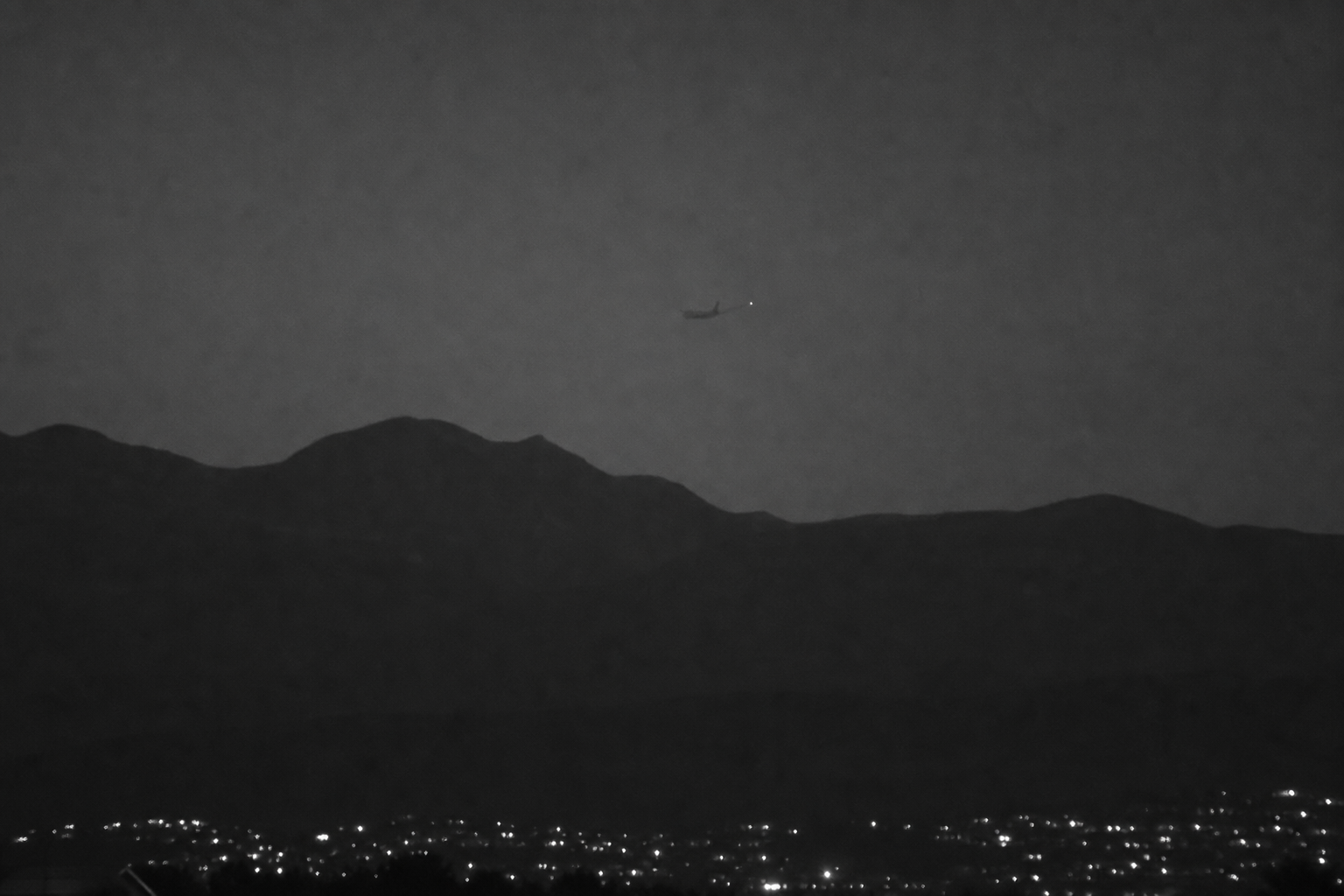
Obstruction creates another ordinary route to an apparent disappearance. Terrain along an eastern sightline, a roofline, trees, or other structures can cut off a low light abruptly. Thin cloud, haze, or changing weather and cloud cover can instead produce a softer fade, sometimes unevenly across several lights. Moving beyond the observer’s line of sight can look sudden when the final visible portion of the path is narrow or partially blocked.
The surviving Orem summary does not specify whether the lights faded, blinked out, passed behind anything, changed brightness or direction, or disappeared simultaneously. Those distinctions matter when assessing why lights disappear: a gradual loss favors different possibilities from a sharp, shared cutoff. “Disappearing” is therefore a worthwhile observation to preserve, especially if it was abrupt, but it records loss of visibility rather than demonstrated physical vanishing or unusual technology.
Reasonable Inferences, Unresolved Questions, and the Proper Classification
The defensible conclusion is narrower than any proposed explanation: an observer reported seeing multiple lights from Orem on February 7, 2020, apparently moving east before they ceased to be visible. That preserves the observation as reported, but it does not convert the perceived motion or disappearance into measured physical behavior.
Crucial identification variables remain absent. The surviving account does not establish the lights’ identity, distance, altitude, speed, point of origin, or whether they were connected to one another rather than separate sources viewed in the same area of sky. It also lacks the timing, duration, angular path, brightness sequence, and independent material that could distinguish, for example, several aircraft from satellites, lanterns, or ground lights seen under changing viewing conditions. A single brief report can be meaningful as testimony of an observation, yet still be too limited to resolve its cause.
The proper classification is therefore unidentified due to insufficient information. “Unidentified” is a recordkeeping label: it means the available description cannot discriminate reliably among plausible conventional possibilities. It does not mean that those possibilities were excluded, nor does it support an inference of extraordinary technology or non-human involvement. The Orem Utah UFO sighting of February 7, 2020 is a local evidentiary question, not evidence by itself for claims about UFO disclosure, UAP disclosure, a government cover-up, or alien disclosure.
What Would Make a Similar Orem Sighting Easier to Investigate
A useful report begins with a time that another investigator can actually match to external records: note the date, clock time, and time zone, along with the exact observing position rather than only “Orem.” Record the compass bearing of the lights and their elevation above the horizon. “East, about 30 degrees up” is far more testable than “overhead,” because it defines a sightline that can be compared with terrain, aircraft routes, and celestial objects.
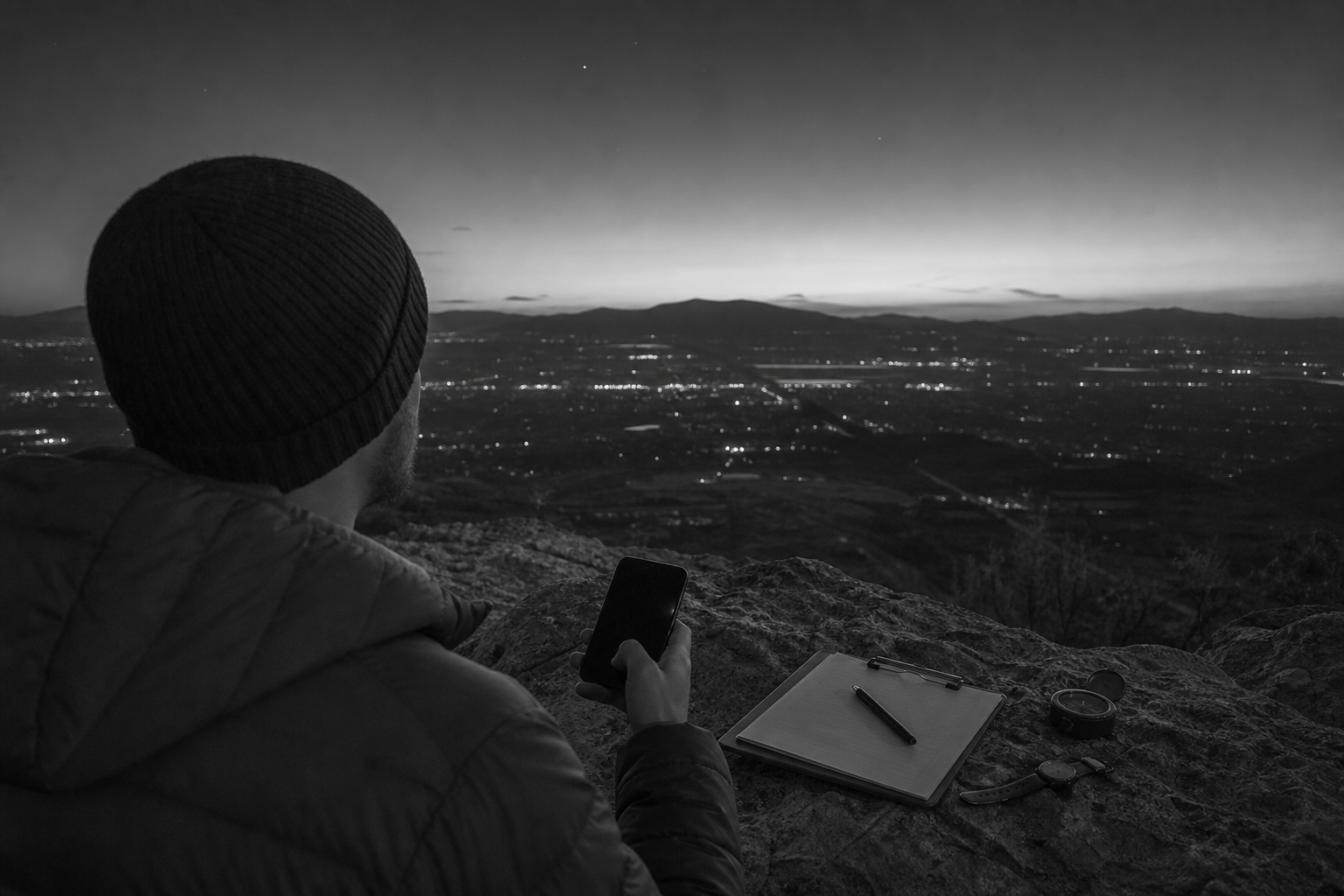
- Write down the duration; the number of lights; whether their spacing held steady, widened, or changed; and whether they moved together or independently.
- Describe the sequence of brightness changes: steady, flashing, fading, changing color, turning, or vanishing one at a time versus together. A gradual fade is a different observational pattern from an abrupt, simultaneous loss.
- Keep original photo and video files, including their timestamps and metadata. Unedited files preserve more investigative value than cropped clips, reposted social-media versions, or screenshots.
- Make contemporaneous notes and obtain contact details for independent observers. Separate accounts written before witnesses compare impressions are stronger than a shared reconstruction.
Flight and satellite-reference searches are most useful when tied to that precise time and sightline; a broad date and city name usually cannot distinguish a relevant track from an unrelated one. These UAP reporting steps do not seek proof of a preferred explanation. They create enough fixed points to test ordinary possibilities fairly and apply the same standard to future UAP news, including reports grouped under searches for UFO sightings 2025.
A Reported Event, Not a Confirmed Explanation
The evidentiary boundary is straightforward. The record preserves a reported date and place, February 7, 2020, in Orem, and the observer’s summarized impression of multiple lights moving east before leaving view. It does not preserve the measurements or independent material needed to identify those lights: no precise time, duration, fixed count, elevation, imagery, original narrative, or separately recorded witness account is available.
That absence prevents a fair choice among the ordinary possibilities considered here. Aircraft lighting, separate aircraft on similar sightlines, satellites, lanterns, drones, and distant ground lights can produce superficially similar reports, but their fit depends on patterns this summary does not describe, such as flashing, spacing, rate of motion, and whether the lights faded individually or together.
The appropriate status is therefore unidentified due to insufficient information, not confirmed extraordinary activity. An unidentified report means that the available account cannot distinguish reliably among plausible explanations; it does not show that conventional causes failed. Better contemporaneous records, especially a time-stamped original video, a defined sightline, and independent observations, would turn a memorable sighting into a testable case.
Frequently Asked Questions
-
What was seen over Orem, Utah, on February 7, 2020?
An observer reported multiple lights over or near Orem, Utah, that appeared to move east and then disappeared from view. The available record does not establish the lights’ number, altitude, distance, speed, or identity.
-
Were the lights over Orem identified?
No. The case is classified as unidentified due to insufficient information because it lacks a precise time, duration, viewing angles, imagery, original witness narrative, and independent corroboration.
-
Could multiple lights moving east over Orem have been aircraft or satellites?
Yes. Aircraft, several aircraft on similar routes, and satellites or a satellite train are all plausible possibilities, but testing them requires a precise observation time, viewing direction, duration, and brightness details that were not recorded.
-
Why do lights in the night sky appear to disappear suddenly?
Lights can seem to vanish when a directional beam turns away, the source dims with distance, flashing stops between visible intervals, or terrain, trees, rooflines, haze, or clouds block the view. The Orem report does not say whether the lights faded, blinked out, or passed behind an obstruction.
-
What details should I record to identify multiple moving lights in the sky?
Record the exact date, clock time, time zone, observing position, compass bearing, elevation angle, duration, number of lights, spacing, colors, flashing pattern, and disappearance sequence. Keep original photo or video files with timestamps and metadata, and obtain independent witness accounts before observers compare notes.