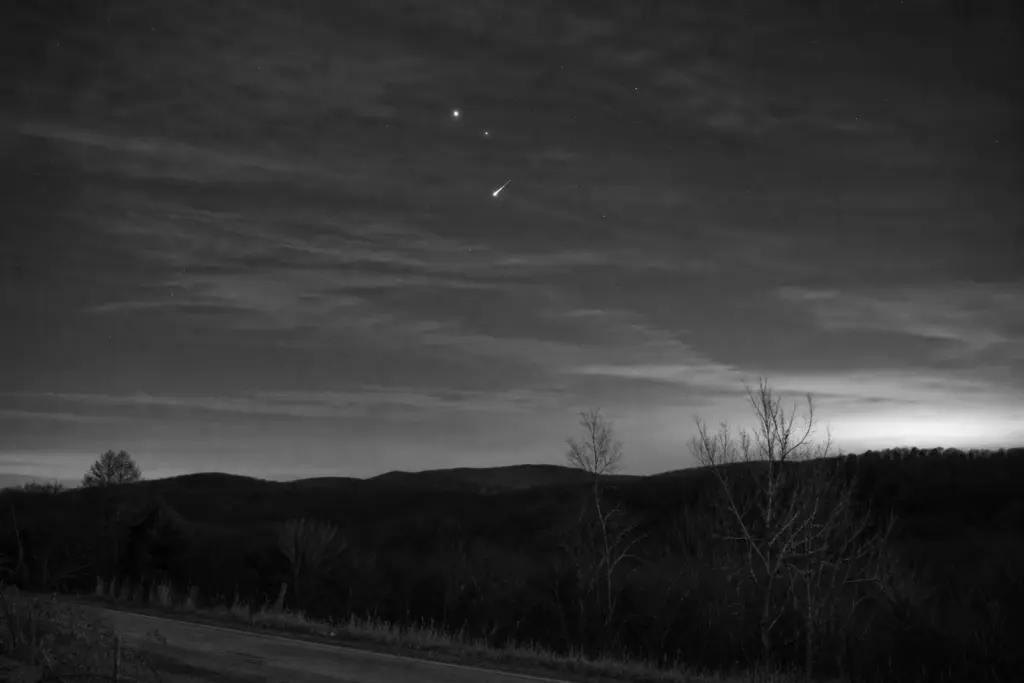
The Jasper Arkansas UFO sighting January 14 2020 centers on an unusual reported sequence: multiple small lights followed by what the witness described as a turning fireball. Those details are worth examining precisely, but they are not, by themselves, proof of an extraordinary craft or event.
This article treats the account as a historical witness report with defined evidentiary limits. It will separate the original or closest available report from later retellings, reconstruct the claimed order of events, and distinguish direct observation from interpretation. A light that appears to turn can reflect an object’s path, changing aircraft orientation, perspective, or an incomplete description; “fireball” likewise describes appearance, not origin.
The analysis then tests conventional categories, including meteors, aircraft, satellites, and viewing effects, against the reported behavior rather than relying on labels. It also identifies the corroboration that would materially strengthen an identification, such as independently recorded imagery, precise timing, or matching external records. Where those materials are absent, the appropriate conclusion is narrower: unidentified on the available record, not confirmed as anything beyond the reported observation.
What Was Reported Over Jasper, Arkansas on January 14, 2020
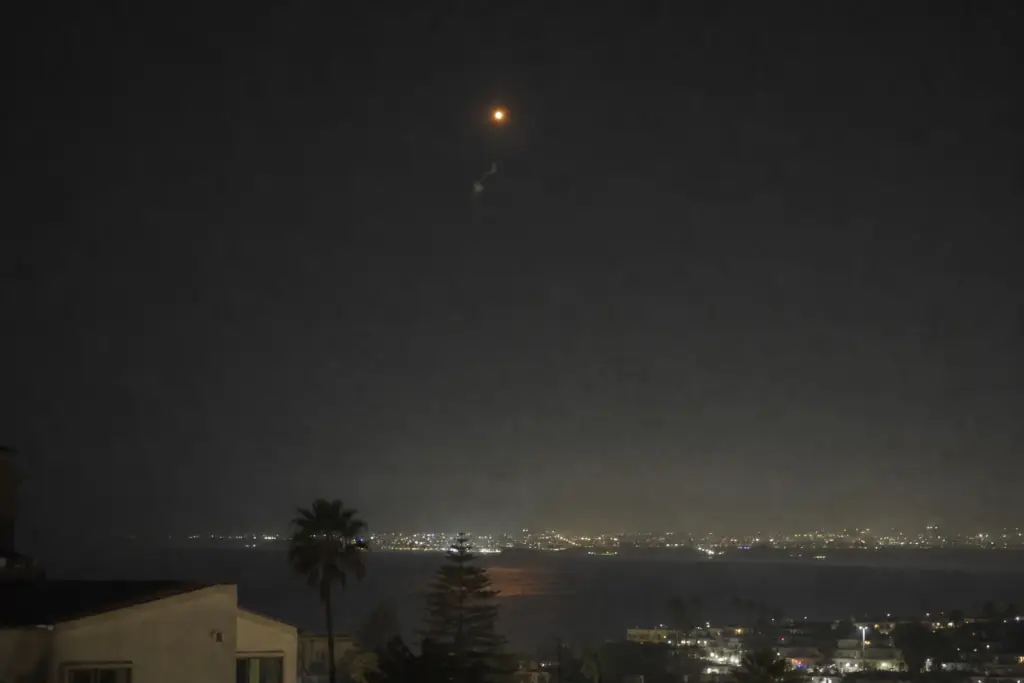
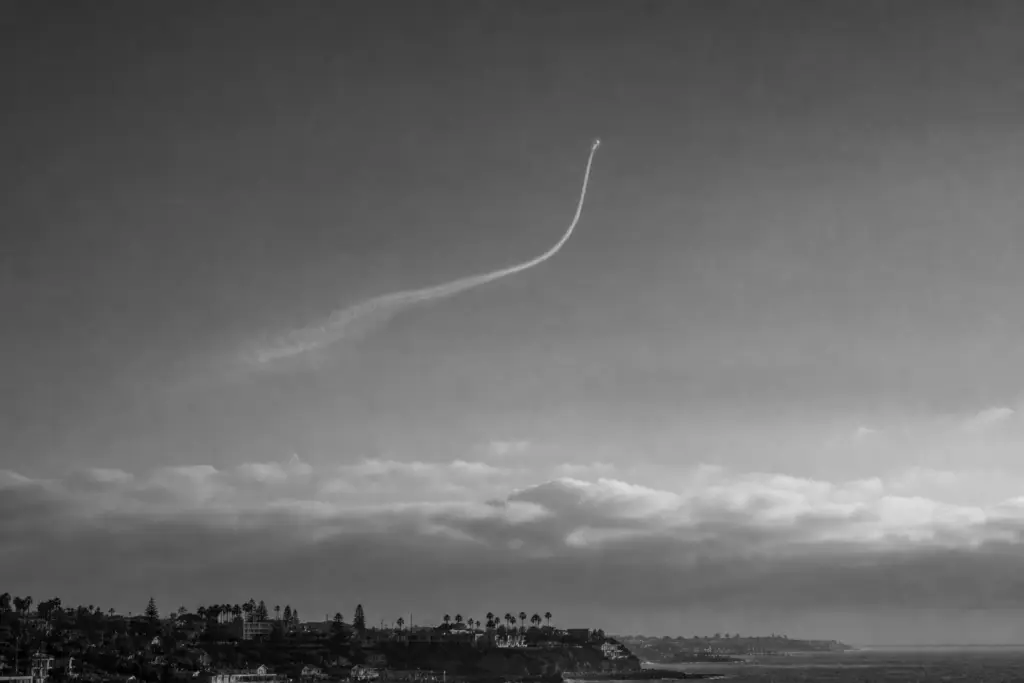
The account is dated January 14, 2020, and places the observation over Jasper, Arkansas. Its central description has two elements: the witness reported “multiple small lights” and also described a “turning fireball.” The available wording does not establish whether the fireball was one of the small lights, appeared after them, or was a separate object seen during the same observation.
Those are direct-report details, not independently established measurements. No precise time, viewing direction, duration, altitude, distance, color sequence, or weather conditions are included in the material available here. The record also does not identify whether one person observed the event or whether there were multiple independent witnesses. That distinction matters: several people reporting the same event independently can test a shared observation, while a single account preserves only one observer’s perspective.
No photograph, video, radar return, meteor-network match, aviation record, police report, or physical trace has been provided for this Jasper report. Later labels such as “UFO” add an interpretation but do not supply those missing details. The fact-focused question is therefore limited: what did the witness describe, and which ordinary explanations can or cannot be compared with that description? On the available record, the observation remains a reported sighting rather than a documented identification.
What the Available Record Can, and Cannot, Establish
Provenance is the first checkpoint. The material available for this article does not identify a report platform, submission date, archive date, report number, or preserved original-text link. The wording can therefore be treated only as a minimal witness account: it records the location, date, a reference to “multiple small lights,” and a “turning fireball,” but does not let readers trace those phrases through an authenticated submission history.
Later reposts, summaries, and commentary would not independently corroborate the event if they merely repeat that account. The distinction between a reported observation and an independently corroborated incident is practical: stronger external material would include contemporaneous local reporting, a separately submitted witness statement, original photo or video files with capture metadata, or an independently time-stamped instrumental record. None is attached to the present case file.
The difference is practical. An image shared without its original file cannot establish its capture time or location; a radar track or aviation record could test whether aircraft were present only if the sighting had a defined time and direction. A meteor-network comparison similarly needs a sufficiently precise observation time and viewing location to test a reported path against recorded fireballs. The available description provides neither.
No named witness, official finding, police record, meteor correlation, or verifiable media item accompanies the report. The documented core is narrow: someone reported lights and a fireball-like object over Jasper on the stated date. Whether those terms describe one object, several objects, an optical impression, or separate events remains ambiguous. The Jasper Arkansas UAP sighting January 14 2020 is unidentified on the available record, not because ordinary explanations have been excluded, but because the record is too limited to test them decisively.
Reconstructing the Multiple Small Lights and the Turning Fireball
A usable event timeline begins by separating what the short wording actually describes from details it does not supply. “Multiple small lights” establishes only that the observer perceived more than one light source. It gives no count, spacing, pattern, or indication of whether the lights held a formation, travelled together, or moved independently.
The phrase “turning fireball” should remain separate from those lights unless fuller original wording explicitly connects them. It could describe a later visual event, an apparent path change by one bright object, or a single impression in which several lights and a brighter object were perceived together. The surviving account provides no order of appearance, interval between observations, or total duration from which to choose among those readings.
“Turning” describes apparent motion, not a measured maneuver. A real change of heading is one possibility. So are viewing-geometry effects: an object moving toward or away from the observer, passing behind a ridge or other foreground reference, or changing brightness rapidly can appear to bend or reverse course. No stated compass direction, elevation above the horizon, or fixed reference point, such as a road, ridge, or building, allows the reported turn to be reconstructed.
Key descriptive fields remain blank: the lights’ color and brightness; the fireball’s color, size, trail, speed, and duration; any sound; direction of travel; and weather, cloud cover, or local visibility. No second observer supplies an independent event timeline. The multiple lights over Jasper, Arkansas, in 2020 and the reported turning fireball are therefore distinct witness-described elements whose relationship remains unknown rather than established.
Could the Turning Fireball Have Been a Meteor or Bolide?
A meteor hypothesis depends on motion and timing, not on the label “fireball.” A meteor is the visible streak made when a meteoroid enters the atmosphere; a bolide is an unusually bright meteor that may flare, break into fragments, or leave a glowing persistent train after the main object vanishes. The strongest visual pattern is normally a brief, rapid path that appears broadly straight against the background sky. Fragmentation can create several points of light, but those points would be expected to follow the same general track rather than display organized, independent movement.
For the Jasper fireball sighting, a sudden bright appearance and any unrecorded flash or breakup would be compatible with a meteor. A perceived bend does not automatically exclude one: perspective, a fragment separating, or the fading of one part of a luminous trail can alter the apparent path. But a clearly observed, sustained turn, meaning continued travel on one heading followed by continued travel on another, would fit a simple meteor trajectory poorly. An extended observation lasting well beyond the brief luminous passage would also require a different account, such as a persistent train rather than a body visibly changing course.
The available wording supplies neither a duration nor a trail, flare, breakup, sound, or independent trajectory. It also does not establish that the multiple small lights moved with the brighter object. Consequently, meteor versus UFO is not a choice the record can resolve: a meteor remains a plausible partial explanation for a brief bright event, while coordinated lights or a substantiated maneuver would weaken it. No meteor-network correlation is available here to connect the reported January 14 event to a documented regional bolide.
Could Aircraft, Satellites, or Viewing Conditions Explain the Lights?
Aircraft remain a workable explanation for some, but not all, of the reported features. Aircraft lighting can present as more than one point: navigation lights occupy different positions on the airframe, while a flashing anti-collision beacon can make the arrangement seem to change as the aircraft banks. A genuine turn would also alter which lights face the observer. That fit becomes stronger if lights blinked at a regular interval and remained visible for minutes; the Jasper wording supplies neither behavior, duration, nor direction, so it cannot support a specific aircraft match.
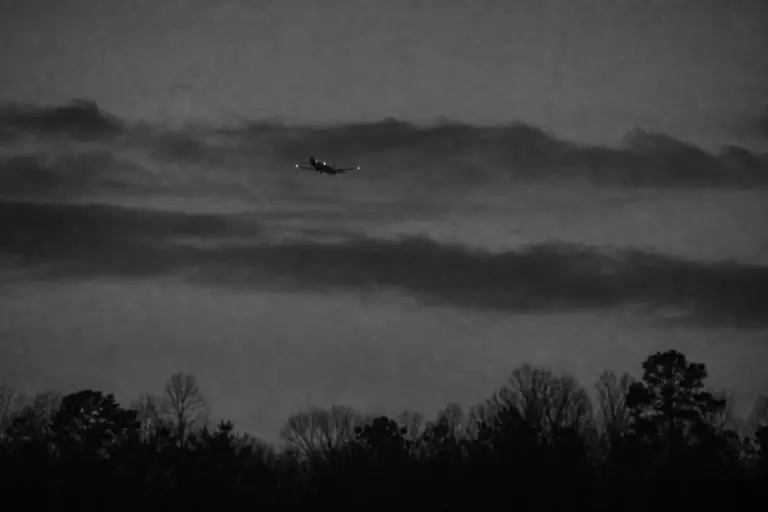
A distant airplane viewed nearly head-on can look like a bright, almost stationary point before seeming to slide sideways as its heading changes. At distance, separate lights may merge, disappear, or reappear with haze and changing viewing angle, creating an impression of changing spacing. A helicopter could likewise turn and carry several lights, but its lower speed, distinctive flash pattern, sound, and prolonged visibility would be useful discriminators. None is recorded here. The claimed fireball appearance is therefore not well explained by aircraft lighting alone, though the sparse description does not rule aircraft out.
Satellites generally appear as steady lights crossing the sky at a smooth pace; a group can be perceived as multiple evenly spaced points. That makes a satellite train a possible fit only if the lights moved together, stayed steadily illuminated, and were observed over an extended interval. It is a weak fit for a bright object that visibly turned, because an orbital pass would not ordinarily produce a sustained angular change against the stars. No pass time, sky direction, count, spacing, or observation length survives to test this possibility.
Stars and planets offer still less direct agreement because they do not traverse the sky over a short observation. Yet an observer shifting position, scanning between fixed lights, or viewing through thin cloud can experience apparent motion, changes in brightness, and false grouping. These viewing effects could contribute to an unidentified aerial phenomenon report, but cannot be assigned as its cause without the missing visual context. On the available record, aircraft, satellites, and perception-based explanations each remain possible categories rather than responsible identifications.
What Evidence Would Be Needed to Identify the Observation
A usable identification begins by turning a remembered sky scene into a time-and-geometry record. The essential starting point is a timestamp narrowed to the minute or second, an observing location precise enough to map, and the direction of travel or appearance expressed as a compass bearing (azimuth) and height above the horizon (elevation). Those details would allow an analyst to compare the reported path with aircraft routes, satellite passes, and a potential meteor trajectory rather than merely compare descriptions.
Original high-resolution photographs or video would be more valuable than reposted clips or screenshots. The unedited files may retain device metadata, including creation time, location settings, exposure length, and camera model. A single video can show motion but can be misleading without a fixed reference such as rooftops, trees, or stars. Two synchronized videos from separate nearby locations are stronger: their differing viewing angles can constrain whether the lights were distant, nearby, separate objects, or parts of one event.
Independent reports must be time-aligned, not simply repeated later. Witnesses who separately recorded the same minute, bearings, duration, color, flashing pattern, and sound, or lack of sound, could distinguish a common sky event from an isolated interpretation. Flight records could test aircraft presence; meteor-network detections could test a fireball; and local weather data could establish cloud, haze, wind, and visibility conditions relevant to skywatching evidence.
For this case, an unidentified classification means the surviving information cannot support a reliable identification. It does not demonstrate an extraordinary origin; it identifies the limits of the record and specifies what would have been needed to resolve it.
Bottom Line: A Reported Event, Not a Confirmed Origin
The defensible endpoint is narrow. The available record supports only a reported observation over Jasper on January 14, 2020: multiple small lights were described, and a fireball-like object was separately described as turning. It does not establish that the lights and fireball were the same object, that either made a measured maneuver, or that either had an unusual origin.
Conventional possibilities remain open, but none can be selected confidently. Aircraft lighting and a change of heading could account for apparent multiple lights or a turn; a meteor could account for a bright fireball-like appearance, though a documented curved path would be a weaker fit. Satellites and viewing effects are also possible for lights, but the sparse wording cannot test their timing or geometry. Without traceable original media, a precise time and direction, independent witnesses, or matching aviation, meteor, weather, or astronomical records, the Jasper Arkansas UFO sighting January 14 2020 remains unidentified on the available record, not confirmed as extraordinary.
Broader debates over UFO disclosure or UAP disclosure concern public records and institutional reporting; they do not independently authenticate this particular Jasper account. Later retellings may preserve the claim, but they cannot supply the missing corroboration.
What Can Be Said About the Jasper Lights Report
The most useful conclusion is an evidentiary one: the surviving account preserves two descriptions, not a documented flight track. “Multiple small lights” is the direct witness claim; the “turning fireball” is a separate direct claim unless fuller original wording establishes a connection. Later labels that call either feature a UFO are interpretations, while claims of a specific craft, secret activity, or non-human origin would be unsupported speculation.
The report cannot discriminate among ordinary possibilities. A meteor can fit a sudden bright fireball-like appearance but fits a true controlled turn poorly; an aircraft can fit several visible lights and an apparent change in direction, but the account gives no blinking pattern, duration, or route; satellites and perceptual effects remain possible for the smaller lights but cannot be tested without their spacing, speed, and bearing. No traceable original report, timestamp, imagery, radar, meteor correlation, aviation match, or time-aligned independent witness account is available here. The Jasper observation therefore remains unidentified on the available record. That classification describes missing resolving evidence, not an extraordinary explanation. A precise location and time, original media with metadata, and independent records from the same interval would be needed to make a stronger identification.
Frequently Asked Questions
What was reported over Jasper, Arkansas on January 14, 2020?
A witness report described multiple small lights and a separate fireball-like object that appeared to turn over Jasper, Arkansas. The available record does not establish whether these were the same object, separate events, or how long they were visible.
Are there official records or photos of the Jasper Arkansas UFO sighting?
No official record, named witness, police report, radar return, aviation match, meteor-network correlation, photo, or video has been provided. The report also lacks a precise time, viewing direction, duration, altitude, and weather conditions.
Could multiple lights and a turning fireball be a meteor?
A meteor or bolide can produce a brief bright fireball, flare, breakup, and multiple fragments following a broadly similar path. A sustained, clearly observed change from one heading to another would fit a simple meteor trajectory poorly.
Can aircraft lights appear to turn or change direction at night?
Yes. Navigation lights, flashing anti-collision beacons, banking, and a real heading change can make an aircraft’s lights appear to shift, merge, disappear, or turn, especially when viewed from a distance.
What evidence should you look for to identify lights or a fireball in the sky?
Record the time to the minute or second, exact observing location, compass bearing, elevation above the horizon, duration, color, flashing pattern, sound, and direction of travel. Original high-resolution video or photos with metadata, plus independent witnesses and matching flight, meteor, satellite, or weather records, provide the strongest identification evidence.