Luna’s UAP Transparency Hearing 2025: Firsthand Accounts Before House Task Force
Explore the UAP congressional hearing 2025 record: confirmed witnesses, firsthand accounts, oversight limits and unresolved claims.
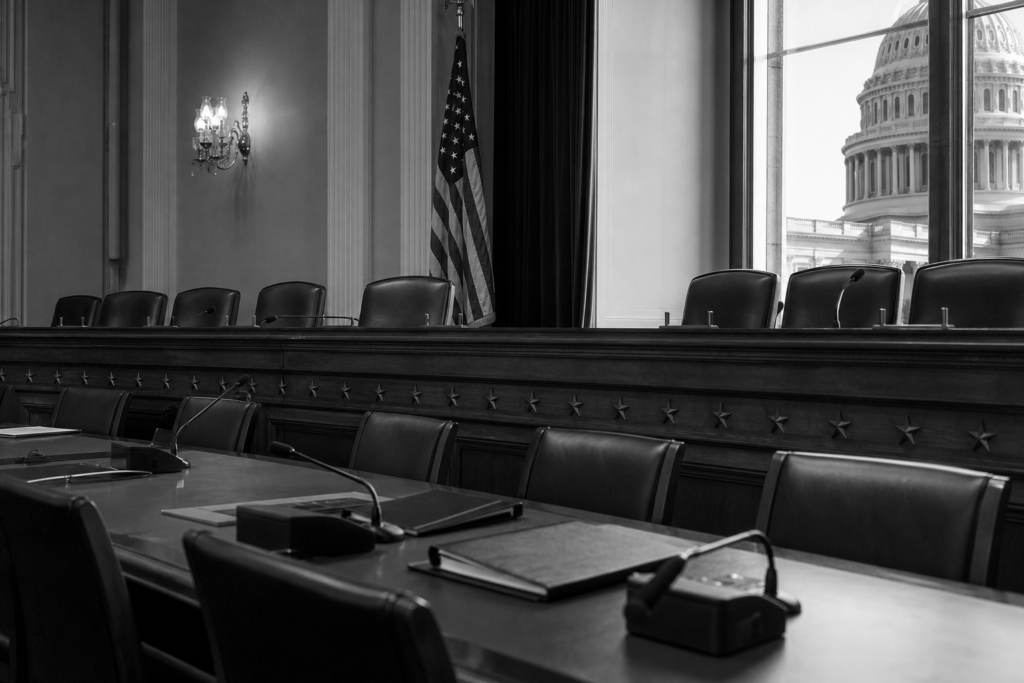
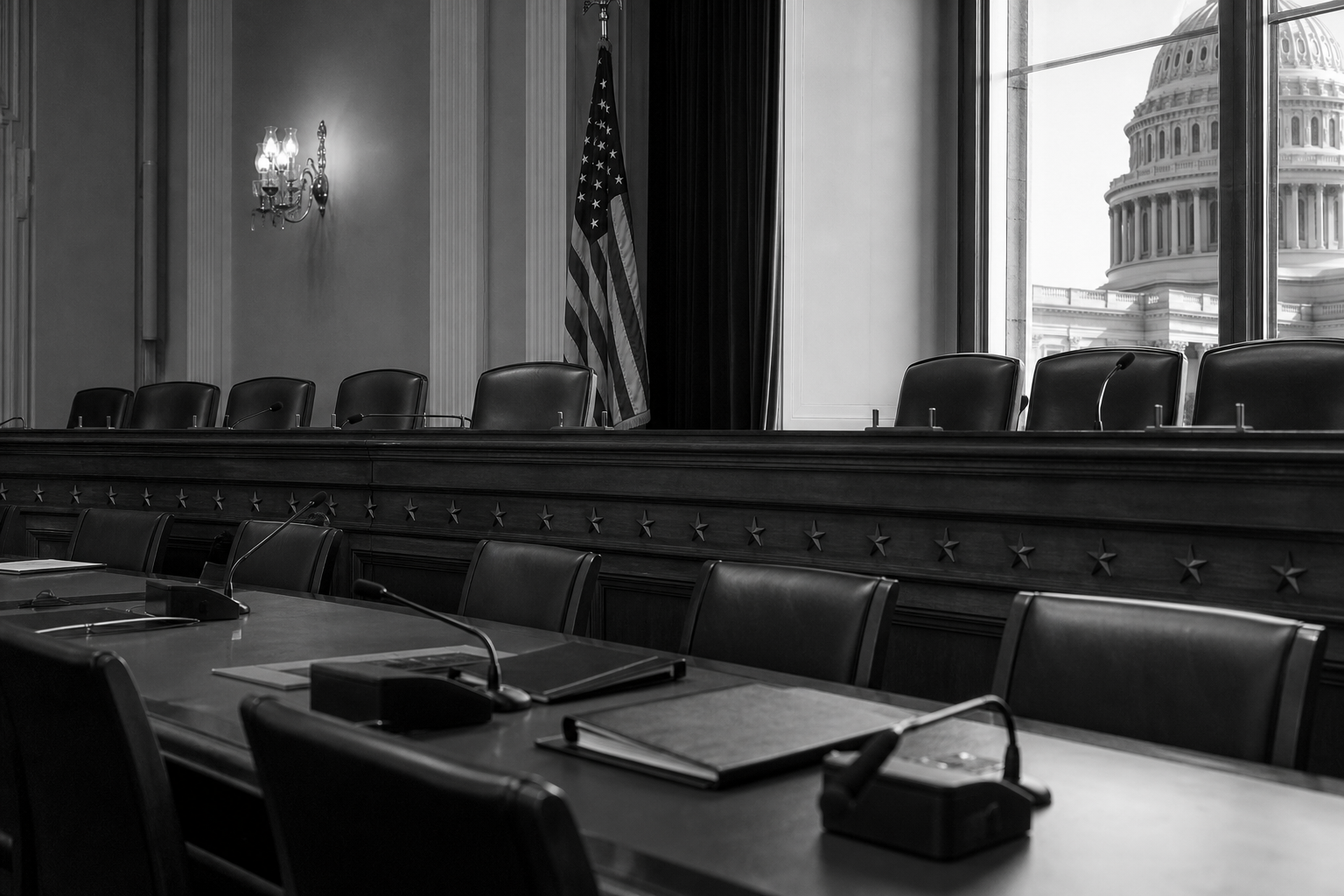
The first checkpoint is institutional: a clip, reposted allegation, or reference to a “House task force” does not by itself establish that Congress held a formal hearing. The public record must show the event’s date, format, sponsor, participants, and accessible proceedings before its significance can be assessed.
This examination of the UAP congressional hearing 2025 associated with Rep. Anna Paulina Luna begins with a narrower question: what do firsthand accounts and accessible official materials actually establish? It first determines whether the event was a formal committee hearing, a member-led task-force session, a press event, or an announced but undocumented proceeding. Those labels are not interchangeable: a committee hearing ordinarily creates a defined institutional record and formal oversight setting, while a member-led event may carry political visibility without the same procedural authority.
From there, the analysis separates direct observation from a witness’s report of what others said, and both from allegations that remain uncorroborated or inaccessible because they are said to involve classified information. Public video, written testimony, House notices, and agency records carry more weight than social-media summaries. The aim is not to dismiss unresolved reports, but to identify precisely what this event added to UAP transparency, and what it did not demonstrate.
What the Public Record Confirms About Luna’s 2025 UAP Transparency Event
The available materials for this review do not establish a completed, publicly docketed House hearing in 2025 under the title “Luna’s UAP Transparency Hearing,” nor do they establish an official date, room, witness list, video archive, or transcript for such a proceeding.
That absence matters because a formal committee hearing is an institutional act: it is convened by a committee or subcommittee, normally has an official notice and member roster, and creates a public record that lets readers assess testimony in context. A member-led task force is different. It can organize inquiries, meetings, and public advocacy, but it is not itself a standing House committee and does not automatically exercise committee subpoena, hearing, or reporting procedures.
Rep. Anna Paulina Luna’s 2025 UAP task-force and disclosure activity therefore should not be treated as interchangeable with the House Committee on Oversight and Government Reform or any other formal House panel. Until an official House notice, Clerk record, committee page, or complete primary video identifies a specific event, the careful designation is an associated or claimed UAP transparency event, not a verified congressional hearing.
That finding does not resolve the underlying UAP allegations. It sets the evidentiary boundary for the sections that follow: claims about participants, firsthand testimony, classified briefings, or oversight outcomes require a traceable public record before they can be attributed to a 2025 House proceeding.
Who Was in Charge, and What Congressional UAP Oversight Can Actually Do
Institutional authority determines whether an event can compel answers or merely solicit them. A member-led task force can coordinate members, spotlight claims, request meetings, and press agencies for information; it does not, by its label alone, become a House committee with the procedural tools attached to committee action.
A formal House committee or subcommittee hearing is conducted under that panel’s rules and jurisdiction. That format can place witnesses under oath, preserve opening statements and questioning in an official record, and support subpoenas when the committee authorizes them. The House Oversight Committee is a standing committee with broad oversight functions; a select committee is a separate House-created body whose authority, membership, duration, and investigative powers depend on the resolution establishing it. The practical difference is follow-through: a task force can advocate, while an authorized committee can build a record for demands, referrals, legislation, or further hearings.
AARO’s executive-branch role, Inspectors General, and classification officials occupy different roles outside Congress. AARO can receive and analyze UAP-related information; an Inspector General can examine allegations within its jurisdiction; executive-branch classification authorities control access to protected material. None turns an unrecorded public appearance into independently tested evidence. A classified briefing may inform members, but without a releasable record it cannot let the public assess the underlying material.
For this House UAP hearing claim, strong signals would include a convening authority, witness notices, an oath or transcript record, and identified follow-up action. Their absence limits what can responsibly be described as congressional oversight or UFO disclosure.
The Witness Roster: Separating Direct Observation From Reported Claims
A witness roster is not available for this claimed 2025 event. Because no official notice, video, transcript, written witness testimony, or oath record has been identified, no individual can responsibly be listed as a confirmed witness before Rep. Anna Paulina Luna’s task-force-associated proceeding. That includes people whose names may circulate in posts, clips, or summaries: an appearance or an attributed remark is not the same as a publicly recorded role in a House proceeding.
The useful test is an evidence ladder, which measures what a statement can establish rather than judging the speaker’s character. A direct observation is a firsthand account of what the witness personally saw, heard, recorded, handled, or did. Firsthand professional involvement covers work the witness personally performed, such as receiving a report, operating a sensor, or participating in an investigation, without turning the underlying event into a personal observation. Documentary evidence is a record or exhibit that readers can inspect and trace to its origin.
- Direct observation: “I observed an object,” with the setting, time, and means of observation stated.
- Firsthand professional involvement: “I processed the report” or “I reviewed the data,” which establishes the witness’s role but not necessarily the event’s ultimate explanation.
- Documentary evidence: a dated report, image, log, or other exhibit whose provenance can be assessed.
- Sworn secondhand reporting: “An official told me” or “I was briefed that.” Sworn testimony can make the witness accountable for accurately relaying what they were told, but it does not convert another person’s assertion into a firsthand account.
- Political or interpretive assertions: conclusions about secrecy, intent, or non-human origin. These may frame an oversight argument, but require supporting evidence to establish the conclusion.
Until a verifiable roster and record emerge, the UAP congressional hearing 2025 should not be described as having produced confirmed firsthand witnesses. The central distinction is straightforward: congressional UAP testimony shows that a credible witness may be reliable about what they were told, yet still lack personal knowledge of the event or material being alleged.
What the Firsthand Witnesses Actually Said
The decisive fact for this section is that there is no named, confirmed witness to report by name. The public materials identified for the claimed 2025 Luna task-force-associated proceeding contain no witness opening statement, timestamped question-and-answer exchange, sworn testimony, or authenticated exhibit. As a result, no individual’s direct observation of a UAP, aircraft, sensor display, or physical object can be attributed to this event.
Nor is there a record linking a particular professional role to particular underlying material. A pilot’s visual account would require the date, location, flight conditions, and contemporaneous report; a sensor operator’s account would require the system involved, its track or recording, and the relevant limitations; an analyst’s account would require an identifiable image, radar record, flight log, or case file. None of those witness-to-record connections appears in the available record for this claimed proceeding.
That distinction matters for evaluating UAP sightings. Seeing an object from an aircraft is not the same thing as reviewing a radar track, and reviewing a radar track is not the same thing as determining what produced it. A strong public account would let readers compare the visual observation with time, altitude, weather, flight-path, and sensor information; a weak account supplies only an unexplained conclusion without those testable details.
No attributable witness from this event described a barrier to aviation reporting, a specific reporting system they used, or a firsthand encounter with classified UAP files. Reporting barriers concern whether pilots, controllers, and other personnel can submit incident information; classified-access questions concern whether an official could inspect restricted records. Neither category, by itself, identifies an object or establishes an extraordinary explanation.
The unanswered evidentiary question is therefore concrete: will an official notice, video, transcript, written testimony, or exhibit emerge that identifies a witness and permits their account to be tested? Until then, claims tied to exotic material, retrieval programs, or non-human intelligence cannot be presented as testimony from Luna’s purported 2025 event.
What the Event Did Not Establish: Non-Human Intelligence, Retrievals, and Cover-Up Claims
An unexplained observation is not a determination of origin. It may justify further investigation, but it cannot by itself establish non-human intelligence, a recovered craft, or a reverse-engineering effort. The same limit applies to an oversight concern: restricted access, an unanswered records request, or a witness’s belief that information was withheld may identify a question for Congress without demonstrating the existence of the underlying program.
Claims of crash retrievals or hidden technology programs require a different evidentiary threshold. A strong case would connect an identified object or material to authenticated records, preserve a verifiable chain of custody from recovery through testing, and include direct witnesses whose duties gave them relevant access. It would also permit independent examination of the material, the laboratory methods, and the conclusions drawn from them. A recollection of what another official reportedly said, even if sincerely offered, does not supply those links.
“Reverse engineering” is especially easy to overstate. The term implies that an organization possessed a physical artifact, characterized it, and attempted to reproduce or understand its design. Establishing that claim would require records tying a specific artifact to a program, personnel with firsthand operational knowledge, and findings capable of being assessed beyond the program itself. Neither a reported sighting nor an assertion that material is classified demonstrates that sequence.
A government UFO cover-up allegation similarly requires more than an absence of public disclosure. Concealment would need evidence of a known fact, an identifiable decision to suppress it, responsible officials or offices, and records or corroborated firsthand accounts showing the connection. Until such evidence is publicly testable or independently confirmed through an official finding, alien disclosure claims remain allegations rather than conclusions produced by this event.
What the Hearing Established for UAP Oversight and Disclosure
Oversight becomes measurable only when it leaves a traceable action behind. For this claimed 2025 event, no identified public record supports describing a records request as sent, a secure briefing as scheduled or completed, a referral as made, or an agency as having accepted a new reporting obligation. Nor is there an identified bill, amendment, committee report, or follow-up statement that converts the event into an enacted UAP disclosure requirement.
Those categories are not interchangeable. A member’s request can place political pressure on an agency, but it does not itself compel production. A proposed UAP transparency measure signals a policy objective; it changes obligations only if it advances through the legislative process and becomes law. An agency commitment is stronger when it specifies what will be provided, to whom, and on what timetable; a completed release or briefing is stronger still because it can be evaluated against the promise.
Meaningful transparency need not mean publishing every operational detail. A public release can disclose an incident’s date, handling process, analytical conclusion, and unclassified evidence. A secure briefing allows appropriately cleared lawmakers to examine information whose disclosure could expose aviation vulnerabilities, intelligence collection, or defense capabilities. The useful test for UAP oversight is whether the two tracks connect: Congress can assess restricted material in closed session while requiring agencies to explain publicly, at the greatest feasible level of detail, what was reviewed and what remains unresolved.
How to Verify the Record and Follow the Next UAP Developments
Build a record trail from the claimed event’s identifying details: a House committee page or Rep. Anna Paulina Luna’s official House page should name the date, convening body, room or remote format, participating members, and witnesses. Those five fields distinguish a formal proceeding from a press appearance, private meeting, or reposted clip.

- Use an official hearing transcript, if a House panel or the Government Publishing Office publishes one, to match a quotation to a named speaker, a question number or exchange, and its context. Written testimony records prepared assertions; video captures live corrections and qualifications.
- Watch the archived House hearing video for the opening gavel, member introductions, witness oath, and any exhibits discussed on screen. A short clip without those markers cannot establish the proceeding’s full format or participant list.
- Compare specific incident claims with Department of Defense releases and AARO reports, which can identify an incident date, sensor context, analytical finding, or stated limitation.
- Use Congress.gov to distinguish an introduced UAP bill, amendment, or resolution from a measure that received a recorded action or became law; the entry lists its text, sponsors, and latest action.
For UFO news, dated letters, authenticated exhibits, and released UAP records carry more evaluative weight than claims attributed to unnamed officials or inaccessible classified material. New primary-source releases could change the assessment, but this claimed 2025 event has value only insofar as its date, participants, testimony, and follow-up can be located and evaluated.
The Bottom Line on Luna’s 2025 UAP Event
An independently testable claim is the threshold that separates a transparency event from a lasting evidentiary development. The record reviewed here does not establish a publicly documented House hearing in 2025, confirmed witness testimony, or formal follow-up action tied to the claimed event.
That does not make every UAP report unimportant. A firsthand account can establish that a person observed an event, filed a report, or encountered an unresolved discrepancy in official handling. It cannot, without corroborating sensor data, records, physical evidence, or independently testable analysis, establish an extraordinary origin for what was observed. Likewise, an allegation about restricted information can identify an oversight question without proving a concealed program.
The value of a future UAP congressional hearing 2025 record would depend on what it makes assessable: a named convening body, sworn witnesses, complete video and transcript, exhibits, agency answers, and identifiable follow-up. Those materials let the public distinguish a request from a response, a claim from corroboration, and an unresolved case from a conclusion.
That is the practical standard for UAP oversight and disclosure. Strong developments produce accessible records and accountable next steps; weak ones rely on forceful assertions that cannot be independently examined. Until the missing institutional record emerges, this claimed event should be treated as an unverified transparency initiative, not evidence that Congress established non-human intelligence, retrievals, or a government cover-up.
Frequently Asked Questions
-
Was the Anna Paulina Luna UAP task force event an official House hearing?
No publicly available record establishes it as a formal House hearing. There is no verified official date, room, witness list, transcript, video archive, committee notice, or Clerk record for a completed 2025 proceeding under that title.
-
What did witnesses say at the 2025 UAP transparency hearing?
No confirmed witness statements are publicly available for the claimed event. No authenticated opening statements, sworn testimony, timestamped questioning, or exhibits identify a witness’s direct UAP observation or professional involvement.
-
Which UAP claims count as firsthand evidence?
Firsthand evidence includes a person’s direct observation of an object, sensor reading, material, or event, with details such as time, location, and method of observation. Reviewing a report or relaying what another official said establishes professional involvement or secondhand reporting, not direct knowledge of the underlying event.
-
What is the difference between AARO and Congress’s UAP oversight role?
AARO is an executive-branch office that receives and analyzes UAP-related information, while Congress conducts oversight through authorized committees and legislation. A formal House committee can create an official hearing record, take sworn testimony, and authorize subpoenas, whereas a member-led task force can advocate and request information but has no automatic committee authority.
-
What should readers look for to verify a UAP hearing or disclosure claim?
Look for an official House or committee notice naming the date, convening body, location or format, participating members, and witnesses. Strong verification also includes a full video showing the gavel and witness oath, an official transcript, written testimony, authenticated exhibits, and documented follow-up such as agency responses or legislative action.