Inside AARO: The Pentagon’s UFO Office
Learn how AARO UAP investigations work, what the Pentagon UFO office has found, and why unresolved cases and whistleblower claims remain disputed.
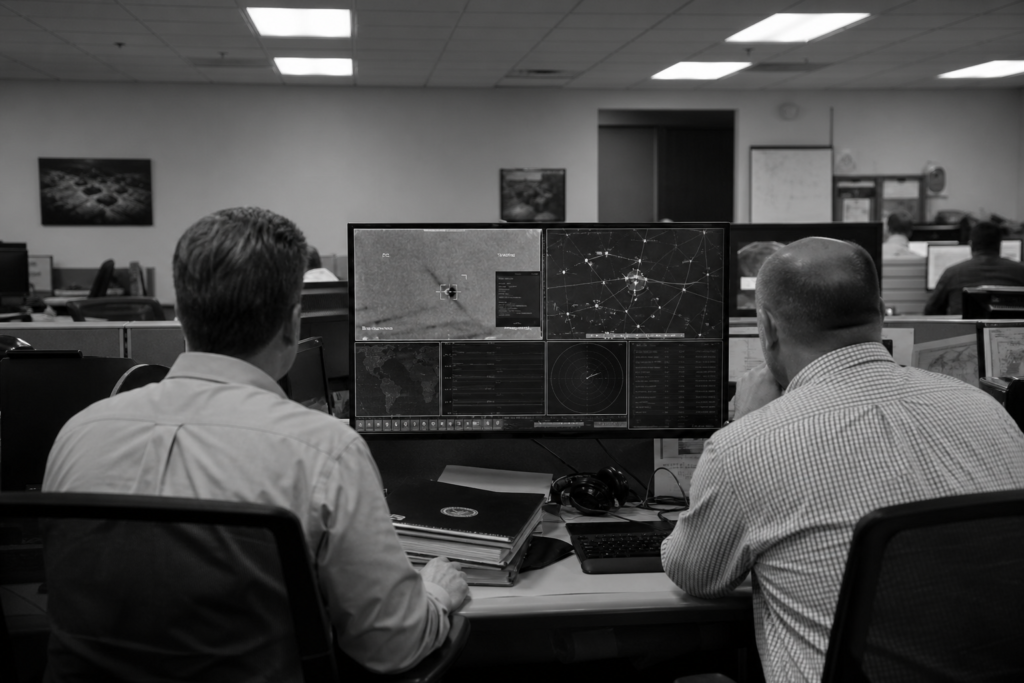
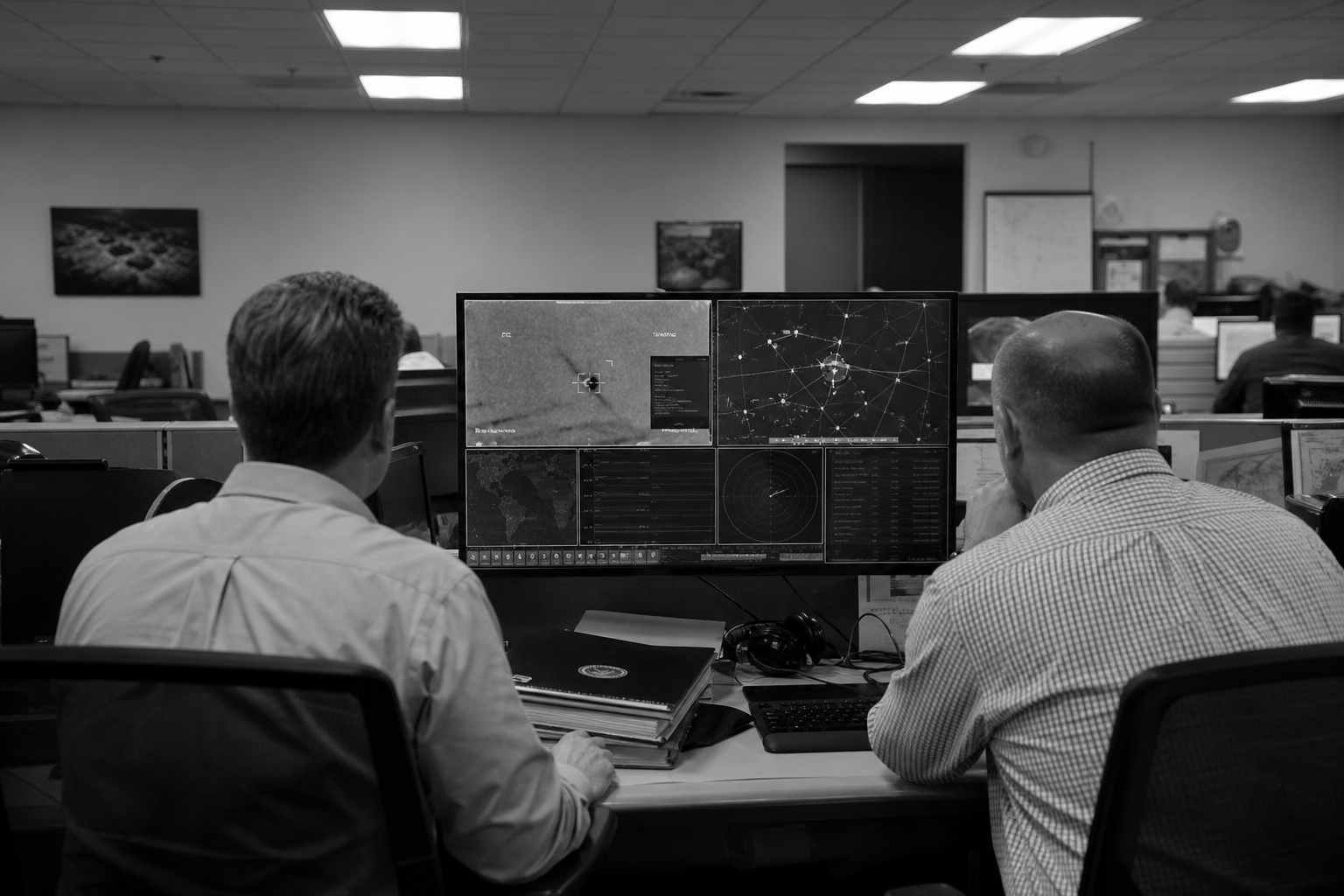
The common belief that every unresolved military sighting points to an extraordinary answer is incomplete: “unidentified” describes the state of the available evidence, not the nature of the object. That distinction has put AARO UAP work at the center of renewed congressional, media, and public arguments over UFO disclosure. AARO, the Pentagon’s All-domain Anomaly Resolution Office, is the federal body created to coordinate examination of reports of unidentified anomalous phenomena across air, sea, space, and other domains. It replaced the narrower UAP Task Force framework, but it is not an independent public archive or a tribunal for extraordinary claims: it operates within the Defense Department while drawing on intelligence and military reporting systems.
A report may remain unresolved because its sensor data, imagery, timing, or surrounding context are incomplete; that alone does not establish an exotic aircraft, a hidden program, or non-human intelligence. Equally, a conventional explanation for one case does not settle every other report. This is the practical lens for reading AARO’s public case updates, historical assessments, and briefings.
This article examines what the Pentagon UFO office is legally required to do, how its investigative process and public reporting fit into congressional oversight, and what its published findings can, and cannot, support. It also addresses the central disputes: allegations of concealed crash-retrieval or reverse-engineering programs, whistleblower accounts, the limits imposed by classified information, and the gap between calls for fuller disclosure and the evidence AARO has publicly presented.
What AARO Is, and Why It Matters in the UFO Disclosure Debate
AARO sits at the junction of three systems that rarely offer the public the same view: military operations, intelligence collection, and congressional oversight. Its role as the Pentagon’s office for unidentified anomalous phenomena is to coordinate the federal assessment of such reports, bringing relevant information into a Pentagon-led process rather than leaving each service or agency to treat incidents in isolation.
That institutional position makes AARO more consequential than a clearinghouse for unusual sightings. Its official record consists of the material it chooses or is permitted to release, public reports, case updates, historical assessments, and testimony, not every datum held in classified channels. An unresolved file means the available record has not supported a conclusion; it is different from evidence for any particular extraordinary explanation. Public allegations, meanwhile, require their own evidentiary footing and should not be treated as findings merely because they concern programs AARO may be asked to examine.
The disclosure debate therefore turns partly on trust in process. Supporters see AARO as a mechanism for consistent investigation and accountable public communication where national-security concerns permit. Critics question whether a Defense Department office can fully expose alleged secrecy within the same national-security establishment. The useful test is narrower: what authority does AARO have, what evidence has it publicly described, and what questions remain outside the public record?
Why Congress Created AARO and What the Law Requires It to Do
Congress first replaced the Navy-led UAP Task Force framework in the fiscal year 2022 National Defense Authorization Act. Section 1683 required the Defense Department and the Director of National Intelligence to establish an Airborne Object Identification and Management Synchronization Group; the Pentagon subsequently organized the All-domain Anomaly Resolution Office in July 2022 as the broader successor.

The fiscal year 2023 NDAA then placed AARO’s mission in statute and widened its subject matter. Its remit is not limited to aircraft or visual sightings: it covers unidentified anomalous phenomena in air, sea, and space, plus transmedium objects, reported objects that appear to move between domains, such as air and water. That breadth matters because a report can involve military sensors, operational safety, intelligence collection, or possible foreign technology rather than a single service’s aviation issue.
The law assigns AARO several connected tasks: synchronize relevant Defense Department and intelligence-community efforts; establish reporting and information-sharing procedures; analyze incidents and available technical data; assess potential threats to U.S. military activities and national security; and coordinate review of relevant historical records. It also requires reports to congressional committees, including unclassified public-facing material where possible. A strong public finding therefore rests on identifiable data and an explained analytic basis; an unresolved report is simply one that has not met that threshold.
Statutory responsibility does not create unrestricted access to every government record. Classified compartments, an agency’s control of its own holdings, operational sensitivities, and lawful handling rules shape what can be shared and what can be released. Congressional oversight is the counterweight: lawmakers can require briefings, reports, and records-review work, while AARO must operate through the authorities and access channels available to it.
How AARO Investigates UAP Reports
An investigation is only as strong as the event record preserved at the time. A report should move from the operational or intelligence channel that received it into a case file containing the observer account, time and location, platform activity, weather, and available sensor data. A single pilot observation can flag a flight-safety concern; correlated radar, infrared, electro-optical, telemetry, or satellite information can test whether the apparent object’s position and movement were real, misread, or incompletely captured.
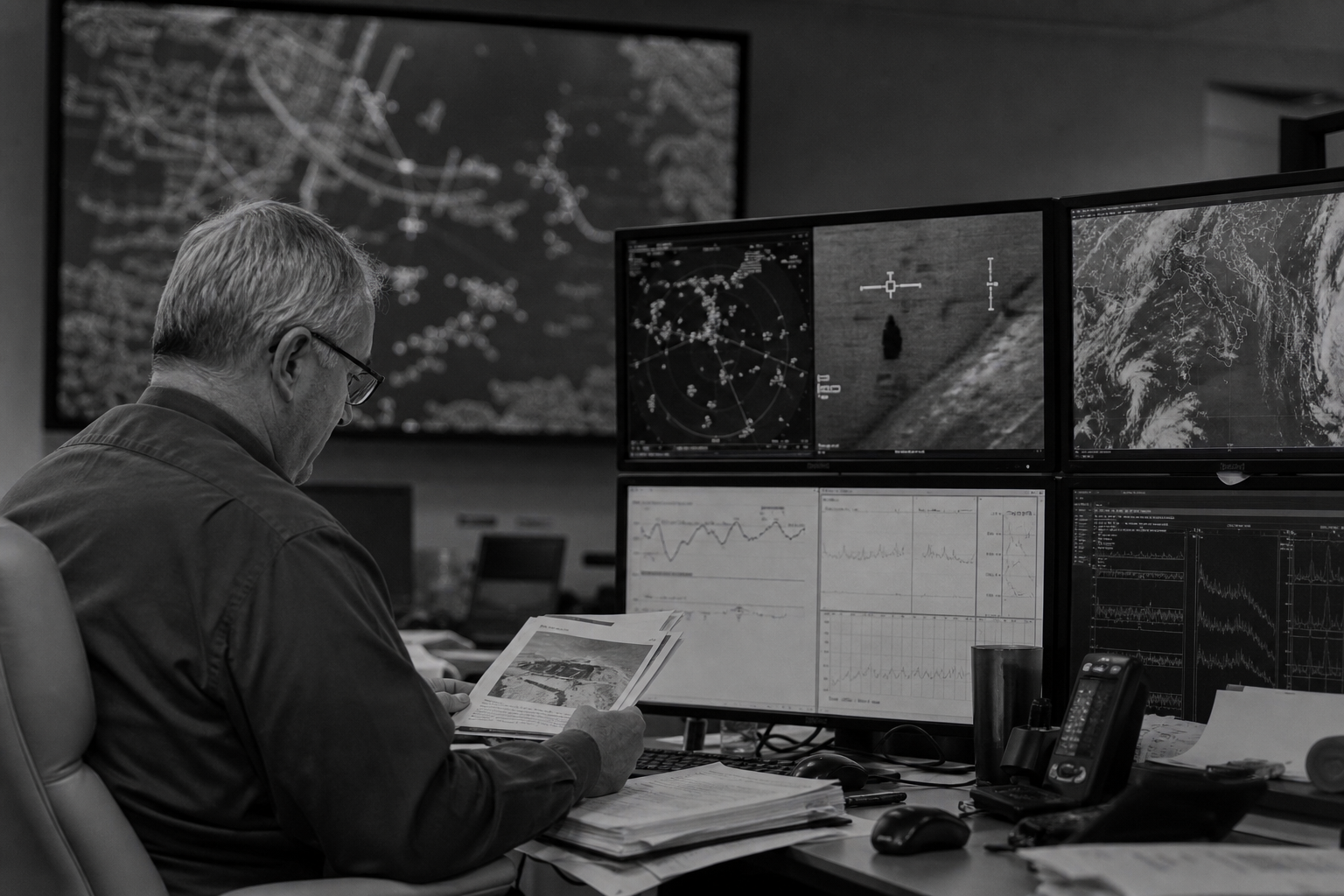
Analysts then compare the observations with contextual explanations. A balloon, drone, conventional aircraft, satellite, debris, or atmospheric effect can look anomalous when the viewer lacks range, speed, altitude, or a stable reference point. The central distinction is between an object that is genuinely unrecognized after adequate analysis and an incident whose available material cannot support a reliable identification. The latter may be unresolved because a sensor was poorly placed, data were not retained, imagery was compressed, or accounts conflict, not because the object demonstrated extraordinary capabilities.
That distinction also keeps the inquiry tied to operational risk. An unknown drone near a training range may raise counterintelligence and force-protection questions even if it never becomes a scientifically unusual case. A possible transmedium observation, one reported across air and water, requires especially careful correlation, since different sensors may be tracking different effects or objects. Resolution is therefore not a hunt for a preferred answer: it is a documented judgment about what the record can support, including the judgment that it cannot yet support one.
What AARO Has Publicly Found, and What Remains Unresolved
Public releases are most useful when they distinguish a solved identification from an unresolved record. A case can be resolved when the available imagery, sensor information, timing, and context support a conventional explanation. In that category, the relevant question is not whether an observer made an error, but whether the evidence can link the observation to something identifiable.
- Resolved with available data: public case summaries may identify balloons, drones, airborne clutter, astronomical objects, or a misidentification caused by perspective, sensor behavior, or incomplete contextual information. These explanations differ: a balloon or drone is a physical object with a plausible flight profile, while clutter or an astronomical object may be an apparent target created or exaggerated by the viewing conditions.
- Unresolved because the data are inadequate: an incident can remain unidentified when imagery lacks range or scale, relevant sensor records are absent, or accounts cannot be correlated. That status does not establish exceptional performance, non-human origin, or even the presence of a single physical object.
- Claims lacking verifiable evidence: this is a separate conclusion from an unresolved sighting. In its historical-review work, AARO has said it found no verifiable evidence supporting claims that the U.S. government had confirmed extraterrestrial technology or operated a concealed reverse-engineering program. That is a statement about the evidence available to its review, not proof that every allegation or historical report has been exhaustively settled.
Readers following UFO news or UAP news should treat published case totals, resolutions, and evolving caseload as dated snapshots rather than a permanent scoreboard. A case may be added, reclassified, or resolved after new material becomes available, and each AARO report’s publication date and reporting period determine what its numbers actually cover. The stronger signal is a release that explains the underlying evidence and analytical basis; a bare unresolved label is the weaker one.
Crash-Retrieval Claims, Whistleblowers, and the Limits of AARO’s Conclusions
The dispute becomes sharper when the claim is not an unexplained observation but an alleged hidden program. Former intelligence officer David Grusch told Congress in 2023 that he had received information from people he described as having direct knowledge of crash-retrieval and reverse-engineering efforts involving alleged non-human intelligence. Journalists Leslie Kean and Ross Coulthart, advocates, and lawmakers including Representatives Tim Burchett and Anna Paulina Luna have argued that those accounts justify deeper investigation of a possible government UFO cover-up.
A crucial distinction is between testimony about what a witness personally handled, saw, or documented and testimony reporting what others said occurred inside classified programs. The first can potentially be tested against records, materials, locations, and corroborating witnesses; the second may still prompt investigation, but does not independently establish that a program or recovered technology exists. Public audiences cannot assess classified interviews or evidence that has not been released.
AARO’s March 2024 Historical Record Report findings reached the opposite institutional conclusion: its review found no verifiable evidence that the U.S. government possessed extraterrestrial technology or had confirmed concealed reverse-engineering programs. That conclusion describes what AARO says it could substantiate through its review; it is not proof that every allegation is false or that every relevant record has been publicly examined.
The gap between those positions explains why AARO remains contentious in the alien disclosure debate. Critics question whether a Pentagon office can gain access to deeply compartmented holdings, protect sources, and investigate its own department with sufficient independence. AARO maintains that it has pursued claims through authorized channels and found no corroborating evidence. Until competing assertions are supported by inspectable evidence or authoritative findings, neither a confirmed crash-retrieval program nor its alleged absence should be treated as settled fact.
Who Can Report UAPs, Where the Records Go, and How the Public Can Check AARO
A sighting report, an allegation about a restricted program, and a public tip belong in different channels because they create different kinds of records. Military and government personnel can preserve operational details, such as sensor outputs, mission context, locations, and classified identifiers, through a secure reporting channel within their service, agency, or command structure. That route is designed to protect sensitive information while allowing the Department of Defense and relevant intelligence elements to route material for assessment.
Members of the public do not have an equivalent classified-reporting pathway into AARO. A public account may draw attention to an event or provide leads, but it normally lacks the authenticated operational data that lets analysts reconstruct an incident. Personnel raising concerns about possible wrongdoing, retaliation, or improperly withheld information may also use a whistleblower reporting channel, inspector-general and protected-disclosure processes; those mechanisms address the handling of a complaint, not a public guarantee that classified evidence will be released or that an allegation will be substantiated.
Oversight records move on separate tracks. Military services and intelligence organizations retain their own operational and intelligence holdings; AARO and ODNI publish selected assessments; inspectors general can examine complaints within their jurisdiction; and Congress can seek testimony, briefings, documents, or classified review. A public hearing is therefore a useful account of what was said under oath, but not necessarily a complete record of the evidence available to oversight committees.
For material the public can inspect, start with AARO’s reports, case-resolution updates, and historical-review material; pair them with ODNI and Defense Department report repositories and congressional hearing transcripts or video. The UAP Records Collection at the National Archives is a separate archival route for records designated for public preservation and review. Its existence does not mean every related record is online or releasable: classification, privacy, sources and methods, and other restrictions can keep portions of the underlying record outside public view.
The Bottom Line: AARO Is a Disclosure Mechanism, Not a Final Answer
The quality of a UAP announcement depends less on its headline than on the record beneath it. A strong signal is a dated primary release that identifies the reporting period, the material assessed, the limits of the available data, and whether a conclusion changed because new information emerged. A weak signal turns an unresolved label, a short video, or a secondhand assertion into a claim about origin without showing the evidentiary path between them.
- Read the underlying report, hearing record, or official update before relying on summaries or clips.
- Separate new evidence, such as authenticated sensor data, records, or firsthand testimony, from an interpretation of existing material.
- Check the publication date and the period covered. Case totals and assessments are snapshots, not a final ledger.
- Keep two conclusions distinct: an observation may remain unexplained, while a claim of non-human origin requires its own corroborating evidence.
AARO is central to UAP disclosure because it provides a formal route for collection, assessment, and selected public communication. That process can improve transparency, but it cannot erase incomplete records, classified holdings, or institutional distrust. Its releases should be treated as accountable, revisable assessments, not as the final answer to every unresolved phenomenon.
What AARO Can, and Cannot, Tell Us About UAP
The most useful conclusion is disciplined rather than dramatic: an unresolved file identifies a gap in the available record, not proof of an extraordinary explanation. Likewise, a classified detail may limit what can be published without turning an unverified assertion into established fact. Those are separate evidentiary conditions, and treating them as interchangeable is where much UAP debate goes wrong.
AARO can show how the government has categorized a report, what material it assessed when public release is possible, and whether its conclusion changes as better data arrive. It cannot, through a public summary alone, demonstrate that every relevant record across government was available, settle a witness account lacking corroborating records, or disclose protected operational information. Its finding that it has not verified a claim is therefore narrower than proof that the underlying event never occurred.
For future developments, give the greatest weight to a traceable chain: authenticated records or sensor data, named firsthand testimony, a clear analytic method, and scrutiny beyond the office making the assessment. Congressional hearings, inspectors general where their work is public, declassified records, and independent technical review can test both official conclusions and allegations. That standard keeps UFO disclosure focused on what can be shown, while leaving genuine evidentiary gaps open to further investigation.
Frequently Asked Questions
-
What does AARO stand for and what does it do?
AARO stands for the All-domain Anomaly Resolution Office. It is the Pentagon office that coordinates investigation of unidentified anomalous phenomena across air, sea, space, and transmedium environments, while assessing potential risks to military operations and national security.
-
How is AARO different from the UAP Task Force?
AARO replaced the narrower Navy-led UAP Task Force framework after Congress required a new coordination group in the fiscal year 2022 NDAA. Its statutory mission, expanded in the fiscal year 2023 NDAA, covers air, sea, space, and transmedium reports rather than primarily airborne UAP incidents.
-
Has AARO found evidence of non-human intelligence or recovered extraterrestrial technology?
AARO’s March 2024 Historical Record Report said it found no verifiable evidence that the U.S. government possessed extraterrestrial technology or operated concealed reverse-engineering programs. An unresolved UAP case means the available data cannot support an identification, not that non-human intelligence has been established.
-
Can military personnel report UAP sightings to AARO?
Military and government personnel can report sightings through secure channels within their service, agency, or command structure. Those reports can preserve operational details such as sensor outputs, mission context, locations, and classified identifiers for Defense Department and intelligence assessment.
-
What should you look for when evaluating an AARO UAP report?
Look for a dated primary release that identifies the reporting period, evidence assessed, data limitations, and the analytical basis for any conclusion. Give more weight to authenticated sensor data, corroborated firsthand testimony, clear methods, and evidence that can be independently scrutinized than to an unresolved label or short video alone.