ICIG Briefing 2024: Grusch Whistleblower Claims ‘Moved the Needle’ for Lawmakers
Explore how David Grusch whistleblower claims shaped the 2024 ICIG briefing, congressional UAP oversight, records access and transparency.
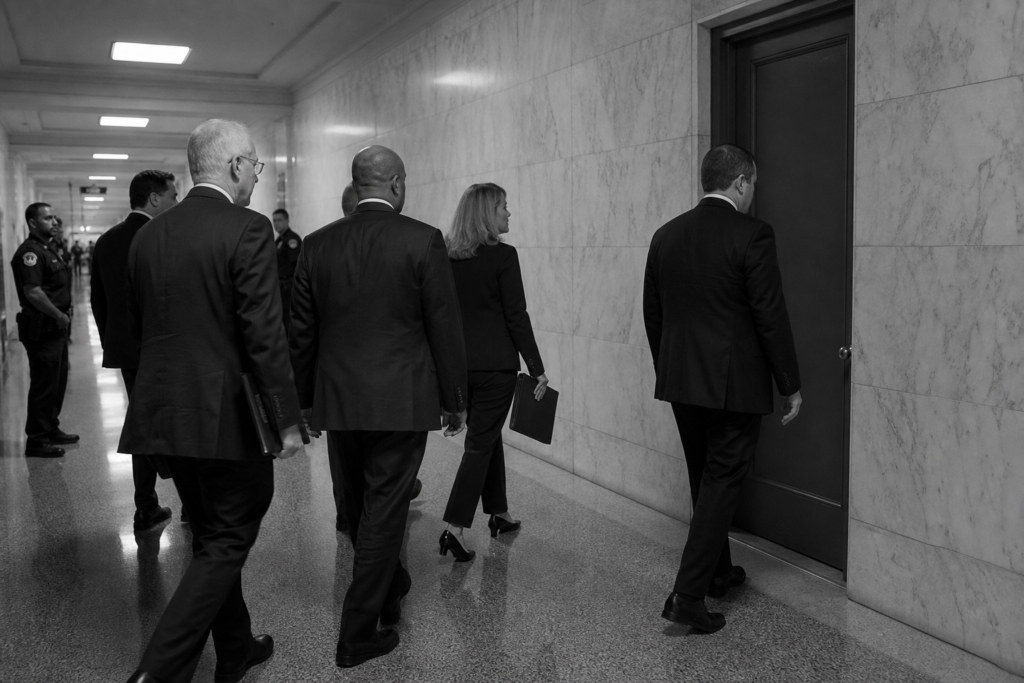
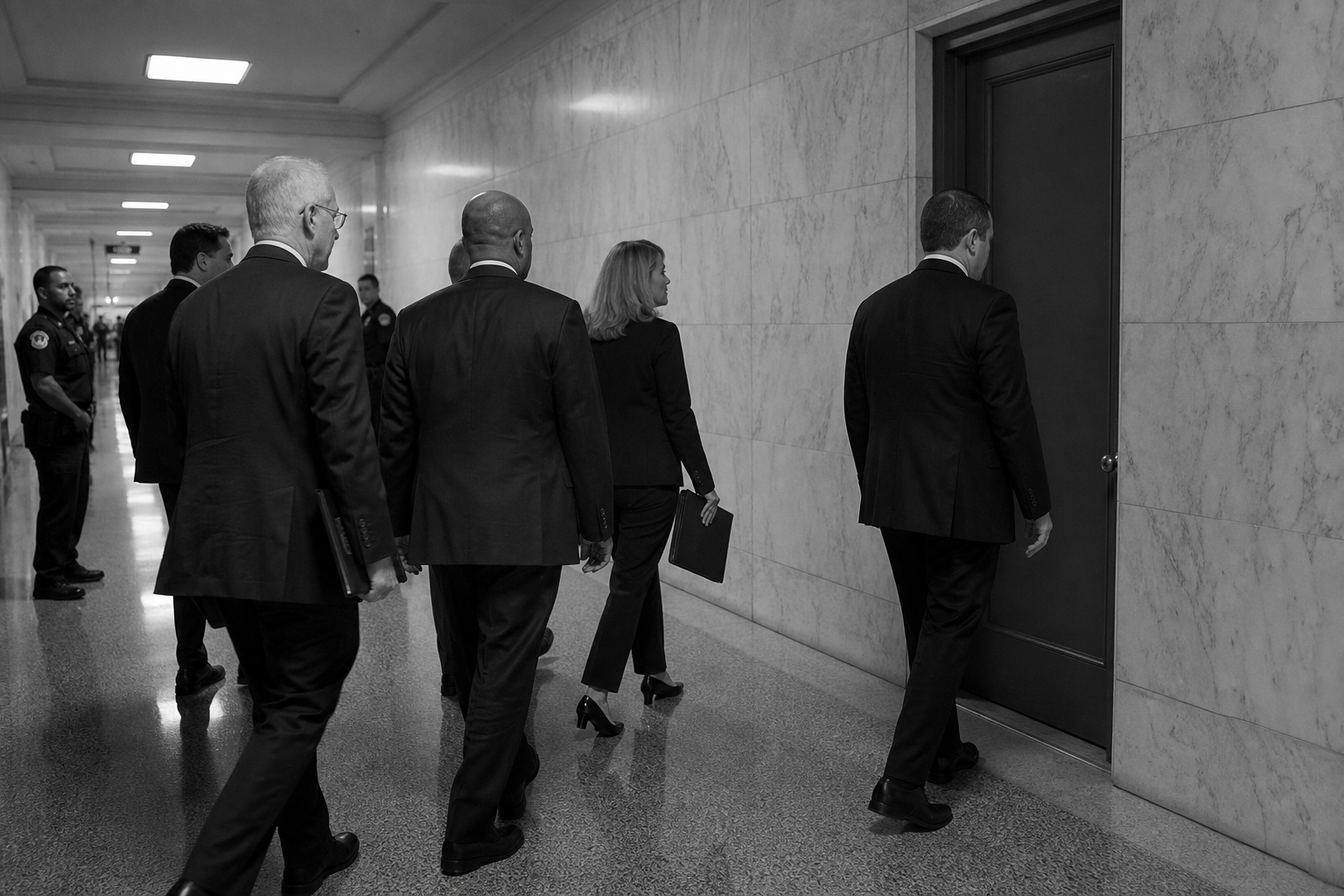
The central question raised by the 2024 ICIG briefing is narrower, and more testable, than whether extraordinary UAP assertions were established. David Grusch whistleblower allegations put claims of withheld information and retaliation before Congress, while the most consequential follow-up discussion occurred behind closed doors. A classified briefing may focus lawmakers’ attention, but its private contents are not public proof of any underlying allegation.
Here, “moved the needle” means a measurable change in congressional UAP oversight: requests for access to classified records, public statements that explain an oversight concern, formal hearing activity, whistleblower-protection efforts, or records-disclosure legislation. Those are stronger signals than speculation about what participants may have heard. A briefing alone is a weak indicator; an observable institutional response is the relevant test.
The analysis also keeps three questions separate. An allegation is a claimant’s assertion. Inspector-general complaint handling addresses whether a complaint merits process and protection; it is not automatically a finding that every assertion is true. Independently verifiable action, committee work, official correspondence, enacted text, and legislative status, shows what Congress actually did. That distinction is essential to judging both the significance and the limits of the briefing.
Why the 2024 ICIG Briefing Became a Test of Congressional UAP Oversight
The practical significance of the 2024 ICIG-related briefing lies in the forum Congress chose: a closed setting in which lawmakers could pursue classified context about allegations, access restrictions, and the treatment of a whistleblower complaint. That is a different event from a public evidentiary hearing. It can show that members considered the matter serious enough to seek protected information, while leaving the substance of that information outside the public record.
That boundary matters. The briefing did not publicly establish the existence of extraterrestrial craft, non-human intelligence, or a crash-retrieval program. Nor does a lawmaker’s participation establish agreement with every allegation. Its value as an oversight test is narrower: whether the request for classified answers produced durable, visible follow-through rather than a short-lived burst of attention.
The relevant signals therefore appear in what Congress did around and after the ICIG UAP briefing: members pressing for briefings or records, explaining concerns in public, holding or pursuing hearings, strengthening channels for UAP-related whistleblowers, and advancing disclosure measures. Those actions have different weight. A public remark signals interest; a formal request creates an institutional record; enacted archival or reporting requirements impose obligations on executive agencies. The later sections assess those steps separately, including the important gap between broader proposed UFO disclosure measures and the provisions that ultimately became law.
What Grusch Alleged, and the Limits of His Public Testimony
Grusch’s public account placed two distinct matters before Congress. In his July 26, 2023 House Oversight Committee testimony, he alleged that information about purported UAP crash-retrieval and reverse-engineering activities had been withheld from Congress and from officials entitled to receive it. He also described retaliation that he said followed his reporting through authorized channels.
The distinction within that account is essential. Grusch testified from his own experience about being blocked from access to information in the course of his UAP-related government work and about the alleged reprisals he reported. His publicly described whistleblower complaint concerned retaliation, not an inspector general finding that an alleged retrieval program existed. That makes the complaint relevant to whether reporting channels and oversight access worked properly, while leaving the underlying extraordinary allegations unresolved.
By contrast, much of the substance of the alleged program was not presented by Grusch as personal observation. During the hearing, he said his claims about recovered craft, reverse-engineering efforts, and purported “biologics” came from interviews with current and former officials, including people he characterized as firsthand witnesses. His David Grusch UFO testimony therefore supplied a map of allegations and potential witnesses, rather than public, independently testable proof of each assertion.
That evidentiary split explains why the UFO whistleblower claims could matter to lawmakers without requiring them to accept claims involving non-human intelligence. A strong oversight signal would be Congress seeking classified testimony, records, and accountable answers about access, reporting, and alleged concealment. A weak signal would be treating secondhand public assertions as though they settled what classified inquiries may or may not establish.
What the ICIG Process Did, and Did Not, Establish
“Urgent and credible” is best understood as whistleblower-process language, not as a public adjudication of the full UAP narrative. In this setting, the meaningful question is whether a complaint raised matters that warranted protected transmission, review, and attention by the appropriate oversight bodies, not whether an inspector general publicly authenticated every allegation connected to it.
The Intelligence Community Inspector General’s role is institutional: it receives certain intelligence-community complaints, assesses whether they fall within its authority, and can refer, investigate, or otherwise address concerns involving access, misconduct, and whistleblower reprisal allegations. Those pathways answer different questions. A reprisal matter asks whether a person may have suffered an adverse action for protected reporting; an access matter asks whether information was improperly withheld from an authorized official. Neither determination, by itself, establishes that every claim reported by the complainant is factually correct.
That distinction is especially important in discussion of the Grusch ICIG briefing. Counsel’s public use of “urgent and credible” described the treatment of the complaint within an oversight process. It should not be expanded into a claim that the Intelligence Community Inspector General issued a public finding validating an alleged crash-retrieval effort, reverse-engineering program, or purported non-human material.
The public record also has firm limits. It does not disclose the full complaint, the classified material available to investigators or lawmakers, witness accounts, investigative steps, or conclusions from any nonpublic review. A closed briefing can therefore demonstrate that Congress sought protected context and took the matter seriously, while leaving the underlying classified evidence, and any final assessment of it, unconfirmed in public.
What Lawmakers Sought From the 2024 Closed-Door Briefing
On January 12, 2024, Intelligence Community Inspector General Thomas Monheim briefed a bipartisan group of House members in a secure setting. Representatives Anna Paulina Luna, Tim Burchett and Jared Moskowitz were publicly associated with the meeting, which followed lawmakers’ efforts to obtain direct access to the ICIG about allegations raised by David Grusch.

The request was not framed as a demand that the inspector general certify claims of a hidden UAP program. Its practical purpose was narrower: members wanted to ask about Congress’s access to relevant information, the handling of Grusch’s complaint, and whether classification or compartmented programs had limited oversight. A classified congressional briefing changes the forum available to members; it permits discussion of protected material but does not make that material public evidence.
Public comments afterward remained guarded. Luna said the briefing had “moved the needle,” while Burchett and Moskowitz indicated that questions remained. Those remarks are meaningful because they describe momentum toward further inquiry, not a conclusion that Grusch’s underlying allegations had been established. No participant publicly released the briefing’s substance, witness accounts, or an ICIG finding validating a crash-retrieval or reverse-engineering claim.
The immediate signal was therefore institutional rather than evidentiary. After the July 26, 2023 House Oversight Committee hearing, a group of members sought a second, protected channel for examining access and accountability questions. That shift, from public testimony to a classified congressional briefing with the ICIG, shows that the allegations had become a live oversight matter for participating lawmakers, while the public record still leaves the classified discussion and its unresolved factual questions unknown.
How to Measure Whether the Claims ‘Moved the Needle’
The clearest test is whether the January 12, 2024 briefing led to durable oversight activity rather than only stronger public rhetoric. The July 26, 2023 House Oversight hearing put Grusch, former Navy pilots Ryan Graves and David Fravor before lawmakers; the later ICIG session added a classified channel for questions about access and accountability. Written record requests, named witness invitations, scheduled hearings, and attempts to compel production are progressively stronger signals because each leaves an observable institutional record.
- Access requests: members’ pursuit of a secure briefing with ICIG Thomas Monheim showed that they sought information beyond Grusch’s public testimony. The practical issue was whether Congress could obtain classified context about complaints, notification practices, and allegedly restricted information, not whether the briefing itself authenticated an alleged government UFO cover-up.
- Witnesses and hearings: public inquiry did not end with the 2023 hearing. On November 13, 2024, the House Oversight Committee held another UAP hearing, “Unidentified Anomalous Phenomena: Exposing the Truth,” with witnesses including Luis Elizondo, Michael Gold, Tim Gallaudet, and Michael Shellenberger. A follow-up hearing is a concrete commitment to keep the subject on the committee agenda, even when central questions remain classified.
- Document demands and enforcement: congressional subpoena power is a committee’s mechanism for compelling testimony or records when voluntary cooperation fails. Seeking that authority, or more direct access to compartmented material, would indicate that members considered ordinary briefings insufficient; it would not independently verify Grusch’s underlying claims.
- Whistleblower protections: Congress also treated protected reporting as an operational issue. The FY2024 NDAA included UAP-related reporting provisions, giving cleared personnel a channel to provide information to designated government bodies without requiring a public disclosure of classified material.
On that record, the David Grusch whistleblower allegations moved the needle in a limited, measurable sense: they heightened UAP oversight and information-access disputes for lawmakers from both parties. The record shows procedural follow-up, not congressional confirmation of alleged secret programs. The remaining test is which records-access measures ultimately survived the legislative process.
The UAP Disclosure Act: What Advanced, What Was Removed, and What Became Law
The clearest legislative distinction is between a proposed disclosure regime with independent review and the more limited archival regime Congress ultimately enacted. The Schumer-Rounds UAP Disclosure Act would have directed federal agencies to locate and transmit relevant records into a centralized collection while creating a presidentially appointed UAP Records Review Board. That board was designed to review withholding claims and recommend release, postponement, or, in defined circumstances, acquisition of privately held material connected to alleged UAP-related technologies.
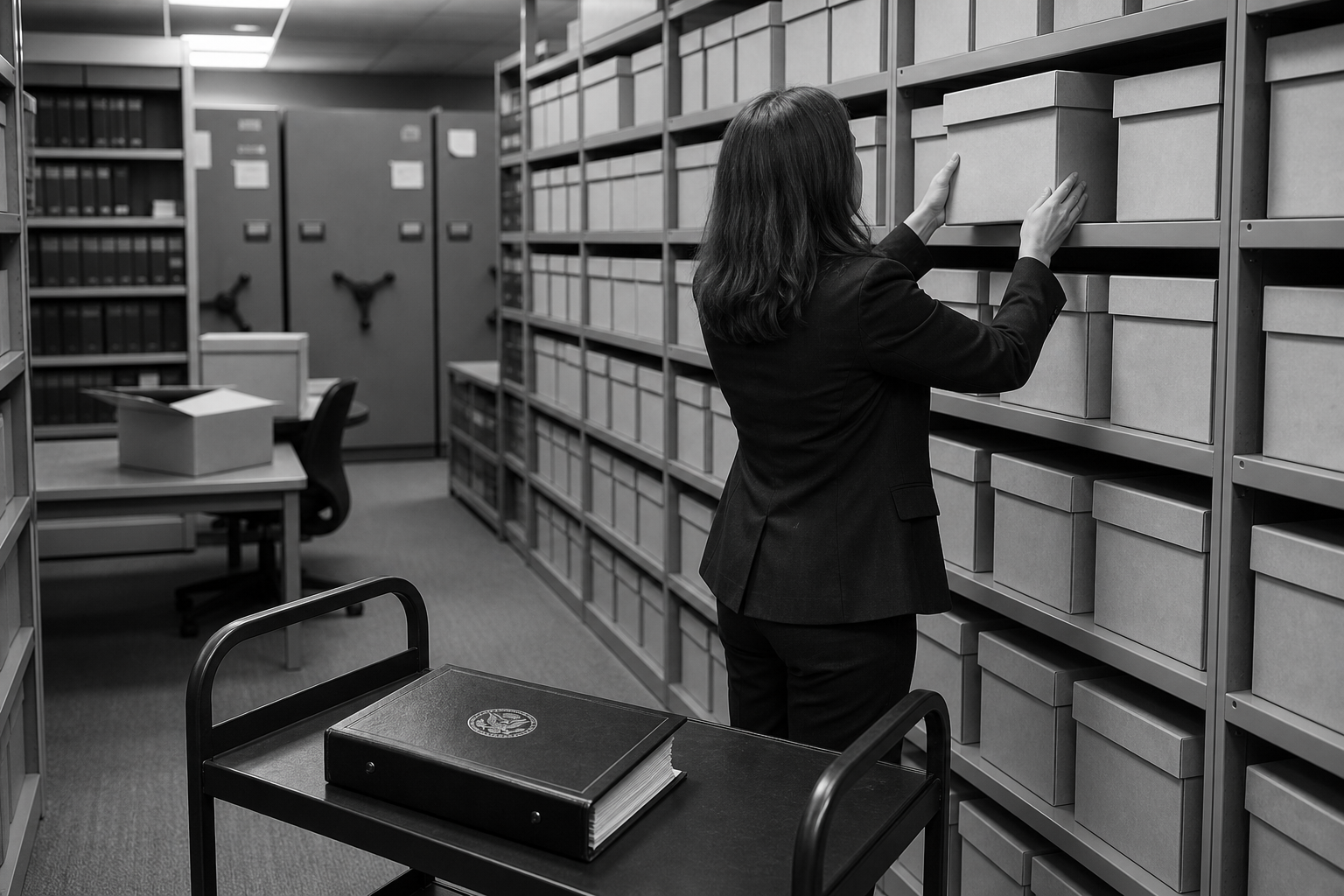
The proposal did not pass intact. Its review board, broader controlled-disclosure structure, and extraordinary acquisition provisions were removed during negotiations over the fiscal 2024 National Defense Authorization Act. Public discussion often calls the effort “alien disclosure,” but the bill’s legal function was records policy: it proposed a process for identifying, preserving, and deciding whether government-held material should be released. It would not itself have established that any alleged crash-retrieval or reverse-engineering program existed.
What became law was narrower: the National Defense Authorization Act created the UAP Records Collection. Federal agencies must identify and prepare qualifying UAP records for transmission to the National Archives, where they are to be organized as a distinct collection. The framework also provides for public disclosure subject to postponement rules for material whose release would meet specified protection criteria.
That outcome is a tangible oversight result, but a qualified one. A centralized collection can make future access, preservation, and accountability more practical; unlike the original proposal, it does not install an independent review board to press agencies’ withholding decisions. The legislative record therefore shows Congress advancing a durable transparency mechanism while stopping well short of adopting the full Schumer-Rounds model, or validating the underlying allegations.
The Bottom Line: An Oversight Shift, Not Public Proof of Extraordinary Claims
The practical checkpoint is what Congress did next: members pursued classified engagement, pressed sharper questions about access and reporting, continued hearing activity, and enacted a narrower UAP-records framework. On that behavioral measure, the January 2024 session helped keep the matter within active congressional oversight rather than allowing it to end with public testimony.
The distinction is decisive. Those actions are observable institutional responses: Congress can seek protected briefings, scrutinize access and retaliation concerns, and create an archival mechanism. They show an effort to test whether information was withheld and whether reporting channels worked; they do not establish the truth of extraordinary assertions.
The public record does not show that the ICIG validated every allegation, that Congress found a crash-retrieval program, or that any claimed non-human intelligence has been independently verified. Classified discussions may contain context unavailable to the public, but undisclosed material cannot responsibly be treated as confirmation. For readers following UAP news, the meaningful benchmark remains documented oversight action, not speculation filling the gaps left by closed sessions.
What the 2024 Briefing Changed, and What It Did Not Prove
The useful public checkpoint is not the classified conversation itself, but the institutional trail it left: a January 12, 2024 meeting with bipartisan House members, continued congressional attention to UAP reporting, and a statutory records framework in the FY2024 National Defense Authorization Act. Those steps gave lawmakers channels to pursue access, preservation, and retaliation questions. They did not make the alleged crash-retrieval or reverse-engineering assertions publicly assessable evidence.
Congress also produced a tangible but narrower records measure. The FY2024 NDAA established a UAP Records Collection, an archival framework for relevant federal records. The broader Schumer-Rounds UAP Disclosure Act did not survive intact: Congress did not enact its proposed independent review board or its stronger mechanism for reviewing agency withholding and certain privately held materials. Preservation and potential access advanced, but independent disclosure oversight did not.
The remaining test is whether that machinery produces attributable results: identifiable records, lawful public releases, explanations for continued withholding, and findings that distinguish reprisals or access failures from allegations about purported technology. The David Grusch whistleblower matter kept those accountability questions on Congress’s agenda. It did not convert allegations into established fact; UAP transparency should be measured by what oversight can disclose and substantiate.
Frequently Asked Questions
-
What did David Grusch tell Congress about UFO programs?
At the July 26, 2023 House Oversight hearing, David Grusch alleged that information about purported UAP crash-retrieval and reverse-engineering activities had been withheld from Congress and authorized officials. He said many claims about recovered craft and biologics came from interviews with current and former officials, not his own direct observation.
-
Did the ICIG confirm David Grusch’s UAP claims?
No. The public record does not show that the Intelligence Community Inspector General validated claims of a crash-retrieval program, reverse-engineering effort, or non-human material. The ICIG process addressed complaint handling, access concerns, and alleged retaliation, not public verification of every underlying allegation.
-
What does “urgent and credible” mean in the David Grusch whistleblower case?
“Urgent and credible” refers to the treatment of a whistleblower complaint within an oversight process. It means the complaint warranted protected transmission, review, and attention by appropriate oversight bodies, not that every UAP-related claim was proven true.
-
What happened after lawmakers received the ICIG UAP briefing?
On January 12, 2024, ICIG Thomas Monheim briefed bipartisan House members including Anna Paulina Luna, Tim Burchett, and Jared Moskowitz in a secure setting. Congress continued UAP oversight, including a November 13, 2024 House Oversight hearing, while lawmakers pursued questions about classified access, reporting, and whistleblower protections.
-
What UAP transparency provisions are law now, and what should people look for next?
The FY2024 National Defense Authorization Act created a UAP Records Collection at the National Archives, requiring agencies to identify and prepare qualifying UAP records for transfer. The broader Schumer-Rounds proposal did not pass intact, so the key indicators to watch are identifiable records, lawful public releases, explanations for withholding, and findings that separate access or retaliation issues from claims about alleged technology.