How to Evaluate a New UAP Video: A Skeptic-Friendly Checklist (2025–2026 Edition)
Learn how to evaluate a UAP video with a skeptic-friendly checklist for sources, camera effects, motion, context, and corroboration.
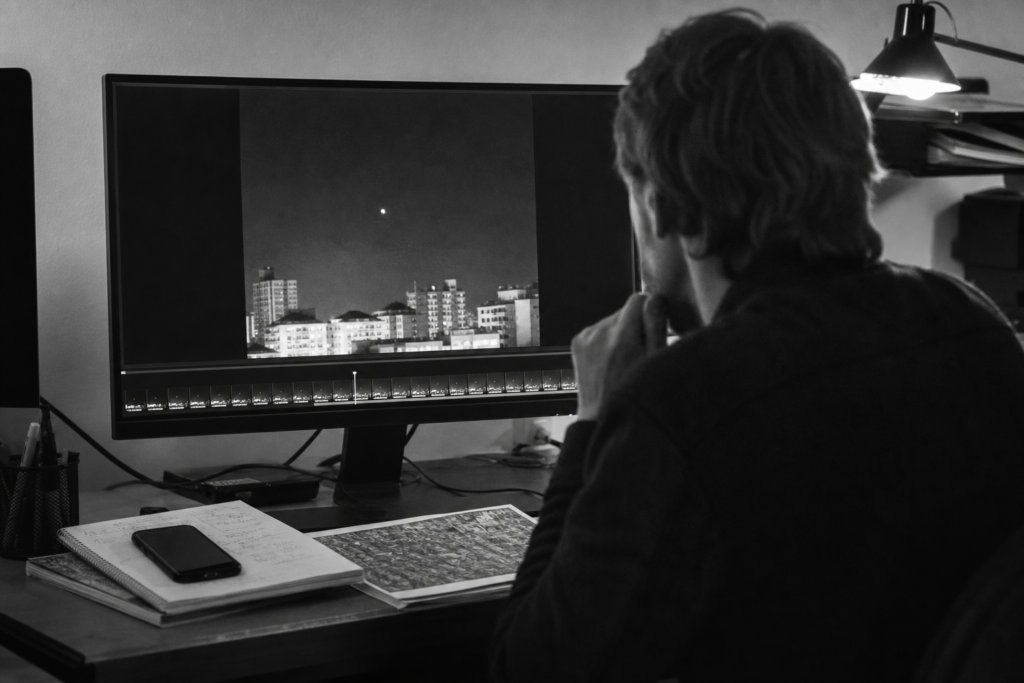
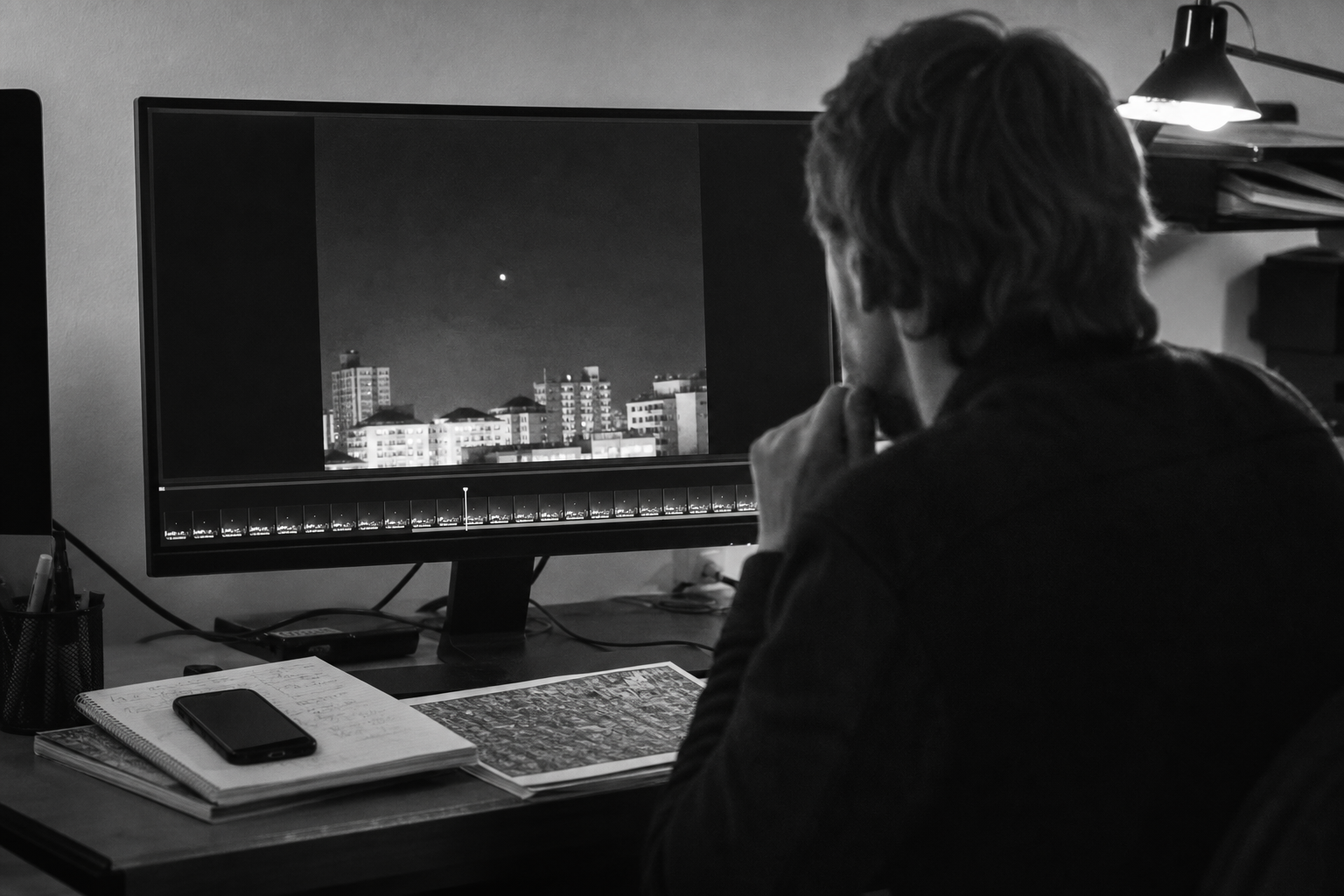
A bright point that seems to stop, turn, or race across a phone screen can be genuinely striking. It is not, by itself, a verified conclusion. A real video file may still show a misread aircraft, satellite, drone, balloon, planet, reflected light, compression artifact, or an object whose distance cannot be established. And a clip can remain unidentified after serious review without becoming evidence of an extraordinary origin.
That is the standard for how to evaluate a UAP video: treat it as a claim with components that can be tested. Start with provenance, who recorded it, whether the original file exists, and what edits or reposts intervened. Then pin down the scene: time, place, viewing direction, weather, and nearby activity. Those details turn an arresting image into something that can be compared with observable conditions.
Next, separate the camera’s behavior from the object’s apparent behavior. Focus shifts, digital zoom, stabilization, exposure changes, and a moving observer can manufacture the impression of shape, speed, or acceleration. Only after those possibilities are addressed does motion analysis become useful, and only independent corroboration, not a thousand copies of the same upload, materially strengthens a case.
The result should be provisional: identified, likely explained, underdetermined, unresolved, or unsupported. Each label describes the evidence available now, not a final verdict about what is possible.
Start With the Right Standard: “Unidentified” Is Not an Explanation
The first discipline is to keep five labels from collapsing into one conclusion. Unidentified means the available information does not yet permit a confident identification; it describes an unresolved classification, not an object’s origin. An unverified video is weaker still: its recorder, original file, date, location, or edits have not been established.
- Misidentification means genuine footage has been assigned the wrong explanation, for example, a distant aircraft or planet interpreted as an exotic craft.
- Deliberate fabrication means the clip or its claimed context was intentionally manipulated or invented.
- Material support for an extraordinary claim would require more than an unusual image: reliable provenance, independently testable context, and observations that remain anomalous after ordinary explanations and imaging effects are seriously examined.
Start by writing down the clip’s actual claim: “recorded here, at this time, showing this object.” A sharp image may support only that pixels were recorded; it does not establish distance, size, speed, provenance, or identity. Conversely, an unresolved case is not proof that fabrication or a conventional explanation has been demonstrated.
Viral UAP news, UFO disclosure arguments, whistleblower allegations, and captions invoking military or government authority may provide context for public debate, but none authenticates a particular upload. Treat each recording as its own evidentiary case.
Checklist Step 1: Trace the Source, Provenance, and Original File
Begin with the upload’s history, not the most dramatic frame. Provenance is the record of who created a file and how it traveled from recorder to viewer. Its plain-language equivalent is a chain of custody: can you follow the clip from the person or organization that captured it through each transfer, edit, and upload?
- Find the recorder and earliest known post. A named person willing to describe the recording, or an accountable organization releasing the clip, is a stronger starting point than an anonymous account. Search distinctive frames, captions, and the claimed location to find earlier versions. A “new” viral clip that appeared years earlier with a different date or place has lost its stated context.
- Ask for the original file. The camera-exported video can retain duration, resolution, audio, file structure, and sometimes creation details. A platform re-encode, screen recording, or tightly cropped excerpt discards context and can add compression artifacts. Original-file access does not prove every visual detail is genuine or correctly interpreted, but it makes meaningful examination possible.
- Compare versions rather than trusting one upload. Note whether the first upload has been trimmed, slowed, stabilized, color-graded, zoomed, or overlaid with arrows and music. Missing audio, a timestamp that changes between posts, or a clip that begins just as the object appears can have innocent explanations; each also limits what the footage can establish.
For this UAP video checklist, strong provenance means the recorder, full unedited file, approximate capture circumstances, and transfer history are available and internally consistent. Weak provenance means an anonymous repost, a cropped screen capture, recycled footage, a sensational caption standing in for context, or a creator who will not share the unedited file. The latter may still depict something real, but it cannot carry a precise claim about when, where, or how the image was made.
Preserve links, filenames, upload dates, and hashes of any file you receive before analyzing frames. That simple record prevents later replacements from silently becoming the version under review, and is the practical first move in how to verify a UFO video.
Checklist Step 2: Lock Down the Time, Place, Direction, and Conditions
A file’s claimed setting becomes useful only when it can be plotted. Record the capture point as an address, coordinates, or a bounded area; the date; local clock time and time zone; clip duration; camera bearing; approximate elevation above the horizon; and the position of the person holding the camera. A landmark, roofline, ridgeline, shoreline, or street grid can anchor both location and direction. “Over town last night” is weak context; “from this overlook, facing southwest at 18:42 local time, above this radio tower” is testable.
- Reconstruct the sightline. Match foreground features in the footage to maps or street-level imagery, then mark where the object sits relative to the horizon. A light low over a distant ridge is a different question from one filmed high overhead, even if both appear near the center of a vertical phone frame.
- Set the clock precisely enough to search. Compare the resulting time window and direction with flight activity, launches or re-entries, bright astronomical objects, satellite passes, reported balloon activity, and scheduled local events. These comparisons can produce a candidate explanation; they do not establish one unless its path, timing, and appearance agree with the footage.
- Capture conditions, not impressions. Note cloud layers, visibility, wind, precipitation, sunset or twilight, and nearby artificial lighting. Weather can hide a distant aircraft while leaving its lights visible, and a low cloud deck can erase the horizon that would otherwise reveal an object’s altitude.
Drone context deserves the same specificity. Identify nearby venues, airfields, public events, or restricted-airspace notices that could affect where drones are likely to appear or be flown; do not infer a drone merely because one would be convenient. Likewise, a witness’s confident estimate of height, distance, or direction is valuable lead information, but it is not a measurement unless tied to a mapped sightline or another reference.
For UAP sightings circulating as UFO sightings 2025 or UFO sightings 2026, the calendar label adds almost nothing. A bounded place, time zone, direction, horizon reference, and conditions turn the clip into a claim that outside records can actually challenge, or support.
Checklist Step 3: Test the Camera Before You Test the Object
A camera can manufacture apparent motion, shape, and brightness changes before any editing enters the picture. Review the earliest available file at normal speed and frame by frame, preferably before a social platform has resized and recompressed it. Ask whether the light’s “maneuver” begins when the operator pans, reframes, taps the screen, or changes zoom. A strong result is an object whose position and appearance remain coherent while stable background features do the same; a weak result is a dramatic change that tracks a camera adjustment.
- Focus, zoom, and exposure: Autofocus hunting can make a point light swell, split, pulse, or acquire a polygonal shape. Digital zoom enlarges pixels rather than optical detail, while exposure shifts can make a light abruptly brighten or dim. Bokeh is the out-of-focus rendering of a small light; lens flare is an internal reflection that may move as the camera angle changes. Covering or moving the light source just outside frame, then observing whether the alleged object changes with it, is a useful checkpoint.
- Motion processing: Image stabilization shifts and warps the frame to counter hand movement; handheld shake can therefore make a distant light appear to dart against a featureless sky. Rolling shutter records different parts of a frame at slightly different moments, which can skew fast movement. Motion blur and frame-rate changes can erase intermediate positions, producing jumps or abrupt turns. Compare the object’s movement with stars, buildings, horizon lines, and any shake visible elsewhere in the frame.
- Platform damage: Compression artifacts are blocky patches, ringing edges, or smeared detail created when video data are discarded. They can make an object’s outline flicker or merge with the background. Treat visual detail that appears only in a repost, crop, slowed version, or heavily zoomed screen recording as weak evidence.
Run a separate manipulation screen without treating any one flaw as a verdict. Look for edges that change thickness without a matching focus change; reflections or shadows that wander; backgrounds that bend or melt; discontinuous motion; noise or grain that differs between the object and nearby sky; repeated, cloned-looking details; and cuts placed immediately before or after the key event. Also play the audio alongside the frames: an unexplained break in ambience can matter as much as a visual jump.
These signs can arise from ordinary processing, low light, or transmission damage, and an authentic file can still show an unidentified object. The useful question in how to analyze a UAP video is narrower: does the object, background, audio, camera movement, and full-file history remain mutually consistent? If not, suspend claims about the object rather than declaring either an AI-generated fake or an extraordinary craft.
Checklist Step 4: Measure Scale and Motion, Then Eliminate Ordinary Candidates
Motion cannot be measured from pixels alone. A light that crosses half the frame quickly may be nearby and slow, distant and fast, or simply carried across the scene by a pan or zoom. “Hovering” is equally ambiguous when the camera is moving with the object or when no fixed horizon is visible. Treat apparent shape cautiously as well: a distant aircraft can reduce to a flashing point, while an out-of-focus insect or reflected light can become a crisp-looking disc or orb.
Use foreground structure to test parallax, the apparent shift of objects at different distances as the observer moves. Hold up a finger and move your head: your finger sweeps across the distant background far more than a faraway building does. In video, a nearby insect, bird, drone, or window reflection may slide rapidly against a distant skyline during a small camera movement; a far object should shift less relative to stable background references. A clear horizon, building edge, treeline, or cloud feature makes this comparison stronger. Empty sky and continuous reframing make it weak.
- Set the constraints: estimate the object’s angular size against a known reference, its bearing and elevation, and whether its path is straight, level, climbing, descending, or merely changing position in frame. Without distance or altitude, do not convert screen movement into speed or acceleration.
- Rank candidates by fit, not drama: begin with the ordinary explanation that best matches the recorded time, place, direction, lighting, apparent size, and behavior. A distant aircraft may fit navigation-light flashes and a steady track; a helicopter may fit slower travel and hovering; a drone may fit nearby hovering and abrupt directional changes; a balloon may fit wind-driven drift; a satellite, planet, or star may fit a steady bright point; and a bird, insect, or reflected light may fit erratic, close-range motion or motion linked to the camera.
- Record the result honestly: a candidate is useful only when it explains several observed features at once. If none can be tested because range, references, and trajectory are missing, label the motion underdetermined rather than forcing either a mundane identification or an exotic one.
Stronger evidence of genuinely unusual performance requires more than an impressive turn in one view: reliable range or altitude data, stable reference points, calibrated sensors with known fields of view, and maneuvers independently confirmed from another position or instrument. Those elements can separate actual displacement from sensor behavior, viewing geometry, and apparent motion, parallax, zoom, reframing, or an object passing close to the camera.
Checklist Step 5: Look for Independent Corroboration, Not More Reposts
Ten accounts sharing the same cropped clip are one piece of evidence, not ten. Corroboration begins only when another observer or instrument can contribute information that was not copied from the first upload. The strongest public example is a separate original recording from a known, geographically distinct position: its timestamp can be synchronized, its sight line can be plotted, and the object’s bearing, apparent path, or brightness can be compared. Two “angles” are weak if both derive from one file, one unknown location, or a later edit.
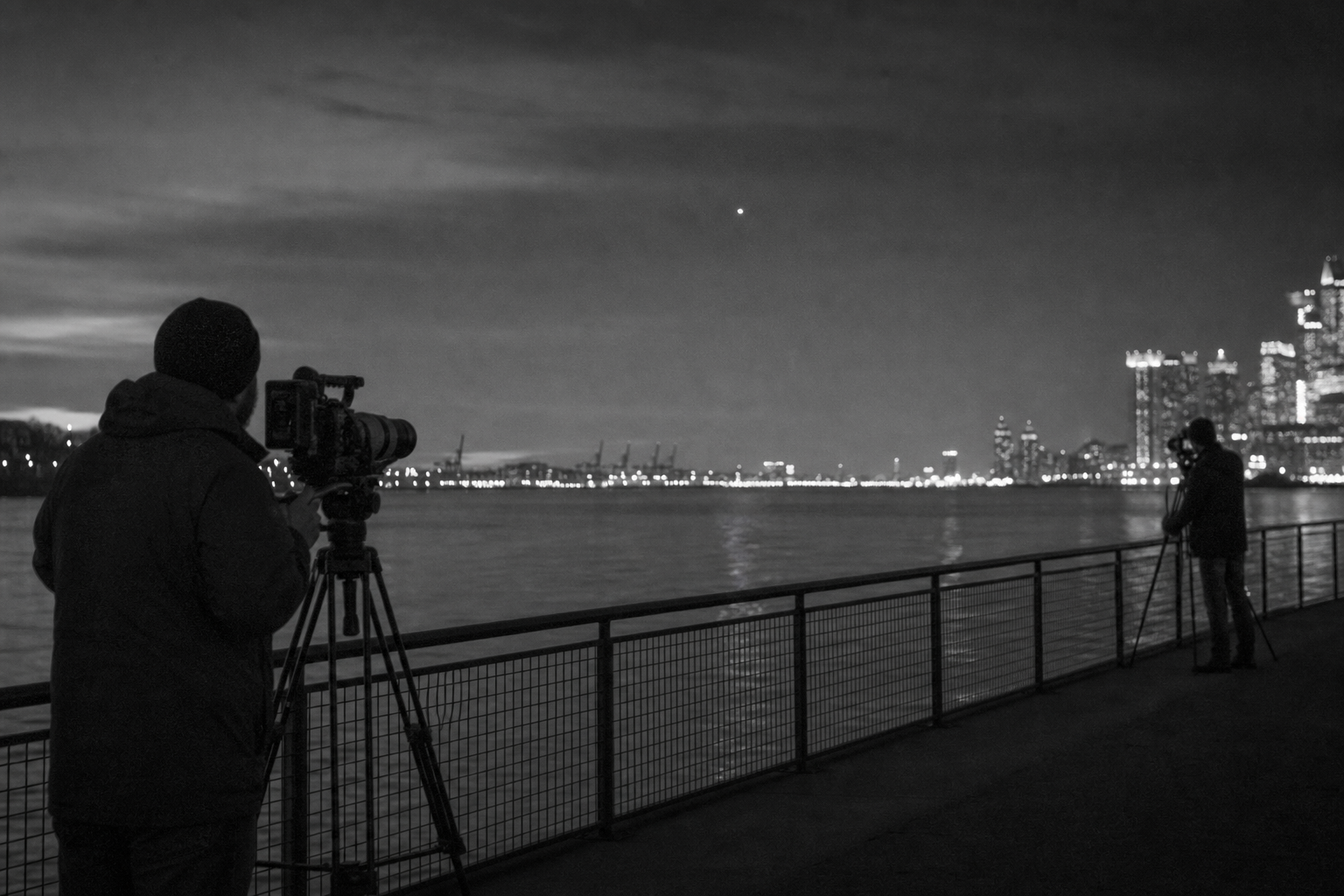
- Prioritize contemporaneous accounts: a message, call log, field note, or witness report made during or immediately after the event can preserve direction, duration, sound, and local conditions before a viral narrative shapes recollection. A later statement may still help, but it should not be treated as an independent measurement.
- Match outside records to the claimed geometry: air-traffic data, weather observations, wind direction, satellite passes, radar, or device telemetry can test a specific candidate. Radar and telemetry are useful only with their coverage, timing, precision, calibration, and gaps understood; a missing return does not by itself establish that nothing was present.
- Preserve sensor context: for each camera or instrument, retain the original file, clock basis, location, field of view, zoom, settings, and any relevant platform motion. Those details allow analysts to determine whether two records depict the same event rather than merely similar lights.
A responsible UAP case review, or any serious civilian investigation, needs enough provenance, exact context, unaltered media, observer information, and sensor detail to test competing explanations against the same timeline. Military footage can offer richer sensor coverage and operational records, but it is not automatically conclusive: classification may withhold context, and a displayed track still requires interpretation of range, calibration, and sensor behavior. Neither repeated posts nor claims of a government UFO cover-up fill those evidentiary gaps.
Reach a Provisional Verdict: Identified, Likely, Unresolved, or Unsupported
Assign the narrowest label the record can support, and state what would move it.
- Identified or strongly likely: the time, geometry, and observed behavior fit a specific aircraft, balloon, satellite, drone, or camera effect better than alternatives. “Strongly likely” remains short of certainty when one confirming datum is absent.
- Plausible but underdetermined: one explanation fits, but competing explanations fit nearly as well. A distant light consistent with an aircraft, without reliable bearing or flight data, belongs here.
- Unresolved: critical information, such as the original file, location, range, or independent record, is missing. This label does not establish non-human intelligence.
- Unsupported or likely manipulated: the stated event conflicts with the file history or visual record, or edits and synthetic elements cannot be reconciled with a genuine capture. It is not enough that a familiar explanation merely sounds plausible; it needs evidence too.
Record what is known, likely, unknown, and contradicted; name the strongest remaining alternatives and the single missing item most likely to change the result. Preserve the original file and analysis trail, write down context immediately and follow a structured reporting process, seek qualified image or aviation analysis when warranted, and revise the verdict when better evidence arrives.
A Good UAP Verdict Is Evidence-Proportionate
The most credible conclusion is often less dramatic than the clip, and more useful. A preserved original establishes what was recorded, not what the object was; a precise time and sight line make alternatives testable; stable background references and camera analysis determine whether apparent motion survives scrutiny; and an independent recording or instrument record can raise confidence because it does not depend on the first witness’s interpretation.
Keep those links visible in the final write-up. Separate observed facts (“the light crossed this bearing over 14 seconds”) from inferred claims (“it accelerated rapidly”) and from unknowns (range, altitude, identity). A sharp, unedited clip with no location is still weak for speed or identity. Conversely, a visually unremarkable recording with a known position, synchronized time, and independent track may be far more informative.
This is how to evaluate a UAP video without reflexively debunking or endorsing it: let every added layer of reliable evidence justify a narrower, stronger label. State which observation would alter the assessment, a full-resolution file, a second viewpoint, a confirmed flight track, or calibrated range data. “Unresolved” is a valid provisional result, not proof of an extraordinary explanation.
Sources
Frequently Asked Questions
-
What makes a UAP video credible?
A credible UAP video has traceable provenance, an original unedited file, a known recorder, and consistent details about when and where it was captured. It should also include a testable sightline, weather conditions, and independent evidence rather than reposts of the same clip.
-
Can metadata prove that a UFO video is real?
Metadata can support a video’s provenance by preserving file structure, duration, resolution, audio, and sometimes creation details. It cannot by itself prove the object is genuine, correctly identified, or recorded at the claimed distance, speed, or location.
-
Why do UFO videos make ordinary objects appear to move so fast?
Handheld shake, image stabilization, digital zoom, rolling shutter, motion blur, and reframing can create apparent darts, turns, or acceleration. Without a stable horizon, known distance, or fixed background reference, movement across a phone screen cannot be converted into speed.
-
How can I tell whether a UAP video shows a drone, balloon, aircraft, or satellite?
Compare the object’s time, location, direction, lighting, apparent size, and path with ordinary candidates. Aircraft may match navigation-light flashes and steady tracks, drones may fit nearby hovering and abrupt movement, balloons may follow wind, and satellites or planets may appear as steady bright points.
-
Are military UAP videos more reliable than civilian sightings?
Military footage can provide richer sensor coverage and operational records, but it still requires range, calibration, field-of-view, timing, and sensor-behavior analysis. A civilian recording with an original file, precise location, synchronized time, and an independent second viewpoint can be more informative than military footage with missing context.