AARO’s Middle East Object Video: What the 2022 MQ-9 Footage and 2023 Senate Record Show
Explore the AARO MQ-9 metallic orb video, its 2022 recording, 2023 Senate hearing link, and why officials still classify the case as unresolved.
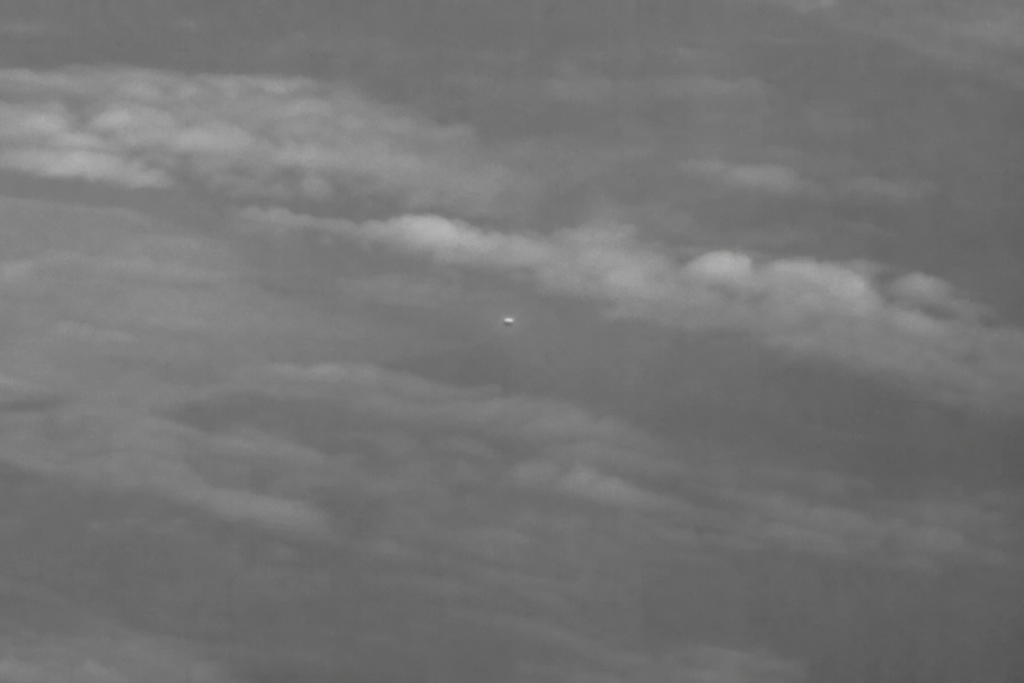
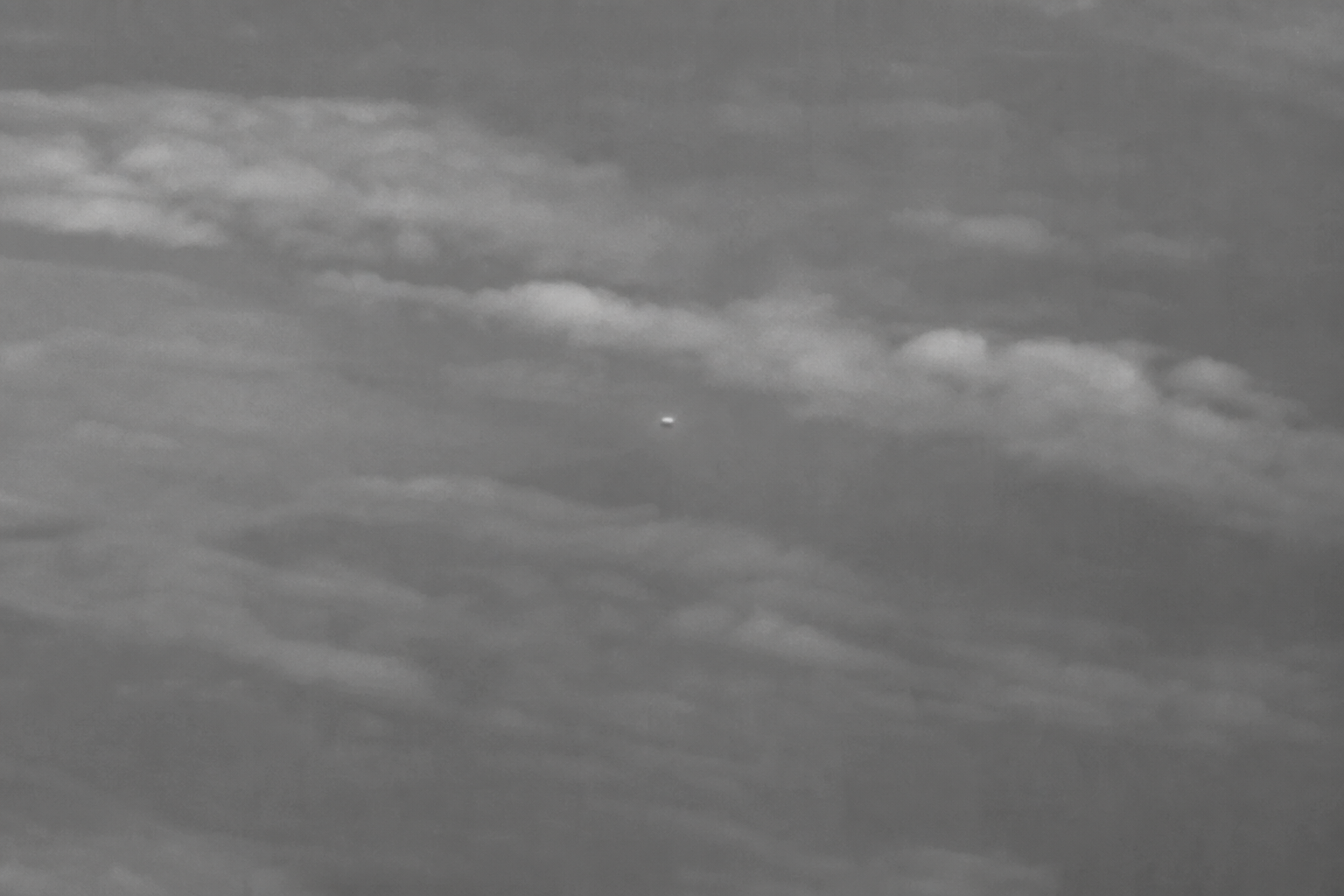
An official UAP-office video release linked to Senate testimony deserves close attention, but not because a short clip can settle what an object is. The AARO MQ-9 metallic orb video is best approached as a documented observation with a public institutional trail, not as proof of a particular technology, material, or origin.
This article follows that trail in order: the reported 2022 MQ-9 infrared recording, its presentation in a 2023 Senate setting, and AARO’s public case-material context. It separates three distinct levels of evidence that are often blurred together: what viewers can see in the imagery, what the aircraft’s sensor record may indicate, and what officials can responsibly identify from the available data.
A label such as “small metallic orb” describes an apparent visual feature; it does not independently establish composition, scale, range, speed, or behavior. Likewise, congressional presentation gives the clip public significance and places it on an official record, but it is not a finding that the object was extraordinary. The useful question is narrower: what do the primary records document, and what uncertainties remain?
What AARO’s MQ-9 Infrared Clip Shows, and What It Does Not Establish
The key distinction is between an officially presented observation and a confirmed identification. The public account links an MQ-9 infrared recording made in 2022 to an unresolved UAP case in which the object is described in appearance-based terms as small and orb-like; AARO later placed material connected to that observation in a public context.
Those are separate milestones, not interchangeable evidence. The recording date concerns when the aircraft sensor captured imagery. The 2023 Senate presentation concerns when an official used the footage in a congressional setting. AARO’s later publication concerns provenance: it allows the public to connect a released item to the government’s UAP-review process. None of those steps, by itself, supplies a physical identification.
An infrared clip can show contrast, shape, and apparent motion within a sensor frame, but it does not independently disclose an object’s material, dimensions, distance, propulsion, or origin. “Metallic orb” is therefore a descriptive label, not a laboratory finding. An unresolved case also does not demonstrate alien technology, non-human intelligence, a government retrieval program, or a cover-up; it means the available information did not support a responsible identification. The timeline and the hearing record matter precisely because they define what officials actually put before the public, and where the evidentiary boundary remains.
The Timeline: 2022 Recording, 2023 Senate Presentation, and AARO’s Public Release
The sequence begins in 2022, when an MQ-9 operating in the Middle East recorded the infrared imagery later associated with the orb case. That is the collection milestone: it fixes the year and platform for the footage, but the official public description does not supply a precise day, time, or location for the encounter.
The next milestone came on April 19, 2023, at the Senate Armed Services Subcommittee on Emerging Threats and Capabilities hearing on unidentified anomalous phenomena. Sean Kirkpatrick, then AARO’s director, displayed the clip during his testimony and identified it as video from an MQ-9 in the Middle East in 2022. He told senators that AARO had not been able to identify the object, making the small metallic orb Senate hearing video part of the hearing record rather than a declaration of what the object physically was.
The third event is AARO’s later public presentation of associated material through its online UAP-video and case-information channels. That public-facing format matters because it permits the clip’s connection to AARO’s work and the 2023 hearing exhibit to be traced outside the hearing room. The supplied record does not establish a single exact posting date for every version, reference, or repost; the date must therefore be attached to the particular AARO page or release being cited, not inferred from the 2022 collection or the April 2023 testimony.
- 2022: an MQ-9 collected the infrared footage during operations in the Middle East.
- April 19, 2023: Kirkpatrick showed related imagery to the Senate Armed Services Subcommittee on Emerging Threats and Capabilities.
- Later AARO public release context: AARO made material available through a public web format, creating a separate publication milestone.
Those dates should not be compressed into one “release” date. Doing so would obscure the difference between sensor collection, congressional presentation, and public availability, and could wrongly imply that the Senate hearing supplied an identification rather than documenting AARO’s unresolved review of the observation.
What the MQ-9 Infrared Footage Appears to Depict
In the footage Sean Kirkpatrick displayed to the Senate Armed Services Subcommittee on April 19, 2023, the MQ-9’s sensor view shows a compact feature against a distant background. In infrared footage, a bright or dark feature represents contrast detected by the sensor; it is not a direct display of surface color, reflectivity, or chemical composition. A rounded-looking feature can therefore be described as orb-like in appearance without establishing that it was a sphere.
The MQ-9 context identifies the collection platform: Kirkpatrick said the video came from an MQ-9 operating in the Middle East in 2022. The publicly shown material is a short sensor view rather than a complete account of the encounter. Apparent movement within that frame may reflect the tracked feature, the aircraft and camera’s changing viewpoint, or a combination of both; the public presentation did not disclose enough range, geometry, telemetry, or sensor-setting information to separate those possibilities.
That distinction matters most for the phrase small metallic orb, used in connection with the clip shown at the 2023 hearing. “Small” and “orb” function as visual shorthand for the feature presented to viewers, while “metallic” can describe an apparent look rather than a tested substance. The hearing record does not present a recovered sample, laboratory result, or other independent material analysis for the object.
A careful reading of the AARO metallic orb video therefore separates the displayed image from conclusions that would require additional sensor data. The visible record supports describing an apparently compact, rounded feature whose position changes in the scene. It does not, on its own, establish dimensions, distance, velocity, altitude, construction, propulsion, or intent, nor did officials publicly provide a precise date or location beyond the 2022 Middle East context.
What the 2023 Senate Hearing Established About the Clip
The decisive checkpoint is what the proceeding actually recorded: an executive-branch briefing, not a Senate finding on the object’s identity. On April 19, 2023, Dr. Sean Kirkpatrick, then director of the All-domain Anomaly Resolution Office, showed the clip at a hearing on unidentified anomalous phenomena held by the Senate panel responsible for emerging threats and capabilities.

Kirkpatrick introduced the MQ-9 imagery as an example within AARO’s discussion of reports under review. That format allowed him to brief senators, illustrate the kinds of cases the office receives, and describe its analytic work. It differs from a committee report, a formal adjudication, or an independently reproduced technical examination of the underlying sensor data.
The small metallic orb Senate hearing video therefore has a specific connection to the 2023 proceeding: an AARO official displayed it while discussing unresolved UAP observations. That establishes the provenance of the presentation itself, who showed the material, where, and for what oversight purpose. It does not establish that cropped reposts, enhanced stills, speed calculations, or other online interpretations faithfully represent the original record.
Nor did the presentation convert “metallic” from a descriptive label into a material determination. Senators were shown an illustrative case, not a recovered object or laboratory analysis. The hearing did not determine the feature’s origin, operator, or intent; its significance is that lawmakers received a public briefing on a case AARO was still treating as unresolved.
AARO’s Assessment: Why the Object Remains Unidentified
The operative status is unresolved, not affirmative: AARO’s public handling of this case did not attach the observed feature to a specific conventional object, and the material made public does not provide enough underlying sensor data for outsiders to reach a firmer identification. “Unidentified anomalous phenomenon” is a case-status label for an observation that has not been satisfactorily explained from the available information. It is not a finding of non-human intelligence, extraterrestrial origin, or exotic technology.
A short infrared sequence records a sensor signature rather than an object’s complete physical identity. Range is pivotal: without a reliable distance, the same apparent size in the frame could represent a small nearby item or a larger, more distant one. Viewing angle also changes the apparent outline and motion. A feature that looks circular from one perspective may not be spherical, while apparent acceleration can reflect the aircraft’s movement, camera tracking, zoom, stabilization, or a changing line of sight rather than the feature’s own flight performance.
Sensor processing adds another layer of uncertainty. Infrared imagery translates detected thermal contrast into a displayed image, using settings that can affect brightness, edge definition, and apparent shape. That makes a visible signature useful evidence of an observation, but weaker evidence for composition or construction. A good identification case joins the imagery to calibrated range information, platform position and attitude, camera mode and field of view, timestamps, and corroboration from another sensor or observer. A clip without that surrounding telemetry can preserve the event while leaving key measurements indeterminate.
Corroboration is the practical dividing line. Radar, additional optical or infrared views, track data, weather information, and a complete flight-and-sensor record can test whether an apparent object is consistent with a balloon, aircraft, drone, atmospheric effect, or sensor artifact. Where those comparisons cannot be made, or the available data are incomplete, the responsible conclusion is that the observation remains unidentified. That conclusion describes an evidentiary limit; it does not supply an extraordinary explanation in its place.
How to Evaluate Future Claims About the AARO Orb Video
Before sharing a new interpretation, separate provenance from inference. A direct AARO posting and the official Senate hearing archive establish where the material was presented; a cropped repost, added soundtrack, slowed playback, or caption asserting a conclusion does not. Read the date label as part of the claim: recording date, hearing date, upload date, and any later official updates answer different questions.

- Start with the complete available video, not a looped excerpt. Look for the beginning and end of the sequence, display overlays, sensor mode, timestamps, and any stated platform context.
- Compare the AARO material with the April 2023 hearing record to distinguish an official’s description of the image from a determination about the object’s material or origin.
- Look for a dated official update before treating a viral claim as a change in case status. A new upload or renewed attention is not itself new evidence.
Stronger evidence would permit competing explanations to be tested rather than merely asserted: synchronized radar or another optical view, dependable range and platform telemetry, an auditable chain of custody for the underlying file, and a technical analysis that explains its methods and limits. The strongest public conclusion would also include a published official assessment tying those materials to a stated identification or explaining why one remains unavailable.
Readers following UAP news can apply the same standard to broader AARO reporting and to coverage of the UAP Disclosure Act. Neither the clip nor its hearing appearance, standing alone, demonstrates a government cover-up; the useful question is whether a claim adds traceable, testable evidence beyond the public record.
The Clip Is Documented, but Its Identity Is Still Unresolved
What survives close scrutiny is a traceable chain of public handling: an MQ-9 sensor recorded the imagery in 2022, Dr. Sean Kirkpatrick displayed related footage at the April 19, 2023 Senate hearing, and AARO later made material associated with the case publicly accessible. That chain makes the clip a documented government observation rather than an internet-originated mystery.
It does not make “small metallic orb” a settled physical description. The infrared view supports a cautious account of a compact, rounded-looking feature in the sensor image; it cannot independently establish metal, size, range, speed, propulsion, or origin. Those are identification questions requiring corroborating data beyond the short public sequence.
AARO’s unresolved-case treatment is therefore the meaningful official bottom line. An unidentified object is one not satisfactorily matched to an explanation on the available evidence, not a positive determination that it represents extraordinary technology or a non-human source. The Senate presentation establishes institutional relevance and a public date for the footage, not a congressional or scientific finding about its identity.
As further claims emerge, give greatest weight to dated primary AARO releases and the official congressional hearing record, especially where they add underlying data, methodology, or a stated change in assessment. Until then, the AARO MQ-9 metallic orb video remains notable for its provenance and unresolved status, not for a conclusion the public evidence cannot support.
Sources
Frequently Asked Questions
-
What is the AARO MQ-9 metallic orb video?
It is a short infrared recording captured by an MQ-9 operating in the Middle East in 2022. The footage shows a compact, rounded-looking feature and was treated by AARO as an unresolved UAP observation.
-
Did AARO identify the small metallic orb in the MQ-9 video?
No. AARO had not identified the object when Kirkpatrick presented the clip to senators, and its public treatment remained unresolved. The term “metallic orb” describes its apparent visual appearance, not a confirmed material or object type.
-
Why can infrared footage not determine the orb’s size, speed, or material?
Infrared imagery shows thermal contrast in a sensor frame, not direct proof of surface color, composition, distance, or dimensions. Without reliable range, platform telemetry, camera settings, and corroborating sensors, apparent motion and shape cannot establish velocity, propulsion, or material.
-
What evidence should you look for before accepting claims about the AARO orb video?
Look for a dated AARO release or official April 19, 2023 Senate hearing record, plus the complete available video rather than cropped or slowed reposts. Stronger identification evidence includes calibrated range data, platform position and attitude, timestamps, sensor settings, radar or additional optical views, and a published technical assessment.