AARO Director Sean Kirkpatrick Testifies on UAPs Before Senate Armed Services Subcommittee on April 19, 2023
Examine Sean Kirkpatrick UAP testimony from the April 19, 2023 Senate hearing, including AARO's evidence, data gaps and oversight questions.
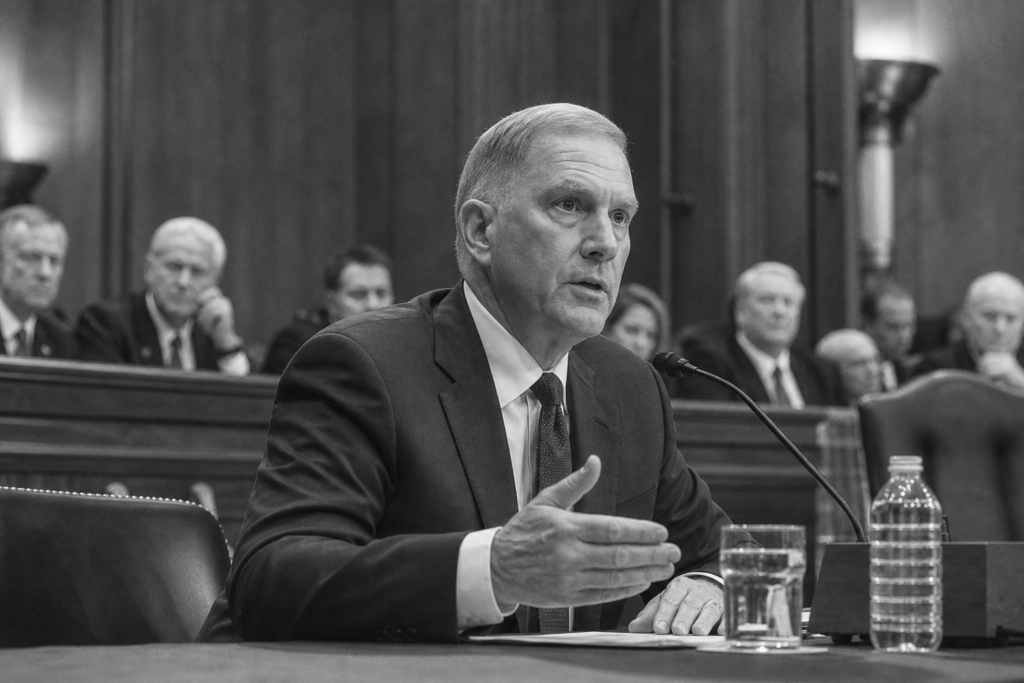
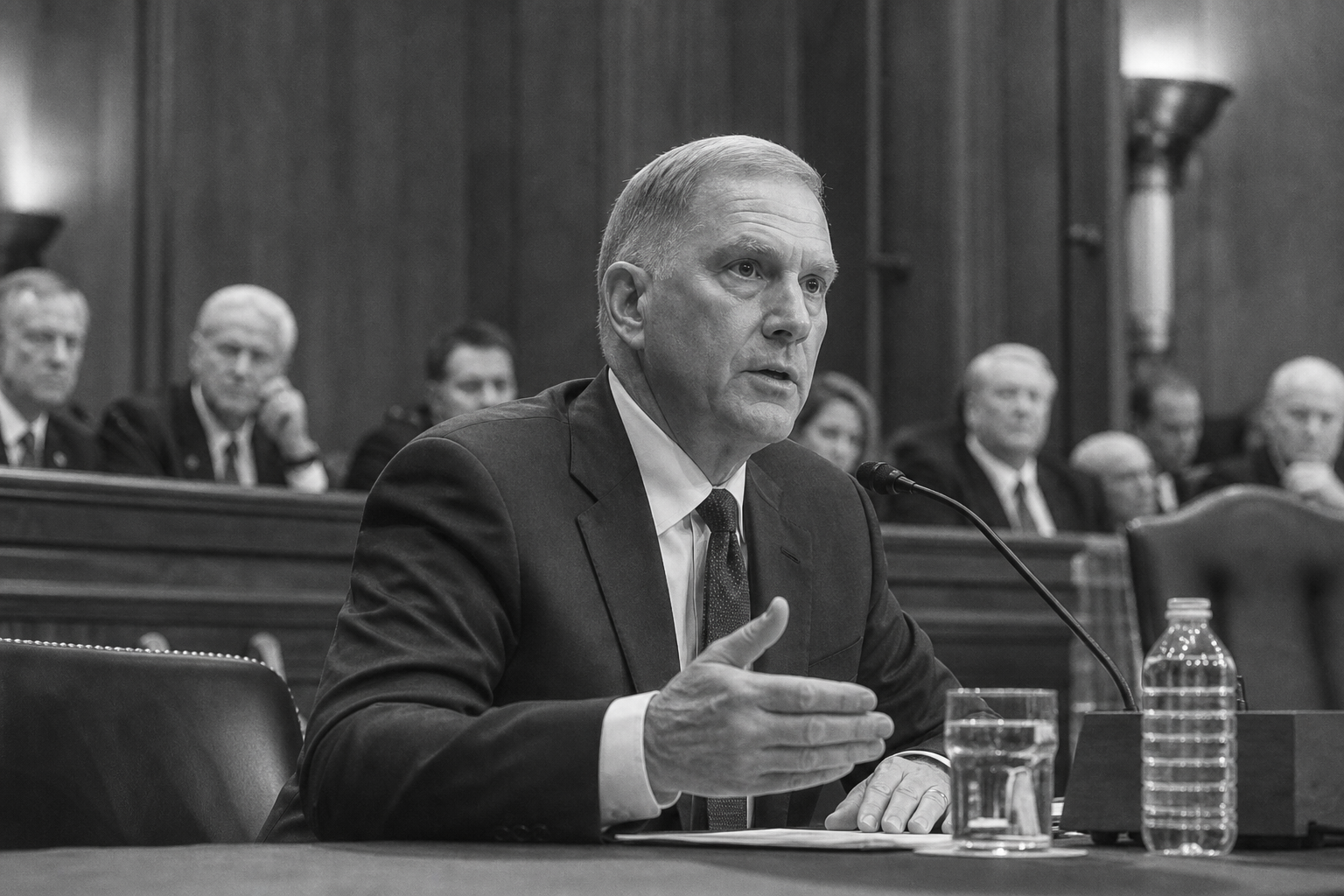
On April 19, 2023, Sean Kirkpatrick’s Senate testimony provided one of the clearest public snapshots yet of how the U.S. government was organizing its review of unidentified anomalous phenomena, or UAP. Kirkpatrick appeared as director of the Department of Defense’s All-domain Anomaly Resolution Office (AARO) before the Senate Armed Services Subcommittee on Emerging Threats and Capabilities, a venue focused on whether emerging issues could affect military operations and national security.
The significance of the hearing lay less in any single sighting than in the framework Kirkpatrick described: collecting reports across military domains, improving the data available for analysis, and distinguishing unresolved observations from confirmed threats or explanations. An unresolved case means the available information is insufficient for a reliable conclusion; it does not, by itself, establish an extraordinary origin.
This article follows the official record closely. It examines what Kirkpatrick said and presented, the oversight questions senators raised about reporting, transparency, flight safety, and potential adversary activity, and the limits of the conclusions available in a partly classified subject area. It also separates the documented April 2023 UAP hearing from broader claims about alien technology, secret programs, or a government cover-up, claims that the public hearing itself did not substantiate.
What Happened at the April 19, 2023 Senate UAP Hearing
The committee formally listed the proceeding as a hearing on “Department of Defense Policy on Unidentified Anomalous Phenomena,” before the Senate Armed Services Subcommittee on Emerging Threats and Capabilities. Held on April 19, 2023, it named Sean M. Kirkpatrick, then director of the All-domain Anomaly Resolution Office, as its sole announced witness.
The public session let senators question the official leading AARO’s UAP work while Kirkpatrick delivered prepared remarks and a presentation. Its stated subject was departmental policy and AARO’s developing analytic effort, not an adjudication of individual extraordinary claims. That distinction matters: oversight can test whether an office receives reports, uses consistent analytical methods, and keeps Congress informed even when particular incidents remain unresolved.
The public record is narrower than the full oversight picture. UAP reporting can involve military sensors, operational activity, intelligence sources, or possible foreign collection; sensitive details may be addressed in closed settings. The released testimony and presentation therefore show what Kirkpatrick could discuss openly, not every case, dataset, or exchange considered by senators.
For assessing the Sean Kirkpatrick Senate testimony, the sound starting point is the documented public material: the hearing notice, witness listing, prepared remarks, presentation, and any available video or transcript. Claims beyond that record need independent evidence; the possibility of classified discussion is not evidence that any particular claim was established.
Why AARO Was Created and What Senators Wanted It to Address
AARO’s value to the subcommittee lay in turning scattered anomaly reports into an organized defense and intelligence problem. Its mandate reached beyond collecting sightings: the office was meant to receive and analyze reports from across military domains, coordinate relevant Department of Defense and intelligence-community work, improve reporting channels and data quality, and identify cases that could bear on flight safety or national security.
Those functions address different weaknesses. A report from an aviator may identify an immediate operational hazard; sensor data can help determine whether an object was misidentified, lacked sufficient information for resolution, or merits further intelligence analysis. Coordination matters because a single event can involve operational commands, intelligence holdings, and technical experts that do not ordinarily share the same picture. Better reporting, in turn, reduces the chance that personnel avoid submitting observations because of stigma or uncertainty about the proper channel.
Senators were therefore examining an intelligence and readiness gap, including whether unusual activity near training ranges or other sensitive areas could reflect foreign surveillance or collection. They also wanted to know whether the department had a durable institutional process for preserving reports, comparing them across domains, and reporting results to Congress. AARO’s historical-review responsibility served a related purpose: examine government records and prior UAP-related activity rather than treat assertions about past programs as established fact. The AARO Senate Armed Services testimony was not premised on an alien-disclosure conclusion; it was an oversight test of whether the government could characterize unknowns, protect military operations, and communicate the limits of its findings.
What Kirkpatrick Said About UAP Reports, Cases, and Evidence
Volume was the first important context in Kirkpatrick’s public account. His April 19 presentation said AARO had received approximately 650 UAP reports by that point, a figure that included reports inherited from earlier review efforts as well as material entering AARO’s process. The total described a workload, not 650 confirmed objects, incursions, or technologies.
Kirkpatrick differentiated between cases that analysts could characterize and those that remained open. In the presentation, AARO reported 52 cases characterized to that date. Characterization means the available reporting and sensor information supported an analytic judgment about what had been observed; it is different from merely assigning an intriguing label or closing a file administratively. The presentation did not portray the remainder as a single, uniform category.
The limiting factor was evidence quality. AARO’s work depended on whether an event had sufficiently detailed, corroborated information, such as more than one sensor source, timing and location data, or imagery that could be placed in operational context. A brief visual observation or a single ambiguous sensor track can document that personnel saw something they could not identify at the time, yet still leave too little information to determine its nature, origin, or performance.
That distinction is central to the Sean Kirkpatrick Senate testimony. An unresolved UAP case meant that AARO lacked enough reliable data to reach a supported conclusion; it did not mean the object had demonstrated exotic capability. Conversely, a case could merit attention because it occurred near military operations or raised a potential intelligence concern without establishing that it was an adversary platform. Kirkpatrick’s prepared remarks framed AARO’s task as reducing those unknowns through improved collection and analysis, while stating that the office had found no credible evidence of extraterrestrial activity, off-world technology, or objects that defied known laws of physics.
The public presentation therefore supplied a snapshot of a developing analytic inventory rather than a final accounting. Its numbers were tied to April 2023, its characterized cases reflected the evidence then available, and its unresolved UAP cases remained subject to revision if stronger data emerged.
What the Presentation Examples Were Meant to Show
The unclassified material released for the April 19, 2023 hearing was not a gallery of dramatic UAP imagery. Its most concrete visual was a case-status presentation: AARO placed the approximately 650 reports then in its holdings alongside the 52 it had characterized, using the contrast to show the difference between an incoming report and an analytically supported assessment.
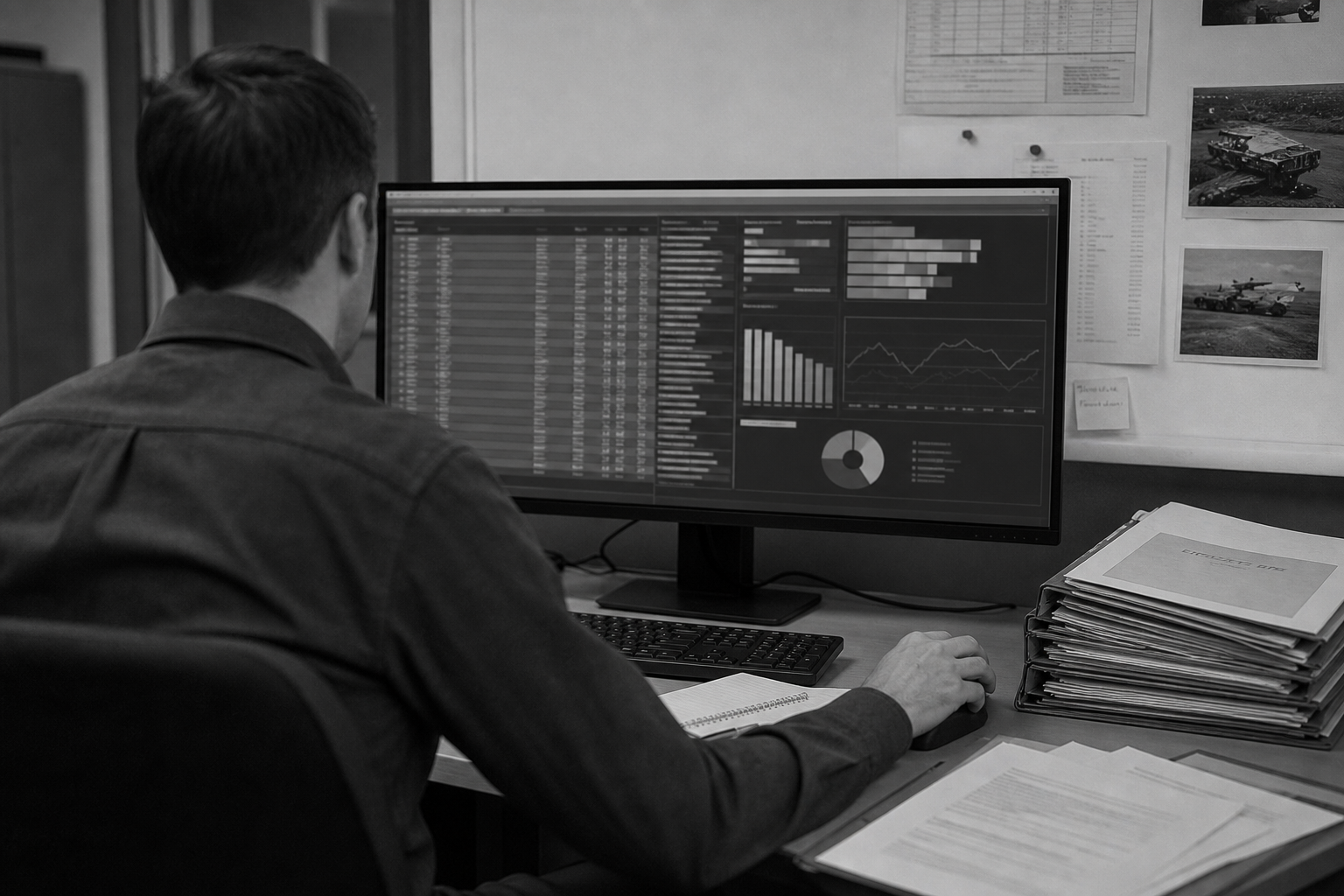
That distinction mattered more than the appearance of any single frame. A still image can show that a camera detected an object or apparent object, but it does not independently supply distance, dimensions, velocity, direction of travel, or intent. The presentation treated visual material as one input to be placed beside its collection time, location, platform, and sensor settings, not as self-interpreting evidence of unusual technology.
AARO’s analytic model depended on data fusion: comparing electro-optical or infrared imagery with radar returns, radio-frequency information, aircraft position data, weather conditions, and witness reporting. These sources answer different questions. Imagery may show shape or motion in a sensor’s field of view; radar can provide track and range information; operational and environmental data can expose an ordinary explanation or reveal a gap that prevents one.
For that reason, the hearing’s charts and process illustrations were meant to explain why some UAP sightings could be resolved and others remained open. A case becomes stronger when independently collected data agree on where, when, and how an object moved. A striking image with missing range data, an uncertain timestamp, or no corroborating sensor record remains an incomplete observation, relevant to military flight safety and collection priorities, but not proof of exotic origin.
The Questions Behind the Hearing: Reporting, Transparency, and Threat Assessment
The practical question raised by AARO’s data-fusion model was whether a pilot or other service member could preserve an encounter well enough for analysts to use it. In the April 19, 2023 proceeding, reporting meant more than submitting a sighting: a useful record linked the time and location of the event to the reporting platform and any available sensor data. The oversight concern was that stigma or fragmented channels could prevent those details from reaching AARO.
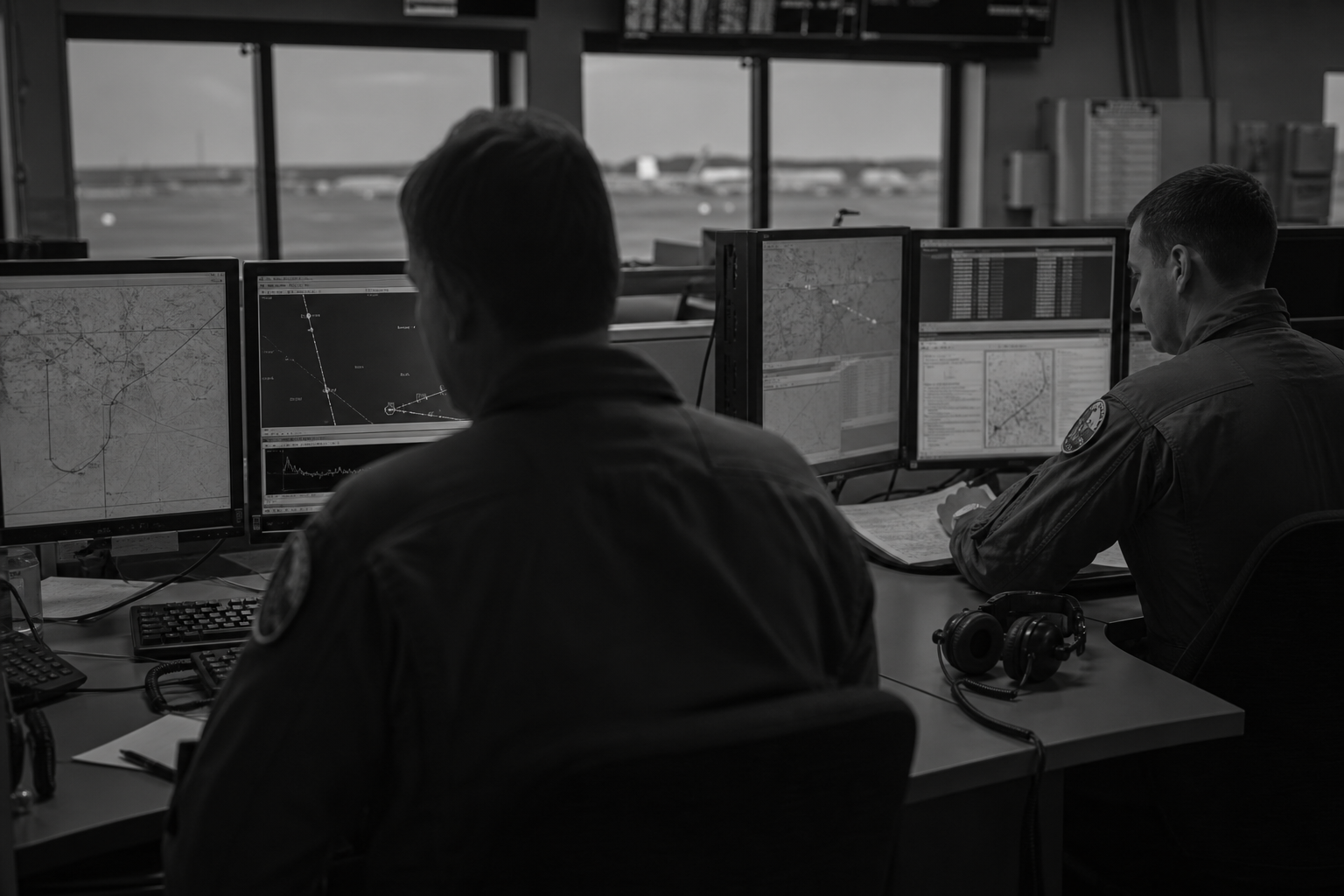
Before the Senate Armed Services Subcommittee on Emerging Threats and Capabilities, Sean Kirkpatrick was asked to address the Pentagon process rather than to validate a particular UAP explanation. The connected questions were whether military personnel had workable reporting routes, whether agencies could combine operational, intelligence, and sensor holdings, and how AARO decided which reports required the most immediate attention. Those questions did not establish that a service member had been blocked from reporting or that an agency had withheld a specific case.
Transparency had a concrete boundary in the public session. AARO could describe its workload and analytic approach in an unclassified presentation, while the underlying material could contain classified information about sensor performance, collection methods, operational locations, or intelligence relationships. A closed congressional setting can receive such material; an open hearing cannot. That distinction explains why the April 19 public record discussed methods and case status without releasing the sensitive data needed for outsiders to independently reconstruct each observation.
Foreign adversary surveillance was a threat-assessment question, not an AARO finding announced at the hearing. An unresolved report could deserve priority because it involved flight operations, a sensitive location, or a gap in collection; attribution required additional evidence tying the observation to a particular platform or actor. Kirkpatrick’s public account did not identify a confirmed foreign-surveillance UAP case. It described an office designed to determine whether such risks were present without treating uncertainty itself as proof.
What Kirkpatrick Did Not Confirm About Alien Technology or a Cover-Up
The public proceeding drew a firm boundary between an open question and an affirmative finding. Kirkpatrick did not present confirmation that any UAP was an extraterrestrial craft, evidence of non-human intelligence, proof of a crash-retrieval program, or evidence that the U.S. government had conducted a UFO cover-up. None of those conclusions follows from the hearing’s discussion of anomalous reports, classified material, or cases still awaiting analysis.
His account of historical-records work was similarly limited. AARO was examining older government material and allegations to determine what records existed, how reliable they were, and whether they could be connected to documented programs, events, or physical evidence. That is an investigative function: an allegation can justify a records search, but it does not become substantiated merely because officials review it. The hearing did not announce that this work had verified hidden recovered technology or a concealed program, unlike the later 2023 crash-retrieval allegations.
An unresolved report also has a narrower meaning than it is often given in UAP disclosure debates. It means the available information was insufficient for analysts to reach a defensible attribution or explanation at that time. Missing sensor data, uncertain range, incomplete context, or the absence of corroboration can keep a case open. A stronger signal would be independently supported measurements that establish what was observed; uncertainty alone is not positive evidence for an alien origin, a secret U.S. system, or a cover-up.
Why the April 2023 Testimony Still Matters, and How to Place It in Context
Its lasting value is institutional rather than sensational. The April 19, 2023 appearance gave Congress and the public a dated baseline for judging AARO’s work: the size of its incoming-report workload, the need for corroborated data before attribution, the limits imposed by incomplete information, and the difference between congressional access and public release. Those are congressional oversight measures for UAP reporting and review that can be revisited as cases are processed and reporting systems mature.
Later allegations, legislative proposals, and UAP news belong to their own dates and evidentiary records; they should not be read back into Sean Kirkpatrick’s Senate testimony as though they were part of the April 2023 proceeding. A useful reading standard is straightforward: identify when a claim was made, who made it, and what supports it. An official finding grounded in released analysis carries a different weight from a witness’s allegation, a senator’s question, or commentary about an unresolved report. That distinction keeps uncertainty from being mistaken for confirmation.
The Takeaway From Kirkpatrick’s April 2023 UAP Testimony
The most defensible conclusion is modest but consequential: the April 19, 2023 appearance showed AARO building a repeatable system for turning disparate UAP reports into assessable cases. That system depends on reporting channels, preserved sensor data, cross-agency context, and analytic standards that can separate a plausible explanation from a case left unresolved by incomplete information. An unresolved file is therefore a record of an evidentiary limit, not a finding about an object’s origin.
Sean Kirkpatrick’s Senate testimony mattered because it gave the Senate Armed Services Subcommittee on Emerging Threats and Capabilities a public basis for congressional oversight of that process: whether reports reach AARO, whether they contain enough usable data, how potential operational concerns are prioritized, and what can responsibly be disclosed. The proceeding did not establish extraterrestrial technology, a concealed government program, or a definitive explanation for every report. Its proper historical record is the April 2023 hearing material itself, Kirkpatrick’s remarks and presentation, the committee proceeding, and the evidence available at that time, read with the same distinction between documented findings and unanswered questions that AARO described.
Frequently Asked Questions
-
What is AARO and what was its role in the April 2023 Senate UAP hearing?
AARO is the Department of Defense’s All-domain Anomaly Resolution Office. It was created to collect and analyze UAP reports across military domains, improve reporting and data quality, coordinate with defense and intelligence agencies, and assess flight-safety or national-security concerns.
-
What did Sean Kirkpatrick say in his April 19, 2023 Senate UAP testimony?
Sean Kirkpatrick said AARO was building a process to turn disparate UAP reports into assessable cases using better collection, corroboration, and cross-agency analysis. He stated that unresolved cases reflected insufficient reliable data, not evidence of extraordinary origins.
-
How many UAP reports did AARO discuss during the April 2023 hearing?
AARO reported approximately 650 UAP reports in its holdings as of April 19, 2023. Of those, AARO had characterized 52 cases, meaning the available information supported an analytic assessment.
-
What evidence does AARO need to identify or characterize a UAP case?
AARO looks for corroborated information such as imagery, radar tracks, radio-frequency data, aircraft position records, weather conditions, timestamps, locations, and witness reports. A case is stronger when multiple independently collected sources agree on where, when, and how an object moved.
-
Did Kirkpatrick’s 2023 Senate testimony confirm alien technology or later UAP whistleblower allegations?
No. Kirkpatrick said AARO had found no credible evidence of extraterrestrial activity, off-world technology, or objects defying known laws of physics, and the hearing did not confirm crash-retrieval programs or a government cover-up. Later 2023 whistleblower allegations were separate claims made after the April hearing and were not substantiated by its public record.