Gillibrand Grills AARO Director Kosloski at 2024 Senate UAP Hearing
Explore the 2024 Senate UAP hearing as Gillibrand questions AARO Director Jon Kosloski on reporting, transparency, records and oversight.
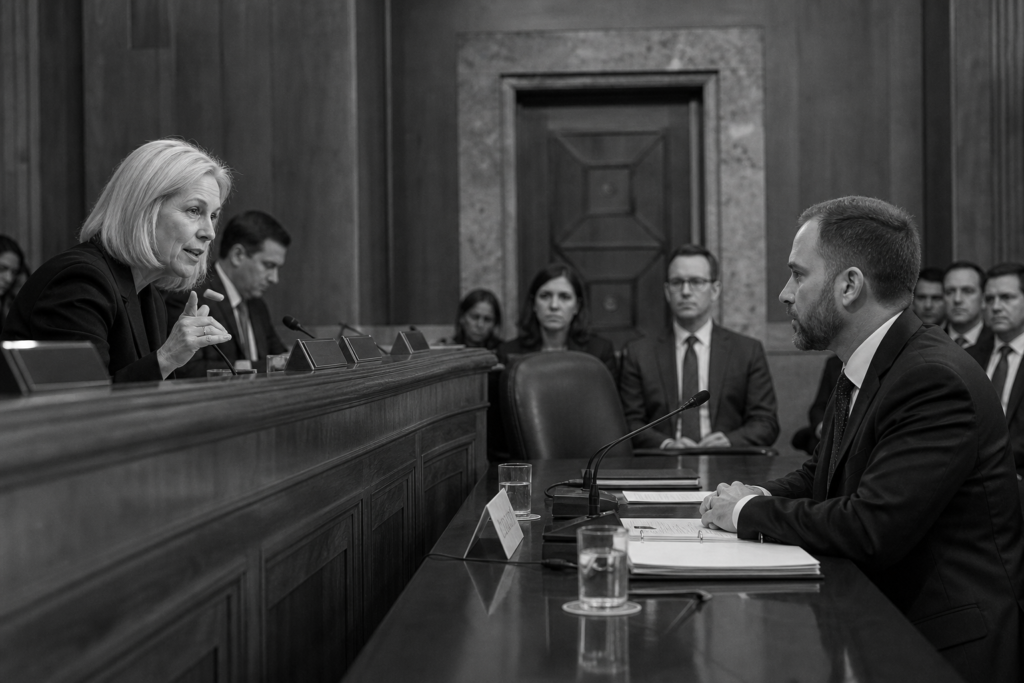
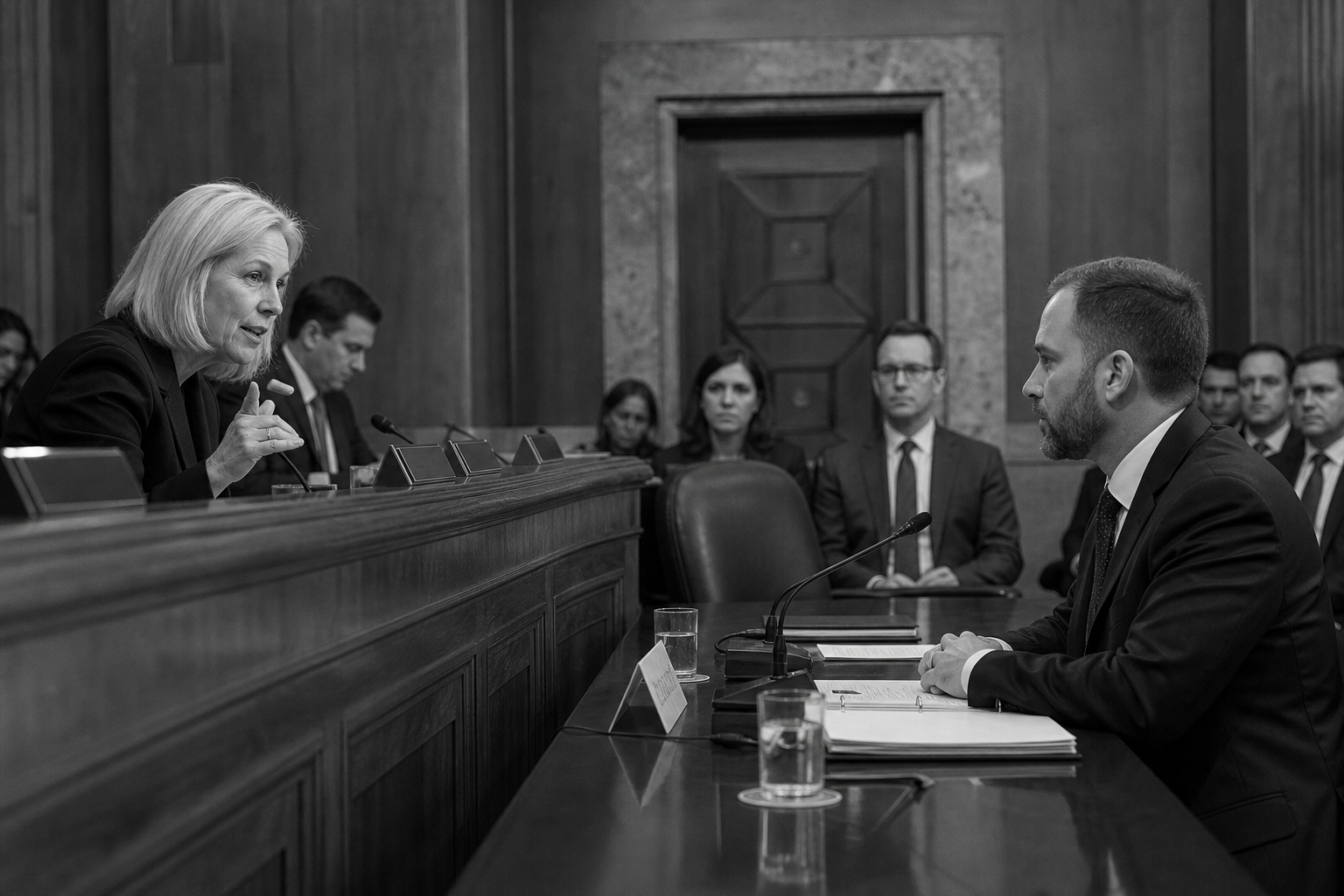
Whether incident reports could enter the system, receive rigorous analysis, and yield conclusions Congress and the public could meaningfully assess became the practical test of AARO UAP oversight on November 19, 2024. Dr. Jon Kosloski, director of the All-domain Anomaly Resolution Office, faced pointed demands for clear answers about reporting channels, analytical standards, and public disclosure.
That is why “grills” fits the exchange, not because the proceeding established an extraordinary explanation for unidentified reports, but because the questioning sought accountable answers about process, access, evidence, and disclosure. Kosloski appeared not to validate every historical allegation, but as the official responsible for an office tasked with receiving, assessing, and resolving anomalous reports across military and intelligence domains.
This account follows the public hearing record closely. It distinguishes AARO’s stated findings from lawmakers’ concerns and from claims that remained unverified or unanswered. The sections that follow examine the specific follow-ups, the constraints Kosloski identified around classified information and investigative authority, and the central unresolved issue: whether AARO’s public-facing work was sufficient to demonstrate the rigor and transparency Congress expected.
What Gillibrand Pressed AARO Director Jon Kosloski on at the 2024 Senate Hearing
On November 19, 2024, the Senate Armed Services Committee’s Subcommittee on Emerging Threats and Capabilities convened its hearing, “Unidentified Anomalous Phenomena: Exposing the Truth.” Chair Kirsten Gillibrand questioned Dr. Jon Kosloski, then leading the All-domain Anomaly Resolution Office, on a panel that also included Luis Elizondo, retired Rear Adm. Tim Gallaudet, and former NASA official Michael Gold.
Gillibrand’s line of inquiry supplied concrete oversight checkpoints: whether AARO could receive reports from service members and other potential witnesses, investigate them with enough rigor to reach defensible conclusions, examine older allegations and records, explain its work publicly, and respond when Congress sought answers. Those measures are not interchangeable. A reporting route can exist but remain hard to use; a historical review can collect claims without resolving them; and a classified assessment can limit what AARO can disclose in public.
The Gillibrand UAP hearing therefore put AARO’s procedures and responsiveness, not an extraordinary explanation for unidentified reports, at issue. The testimony created a public record of congressional demands and Kosloski’s stated approach, while leaving execution questions for later oversight. It did not establish alien visitation, non-human intelligence, or a government UFO cover-up; none of those propositions was proven by the hearing exchange.
Why AARO’s Mandate and Limits Were Central to the Exchange
The key boundary is that AARO’s Pentagon mandate allows it to assess an incident without owning every underlying record. It operates within the Department of Defense in coordination with the Office of the Director of National Intelligence, receiving reports, assembling relevant data, analyzing incidents across air, sea, space, and other domains, and seeking resolutions. That makes it an investigative and analytic office, not a single repository with automatic control over every federal record connected to an alleged UAP event.
The distinction matters. AARO can evaluate information it receives and request access needed for its work, while the agency that owns a record may retain classification authority and operational equities. Its historical-review function likewise examines available government material and allegations; it does not guarantee access to every record or a conclusive answer to every claim. Congress, through hearings and other congressional oversight, can demand explanations of access problems, reporting pathways, methods, and public releases. An unresolved case therefore marks an evidentiary or analytic limit, such as incomplete sensor data, missing context, or restricted access, not affirmative proof of an extraordinary explanation.
The Specific Questions Gillibrand Asked, and How Kosloski Answered
Gillibrand first tested whether people with relevant information could actually reach the office. She asked AARO Director Jon Kosloski about its reporting mechanisms, including routes for current and former government personnel. Kosloski said AARO had established a secure means for such individuals to submit information. His qualification was consequential: receiving a report creates an investigative lead, not a finding that the underlying allegation is true. He did not promise that every submission would produce a public case resolution, but described a process intended to bring claims into AARO’s review rather than leave them solely within an individual agency.
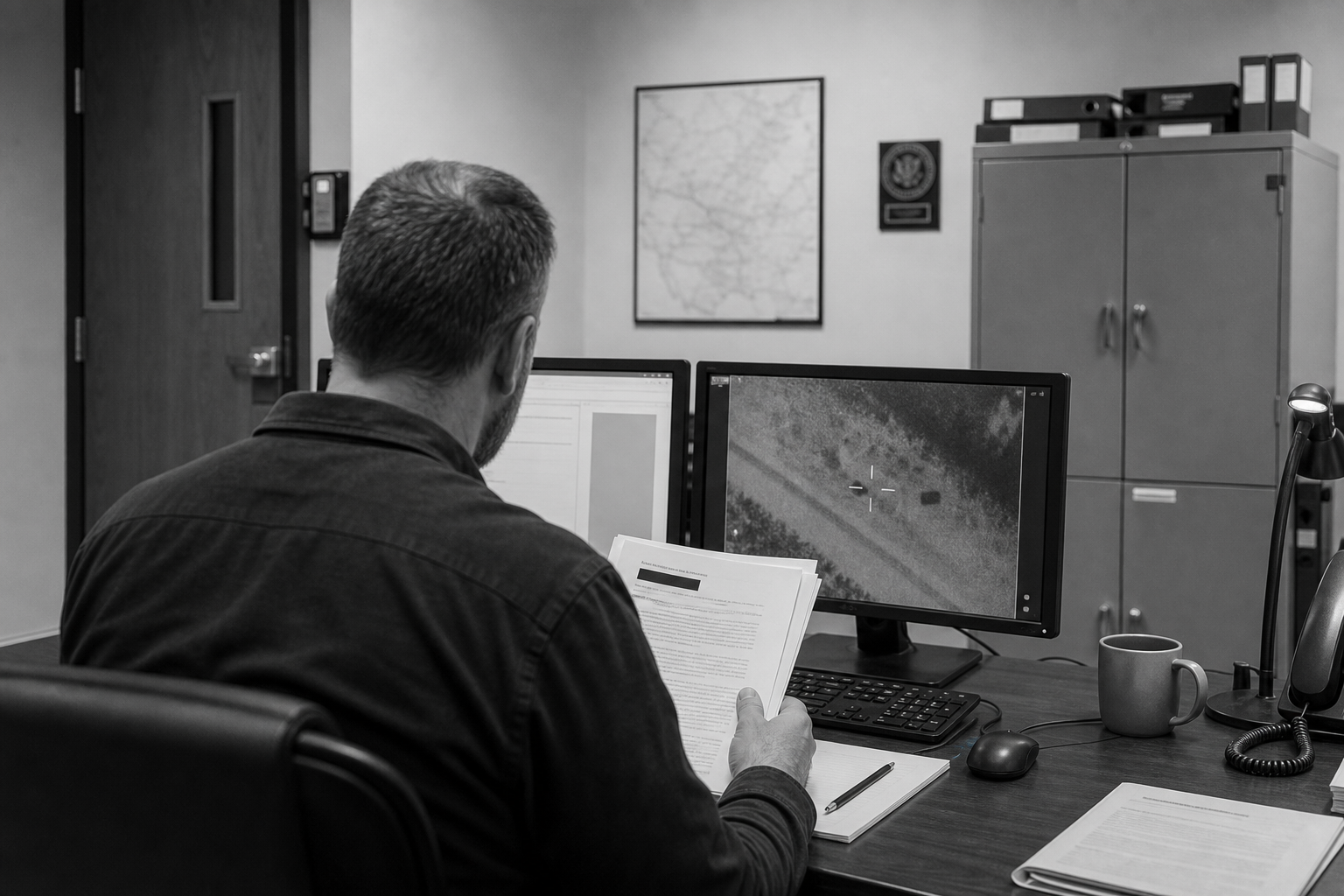
She then asked whether AARO could obtain the information needed to assess reports, pressing the distinction between an office that receives allegations and one that can examine the relevant classified data, programs, and witnesses. Kosloski answered that he had the authorities he needed and did not identify a specific access request that had been denied. That was a direct answer on formal authority, not a claim that every historical record was complete or immediately available. Gillibrand’s practical checkpoint was clear: if an agency impeded a legitimate inquiry, she wanted AARO to bring that problem to congressional oversight.
On historical allegations, Gillibrand challenged AARO to take accounts of alleged hidden programs and recovered material seriously while separating testimony from corroborated evidence. Kosloski pointed to AARO’s historical-review work and its first public historical report, which found no verifiable evidence that the U.S. government had confirmed extraterrestrial technology or operated a concealed reverse-engineering program. He qualified that conclusion by describing the review as an evidence-based examination of records and interviews, not a declaration that every allegation had been exhaustively disproved. The concrete commitment was continued review and publication of further historical work as it was completed.
Gillibrand also pressed the public-facing side of the mission: what could be released, why resolved cases remained limited, and how Congress could assess AARO’s work without exposure of sensitive collection methods. Kosloski said AARO could publish information after protecting classified sources, methods, and operational details; classification decisions could involve the agency that owned the underlying material. He described public case material and historical reporting as part of AARO’s transparency effort, but did not commit to declassifying any particular incident at the hearing.
Finally, Gillibrand asked whether resources or legal authorities were preventing the office from doing its job. Kosloski said AARO had the authorities and resources it required at that point. That answer left no specific funding request, staffing target, or legislative fix for the committee to act on immediately. It also fixed an oversight benchmark: if AARO later cited inadequate access, personnel, funding, or authority as a reason for an unresolved matter, the November 19, 2024 record showed that Gillibrand had directly asked the director to identify that obstacle.
What the Testimony Established, and What It Did Not
The defensible conclusion is narrow: the available material supports an oversight framework, not a completed factual account of AARO’s performance. A sound case-resolution methodology requires more than a report that remains unidentified. It requires sufficiently detailed observations, usable sensor or contextual data, a known chain of custody where relevant, and comparison against ordinary explanations. Poor data quality, missing records, restricted access, or an inability to connect observations across systems can prevent resolution without making an extraordinary explanation more likely.
Reporting channels and information handling are separate tests. A reporting channel determines whether a witness or operator can submit an account for review; it does not itself establish that the account is accurate or complete. Likewise, classified information may be essential to understanding collection methods, military activity, or intelligence context, while unclassified material is what can ordinarily support a public explanation. The practical challenge is to use protected information to assess a case while releasing enough of the reasoning to make the result intelligible.
What remains unresolved on this record is whether AARO met Gillibrand’s expectations for timely access to relevant material, prompt handling of reports, public-facing explanations, and the depth and pace of its historical-records review. Those are measurable accountability questions only when linked to specific requests, dates, records sought, responses received, and completed deliverables. Unresolved cases are therefore an indicator of evidentiary limits or unfinished work, not a finding about their cause.
Most importantly, neither Gillibrand’s skepticism nor Kosloski’s testimony constitutes verified evidence of crash-retrieval programs, alien disclosure, non-human intelligence, or a government UFO cover-up. A senator’s concern can identify an issue requiring scrutiny, and an agency director’s account can describe the office’s position and limits; neither substitutes for independently substantiated evidence of those claims.
Transparency, Classification, and the Disclosure Gap Gillibrand Highlighted
The central divide is between disclosure that explains an agency’s work and disclosure that exposes protected sources, operations, or personal information. Those are not the same demand. Public UAP disclosure can show what question was asked, what evidence category was considered, what conclusion was reached, and why uncertainty remains; it need not reveal a sensor’s capabilities, an intelligence collection method, or the identity of a reporter.
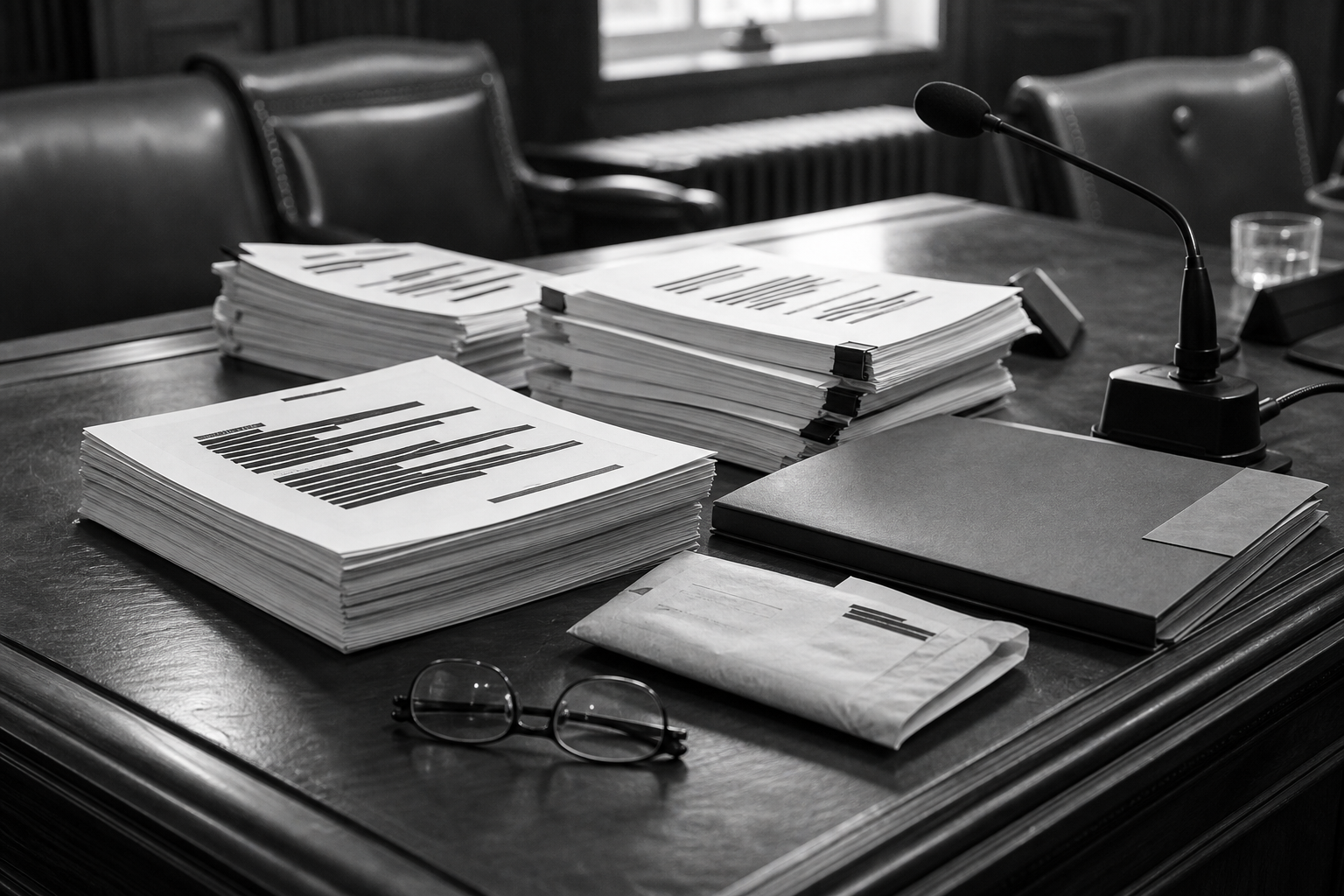
That distinction gives practical shape to Gillibrand’s transparency concerns. Unclassified testimony creates a public record against which voters, journalists, and outside researchers can measure AARO’s stated methods. A classified briefing serves a different oversight function: senators with the appropriate access can test whether the public account omits material details for legitimate protection reasons or merely leaves an accountability gap. Neither format replaces the other. Public explanation permits scrutiny; protected discussion permits examination of sensitive underlying material.
Official reports and website releases are the bridge between those channels. A useful public release identifies the scope of the review, distinguishes resolved from unresolved cases, describes evidentiary limits, and avoids implying that an unresolved report proves an extraordinary cause. A weak release supplies conclusions without enough method or context for readers to understand how the office reached them. Public reporting tools similarly matter because they create an avenue for information to enter the system, while still requiring screening, corroboration, and appropriate privacy protections.
The same care applies to references to a UAP Disclosure Act or archival-disclosure framework. A legislative proposal can express Congress’s preferred approach to records collection, review, and release, but it is not operational authority unless enacted. The hearing record available here does not establish a specific Gillibrand–Kosloski exchange on such a proposal. Its relevance is therefore conceptual: archival openness and AARO’s current investigative work may overlap, but they are separate mechanisms with different rules, custodians, and limits.
Why This Exchange Mattered for UAP Oversight
Kosloski’s statement that AARO had a secure reporting mechanism gave Gillibrand a concrete benchmark Congress could revisit. A reporting channel is meaningful only if submissions are screened, pursued, and connected to the records or witnesses needed to test them; otherwise, it is merely an intake point. His further statement that AARO had the authorities and resources it needed supplied another baseline for judging subsequent performance.
An unresolved report can still expose a flight-safety concern, an intelligence gap, or a national-security question without establishing an extraordinary cause. Gillibrand’s questions demanded more than collection of accounts: AARO needed to obtain relevant material, distinguish allegation from corroboration, and explain why the available evidence did or did not support a resolution. On that standard, investigative method, not the number of cases left unresolved, is the more useful measure of the office’s work.
The public exchange also gave the Senate Armed Services Committee a visible set of oversight checkpoints. AARO’s reporting routes, access to information, historical review, and public-facing conclusions can be measured against later testimony, reports, and classified briefings. Public releases enable outside assessment of the process AARO describes; closed briefings let senators examine protected evidence and access problems that cannot responsibly be aired in open session.
Kosloski did not announce a deadline, a particular document-production commitment, or a new process change in this exchange. The hearing therefore did not settle individual UAP allegations or demonstrate that AARO had remedied every concern Gillibrand raised. Its concrete outcome was a public accountability framework: credible reporting pathways, meaningful access to pertinent records, defensible casework, and sufficient communication for Congress to determine whether the office is meeting its mandate.
Bottom Line: A Test of AARO’s Accountability, Not Proof of Extraordinary Claims
A deadline, a document-release pledge, or a defined corrective step would have converted the November 19, 2024 exchange into an immediate operational commitment. None emerged. Gillibrand’s questions instead left the committee with specific points against which it can assess later testimony and published work: whether reports receive substantive inquiry, whether AARO can obtain pertinent records and witnesses, and whether its public explanations distinguish evidence from uncertainty.
That is why the exchange matters. It put congressional expectations for a capable, transparent, and responsive UAP office into the public record. It did not substantiate crash-retrieval claims, non-human intelligence, or any other extraordinary explanation. Gillibrand’s questions were demands for scrutiny; Kosloski’s answers were agency representations; allegations not corroborated in the hearing remained unresolved.
Readers can examine the underlying record through the Senate Armed Services Committee’s November 19, 2024 hearing page for “Unidentified Anomalous Phenomena: Exposing the Truth,” its official video or transcript, Kosloski’s prepared testimony, and AARO’s published case inventory, reporting, and public accountability record. Those primary materials separate the documented oversight exchange from broader UFO news and claims the hearing did not prove.
What Gillibrand’s Questions Reveal About AARO Accountability
AARO’s accountability should be measured through an auditable chain: a report is received, relevant material is preserved and obtained, analysts test competing explanations, Congress receives a meaningful account, and the public receives as much of that account as classification permits. A stated procedure describes how that chain is intended to work; demonstrated outcomes would show whether it worked in particular cases.
Gillibrand’s questions sharpened that distinction. Her concern was not simply whether AARO could describe a mission, but whether congressional visibility, accessible reporting, responsive follow-up, and public-facing explanations would make the office answerable for its performance. A strong signal is a record that identifies what evidence was reviewed, what limits affected the analysis, and why a conclusion remained uncertain. A weak signal is an assertion of process without enough information to assess its execution.
The unresolved issue is therefore institutional rather than extraordinary: how far AARO can provide meaningful UAP transparency while withholding details that could expose protected capabilities, operations, sources, or personal information. Readers can evaluate that boundary through the Senate hearing record, Kosloski’s prepared testimony, and AARO’s released reports, comparing the office’s public descriptions with the level of specificity Congress sought.
Frequently Asked Questions
-
What is AARO and what authority does it have over UAP investigations?
The All-domain Anomaly Resolution Office is a Department of Defense office that works with the Office of the Director of National Intelligence to receive, analyze, and seek to resolve anomalous reports across air, sea, space, and other domains. It can request information needed for its work, but it does not automatically control every agency record or classification decision.
-
What did Kirsten Gillibrand ask AARO Director Jon Kosloski at the November 19, 2024 Senate UAP hearing?
Gillibrand questioned whether current and former government personnel could securely report information to AARO, whether the office could access classified records and witnesses, and whether it could investigate historical allegations. She also pressed Kosloski on public disclosure, case resolutions, and whether AARO needed more funding, staff, or legal authority.
-
Did the 2024 Senate UAP hearing produce evidence of non-human intelligence or a secret crash-retrieval program?
No. The November 19, 2024 hearing did not establish alien visitation, non-human intelligence, crash-retrieval programs, or a government UFO cover-up. Kosloski cited AARO’s historical review, which found no verifiable evidence that the U.S. government had confirmed extraterrestrial technology or operated a concealed reverse-engineering program.
-
What should Congress and the public look for when evaluating AARO’s UAP accountability?
Look for evidence that reports are received, relevant records and witnesses are obtained, competing explanations are tested, and conclusions explain the evidence and any unresolved limits. Strong public releases should identify the review scope, distinguish resolved from unresolved cases, and describe why classification or missing data prevents fuller disclosure.