Why the Go Fast Video May Not Show What You Think
Learn why the Go Fast video UAP looks so fast, how parallax and sensor geometry shape the footage, and what evidence remains uncertain.
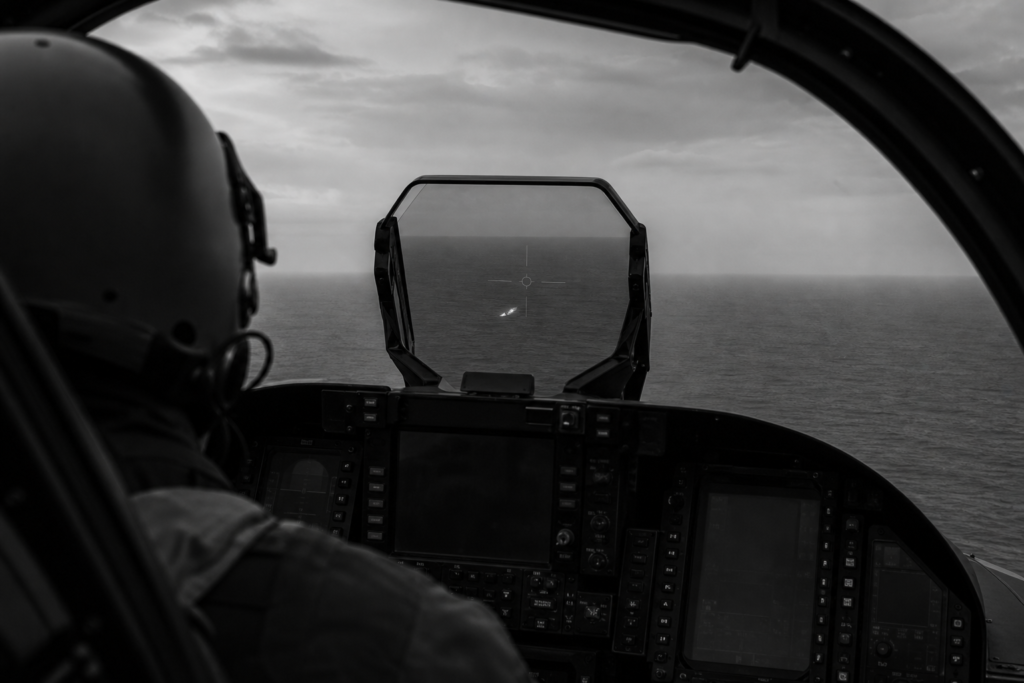
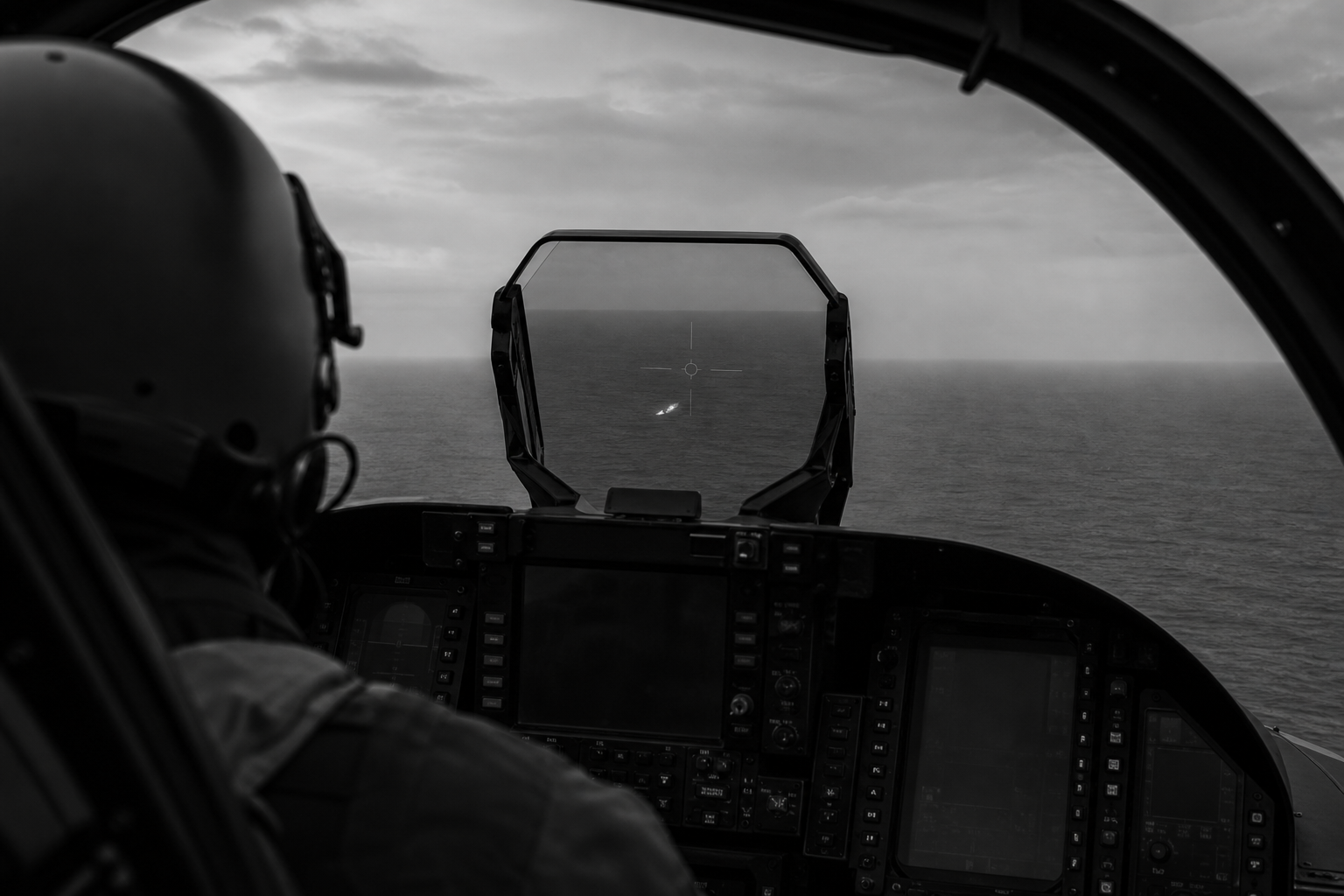
The Go Fast video UAP clip creates an immediate, powerful impression: a small object appears to skim rapidly across the ocean as a military sensor tracks it. That impression is real as an experience of watching the footage. It is not, however, the same thing as a measured ground speed, or an identification of what the object was.
A sensor display shows an object’s changing position in a camera’s view. To turn that apparent motion into a reliable performance claim, an analyst needs more: the object’s range and altitude, the aircraft’s own motion, viewing geometry, the targeting pod’s tracking behavior, and relevant wind conditions. Change any of those inputs and the same image movement can imply very different real-world motion.
This distinction matters for UAP evidence. Authentic military footage can document an unresolved observation without independently establishing extraordinary acceleration, unusual speed, or technology beyond known capabilities. The public clip is compelling; the public measurement record is incomplete.
The sections ahead separate the visible facts from the assumptions layered onto them. They examine how a moving jet and camera geometry can magnify apparent speed, what the on-screen context can and cannot tell us, and how to read the limited official assessment without converting uncertainty into either a mundane verdict or an extraordinary one.
Why the Go Fast Video Looks Extraordinary, and Why Appearance Is Not a Measurement
What gives the sequence its force is the combination of a locked-looking target, an ocean horizon, and a display that makes every shift feel immediate. The eye naturally reads that image as a small craft tearing across the water. But a targeting-pod image records a line of sight: how the object moves against the camera’s view, not a direct readout of its path over the ocean.
That is why provenance and performance are separate questions. Footage authenticated as recorded by Navy personnel establishes that a military sensor captured an observation. It does not, on its own, identify the object or establish extreme speed, acceleration, altitude, or maneuverability.
A strong performance claim requires contextual measurements. Range determines how much real distance corresponds to a small movement on screen; aircraft position and velocity determine how much of the apparent motion may come from the jet; viewing angle and pod tracking affect the image; and wind matters if the object is drifting rather than self-propelled. Without those inputs, the dramatic visual remains an unresolved observation, not a measured demonstration of extraordinary capability.
What Is Publicly Known About the Navy Go Fast Footage
The public clip itself provides a narrow but useful record: an airborne sensor view, a small tracked image, an ocean backdrop, and an overlay of abbreviated readouts. Those elements establish the setting in which the observation was recorded; they do not turn every display value into a complete reconstruction of the encounter.
The camera is generally described as an ATFLIR targeting pod: a stabilized aircraft sensor designed to point at and track a selected line of sight. Its overlay can show items such as viewing mode, angular information, aircraft-related data, and targeting status. A good reading distinguishes those categories. A visible aircraft speed, for example, describes the observing jet, while an angle marks where the sensor is looking; neither is automatically the object’s speed over the water.
The ocean horizon supplies visual context but not a surveyed distance scale. The public release does not, by itself, provide a complete, independently testable package of target range, target altitude, wind at the object’s location, aircraft trajectory, sensor settings, and corroborating tracks. Each missing input changes what the image could mean.
Official acknowledgment of the Navy Go Fast video therefore answers a provenance question: the footage is treated as a genuine military recording rather than a fabricated clip. It does not publicly supply a solved identity or a full accounting of every variable needed to calculate performance. For related coverage of the Go Fast footage, the appropriate starting point is neither dismissal nor extraordinary inference, but a careful inventory of what the visible record can, and cannot, measure.
The Central Issue: Apparent Motion Is Not Ground Speed
A useful way to read the image is to separate an angle from a distance. The sensor can register that its line of sight is rotating rapidly as the target shifts across the frame. That is apparent angular motion: a change in where the object lies relative to the camera’s pointing direction. It is not yet a measurement of how many miles the object has travelled over the ocean.
Range is the missing conversion factor. The same small angular change can represent a short sideways movement by a nearby object or a much larger sideways movement by a distant one. Imagine watching two birds pass the edge of a car window: the nearer bird seems to sweep across your view far faster than a distant bird, even if their actual speeds are similar. Conversely, an object’s dramatic-looking movement on a narrow camera view does not establish an extreme ground speed unless its distance is known reliably.
The observing jet further complicates the geometry. Its own forward motion changes the line of sight continuously, while the pod may rotate to retain the target. What appears on screen is therefore a combined result of target motion, aircraft motion, camera pointing, and the changing angle between them. A target that is nearly stationary relative to the air can still show substantial apparent speed from a fast-moving aircraft’s perspective.
True ground speed means the object’s rate of movement across the Earth’s surface. Deriving it requires a flight-path model: target range and altitude, the jet’s position and velocity, the camera’s viewing angle, and the target’s direction of travel. If the object is windborne, wind at its actual altitude also matters because its air-relative motion and ground track may differ. The Go Fast video explained as a speed measurement therefore cannot rest on a screen crossing alone; the public image shows changing geometry, while the inputs needed to turn that geometry into a confident velocity remain unresolved.
How Parallax, Tracking, and a Moving Jet Can Make the Object Seem Faster
A useful checkpoint is the rate at which foreground and background seem to shift from the observer’s position. From a passenger window, a roadside sign appears to slide past quickly while a distant hill barely moves. That difference is parallax: the viewing-angle change produced by the observer’s own movement. A fast jet creates the same effect. As it flies forward, a nearby or moderately distant object can move sharply against the ocean background even if the object’s own motion is modest. Parallax is necessary to interpret the image, not a stand-alone answer to the object’s identity.
Camera tracking adds another layer. A targeting pod can slew, rotate its optics, to keep a selected point near the center of its field of view. That rotation responds to a changing line of sight, caused by the jet’s movement, the target’s movement, or both. A tracking cue or lock-like display therefore indicates that the sensor is maintaining attention on something; it does not independently show that the target accelerated, made a sharp maneuver, or outran the aircraft. The important distinction is between an object’s changing position in the frame and a reconstruction that establishes a rapid change in its real-world velocity.
The ocean makes intuitive judgment harder because it supplies little fixed foreground detail. There are no passing buildings, road markings, or known-size objects to reveal whether the target is close, far away, high, or low. A small nearby object and a larger distant one can produce similarly ambiguous images, while camera tracking can make either appear to skim dramatically across the water. The visible movement is real within the viewing geometry; the unresolved question is how much of that apparent speed belongs to the object’s ground track rather than to the moving jet and rotating sensor.
Why Wind, Range, and Altitude Matter to Any Go Fast Explanation
A windborne explanation is a testable geometry model, not a label to attach from the image alone. It starts by assigning a possible range estimate and altitude, then combining the observing jet’s flight path with wind speed and direction at the object’s assumed height. The resulting calculation asks whether an object drifting with that air mass could produce the changing line of sight seen by the pod. A surface weather report is not enough: winds can differ substantially with altitude, and the relevant wind is the vector, both its speed and the direction in which it carries an object.
Range is the model’s most sensitive input. At a short assumed range, the jet’s forward motion can account for a large share of the apparent lateral movement; at a longer range, the same angular change represents more physical distance. Altitude changes two things at once: which wind layer may matter and how the object’s projected position relates to the horizon and ocean below. A reconstruction also needs the aircraft’s heading, speed, and viewing angle. Changing any of these assumptions can change a seemingly dramatic track into one compatible with modest wind-relative motion.
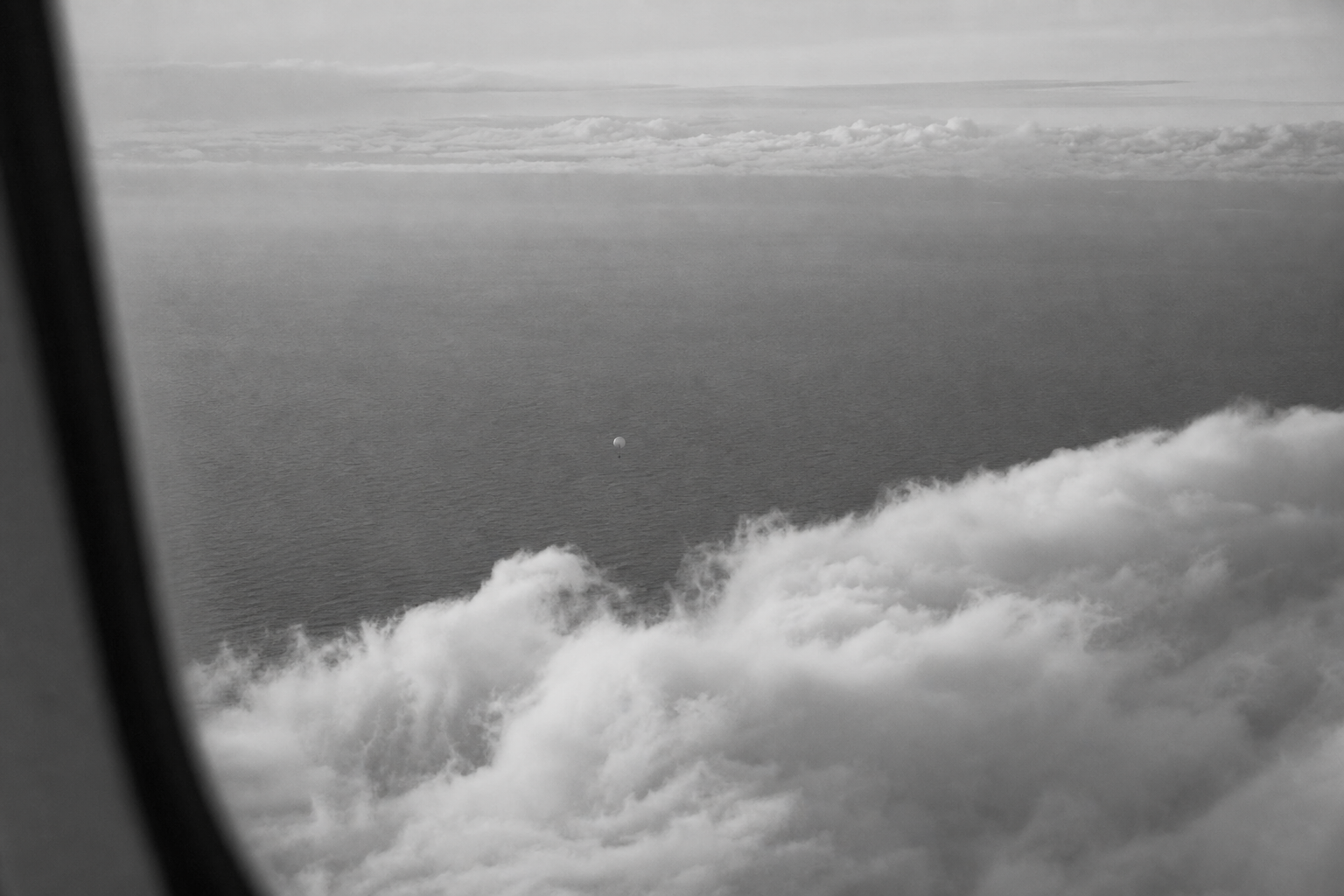
A balloon-like or other drifting-object interpretation can therefore fit some combinations of range, altitude, and wind, but it is not established by that fit. It would become weaker if independently measured range and altitude, together with a well-constrained wind profile and aircraft track, required sustained motion far beyond the modeled air mass. Clear evidence of controlled turns, acceleration inconsistent with the reconstructed geometry, or a trajectory that repeatedly departed from plausible drift would also weigh against it. The public clip alone does not supply enough of those constraints to choose confidently among such possibilities.
The Limited Official Conclusion: No Demonstrated Extraordinary Performance
An unresolved label is not a performance finding. In public UAP work, it can mean that the available record does not support a confident identification, not that the observed object exhibited capabilities beyond known aircraft, balloons, drones, or other ordinary possibilities. Those are separate evidentiary questions, and each requires its own supporting measurements.
This distinction keeps the Pentagon UFO office and AARO UAP discussion in proportion. A cautious official assessment may leave identity open because the public material lacks a decisive image, range solution, correlated radar track, altitude record, or complete environmental context. That same absence prevents the video from establishing extraordinary speed. An unknown range makes apparent motion an uncertain conversion; the jet’s motion, viewing geometry, and possible wind effects leave multiple non-extraordinary reconstructions in play.
“Unresolved” therefore does not mean “impossible.” The Go Fast footage does not, on its public record, demonstrate a craft crossing the water at extreme ground speed, entering or leaving the ocean, making impossible maneuvers, or using non-human technology. It documents a real military-sensor observation whose identity remains uncertain in the material available to viewers, consistent with the distinction between unresolved cases and demonstrated anomalous performance. That is a limited conclusion, but it is stronger than speculation because it describes exactly what the evidence can, and cannot, carry.
What the Go Fast Video Actually Supports, and the Questions It Leaves Open
A practical evidence ladder separates what the clip records from what a stronger conclusion would require. It supports that a military sensor captured an aerial observation that remains unidentified in the public material. It does not establish a measured target range, a complete three-dimensional track, extraordinary ground speed, or unusual technology.
- Stronger: calibrated range and angle data would convert the pod’s line of sight into position estimates.
- Stronger still: synchronized radar returns and complete aircraft telemetry would test the target track against the jet’s own motion.
- Most decisive: altitude-specific wind records, full sensor-mode information, and independent visual or instrumented observations could discriminate among competing explanations.
That is the useful standard for responsible UFO news and UAP disclosure coverage: preserve the observation, state the missing measurements, and resist making identity or performance claims that the released clip cannot carry. The public Go Fast record supports neither alien-proof certainty nor categorical dismissal.
A Striking Video Is Not a Final Answer
The disciplined response to a dramatic clip is to ask what measurement would have to exist before the image could bear the conclusion being drawn from it. A rapid shift across a targeting-pod display is a visual result; verified ground speed is a reconstructed quantity. The gap between them is filled by range, altitude, the jet’s motion, sensor geometry, camera behavior, and, where drifting is possible, the wind at the object’s height.
That standard also separates two different questions that striking footage can blur together. An object may remain unidentified in the publicly available record because the available sensor data do not resolve its nature. That uncertainty does not, by itself, establish extraordinary claims about its propulsion, speed, or origin. Conversely, a plausible ordinary interpretation is not a confirmed identification without measurements that distinguish it from alternatives.
For the Go Fast video UAP, visual intuition is therefore the weakest starting point, not the final verdict. Give greater weight to a constrained range and altitude, a known aircraft track, sensor-mode context, altitude-specific wind, and independent corroboration. Until those pieces are available together, the responsible conclusion is narrow: the footage is compelling, but it is not a complete performance measurement or a final answer about the object.
Frequently Asked Questions
-
What does the Go Fast UAP video actually show?
It shows a Navy aircraft’s ATFLIR targeting pod tracking a small unidentified object against an ocean backdrop. The public footage confirms a genuine military sensor observation, but it does not provide a complete target range, altitude, or three-dimensional flight track.
-
Was the object in the Go Fast video moving at extraordinary speed?
The public video does not demonstrate extraordinary ground speed. A target’s true speed requires its range, altitude, direction of travel, aircraft position and velocity, viewing geometry, and potentially wind at the target’s altitude.
-
How can parallax make the Go Fast object look faster than it is?
Parallax occurs when the observing jet’s forward motion changes the line of sight to an object, making it shift rapidly against the distant ocean background. A nearby or moderately distant object can appear to move quickly in the frame even if its own motion is modest.
-
What do the Go Fast video display readouts measure?
The ATFLIR overlay can show sensor mode, angular information, targeting status, and aircraft-related data. A visible aircraft speed refers to the observing jet, while an angle shows where the sensor is pointed, so neither automatically gives the object’s speed over the water.
-
What evidence would be needed to determine whether the Go Fast object was a balloon or something unusual?
A reliable assessment would need calibrated range and angle data, target altitude, complete aircraft telemetry, altitude-specific wind speed and direction, sensor-mode information, and independent corroboration such as radar. A drifting-object explanation is plausible only if those measurements show that windborne motion fits the reconstructed track.