House Intelligence Hearing on UAPs: May 17, 2022 Testimony from Scott Bray and Ronald Moultrie
Explore the May 17 2022 UAP hearing: Scott Bray and Ronald Moultrie's testimony on reports, risks, evidence, and what it did not confirm.
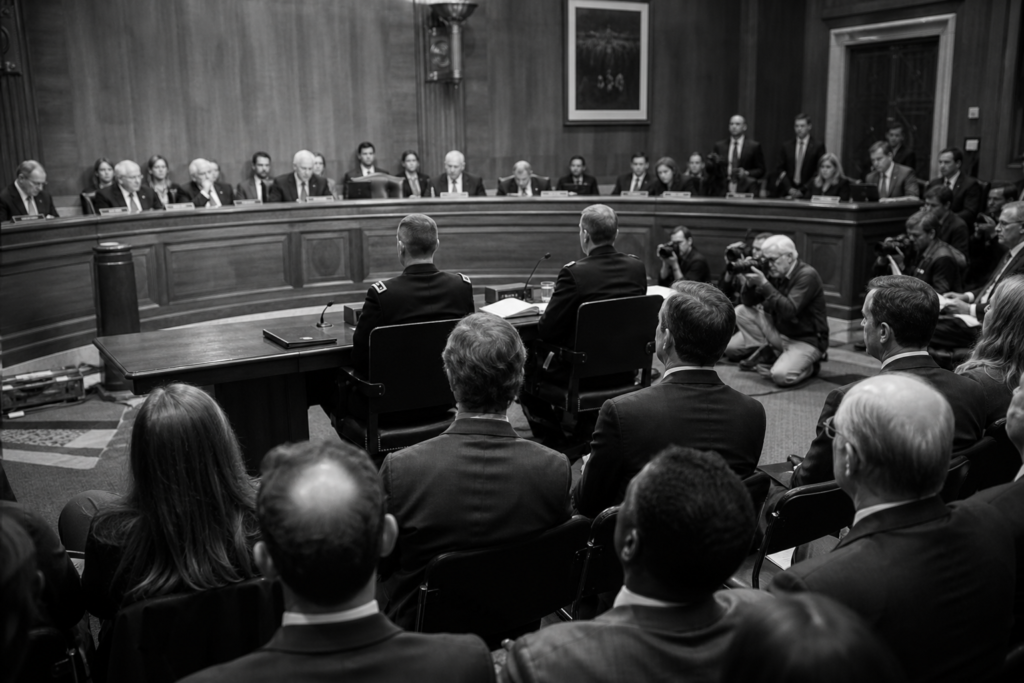
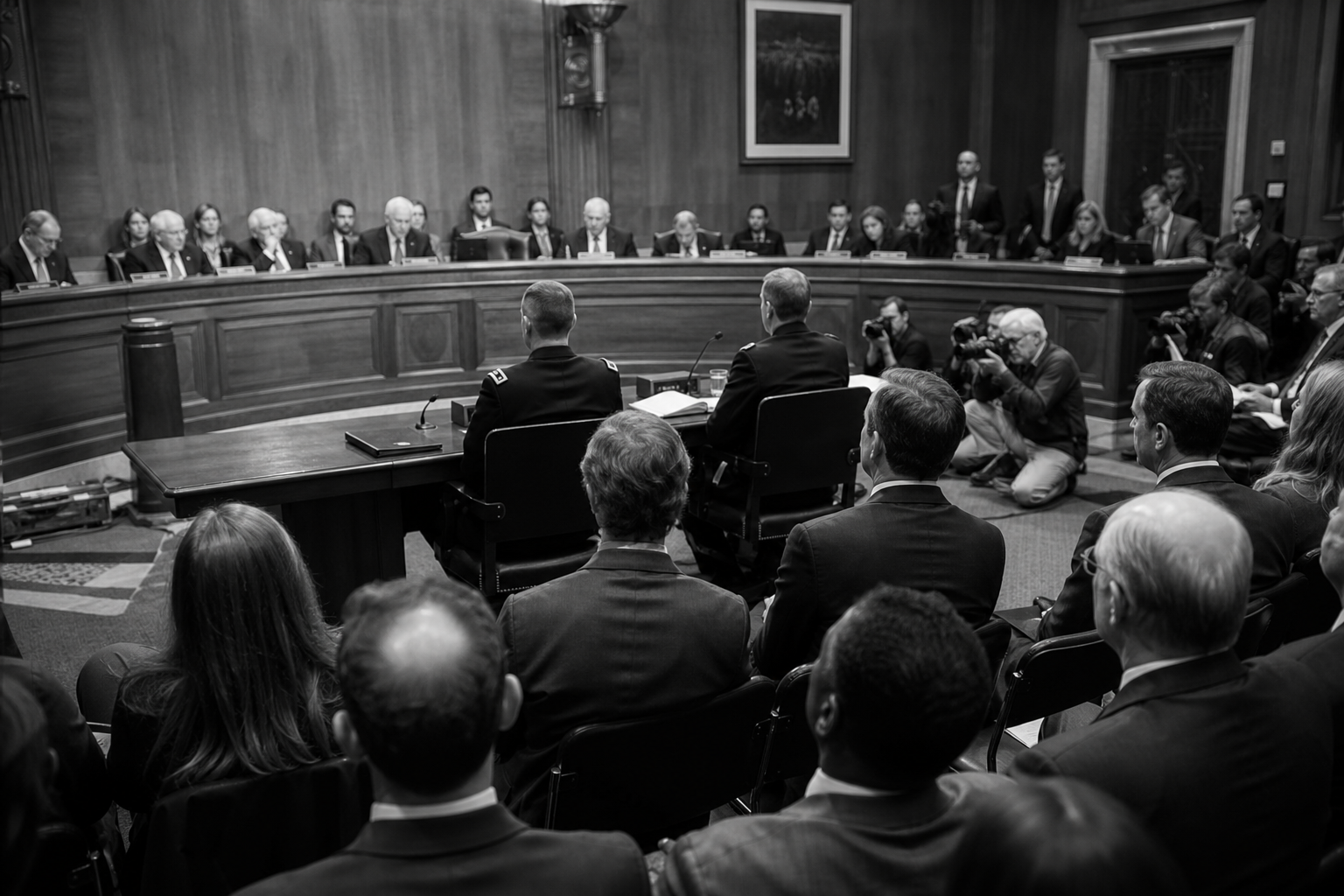
The House Intelligence UAP hearing on May 17, 2022 brought the Defense Department’s handling of unidentified aerial phenomena into an open congressional setting, a notable shift for a subject usually discussed through classified reporting, military encounters, and fragmentary public releases.
Ronald Moultrie, then the Under Secretary of Defense for Intelligence and Security, and Scott Bray, the deputy director of naval intelligence, addressed how the department was collecting reports, reducing barriers to reporting, assessing possible flight-safety and intelligence risks, and improving analysis. Their testimony included a larger reported-case total than the previous public intelligence assessment and illustrated how apparently unusual imagery can have ordinary explanations when analysts obtain sufficient context.
This account stays with that record. It distinguishes what the witnesses directly described from cases that remained unresolved because available data were incomplete, and from broader claims about non-human or extraordinary origins that the public hearing did not establish. The result was not a solution to every report; it was a public measure of how the Pentagon and Congress were beginning to treat UAP as an oversight, operational, and national-security matter.
What Happened at the May 17, 2022 House Intelligence UAP Hearing
On May 17, the House Permanent Select Committee on Intelligence assigned the public portion of its UAP inquiry to its Subcommittee on Counterterrorism, Counterintelligence, and Counterproliferation. The subcommittee convened an open hearing titled “Unidentified Aerial Phenomena,” then moved to a closed session, allowing members to hear public testimony while reserving sensitive operational and intelligence details for classified discussion.
Ronald Moultrie, the Defense Department’s Under Secretary of Defense for Intelligence and Security, appeared alongside Scott Bray, the deputy director of naval intelligence. Their presence defined the hearing’s institutional frame: Congress was examining how the Pentagon identifies, reports, analyzes, and protects against objects or phenomena encountered in military operating areas. The question was not whether every report represented a single kind of object; it was whether incomplete identification could create intelligence gaps, hazards to aviators, or openings for foreign surveillance and technology.
The 2022 House UAP hearing was especially notable because it was described as the first open House hearing on the subject in more than 50 years. That historical marker reflects the unusual degree of public oversight, not a finding that the underlying reports had extraordinary explanations. “UFO” remained the familiar public search term, but the witnesses used “UAP,” the government’s operative label for observations not immediately identified.
That distinction matters when reading the May 2022 UFO congressional hearing record. An unidentified report is a starting point for analysis, often shaped by limited sensor data or context, not confirmation of an alien, non-human, or otherwise extraordinary origin. The open session documented a defense and intelligence process under congressional scrutiny; the closed session addressed material that could not responsibly be aired in public.
Who Testified: Ronald Moultrie and Scott Bray
Titles and chains of responsibility mattered to the limits and value of the public testimony. Ronald Moultrie appeared in his capacity as Under Secretary of Defense for Intelligence and Security, the senior Pentagon official responsible for integrating intelligence and security policy across the department. That portfolio placed him above any single service’s UAP cases. His remarks therefore addressed leadership responsibility: whether personnel could report encounters without stigma, whether reports reached the right offices, and whether the department was organizing oversight around a continuing operational problem.
Scott Bray testified as Deputy Director of Naval Intelligence. His role brought the hearing closer to the Defense Department UAP Task Force framework, reports from naval personnel and the intelligence work used to sort observations, assess available sensor information, and identify potential threats. The division was useful: Moultrie explained the Pentagon-level management response, while Bray described how reports entered and moved through the analytical system.
Neither man appeared as a whistleblower offering personal allegations outside official channels. Their Scott Bray Ronald Moultrie UAP testimony was departmental testimony from serving officials, bounded by what could be discussed publicly. Nor were they speaking for the All-domain Anomaly Resolution Office, or AARO, a later institution. Reading their answers through their May 2022 jobs keeps the record properly focused on the Defense Department’s then-current reporting and intelligence responsibilities.
What Bray and Moultrie Said About UAP Reporting, Risk, and Analysis
For Bray, the immediate problem was not a shortage of labels but the quality and flow of observations. He said the department was working to reduce the stigma that had discouraged aviators and other personnel from reporting encounters, while building reporting mechanisms that could capture the details analysts need: where and when an event occurred, which sensors recorded it, and whether it created an operational concern. A report could then become an intelligence lead rather than an isolated anecdote. That approach treated unidentified aerial phenomena as objects or observations requiring collection, correlation, and explanation, not as evidence of any predetermined origin.

Bray described an analytic framework that sorted possible explanations into distinct categories. Airborne clutter covered objects such as balloons, birds, plastic bags, or debris that can appear unusual to a sensor or crew. Natural atmospheric phenomena covered weather and related effects. Other categories asked whether an observation could involve a U.S. government or industry developmental program, a foreign adversary system, or an other explanation. The final category was a holding space for cases that could not be assigned confidently with the available information; it did not mean extraterrestrial technology. The practical distinction was between a case that was unresolved because data were limited and one that had been affirmatively identified.
Moultrie put that work in national-security terms. He emphasized the obligation to protect military personnel, military installations, and operations, and said reports had to be taken seriously even when the department could not immediately identify what had been observed. In that sense, better reporting served two purposes at once: it could reveal a flight-safety issue affecting crews, and it could help determine whether an observation reflected surveillance, collection, or a capability of concern. His testimony did not announce a conclusion about the nature of the remaining cases. It described a management expectation that reports move through a more credible process, without ridicule or premature dismissal, so the Pentagon could distinguish ordinary explanations from genuine intelligence questions.
What the Public Hearing Established
The clearest numerical disclosure concerned the size of the reporting pool, not a count of extraordinary objects. Bray told the subcommittee that the department had “approximately 400” UAP reports. That figure was larger than the 144 reports examined in the Office of the Director of National Intelligence’s June 2021 Preliminary Assessment, which covered observations reported largely between 2004 and 2021. The two totals were not like-for-like measures of confirmed phenomena: the later figure reflected continued accumulation of reports and a stronger effort to bring encounters into formal channels.
Nor did “approximately 400” mean that 400 objects had defeated analysis, displayed unusual performance, or represented foreign or non-human technology. A report records an observation; it can concern an object, a sensor return, or an event that later proves ordinary. Bray acknowledged that most reports offered limited data, a constraint that can prevent analysts from identifying an observation confidently even where no extraordinary explanation is warranted. The number therefore measured the volume of material requiring triage and assessment, rather than a final inventory of unexplained incidents.
The hearing also placed a concrete aviation-risk figure on the record. Bray said there had been 11 reports of documented near misses between UAP and military assets. That did not establish collisions or identify what caused each encounter, but it explained why the department treated reporting as more than a public-curiosity issue. The Defense Department’s response was to standardize collection, reporting, and analysis so that future cases would contain more useful contextual and sensor information. A rising report total could thus be a sign of improved reporting discipline as well as a changing operational picture, the essential distinction often lost in contemporaneous UAP news coverage.
What Was Shown in the Open Session, and What It Did Not Prove
The most consequential visual shown to the subcommittee was nighttime, green-tinted imagery recorded from an MQ-9 remotely piloted aircraft in the Middle East. On screen, several bright objects appeared triangular. Bray told members that the triangle-like appearance was consistent with an image-processing effect associated with the sensor’s optics; the shapes themselves were not evidence that the objects were triangular craft. He said the objects in that example were assessed as likely commercial aircraft.
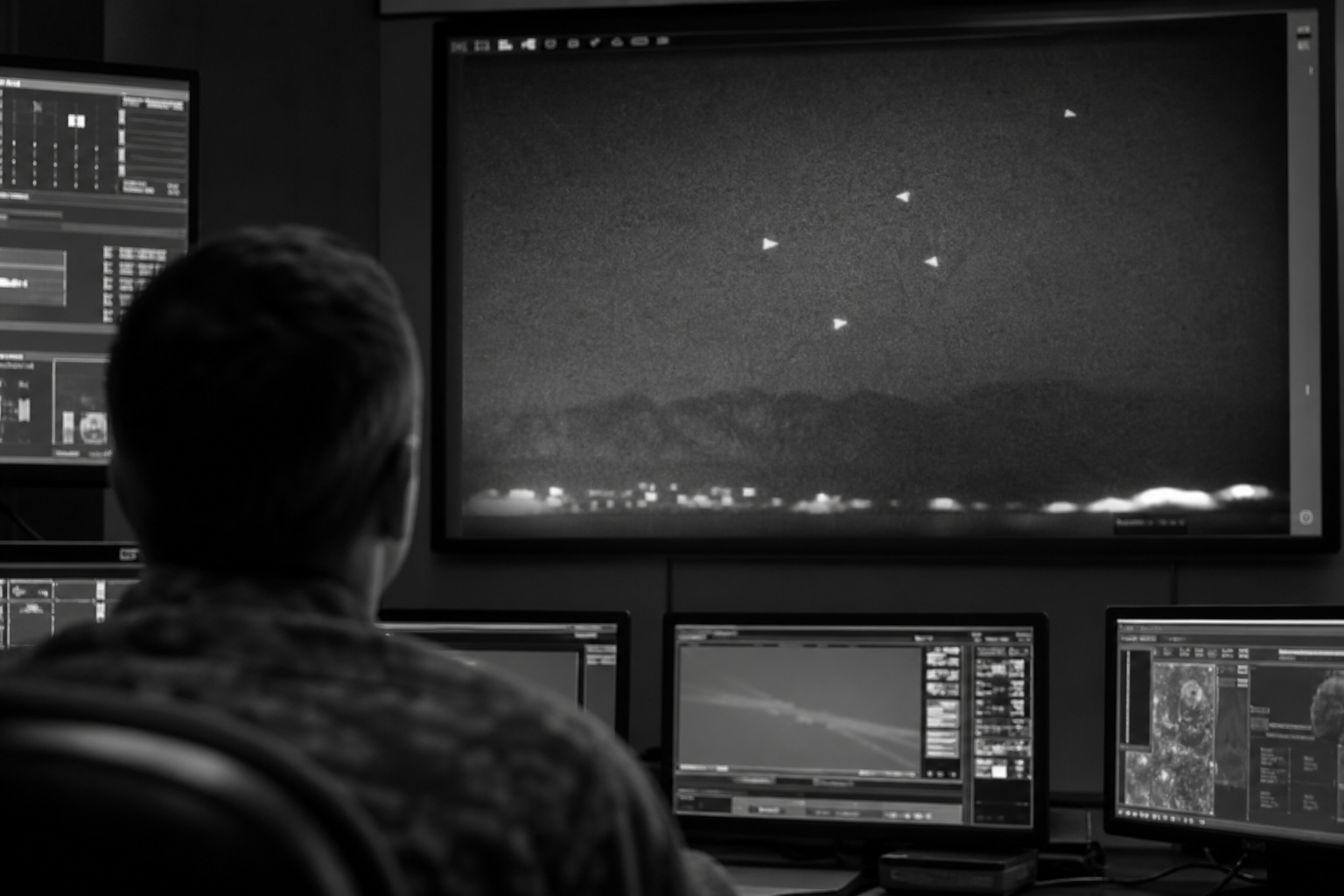
That demonstration supplied an important analytic distinction. A sensor image records light through a particular optical system and processing chain, rather than providing a literal outline of an object. Apparent geometry can therefore arise from the instrument, especially in low-light imagery, while the underlying target may be conventional. The value of the MQ-9 example was not a dramatic UFO disclosure but a public illustration of why analysts compare imagery with other available data before assigning an identification, as with officially released Pentagon UAP footage.
Bray also discussed a separate, brief visual example that remained unidentified in the public session. Its unresolved status meant the available material did not support a confident identification; it did not establish exotic technology, exceptional performance, or a non-human origin. The displayed material thus made the hearing’s central evidentiary point unusually clear: footage can be genuine while its interpretation remains uncertain, and unidentified flying objects are an analytical category rather than a conclusion about what was observed.
What Remained Unresolved, and What the Hearing Did Not Confirm
The remaining uncertainty was operational, not a license to supply an extraordinary explanation. An observation could stay unidentified because the available record lacked enough corroborating sensor data, contextual information, or consistent reporting to establish what it was. The key analytic question was whether a case reflected an ordinary object or effect that could be resolved with better information, or an intrusion that warranted sustained intelligence attention, particularly if a foreign actor might be collecting against U.S. forces or operations.
Bray did not tell the subcommittee that the department possessed evidence of an extraterrestrial origin. The public testimony treated non-human intelligence as unsubstantiated, while leaving some individual reports without a confident identification. That is a consequential distinction: “unidentified” describes the status of an assessment at that point in the evidentiary process; it does not mean inexplicable, alien, or technologically exceptional.
The May 17, 2022 open hearing also did not establish alien spacecraft, crash-retrieval programs, reverse engineering of recovered craft, biologics, or a government UFO cover-up. Claims of that kind belong to later public allegations and witness accounts raised during the 2023 House hearing, not to the factual record created by Moultrie and Bray that day. The hearing documented a need to improve collection and analysis precisely because uncertainty can conceal both mundane explanations and legitimate security concerns; it did not convert that uncertainty into alien disclosure.
Why the Hearing Mattered: A Public Oversight Turning Point
The institutional change was that these matters could be examined as a continuing government responsibility rather than left to episodic public speculation. In open testimony, members pressed Pentagon officials on whether personnel could report encounters, whether the resulting information was being collected for intelligence purposes, and whether aviation risks were receiving sustained attention. That combination made the hearing an accountability event: Congress publicly tested whether the department’s reporting and analytic system matched the operational problem.
The UAP Task Force discussed on May 17 was the then-existing body supporting this work. It was not the All-domain Anomaly Resolution Office established later in 2022; later AARO activity and reporting should not be read back into Bray and Moultrie’s testimony. The lasting significance is more disciplined than most UFO news framing: the hearing normalized scrutiny of a real reporting and analysis problem while leaving its hardest individual cases unresolved.
The Lasting Takeaway From the May 17 Hearing
Its durable value lies in the standard it set for public accounting. Bray’s reference to roughly 400 reports showed that the Pentagon was treating UAP reporting as a growing body of operational information to collect, compare, and assess, not as a collection of isolated stories. Moultrie’s emphasis on the protection of personnel, installations, and operations explained why that work belonged within intelligence and security responsibilities. A formal reporting process changes the quality of the record: it can preserve sensor data and context for analysis, whereas a bare observation may remain difficult to resolve.
The House Intelligence UAP hearing May 17 2022 did not, however, turn incomplete cases into proof of a particular origin. The open-session footage illustrated both sides of the issue: one apparently striking visual effect had a conventional sensor-based explanation, while another example remained unidentified because the public evidence did not permit a confident conclusion. That distinction is the essential takeaway. Congressional oversight made the department’s handling of uncertainty more visible and more answerable; it did not supply confirmation of extraterrestrial, non-human, or adversary technology for the unresolved reports.
Frequently Asked Questions
-
Who testified at the May 17, 2022 House Intelligence UAP hearing?
Ronald Moultrie, the Under Secretary of Defense for Intelligence and Security, testified alongside Scott Bray, the Deputy Director of Naval Intelligence. They addressed Pentagon reporting, analysis, flight safety, and national-security concerns involving UAP.
-
How many UAP reports did the Pentagon discuss at the May 2022 hearing?
Scott Bray said the Defense Department had approximately 400 UAP reports. This was higher than the 144 reports examined in the June 2021 ODNI Preliminary Assessment and reflected continued reporting and collection efforts.
-
What did Scott Bray say about the triangular objects shown in the MQ-9 UAP video?
Bray said the nighttime triangular appearance was consistent with an image-processing effect caused by the MQ-9 sensor’s optics. The objects shown were assessed as likely commercial aircraft, not triangular craft.
-
Did the 2022 House UAP hearing confirm alien spacecraft?
No. The public hearing did not establish extraterrestrial or non-human technology, alien spacecraft, crash-retrieval programs, biologics, or a government cover-up. Unidentified cases remained unresolved because available data were incomplete.
-
What is the difference between the UAP Task Force and AARO?
The UAP Task Force was the Defense Department body handling UAP reporting and analysis at the May 17, 2022 hearing. AARO, the All-domain Anomaly Resolution Office, was established later in 2022 and should not be treated as the office represented by Bray and Moultrie at that hearing.