First UAP Hearing in 54 Years: 400 Reports, 11 Near-Misses Disclosed
Explore the UAP congressional hearing: 400 military reports, 11 near-misses, aviation safety concerns, and what officials did not confirm.
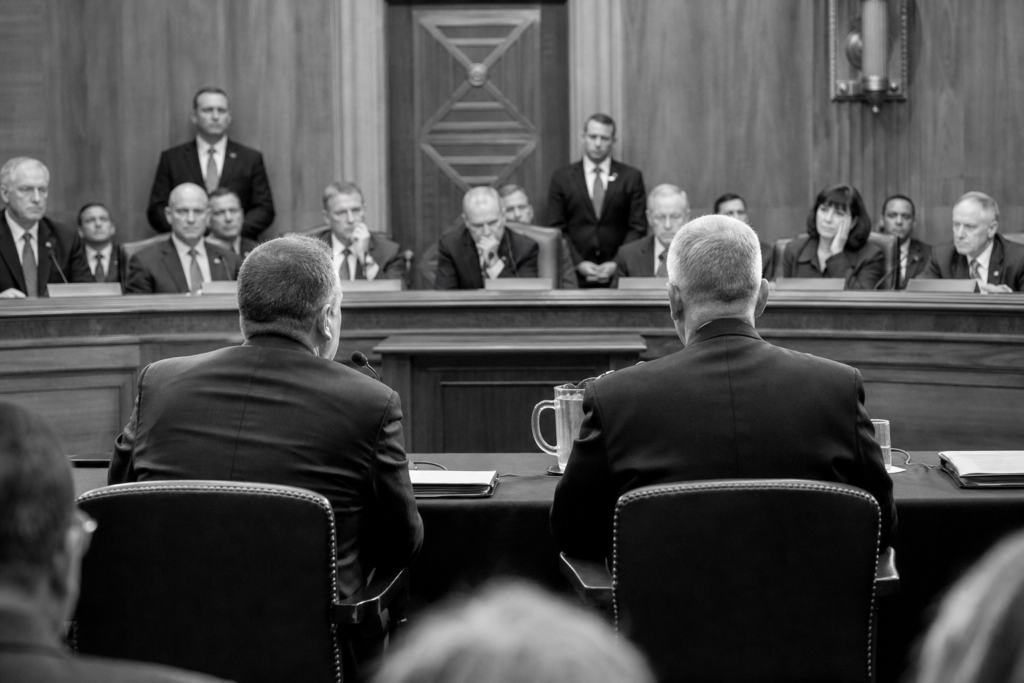
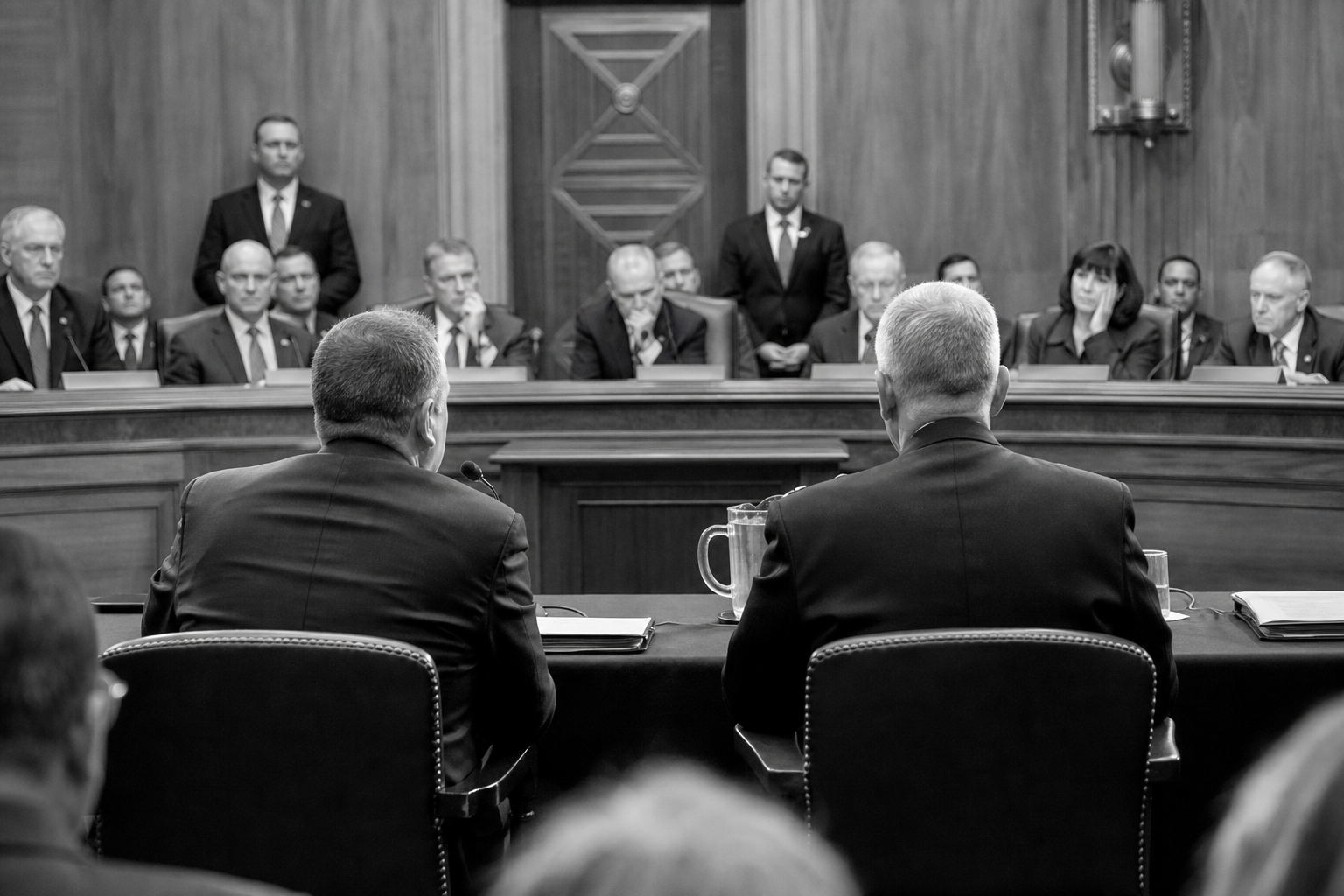
On May 17, 2022, the House Intelligence Subcommittee on Counterterrorism, Counterintelligence, and Counterproliferation held an open UAP congressional hearing, an unusually public examination of military sightings after decades in which Congress had not held a comparable public session focused on the subject. Defense intelligence chief Ronald Moultrie and Navy intelligence official Scott Bray testified. The “54 years” description points narrowly to the interval since Congress’s 1968 public UFO-focused proceedings; it does not mean lawmakers had ignored the issue entirely, as later briefings and oversight could occur behind closed doors.
The hearing’s most consequential disclosures were practical rather than fantastical. Bray said the Defense Department’s UAP Task Force had received roughly 400 reports, a count of reported encounters rather than 400 confirmed objects or threats. He also disclosed 11 reports described as near-miss incidents involving military aircraft, reports that raised flight-safety questions but did not, by themselves, establish a cause, intent, or identity. The public testimony put the scale of the reporting problem on the record while leaving central questions unresolved. Unidentified meant not yet reliably explained from the available information; it was not confirmation of extraterrestrial or non-human origins.
What Happened at the Public UAP Hearing
Bray’s account of how reports were collected sat alongside Moultrie’s description of the Pentagon’s oversight role. Moultrie, then under secretary of defense for intelligence and security, and Bray, then deputy director of naval intelligence, testified publicly on May 17, 2022, before a House Intelligence subcommittee; members then continued in a classified briefing.
That split between open and closed sessions defined what the public could learn. The hearing placed selected testimony and video evidence in the record, not every sensor record, intelligence assessment, or operational detail. Moultrie described an effort to identify potential threats and reduce the stigma that could deter service members from reporting encounters. Bray described analysis meant to sort reports into plausible categories when the evidence permitted, rather than assume every observation had the same explanation.
The title’s figures came from Bray’s oral testimony: roughly 400 reports held by the UAP Task Force and 11 reports characterized as near-misses involving military aircraft. They were reporting and flight-safety signals, not findings that identified a particular object, actor, or origin. The public hearing therefore exposed the scale of a military reporting record while retaining the essential distinction between an unresolved observation and an extraterrestrial conclusion.
Why It Was Described as the First Public UAP Hearing in 54 Years
The 54-year shorthand measures a specific kind of event: an open congressional proceeding devoted to unidentified aerial phenomena. Its usual reference point is the House Committee on Science and Astronautics’ 1968 symposium on unidentified flying objects, held during the Project Blue Book era. That forum put military and scientific discussion of sightings before the public; the May 17, 2022 House Intelligence subcommittee session again did so in a hearing centered on the subject.
That is why “first UAP hearing in 54 years” is useful but narrow. It describes the return of public, subject-specific congressional scrutiny, not a 54-year absence of congressional interest or government activity. Between 1968 and 2022, lawmakers could receive classified briefings, review intelligence material, legislate reporting and oversight provisions, and raise UAP-related questions in settings whose records were not fully public.
The distinction changes how the historical claim should be read. A public hearing creates a searchable transcript, sworn or formal witness testimony, and an opportunity for citizens to see members press officials on the record. A classified briefing can support oversight of sensitive sensor capabilities, operations, or intelligence collection, but it cannot provide that same public account. The 2022 session was therefore notable for restoring visible historical congressional oversight of the issue, while the closed session that followed showed that public disclosure remained only one part of the inquiry.
What the Roughly 400 Military UAP Reports Meant
Counting reports rather than objects is the essential checkpoint for reading the “nearly 400” figure. In Scott Bray’s May 17, 2022 testimony, it described cases received by the Defense Department’s UAP Task Force through military reporting channels. One case could combine a military aviator’s visual observation with cockpit, shipboard, or other sensor data and subsequent analysis; another could contain only limited information. The figure did not establish 400 separate physical craft, 400 confirmed aircraft, or one common explanation.
Reports also differed in evidentiary value. An encounter might include radar, infrared, or electro-optical data that captured part of an event alongside a pilot account; another might leave critical details, range, speed, shape, duration, or sensor context, unresolved. Multiple time-synchronized observations give analysts more material to assess than a single account, but neither category determines an object’s origin by itself. Here, “unidentified” meant the available information had not yet supported attribution, not that officials had reached a conclusion about what the reported phenomenon was.
The UAP hearing’s roughly 400 reports must remain tied to its May 2022 snapshot. ODNI’s June 2021 preliminary assessment examined 144 reports from November 2004 through March 2021, while ODNI’s later annual report counted 510 reports as of August 30, 2022. AARO’s fiscal-year 2024 consolidated report discussed 757 reports submitted or identified during its May 1, 2023-to-June 1, 2024 reporting period. These are separate collections, with different cutoffs and reporting arrangements, not retroactive evidence that the hearing-era cases involved the same events or a single category of object.
What Officials Said About the 11 Near-Miss Incidents
Bray’s most concrete aviation-safety disclosure was that the task force had received 11 reports in which military aircraft and a UAP were described as having a near miss. In this setting, “near miss” identifies a reported proximity event that could have created a collision risk and therefore warranted investigation. It does not establish that an impact occurred, that the object acted with hostile intent, or that investigators had determined what the object was.
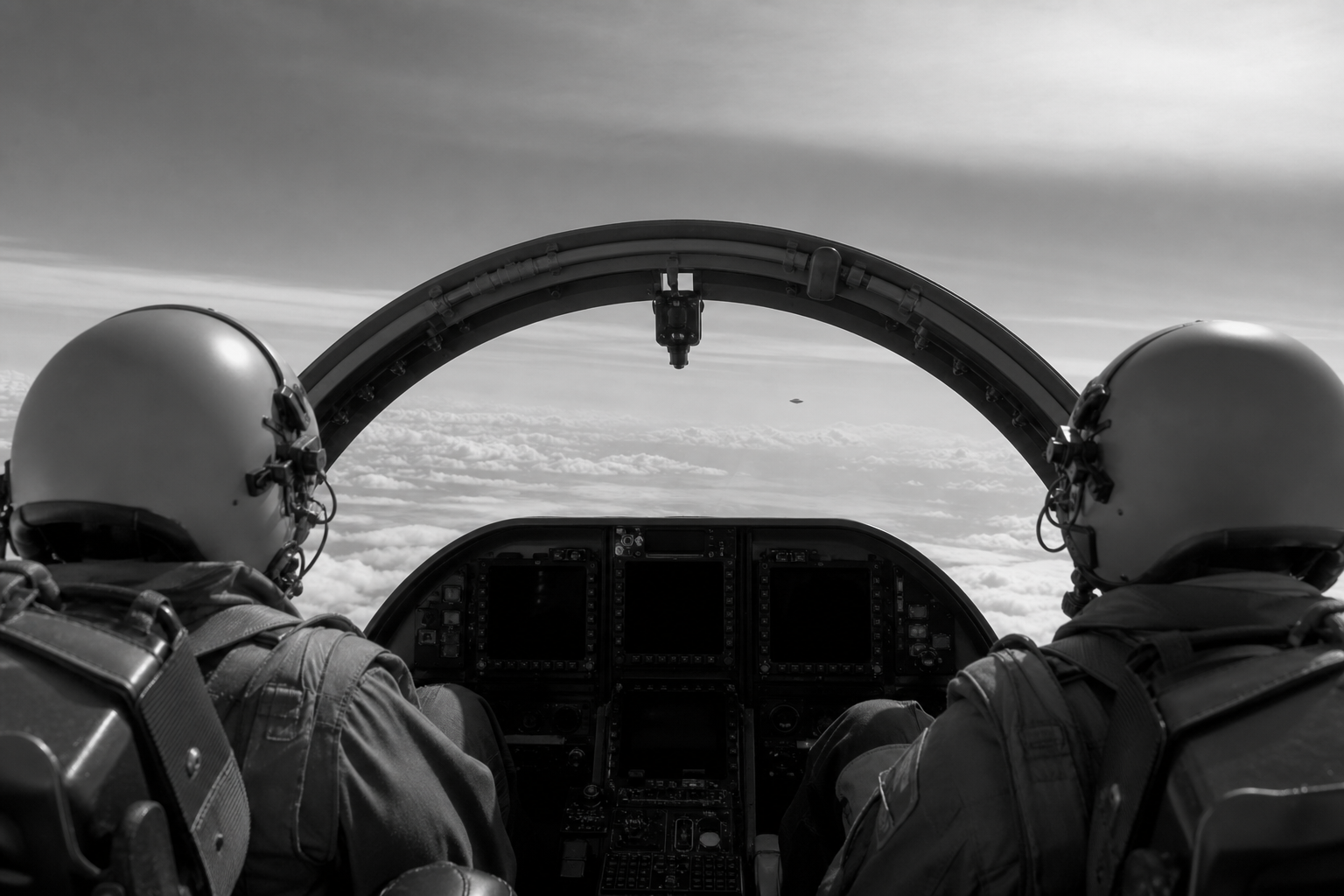
The distinction was made explicit during the May 17, 2022 House Intelligence subcommittee hearing. Asked whether the department had reports of collisions between U.S. aircraft and UAP, Bray said he had not received any such reports. The UAP hearing’s 11 near-misses were consequently reports of potential aviation hazards, not confirmed crashes or confirmed safety failures. The public testimony did not supply a uniform distance, speed, or sensor record for each event, so the number cannot by itself show how close each aircraft came to an object or assign responsibility for the encounter.
That limitation did not make the issue trivial. A pilot or crew that sees an unrecognized object near an aircraft needs a reporting path that preserves time, location, altitude, sensor information, and operational context. Those details help analysts distinguish a genuine flight-safety concern from an incomplete observation. Members of Congress also pressed officials on the stigma that can discourage military aviators from reporting anomalous encounters. Moultrie and Bray emphasized efforts to make reporting more consistent and less stigmatized, because unreported events cannot be assessed for aviation safety, intelligence, or operational risk.
What Pentagon Officials Said They Knew, and Did Not Know
The value of those reports lay in what analysts could determine from them, not in attaching a dramatic label. In prepared testimony for the May 17, 2022 House Intelligence subcommittee hearing, Ronald Moultrie said the Defense Department’s objective was to assess unidentified observations that might affect flight safety, expose an intelligence gap, or pose a national-security concern. Scott Bray described bringing together pilot accounts with radar, imagery, telemetry, and other available context rather than treating a visual observation alone as self-explanatory.
That assessment could produce several different outcomes. The Defense Department’s 2021 preliminary assessment used categories including airborne clutter, natural atmospheric phenomena, U.S. government or industry developmental programs, foreign-adversary systems, and an “other” category for cases lacking enough information for attribution. A balloon, drone, sensor artifact, or poorly documented observation could remain unresolved for different reasons; “unresolved” meant the available evidence did not support a reliable identification, not that investigators had identified an extraordinary origin.
Better collection was therefore a substantive part of the response. A report containing time, location, altitude, weather, flight-path data, and corroborating sensors gives analysts material to compare against known activity; a brief sighting report may establish only that an event occurred. Moultrie and Bray’s emphasis on more consistent reporting by the Defense Department UAP Task Force sought to reduce those evidentiary gaps while preserving potential indicators of surveillance or operational risk.
The public record also had defined limits. Moultrie and Bray testified openly before the House Intelligence subcommittee on May 17, then members continued in a classified briefing where sensitive capabilities, locations, and intelligence methods could be addressed. In the open session, Moultrie said he had seen nothing in the department’s holdings suggesting alien visitation or a crash landing, and Bray said the task force had not detected anything leading it to believe an object was non-terrestrial. The hearing’s unresolved cases were not evidence of non-human intelligence, crash-retrieval materials, or a hidden government program; they were cases still short of an attribution.
Why the Hearing Mattered for UAP Reporting and Oversight
The hearing’s lasting effect was procedural: it made the quality of collection, the route by which personnel submit observations, and the adequacy of congressional review visible public questions. Standardized reporting means preserving comparable details, such as time, location, platform, sensor data, and operational context, so analysts can correlate cases rather than treat each account as an isolated anecdote. Reducing reporting stigma matters for the same reason: crews are more likely to report events promptly when doing so is treated as a safety and intelligence duty rather than a career risk.
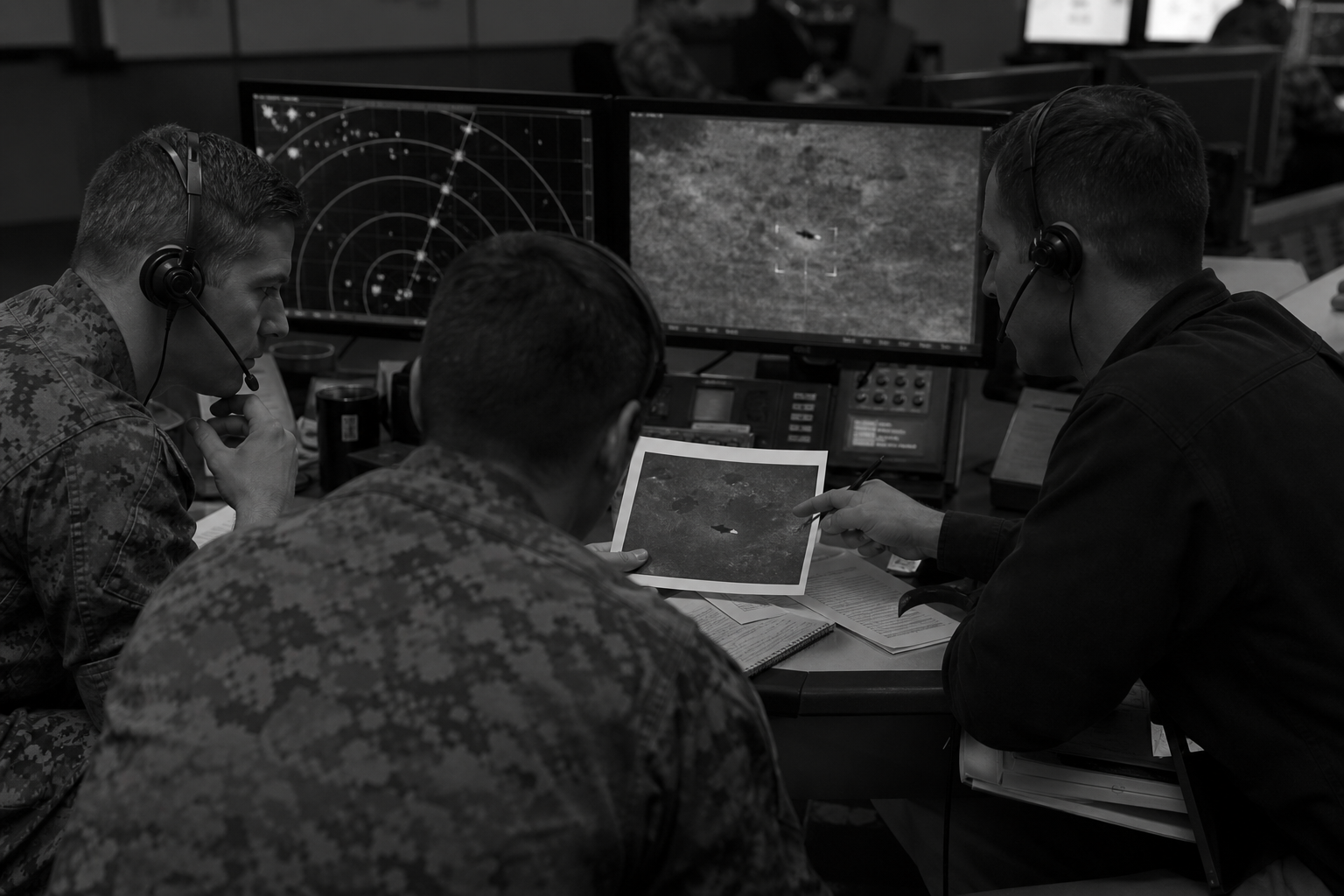
That emphasis formed part of the policy environment in which the Defense Department created the All-domain Anomaly Resolution Office in July 2022. AARO centralized the work across air, sea, space, and other domains, replacing a narrower, ad hoc approach with a designated office for receiving, analyzing, and reporting anomalous-event information. Institutionalization changed who owned the process and how Congress could seek public accounting; it did not supply a final explanation for every earlier file.
Later disclosures should be read as follow-on developments, not revisions of Bray’s May 2022 testimony. ODNI’s subsequent annual UAP reports, AARO’s public reports, and additional congressional hearings in 2023 and 2024 expanded the public record and kept pressure on reporting systems and analytic methods. They did not change what the original hearing’s figures meant: roughly 400 reported cases and 11 reported near-miss events within the task force’s then-current record.
Bottom Line: What the Disclosures Proved, and What They Did Not
The decisive checkpoint is what the figures can bear: hundreds of military UAP reports and 11 reported near-miss events involving military aircraft. They placed aviation safety, uneven data quality, and public oversight, not a settled origin story, at the center of the May 17, 2022 UAP congressional hearing.
They did not publicly establish alien visitation, non-human intelligence, recovered craft, a government cover-up, or one explanation for every case. “Unresolved” describes the limits of the available evidence; it is not positive proof of a particular hypothesis. The strongest basis for judging those claims remains the official House hearing record and video, Moultrie’s and Bray’s prepared testimony, ODNI UAP reports, and AARO’s public reports and case materials.
The Lasting Takeaway From the 2022 UAP Hearing
For readers weighing a claim, the central test is whether a reported observation has been identified, not whether it has been given an extraordinary interpretation. Scott Bray’s disclosure of nearly 400 military UAP reports showed that the Defense Department had a sizable body of observations requiring organized collection and analysis. His reference to 11 proximity incidents involving military aircraft showed why the issue could not be treated solely as cultural or speculative: unrecognized aerial activity near an aircraft presents a flight-safety question even before its identity is known.
Congress also became a more visible part of that process. The May 17, 2022, House Intelligence subcommittee session put officials’ methods, limits, and unanswered questions into a public record, while the following classified briefing preserved space for sensitive operational details. That combination made UAP oversight more concrete: lawmakers could press for better reporting and analysis without converting incomplete cases into conclusions.
The appropriate final reading remains disciplined. Many cases were unresolved because the available information did not permit a confident identification. That evidentiary gap justified continued inquiry; it did not establish an extraordinary origin for the reported phenomena, even as official UAP totals continued to evolve.
Frequently Asked Questions
-
What was the first public UAP congressional hearing in 54 years?
The House Intelligence Subcommittee held a public UAP hearing on May 17, 2022, with Defense intelligence chief Ronald Moultrie and Navy intelligence official Scott Bray testifying. It was described as the first public congressional hearing focused on UFOs or UAPs since a 1968 House symposium.
-
What did the roughly 400 UAP reports disclosed at the hearing mean?
The roughly 400 figure referred to reports received by the Defense Department’s UAP Task Force through military reporting channels. It did not mean 400 confirmed objects, aircraft, threats, or extraterrestrial craft.
-
Were the 11 UAP near-misses confirmed aviation incidents?
The 11 reports described potential near-miss encounters between military aircraft and UAPs, creating flight-safety concerns that warranted investigation. Scott Bray said the department had received no reports of collisions between U.S. aircraft and UAPs.
-
Did the 2022 UAP hearing confirm alien or non-human intelligence?
No. Moultrie said he had seen nothing in Defense Department holdings suggesting alien visitation or a crash landing, and Bray said the task force had found nothing indicating an object was non-terrestrial.
-
What should investigators look for when assessing a UAP report?
The most useful reports include the time, location, altitude, weather, flight path, platform details, and corroborating radar, imagery, telemetry, or other sensor data. These details help analysts distinguish potential flight-safety or intelligence concerns from incomplete observations and possible sensor artifacts.