House Intelligence Subcommittee Holds May 17, 2022 Hearings in Washington, D.C. on Military Reports of UAPs
Explore the May 17 2022 UAP hearing, public testimony, congressional questions, military reports, and the key issues left unresolved.
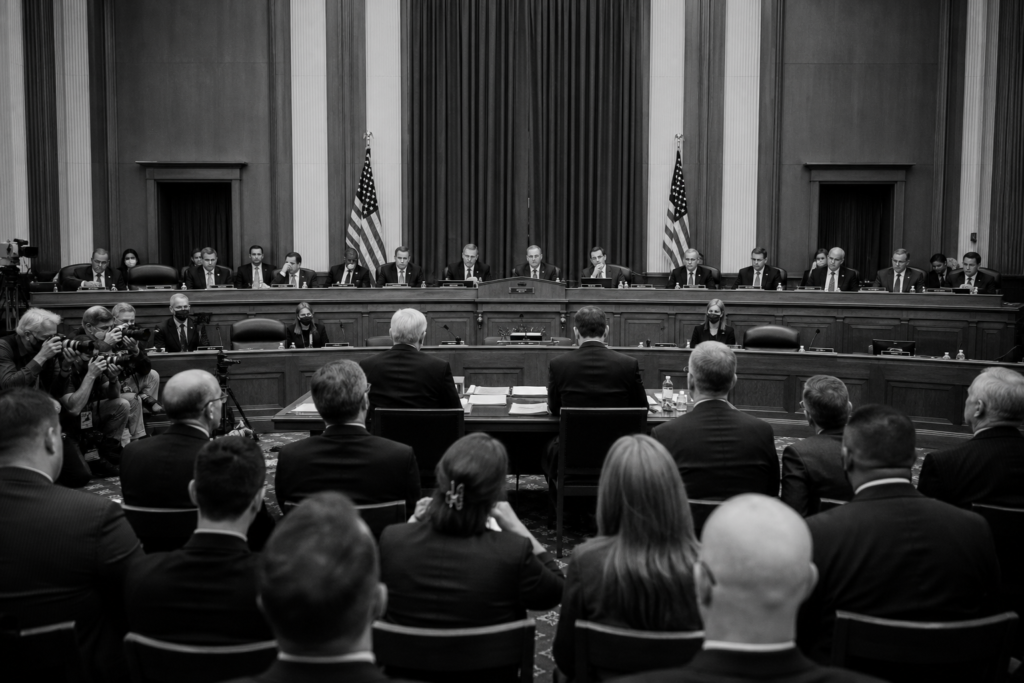
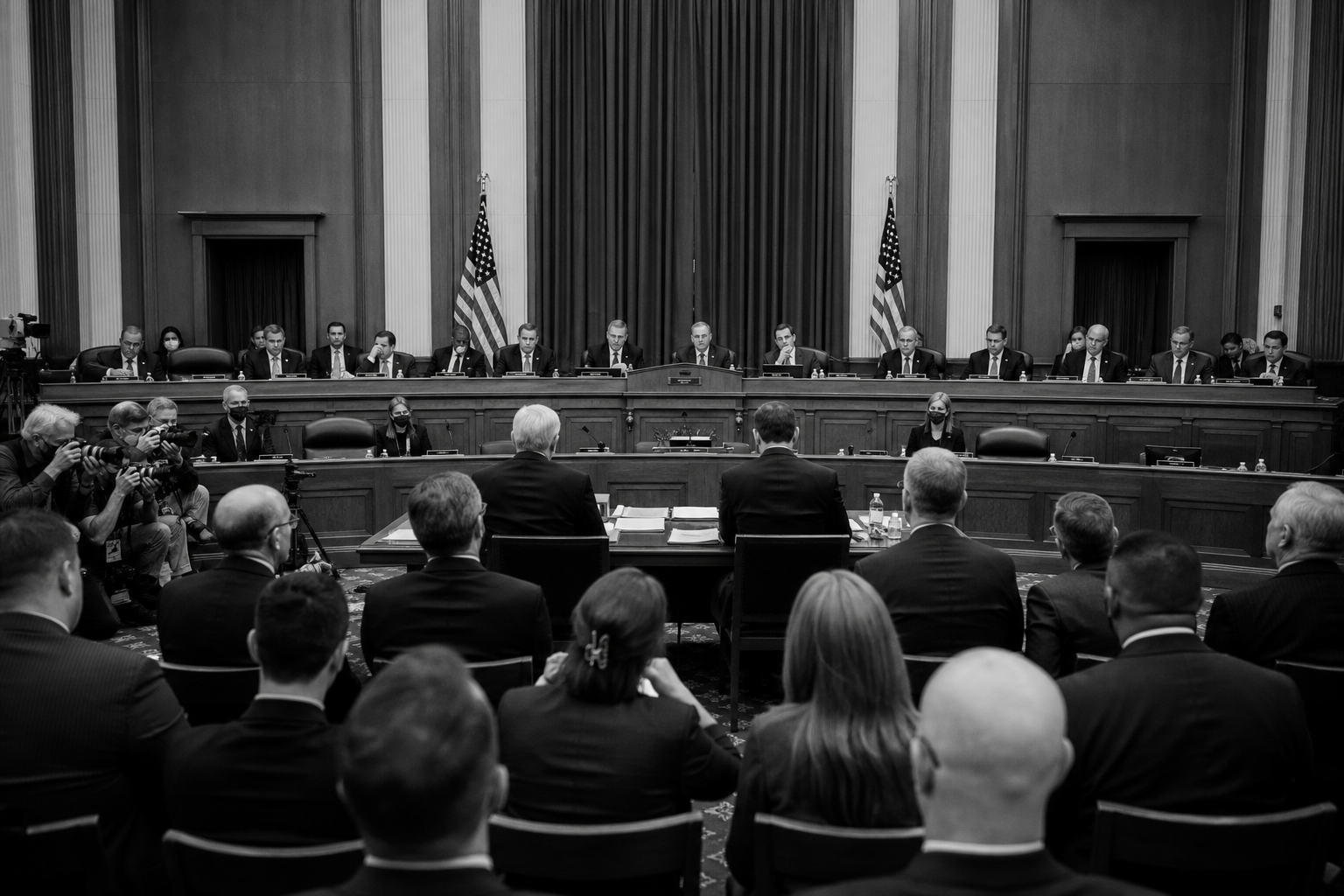
On May 17, 2022, the House Intelligence Subcommittee held a public hearing in Washington, D.C., placing the Defense Department’s handling of unidentified aerial phenomena before Congress and the public. The May 17, 2022 UAP hearing concerned military reports and the government’s ability to collect, analyze, and communicate information about incidents that remained unidentified, not a finding that any report had an extraterrestrial or non-human origin.
Ronald Moultrie, the Pentagon’s under secretary of defense for intelligence and security, and Scott Bray, the Navy’s deputy director of naval intelligence, appeared in the open session before a subsequent closed briefing. Their testimony addressed reporting procedures, sensor data, analytic limits, and the effort to reduce stigma around reports from service members. Members of Congress, in turn, pressed for clearer accountability, stronger data collection, and a fuller understanding of possible flight-safety and national-security implications.
This account separates the public record into its essential parts: what officials disclosed, what lawmakers asked, what evidence was discussed, and what remained unresolved. It also distinguishes the 2022 oversight event from later UAP developments, without treating unanswered public questions as proof of a classified conclusion.
What Happened at the May 17, 2022 House UAP Hearing
The formal setting matters: on May 17, 2022, in Washington, D.C., the House Permanent Select Committee on Intelligence’s Subcommittee on Counterterrorism, Counterintelligence, and Counterproliferation convened a public hearing titled “Unidentified Aerial Phenomena.” Chaired by Representative André Carson, with Representative Mike Turner as ranking member, the subcommittee examined how the Defense Department receives, evaluates, and reports military and intelligence information about incidents that had not yet been identified.
The open portion created a record viewers could assess directly: opening statements, prepared remarks, member questions, and public answers from Pentagon and Navy intelligence officials. Its subject was the government’s handling of reported encounters, not a proceeding to determine an extraterrestrial explanation. The hearing centered on whether reporting channels, sensor-derived information, analytic methods, and coordination could convert initially unresolved military encounters into usable assessments of potential flight-safety or national-security concern.
Public testimony was only one part of the day. Following the open session, the subcommittee received a classified briefing, allowing members to address information that could not be discussed publicly. That division is important: the closed briefing’s existence does not reveal its contents or establish a hidden conclusion. The May 17, 2022 UFO hearing, using “UFO” as the familiar public term while UAP was the government’s term, was also a discrete 2022 oversight event, not evidence from the later hearings, offices, reports, or claims that followed.
Why Congress Examined Military Reports of UAPs
Reports from military aviators made the issue more than a matter of unusual sightings. An encounter can affect flight safety when an aircrew cannot promptly determine whether an object is another aircraft, a balloon, debris, a natural phenomenon, or something else. Sensor information can narrow that uncertainty, but it can also be incomplete, ambiguous, or collected by systems designed for a different operational purpose. The oversight question was therefore whether the government could preserve reports and data well enough to reach defensible assessments.
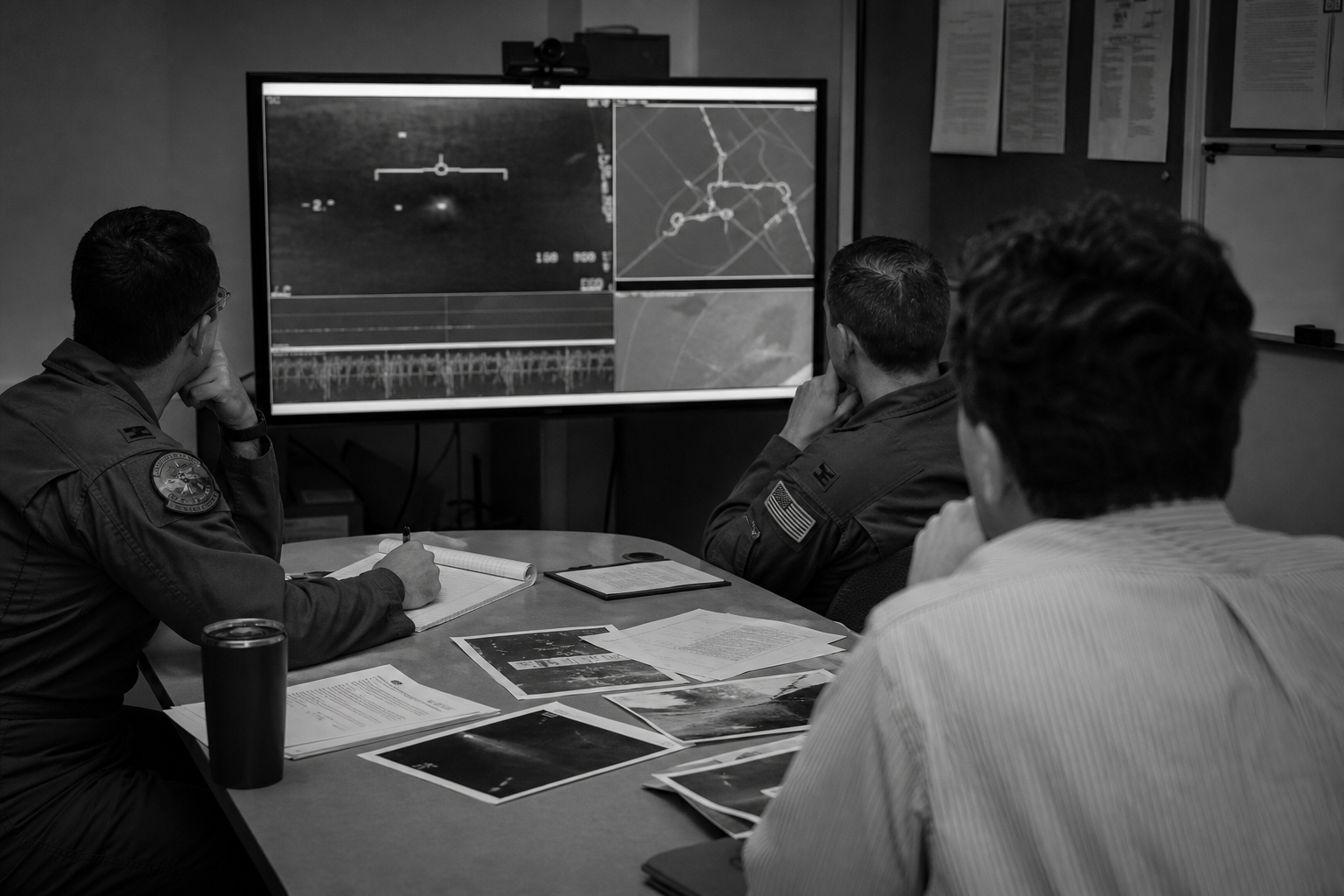
The June 2021 ODNI preliminary assessment supplied the immediate institutional context. It examined 144 reported incidents and emphasized that limited, inconsistent data constrained analysis in most cases. That distinction matters: “unidentified” describes the status of an assessment after available information has been reviewed; it does not identify an object’s origin, technology, or intent. A report supported by multiple sensor inputs may warrant deeper analysis, while a brief visual observation may remain unresolved because the record is thin, not because it demonstrates an extraordinary explanation.
Congress also treated those gaps as a national-security concern. Unresolved activity near training ranges or other military operations could point to ordinary airborne clutter, foreign collection efforts, or vulnerabilities in reporting and sensor coverage. The military reports of UAPs hearing was consequently directed at practical accountability: reducing stigma around aviator reporting, improving the consistency of collected information, and ensuring that intelligence analysts could distinguish a genuine hazard or counterintelligence problem from an event that could be explained with better data.
Who Testified and What They Were Responsible For
The witness roster defined the scope of the open session. Ronald Moultrie appeared as under secretary of defense for intelligence and security, the senior Department of Defense official responsible for integrating intelligence and security matters across the department. His role placed him in a position to discuss how the Pentagon organized oversight, reporting policy, and analytic attention around UAP cases. It did not make him a witness offering a final identification for every individual report.
Scott Bray testified as deputy director of naval intelligence. That position gave the hearing a direct connection to the Navy’s handling of reports from its personnel and platforms, including the flow of observations and sensor information into intelligence review. Bray could describe the Navy’s reporting experience and analytic work, but his testimony likewise reflected the limits of cases whose available data did not permit a conclusive assessment.
Together, the two officials represented complementary layers of the government response: Moultrie addressed Department of Defense-level intelligence and security oversight, while Bray addressed the naval intelligence component that had received substantial attention in public discussion of military encounters. Their public testimony also sat alongside coordination with the Office of the Director of National Intelligence, which had issued the 2021 preliminary assessment. The arrangement mattered because UAP review was not solely a Navy question or solely an intelligence-community question; it depended on reporting from military services and analysis coordinated across institutions.
What Officials Said in the Public Testimony
Bray’s most consequential update was numerical: the government’s UAP inventory had grown from the 144 reports covered by the June 2021 ODNI preliminary assessment to roughly 400 reports. He linked that increase in part to a more formalized reporting process. A larger file count did not mean that hundreds of new objects had been verified; it meant that more incidents were being captured for review rather than being handled inconsistently or left outside a common analytic system.
The officials emphasized that a useful report combines an observer’s account with military sensor data, such as radar returns, electro-optical imagery, infrared video, or other platform information. Those sources can corroborate timing, location, and apparent movement, but they do not automatically identify an object. Sensor readings may be incomplete, lack sufficient context, or reflect the limits of equipment designed for a mission other than characterizing an unusual aerial event. The practical distinction was between having data and having enough reliable data to reach a confident conclusion.
Bray also said the Navy had received 11 reports in which personnel described UAP as near-misses with aircraft, while adding that he was not aware of any confirmed collision. That testimony treated the reports as an operational and flight-safety matter requiring collection and analysis; it did not establish that each reported event involved a physical object, intentional interference, or an extraordinary capability.
During the public portion of the May 17, 2022 UAP hearing, Bray displayed selected imagery and video examples, including footage of apparent triangular lights recorded through night-vision equipment and imagery of a small object passing near an aircraft cockpit. The triangle-like presentation illustrated why imagery must be evaluated in light of the sensor involved: officials described the effect as consistent with the visual characteristics of the night-vision system rather than proof that the object itself was triangular. The cockpit example showed a brief encounter, not a complete identification; similar care is needed when interpreting officially released Navy UAP footage.
Moultrie and Bray therefore acknowledged that some unidentified aerial phenomena remained unresolved while resisting a single explanation for the entire collection. The public testimony documented a reporting and analysis problem with uneven evidence, not a public determination about extraterrestrial or non-human origins.
What Lawmakers Pressed the Pentagon to Explain
Members used their questions to test whether the reporting system could capture incidents that service members might once have kept informal. They asked how the Department of Defense was reducing stigma around reporting unusual encounters and whether aviators and other personnel understood that reporting was expected. The oversight point was practical: a culture that treats reports as professionally legitimate produces a fuller record; one that discourages them can leave analysts with too little information to distinguish a hazard, a sensor effect, or an identifiable aircraft.
Lawmakers also pressed for clarity about coordination. A report may involve personnel, operational commands, intelligence organizations, and several kinds of sensor data, so the relevant question was not simply who receives it first, but who combines the pieces, looks for recurring patterns, and alerts the appropriate officials. Members sought assurance that the Pentagon was moving beyond isolated service-level handling toward a process that could compare cases and direct resources to the most consequential gaps in UAP oversight and reporting processes.
National-security questions focused on the possibility that some incidents could reflect foreign surveillance or advanced technology. That was posed as an analytic requirement, not an assertion that any particular report was Russian, Chinese, or otherwise hostile. Officials were asked how they ruled out known systems and whether unresolved cases exposed weaknesses around military operations.
Finally, the House Intelligence Subcommittee UFO hearing brought public transparency into direct tension with protecting sensitive capabilities. Members asked why more material could not be released, while witnesses emphasized that imagery, collection methods, and operating locations can reveal intelligence sources and methods. Requests for UFO disclosure therefore did not establish a government UFO cover-up; they documented Congress’s demand for more public accountability while recognizing that some details were reserved for the classified briefing.
What the Hearing Did Not Resolve
An unresolved report is not a positive identification. It can mean that the available record was too thin to distinguish among possibilities: a single sensor view may lack context, imagery may be inconclusive, and an observer account may not be enough to establish an object’s origin, capability, or intent. Classification can further limit what can be shown publicly when the underlying material would expose collection methods, platform performance, or operating locations.
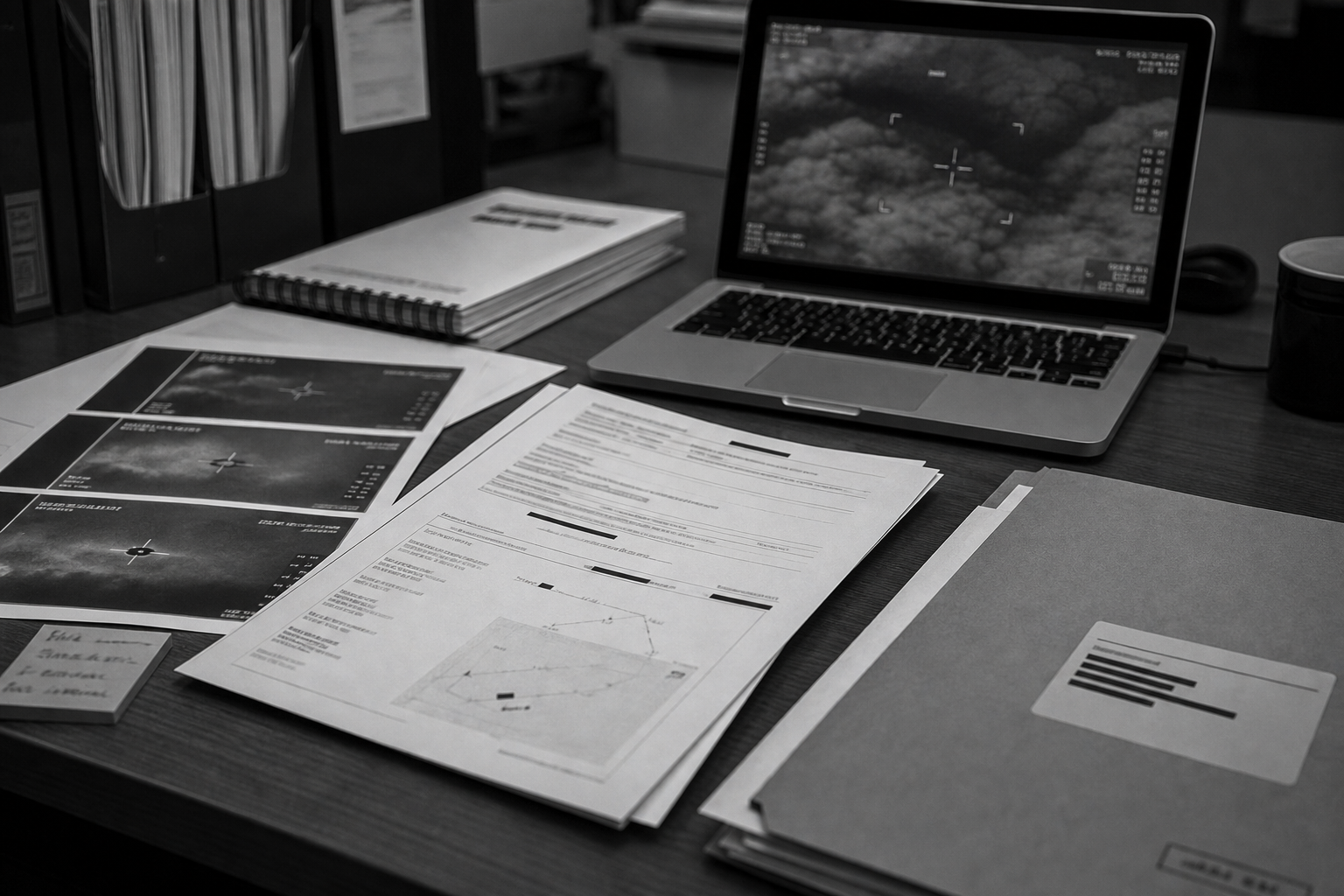
In the open session, officials did not publish the complete case file for the roughly 400 reports, identify every object, or supply a definitive answer for each remaining case. Nor did the public hearing disclose the substance of the later classified briefing. That boundary matters: material withheld from public view may explain intelligence capabilities or operational circumstances, but its non-release does not permit a reader to infer a particular conclusion.
Most importantly, the May 17, 2022 UAP hearing did not confirm alien life, non-human intelligence, recovered craft, or a government UFO cover-up. “Unidentified” described the status of an assessment based on the information then available; it was not a label for an extraordinary origin. A stronger conclusion would require evidence capable of ruling in a specific explanation, rather than merely showing that the existing data could not rule every explanation out.
Why the Hearing Mattered, and How It Differs From Later UAP Developments
The lasting importance of this public session lies in the oversight standard it applied: military reports had to be collected consistently, assessed against available data, and answered for in a forum where elected members could press responsible officials. That changed the public conversation from isolated UFO accounts toward institutional questions of reporting quality, analytic discipline, flight-safety awareness, and accountability.
Later developments, including the All-domain Anomaly Resolution Office mandate and subsequent congressional hearings, belong to separate records and should not be used to supply conclusions absent from the 2022 congressional UAP hearing. When weighing current UFO news, including claims labeled UFO sightings 2025 or 2026, begin with the House hearing video, its transcript and witness statements, the 2021 ODNI preliminary assessment, and the relevant dated government material. A strong claim identifies its underlying evidence and date; a weak one treats later assertions as if they were part of the May 17 public testimony.
What the May 17 Hearing Established
Its clearest legacy is methodological. The public exchange made clear that useful answers depend on a durable chain: personnel must be able to submit reports without stigma, relevant sensor material must be retained and linked to those accounts, analysts must apply consistent standards, and responsible offices must explain how unresolved cases are being managed.
That is what congressional oversight changed for the reader of the record. It shifted attention from a demand that every sighting receive an immediate public label to questions that can be tested over time: Are reports entering a common system? Are separate military components sharing relevant information? Are flight-safety and counterintelligence concerns reaching decision-makers? And can officials describe the limits of their conclusions without exposing sensitive collection capabilities?
The May 17, 2022 UAP hearing therefore established an accountability baseline rather than an extraordinary explanation. Unresolved cases documented gaps in available information; they did not demonstrate a particular origin, technology, or intent. Later UAP oversight efforts are most usefully measured against that baseline, whether they improve collection, analysis, transparency, and institutional responsibility, while the public record from 2022 remains appropriately cautious about what the evidence could prove.
Frequently Asked Questions
-
What happened at the May 17, 2022 House UAP hearing?
The House Intelligence Subcommittee held a public hearing in Washington, D.C., on how the Defense Department collects, analyzes, and reports military unidentified aerial phenomena incidents. Pentagon and Navy intelligence officials testified publicly before providing members with a classified briefing.
-
Who testified at the 2022 House Intelligence UAP hearing?
Ronald Moultrie, the Pentagon’s under secretary of defense for intelligence and security, and Scott Bray, the Navy’s deputy director of naval intelligence, testified in the open session. Moultrie addressed Defense Department oversight, while Bray discussed Navy reporting and UAP analysis.
-
What did the Pentagon say about UAP reports in the May 2022 hearing?
Scott Bray said the government inventory had grown from 144 incidents in the June 2021 ODNI assessment to roughly 400 reports, partly because reporting had become more formalized. He also said the Navy had received 11 reports of UAP near-misses with aircraft but was not aware of any confirmed collision.
-
What evidence should be reviewed when evaluating a military UAP report?
A strong assessment combines an observer account with sensor data such as radar returns, electro-optical imagery, infrared video, timing, location, and platform information. Analysts must also account for sensor limitations, incomplete context, and whether the available data can support a confident identification.
-
How was the 2022 House Intelligence UAP hearing different from later UAP hearings?
The May 17, 2022 hearing was a specific oversight event focused on military reporting procedures, sensor data, flight safety, and Pentagon accountability. Later developments, including the All-domain Anomaly Resolution Office and subsequent congressional hearings, are separate records and do not add conclusions to the 2022 public testimony.