How the 2021 NDAA Created a Permanent UAP Investigation Agency Under 50 U.S.C. § 3373 in Washington, DC
Learn how the 2021 NDAA created the 50 U.S.C. § 3373 UAP office, its enduring mandate, and how it evolved into AARO.
“A new UAP agency” is useful shorthand, but it blurs an important legal distinction. The FY2022 NDAA, enacted as Public Law 117-81 in December 2021, required a Defense Department office with defined responsibilities; it did not create an independent federal agency outside the Pentagon.
This article follows that statutory thread. It distinguishes the earlier UAP Task Force from the office Congress directed the Department to establish, then separates the enacted mandate from later organizational decisions that led to its association with the All-domain Anomaly Resolution Office, or AARO. The central legal anchor is the 50 U.S.C. § 3373 UAP office: a continuing Defense Department function for coordinating collection, reporting, analysis, procedures, and interagency work on unidentified anomalous phenomena.
“Permanent” also needs precision. Here, it means Congress imposed an ongoing statutory requirement without an express sunset, not that the office is irrepealable, independently funded forever, or insulated from future changes to its name, structure, duties, or appropriations. Washington, DC, describes the congressional oversight and national-security policy setting, not a statutory command that fixes the office’s physical address there.
What the FY2022 NDAA Actually Created in December 2021
The fiscal-year label is not the enactment date: the Fiscal Year 2022 National Defense Authorization Act became Public Law 117-81 on December 27, 2021. Its relevant UAP provision was Section 1683, headed “Establishment of Office to Address Unidentified Aerial Phenomena.”
Section 1683 directed the Secretary of Defense to establish an office within the Department of Defense, in coordination with the Director of National Intelligence. The assignment went beyond collecting isolated reports: it called for synchronized collection, reporting, and analysis; procedures for identifying and reporting incidents; coordination with other federal agencies; and reports to Congress.
That is the significant change embodied in the 2021 NDAA UAP office. Congress set out an institutional mission and specified duties in legislation, rather than leaving UAP work solely to a temporary task-force arrangement or an internal administrative initiative. The provision did not decide what any reported object or incident was, and it did not require disclosure of extraordinary explanations.
Nor did Section 1683 itself settle future funding, departmental organization, or the office’s eventual name. Those implementation questions help explain why the statutory requirement and the later AARO structure should be treated as connected stages, rather than as identical entities.
From the UAP Task Force to a Statutory Pentagon Office
Before Congress acted, the Unidentified Aerial Phenomena Task Force operated as a Navy-led Defense Department initiative. Its purpose was to improve the collection and analysis of reports involving unexplained airborne objects that could pose flight-safety or national-security concerns. That structure could concentrate expertise quickly, but it rested on internal executive-branch direction rather than a congressionally prescribed office, mission, and reporting framework.
The contrast matters because Public Law 117-81 did not simply endorse the task force. Section 1683 required a Defense Department office to assume a cross-government role: it was to bring together Defense and intelligence efforts, establish reporting and identification procedures, coordinate with other agencies, and provide Congress with recurring information. In practical terms, the UAP office established by Congress was designed to outlast any particular task-force label or organizational chart.
The name All-domain Anomaly Resolution Office does not appear in the FY2022 NDAA. In November 2021, before enactment, the Defense Department announced the Airborne Object Identification and Management Synchronization Group as the successor to the UAP Task Force. The Department then established AARO in July 2022 to carry forward and broaden that work. The useful chronology is therefore UAPTF, then the statutory office requirement and interim synchronization group, then AARO, not a claim that Congress created an office called AARO in December 2021.
That distinction also disciplines UAP news coverage. A statutory mandate can continue without a stated sunset while its name, leadership, internal placement, resources, and implementing procedures change through later legislation and Defense Department action. The 50 U.S.C. § 3373 UAP office is the enduring legal framework; AARO is the institution through which the Department has implemented that framework.
What 50 U.S.C. § 3373 Requires the UAP Office to Do
The operative verbs in 50 U.S.C. § 3373 matter more than the broad label “investigation.” The provision assigns the office a system-building mission: it must synchronize the collection, reporting, and analysis of unidentified anomalous phenomena across the Defense Department and the intelligence community. In plain English, the office is meant to make reports from different components comparable, centrally visible, and usable for a common assessment rather than leaving each service or agency to maintain an isolated picture.

Section 3373 also calls for formal procedures to receive reports, collect relevant information, analyze it, and identify incidents when the available evidence permits identification. Those are distinct steps. Receiving a report preserves an account or sensor observation; collection gathers supporting material such as operational and intelligence data; analysis tests possible explanations; and identification is the resulting attribution, if one can be supported. A reported sighting is therefore not, by itself, a verified conclusion about an object’s origin, technology, or identity.
The 50 USC 3373 UAP office must also coordinate beyond its immediate Defense and intelligence participants. That function addresses a practical problem: an event may touch military operations, intelligence holdings, civilian aviation concerns, scientific expertise, or another federal department’s authorities. Coordination does not give the office command over every participant. It creates a legally assigned mechanism for bringing relevant information and responsible entities into the same government-wide process.
Its assessment role is similarly bounded. Congress directed attention to potential threats to national security and to the safety of United States military personnel and facilities. The statute’s inclusion of unidentified anomalous phenomena, rather than only airborne observations, also accommodates transmedium objects where applicable, reported objects or devices associated with movement across domains such as air, water, or space. That scope prevents an arbitrary jurisdictional gap; it does not establish that any particular report involves extraordinary technology.
Finally, recurring reports to congressional defense and intelligence committees turn the office’s work into an oversight obligation. The reports are the accountability channel through which Congress can assess reporting volumes, analytic progress, identified threats, unresolved cases, and the office’s implementation of its assigned process. This is the core of AARO statutory authority: a continuing requirement to organize, assess, coordinate, and report, not a statutory finding that UAP are extraterrestrial, not a guarantee that every case can be solved, and not a free-standing power to disclose all classified information.
How the Congressional Office Requirement Evolved Into AARO
The organizational transition occurred in stages. Public Law 117-81 supplied the requirement for a Defense Department office, but it did not assign the later AARO name. In July 2022, Deputy Secretary of Defense Kathleen Hicks established the All-domain Anomaly Resolution Office as the Department’s implementing organization, bringing the earlier Airborne Object Identification and Management Synchronization Group functions into that structure. AARO was therefore an executive-branch organizational decision made to carry out a congressional mandate, rather than the office created by name in the 2021 statute.
That sequence gives a qualified answer to the common question, “Did the 2021 NDAA create AARO?” It created the statutory office requirement; the Defense Department established and branded AARO later. The difference matters because Congress can prescribe an enduring function while the Department determines such operational details as the office’s name, reporting relationships, leadership arrangements, and internal placement.
Congress then reshaped the framework in the FY2023 NDAA, Public Law 117-263, enacted in December 2022. Its amendments broadened the terminology from unidentified aerial phenomena to unidentified anomalous phenomena, a change that better fits reports involving more than the air domain, including transmedium activity where applicable. The amendments also refined the office’s responsibilities and the statutory language ultimately codified at 50 U.S.C. § 3373. Thus, AARO statutory authority rests on an accumulated legal framework: the 2021 mandate, Defense Department implementation in July 2022, and later congressional amendments, not on a single act of renaming.
As of August 5, 2026, “AARO” is the public institutional label for this Defense Department function. That label may change more easily than the underlying statutory assignment, while Congress retains the power to revise both the duties and the resources available to perform them.
What “Permanent” Means, and Does Not Mean, Under the NDAA
“Permanent” is best understood as a description of legal continuity, not institutional invulnerability. The framework codified at 50 U.S.C. § 3373 contains no express termination date for the Defense Department’s UAP function. Unlike a program authorized only for a specified number of fiscal years, the office’s assigned duties remain in statute unless Congress changes or repeals them. In that limited but important sense, the permanent UAP investigation agency label refers to an ongoing statutory requirement.
Authorization and appropriation are different controls. An authorization establishes or continues a governmental function and describes what it may or must do; an appropriation provides budget authority for spending. Section 3373 therefore does not permanently fund AARO or guarantee any particular staffing level, analytic capability, contract, or reporting infrastructure. Congress can provide more, less, or no specifically designated funding through the appropriations process and funding oversight, subject to the rules governing Defense Department accounts and spending.
Nor does codification freeze the organization in its present form. Congress may amend the duties, repeal the provision, move responsibilities to another component, or replace the arrangement with a different statutory structure. Within those legal boundaries, the executive branch may also administer the function through choices about its name, leadership, internal reporting lines, and implementation. The practical test is straightforward: a continuing mandate is a stronger legal foundation than a temporary task force, but it remains subject to appropriations and congressional oversight rather than becoming legally irrepealable.
Washington, DC: Policy, Oversight, and the Limits of “Disclosure”
“Washington, DC” is best read as the office’s policy environment, not as a statutory address. The Defense Department, Office of the Secretary of Defense, intelligence community, and congressional defense and intelligence committees all shape how the UAP function is directed, resourced, briefed, and scrutinized. Its work can involve classified collection and programs, while required reports and selected AARO releases create narrower public-facing channels.
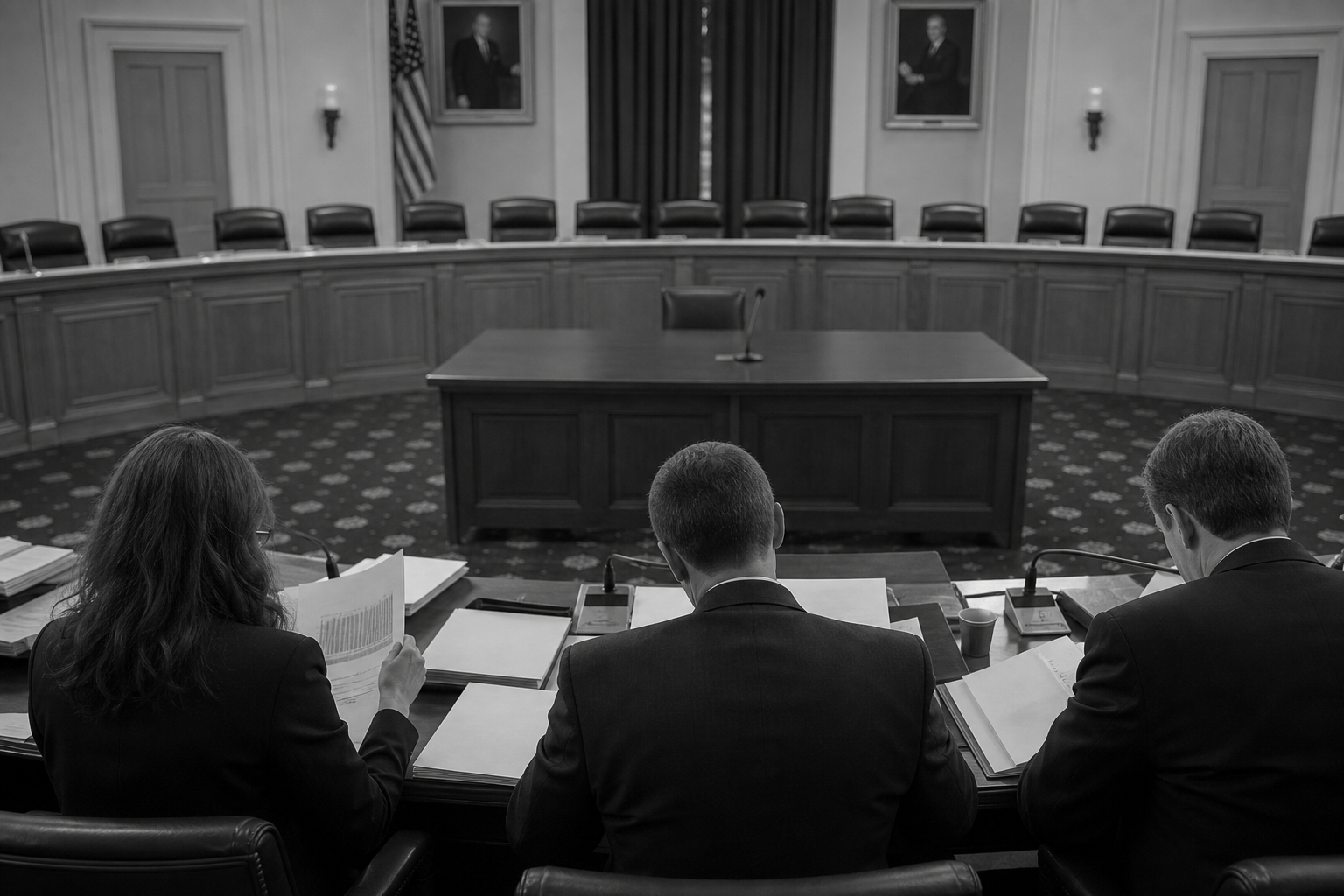
That distinction matters for disclosure debates. A classified congressional briefing is an oversight mechanism; a public report is a release chosen for public access. Neither, by itself, establishes allegations of a government UFO cover-up, alien disclosure, non-human intelligence, crash retrieval, or reverse engineering. Broader UFO disclosure proposals may seek records, review processes, or disclosure authorities, but they are legally distinct from the operational mandate in Section 3373.
Nor does 50 U.S.C. § 3373 supply a Washington street address or require a fixed headquarters to be inferred from the statute. “Washington” therefore identifies the federal decision-making and oversight system surrounding AARO, not a location command embedded in the law.
The Bottom Line for Current UAP Claims and Future Coverage
AARO’s existence signals a reporting and assessment process, not an extraordinary answer. Public Law 117-81, enacted December 27, 2021, established the statutory Pentagon function that later developed into AARO; neither that mandate nor an unresolved case establishes extraterrestrial activity or non-human intelligence.
- For UFO sightings 2025, UFO sightings 2026, and later UAP news, distinguish a report from a verified finding. A pilot observation, video, or sensor return can warrant review; a finding requires corroborated evidence sufficient to identify the event.
- Distinguish the office’s legal task, receiving, analyzing, coordinating, and reporting, from a conclusion about an object’s origin. An investigation can remain unresolved without validating any particular theory.
- Distinguish statutory authorization from appropriated funding. Section 3373 imposes an ongoing duty without a stated sunset, but appropriations determine the resources available to carry it out.
This legal snapshot is current through August 5, 2026. Read future coverage in order: the legal structure, the evidence actually assessed, and the status of the individual case.
The Lasting Legal Framework for UAP Investigation
The practical legacy is a durable federal process for handling uncertainty: reports can be gathered through defined channels, compared across components, assessed for identification or risk, and carried into congressional oversight. That is the institutional change that separates the statutory framework from an ad hoc task force.
Public Law 117-81 supplied the original congressional direction in December 2021; later legislation and Defense Department implementation produced the present AARO structure. The 50 U.S.C. § 3373 UAP office is therefore best understood as a continuing Defense Department function, not a separate, independent agency created by the statute under that later name.
“Permanent” describes the absence of a stated sunset for the mandate. It does not promise a fixed budget, an unchangeable organizational chart, unrestricted public access to reports, or a predetermined explanation for any anomalous case. Congress can amend or repeal the provision and controls appropriations; the executive branch can revise its internal implementation.
For future UAP coverage, the useful checkpoint is whether a claim identifies the governing statutory duty, the current implementing office, and the evidence behind a particular conclusion. Those are separate questions, and none should be inferred merely from the office’s continuing existence.
Frequently Asked Questions
-
Did the 2021 NDAA create AARO?
No. The FY2022 NDAA, enacted as Public Law 117-81 on December 27, 2021, required the Secretary of Defense to establish a UAP office within the Department of Defense. The Defense Department later established the All-domain Anomaly Resolution Office, or AARO, in July 2022 to implement that mandate.
-
What does 50 U.S.C. § 3373 require the Pentagon UAP office to do?
50 U.S.C. § 3373 requires the office to synchronize collection, reporting, and analysis of unidentified anomalous phenomena across the Defense Department and intelligence community. It must establish reporting and identification procedures, coordinate with other federal agencies, assess potential safety and national-security threats, and report to congressional defense and intelligence committees.
-
Is the UAP office under 50 U.S.C. § 3373 permanent?
The UAP office has an ongoing statutory mandate because 50 U.S.C. § 3373 contains no express sunset date. It is not permanently funded or legally immune from change, because Congress can amend or repeal the provision and controls appropriations.
-
What is the difference between the UAP Task Force and AARO?
The UAP Task Force was a Navy-led Defense Department initiative created through internal executive-branch direction. AARO is the Defense Department’s later implementing organization for the congressionally required UAP function, with responsibilities grounded in the statutory framework codified at 50 U.S.C. § 3373.
-
What should I look for when evaluating claims about AARO, UFO disclosure, or non-human intelligence?
Check whether the claim separates the statutory duty, the current implementing office, and evidence from an individual case. Section 3373 requires collection, analysis, coordination, and congressional reporting, but it does not confirm non-human intelligence, crash retrieval, reverse engineering, or unrestricted public disclosure of classified information.