House Oversight’s April 29, 2025 Hearing on Unauthorized Drone Activity Over U.S. Military Installations
House Oversight UAP hearing on April 23, 2025: learn what officials scheduled, key drone security issues, and what Congress can establish.
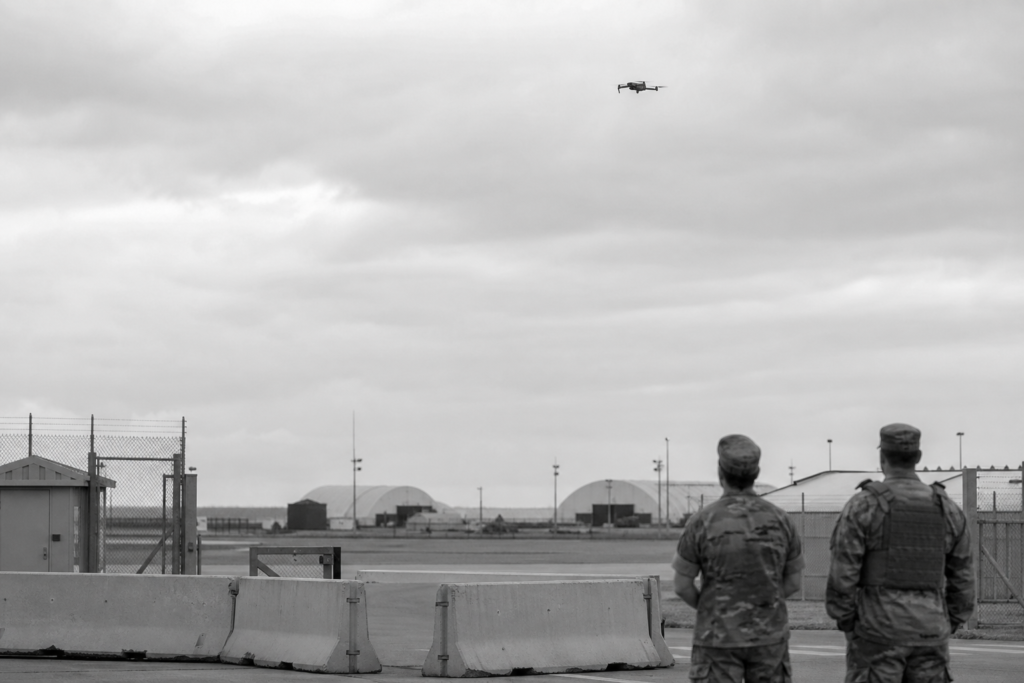
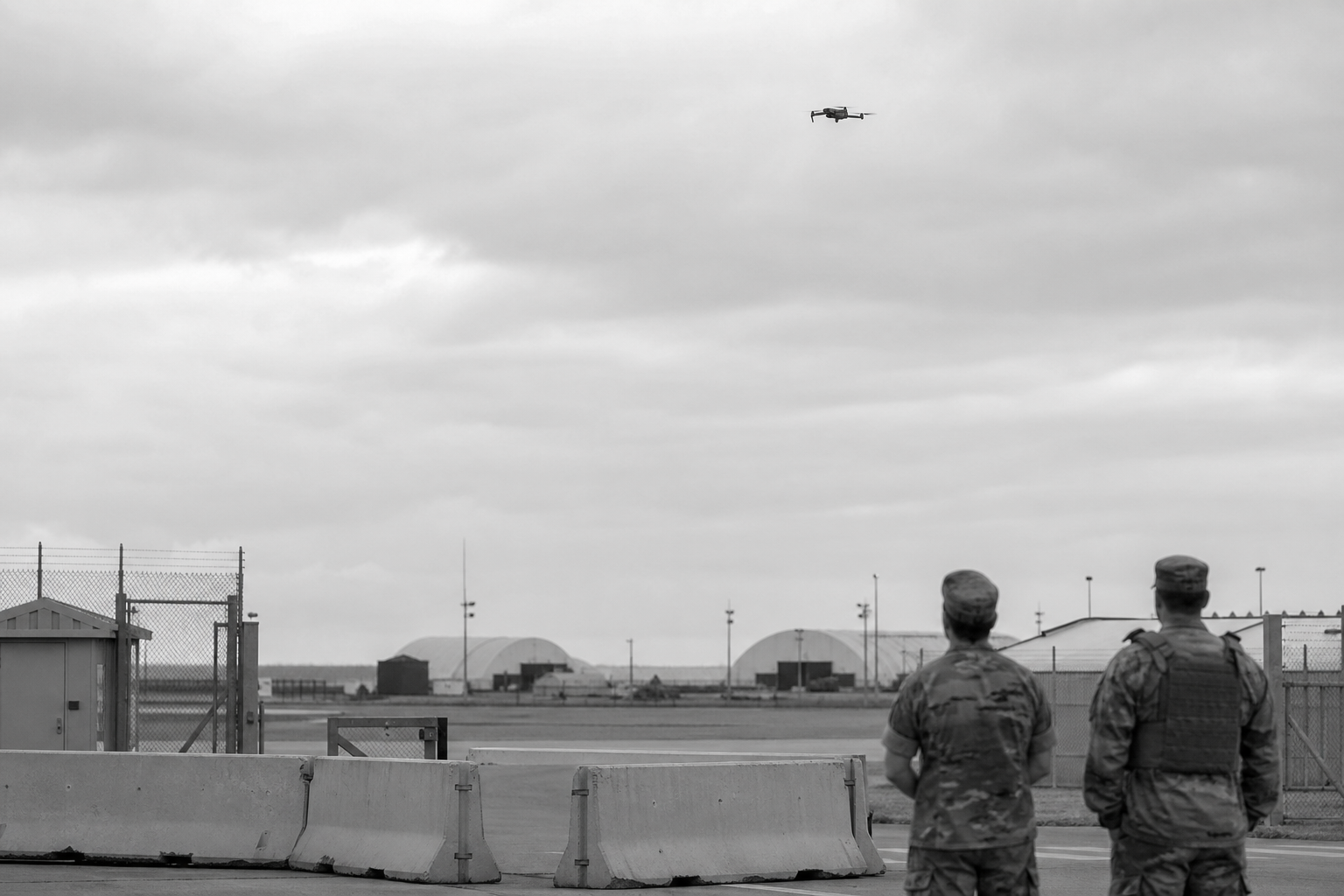
A small uncrewed aircraft reported over a protected site presents a sequence of concrete questions: can agencies detect it reliably, identify its operator, safeguard sensitive operations, and act within their available authorities? The same object might be a routine commercial device, a careless intrusion, or a deliberate collection platform; an initial sighting does not establish which.
This article examines the House Oversight hearing on drone activity listed for April 23, 2025 as its central event. It separates the official scheduling record and stated hearing scope from the operational questions Congress could explore, including detection, attribution, disruption, intelligence risks, and coordination among responsible agencies.
That distinction matters. Scheduling a hearing signals congressional scrutiny and creates a forum for testimony and records; it does not, by itself, establish what particular objects were, who operated them, or whether an incident involved a foreign actor. Nor should drone reports be collapsed into UAP claims. “Unidentified” describes an unresolved identification at a given point in time, not evidence of an extraordinary origin. The sections that follow keep those evidentiary categories separate while assessing why the hearing mattered.
What House Oversight Scheduled for April 23, 2025
The scheduling entry at issue placed a House Oversight event on Wednesday, April 23, 2025, concerning unauthorized drone activity over U.S. military installations. The material supplied for this section identifies the House Oversight Committee connection, the date, and the installation-security subject, but it does not provide the responsible subcommittee, hearing room, start time, chair, ranking member, or a committee-issued title more precise than that description.
That record establishes a planned congressional event, not a completed proceeding. It does not show that members convened on April 23, that the event was postponed or rescheduled, or that witnesses delivered testimony. Nor does the supplied material include a witness roster, opening statements, prepared testimony, webcast, transcript, vote, report, or policy action. Those are materially different records: a calendar listing announces an intended hearing, while a webcast or transcript would document what actually occurred.
The narrow, supportable description is a congressional hearing on unauthorized drones near U.S. military installations. It was not, on the available record, an “April 23 2025 UAP hearing”: that label would imply an inquiry into unresolved-object reporting rather than the stated security concern of unauthorized aircraft activity. The scheduling reference also identifies no particular installation, drone operator, foreign connection, or extraordinary explanation.
The Official Scope: What the Hearing Was Expected to Examine
The key scope checkpoint is whether an official memorandum turns a calendar subject into defined oversight questions. For April 23, the supplied materials identify unauthorized drones and U.S. military sites, but they do not include a memorandum defining objectives, enumerated questions, named incidents, or requests for information about particular capabilities.
That leaves important operational categories unspecified. Detection concerns recognizing an object in the first place; tracking follows its movement; attribution seeks to link it to an operator or sponsor; and counter-UAS response refers to measures intended to disrupt, seize, or otherwise address a threat. The listed House hearing could have examined any combination of those functions, yet the calendar description does not identify which capability gaps, agencies, or response authorities were to be scrutinized.
No official witness list, prepared witness testimony, or agency submission accompanies the April 23, 2025 entry in the supplied record. It would therefore be inaccurate to name Department of Defense, Federal Aviation Administration, law-enforcement, intelligence, or industry officials as participants, or to assign them anticipated positions. The same limit applies to jurisdiction: the available material links the event to House Oversight but does not identify a responsible subcommittee or provide a committee-specific jurisdictional statement.
The supportable scope is consequently limited to prospective congressional scrutiny of unauthorized aircraft near sensitive military sites. The record does not place a named installation, incursion, foreign connection, classified briefing, or legislative remedy on the agenda. Nor does it show that the proceeding was intended to investigate unresolved UAP reports; a drone-security inquiry and an inquiry into unidentified reports require different factual records.
Why Unauthorized Drones Over Military Installations Matter
The security concern begins before an aircraft’s origin or intent is known. An uncrewed aircraft operating near a military installation may be a careless recreational flight, a commercial system flown without authorization, or a platform used to observe the site. Those possibilities require different responses, but each can place personnel and operations under avoidable pressure.
Surveillance is a central concern because a drone can potentially collect imagery, video, radio-frequency information, or patterns of activity from outside a perimeter. Repeated flights by surveillance drones may reveal entry points, aircraft locations, guard routines, training schedules, or other details that contribute to military installation security. The risk is not proof that collection occurred: a sighting establishes an object near a site, while evidence of intelligence gathering requires information about its sensors, flight path, data links, operator, and recovered material.
Flight safety and operational continuity are separate issues. A small aircraft in restricted airspace may interfere with piloted aviation, complicate launch or landing activity, or prompt precautionary pauses while personnel determine whether it presents a collision or security hazard. That disruption can matter even when the aircraft is ultimately assessed as non-malicious, because protective action must often be taken before intent is resolved.
Force-protection concerns extend beyond the airspace immediately above a base. Unauthorized drone incursions can test detection coverage, expose uncertainty over who has authority to act, and create opportunities to approach sensitive facilities or infrastructure from directions not designed for conventional ground access. The important oversight question is therefore not whether every reported aerial object was hostile. It is whether installations can distinguish a harmless or misidentified object from a credible threat quickly enough to protect people, missions, and sensitive information without treating uncertainty itself as evidence of malign intent.
The Oversight Questions Behind Detection, Attribution, and Counter-UAS Response
An effective response is a chain rather than a single capability. Detection establishes that something may be present; classification tests whether the signal or observation is consistent with a small aircraft rather than a bird, weather effect, or another object; and attribution seeks to connect a confirmed aircraft to an operator, controller, launch point, or purpose. A reliable track with no operator identified is a detection success but an attribution gap.

Drone detection and attribution also require information to move quickly between the installation, military command channels, law-enforcement bodies, aviation officials, and intelligence organizations where their roles apply. Useful records can include time, location, altitude estimate, direction of travel, sensor observations, imagery, and any recovered device. A vague sighting may justify heightened awareness, but it is weak evidence for identifying a specific person or organization.
Interdiction is a separate decision: it means stopping, diverting, disabling, or otherwise preventing an aircraft from continuing its flight. Prosecution comes later and concerns whether admissible evidence identifies a responsible person and supports a charge. Conflating these stages can obscure the central counter-UAS problem. Personnel may have enough information to treat an object as an immediate operational concern without yet having the technical evidence needed to prove who launched it or why.
Domestic installations add a further constraint: counter-UAS technology and operational authority do not automatically travel together. A system may detect or track an object while the decision to interfere with it raises concerns about surrounding airspace security, communications, property, public safety, and which agency may act. Congressional scrutiny can therefore focus on practical checkpoints: whether sensors produce usable identification, whether reports reach the right offices promptly, whether response roles are clear, and whether follow-on investigations preserve evidence rather than merely ending the immediate incident.
Where Drone Security Overlaps With, But Is Not the Same as, UAP Oversight
Terminology can obscure the difference between an object that has not yet been identified and an aircraft that has been assessed as an unauthorized drone. UAP is a reporting and identification category: it preserves uncertainty while an observation is evaluated. A drone is a particular kind of uncrewed aircraft system. An initial report can move from “unidentified” to “drone” as imagery, flight behavior, radio-frequency information, or recovered equipment improves the record; it does not become anomalous merely because identification took time.
The All-domain Anomaly Resolution Office’s UAP mandate belongs to the UAP side of that distinction. Its work concerns the collection, analysis, and resolution of reports that remain unexplained at the point of reporting. That can overlap with installation security when personnel observe something near protected airspace and cannot immediately classify it. The practical value of the overlap is disciplined reporting: preserve what was observed, distinguish confirmed facts from inference, and avoid treating a preliminary label as a conclusion about origin or intent.
That overlap does not turn the reported April 23 event into a House Oversight UAP hearing. The available description centers on unauthorized drone activity over U.S. military installations, a defined force-protection and response problem. Without an official notice or agenda identifying UAP as a subject, it would be inaccurate to portray the hearing as an exercise in UAP disclosure or to treat drone reports as evidence for extraordinary claims. The stronger reading is narrower: Congress’s interest in reliable identification has relevance to both subjects, while the hearing’s stated focus remains unauthorized drones.
What Congress Can Investigate, and What a Scheduled Hearing Could Not Establish
A hearing is one instrument in a broader congressional oversight toolkit. In public session, members can question witnesses and create a record; through document requests, they can seek incident logs, assessments, correspondence, and policy materials. Committees may also pursue subpoenas where their rules and delegations authorize them, receive classified briefings when public discussion would expose sensitive capabilities or operations, and use appropriations conditions, reporting mandates, or legislation to press agencies toward defined changes. National-security oversight is therefore not limited to a single exchange on the dais.
Each tool produces a different result. A classified briefing can give members access to operational detail without putting it in the public record. A reporting requirement can compel recurring, structured information, such as incident totals or progress against a deadline. An appropriations condition can restrict or direct the use of funds, while enacted legislation changes legal authorities or duties. A request for records, by contrast, can test whether witness statements are supported by contemporaneous evidence.
The scheduling of a House Oversight hearing on drone activity did none of those things by itself. It could not identify every reported object, turn an allegation into a verified finding, compel public release of classified collection methods, or create a new counter-drone authority. Nor would an unexplained sighting establish a government UFO cover-up or support alien-disclosure claims. Stronger signals would be sworn testimony matched by released records, a formal committee finding, or enacted statutory text; weaker signals are calendar entries, promotional descriptions, and uncorroborated assertions. That distinction matters when evaluating any later hearing record or proposed remedy.
What to Watch Next in the Official Record
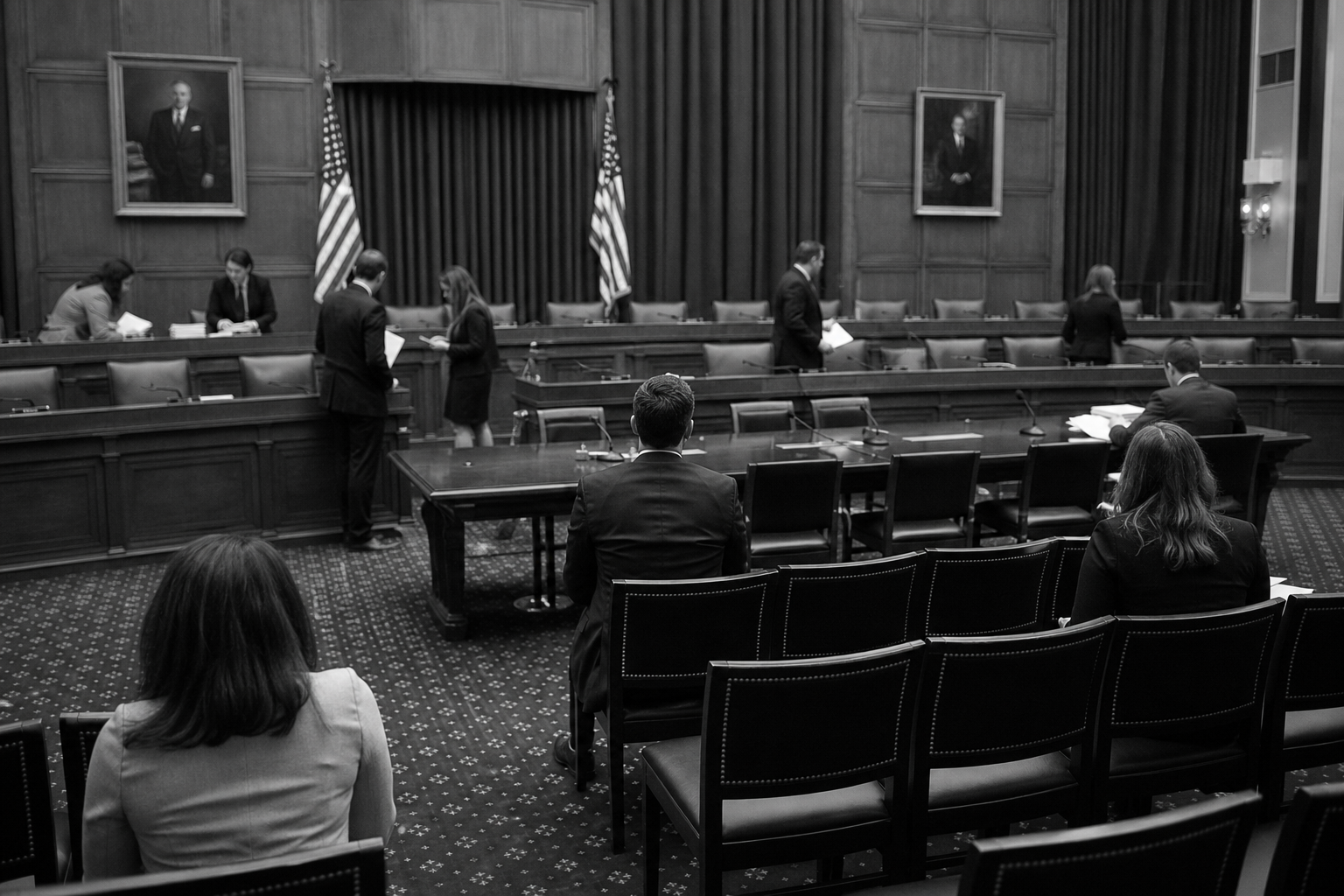
The decisive next artifact is the committee’s official hearing record. An archived webcast can show whether the April 23, 2025 proceeding actually occurred, who appeared, what questions were asked, and whether the discussion matched the originally reported subject. Written testimony and a transcript serve different purposes: testimony preserves a witness’s prepared position, while a transcript captures the exchanges, qualifications, and unanswered questions.
- Compare the final hearing page with any calendar notice for the date, title, panel, witnesses, and changes in status.
- Read member opening statements and post-hearing releases for requested records, promised follow-up, or disputed factual claims.
- Look for introduced bills, appropriations language, agency response letters, incident reporting, or published committee findings; these show whether scrutiny produced a policy consequence rather than publicity alone.
The official hearing record is also the appropriate filter for UAP news or UFO news coverage. A discussion of unidentified reports does not establish an anomalous origin, and neither a scheduled hearing nor witness assertions automatically substantiate extraterrestrial claims. The material question remains whether Congress obtained a clearer account of security, response, and accountability at military installations.
What the April 23 Hearing Means for Drone Security Oversight
The lasting value of the April 23 proceeding depends on whether it converted broad concern into accountable questions: Were incursions detected reliably? Were reports attributed on evidence rather than assumption? Did the responsible personnel have timely authority to respond, and could military, law-enforcement, and aviation partners share information quickly enough to act?
Those are preparedness tests, not conclusions about every reported aircraft. A strong oversight outcome would identify a specific gap, such as incomplete incident records, delayed handoffs, or unclear response ownership, and show who is responsible for correcting it. A weak outcome would leave only general alarm, untested assertions, or an unresolved label attached to an observation.
That is also the proper limit of any connection to UAP oversight. An initially unidentified sighting may warrant careful examination, but it is not evidence of an extraordinary origin. The practical issue is whether agencies can move from a report to a defensible assessment and, when needed, a lawful counter-UAS response without exposing sensitive operations or creating additional hazards.
Readers should use the official committee record to judge the result: the archived webcast, prepared and written testimony, transcript, member releases, agency correspondence, and any later legislative or administrative action. Together, those materials can distinguish what Congress learned about drone security from what remained unproven after the hearing.
Frequently Asked Questions
-
When was the House Oversight hearing on unauthorized drone activity over military installations scheduled?
The House Oversight event was scheduled for Wednesday, April 23, 2025. The available scheduling record described unauthorized drone activity over U.S. military installations but did not provide a start time, room, subcommittee, or witness list.
-
Was the April 23 House Oversight hearing a UAP or UFO disclosure hearing?
No. The listed subject was unauthorized drone activity near U.S. military installations, which is a force-protection and airspace-security issue. The available record did not identify UAP disclosure, UFO claims, whistleblowers, or extraordinary origins as agenda items.
-
Are drones reported over U.S. military bases automatically considered UAP?
No. UAP is an unresolved reporting category, while a drone is a specific type of uncrewed aircraft system. An object can initially be unidentified and later be assessed as a drone through imagery, flight behavior, radio-frequency data, or recovered equipment.
-
What is the difference between detecting a drone and identifying its operator?
Detection establishes that an object may be present, while attribution links a confirmed aircraft to an operator, controller, launch point, sponsor, or purpose. A military installation can successfully track a drone’s time, location, altitude, and direction without having enough evidence to identify who launched it.
-
What should people look for to determine whether the House drone hearing produced real oversight results?
Look for the official hearing page, archived webcast, witness testimony, transcript, member releases, agency response letters, and any introduced legislation or appropriations language. Strong evidence of results includes verified records, formal committee findings, or enacted legal changes rather than a calendar listing or uncorroborated claims.