House Oversight Opens UAP Transparency Hearing in Washington, D.C. on September 9, 2025
Verify the House Oversight UAP hearing on September 9, 2025: examine witnesses, evidence, official records, and policy follow-up.
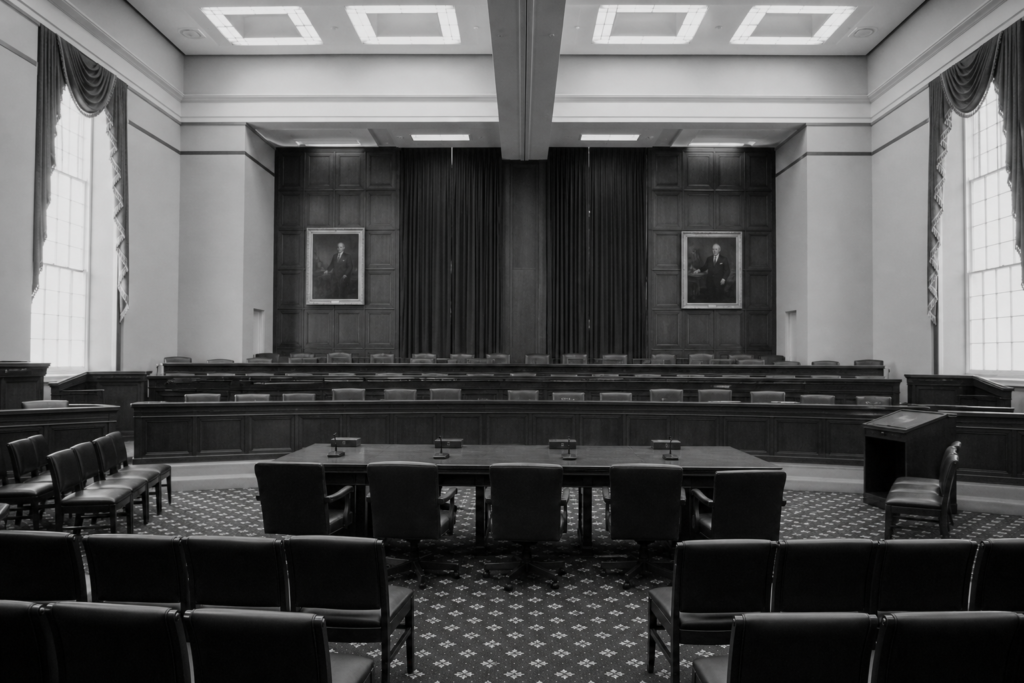
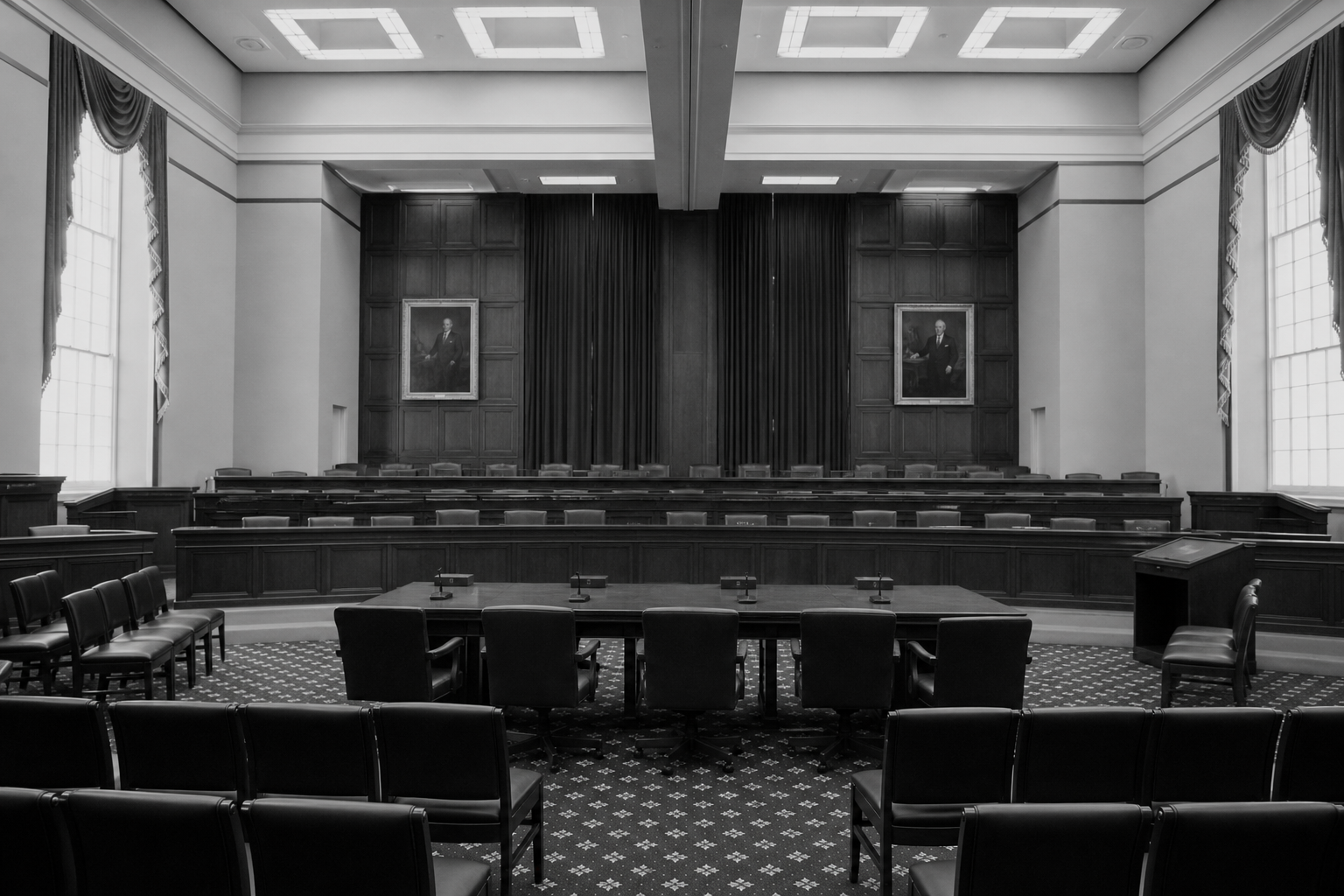
The reported September 9, 2025 House Oversight UAP hearing matters only to the extent that the public record can establish what actually happened. A hearing may be scheduled on a committee calendar, announced in a press release, formally convened with members and witnesses present, or fully documented through video, testimony, exhibits, and subsequent correspondence. Those are different benchmarks: an announcement shows intent, while a complete archive can show what was said, submitted, and promised.
This article treats UAP transparency as an accountability question rather than a conclusion about the nature of any reported object or event. It tests the central claims against primary materials: whether the House Committee on Oversight and Government Reform held the session in Washington, who called it and appeared, what written or audiovisual evidence entered the record, and whether members or agencies made identifiable follow-up commitments. Committee notices and archives, witness statements, congressional records, agency materials, and bill text carry more weight here than summaries or political assertions. Sworn testimony can establish that a witness made an allegation; it does not, by itself, publicly corroborate that allegation. The result is a clear account of what the record supports, what remains unresolved, and what the episode could mean for disclosure policy.
What the Official Record Shows About the September 9 UAP Hearing
The available primary-source record does not establish that the House Committee on Oversight and Government Reform convened a UAP hearing in Washington, D.C., on September 9, 2025. No official committee event page, hearing notice, memorandum, video archive, witness list, transcript, press release, or Congressional Record entry has been provided that matches that date and description.
That absence prevents a fact-checked identification of an official hearing title, the responsible subcommittee, the member who opened the proceeding, its stated purpose, or the witnesses who appeared. It also means there is no public congressional record here from which to report a documented exchange, agency undertaking, finding, exhibit, or records-production commitment. Calling the event a “UAP transparency hearing September 9 2025” would therefore turn an unverified description into a purported fact.
The distinction matters because a committee’s jurisdiction and format determine what a session can show. A full committee hearing, a subcommittee hearing, a member-led roundtable, and an outside event involving lawmakers are not interchangeable: only the first two normally produce a committee-controlled notice, witness materials, audiovisual archive, and formal record capable of demonstrating that the committee acted. A scheduled event likewise differs from a convened session, while testimony differs from corroborated evidence.
Accordingly, this article cannot treat the reported House Oversight UAP hearing as an established September 9 event or assign it disclosure-policy consequences. The verifiable account must remain limited to materials that identify the proceeding and preserve its record; until those materials are available, claims about what the committee heard, demanded, or promised remain unresolved rather than evidence of a congressional action.
Who Convened the Hearing and Who Appeared Before the Committee
For the reported September 9, 2025 session, the essential first identifier would be the name of the presiding House member printed on a dated hearing notice or shown in the archived opening gavel. No such notice, opening statement, or video has been provided here, so no Representative can responsibly be identified as convening the proceeding and no subcommittee can be assigned to it.
The same gap applies to the panel. There is no official witness list, committee-issued biography, written witness statement, exhibit index, or archived video naming an attendee at the claimed event. That means the record does not support attaching a specific institutional role, such as a Department of Defense, intelligence-community, National Archives, or All-domain Anomaly Resolution Office official, to this date.
Those categories matter because they carry different evidentiary weight. A current agency official can describe an agency’s position on classified records, UAP reporting channels, or document production; a former official can describe prior service but does not speak for the agency. A private specialist or journalist may offer analysis or reporting without governmental authority. An alleged whistleblower may make a disclosure or retaliation allegation in witness testimony, but neither the witness’s title nor the allegation independently corroborates its underlying facts.
Accordingly, the reported House UFO hearing 2025 cannot be reconstructed as a particular member panel. A reliable account would need, at minimum, a dated committee notice naming the convening unit and members, an official witness list with affiliations, and either a video archive, transcript, or written witness statement establishing what each participant actually presented.
What Was Said, Submitted, and Put on the Record
A substantive hearing record normally begins with an identifiable exchange: a witness’s opening statement, a member’s question, and a response preserved on video or in a transcript. For the reported September 9, 2025 proceeding, none of those items is available. There is no timestamped House video, transcript page, hearing-room photograph, or official record identifying a statement, speaker, oath, question, or answer; nor has a written testimony package, exhibit index, agency letter, or committee print dated to that session been supplied.
That absence prevents a claim-by-claim account of what was said. A written statement attributed to a named witness could establish that the witness submitted a particular assertion; an archived oral exchange could show whether the assertion was firsthand testimony, a secondhand allegation, or a member’s characterization. An agency letter from the Department of Defense, the All-domain Anomaly Resolution Office, the intelligence community, or the National Archives would instead record an institutional position. These are materially different forms of evidence: sworn testimony attributes a claim to an individual, while an agency response identifies what the agency was prepared to state publicly.
The supplied material does not show that a participant on September 9 alleged a government UFO cover-up, claimed knowledge of non-human intelligence, or submitted an exhibit in support of either proposition. It likewise contains no committee exhibit number, video timestamp, signed declaration, or released agency response that would independently verify such a claim was raised at the reported event. Broader arguments for UFO disclosure therefore cannot be treated as testimony from this particular session.
- Major testimony: No named witness, oath, opening statement, written witness statement, or timestamped question-and-answer exchange has been provided.
- Documents entered into the record: No exhibit number, unanimous-consent submission, committee print, report, image, attachment, letter, or supporting declaration identifies material formally received on September 9, 2025.
- Agency responses: No preserved answer from the Department of Defense, AARO, the intelligence community, or the National Archives can be tied to the reported proceeding.
- Requests and commitments: No record identifies a member who requested files, a recipient agency, a specified set of records, a classified briefing, a production deadline, or a promised written answer.
A traceable oversight action has five concrete markers: the requesting member, the receiving office, the records or information sought, a deadline or commitment, and a subsequent response or release. None is available for September 9, 2025. Until underlying hearing materials establish those markers, no testimony, exhibit, agency position, or follow-up commitment from the reported House Oversight UAP hearing can be presented as established fact.
The Policy Stakes: AARO, Classification, Records, and Reporting Channels
The accountability questions raised by UAP disclosure are institutional rather than rhetorical. Any credible inquiry would need to distinguish the All-domain Anomaly Resolution Office’s assigned role from the responsibilities of the military services, intelligence elements, and offices that own particular records. The central test is traceability: which office received a report, which office assessed it, which office retained the underlying material, and which official can answer for an unresolved gap.
Reporting channels matter because a report is not the same as a public finding. A protected internal submission can preserve an account for review while keeping operational details, sources, methods, or personal information outside public release. A public-facing summary, by contrast, can describe an assessment without disclosing the full evidentiary file. Those are different products, and neither should be portrayed as proof of the other.
Classification creates a further boundary. Declassification is a formal decision about whether information may be publicly released; it is not triggered simply by testimony, a member’s question, or public interest. A useful oversight record would identify the specific material at issue, its holding agency, the reason offered for withholding it, and whether a review for release or a less-redacted version has been requested.
Records preservation is equally concrete. An effective request would seek identifiable categories, such as incident reports, analytic products, correspondence, briefing materials, and disposition logs, rather than an undefined demand for “all UAP files.” It should also establish whether records remain with an originating office, have moved to a central repository, or are subject to archival transfer.
A public session can surface questions, place requests in view, and create political pressure for written responses. It cannot by itself release classified material, compel an agency production without further committee action, establish a new reporting protection, or resolve competing assessments. Appropriations conditions, formal requests, subpoenas, and legislation are separate tools; each requires a documented follow-through beyond the hearing room.
What the Hearing Means for UAP Disclosure Legislation
The Senate’s 2023 UAP Disclosure Act proposal and the House’s UAP Transparency Act were not interchangeable measures. The first appeared as Senate Amendment 797 to S. 2226, the fiscal 2024 National Defense Authorization Act, led by Senate Majority Leader Chuck Schumer and Sen. Mike Rounds; the second was H.R. 6967, introduced by Rep. Tim Burchett on January 11, 2024.
The Schumer-Rounds amendment proposed a National Archives UAP Records Collection, a nine-member UAP Records Review Board, and a controlled-disclosure plan. Its defined records scope reached material concerning unidentified anomalous phenomena, technologies of unknown origin, and biological evidence of non-human intelligence. Those provisions were not enacted in that form. The final fiscal 2024 defense law instead enacted Section 1843, which created a records-collection framework but omitted the proposed review board and disclosure campaign.
H.R. 6967, titled the UAP Transparency Act, focused on federal review and public release of UAP-related records. It was referred to House committees during the 118th Congress and did not become law before that Congress ended on January 3, 2025. An introduced House bill can signal a sponsor’s preferred records policy, but referral does not create an agency duty to transfer records, release classified material, or alter classification authority.
The practical distinction is important. A records collection centralizes identified material; a review board would reassess withholding decisions; whistleblower language would need to specify a protected reporting route, confidentiality rules, and remedies for retaliation. Neither the surviving Section 1843 framework nor an unenacted proposal converts an allegation into an official finding, and neither establishes confirmed alien disclosure.
No supplied House record links the reported September 9, 2025 proceeding to a markup, vote, bill referral, formal records request, investigation, or follow-up letter concerning Senate Amendment 797 or H.R. 6967. On the material available, the hearing cannot be said to have advanced either measure. Testimony or committee discussion may air legislative proposals, but enactment requires passage by Congress and presidential signature; declassification requires a separate, documented release decision.
What Changed After the Hearing, and How to Verify Future Claims
The post-hearing ledger remains blank on the materials available here. No follow-up letter, agency-response deadline, closed briefing notice, released record set, announced investigation, or legislative action has been supplied that can be tied to the reported September 9 event. Those are the developments that would convert public discussion into an identifiable oversight outcome.

A useful next signal is specific rather than dramatic: a committee letter names its recipient and requested material; an agency reply answers it; a briefing announcement identifies the committee unit; or a Congress.gov action records a bill’s introduction, referral, markup, vote, or enactment. By contrast, a media summary or social-media post that cannot link to a primary record is not evidence that Congress obtained records or that an agency changed policy.
- Start with the House Oversight Committee site and its hearing archive for an event page, notice, witness list, written statements, and follow-up releases.
- Use House Video for preserved footage; a complete video permits claims to be matched to the speaker and exchange.
- Search the Congressional Record and Congress.gov for floor material and bill-action histories.
- Review AARO publications for official assessments and reporting information.
Individual UFO sightings 2025 posts may be newsworthy, but they are not congressional evidence. The decisive checkpoint is a traceable primary record that identifies the actor, date, claim, and resulting action.
The Bottom Line on the September 9 UAP Hearing
What remains is a claim awaiting proof, not an established congressional event. The materials available for this account do not identify an official hearing title, convening committee unit, presiding members, witness panel, transcript, exhibits, or post-hearing action for September 9, 2025. It follows that no testimony, agency commitment, records request, or disclosure-policy result can be attributed to that date.
That conclusion does not settle the broader UAP debate. It sets the evidentiary threshold for reporting on it. A committee hearing becomes an oversight event when the public can trace the institutional chain: an official notice establishes who called it and why; video, a transcript, and submitted statements establish what occurred; and correspondence, production records, briefings, or enacted measures establish whether an agency was required to do anything afterward.
The same standard applies to UAP disclosure legislation. Bill text and a Congress.gov action history can show a proposal’s actual duties and status; headlines cannot show that records were released, classification changed, or an agency finding was overturned. Until those primary records are available, the responsible account of the reported House Oversight UAP hearing is limited: its claimed occurrence and consequences remain uncorroborated.
Frequently Asked Questions
-
Did the House Oversight Committee hold a UAP hearing on September 9, 2025?
No official primary record establishes that the House Committee on Oversight and Government Reform convened a UAP hearing in Washington, D.C., on September 9, 2025. No matching committee notice, event page, video, witness list, transcript, press release, or Congressional Record entry is available.
-
Who testified at the reported September 2025 House UFO hearing?
No official witness panel has been identified for the reported event. There is no committee-issued witness list, biography, written statement, exhibit index, or archived video naming any participant.
-
Did the reported House Oversight UAP hearing confirm alien or non-human intelligence claims?
No. The available record contains no verified testimony, exhibit, agency response, or video showing that claims about non-human intelligence or a government UFO cover-up were made at the reported proceeding.
-
What role does AARO have in investigating UAP reports?
The All-domain Anomaly Resolution Office is one part of the UAP accountability system, but military services, intelligence elements, and other agencies may hold the underlying reports and records. A traceable inquiry should identify which office received a report, assessed it, retained the material, and can answer unresolved questions.
-
What is the difference between the UAP Disclosure Act and the UAP Transparency Act?
Senate Amendment 797, commonly called the UAP Disclosure Act, proposed a National Archives UAP Records Collection, a nine-member review board, and a controlled-disclosure plan, but those provisions were not enacted in that form. H.R. 6967, the UAP Transparency Act, focused on federal review and public release of UAP records, but it did not become law before the 118th Congress ended on January 3, 2025.