How to Follow a House UAP Hearing: Witness Statements, Committee Procedure, Video, and Transcripts
Prepare for a House Oversight Committee UFO hearing: verify schedules, understand procedures, assess testimony, and read transcripts with evidence.
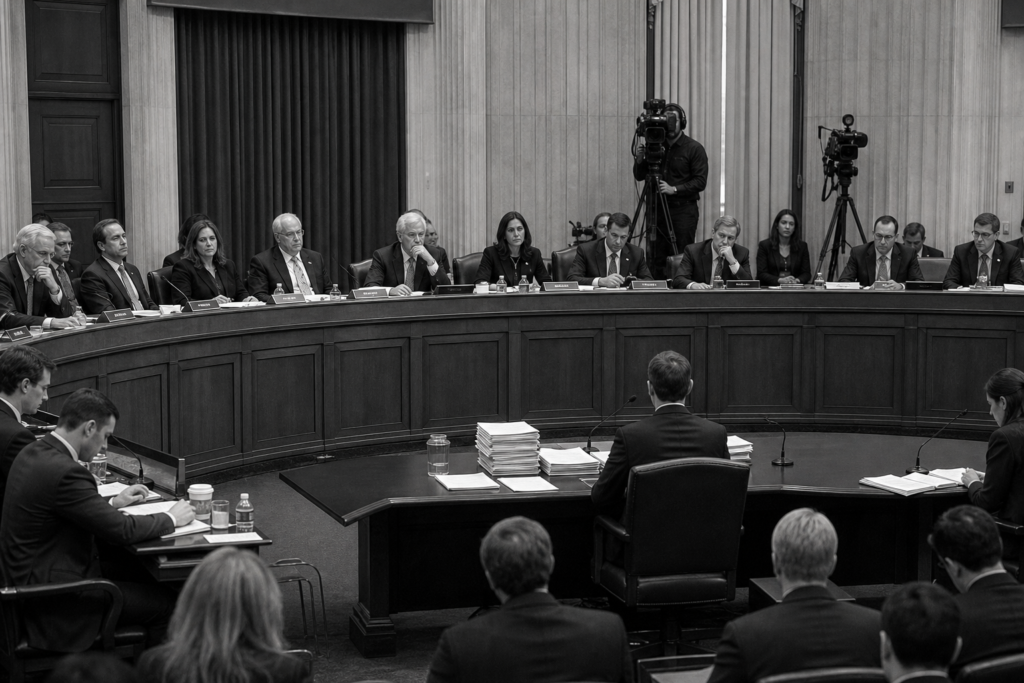
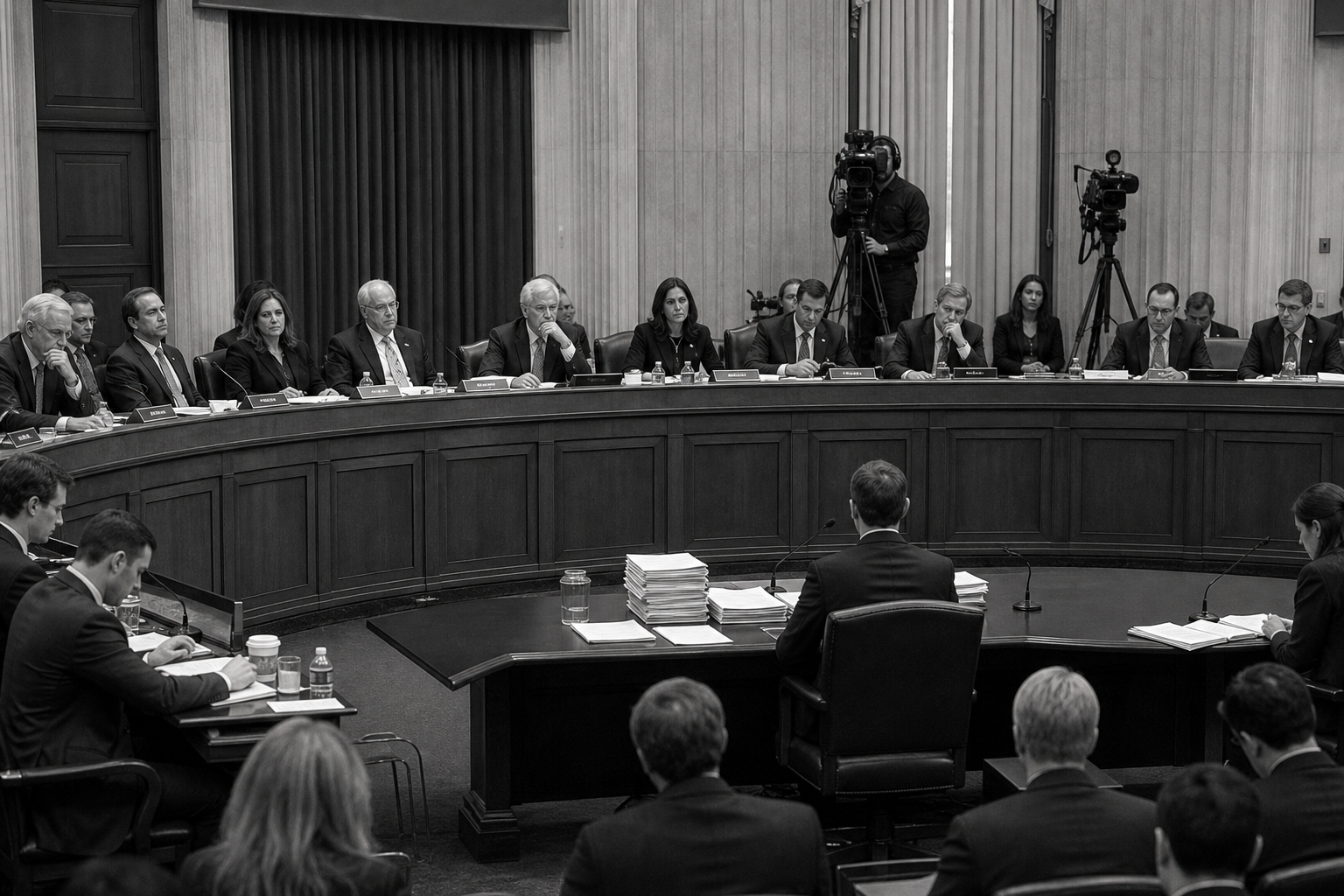
A headline can turn an allegation into a spectacle; a congressional record can show precisely who made it, what they were asked, and what, if anything, supports it. Those are not the same thing. A House Oversight Committee UFO hearing should begin with an official event notice, not a circulating clip, a member’s teaser, or a claimed witness list. A named witness’s firsthand account carries a different weight from hearsay, and neither becomes established fact merely because it is delivered before Congress.
This guide treats a UAP hearing as a record-building event. Before it starts, preserve the committee notice, stated purpose, witness materials, written testimony, and any related letters or reports. During it, note whether questions produce dates, documents, custodians, reporting channels, or specific requests for agency action. Afterward, compare headlines and short video excerpts with the complete video, transcript, exhibits, and later agency responses.
Procedure matters because it defines what the public can see and what the hearing can accomplish. Public questioning creates a visible record; a closed session may leave little public detail. A subpoena or a forceful exchange may signal an oversight lead, but it does not itself authenticate an allegation. The practical task is to separate assertion, testimony, documentary support, corroboration, and unresolved claims, then follow the record rather than the excitement around it.
First, Verify That the Hearing Is Real, Scheduled, and Public
Start with the committee’s own public calendar or hearing page. Until that page carries an event, treat a rumored date as unconfirmed, even if a screenshot, social post, prospective witness, or member’s comment appears credible. An official hearing notice should supply the basics readers need to preserve: date, start time, room or remote-access details, title, stated purpose, and a link to the committee’s live video or event record.
The event label changes what the public should expect. A hearing is ordinarily the format for receiving witness testimony and member questions. A markup concerns proposed legislation or other committee business rather than a witness-driven examination. A roundtable may be informational but can follow a less formal structure. A closed briefing is not a public livestream event; its existence does not establish the substance of any allegation discussed there.
Use the committee’s hearing calendar, press releases, and official livestream page as the controlling record, then save the hearing notice when it appears. Compare its title and logistics with any circulating claims, including announced House Oversight UAP activity. A renamed event, revised witness lineup, room change, postponement, or missing livestream link can materially change what is actually happening. If no official notice appears, the responsible conclusion is simple: no publicly scheduled House Oversight UFO hearing has been established.
How to Prepare: Build a Primary-Source File Before Testimony Begins
Create a dated folder before the event and save each file in its original form, along with its URL. Begin with the official notice, then add the hearing memorandum or background materials, the published witness list, witness biographies, and written testimony released in advance. The notice fixes the event’s stated scope; the memorandum often shows whether members are pursuing factual disclosures, agency accountability, or a policy change. Bios and testimony help separate a witness describing personal work or observation from one relaying information received from others.

Add the prior correspondence that the hearing or witnesses cite: committee letters, agency replies, public inspector general material, Department of Defense or AARO statements, National Archives UAP Records Collection materials, and the text and status of any bill on Congress.gov. A letter requesting records is an oversight lead, not proof that the records support its premise. By contrast, a dated exhibit, a named report, or a specific case number creates a trail that can be tested after the UAP congressional hearing.
Preserve the version available before opening statements. A revised witness lineup or updated submission can explain apparent contradictions later, while a missing attachment should be logged as unavailable rather than reconstructed from commentary.
Use a simple claim ledger while reading:
| Speaker | Exact claim | Claimed source | Documents cited | Agency response | Verification status |
|---|---|---|---|---|---|
| Name and role | Direct quotation with timestamp | Firsthand account, colleague, report, or record | Title, date, link, exhibit, or none | Statement, letter, report, or pending | Corroborated, partly supported, unverified, or contradicted |
Record the precise wording, not a compressed headline. “I was told” identifies secondhand testimony; “I reviewed document X on date Y” supplies a narrower, checkable assertion. That distinction keeps later analysis tied to what the public record can actually establish.
What House Oversight Procedures Actually Change
The sequence of the hearing tells you what each exchange can establish. The chair’s recognition and agenda choices determine which witnesses appear, which subjects receive time, and whether material is offered for the record. Majority and minority members can pursue competing lines of inquiry; their opening statements frame those priorities, but they are arguments rather than evidence. A witness oath makes false testimony a serious matter, yet it does not turn an assertion into corroborated fact.
Questioning is also a constrained tool. Under the usual five-minute rule, members use short rounds to seek dates, names, records, and direct answers, while witnesses may qualify, decline, or explain that they lack firsthand knowledge. In a House Oversight Committee UAP hearing, a precise request, “identify the report, office, and date”, creates a better lead than a broad demand for confirmation. Note whether the answer identifies an item that can later be produced, not merely whether the exchange sounds forceful.
Subpoena authority is a means of formally compelling testimony or documents through the committee’s established process; it differs from an informal request for voluntary production. A subpoena can improve the committee’s access to evidence, but subpoena authority cannot establish that an allegation is true, authenticate every item received, or compel a public disclosure of protected information. The applicable House and committee rules determine who may authorize a subpoena and how it is issued.
A public hearing is therefore neither a criminal investigation, an intelligence assessment, a declassification order, nor a final congressional finding. It is a visible congressional oversight proceeding. Its strongest immediate output is a structured record of claims, questions, exhibits, and commitments, not a verdict on extraordinary allegations.
How to Evaluate UFO and Non-Human Intelligence Claims Without Overreading Them
Start by sorting every assertion by the witness’s route to knowledge. A firsthand observation is an account of what the witness personally saw, did, heard, or handled; it can be tested against timing, location, contemporaneous reports, and other witnesses. A claim based on access to records is different: its value depends on whether the witness identifies the document, date, office, program, and custodian well enough for the committee or another reviewer to locate it.
Use a simple hierarchy. The strongest claims combine a precise firsthand account or identified record with named corroborating witnesses, independently confirmed agency material, or physical or digital evidence whose chain of custody is clear. Chain of custody means a traceable account of who collected an item, stored it, transferred it, and examined it. It does not establish what an object is by itself, but it helps determine whether later testing can be trusted.
At the other end are claims framed as “someone told me,” anonymous accounts, broad assertions of a government UFO cover-up, and allegations that cannot be assessed publicly. These may justify a narrowly defined oversight lead, but they do not establish crash retrievals, reverse-engineering programs, or non-human intelligence. Do not let an unexplained UAP sighting silently become evidence for a larger conclusion.
Read the exact sworn words, not the headline paraphrase. “I reviewed a report in a named office on a stated date” is a checkable claim; “I have been informed that a program exists” is hearsay unless the underlying source, record, or witness is independently produced. Testimony under oath raises the personal stakes for the speaker, but oath status does not independently prove accuracy, completeness, or the truth of information received from others.
For each extraordinary assertion, write down four checkpoints: what exactly is alleged; how the witness knows; what named material could test it; and whether an independent record or witness supports it. If any link remains unavailable, label the claim unresolved rather than filling the gap with inference.
What to Watch for During the Hearing: Questions That Build a Checkable Record
The most useful exchange often sounds procedural rather than sensational. Listen for a member who narrows an allegation into retrieval questions: What is the date? Who had direct knowledge? What office held the record? What reporting channel received the complaint? Where is the item or file now? A precise answer creates a lead that can be pursued; a broad assurance of access or concern does not.
- Identity and timing: a name, job title, date range, location, and program or office turn a general assertion into a potentially searchable one.
- Record location: ask for a report number, email system, case file, repository, or custodian. “It exists” is weak; “it was filed with this office under this reference” gives investigators somewhere to look.
- Handling history: if an object, image, sample, or digital file is invoked, note who obtained it, who controlled it, and whether it was altered, copied, or tested.
- Follow-up: a commitment to provide material, identify a contact, or answer a question for the record is an observable next step, not proof that the underlying allegation is true.
A member’s question is not evidence of its premise. Members may test a lead, summarize an allegation, or make a rhetorical point. Likewise, an incomplete answer can reflect limited time, uncertainty, privilege, poor preparation, or classified constraints; it does not by itself demonstrate concealment.
When a witness invokes classification, capture the exact stated basis and whether they offer a public alternative: an unclassified date, office, process, or commitment to brief members elsewhere. Classification can limit a public answer, but it does not validate the hidden claim. Use the official livestream or archived video to time-stamp these exchanges; UFO news and short clips are useful for finding moments, not for preserving their full context.
How to Read the Transcript and Separate Testimony From Proof
The written record is most valuable when it lets you reconstruct an exchange rather than isolate its sharpest sentence. Start at the committee’s hearing page and collect the official transcript or published record, the full video archive, each witness’s written statement, and every exhibit or item entered for the record. The House UFO hearing transcript may arrive after the video and can later be corrected or supplemented, so preserve the version and date you used.
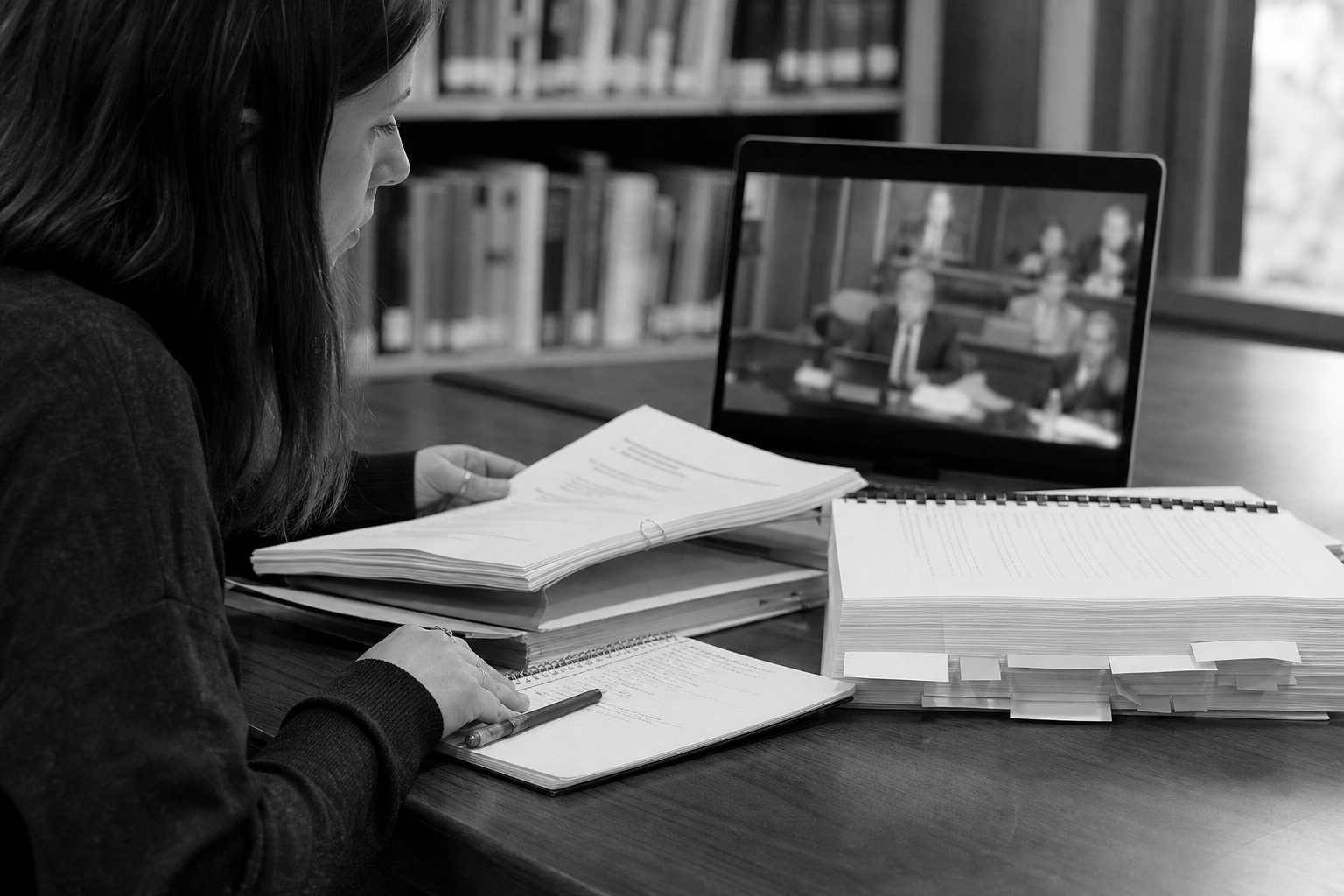
Read any consequential quotation in three places: the witness’s prepared statement, the surrounding question-and-answer exchange, and the video. The video resolves interruptions, emphasis, and whether a member supplied the allegation in the question. “Were you told that the government has recovered material?” is a member’s assertion framed for inquiry; “I was told” is the witness’s secondhand testimony; neither establishes recovery. Mark qualifiers such as to my knowledge, I believe, may, could, if true, and I cannot discuss that publicly. They define the claim’s limits.
- Alleged: someone asserts an event or fact without public supporting material.
- Documented: a named record, exhibit, image, report, or correspondence is actually available and identifiable.
- Corroborated: an independent witness or record supports a material detail, not merely the general narrative.
- Disputed: another witness, agency response, or record conflicts with the assertion.
- Unresolved: the lead remains untested, inaccessible, incomplete, or ambiguous.
Add a note beside each major assertion identifying the promised follow-up: a document production, corrected answer, written response, or named office that can respond. The strongest reading of a transcript connects the claim to that evidence trail and its outcome, not to the most sensational wording.
After the Hearing: Track What Congress, Agencies, and Witnesses Actually Do Next
The next signal is follow-through, not reaction. Keep a dated log of each promised production, committee letter, agency reply, witness correction, inspector general referral or public update, proposed reporting requirement, appropriations provision, future hearing, and release decision. A produced, identifiable record is a stronger development than a member’s statement that material exists.
- Match commitments to results: note whether a promised document or formal post-hearing answer appears, arrives only in private, or never materializes.
- Separate oversight from validation: a classified briefing may advance an inquiry while adding nothing assessable to the public record.
- Follow formal action: legislative text, enacted funding language, or a new reporting rule shows a concrete response; it does not establish every underlying allegation.
A House Oversight Committee UFO hearing can generate useful leads, limited administrative action, or no substantiating record. Its significance need not rest on alien disclosure or UAP disclosure; the outcome is measured by what becomes testable afterward.
The Record Matters More Than the Headline
Restraint is not dismissal. An unanswered question identifies a gap; an allegation under oath identifies a person accountable for making it; an established fact requires support that can be independently examined. Those categories can coexist in the same exchange, and collapsing them is how a hearing becomes a misleading headline.
Keep the public file intact: the event notice establishes what occurred, written statements fix a witness’s account, full video supplies tone and context, the hearing transcript makes quotations searchable, exhibits provide underlying material, and follow-up correspondence shows whether an oversight lead produced an answer. A named document, identifiable firsthand source, agency response, or disclosed corrective action is a stronger signal than a compelling clip with no testable trail.
Procedural limits also belong in the final assessment. A member’s question can expose an issue without proving its premise, and a restricted answer may leave the public unable to assess a claim. Neither result warrants filling the record with assumption. Preserve the primary sources, mark what remains unresolved, and revise conclusions only when new material permits it.
Judge a House Oversight Committee UFO hearing by the checkable record it leaves behind, and by the documents, responses, and concrete oversight action that follow, not by viral excerpts or immediate conclusions.
Sources
Frequently Asked Questions
-
How can I watch a House Oversight Committee UFO hearing live?
Use the House Oversight Committee’s official hearing calendar, event page, press releases, and livestream page. Confirm the date, start time, room or remote-access details, hearing title, stated purpose, and live-video link before relying on circulating posts or clips.
-
Where can I find the official transcript of a House UAP hearing?
Start on the committee’s hearing page and collect the official transcript or published record, full archived video, witness written statements, and exhibits. Save the transcript version and date because hearing records can be corrected or supplemented after the video is posted.
-
What is the difference between sworn UFO testimony and verified evidence?
Sworn testimony makes the speaker accountable for the statement, but it does not independently prove that the claim is accurate or complete. Verified evidence requires testable support, such as an identified document, a precise firsthand account, independent corroboration, or physical or digital material with a clear chain of custody.
-
Can the House Oversight Committee force the Pentagon to release UAP records?
The committee can use subpoena authority to formally compel testimony or documents through its established process, which is stronger than a voluntary request. A subpoena does not prove an allegation, authenticate every document received, or require public release of protected or classified information.
-
What should I look for when evaluating UFO whistleblower claims in a congressional hearing?
Look for the exact allegation, whether the witness has firsthand knowledge, the name and date of any report or record, the office or custodian holding it, and independent corroboration. Treat claims such as “I was told” as secondhand testimony unless the underlying source, witness, or document is independently produced.