George Knapp and the UAP Media Trail
Explore George Knapp UFO reporting, from Bob Lazar to UAP whistleblowers, and learn how to separate documented facts from unverified claims.
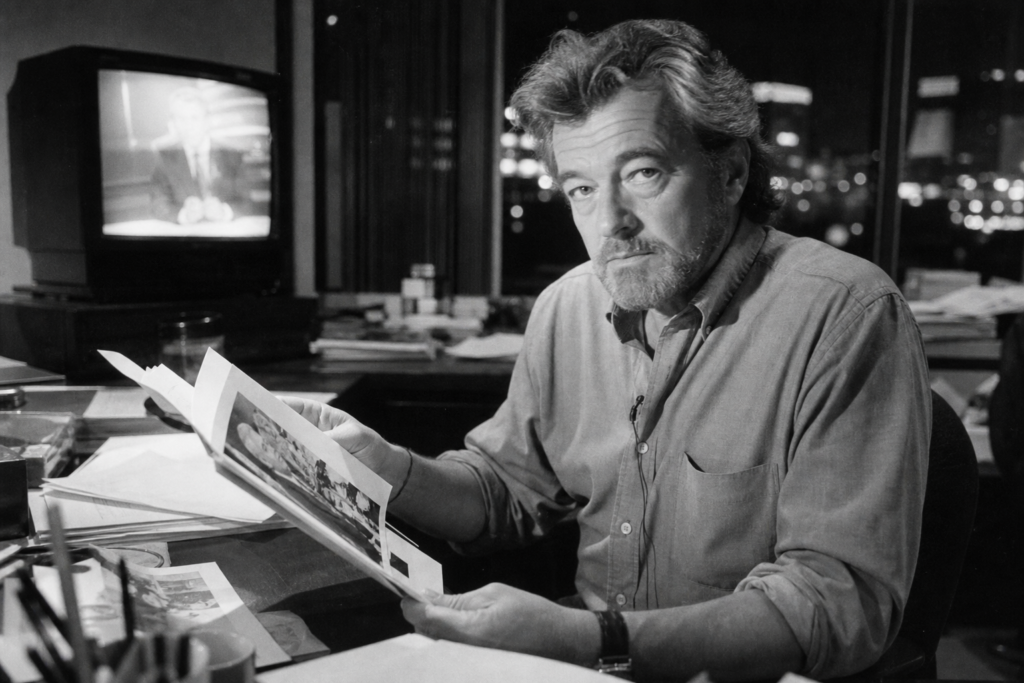
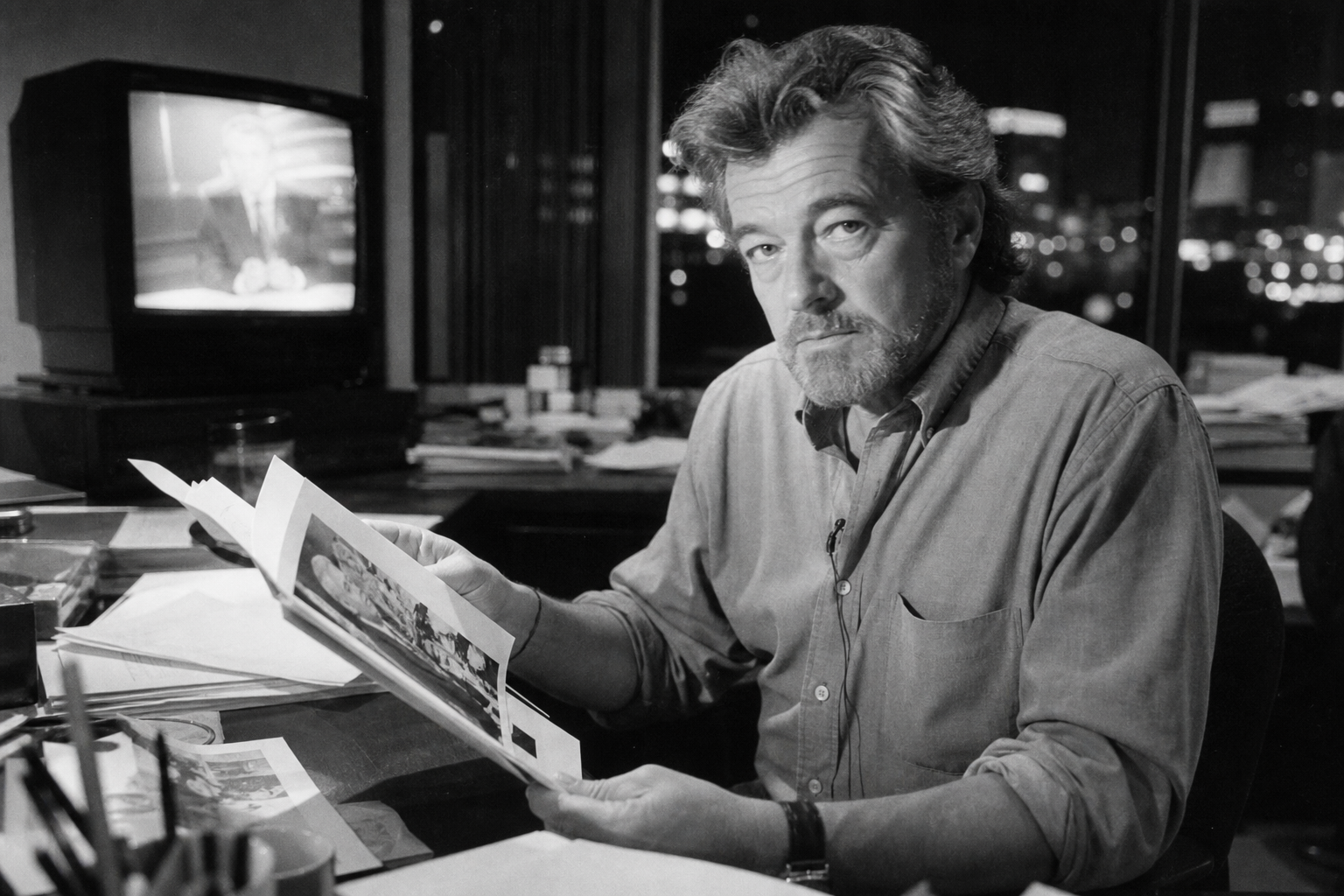
George Knapp UFO reporting occupies an unusual place in the modern UAP story: for decades, his work has carried contentious accounts from Las Vegas television into national radio, books, documentaries, and the wider disclosure debate. His name is inseparable from Bob Lazar’s Area 51 allegations, the evolving mythology and investigation of Skinwalker Ranch, and more recent whistleblower-era conversations. That reach matters because media attention can determine which witnesses, documents, and questions remain in public view long after an initial broadcast.
But influence is not confirmation. A recorded interview establishes that a person made a claim; it does not, by itself, establish that the claim is true. A government acknowledgment that some incidents remain unidentified does not validate every earlier assertion about secret programs or non-human technology. This examination follows Knapp’s reporting trail as a piece of the UAP media ecosystem: the reporting methods that built his access, the stories that expanded his audience, the sources who shaped the narrative, and the evidentiary boundaries readers should keep in view. The central distinction is straightforward: documented journalism, firsthand allegation, and independently verified conclusion are different categories, and treating them as interchangeable obscures what the record can actually show.
Why George Knapp Matters to the Modern UAP Media Narrative
Las Vegas gave George Knapp a distinctive reporting base: a city close to military installations, shaped by secrecy, spectacle, and a steady supply of people willing to describe unusual experiences. His work as an investigative television reporter at KLAS-TV made him a recognizable local journalist before his UFO-focused interviews reached far beyond Nevada. National radio, especially his long association with Coast to Coast AM, then gave those conversations a durable, participatory audience, while books and documentary appearances preserved them for new disclosure-era viewers.
That cross-platform path is why Knapp matters. A regional broadcast can introduce a witness; radio lets the witness’s account be revisited, contested, and connected to other claims; documentary storytelling can turn a disputed episode into part of a larger public narrative. Each stage increases visibility, but it does not increase the underlying evidence automatically. Reporting an allegation means accurately presenting what a source asserts. Documenting a source means establishing who spoke, when, and in what context. Independently establishing a fact requires corroboration that does not depend solely on the original claimant or the program carrying the claim.
For readers following UAP disclosure, that distinction is the useful starting point. Knapp’s importance lies in his capacity to keep particular witnesses, locations, and questions in circulation across media formats, not in treating circulation itself as proof.
Knapp’s Reporting Method: Interviews, Sources, Documents, and Amplification
The useful way to read a Knapp interview is as a record with several layers, not as a finished finding. A long on-camera exchange can preserve a witness’s wording, demeanor, chronology, and response to follow-up questions far better than a short quotation. It also lets viewers see where an account is firsthand, where it relies on another person, and where a witness declines to provide detail. That is a genuine reporting advantage, even when the central allegation remains unresolved.
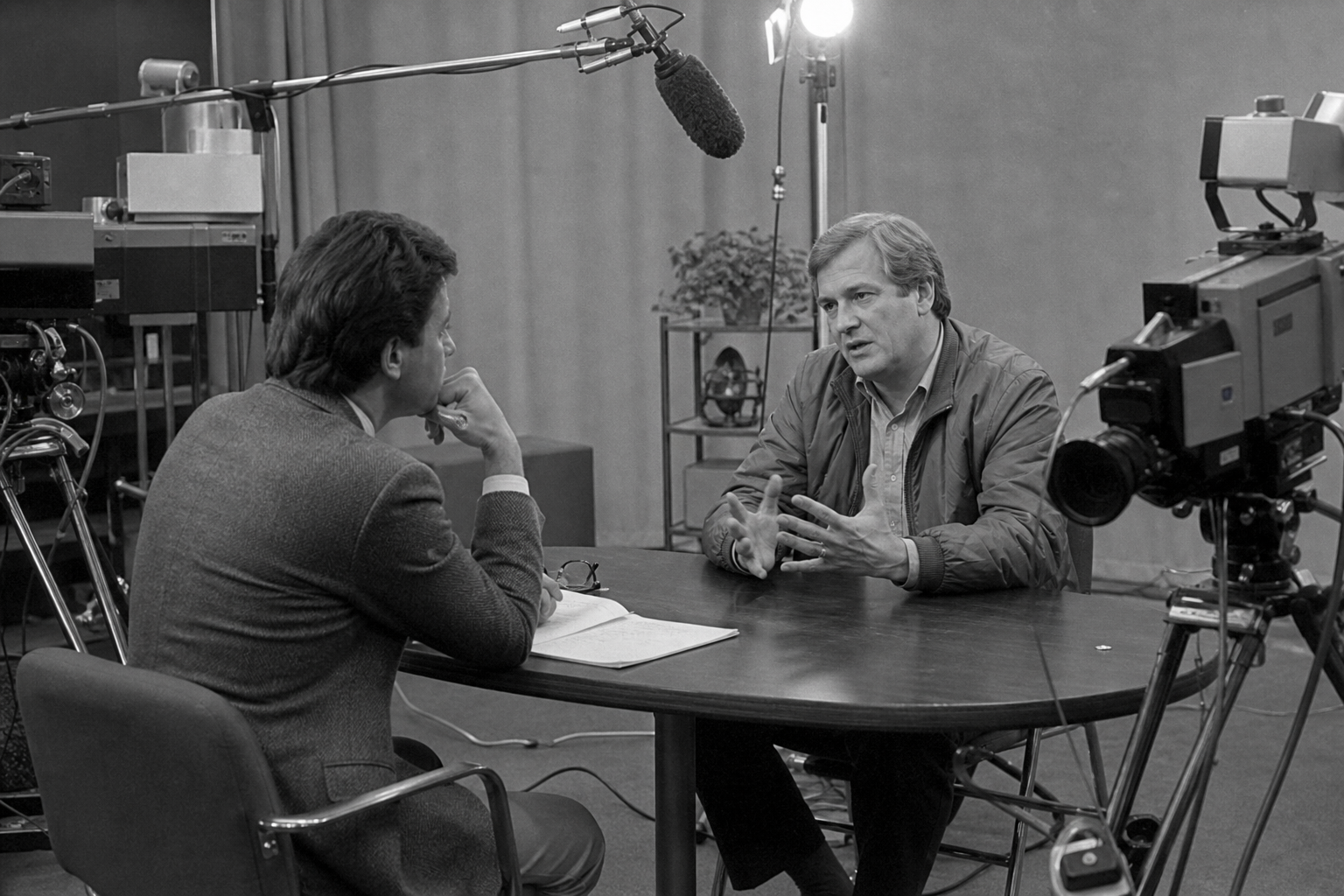
His approach also rewards source cultivation: people working around specialized subjects may return with documents, introductions, corrections, or new claims after an initial appearance. The practical test is source vetting, not simply access. A named witness with a traceable role and a contemporaneous record offers a stronger starting point than an unnamed official, a recollection relayed through intermediaries, or credentials that cannot be independently established. Classified-program claims pose an additional limit: the absence of public records may explain why evidence is scarce, but it cannot itself demonstrate that the asserted program exists.
Documents matter differently depending on what they actually establish. A broadcast clip, email, police report, flight record, or public-records response may authenticate a date, a meeting, a complaint, or the fact that an official agency received information. It does not necessarily authenticate the extraordinary interpretation attached to it. Likewise, documentary footage can show that a person made a claim under recorded conditions without proving the substance of that claim.
- Stronger signals: firsthand testimony paired with contemporaneous material and independent records that converge on the same limited fact.
- Weaker signals: anonymous attribution, secondhand accounts, inaccessible classified evidence, and repeated claims whose only corroboration is another retelling.
Long-form television and radio gave George Knapp UFO reporting room for this material to be revisited rather than discarded after one segment. That amplification can expose inconsistencies and invite corroboration; it can also make an unverified narrative feel more settled through repetition. The reader’s task is to keep the interview, the document, and the conclusion in separate categories.
Bob Lazar, Area 51, and the Story That Expanded Knapp’s Reach
Knapp’s 1989 KLAS-TV interviews with Bob Lazar turned him into the human face of a story that had previously circulated largely as rumor. Lazar alleged that he had worked at a site near Area 51 called S-4, where he encountered craft said to be under examination and described an effort to reverse-engineer their propulsion. Television gave those assertions unusual staying power: viewers could watch the witness speak at length, assess his confidence and detail, and revisit the account as it spread beyond Las Vegas.
The setting supplied much of the story’s force. Area 51 was a real, highly restricted military location associated with secret aerospace work; its later public acknowledgment established the existence of the site, not the particular program Lazar described. That distinction matters. A documented installation and the general reality of classified projects make secrecy plausible as context, but neither independently demonstrates employment at S-4, recovered craft, reverse-engineering work, or non-human technology.
Bob Lazar’s allegations also contained claims that could, in principle, be tested separately: his education, professional history, access to the alleged facility, and the physical evidence for the craft. Publicly available records and reporting have not produced independent confirmation sufficient to establish the full account, while questions surrounding parts of his claimed background have remained central to the dispute. The strongest established point is narrower: Lazar appeared in Knapp’s reporting and made specific allegations on camera.
That narrow point still had large media consequences. The combination of an obscure desert base, the opacity of military programs, and a memorable televised witness helped make Area 51 a durable cultural shorthand for hidden government activity. Later films, books, radio discussions, and popular fascination kept the narrative alive. George Knapp UFO coverage did not settle Lazar’s claims; it created the format through which those claims became exceptionally difficult for the wider UAP conversation to ignore.
Skinwalker Ranch: From Regional Mystery to Repeatable UAP Story Engine
Skinwalker Ranch gave this media model a broader canvas: not one witness describing a hidden program, but an open-ended location narrative capable of accumulating new accounts over time. In Knapp’s reporting and later collaborations, the Utah property became associated with reports of unusual lights, UAP sightings, animal injuries, apparent equipment failures, strange creatures, and other paranormal experiences. The variety is central to its appeal; each new episode can be presented as part of a continuing pattern rather than as an isolated incident.
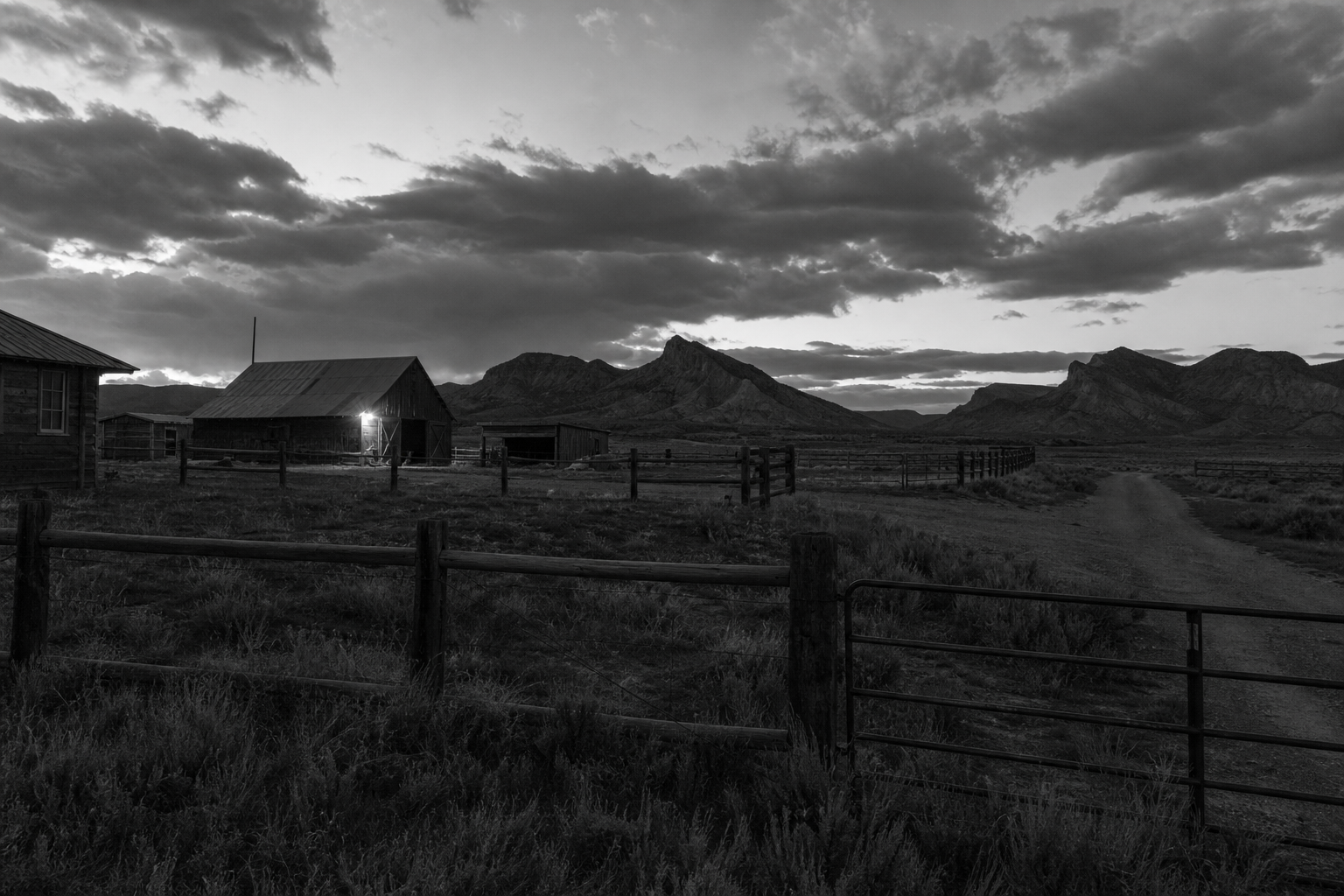
Private investigation also supplied the story with an institutional frame. Robert Bigelow’s National Institute for Discovery Science examined reports connected to the ranch, and Knapp helped carry that material into books, radio discussions, and eventually screen formats. Those channels made witnesses and investigators recurring characters, while the setting itself became a durable narrative engine for audiences already interested in secrecy and anomalous phenomena.
That reach should not be confused with a conclusive result. Witness testimony can preserve what people say they experienced, and privately gathered readings may suggest questions worth pursuing, but neither substitutes for accessible raw data, clearly described controls, independent replication, and outside review. A compelling episode is strongest as a record of a reported event; it is weaker when its underlying measurements, alternative explanations, or chain of custody cannot be independently examined.
The ranch therefore matters to Knapp’s influence less as settled evidence than as a repeatable template. It connected UFO reports to broader paranormal claims, turned investigation into an ongoing serial narrative, and demonstrated how television, radio, books, and streaming formats can keep unresolved anomalies in public circulation.
How Knapp Helped Build a Bridge to the Disclosure-Era UAP Conversation
By the time the Pentagon formally released three Navy-recorded UAP videos in April 2020, Knapp had built a distribution network that outlasted any one broadcast: KLAS-TV reporting, years on Coast to Coast AM, the Mystery Wire platform, books with Colm Kelleher, and documentary work including Hunt for the Skinwalker. That archive gave journalists, filmmakers, former officials, military witnesses, and longtime listeners common reference points, names, interviews, locations, and unresolved allegations, rather than a single passing news cycle.
Each medium performed a different connective role. Local television put a witness and interviewer before a broad audience; long-form radio preserved extended testimony and audience debate; podcasts could return to an older account after a new official development; documentaries paired archival interviews with places and visuals that made specialized stories accessible to streaming audiences. The tradeoff is consequential: circulation can invite fresh scrutiny, but a polished sequence can also make separate claims appear more mutually corroborating than the public record warrants.
The terminology shift widened the conversation. “UFO” carried a cultural history of sightings and extraordinary explanations, while “UAP” became the official label used in Pentagon releases, the UAP Task Force, and the 2021 intelligence assessment for incidents not identified at the time of reporting. That distinction matters: an unidentified report describes an unresolved identification problem, not a demonstrated non-human origin. Pentagon UAP investigations added defense, intelligence, and flight-safety interests to a field long shaped by UFO news and paranormal media.
Knapp did not create this disclosure-era debate, and official acknowledgment of unresolved cases did not validate Lazar’s allegations or the Skinwalker Ranch narratives. His contribution was connective and amplifying: he maintained channels through which established UFO audiences and newer policy-minded viewers could encounter overlapping witnesses, questions, and evidentiary disputes, helping set the stage for the later mainstream-media phase of UAP coverage, and judge each claim on its own record.
The Whistleblower Era: Knapp, David Grusch, and What Testimony Can Establish
David Grusch brought a different kind of source into the conversation: a former intelligence officer describing alleged hidden programs in televised interviews and before Congress. George Knapp’s engagement with the story helped place those claims before an audience already familiar with long-running assertions about retrievals and secrecy, while the congressional setting gave the allegations a more formal public stage.
David Grusch’s UFO testimony mattered because it was sworn testimony: it created a public record of what he said and exposed him to the consequences of knowingly making false statements. It did not, by itself, establish that a crash-retrieval program or non-human intelligence materials exist. Grusch repeatedly framed central allegations as information supplied by other people, rather than material he had personally handled or observed. That distinction is decisive: firsthand evidence can be independently tested; a secondhand account can identify leads, but remains dependent on the original witnesses, records, and physical evidence.
The David Grusch whistleblower designation also needs careful reading. An inspector-general complaint process can address whether a person’s disclosures or treatment merit review, including alleged retaliation; it is not a public finding that every underlying allegation is true. Claims said to involve classified information create a further limit: lawmakers and journalists may hear that evidence was provided in closed channels, but the public cannot assess material it cannot inspect.
For Knapp, the episode demonstrated the reach of the disclosure-era media network. For readers, the checkpoint is simpler: distinguish a UFO whistleblower’s sworn account, the existence of an official review process, and independently public corroboration. They are related developments, but they are not interchangeable forms of proof.
How to Evaluate Knapp’s Legacy, and the Next Wave of UAP Claims
New reports demand a disciplined reading order, whether the headline concerns UFO sightings 2025 or UFO sightings 2026. Start with the original record: the full interview, hearing transcript, filing, official statement, or earliest available video, not a clipped repost or a narrator’s summary. A report establishes that someone observed, recorded, or alleged something; a finding is a conclusion reached after the underlying material has been examined.
- Trace video provenance: identify who recorded it, when and where it was captured, whether the original file is available, and whether edits, compression, or missing context could change its meaning.
- Prefer contemporaneous material, flight data, weather records, sensor logs, photographs, messages, or dated documents, over memories reconstructed long afterward.
- Look for independent corroboration. Multiple accounts only strengthen a case when they are genuinely separate, specific, and capable of being compared against the same time and place.
- Test ordinary alternatives first, including aircraft, balloons, drones, astronomical objects, optical effects, sensor artifacts, and mistaken distance or speed estimates.
- Read an official recent UAP report narrowly: determine whether it examined the particular incident or merely addressed UAP policy, reporting procedures, or a broader category of claims.
That framework also clarifies George Knapp’s legacy. His lasting contribution is the ability to surface, preserve, and circulate consequential allegations that might otherwise disappear from public view. It does not settle their factual status. The strongest response to any compelling UAP story is neither reflexive belief nor reflexive dismissal, but a clear chain from claim to record, corroboration, alternatives, and a finding that actually addresses the claim.
A Lasting Influence, Not a Final Answer
What endures is a chain of attention rather than a chain of proof. Knapp’s early Area 51 broadcasts showed how a local investigation could preserve a witness account and carry it into national culture; Skinwalker Ranch demonstrated how a continuing location-based mystery could be retold across books, radio, documentaries, and television; whistleblower-era coverage connected those established audiences to formal public allegations about secrecy and oversight.
That progression makes George Knapp UFO reporting a significant part of the modern media ecosystem. It has supplied durable characters, archives, questions, and venues for disputes that institutions often address slowly or only in narrow terms. But a story’s longevity can reflect compelling narration, committed audiences, and repeated access to the same source network as readily as it reflects new evidence.
The appropriate final standard is demanding but fair. Give greatest weight to material with clear provenance: an identifiable witness, an unaltered record, dated documents, and evidence that independent parties can test. Treat firsthand public testimony as evidence of what the witness asserts, not automatic proof of concealed programs or extraordinary technology. When corroboration is absent, alternatives remain untested, or official records do not reach the specific allegation, transparent uncertainty is the accurate conclusion.
Knapp’s achievement is not a final answer to UAP claims. It is a media trail that keeps consequential claims available for scrutiny, and makes the quality of that scrutiny matter.
Sources
Frequently Asked Questions
-
Who is George Knapp and why is he important to UFO disclosure?
George Knapp is a longtime investigative journalist associated with KLAS-TV in Las Vegas and Coast to Coast AM. He helped keep major UFO and UAP allegations in public view through television, radio, books, documentaries, and the Mystery Wire platform.
-
What UFO story did George Knapp report first?
Knapp became widely known for his 1989 KLAS-TV interviews with Bob Lazar. Lazar alleged he worked at a site called S-4 near Area 51, where he said craft were being examined and reverse-engineered.
-
What is George Knapp’s connection to Bob Lazar and Area 51?
Knapp conducted and broadcast Bob Lazar’s 1989 television interviews, giving Lazar’s Area 51 allegations a national audience. Area 51 is a documented restricted military site, but its existence does not independently verify Lazar’s claimed S-4 employment, recovered craft, or non-human technology.
-
Did George Knapp report on David Grusch’s UFO claims?
Yes. Knapp’s engagement with David Grusch’s claims connected Grusch’s televised and congressional allegations to audiences familiar with earlier retrieval and secrecy narratives. Grusch gave sworn testimony, but he described central crash-retrieval allegations as information supplied by other people rather than material he personally handled.
-
How should readers evaluate George Knapp’s UAP reporting?
Separate the recorded claim from independently verified evidence. Look for original interviews or filings, identifiable witnesses, unaltered records, contemporaneous flight or sensor data, independent corroboration, and testing of alternatives such as drones, balloons, aircraft, optical effects, or sensor artifacts.