How Leslie Kean Helped Bring UAP Reporting into Mainstream Media in 2017
Explore how Leslie Kean UAP reporting helped make the 2017 New York Times story a mainstream issue, and what its evidence did and did not show.


Its byline offered readers an immediate credibility checkpoint: Leslie Kean, Ralph Blumenthal, and Helene Cooper reported the story together for The New York Times. After decades in which UFO coverage was often treated as peripheral or sensational, their investigation placed reported military encounters and a previously little-known Pentagon-funded effort in a national-security and public-accountability frame.
That distinction matters. Leslie Kean UAP reporting did not make an extraordinary explanation established fact; it showed that unidentified incidents involving trained military personnel, official records, and government attention could be investigated with ordinary journalistic standards. A report can document that pilots observed something they could not identify without resolving what the object was, or whether it had any extraterrestrial origin.
This article examines Kean’s specific role within a collaborative investigation, the sourcing and materials that made the story publishable at a major national outlet, and the limits that careful reporting preserved. Its significance lies less in a final answer about UAPs than in a durable change in what editors, officials, and readers could regard as a legitimate subject for evidence-based reporting.
Why the December 2017 Story Changed the UAP Media Conversation
The headline itself supplied the reporting checkpoint: “Glowing Auras and ‘Black Money’: The Pentagon’s Mysterious U.F.O. Program,” published on December 16, 2017. Helene Cooper, Ralph Blumenthal, and Leslie Kean shared the byline, signaling a collaborative investigation rather than a personal campaign by one reporter. By centering a Pentagon-funded effort, military personnel, and government spending, the article gave editors a conventional public-interest basis for pursuing a subject long confined largely to UFO news.
That basis did not depend on deciding what the reported objects were. An unidentified encounter is an observation without a settled explanation; it is not, by itself, evidence of extraterrestrial technology. The report instead opened three established newsroom beats: national security, accountability for defense programs, and aviation incidents involving trained observers. Kean’s contribution belonged to a larger chain, reporters developing and testing the account, sources willing to be named or quoted, editors applying rigorous standards, documentary materials, and institutional reactions that followed. Together, those elements made mainstream UAP reporting more sustainable without treating uncertainty as proof.
What Kean and Her Co-Authors Actually Reported
The investigation’s most concrete disclosure was budgetary: it reported that the Defense Department had funded the Advanced Aerospace Threat Identification Program, or AATIP, with about $22 million from 2007 through 2012. That figure mattered because it turned a long-marginalized topic into a question of identifiable federal spending. The article linked the program’s creation to funding sought by Senator Harry Reid of Nevada, then the Senate majority leader, while making clear that the reported appropriation was a small part of the Pentagon’s overall budget, not evidence that officials had reached a conclusion about the phenomena.
The December 2017 New York Times UAP report also identified Luis Elizondo, a former military intelligence official, as the program’s director from 2010 until his October 2017 resignation. Elizondo told the reporters that the work examined military reports of unusual aerial encounters and that he had pressed for the issue to receive greater attention. That was a source’s account of his role and concerns, not an independent determination of every activity conducted under the AATIP name. Later official descriptions of the program’s scope have varied, a reason to keep the article’s contemporaneous reporting and later characterizations distinct.
Alongside the program, Kean, Helene Cooper, and Ralph Blumenthal reported on cockpit and sensor video associated with Navy encounters, including the 2004 Nimitz incident, and on pilots’ descriptions of objects whose movements they could not explain. The videos and testimony established that trained military personnel had reported and recorded unusual events; they did not establish an extraterrestrial origin. That boundary is central to the Leslie Kean 2017 UAP story: the jointly reported investigation presented documented government activity, named accounts, and unresolved observations, rather than asking readers to treat uncertainty as a final explanation.
How the Reporting Made a Stigmatized Subject Reportable
What made the package legible to a general-news audience was the attribution chain visible on the page. Kean and her co-authors did not ask readers to accept a single dramatic witness or an anonymous dossier. They paired on-the-record figures with distinct institutional vantage points: Harry Reid could address congressional interest and Pentagon funding; Luis Elizondo described his claimed role in the Pentagon effort; and Navy personnel described encounters from operational experience. Those sources did not all prove the same proposition. Their value was that each could be assessed against a defined responsibility, public record, or firsthand account.
The reporting also separated kinds of evidence rather than treating them as interchangeable. Budget information established that government money had supported a program; it could not identify the objects reported by service members. Video supplied contemporaneous sensor material; it did not, by itself, resolve distance, speed, or origin. Pilot testimony explained the operational setting and what crews perceived; it remained witness evidence, not a scientific conclusion. That discipline is a central feature of Leslie Kean UFO reporting in 2017: the story made its strongest claims where records and accountable sources could support them, while preserving uncertainty where the evidence did not settle the question.
The published article’s framing likewise gave editors and readers recognizable public-interest questions to pursue. If military aviators encounter objects they cannot readily identify, the relevant issues include aviation safety, awareness of activity near training areas, and whether defense institutions have adequate reporting and review processes. If a Pentagon-linked program receives funds, oversight and transparency become reportable questions even when the underlying phenomena remain unexplained. A major national newspaper’s standards are visible here not through private newsroom deliberations, which are not public, but through the article’s named sources, specific spending claim, stated limits, and distinction between reported encounters and asserted explanations. That approach created a durable model for UAP news: investigate the record, identify who is making each claim, and resist converting an unresolved observation into an extraordinary answer.
The Videos, the Sources, and the Attribution Chain
The footage gave readers something unusually concrete to examine, but its value depended on the reporting around it. In December 2017, To the Stars Academy of Arts & Science publicized three military videos: FLIR1, associated with the 2004 Nimitz encounter, and the later Gimbal and Go Fast clips. The images showed infrared targeting displays, aircraft instrumentation, and crew audio, not a clear visual identification of an object. That distinction made the videos compelling evidence of an operational encounter, while leaving the object’s nature open.
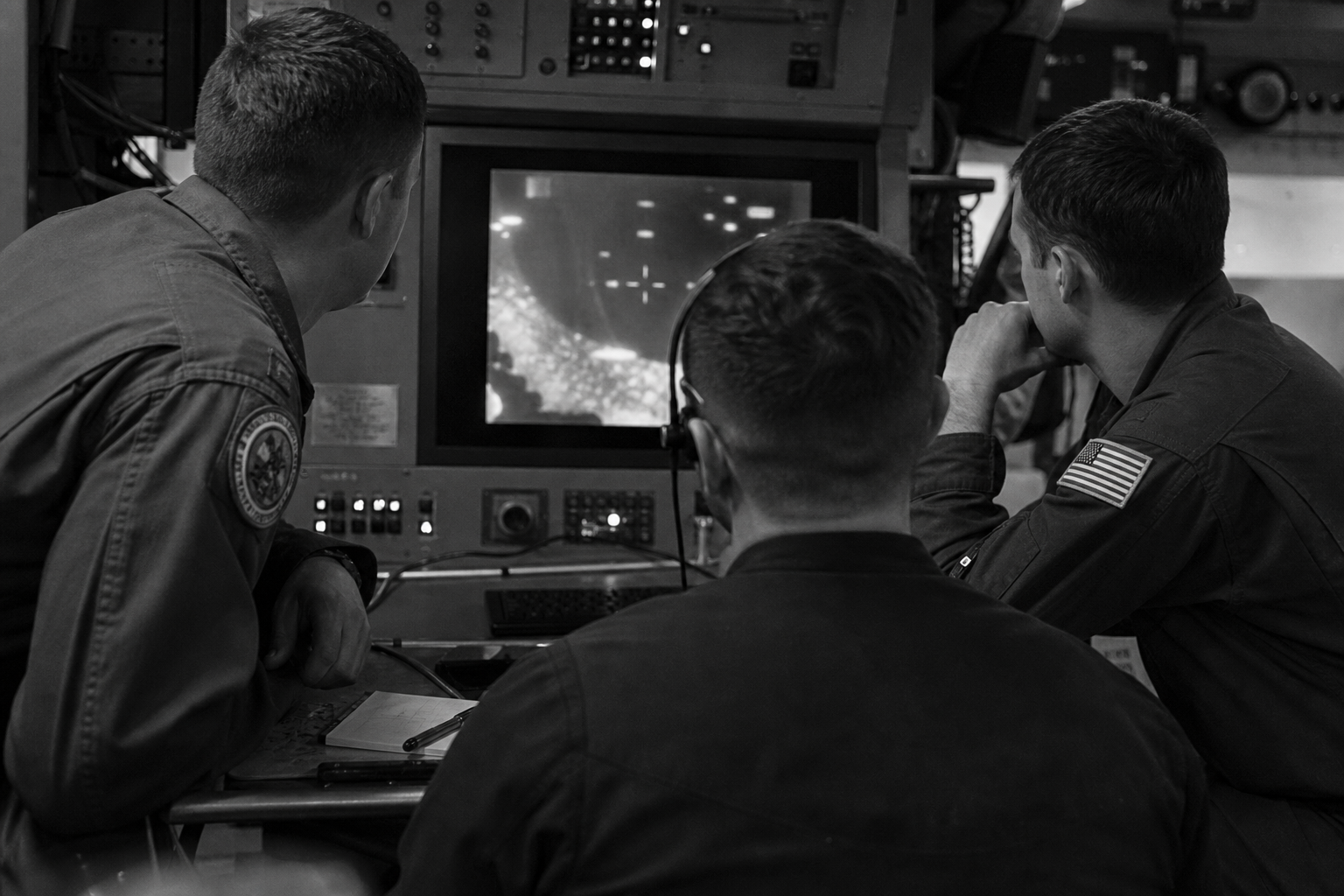
The Nimitz UAP footage acquired meaning through the accompanying accounts. The Times connected the FLIR material to David Fravor, a retired Navy commander who described seeing a white, oblong “Tic Tac”-like object during the 2004 exercise, and to other personnel involved in the event. Fravor’s account supplied a firsthand description and a setting; the video supplied a separate sensor record. Neither item alone could establish origin, speed, or technology, but together they gave readers identifiable people, a date, a military context, and material that could be scrutinized.
Kean, Ralph Blumenthal, and Helene Cooper thus treated the clips as reporting leads rather than self-explanatory proof. The Gimbal and Go Fast material broadened the public record beyond one encounter, but it did not convert every ambiguous image into a solved case. Later Pentagon statements confirmed that the three widely circulated clips were authentic Navy recordings and authorized their release. That authentication established provenance, where the recordings came from, not the identity, origin, or capabilities of every object depicted. The restraint was essential: the 2017 package documented military observations and a real institutional response, not evidence of alien craft.
The Story’s Immediate Impact on Newsrooms and Public Institutions
The investigation also gave subsequent coverage a durable, ordinary-news peg: not whether a spectacular claim was true, but how the Defense Department had handled reports from military personnel and money spent on an obscure program. That distinction widened the range of legitimate follow-up questions. Editors could assign defense reporters to examine reporting channels, aviation-safety concerns, records, and institutional accountability rather than treating the subject solely as a cultural curiosity.
That shift made military witnesses especially consequential. A pilot’s account, a sensor record, and a defense official’s statement are different forms of evidence with different limits, but each raises questions that public institutions can answer or decline to answer. The stronger newsroom frame asked what was observed, what information was retained, who assessed it, and whether the process was adequate. The weaker frame skipped those checkpoints and treated an unresolved sighting as confirmation of an extraordinary explanation.
Leslie Kean UAP reporting was an important catalyst, not a solitary cause of that change. Navy adjustments to how personnel could report unidentified encounters, public Pentagon engagement and later institutional attention, work by other journalists and researchers, willing sources, congressional interest, and sustained public demand all helped make the subject a continuing beat. Together, those developments made it more difficult to dismiss every report as unserious while preserving room for disagreement about individual cases and about AATIP’s precise remit.
For UAP disclosure, the practical gain was a larger public record and a more accountable set of questions for officials. It did not establish a government UFO cover-up, nor did expanded press attention amount to official confirmation of extraterrestrial or non-human technology. The meaningful near-term change was procedural: unidentified military incidents became discussable in mainstream forums as matters of evidence, safety, and oversight.
What Kean’s Role Does, and Does Not, Mean for UAP Reporting Today
Before accepting a dramatic UAP claim, ask what the available material can actually establish. A named witness can describe an encounter; a video can show what a sensor recorded; an official statement can authenticate an agency record. None of those elements, alone or together, automatically supplies the cause of what was observed.
That is the lasting standard associated with the 2017 investigation. Leslie Kean helped produce a New York Times report that treated Pentagon spending, military encounters, named participants, and released material as separate reportable elements. The work gave other journalists a credible starting point, but it did not make Kean the sole driver of sustained UAP coverage or turn every later claim into an extension of the original investigation.
The boundary matters most when an unresolved observation becomes an asserted explanation. Official acknowledgment can establish that an agency possesses a video, received a report, or had not identified something at a particular time. It does not, without further evidence, establish alien disclosure or non-human intelligence. A military witness may be credible about what was observed without being able to conclusively identify its cause.
Readers encountering “UFO sightings 2025” or “UFO sightings 2026” can apply the same discipline:
- Is the source named, positioned to know the claim, and quoted in context?
- Is there an original record, such as a report, image, sensor data, or official statement, rather than a retelling?
- Can the video’s provenance be traced: who recorded it, when, what has been edited, and what do its instruments actually show?
- Has an agency authenticated the material, and does that authentication address only its origin or also the proposed explanation?
- Have alternatives such as misidentification, sensor effects, incomplete data, and classified human activity been considered?
Those questions do not require dismissing unusual reports. They preserve the distinction on which responsible coverage depends and help counter the stigma surrounding serious UAP reporting: documented reporting can establish that an incident remains unresolved, while unresolved interpretation is not a verified answer.
A Reporting Milestone, Not a Final Answer
The lasting shift was editorial: UAPs became a subject that could be pursued through the ordinary disciplines of public-interest reporting. Leslie Kean, Helene Cooper, and Ralph Blumenthal built their 2017 investigation from identifiable people making bounded claims, records of Pentagon spending, and military accounts tied to particular events and materials. That approach gave later reporters a usable model: distinguish an official acknowledgment from an interpretation, a witness’s observation from a conclusion, and a released video’s provenance from what it depicts.
It also set a proportionate test for mainstream UAP journalism. Strong reporting can establish that government institutions examined reports, that service members described unusual encounters, or that some incidents lacked a public explanation. Weak reporting skips those evidentiary steps and treats uncertainty as confirmation of a preferred theory. The December 2017 investigation did not resolve the Nimitz encounter, prove an extraterrestrial origin, or settle every dispute over the Pentagon program’s scope. Its achievement was more durable: it raised the visibility and standards of the conversation, leaving the underlying cases open to evidence rather than declaration.
Frequently Asked Questions
-
Who wrote the New York Times UAP article published in 2017?
The December 16, 2017 New York Times investigation was co-written by Leslie Kean, Ralph Blumenthal, and Helene Cooper. Its headline was “Glowing Auras and ‘Black Money’: The Pentagon’s Mysterious U.F.O. Program.”
-
What was AATIP in the 2017 Pentagon UFO story?
AATIP was the Advanced Aerospace Threat Identification Program, a Defense Department effort reported to have received about $22 million in funding from 2007 through 2012. The story linked its creation to funding sought by Senator Harry Reid and described it as examining unusual military aerial encounters.
-
What role did Luis Elizondo play in the 2017 UAP reporting?
Luis Elizondo was identified as a former military intelligence official who said he directed AATIP from 2010 until his resignation in October 2017. He told the reporters that the program examined military reports of unusual aerial encounters and that he had pushed for greater official attention.
-
Did the 2017 New York Times UFO report prove that UFOs were alien spacecraft?
No. The report documented Pentagon funding, military witness accounts, and Navy videos of unresolved encounters, but it did not establish extraterrestrial origin or non-human technology. Authentication of the videos confirmed their Navy provenance, not the identity of the objects shown.
-
What should you look for when evaluating a UAP video or sighting claim?
Look for a named source, an original report or sensor record, and traceable video provenance showing who recorded it, when, and whether it was edited. Also distinguish agency authentication of a recording from proof of what the object was, and consider alternatives such as misidentification, sensor effects, incomplete data, or classified human activity.