How Journalist Leslie Kean Helped Bring UAP Reporting into Mainstream Media in 2017
Learn how Leslie Kean UAP reporting helped the 2017 New York Times investigation bring verified military encounters and Pentagon records to mainstream news.
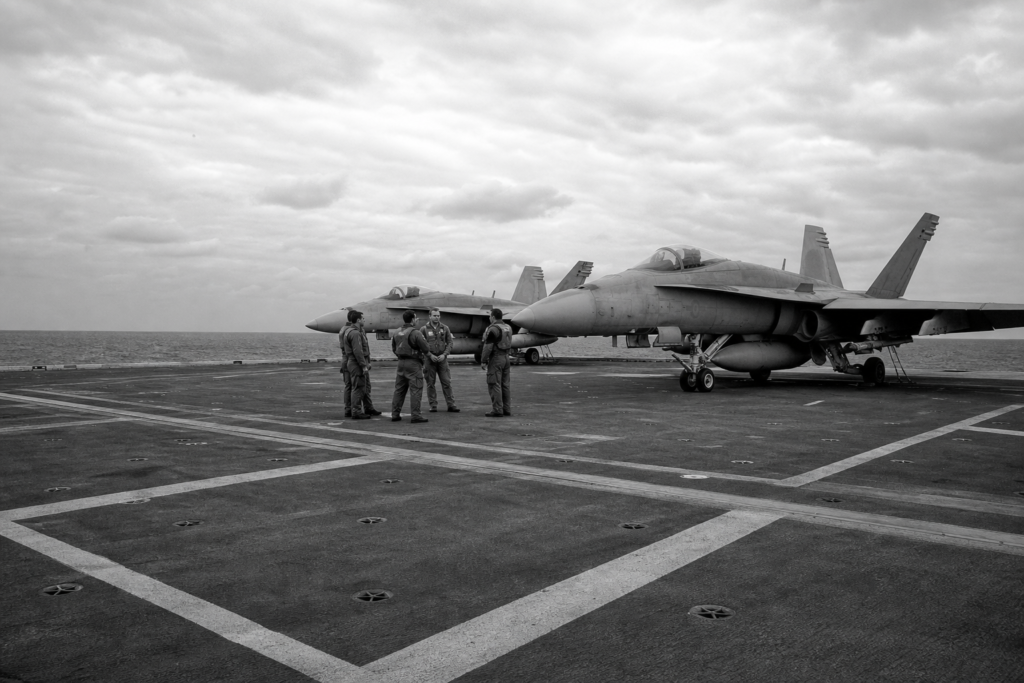
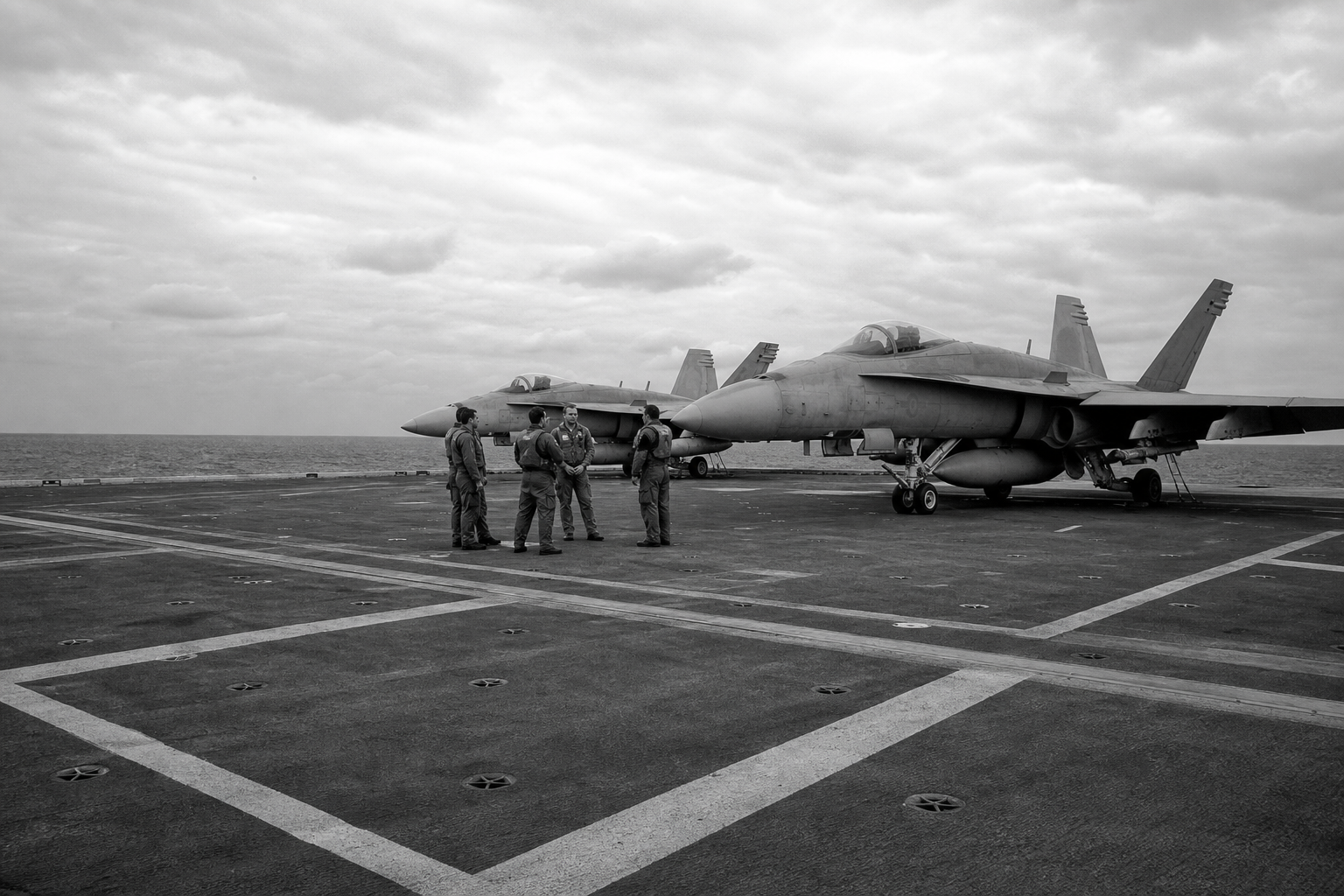
The December 16, 2017 report paired a Pentagon-funded effort with named military witnesses and cockpit video tied to the 2004 USS Nimitz encounter, concrete reporting checkpoints rarely assembled in national coverage of unidentified aerial phenomena. Its title, “Glowing Auras and ‘Black Money’: The Pentagon’s Mysterious U.F.O. Program,” did not establish what the objects were; it established a documented basis for treating the subject as a serious public-interest story.
Leslie Kean UAP reporting was central to that shift, but not as a solitary breakthrough. Kean shared the byline with Ralph Blumenthal and Helene Cooper, bringing a long-developed network of aviation and government sources to a collaborative investigation shaped by rigorous editorial standards. The reporting joined a previously little-known Pentagon effort with accounts from Navy personnel and released cockpit video. That combination mattered: extraordinary interpretations remained unresolved, while the program, witnesses, and material evidence could be reported and tested on their own terms. The sections that follow examine how Kean’s source work helped make that distinction possible, and why it changed the way mainstream outlets approached UAPs.
Why the December 2017 Times Story Marked a Mainstream Reporting Shift
The report’s byline signaled a conventional newsroom investigation rather than a specialty-media claim: Helene Cooper, Ralph Blumenthal, and Leslie Kean jointly published The New York Times article “Glowing Auras and ‘Black Money’: The Pentagon’s Mysterious U.F.O. Program” on December 16, 2017. Its reporting tied a little-known Defense Department initiative to identifiable officials, a documented $22 million funding figure, and accounts from Navy personnel. Those were independently assessable reporting components, not an invitation to accept a sweeping explanation.
That distinction changed the context for UFO news. A weak account can rest solely on an extraordinary witness assertion or an ambiguous image; this investigation gave readers several evidence tracks to weigh separately: Pentagon activity, former program participants, military aviators, and video associated with Navy encounters. The Times‘ standards of attribution and corroboration also meant that other national outlets could pursue the subject as a defense, aviation, and government-accountability story.
None of those elements established that the observed objects were extraterrestrial or evidence of non-human intelligence. “Unidentified” described an unresolved identification problem, not a conclusion about origin. The importance of the 2017 New York Times UFO story was therefore methodological: it demonstrated that a stigmatized topic could receive sustained mainstream scrutiny when reporters separated documented facts, firsthand testimony, and unresolved interpretation.
What Leslie Kean Brought to the Investigation
Kean came to the assignment with a reporting habit suited to a subject in which useful leads often arrive wrapped in uncertainty. Her earlier work on aviation-related unidentified phenomena had put her in conversation with pilots, former officials, researchers, and others willing to describe encounters that could carry professional stigma. That background did not make a source’s account true; it made it possible to ask informed follow-up questions about timing, records, radar, aircraft procedures, and who else might independently substantiate a claim.
This is the practical value of source cultivation. On a difficult beat, a relationship built over time can help a reporter learn which assertions are firsthand, which are retellings, and which documents or witnesses may test the account. The stronger signal is not access alone, but access that produces checkable reporting leads: a named participant, a contemporaneous record, a video with a traceable institutional connection, or another witness who can be interviewed separately. A weaker signal is an allegation that cannot move beyond one person’s recollection.
Leslie Kean UFO reporting had already treated testimony as the beginning of an investigation rather than a final verdict. That approach helped make the 2017 inquiry workable because it joined specialized familiarity with ordinary journalistic discipline: distinguish observation from interpretation, seek corroboration, and leave unresolved questions unresolved. Her relationships were an important reporting asset, but they were not the whole explanation for public interest or for the article’s impact. Pilots, earlier researchers, public-record efforts, fellow journalists, and the Times‘ collaborative editing and verification all supplied parts of the foundation.
The takeaway is narrower, and more useful, than a lone-reporter origin story. Kean helped turn a stigmatized subject into a reportable mainstream beat by arriving with context, contacts, and an understanding of what evidence could be independently pursued. Those assets increased the chance that reluctant sources could be heard without requiring readers to accept their conclusions on trust.
A Collaborative Investigation, Not a One-Reporter Scoop
What turned access into a publishable investigation was the division of reporting labor. Leslie Kean, Ralph Blumenthal, and Helene Cooper shared the December 16, 2017 New York Times byline, bringing the subject into a national-security reporting environment where source accounts had to be connected to identifiable officials, records, and institutional responses.

Kean’s long-built contacts helped surface leads and participants who could describe the subject from inside government and military circles. Blumenthal contributed investigative reporting experience, while Cooper’s national-security reporting placed Pentagon activity and official comment at the center of the account. The result was not three versions of the same anecdote. It was a report assembled from distinct forms of support: former Defense Department officials discussing the effort, program-related funding information, Pentagon confirmation that such an effort had existed, and military personnel describing encounters.
The central program was the Advanced Aerospace Threat Identification Program, commonly abbreviated AATIP. The article reported that it operated from 2007 to 2012 and received roughly $22 million in funding. Those details mattered because they gave readers a concrete government activity to assess: not proof that any unexplained object had an extraordinary origin, but evidence that the Defense Department had directed money and attention toward reviewing reported aerial incidents.
Pentagon acknowledgment changed the evidentiary footing of the story. Official confirmation could establish that a program existed and describe its stated purpose; it could not settle every account associated with the program, authenticate every interpretation of imagery, or identify the objects reported by service members. Former officials’ descriptions supplied context and leads, while the newspaper treated those descriptions as reporting claims rather than final answers.
That distinction also prevents a later historical blur. AATIP was the specific initiative reported in 2017; it should not be treated as a catchall label for earlier, parallel, or later Pentagon UAP work. Subsequent bodies, including the UAP Task Force and the All-domain Anomaly Resolution Office, had different dates, structures, and mandates. The strength of the 2017 investigation lay in its narrower construction: each part of the account, funding, program, witnesses, and official response, could be weighed on its own terms.
Why the Nimitz Encounter Gave the Story Concrete Evidence
The 2004 incident involving the USS Nimitz carrier strike group supplied a case study readers could examine rather than an abstract claim. In the training area off Southern California, Navy aviators reported being directed toward an unusual object after personnel aboard the USS Princeton detected anomalous tracks. Cmdr. David Fravor’s 2004 Nimitz encounter, then commanding an F/A-18 squadron, included his description of seeing a white, oblong object maneuvering above disturbed water; other aviators provided related accounts. Named witnesses with operational roles gave the episode a level of specificity that anonymous sightings lacked.
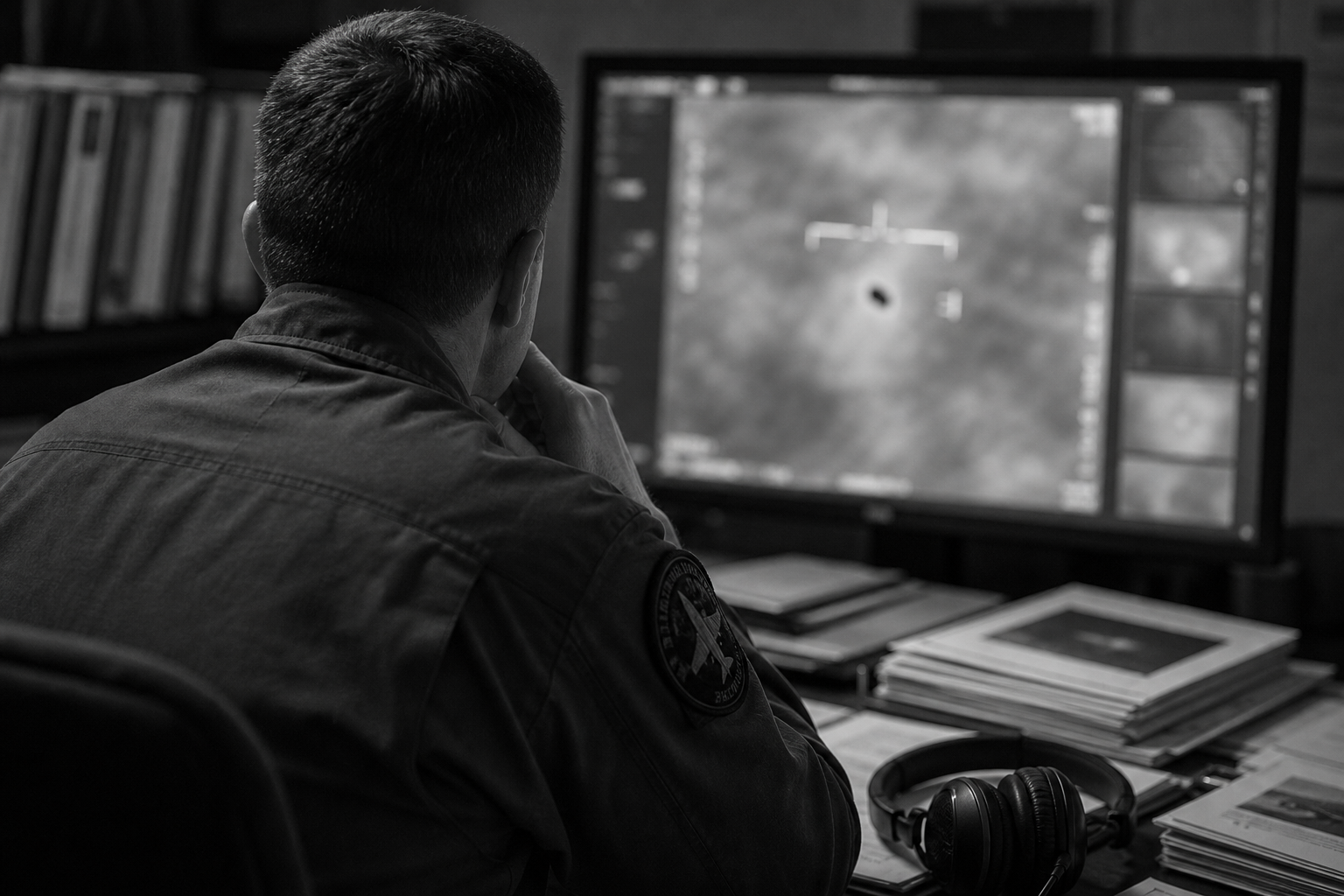
Eyewitness testimony was important, but it was not self-validating. Its value came from its setting: trained Navy aviators, a carrier-group exercise, reported shipboard tracking, and an encounter tied to a particular date and location. That combination let readers distinguish a documented military incident from a conclusion about what the object was. Human observation can be incomplete, especially during a fast aerial event, and the reported accounts did not resolve the object’s identity or origin.
The Nimitz UAP footage added a second, more accessible layer. The December 2017 article included the infrared cockpit video commonly known as FLIR1, recorded during the episode by a Navy F/A-18’s forward-looking infrared system. The clip showed a tracked object on a military display, making the report’s visual evidence available for public scrutiny rather than asking audiences to rely on description alone. Yet imagery of an object on a sensor display is not, by itself, a complete reconstruction of its range, speed, maneuvering, or nature.
Later Pentagon acknowledgment that the videos were authentic Navy recordings strengthened the provenance of the material without identifying the object depicted. The FLIR recording was linked to the 2004 USS Nimitz encounter; it should not be collapsed into the later Gimbal and Go Fast Navy videos, which came from different Navy events and were not the Nimitz clip featured in the December 16 report. That evidentiary hierarchy, witnesses, military context, imagery, and official acknowledgment, made the incident newsworthy while preserving the central unanswered question.
How the Story Changed the Terms of Mainstream UAP Coverage
Public access to the FLIR1 clip gave general audiences a fixed point of reference: readers could view the same military sensor display while keeping its limits in view. The 2017 New York Times report linked that footage to a Pentagon-funded program and identifiable military participants, giving editors and readers more to assess than an isolated image or anonymous assertion. Witness accounts described an event; program reporting established an institutional record; the video made the underlying claim accessible without resolving what it depicted.
That combination created a meaningful distinction in UAP news. A decontextualized image or unnamed allegation offers little basis for testing dates, participants, or government actions. The article instead supplied concrete avenues for follow-up: the Advanced Aerospace Threat Identification Program, Navy aviators associated with the 2004 Nimitz episode, and footage available for public examination. Mainstream UAP reporting could consequently focus on military procedures, sensor records, spending, and unresolved identification questions without presenting an extraordinary explanation as fact.
The later institutional trajectory cannot reasonably be assigned to one article or one journalist. Pilots who reported encounters, Pentagon personnel who addressed them, researchers who preserved records, lawmakers who sought information through formal congressional attention, and journalists who sustained coverage all played roles. The Defense Department announced the UAP Task Force in 2020, and Congress established the All-domain Anomaly Resolution Office in 2022. Such a Pentagon UFO office formalizes the collection, analysis, and public communication of reports; it does not turn an unresolved observation into a confirmed identification.
The practical legacy was recurring national attention to a subject often confined to specialty outlets. The investigation gave later coverage a durable reporting model: named participants, dated incidents, government actions, visible evidence, and plainly stated limits on what the evidence could establish.
The Lasting Lesson: Better Reporting Is Not the Same as a Final Answer
A useful test for any later UAP account is whether its individual parts can be independently examined. In 2017, Kean’s specialized contacts and persistence helped turn leads into a jointly verified investigation, giving editors and readers concrete matters to assess: Pentagon funding, identifiable military participants, official responses, and records connected to particular encounters.
That achievement has clear limits. The reporting established that the Pentagon had funded AATIP, that Navy personnel had described serious incidents, and that some cases remained unidentified. It did not demonstrate a government UFO cover-up, alien or UAP disclosure, crash-retrieval claims, or non-human intelligence. “Unresolved” is a status of the evidence, not an explanation for it.
Readers weighing later UFO news can apply the same discipline:
- Start with primary material: a released record, dated report, video with established provenance, or official statement, rather than a claim detached from its underlying material.
- Prefer attributable sources who can be identified, questioned, and compared with independent witnesses or records over anonymous assertions that cannot be tested.
- Read official scope statements closely. An office’s acknowledgment that it received or reviewed a report is not the same as an official finding about what was observed.
- Separate observation from allegation and conclusion: a pilot’s description is testimony, a claim about a hidden program is an allegation, and a determination of origin requires evidence sufficient to support it.
That distinction is the lasting contribution of Leslie Kean UAP reporting: it helped make careful inquiry into unexplained incidents mainstream without pretending that careful inquiry had already supplied a final answer.
What Leslie Kean’s 2017 Reporting Changed
The reporting standard, rather than any single claim about an object, was the consequential change. AATIP’s reported $22 million Pentagon funding connected government activity to named former officials and a documented 2004 Navy incident, giving editors a public-interest basis for pursuing the subject beyond an isolated sighting.
Kean’s contribution mattered at the lead-development stage. Her long familiarity with pilots, former officials, and aviation cases helped identify accounts that could withstand follow-up; Ralph Blumenthal and Helene Cooper helped turn those leads into a collaboratively reported newspaper investigation. Readers could assess former Navy Cmdr. David Fravor’s attributable testimony alongside the FLIR1 video linked to the incident. Testimony and video made the event reportable; the funding record showed that the Pentagon had assigned resources to the subject. Neither established what the object was.
The lasting change was procedural rather than revelatory. Joining Kean’s source development to documentary reporting and major-newspaper editing gave mainstream UAP coverage a clearer basis for demanding accountable answers about unexplained incidents, without treating uncertainty as proof of an extraordinary explanation.
Frequently Asked Questions
-
Who wrote the New York Times UAP story published in 2017?
Leslie Kean, Ralph Blumenthal, and Helene Cooper jointly wrote the December 16, 2017 New York Times report, “Glowing Auras and ‘Black Money’: The Pentagon’s Mysterious U.F.O. Program.” Their shared byline reflected a collaborative investigation combining source development, investigative reporting, and national-security coverage.
-
What did Leslie Kean report in the 2017 New York Times UFO story?
Kean and her coauthors reported on the Pentagon’s Advanced Aerospace Threat Identification Program, or AATIP, along with accounts from Navy personnel and cockpit video tied to the 2004 USS Nimitz encounter. The story documented government activity and unresolved military incidents without identifying the objects’ origin.
-
What was AATIP and how much Pentagon funding did it receive?
AATIP was the Advanced Aerospace Threat Identification Program, a Pentagon effort reported to have operated from 2007 through 2012. It received roughly $22 million in funding to review reported aerial incidents.
-
How did the Nimitz UAP footage become public?
The December 16, 2017 New York Times report included the infrared cockpit video known as FLIR1, which was linked to the 2004 USS Nimitz encounter. Later Pentagon acknowledgment confirmed that the clip was an authentic Navy recording, though it did not identify the object shown.
-
What should you look for when evaluating a UAP report?
Look for primary material such as dated records, official statements, or videos with established provenance, plus named sources who can be checked against independent witnesses or documents. Separate a witness observation from claims about origin, because an unresolved incident does not establish extraterrestrial or non-human involvement.