How Sen. Harry Reid Helped Fund Pentagon UAP Research Efforts in 2017
Learn how Harry Reid Pentagon UAP research shaped DIA funding, AAWSAP's 2008 to 2012 timeline, and why it differs from AATIP.
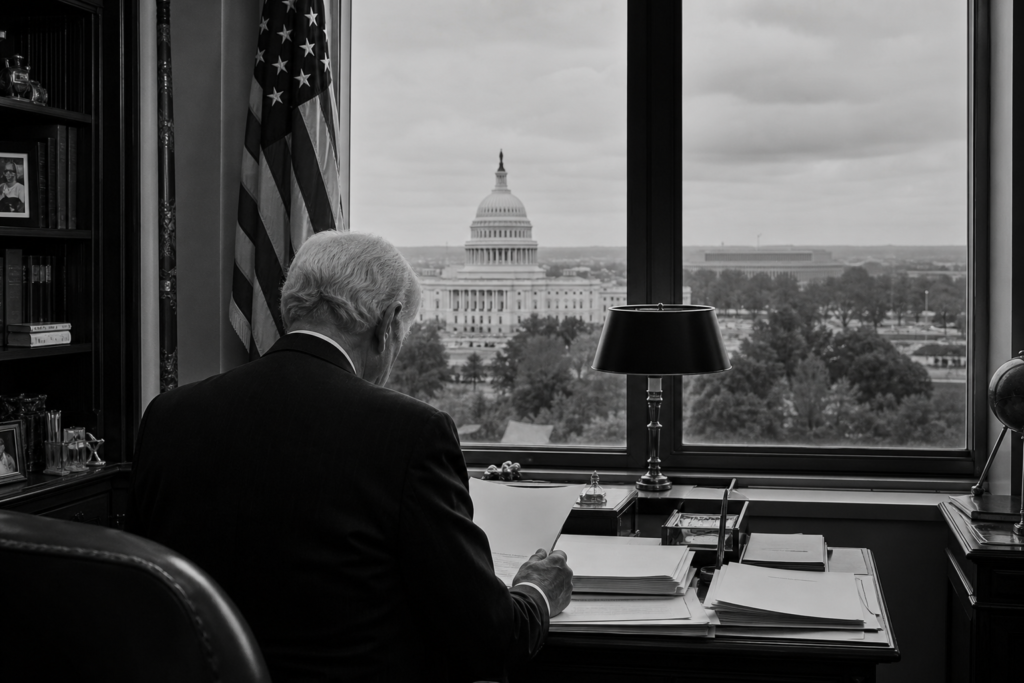
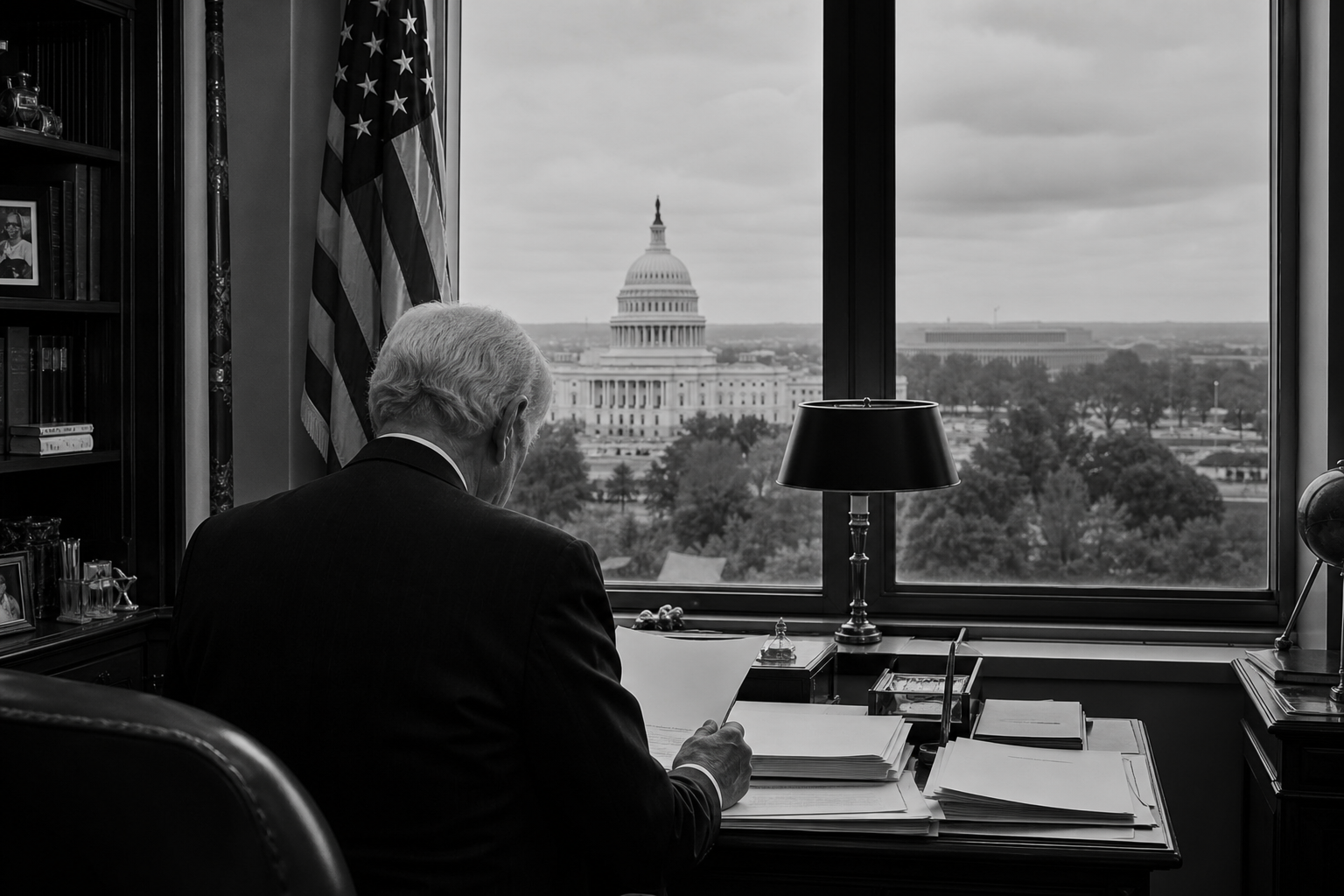
Public attention in 2017 can make the Pentagon’s UAP research appear to have begun in that year. The more important question is whether the public disclosure and the underlying government activity belong to the same point on the timeline. They do not necessarily do so, and that distinction is essential to understanding Harry Reid’s role.
This article examines how Reid, then a powerful Nevada senator, helped create political and appropriations support for a Defense Intelligence Agency research effort years before the story reached a broad audience. It follows the path from congressional interest to a Pentagon contract, rather than suggesting that a senator personally awarded that contract.
It also separates two often-blurred labels. The Advanced Aerospace Weapon System Applications Program, or AAWSAP, refers to the DIA-funded contract effort; the Advanced Aerospace Threat Identification Program, or AATIP, is the name most closely associated with the 2017 disclosure. That difference changes what any individual document can establish.
The record can show funding, official interest, correspondence, and contracted research. It cannot, by itself, prove claims about recovered craft, extraterrestrial technology, non-human intelligence, or the operational results of the work. The account of Harry Reid Pentagon UAP research begins with that evidentiary boundary.
The Pentagon UFO Story Became Public in 2017, But the Funding Came Years Earlier
The story’s public turning point arrived in December 2017, when The New York Times reported that the Pentagon had funded an effort to examine unidentified aerial phenomena. That report, widely treated as major UFO news, introduced many readers to the Advanced Aerospace Threat Identification Program, or AATIP, and helped move the subject from specialist circles into national debate.
The date of publication, however, is not the date the underlying funding began. The documented trail runs back to 2008, when congressional support helped open a path for the Defense Intelligence Agency to award a research contract. That contract supported AAWSAP, the DIA effort that is central to the funding history, rather than establishing that AATIP and AAWSAP were interchangeable names for one continuous program.
The relevant DIA work was scheduled to end in 2012. Thus, 2017 marks the later disclosure of Pentagon-associated UAP work, not the moment Reid first used Senate influence to support it. The chronology matters because it separates three distinct events: congressional backing and contracting, the program’s operational period, and the public reporting that made the subject broadly visible. None of those dates alone establishes extraordinary claims about what the research found.
What Harry Reid Actually Did to Support the Research
The key institutional fact is that Reid held two sources of influence in fiscal year 2008: he was Senate Majority Leader and Nevada’s senior senator. Those positions enabled him to promote a proposed Defense Intelligence Agency research effort within Congress, but they did not authorize him to create a DIA office, define its technical work, select its contractor, or direct its day-to-day operations.
The appropriations process required support beyond Reid. The Senate Defense Appropriations Subcommittee was chaired by Sen. Daniel Inouye of Hawaii, while Sen. Ted Stevens of Alaska served as its ranking Republican; public accounts of the project identify both men as supporting the Senate push behind the DIA effort. That three-senator alignment is more precise than describing the initiative as Harry Reid UFO research funding alone: Reid could use leadership and seniority to press the case, while appropriators helped create a route for defense money to be applied.
The division of responsibility matters because congressional advocacy and Pentagon execution are different functions. Senate involvement concerns whether a defense purpose receives funding and institutional backing in a particular fiscal-year environment. After that, DIA personnel, not Reid, Inouye, or Stevens, set the procurement process in motion, issued and managed the contract, and oversaw the resulting research work. Calling the effort the “Sen. Harry Reid Pentagon UFO program” therefore overstates a senator’s control over an executive-branch program.
Reid’s role was consequential precisely because it was political and appropriations-oriented. His support, alongside that attributed to Stevens and Inouye, helped the DIA effort gain traction before the agency’s contracting actions gave it a defined scope. The later record of the DIA contract supplies the stronger evidence for what the government actually commissioned; Senate support alone does not establish what the research found.
From Congressional Support to a DIA Contract: The 2008–2012 Timeline
The documentary trail becomes clearest once the activity reached the procurement stage. A Senate-supported funding initiative created the opening in 2008; the Defense Intelligence Agency then translated that opening into a competitively administered research requirement rather than receiving a contractor chosen by a senator.
- 2008, Congressional support and DIA planning: accounts of the initiative’s origin place Reid among the senior senators who backed funding for a DIA effort on advanced aerospace questions. That political history helps explain why the work was pursued, but later participant recollections do not substitute for a contract record or show that Reid directed the agency’s technical agenda.
- 2008, Solicitation: the DIA issued a solicitation for what became the Advanced Aerospace Weapon System Applications Program, or AAWSAP. A solicitation defines the work an agency wants performed and invites proposals; it is distinct from an appropriation, which makes funds available, and from an award, which selects a performer.
- September 2008, Award: DIA awarded the AAWSAP contract to Bigelow Aerospace Advanced Space Studies, commonly known as BAASS. Procurement records identify an approximately $10 million contract vehicle for research into advanced aerospace technologies and related reports.
- 2008–2012, Performance: the work continued through 2012. The contract establishes that DIA paid BAASS to conduct the assigned research; it does not establish that the research validated any particular explanation for anomalous incidents.
This sequence is the practical answer to how Harry Reid funded UAP research: Senate influence helped support the funding path, while the Defense Intelligence Agency handled the solicitation, award, and contract administration. The documented award is firmer evidence than retrospective accounts of who first proposed the idea or what its investigators believed they might find.
AAWSAP and AATIP Were Not Simply the Same Program
The contract title is the clearest checkpoint: Advanced Aerospace Weapon System Applications Program (AAWSAP) names the formal, contractor-run research effort. Its solicitation, award, statement of work, and BAASS performance identify a defined procurement vehicle. That record establishes an agency-funded study of advanced aerospace-related subjects; it does not attach the AAWSAP label to every later Pentagon UAP activity.
AATIP, the Advanced Aerospace Threat Identification Program, entered broad public view through 2017 reporting on the Pentagon effort, which described a Pentagon effort focused on military encounters with unidentified aerial phenomena. Similar subject matter, an overlapping period, and association with officials including Luis Elizondo made the acronyms easy to merge. But they answer different institutional questions: AAWSAP identifies a contract and an outside performer, while AATIP describes a later-reported Pentagon activity whose scope, personnel, and administrative standing have been characterized differently over time.
Pentagon statements initially acknowledged AATIP as a program that ended in 2012. Later descriptions emphasized that it was not an authorized, continuing department-wide program after that point, while Elizondo and other participants have maintained that UAP work continued in a smaller internal form. Those recollections may explain why AATIP became the public-facing label, but they do not turn an individual account into a contracting record.
- Strong signal: A record naming AAWSAP, its contractor, deliverables, and period of performance supports a claim about formal funding and assigned research.
- Weaker signal: Treating every AATIP reference in reporting or participant accounts as proof that it had AAWSAP’s budget, staff, mission, or institutional status.
The practical takeaway is to preserve the labels. AAWSAP is the documented contract central to the earlier funding history; AATIP is the term through which the story reached the public in 2017, with a more contested relationship to that contract.
Reid’s 2009 Request Shows Continued Interest, Not Proof of a Hidden Program
The June 24, 2009 letter is the relevant checkpoint. Addressed to Deputy Defense Secretary William J. Lynn III, it asked the Pentagon to establish a restricted Special Access Program for AAWSAP. Its stated purpose was heightened protection for the work, showing that Reid remained personally interested after the DIA contract had begun.
A Special Access Program is not simply another name for classified research. It is a formal protection structure that restricts access to a defined group and adds administrative safeguards beyond ordinary classified handling. A request for that status therefore differs from an approved designation: the first records a sponsor’s preference for tighter controls; the second would require a Defense Department decision establishing the program and its access rules.
The letter is meaningful, but its limits matter. It supports the conclusion that Reid sought greater protection for AAWSAP-related activity in 2009. It does not, by itself, demonstrate that the request was granted. Nor does a request for restricted access establish that the program possessed recovered craft, non-human technology, or any other extraordinary material.
That distinction also weakens a common leap to a government UFO cover-up. Secrecy can reflect the handling of sensitive defense research, proposed capabilities, sources, methods, or personnel information. The available correspondence shows an effort to obtain a particular protective status, not proof that the status existed or an account of what the research discovered.
What the Funding Documented, and What It Did Not Establish
The evidentiary value changes with the question being asked. Appropriations history, the DIA procurement record, and the AAWSAP contract establish that the government paid for a defined research effort involving advanced aerospace and anomalous subjects. They establish expenditure and scope, not that investigators confirmed alien craft, non-human intelligence, crash-retrieval material, or a coordinated government UFO cover-up.

That boundary helps rank the available material. Primary records such as funding documents, solicitations, contract awards, and contemporaneous correspondence are strongest for identifying who supported an effort, which agency administered it, and what work was commissioned. Official Pentagon statements can clarify how the department publicly described a program. Investigative reporting can explain how the story emerged in 2017 and identify competing accounts. Recollections and allegations from participants may be important leads, but they do not carry the same weight as a procurement record when the claim concerns what the government formally funded or found.
A useful test is to match the evidence to the conclusion. A contract can show that research was ordered; it cannot establish that its most extraordinary hypotheses were validated. Likewise, later Pentagon UAP offices and later UAP disclosure proposals belong to a different institutional and legislative history. Shared subject matter does not turn subsequent policy, reporting requirements, or alien disclosure claims into proof of what AAWSAP produced.
The Bottom Line on Reid’s Role in Pentagon UAP Research
The timeline fixes Reid’s role in proportion. In 2008, his Senate influence helped open a political and appropriations path for a Defense Intelligence Agency contract; in 2009, his letter showed continuing interest in giving the work additional protection. DIA, not Reid, solicited and administered the research, while the contractor performed it. The contract’s 2012 end date came years before the story became broadly public in 2017.
AAWSAP is the documented DIA contract effort at the center of that sequence. AATIP is the label that became prominent in the 2017 public account and should not automatically be treated as interchangeable with AAWSAP. The defensible conclusion about Harry Reid Pentagon UAP research is therefore limited but significant: he helped enable government-funded inquiry, not personally run a Pentagon program or establish that extraordinary claims were true. Future UAP news deserves the same test: distinguish a funding record, official finding, and contractor claim from speculation built around UAP sightings or assertions of non-human intelligence.
Harry Reid’s Role Was Significant, but the Record Has Clear Limits
Reid’s 2009 request for Special Access Program treatment is a useful limit on the record: it shows his continuing interest in protecting the work, not authority to award its contract or proof of its results. His seniority gave him leverage to advocate for an appropriations-backed line of inquiry, but it did not make him the contracting authority or establish what the research found.
The dates resolve the title’s apparent tension. The relevant contract activity belonged to 2008–2012; 2017 was when reporting made the Pentagon connection widely known. AAWSAP remains the clearest documentary anchor for the earlier contract, while AATIP is the more publicly familiar label whose precise relationship to AAWSAP remains debated.
Government funding demonstrates institutional interest in examining a subject, not that every proposed explanation survived examination. It cannot by itself demonstrate recovered extraterrestrial craft, non-human intelligence, or a continuing concealed program. Reid helped open an avenue for research; the public learned of that history years later. Keeping those points separate from unresolved claims is the soundest measure of his role.
Frequently Asked Questions
-
Why is Harry Reid connected to Pentagon UAP research?
As Senate Majority Leader and Nevada’s senior senator, Harry Reid helped build congressional and appropriations support for a Defense Intelligence Agency research effort in 2008. He did not award, manage, or direct the DIA contract.
-
Was the Pentagon UFO program created in 2017?
No. The Pentagon connection became widely public in December 2017, but the DIA-funded AAWSAP contract began in 2008 and its work continued through 2012.
-
How much money did Harry Reid help secure for Pentagon UFO research?
The DIA awarded an approximately $10 million AAWSAP research contract to Bigelow Aerospace Advanced Space Studies in September 2008. Reid helped support the funding path, while the DIA conducted the solicitation, award, and contract administration.
-
What was the difference between AAWSAP and AATIP?
AAWSAP was the formal DIA-funded contract program performed by BAASS from 2008 to 2012. AATIP was the Pentagon UAP label that became prominent in 2017 reporting, and it should not automatically be treated as the same program with the same budget, staff, or mission.
-
What should you look for when evaluating claims about the AAWSAP contract?
Look for primary records such as appropriations documents, DIA solicitations, contract awards, deliverables, and contemporaneous correspondence. The AAWSAP contract proves the government funded research, but it does not prove recovered alien craft, non-human intelligence, or validated extraordinary findings.