How Luis Elizondo Became the Public Face of the Pentagon’s AATIP and UAP Advocacy in 2017
Learn how Luis Elizondo AATIP claims, his 2017 resignation and the New York Times report made him a leading UAP advocate.
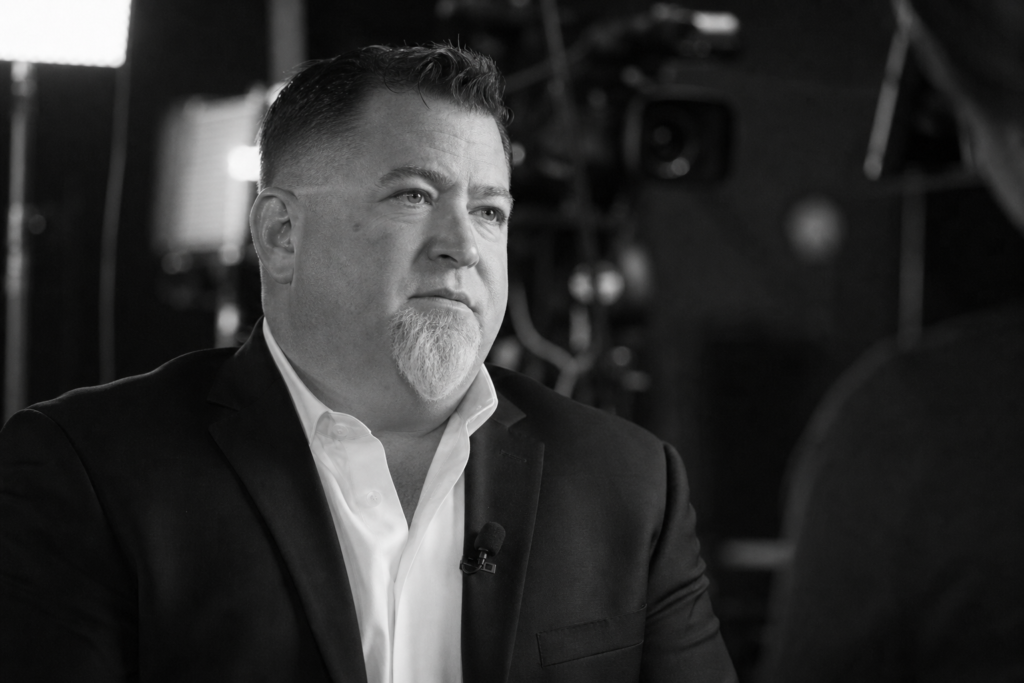
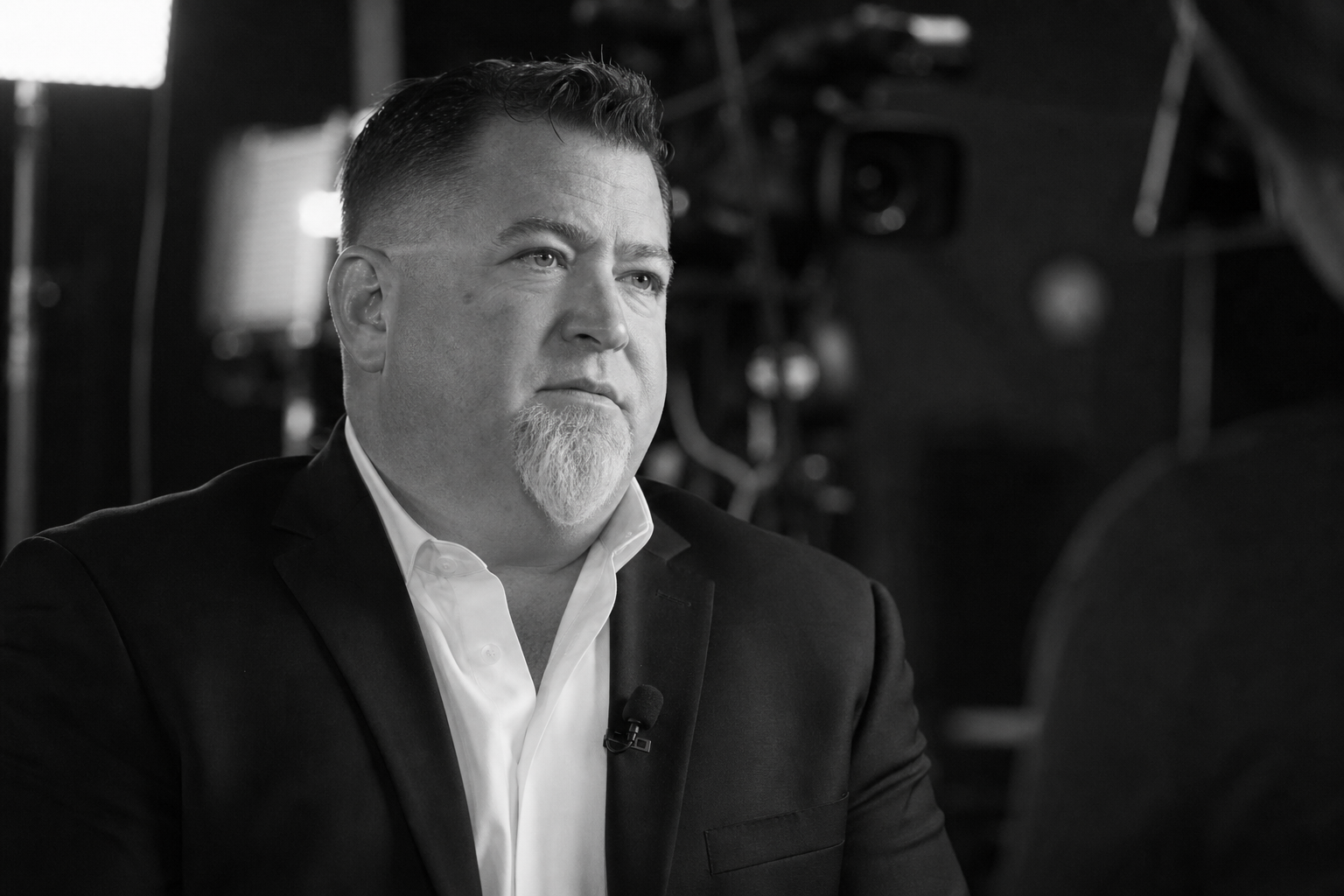
The Lue Elizondo UFO story presents an unusual modern-media puzzle: a former Pentagon employee who was little known outside government circles emerged in 2017 as a highly recognizable advocate for taking unidentified aerial phenomena seriously. His prominence was not a Pentagon appointment or a formal designation as a spokesperson. It was a public role created when an asserted insider account met a distribution network able to carry it into mainstream news and sustained public debate.
This article follows that sequence: Elizondo’s claimed leadership connection to the Advanced Aerospace Threat Identification Program (AATIP), his 2017 departure from government, his alignment with To The Stars Academy and collaborators including Christopher Mellon, and the December 2017 New York Times report that brought the story to a far wider audience. It also keeps an essential distinction in view. His transition into public advocacy and the visibility it produced are separate questions from the later dispute over the precise scope of his AATIP authority. The record contains reporting, official statements, released correspondence, and competing interpretations; public fame did not settle those institutional questions.
Why 2017 Turned Luis Elizondo Into a Public UAP Figure
The decisive change was one of public visibility: an insider account that might otherwise have remained a specialist claim was presented alongside recognizable institutions, recorded military material, and national journalism. That combination gave a mainstream audience a way to understand why the subject warranted attention without requiring it to accept an extraordinary explanation for every sighting.
The relevant sequence is narrow. Elizondo left the Department of Defense in 2017, identified himself publicly with AATIP, joined the To The Stars Academy effort, and appeared in the December reporting that connected the program, former officials including Christopher Mellon, and Navy-origin videos. The videos supplied a concrete object for viewers to discuss; the reporting supplied institutional context; and the new advocacy platform turned a single news event into continuing interviews, presentations, and public argument.
That is what “public face” means here: not an official Pentagon post, but a highly visible messenger whose claimed former role made him the most readily identifiable participant in the story. His assertion that he led AATIP was therefore both his central credibility claim and the point on which later disagreement concentrated. Public prominence establishes neither the program’s exact internal structure nor the nature of the phenomena shown in the videos. It explains, instead, why the Lue Elizondo UFO discussion became a durable part of the wider UAP disclosure debate after December 2017.
The Pentagon Background That Made His Voice Newsworthy
What gave Elizondo’s later statements unusual weight was not a civilian interest in anomalous sightings, but his identified career inside the Department of Defense. His public biography placed him in intelligence and security work, including service within the Office of the Under Secretary of Defense for Intelligence. That office sat within the department’s senior intelligence structure, so the affiliation suggested access to the channels where potential aerospace and national-security concerns could be assessed rather than merely debated in public.
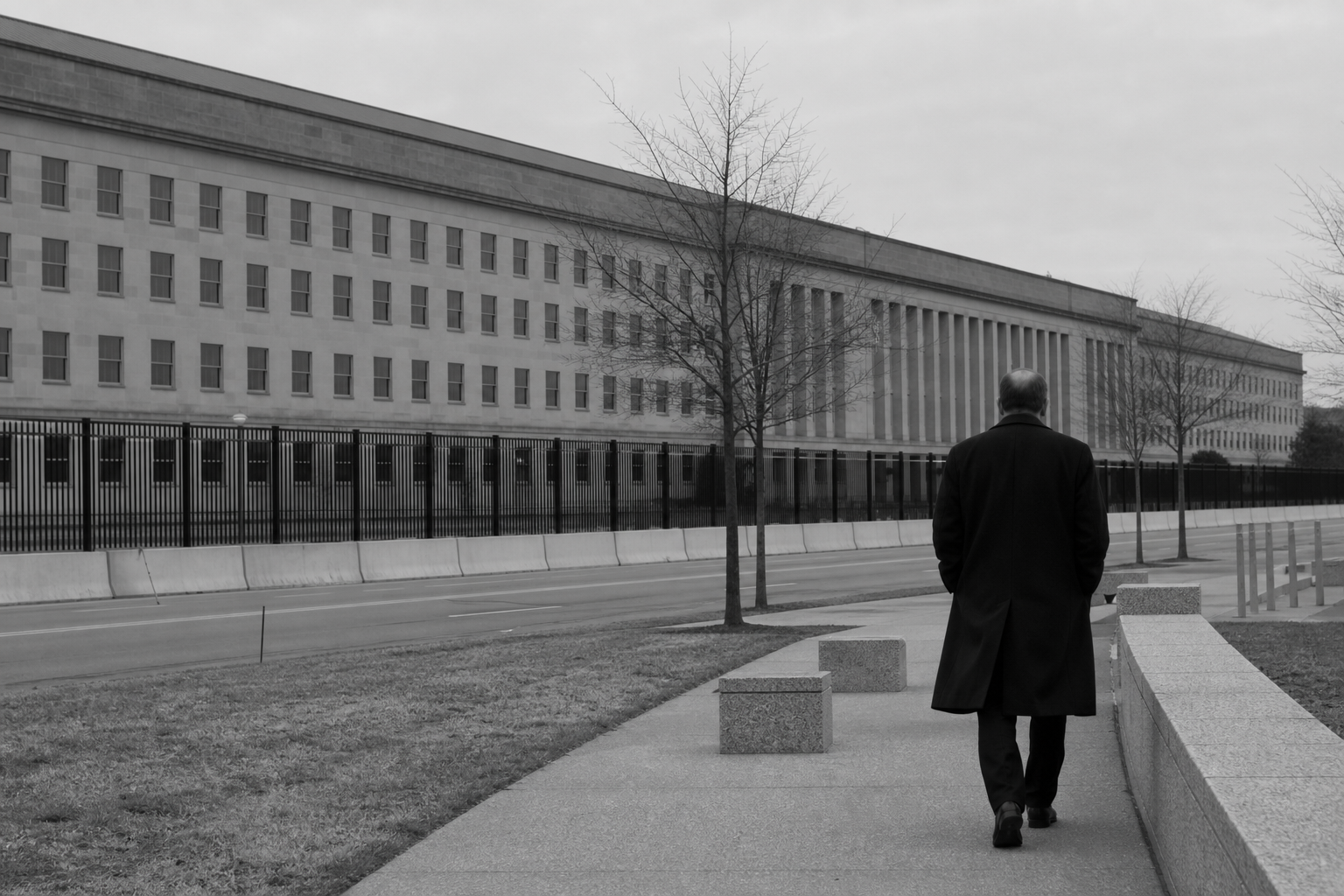
Elizondo has said that, alongside those duties, he directed AATIP. In that account, the effort concerned unidentified aerial incidents that might present an advanced aerospace or defense challenge. This is the useful, limited meaning of a Pentagon-linked AATIP program: an inquiry into reports and capabilities that were not readily identified, not proof that the Pentagon had established an office to validate extraterrestrial craft. For readers assessing the Luis Elizondo AATIP claim, the important distinction is between an official’s asserted responsibility for a small, loosely organized activity and a clearly documented, stand-alone program with settled staffing, authority, and mission.
That distinction matters because the institutional record has not yielded one uncontested description. AATIP has at times been described as an effort associated with the Pentagon, while the Defense Intelligence Agency’s earlier Advanced Aerospace Weapon System Applications Program, or AAWSAP, was a separately funded contract. The two were connected in public accounts but should not be treated as interchangeable names for the same entity. Nor should either be collapsed into the later UAP Task Force or today’s successor review structures.
Officials and later reporting have also differed over AATIP’s scope, administrative home, and whether Elizondo formally led it. Elizondo’s resignation letter and subsequent public account made his claimed role central; Pentagon responses initially narrowed or questioned parts of that characterization, while supporters have pointed to later-released correspondence as corroborating his involvement. The durable point is narrower than either side’s broadest conclusion: his government background made the claim newsworthy, but it did not eliminate the need to separate his account from the still-contested details of AATIP’s organization.
His 2017 Resignation Created the Conditions for Public Advocacy
Elizondo’s October 2017 departure changed the practical limits on what he could say and do. In his resignation letter to then-Defense Secretary James Mattis, he argued that unidentified aerial phenomena were not receiving the attention and resources he believed their potential national-security implications warranted. That letter records Elizondo’s stated reason for leaving; it does not independently establish every assessment or later allegation associated with his public advocacy.
Once outside the department, he could give interviews, appear at public events, and work openly with figures who had government, media, and policy connections. The tradeoff was equally important: he no longer spoke for the Pentagon. His authority in this new role rested on his past position and personal account, rather than on an active government mandate or an official briefing function.
Elizondo soon joined Tom DeLonge’s To The Stars Academy, an organization that presented itself as combining public-interest research, entertainment, and efforts to widen discussion of advanced aerospace questions. Its announced team included former Defense Department official Christopher Mellon, creating a network in which Elizondo could pair a named insider narrative with experienced policy and communications voices.
That arrangement made him a particularly effective public messenger. A former official willing to identify himself, explain why he had resigned, and discuss the issue on camera had far greater news value than an unnamed source or a private advocate. It also created the conditions for the December media breakthrough: Elizondo could participate in public advocacy while reporters could present his former Pentagon connection as a central, though contested, element of the AATIP story.
The New York Times Story Supplied the Mainstream Breakthrough
On December 16, 2017, The New York Times gave that emerging network a national-news event. Leslie Kean, Ralph Blumenthal, and Helene Cooper’s report, “Glowing Auras and ‘Black Money,'” introduced a broad audience to the Advanced Aerospace Threat Identification Program, its $22 million funding history, and former Senator Harry Reid’s role in seeking support for the effort. It also named Elizondo and reported his account that he had run the program after leaving the Defense Department.

The article’s force came from its structure, not merely from a former official making an extraordinary allegation. It combined named political and military figures, a traceable congressional funding episode, descriptions of Navy encounters, and cockpit imagery associated with those incidents. Readers could distinguish the elements: the reporting established that a Pentagon-backed effort had existed; Elizondo supplied his own account of its work and significance; and the videos offered a concrete object for public scrutiny without, by themselves, establishing what the objects were.
The Nimitz UAP footage was especially important because it translated an otherwise bureaucratic story into a visible military encounter. The reporting described the 2004 incident involving the USS Nimitz strike group and included accounts from personnel connected to it. That did not turn an unresolved sighting into proof of extraordinary technology or non-human intelligence. It did, however, make the argument for serious examination intelligible to people who had never heard of AATIP.
To The Stars Academy circulated the FLIR1/Nimitz, Gimbal, and Go Fast clips during 2017, giving the Times story and subsequent television coverage material that audiences could watch and debate. Christopher Mellon later described helping facilitate their release. The chronology matters: these were not Pentagon videos “released by the Pentagon” in 2017. The Defense Department’s later acknowledgments of the footage’s official origin and formal public release of the three videos in 2020 were separate events.
For Elizondo, the result was a platform far larger than a conventional post-government interview circuit. His name appeared within a reported account carrying the authority of a major newspaper, alongside identifiable officials and visual records. That exposure did not settle the later dispute over his precise AATIP authority. It did establish him, in public view, as the former Pentagon figure most closely associated with explaining why the program and the encounters mattered.
Why Elizondo, Rather Than Any One of His Collaborators, Became the Recognizable Spokesperson
News coverage gave the story many authorities, but television and interview formats favored one kind of participant: a named former official who could repeatedly translate a complicated institutional account into a concise public argument. Elizondo described the issue in operational terms, potential aerospace and national-security concern, the need to collect data, and the need to reduce stigma around reporting. His claimed AATIP position gave those explanations an insider frame, while his regular appearances made him easier for audiences to recognize than participants whose contribution was narrower or less public-facing.
That did not make the Lue Elizondo AATIP account a one-man enterprise. Leslie Kean and Ralph Blumenthal performed a journalist’s function: reporting, attribution, and bringing the story to a mainstream readership rather than serving as its advocates. Harry Reid supplied political context for why a Pentagon-funded effort had existed. Tom DeLonge and To The Stars Academy supplied an organizational platform able to publicize material and arrange appearances. Navy aviators supplied the firsthand accounts of the 2004 Nimitz Tic Tac encounter that made the footage more than an abstract intelligence question. Each role answered a different public need, reporting, political history, distribution, or direct testimony.
Christopher Mellon UAP advocacy occupied a particularly important adjacent position. As a former senior defense-intelligence official, Mellon added policy credibility and publicly discussed the path by which the videos reached wider circulation. Yet Mellon’s public role often centered on institutional reform and the evidentiary significance of military reporting, whereas Elizondo became the recurring on-camera narrator of the program-related story. The practical media advantage was consistency: viewers encountered the same identifiable former Pentagon figure across interviews, panels, and subsequent coverage.
“Public face,” then, describes recognition rather than exclusive authority. Elizondo’s visibility depended on the reporting, platform, witnesses, imagery, and policy figures around him. But he combined a claimed operational vantage point with a willingness to explain it in accessible, repeatable terms. That combination made him the network’s most recognizable spokesperson for UFO disclosure, even though the underlying evidence and institutional history involved many other people.
The Dispute Over AATIP Authority Did Not End His Public Role
The continuing argument turned on a narrower question than whether the 2017 story had public impact: how precisely to describe Elizondo’s authority within AATIP. Pentagon responses at different points questioned or narrowed descriptions of his formal leadership, while later-released correspondence and subsequent reporting were used by supporters to argue that he had meaningful program involvement. Those positions are not interchangeable. Recognition that AATIP existed does not, by itself, settle its reporting lines, scope, or the exact title held by every participant.
That ambiguity did not displace Elizondo from public view because his role had become larger than a disputed organizational label. The 2017 reporting package had attached his name to a former-government identity, military videos, witnesses, and a mainstream account of a previously obscure effort. His continued interviews and UAP disclosure advocacy kept the institutional questions visible: not only what unusual incidents might represent, but how the Pentagon records, evaluates, and communicates information about them. In that sense, the dispute itself reinforced his position as the public face of AATIP demanding greater transparency.
A careful reader should therefore distinguish four levels of material: a witness’s account is a claim; an authenticated record establishes that a document, video, or sensor product is genuine; an agency statement shows the institution’s stated position; and an inference goes beyond what those materials prove. That standard is especially useful when assessing UFO sightings 2025 or UFO sightings 2026 coverage, where compelling footage or testimony may be real without resolving the explanation attached to it.
Why Elizondo Remained Central to the UAP Conversation
A useful checkpoint is whether the 2017 story offered a repeatable public case rather than a single headline. Elizondo’s October resignation, his move to To The Stars Academy, and his appearance in the December 16 New York Times report supplied that case: a former official, a Pentagon-linked program, former Senator Harry Reid’s involvement, and military material including Nimitz encounter footage.
Each component served a different purpose. To The Stars provided an organized launch platform; the Times made the account national news; and the released Navy videos gave television and podcast audiences a concrete point of reference rather than an abstract claim about a classified effort. Elizondo became a recurring voice in UAP advocacy by arguing for improved reporting, analysis, and oversight of anomalous incidents. His Pentagon background made that argument newsworthy, while his readiness to make it repeatedly made him more recognizable than collaborators centered on policy, journalism, or witness testimony.
That visibility does not prove every assertion about his career. Pentagon officials initially questioned or narrowed descriptions of his AATIP authority, while supporters have treated later-released correspondence and statements as corroboration of meaningful involvement. The unresolved issue is the program’s structure and Elizondo’s precise formal role, not why 2017 changed the debate. His departure, platform, press exposure, and visible military material converged as public attention widened, making him its best-known representative without making him a formal Pentagon spokesperson.
Frequently Asked Questions
-
What was AATIP and what role did Luis Elizondo claim to have?
AATIP, or the Advanced Aerospace Threat Identification Program, was a Pentagon-linked effort focused on unidentified aerial incidents with possible aerospace or national-security implications. Luis Elizondo said he directed the effort while working in the Office of the Under Secretary of Defense for Intelligence, though the exact scope and formal authority of that role remain disputed.
-
Why did Luis Elizondo leave the Pentagon in 2017?
Elizondo resigned in October 2017 and said unidentified aerial phenomena were not receiving sufficient attention or resources despite their potential national-security implications. After leaving, he could publicly advocate for improved reporting, analysis, and oversight, but he no longer spoke for the Pentagon.
-
How did the 2017 New York Times UFO story make AATIP public?
The New York Times report published on December 16, 2017 described AATIP, its $22 million funding history, former Senator Harry Reid’s support, and Elizondo’s claim that he ran the program. It combined named officials, military encounter accounts, and cockpit footage, bringing an obscure Pentagon-linked effort to a national audience.
-
What role did Christopher Mellon play in the UAP videos?
Christopher Mellon, a former senior defense-intelligence official associated with To The Stars Academy, helped bring the FLIR1/Nimitz, Gimbal, and Go Fast videos into wider public circulation. His public work emphasized military reporting, evidence, and institutional reform, while Elizondo became the more frequent on-camera spokesperson.
-
Were the Nimitz, Gimbal, and Go Fast videos released by the Pentagon in 2017?
No. To The Stars Academy circulated the three videos in 2017, while the Defense Department later acknowledged their official origin and formally released them in 2020. When evaluating UAP claims, distinguish between authentic footage, agency statements about it, witness accounts, and conclusions about what the objects were.