Cylinder-Shaped Objects with Orange Lights Spotted Rotating Over Prescott Valley, AZ on January 28, 2000
Investigate the Prescott Valley UFO sighting January 28 2000, including reported orange lights, rotating shapes, records and possible explanations.
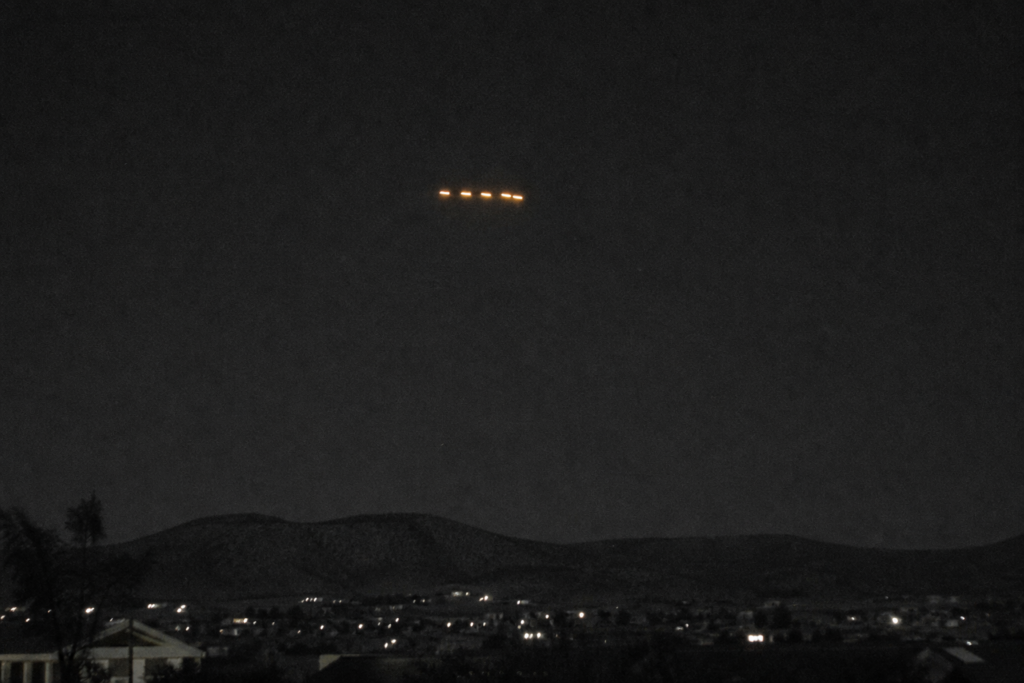
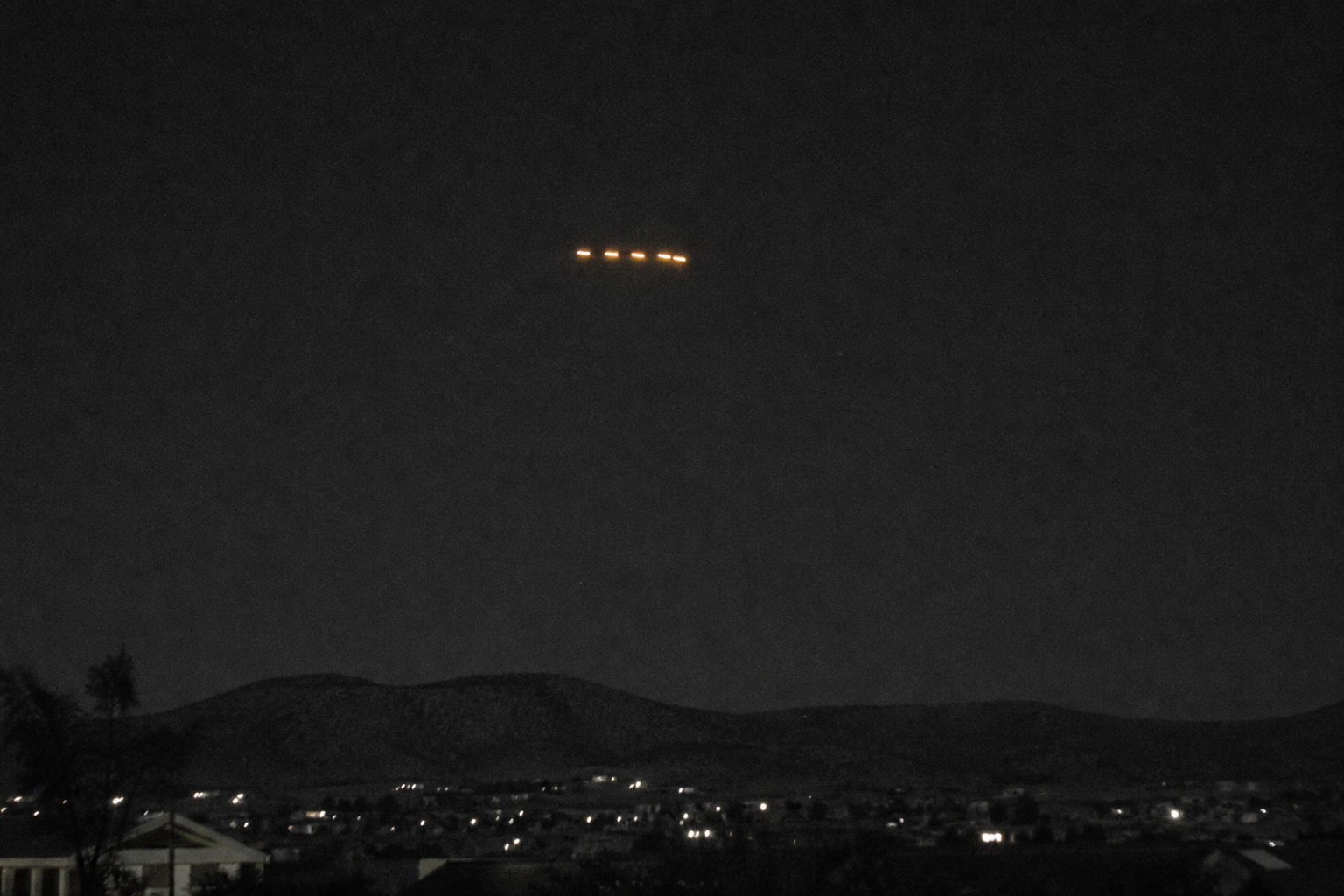
The Prescott Valley UFO sighting 2000 centers on a striking but limited reported observation: on January 28, witnesses described cylinder-shaped objects over Prescott Valley, Arizona, displaying orange lights and seeming to rotate. Those words preserve the account’s visual impression; they do not independently establish an object’s shape, distance, size, altitude, or origin.
That distinction matters. A lighted aircraft, a distant ground source, an astronomical object seen through shifting air, or another conventional cause can be perceived differently when a witness lacks stable reference points. Conversely, a plausible category is not an identification unless it fits the reported timing, direction, duration, motion, and appearance. “Rotating,” for example, may describe actual movement, changing light patterns, or apparent motion created by viewing conditions.
This article follows the surviving record from the reported date and place outward: first separating witness testimony from later retellings, then weighing aviation, astronomical, and terrestrial-light possibilities against the details that are actually preserved. The goal is not to convert an unusual description into proof of an extraordinary event, nor to impose an easy conventional answer. It is to identify what the available record can support, what it cannot independently confirm, and why the case remains difficult to classify with confidence.
What Was Reported Over Prescott Valley on January 28, 2000
January 28, 2000, is the first checkpoint for this account: the report associates that date and Prescott Valley with an observation described as cylinder-like objects showing orange lights and apparent rotation. Those are the report’s descriptive terms, not measured properties of a confirmed physical object.
Each element carries a different evidentiary weight. “Cylinder-shaped” records an apparent silhouette rather than a documented size or structure; “orange lights” records perceived color rather than a known light source; and “rotating” records how the display appeared to move, without establishing whether an object turned, lights changed position, or viewing conditions produced that impression. The available description does not supply dependable measurements for distance, altitude, direction, duration, or number of observers.
For that reason, the January 28 2000 Arizona UFO sighting should be treated as a reported event rather than a verified incident. A verified incident would require independently traceable material, such as an original dated witness submission, contemporaneous reporting, imagery with provenance, or corroborating aviation, weather, or astronomical records that can be matched to a time and direction.
The record considered here preserves the reported date, place, and visual language, but it does not by itself establish what was present in the sky. The next step is to trace where those details appear, distinguish firsthand testimony from later summaries, and determine how much of the Prescott Valley account can be independently supported.
Tracing the Case Record: What Sources Actually Document
The surviving trail is best understood as a chain of retellings rather than a complete investigative file. The available case record preserves the reported date, location, and the phrases “cylinder-shaped,” “orange lights,” and “rotating,” but it does not include an accessible, signed original witness submission with a recorded observation time, observer identity, sketches, photographs, or a statement taken close to the event.

Those distinctions affect how much weight a record can bear. An original witness report preserves the observer’s own wording and may show when it was submitted. An investigator summary can add interviews, timelines, and follow-up, but only if its methods and underlying notes are available. A sighting-database entry is useful for locating a claim, yet it may be a condensed transcription or a later repost rather than independent testimony. Local newspaper, broadcast, or community reporting made at the time would establish that the event was publicly reported then, though not necessarily identify the lights. Independent official material, such as a dispatch log, airport record, or weather observation, could test parts of the account against a time and place.
For the Prescott Valley orange lights UFO report, the accessible material does not establish that these stronger forms of corroboration survive. There is no documented chain linking the preserved description to a named witness, a contemporaneous news item, a disclosed investigator file, or a specific official record. Multiple appearances of the same wording should therefore be treated as copies of one account unless separate witnesses and source provenance are shown.
That leaves important gaps: the precise time is uncertain, the number and locations of observers are not securely documented, and no independently attributable photograph, video, or official response is available in the record considered here. Aircraft or helicopter lighting and distant terrestrial lights remain plausible categories, but the missing time, direction, duration, and geometry prevent a meaningful match. The responsible finding is insufficiently documented, not a confirmed identification or a demonstrated anomaly.
Cylinder Shapes, Orange Lights, and Apparent Rotation
A cylinder is a visual impression of length, width, and outline, not a measurement of an object’s physical construction. At night, a short row of lights, a brightly lit edge, or a distant object seen end-on can appear tubular while its body remains invisible. A reliable morphology assessment would need a stated viewing angle, a sketch made at the time, a comparison against fixed landmarks, and an account of whether any dark structure was visible around the lights.
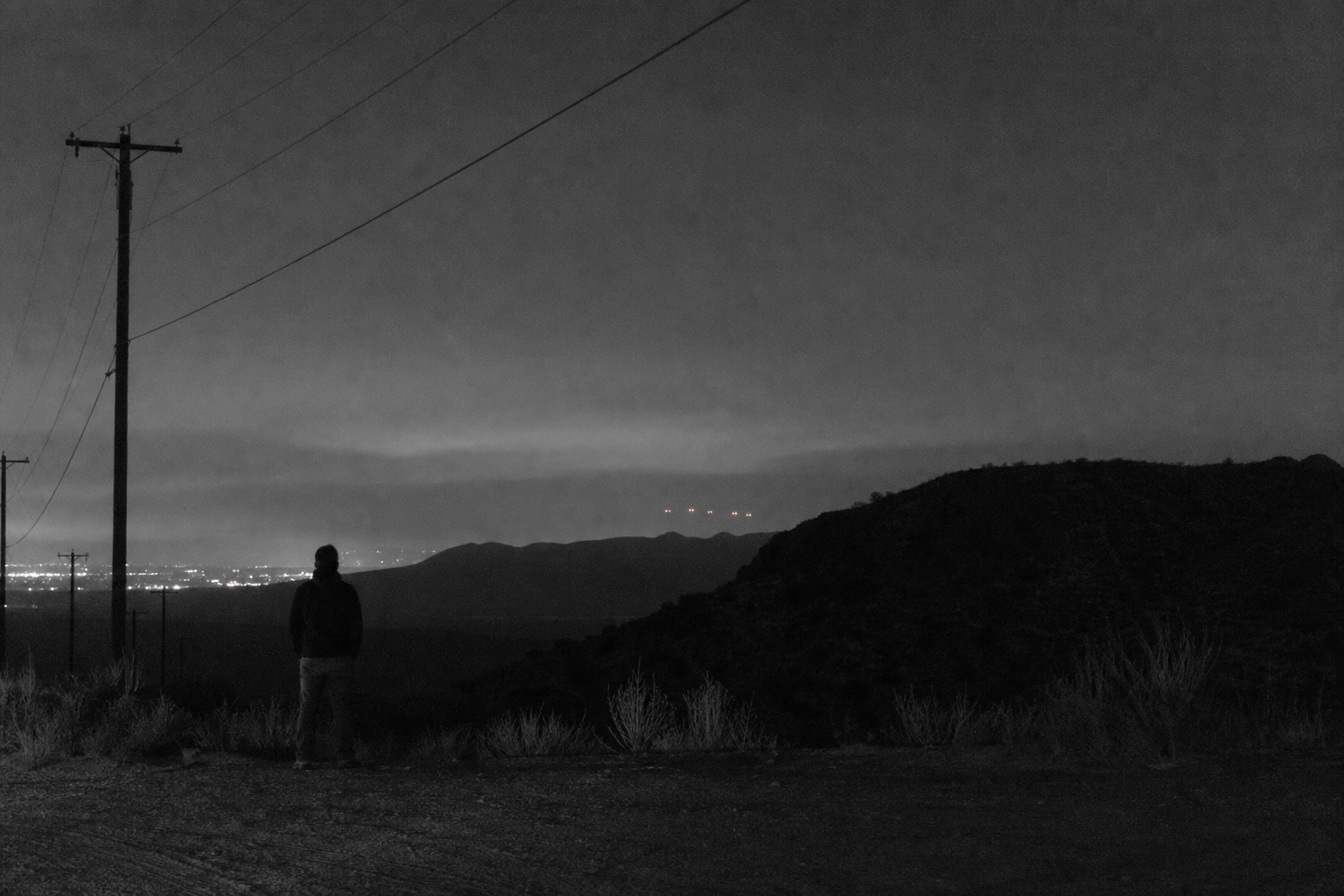
“Orange” is similarly descriptive rather than diagnostic. Color can reflect the light source, haze, exposure of the observer’s eyes to darkness, and contrast with the surrounding sky. The key unresolved distinction is whether the observers saw orange lights attached to a discernible cylinder-shaped structure or only lights against darkness from which a structure was inferred. The surviving wording does not preserve that distinction.
Apparent rotation can mean several different things: an object may truly turn; separate lights may brighten in sequence; a moving observer may experience a changing perspective; or atmospheric shimmer can make a distant point or cluster seem to shift. For rotating cylinder-shaped objects with orange lights, the strongest signal would be a repeated, described cycle, such as lights changing position around a visible outline at a consistent rate. A bare statement that an object “rotated” cannot establish which of those visual mechanisms was involved.
To test an identification, an investigator would need the number of lights or objects, their spacing and relative positions, direction of travel, elevation above the horizon, duration, apparent changes in brightness, and any sound, size, distance, or weather estimate. Time-stamped observations from separate locations would be especially useful because they could distinguish a nearby light source from a distant aerial one. Those particulars are not retained in the available account, leaving the Arizona cylinder UFO orange-lights description evocative but too incomplete for a technical match.
Could the Lights Have Had a Conventional Explanation?
Several ordinary possibilities remain open, but none can be responsibly elevated from possibility to identification on the surviving description alone.
Aircraft and aviation activity would be more persuasive if the lights traveled on a steady track, showed a recognizable arrangement or repeated flash pattern, changed intensity as they turned, or were accompanied by engine noise. A fixed-wing aircraft seen at an oblique angle can present a short line of lights; a helicopter can seem to hold position or pivot while its lights alter in apparent spacing. Neither option can be matched here because the record does not retain a time, bearing, flight path, altitude estimate, duration, or observer position.
Flares could fit orange illumination if the lights descended, drifted with the wind, faded over a short interval, or appeared as several separated sources. They fit poorly if the reported objects maintained a rigid formation or showed a persistent, structured outline, but those distinguishing observations were not preserved. Without a time window or documented local activity, flare use remains neither established nor excluded.
Satellites and astronomical objects are strongest candidates when a light follows a smooth, unblinking path or remains fixed relative to the horizon. They are weaker matches for a clearly resolved cylindrical form, multiple independently moving lights, or a repeated rotation cycle. Yet the account supplies no direction of view or duration from which a celestial position or satellite pass could be tested.
Distant ground lights, vehicles, illuminated facilities, or lights on terrain, can appear airborne when a horizon is obscured or when the observer lacks a fixed foreground reference. Haze, darkness, and changing viewpoint can also enlarge, merge, separate, or seemingly rotate points of light. Such perceptual effects offer a route to misidentification, not a determination that misidentification occurred.
The missing variables matter more than the unusual wording. Weather observations could help assess haze and visibility; aviation records could be compared against a defined time and direction; and sky charts could test astronomical objects. Because the Prescott Valley report retains none of those anchors, conventional explanations are plausible categories rather than case-specific solutions.
What Can Be Verified, and What Remains Unresolved
The clearest way to weigh this report is to separate the existence of a recorded claim from confirmation of the claimed event.
| Claim | Status in the surviving record | What that status supports |
|---|---|---|
| A sighting was reported over Prescott Valley on January 28, 2000. | Documented as a later case-record reference. | There is a traceable report associated with that date and location. |
| Cylinder-shaped objects, orange lights, and rotation were observed. | Reported descriptive testimony. | Those are the preserved visual claims, not independently measured characteristics. |
| More than one person independently observed the same phenomenon. | Uncorroborated. | Repeated summaries do not establish separate witnesses unless each account has an identifiable, independent origin. |
| The objects had an extraordinary or nonhuman origin. | Unsupported. | No retained detail establishes origin, propulsion, altitude, or physical structure. |
Independent corroboration would materially change the assessment. Two accounts written separately, close to the event, that agree on time, direction, duration, motion, and light arrangement would be stronger than multiple websites repeating one description. A contemporaneous police, news, airport, weather, or investigator record could also anchor the observation to a usable time window rather than merely preserve the story.
Any photograph or video would require provenance before it could carry much weight: an original file, creation metadata, an identified photographer, an observation location, and a record of whether the file was edited or reposted. A low-resolution image without those links may show lights, but it cannot securely establish date, place, scale, or object form.
A precise location and time could permit meaningful comparison with aviation activity or a celestial position. Such a match would not automatically identify the sighting, but it could test whether an aircraft, flare activity, satellite pass, or bright astronomical object was present in the relevant part of the sky.
The calibrated finding is therefore insufficiently documented and unresolved: the Prescott Valley UFO sighting 2000 is a preserved report with distinctive witness language, not a confirmed physical incident or evidence for an extraordinary explanation.
How the Prescott Valley Report Fits Into Arizona UFO History
In Arizona’s sighting record, the January 28, 2000 Prescott Valley entry belongs on the sparse-record end of the spectrum. The material retained for this case fixes a date and community and preserves three visual descriptors, cylinder-shaped objects, orange lights, and apparent rotation, but not an observation time, named independent observers, viewing direction, duration, image file, police report, or identified official inquiry.
That makes it materially different from a case in which several people submit separate accounts of, for example, the same three lights traveling west for ten minutes from different locations. Separate accounts can be compared for the number of objects, direction, spacing, brightness changes, and timing; a contemporaneous dispatch log, local-news report, airport record, or original photograph can further test whether those accounts refer to one shared event. Repeated online use of the Prescott Valley phrases “orange,” “cylinder-shaped,” and “rotating” may instead trace back to a single unrecovered description.
Object language alone is also a weak basis for linking Arizona UFO sightings. A report that supplies a time, a horizon direction, and a several-minute duration can be assessed against aircraft traffic, flare activity, or celestial objects present in that part of the sky. The Prescott Valley account lacks those comparison points, so it cannot be meaningfully ranked by witness count, physical scale, speed, or official follow-up alongside more fully recorded Arizona episodes, including the better-known Phoenix Lights reports.
“UFO” and “UAP” are unresolved-observation labels, not identifications of a craft, operator, or origin. For this January 28 report, the labels accurately preserve the absence of a settled explanation while adding no evidence that the lights were non-human or extraordinary. The case should not be used as proof of alien disclosure, non-human intelligence, UAP disclosure, or a government UFO cover-up; its limited historical value is as a local claim whose distinctive wording survived more clearly than the contemporaneous evidence needed to determine what was seen.
Frequently Asked Questions
-
What was reported over Prescott Valley, Arizona, on January 28, 2000?
A reported sighting associated with Prescott Valley on January 28, 2000 described cylinder-shaped objects with orange lights that appeared to rotate. The surviving record does not provide verified measurements of the objects’ size, altitude, distance, direction, or origin.
-
Were the rotating cylinder-shaped objects over Prescott Valley ever identified?
No confirmed identification is supported by the available record. The case remains insufficiently documented and unresolved because it lacks a reliable observation time, witness identities, direction of view, duration, imagery, and corroborating official records.
-
Are there original witness reports or case files for the 2000 Prescott Valley UFO sighting?
No accessible signed original witness submission, named witness account, investigator file, photograph, video, or contemporaneous news report is documented in the surviving record. The case is preserved mainly through later references repeating the date, location, orange lights, cylinder-shaped appearance, and apparent rotation.
-
What details would help identify orange rotating lights in the sky?
Useful identification details include the exact time, viewing direction, duration, number and spacing of lights, travel path, elevation above the horizon, brightness changes, sound, weather, and observer location. Time-stamped accounts from separate locations could help distinguish aircraft, flares, satellites, astronomical objects, or distant ground lights.
-
How does the Prescott Valley report compare with other Arizona UFO sightings?
The Prescott Valley report is on the sparse-record end of Arizona sightings because it preserves only a date, community, and three visual descriptors. Unlike better documented cases with separate witness accounts, timelines, images, or official records, it cannot be reliably compared by witness count, speed, scale, direction, or duration.