China’s UAP Task Force
What does public evidence show about a China UAP task force? Compare aviation, military and scientific records with the US disclosure model.
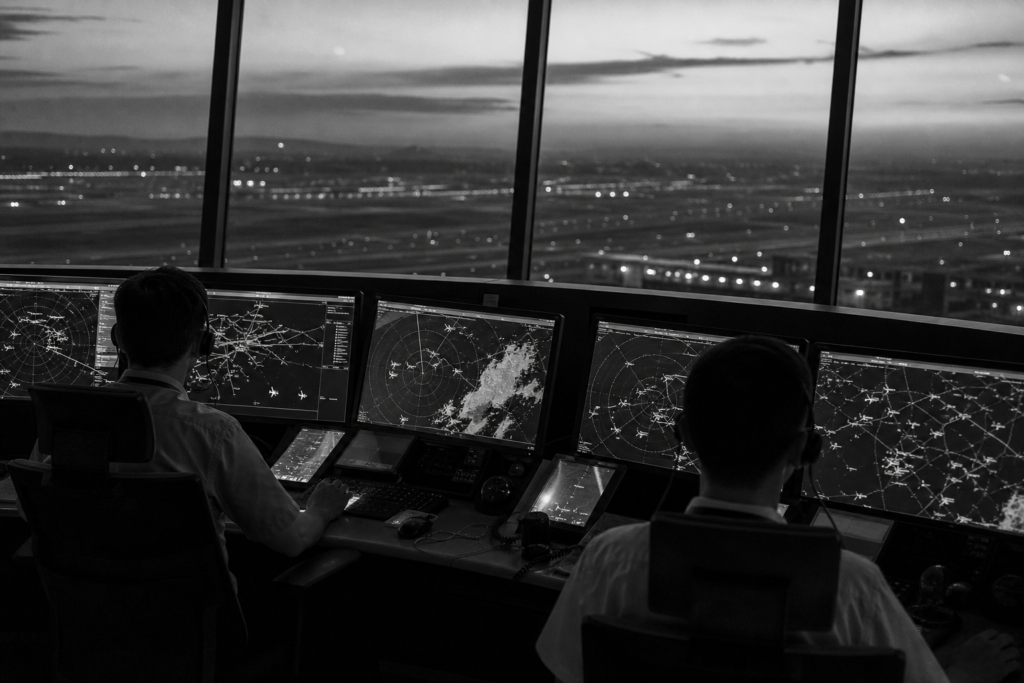
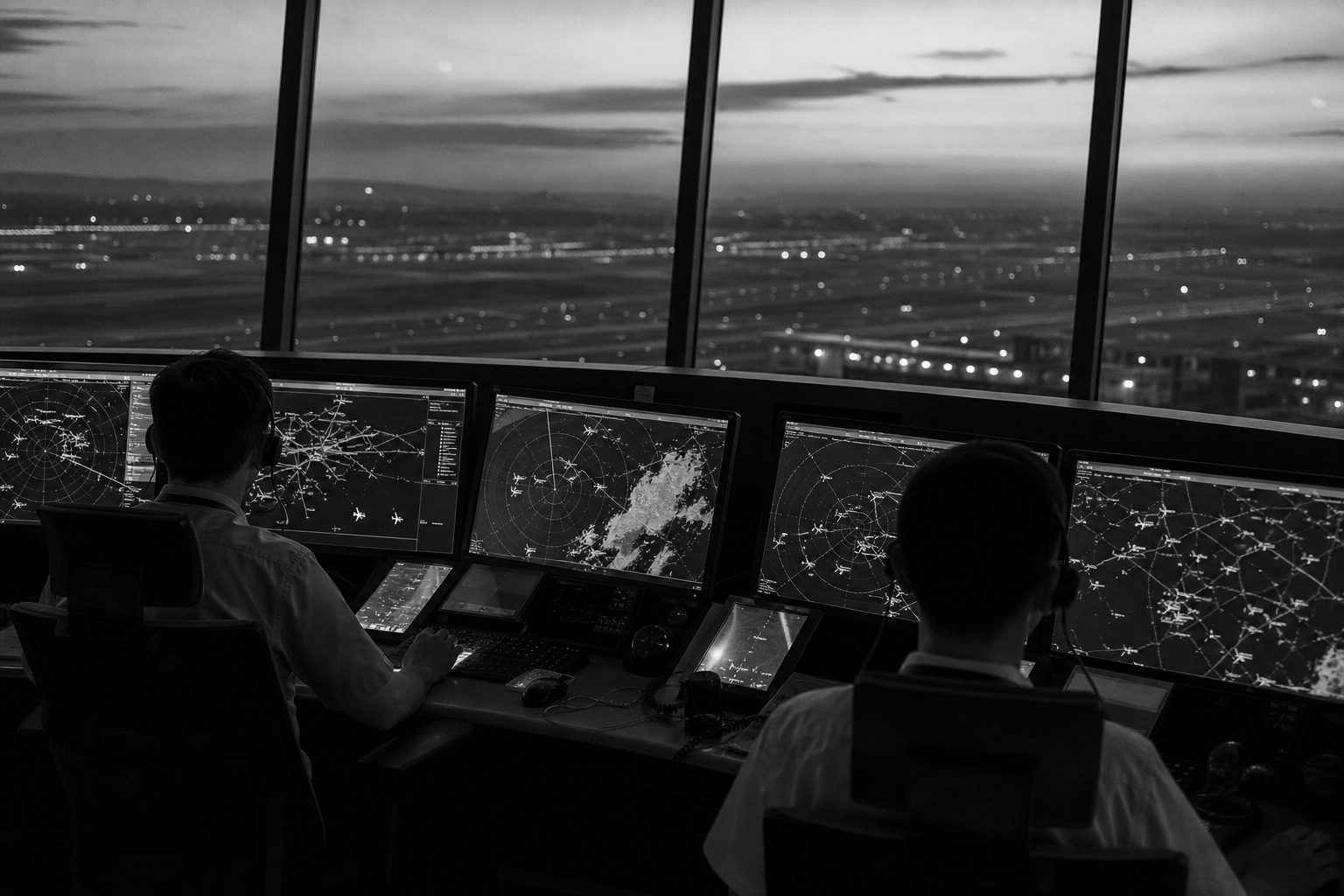
The decisive checkpoint is whether public records identify a named office with a mandate, reporting structure, and institutional home. They do not establish such a centralized Chinese body comparable to a publicly acknowledged government office. That conclusion is deliberately narrow: it describes the accessible record, not activity that may exist in classified channels. Secrecy, fragmentary reporting, and translation difficulty can limit outside knowledge; none, by itself, proves a hidden program.
An unidentified object is simply a contact not yet resolved. An aviation-safety report records a potential flight hazard; military tracking identifies and assesses an airspace contact; a formal UAP office coordinates a defined mission and leaves an identifiable public footprint. Treating those functions as interchangeable turns routine uncertainty into unsupported conclusions.
The analysis separates five strands often collapsed into one claim: civil-aviation reporting, air-defense identification, scientific and academic observation, state-media coverage, and official records or statements. It then compares China’s dispersed, limited public record with the more visible U.S. framework, including the All-domain Anomaly Resolution Office and congressionally mandated reporting. Claims of recovered craft, reverse engineering, or non-human intelligence require far stronger evidence than an unresolved sighting.
China’s UAP Task Force: What Public Evidence Actually Shows
The label fails a basic institutional test. A publicly verifiable China UAP task force would have an identifiable Chinese name, a lead agency or designated staff, a stated remit, and a reporting or publication trail. Searches of the kinds of public materials that would ordinarily reveal those features, agency pages, policy papers, regulations, official statements, and authoritative state-media accounts, do not establish such an office.

That is a narrower finding than saying Chinese authorities do nothing with unusual aerial reports. A radar operator can classify an unknown contact, an airport can respond to a possible airspace hazard, and researchers can study an unexplained observation without any of those activities belonging to a centralized program. The practical distinction is accountability: a formal office can be identified by its mandate and outputs; dispersed functions may be visible only through isolated incidents or general institutional responsibilities.
The Chinese UAP task force description therefore remains unverified in the public record, rather than confirmed by the existence of surveillance, aviation, or security systems. Public silence also cannot settle the separate question of classified activity. States routinely withhold operational details about sensors, air-defense procedures, and intelligence collection. But classification is not affirmative evidence of a dedicated anomaly office, much less of extraordinary conclusions about what such an office has found.
Do Not Confuse Five Different Chinese Systems
The useful next step is to sort any reported anomaly by its institutional pathway rather than by the label attached to it. The same light, radar return, or alleged object can enter very different systems, each designed to answer a different question.
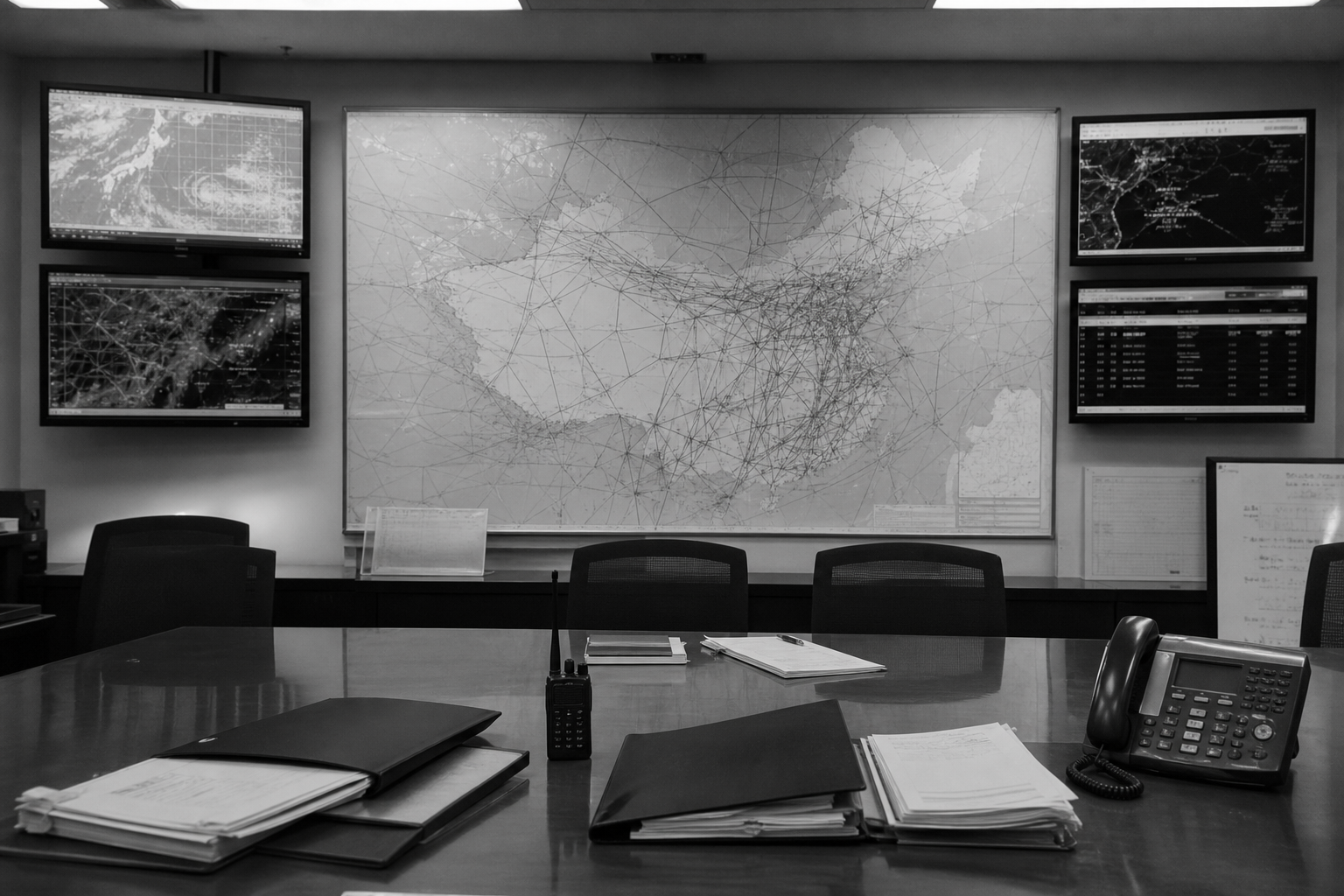
- Chinese civil aviation: an airport or air-traffic safety pathway concerns whether an object, weather event, or uncertain track threatens the safe movement of aircraft. Its meaningful outputs are operational ones, warnings, delays, diversions, or incident handling, not a determination that the object is extraordinary.
- PLA air-defense identification: a military pathway concerns whether an aerial contact is friendly, hostile, unauthorized, or still unresolved. “Unidentified” here is a status requiring identification or response; it does not describe an object’s origin or establish a specialized anomaly mission.
- Scientific and academic observation: researchers may examine unusual optical, atmospheric, astronomical, or sensor observations. This is inquiry into evidence and possible explanations, not proof that the work belongs to a state-directed China UFO program.
- State-media coverage: a news report can publicize an incident, official comment, or eyewitness account. It is useful for tracing what was publicly said, but it is weaker than an agency record for establishing mandate, data, or investigative outcome.
- Online UFO reports: videos, posts, and enthusiast compilations can preserve leads and public reaction, yet often lack authenticated time, location, sensor data, and chain of custody. They are claims to assess, not institutional evidence.
The practical test is whether these channels converge in a named office with a shared remit, personnel, reporting rules, and published outputs. A sighting can pass through one or several of them without creating that structure. Treating every aviation alert, military track, research project, or viral video as evidence of a unified China UAP program collapses distinct functions into a conclusion the public record does not supply.
What China Has Said Publicly About Unusual Aerial Sightings
A usable public case file would identify a date, airport or airspace sector, reporting authority, and operational consequence, such as a notice to airmen, departure hold, diversion, or runway closure. The research material supplied for this review includes no dated Civil Aviation Administration of China notice, airport statement, Xinhua report, or China Central Television account that describes a particular disruption as an extraordinary aerial phenomenon. A temporary restriction can establish that controllers treated an airspace risk seriously while leaving the object’s identity, sensor data, and final disposition unpublished.
That distinction matters because the most immediate alternatives are commonplace. A drone is a remotely piloted aircraft that can require aircraft to be kept away from a runway environment; a balloon can move with winds and present an unfamiliar shape; and an ordinary aircraft can appear stationary, unusually fast, or oddly shaped when distance, haze, viewing angle, or night lighting obscure scale and motion. Weather effects, bright astronomical objects, re-entering debris, reflections, and incomplete radar or video records likewise can produce an observation that remains unresolved at the moment it is reported.
Scientific commentary becomes probative only when the observation can be tied to particulars: a precise time, coordinates, calibrated imagery, radar returns, local weather observations, or a traceable flight path. Those inputs do different work. Video with no authenticated time, location, or provenance can demonstrate that a light was recorded, but cannot reliably establish its distance, size, velocity, or identity. Matched optical and radar records, by contrast, allow competing explanations to be tested against the same event. That is the standard missing from much UFO news and from online claims presented as UAP news.
The public record should therefore preserve three separate findings: an object was reported; it was not identified at the time; and it displayed characteristics that ordinary explanations cannot account for. The first two propositions do not entail the third. No supplied public Chinese material documents an authority converting an unresolved aerial report into a finding of non-human technology, recovered craft, or an extraordinary origin.
What Military Air-Defense Tracking Does, and Does Not, Reveal
A military sensor track begins a security problem, not an anomalous-phenomena investigation. In sensitive airspace, the immediate operational questions are practical: Is the object approaching a protected area? Does it present a collision or intelligence risk? Can it be correlated with an authorized flight, known weather activity, or another recognized source?
That is the normal logic one would expect of PLA Air Force air-defense activity and aerospace surveillance. A drone may be small, low-flying, and difficult to classify; a balloon may drift across expected routes and change its radar signature with altitude; and a surveillance platform may be designed to test defenses while withholding identifying signals. Each possibility gives military authorities reason to detect, track, classify, and, where necessary, respond, without implying that the event is extraordinary.
Air-defense radar also does not produce a self-explaining identification. Detection establishes that a sensor registered something. Identification links that return to a known object or flight. Attribution goes further, assessing who operated it and for what purpose. A track can remain unresolved because of range, altitude, clutter, incomplete sensor coverage, or missing cooperative signals; that uncertainty is an intelligence and air-defense issue, not evidence of non-human technology.
The meaningful evidentiary threshold is therefore higher than reports of monitoring or intercept activity. A dedicated China UAP task force would require public indications of a specialized remit, assigned personnel, procedures for collecting anomalous-case data, and outputs distinct from ordinary threat warning and airspace defense. Routine military attention to an unknown object shows that authorities treat uncertain incursions seriously. It does not reveal a separate office established to investigate UAP as a category.
China Versus the U.S. Public UAP Framework: The Key Difference Is Transparency
The United States offers a visible institutional trail that makes external scrutiny possible even when much of the underlying data remains classified. The UAP Task Force (UAPTF) was followed by the All-domain Anomaly Resolution Office, or AARO: a Pentagon UFO office with a defined government-facing remit rather than a label inferred from isolated sightings or air-defense activity.
AARO’s defined Pentagon mandate and public framework include congressionally required reporting, recurring unclassified reports, a public-facing website, and a historical review of U.S. government UAP records. Those mechanisms do not make every case solvable or every sensor record public. They do, however, create identifiable checkpoints: readers can see which office is responsible, what categories it reports, when it publishes, and where Congress can question officials in open hearings.
NASA adds a separate, civilian-facing element. Its public UAP study addressed how scientific methods, better data collection, and cross-disciplinary analysis could improve observations; it was not a Pentagon intelligence investigation. That division is useful because it distinguishes defense reporting and classified holdings from a public scientific discussion about data quality and research practice.
No comparably visible Chinese structure appears in the public record reviewed here: no centralized office equivalent to AARO, public case database, regular national report, or formal hearing-and-disclosure cycle devoted to anomalous aerial cases. That contrast is meaningful, but bounded. Transparency measures the availability of public mandates, records, and oversight, not a state’s sensor reach, classified holdings, or ability to respond to incursions. The absence of a Chinese public process therefore supports caution about claims of a China UAP task force; it does not quantify what Chinese authorities may know in nonpublic channels.
No Public Evidence Confirms Crash Retrievals, Non-Human Intelligence, or a Cover-Up
Extraordinary conclusions require evidence that can bear their weight. A recovered craft or reverse-engineering program would need more than an unresolved sighting, a second-hand allegation, or an intelligence assessment: it would require attributable official records, a traceable chain of custody, independently examinable material, and findings that rule out conventional explanations. None of those elements has been publicly produced for a Chinese program involving recovered non-human technology.
That gap also matters when claims of a government UFO cover-up circulate. Secrecy around defense operations can explain why flight tracks, sensor performance, or response procedures are withheld; it does not itself demonstrate concealed alien disclosure. An observation can remain unresolved because its data are incomplete, classified, contradictory, or never collected at the necessary quality. “Unidentified” describes the state of identification, not an origin.
Testimony may identify a lead worth investigating, and an official statement may establish that an agency received or reviewed a report. Neither is equivalent to independently verified physical evidence or confirmation of non-human intelligence. The appropriate conclusion is narrow: publicly attributable material does not establish Chinese crash retrievals, reverse engineering, extraterrestrial craft, or a dedicated concealment program.
Why China’s Limited Public Disclosure Matters to the Global UAP Debate
The disclosure gap changes the standard of comparison, not the standard of proof. Global UAP disclosure cannot treat U.S. cases as a complete proxy for worldwide reporting, yet China’s public record presently points to dispersed aviation, defense, scientific, and media activity rather than a verified formal task force.
Assess a future claim by asking for six things: a named institution; an original official source rather than a repost or translation alone; a date; a defined mandate showing what the body is authorized to do; underlying data or a clear account of its limits; and independent corroboration. A report naming an office and publishing its remit is a stronger signal than an unnamed official describing an unexplained sighting.
The verified bottom line is narrow: limited transparency leaves important questions open, but it does not convert ambiguity into evidence of extraordinary capabilities or a confirmed China UAP task force.
The Evidence Supports Caution, Not a Confirmed Chinese UAP Office
What remains after these distinctions is an evidentiary boundary. Civil-aviation reports can record an operational disruption; air-defense activity can address an unidentified track; scientific work can examine an observation; and popular UFO accounts can preserve a claim. None of those records, alone or combined, demonstrates that they are administered by one specialized national office.
The public picture therefore differs from the United States’ disclosed UAP framework in a specific way: the issue is not whether Chinese institutions can encounter unusual objects, but whether public materials identify a dedicated body with an anomalous-phenomena mandate, personnel, procedures, and accountable reporting. They do not establish that structure. Limited disclosure is a reason to preserve uncertainty, not a basis for inferring a hidden China UAP task force.
Future conclusions should rise or fall on attributable evidence: an original government document, a named official statement defining a program, or reporting independently corroborated by records and knowledgeable sources. Claims of recovered craft, non-human intelligence, reverse engineering, or coordinated concealment require still more, traceable physical evidence, a documented chain of custody, and findings open to independent scrutiny. Until such evidence appears, caution is the fact-checked conclusion.
Frequently Asked Questions
-
Does China have an official UAP task force?
No publicly verifiable Chinese UAP task force has been identified. Public records do not show a named office with a defined mandate, lead agency, personnel, reporting structure, or published outputs comparable to a formal UAP program.
-
What does an unidentified object mean in Chinese aviation or military tracking?
An unidentified object is a contact that has not yet been resolved, not proof of an extraordinary origin. Civil aviation treats it as a potential flight-safety risk, while air defense treats it as a contact to identify, assess, and potentially respond to.
-
Does the Chinese military investigate unidentified objects in its airspace?
Chinese air-defense systems would detect, track, classify, and assess unknown airspace contacts for collision, intelligence, or security risks. An unresolved radar track can result from range, altitude, clutter, incomplete coverage, or missing cooperative signals and does not establish a specialized UAP investigation.
-
What evidence should you look for to verify a Chinese UAP program?
Look for a named institution, an original official source, a date, a defined legal or administrative mandate, underlying data or stated data limits, and independent corroboration. Strong evidence would also identify assigned personnel, reporting procedures, and published outputs for anomalous cases.
-
How does China’s public UAP approach compare with AARO in the United States?
The United States has a visible framework through AARO, including a defined Pentagon mandate, congressionally required reporting, recurring unclassified reports, a public website, and congressional oversight. China has no comparably visible centralized office, public case database, regular national reports, or formal public disclosure cycle for anomalous aerial cases.