AARO’s 2024 Historical Report: ‘Kona Blue’ SAP Revealed, No ET Evidence Found
Explore the AARO 2024 historical report: Kona Blue, AAWSAP and AATIP, and why AARO found no verified extraterrestrial evidence.


Crash-retrieval claims carry an unmistakable implication: that the United States has secretly recovered technology of non-human origin. The documentary record examined in the AARO 2024 historical report presents a narrower and more consequential question, what can actually be established from government files, interviews, and program history.
Released in March 2024, Historical Record Report, Volume 1 examined allegations of concealed UAP activity and past government efforts associated with the subject. Its most widely discussed disclosure was Kona Blue, described not as an operating alien-material recovery project but as a proposed, unapproved Special Access Program. A SAP is a tightly controlled framework for particularly sensitive work; a proposal for one is not proof that the work was authorized, funded, or carried out.
The report also said its review found no verifiable evidence that the U.S. government possessed extraterrestrial technology or had confirmed non-human intelligence. That is a finding about the evidence AARO could substantiate, not a declaration that every unexplained UAP report has an extraterrestrial or ordinary answer. The distinction matters as the debate moves from dramatic allegation to documented history.
What AARO’s 2024 Historical Report Actually Disclosed
Its significance lies in the standard of proof it applied: the report separated documented government activity from inferences drawn from program names, testimony, or unresolved incidents. On that record, AARO did not treat an anomalous report, or an allegation of restricted activity, as confirmation of extraterrestrial hardware, non-human intelligence, or a concealed retrieval effort.
Historical Record Report, Volume 1 was a historical assessment, not an attempt to settle whether life exists elsewhere or to assign a final explanation to every UAP case. Its finding concerns what could be established through the material reviewed. That makes “no verifiable evidence found” a consequential conclusion about the specific claims examined, while leaving room for new records or independently corroborated evidence to change the historical record.
The report also requires readers to keep similarly named efforts distinct. AAWSAP, AATIP, and Kona Blue belong to overlapping UAP-era history, but a research contract, an investigative office, and a proposed sensitive program are not interchangeable categories. The practical test is whether records show authorization, funding, and operations, not whether a name sounds clandestine or appears beside extraordinary allegations.
Kona Blue: A Proposed SAP, Not a Documented Operational Retrieval Program
Kona Blue is best understood as a proposed security compartment, not as a program history. A Special Access Program adds protections beyond ordinary classified controls: it limits who may know about a defined activity and establishes rules for access, handling, and oversight. Approval is the dividing line. A proposal can lay out a sensitive mission in detail without creating an authorized operation.

AARO’s Historical Record Report, Volume 1 described Kona Blue as a proposed, not approved, Department of Homeland Security and Defense Intelligence Agency-related SAP concept. Its draft materials contemplated protecting the storage, analysis, and management of alleged UAP-related material and information, including claims involving advanced or unusual technology. That subject matter explains why the name attracts attention; it does not establish that such material was in government possession or that the proposed activity began.
The practical distinction is visible in the records a real operating program would normally leave behind: an approval decision, assigned authorities, funding, personnel, facilities, and documented work. AARO found that Kona Blue did not clear the approval stage. Descriptions of restricted facilities, scientific analysis, or tightly limited access therefore show what the proposal’s authors sought permission to do, rather than proof that a retrieval or reverse-engineering effort was carried out.
It also should not be collapsed into AAWSAP or AATIP. AAWSAP was a DIA-funded research contract; AATIP was a later Pentagon UAP effort; Kona Blue was a proposed protective structure associated with this period of UAP-related activity. Treating those labels as one continuous alien-material program turns proximity and similar subject matter into evidence of operations. The AARO historical report Kona Blue finding is narrower: the concept existed on paper, but it was proposed and not approved.
How AAWSAP, AATIP, and Kona Blue Fit Together, and How They Differ
A timeline makes the distinctions clearer: AAWSAP was a funded research contract, AATIP was a later Defense Department UAP effort, and Kona Blue was a proposed security arrangement that never entered operation. AARO’s March 2024 historical report placed all three in related history while finding no verifiable evidence of U.S. possession of extraterrestrial technology or confirmed non-human intelligence.
AAWSAP, the Advanced Aerospace Weapon System Applications Program, was a Defense Intelligence Agency contract awarded in 2008 to Bigelow Aerospace Advanced Space Studies. Its work ranged across advanced aerospace and defense concepts, including reports and inquiries associated with unidentified aerial phenomena. A contractor studying unusual reports or producing technical assessments is not the same thing as a government office holding recovered material: the contract establishes funded work and deliverables, not the truth of every premise explored within that work.
AATIP, the Advanced Aerospace Threat Identification Program, belongs to the subsequent policy and investigative history. It is commonly associated with Pentagon examination of military UAP encounters and helped make the subject more visible inside government and, later, publicly. Its focus on identifying potential aerospace threats differs from AAWSAP’s contracted research model.
Kona Blue fits beside those efforts rather than inside either one. It was drafted as a proposed SAP structure for handling exceptionally sensitive alleged material and information, not as the AAWSAP contract and not as AATIP’s investigative activity. The practical checkpoint is category: a contract shows commissioned research; an investigative effort shows an institutional mission; an approved SAP would show authorized protected activity. Shared personnel, names, or UAP subject matter cannot bridge those distinctions into proof of recovered alien craft.
What AARO Found on Alien Technology and Crash-Retrieval Allegations
That category test also defines the evidentiary threshold for the more consequential allegations. AARO’s Historical Record Report, Volume 1 described Kona Blue as a proposed, unapproved SAP and concluded that its review found no verifiable evidence that the U.S. government or private industry possessed extraterrestrial technology, extraterrestrial biological remains, or confirmed non-human intelligence.
“No verifiable evidence” is a specific finding, not a claim that every reported UAP has been identified or that life cannot exist beyond Earth. It means AARO did not find records, physical material, or corroborated testimony sufficient to establish the alleged possession-and-exploitation programs. An unexplained observation is therefore a different evidentiary category from a recovered craft, and a claim that a material sample is unusual is different from proof that it is extraterrestrial.
The report assessed crash-retrieval and reverse-engineering allegations against that distinction. It found that some accounts appeared to conflate authentic but unrelated classified activities with alleged hidden UAP programs; others rested on unsubstantiated, secondhand, or internally inconsistent claims. A sensitive aerospace project can explain why an activity was compartmented without establishing that its equipment came from a non-human source.
This is the practical significance of the AARO report no extraterrestrial evidence conclusion for alien disclosure debates: it narrows what the historical record supports about a claimed government possession program. It does not convert every allegation into a falsehood, but it rejects the inference that program labels, security restrictions, or unresolved cases alone amount to confirmation of non-human technology.
How AARO Reached Its Conclusions, and What Its Review Could Assess
AARO evaluated those allegations through an evidentiary process rather than by treating public circulation as corroboration. Its March 2024 Historical Record Report, Volume 1 characterized Kona Blue as a proposed, unapproved SAP and reported no verifiable evidence of U.S. possession of extraterrestrial technology or confirmed non-human intelligence.
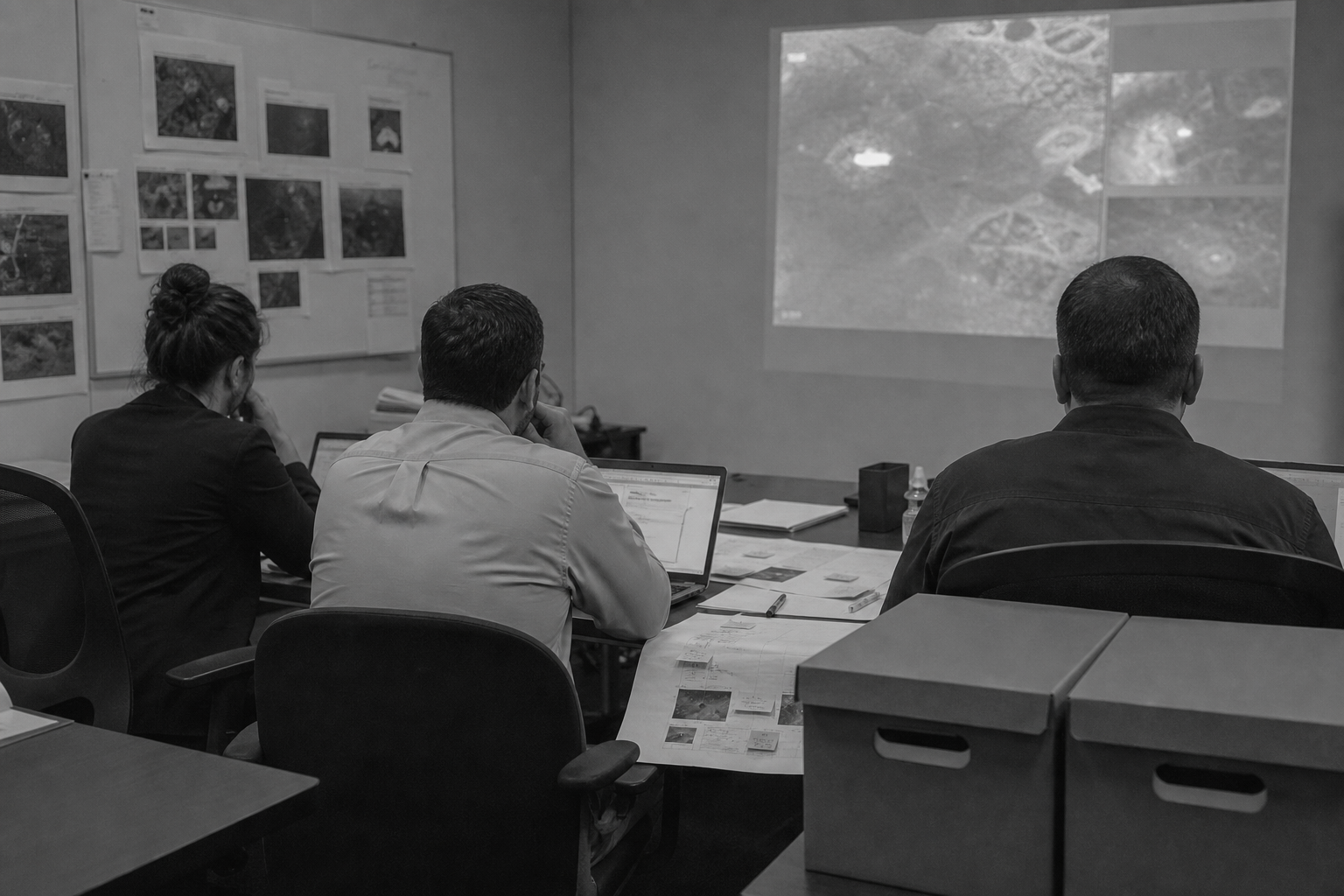
The review combined government-record searches, interviews with current and former personnel, and coordination with agencies that held relevant program files or could address specific claims. A named program or alleged compartment was tested against records showing such basics as authorization, funding, oversight, tasking, access controls, and operational activity. That is why a surviving proposal can establish that officials considered an idea while not establishing that the proposed activity was ever approved or performed.
Evidence also carried different weight. Contemporaneous official records and independently corroborated firsthand accounts can be compared against one another. Testimony based on what an interviewee was told, media reporting, and documents without a known provenance may identify leads, but they do not by themselves establish a classified program or material’s origin. The practical distinction is between a claim that points investigators toward a file and a record that substantiates the claim.
The public document was an unclassified report, accompanied by classified annexes for information that could not be released openly. Their existence shows that AARO’s review included restricted material; it does not, by itself, reveal what the annexes contain or alter the findings AARO made public. The report’s conclusion is consequently bounded but meaningful: it describes what its access, records review, and corroboration process could substantiate, not a universal resolution of every UAP account.
Why the Report Remains Contested in the UFO Disclosure Debate
The central divide in the UFO disclosure debate is not whether Kona Blue paperwork exists, but whether AARO had sufficient access to the people and restricted records that critics believe could alter its interpretation. The report identifies Kona Blue as an unapproved proposal; disputing the breadth of AARO’s inquiry is different from producing evidence that the proposal became an operating retrieval program.
Former intelligence officer David Grusch told the House Oversight Committee on July 26, 2023, that his crash-retrieval allegations were based on interviews with people he described as having direct knowledge. He also said he had not personally seen recovered craft or bodies. That distinction matters: testimony relaying claimed firsthand knowledge can identify witnesses and leads, but it is not itself the same as authenticated program records or physical material.
Grusch and disclosure advocates argue that classification restricts what witnesses can say in public and can leave the public unable to assess competing accounts. AARO said its historical review used interviews, records searches, agency coordination, and classified annexes. Critics may reasonably question whether particular witnesses or compartments were fully examined, especially when the underlying material cannot be released; AARO’s whistleblower-reporting process is also central to concerns about transparency and oversight, not independent confirmation of a crash-retrieval effort.
Representatives Tim Burchett and Jared Moskowitz have pressed the Pentagon for greater openness following the 2023 hearing, while journalist Leslie Kean has emphasized claims from sources who say they possess classified knowledge. Those challenges help explain continuing UAP news coverage, but the evidentiary threshold remains unchanged. A concern about access or witness treatment can justify further inquiry; it cannot convert an allegation into an authorization record, a funded operation, or verified non-human material.
What the Findings Mean for Current and Future UAP Questions
A case should remain unresolved when the available record cannot support a confident identification. That is an evidentiary status, not a positive extraterrestrial attribution: an observation may be unusual because key data are missing, ambiguous, or insufficient to distinguish among explanations. The 2024 review narrowed a historical possession claim while leaving incident-level investigation open to new evidence.
For readers tracking UAP sightings, the quality of a case turns on whether its evidence can be tested. A strong submission preserves provenance: who collected the material, when and where it was collected, and whether the original file or sensor record remains intact. It also pairs a reported observation with calibrated sensor data, independent witnesses or systems, and a serious accounting for ordinary alternatives such as aircraft, balloons, drones, astronomical objects, atmospheric effects, or sensor artifacts.
A weak signal is a striking clip detached from its original metadata, location, timing, and instrument settings. A stronger one is a time-synchronized record from more than one sensor that permits analysts to reconstruct range, speed, and context. Neither category warrants an alien conclusion merely because it remains unusual after an initial review.
That standard applies equally to UFO sightings in 2025, UFO sightings in 2026, and later reports. Future evidence could strengthen, revise, or resolve a particular case, but it must stand on its own chain of custody and corroboration. The report is therefore neither a universal debunking nor a confirmation of every disclosure claim; it defines what its historical review could substantiate and preserves the distinction between an unanswered observation and an extraordinary explanation.
The Bottom Line on Kona Blue and AARO’s Findings
What matters most is the evidentiary threshold the public record can meet. A proposed compartment, an operating government program, and a witness allegation carry different weight. Kona Blue falls into the first category: its paperwork shows that officials contemplated a tightly restricted framework for claimed extraordinary material, not that the framework was approved, funded, or used to hide recovered non-human artifacts.
That distinction anchors the AARO 2024 historical report’s larger conclusion. After reviewing historical claims and relevant government activity, AARO reported no verifiable evidence that the U.S. government possessed extraterrestrial technology, confirmed non-human intelligence, or operated a secret crash-retrieval and reverse-engineering program. Program names and secondhand accounts, without corroborating records or testable material, do not establish possession.
This was not a universal negative. The report could not determine what a future witness, record release, or properly preserved physical sample might establish, and an unexplained incident is not thereby resolved. Disputes over AARO’s access and interpretation can continue. Yet the report remains the key official baseline: a hidden-program claim requires traceable material, corroborated records, and independently testable evidence, not an inference drawn from an unapproved proposal.
Frequently Asked Questions
-
What was Kona Blue in AARO’s 2024 historical report?
Kona Blue was a proposed Special Access Program concept connected to the Department of Homeland Security and Defense Intelligence Agency. Its draft materials contemplated protected storage, analysis, and management of alleged UAP-related material and information.
-
Was Kona Blue an approved Special Access Program?
No. AARO found that Kona Blue was proposed but never approved, funded, or operated as a Special Access Program. The records did not show the authorization, personnel, facilities, or documented work expected for an active program.
-
What is the difference between AAWSAP, AATIP, and Kona Blue?
AAWSAP was a DIA-funded research contract awarded in 2008 to Bigelow Aerospace Advanced Space Studies, while AATIP was a later Pentagon effort focused on UAP encounters and potential aerospace threats. Kona Blue was a proposed security compartment, not a funded research contract or an operating investigative program.
-
What should you look for when evaluating a UAP crash-retrieval claim?
Look for authenticated authorization records, funding, oversight, personnel, facilities, physical material with a documented chain of custody, and independently corroborated firsthand evidence. Program names, secondhand testimony, security restrictions, or an unresolved sighting do not by themselves verify recovered non-human technology.