Unspecified object sighting reported in Helena, MT, USA on 2020-02-10
Examine the Helena Montana UFO sighting February 10 2020: source records, missing evidence, context checks, and what remains unresolved.
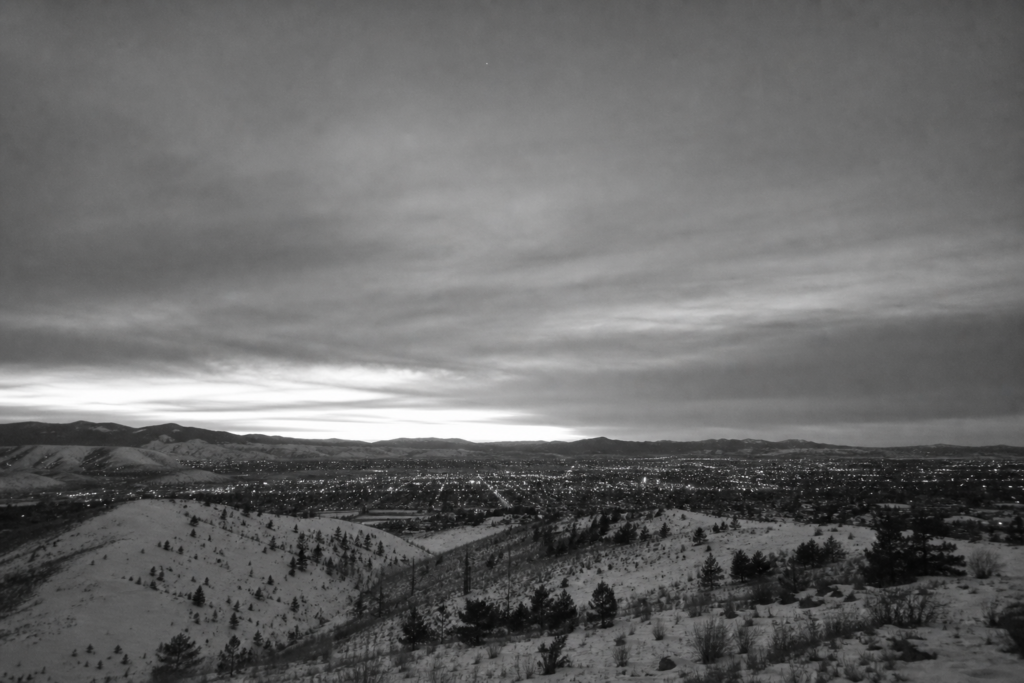
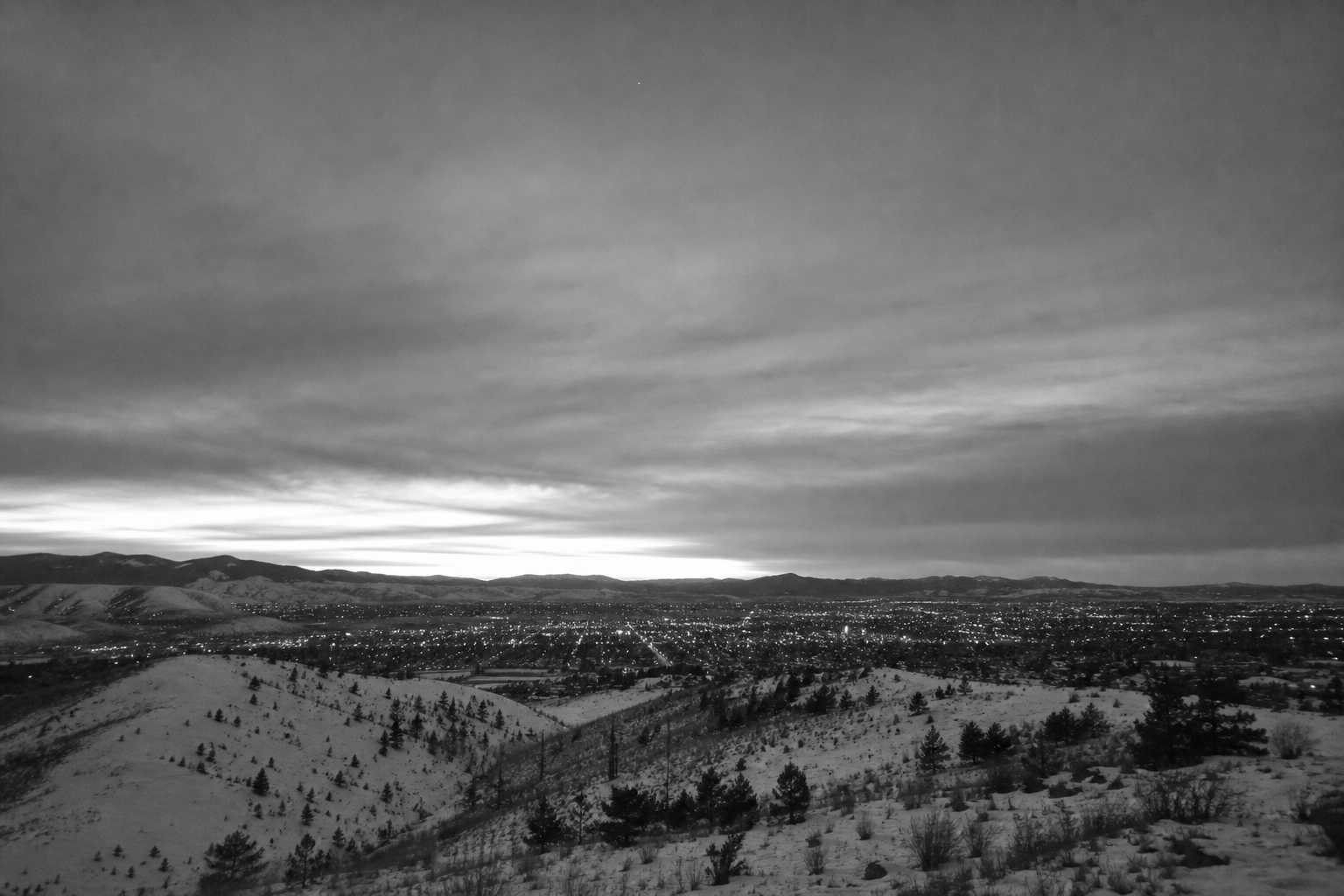
The first checkpoint is modest but important: the Helena entry is tied to February 10, 2020, and it identifies the subject only as an unspecified object. For a Helena Montana UFO sighting February 10 2020, that label supports a narrowly defined starting point, someone cataloged a sighting report, not confirmation of an extraordinary event.
“Unspecified” describes an evidentiary limit. It can mean that a witness or catalog record did not provide enough reliable detail to identify what was seen; it does not establish an aircraft, a celestial object, a secret program, or a nonhuman origin. A submitted or cataloged sighting record documents that someone made a report. Independent verification would require supporting material such as a precise observation time and location, a narrative, images with provenance, corroborating witnesses, or records capable of testing ordinary explanations.
This account therefore separates the report’s documented fields from witness assertions and from facts that remain unavailable. It will examine the underlying record, note any report or publication date distinct from the claimed observation date, and identify the details needed for meaningful contextual checks: weather, astronomical conditions, aviation activity, satellites, balloons, and viewing conditions. Where those details are absent, the appropriate conclusion is uncertainty rather than escalation.
What the Helena, Montana Record Actually Reports
The available material does not include a linkable original database entry, archival capture, case identifier, or submitted narrative for the Helena listing. As a result, the exact database label cannot be independently reproduced beyond the case description supplied for this article: an “unspecified object” sighting associated with Helena, MT, USA, and the date 2020-02-10.

That date should therefore be treated as an unresolved record label, not confidently as the time of observation. A sighting database can display several different dates: the alleged event date, the date a witness filed a report, and the date an entry was posted or updated. Without the underlying record’s field names and values, there is no basis to determine which of those functions February 10, 2020 serves here.
Likewise, the available description establishes neither a precise point within Helena nor an observation time, direction, duration, object appearance, motion, photograph, or second witness. The phrase “Helena MT UFO sighting 2020” is useful for locating the claimed historical entry, but it is not a case number or an investigative finding.
The record presently supports one narrow conclusion: a report was associated with Helena and the displayed date. It does not establish the identity, distance, altitude, origin, or even independently confirmed presence of an object. Those missing fields are consequential because they are what would distinguish an event-date entry with testable circumstances from a bare catalog reference.
Reading the Source Record: What Is Known, Claimed, and Missing
Known: The surviving description supplies only a location association, Helena, Montana, a displayed date of February 10, 2020, and the broad description “unspecified object.” Those are catalog-level details, not a complete case record. No named sighting database, record identifier, access date, submission status, moderation note, or investigation outcome is available in the material reviewed here.
Claimed: There is no preserved witness report to assess. That means no attributable account of what a person saw, whether the observation was direct or relayed, or how the observer reached the “object” description. A submitted narrative can provide leads, such as a shape, color, apparent movement, or comparison with familiar aircraft, but it remains a witness assertion unless independent records support it. Here, no narrative text is available from which to extract even those provisional details.
Unknown or unverified: The record does not provide an observation time, duration, compass direction, elevation above the horizon, apparent size, path of travel, or viewing location. It also contains no accessible photograph, video, attached link, weather observation tied to a time, or account from an additional observer. Each absence limits a different kind of assessment: time and direction permit comparisons with aircraft or astronomical objects; duration and motion help distinguish a transient light from a sustained track; imagery and independent witnesses can test whether the description is reproducible.
A sighting database is therefore best treated as a historical lead: it can document that an entry was made, but it does not by itself establish that an unusual object was present or that its identity was investigated. For this Helena case, the useful distinction is between a record of a reported sighting and evidence capable of resolving what was reported. The latter is not presently available.
What “Unspecified Object” Means, and What It Does Not Mean
Labels answer different questions. An unidentified object is simply something an observer or record has not identified; it does not tell the reader whether the item was airborne, distant, physical, or even accurately perceived. “Unspecified object” is broader still: it preserves no usable description from which an identity could be tested.
An unidentified aerial phenomenon, often shortened to UAP, is a more formal term for a reported observation in the air that has not yet been attributed after analysis. That wording matters because it describes an analytical status, not an origin. A light can remain unidentified because its time, bearing, elevation, duration, and appearance were not recorded, not because it displayed unusual capabilities.
A confirmed investigated case is different. It would have an identifiable reporting trail and enough underlying material for investigators to compare the observation with ordinary possibilities, such as aircraft activity, astronomical objects, balloons, atmospheric effects, or misperception. An unresolved result after that work would mean the available evidence did not support a determination; it would not establish a non-human, extraterrestrial, or classified-government explanation.
For the Helena entry, “unspecified” is the weakest of these categories because no underlying description or investigative file is available. It cannot reliably be elevated to a UAP case, and it offers no factual basis for claims about what the object was made of, who operated it, or why it was present. The appropriate reading is limited: the classification records uncertainty in the surviving account, rather than evidence of an extraordinary event.
How the Sighting Could Be Contextually Checked
A contextual review begins by fixing the observation geometry. A reliable local time, witness position, compass bearing, elevation above the horizon, and duration allow an analyst to reconstruct what portion of the sky was visible. A time accurate to the minute is far more useful than a date alone: a brief light low in the western sky calls for a different comparison than a stationary-looking light high to the south. None of those inputs is publicly preserved for this Helena entry, so the following are appropriate tests, not completed matches.
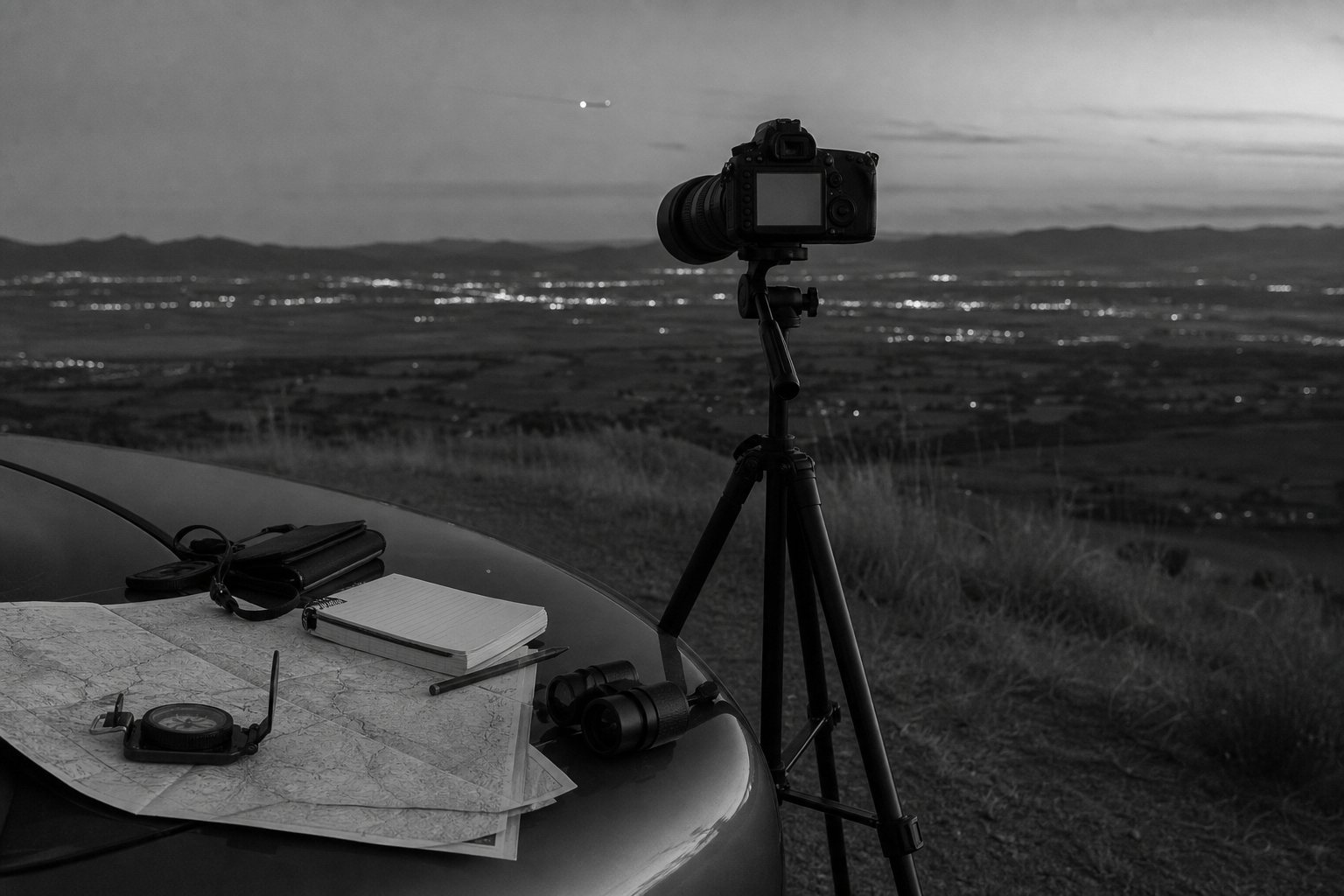
Meteorological conditions could be compared with National Weather Service observations nearest to Helena for the verified observation time. Cloud layers, visibility, wind, precipitation, and temperature structure can help distinguish a clear-sky viewing opportunity from one in which aircraft lights, ground lights, clouds, or atmospheric effects might appear distorted. The date by itself cannot tie any weather observation to the reported object.
A sky reconstruction would use astronomical objects, especially bright planets, the Moon, and conspicuous stars, at the precise time and bearing. Their expected position, setting time, and brightness provide a useful fixed reference. Satellite-pass predictions require the same precision because a pass can last only minutes and may be visible from one part of the sky while remaining unseen elsewhere.
Historical aircraft tracking can test whether a transponder-equipped flight followed a compatible route, altitude, and direction. It is a comparison tool rather than a complete air-traffic record: a coincident track is meaningful only if its timing and apparent position align with the observation, while no visible track does not by itself exclude an aircraft.
Balloons and initially unidentified aerial objects require similarly specific comparison. Wind direction and speed at relevant altitudes, known launches, and the object’s reported drift or apparent steadiness would matter; without motion and viewing details, a balloon hypothesis cannot be meaningfully weighed. Local events, such as organized light displays, aviation activity, or public gatherings, would likewise need a location and time overlap rather than a broad date-level association.
For the reported Helena Montana UFO sighting of February 10, 2020, the absent observational fields prevent these checks from producing a case-specific conclusion. They instead identify the minimum evidence needed to turn a catalog entry into an analyzable event.
Contextual Assessment: Plausible Explanations and the Limits of Resolution
Competing explanations can be ranked only when the reported appearance and behavior give them something to explain. An aircraft account would gain support from a compatible route, steady navigation-style lights, engine sound, and motion consistent with a distant flight; it would be weakened by a reliable account of silent, close-range movement that no matching flight could reproduce. No such comparison is possible here.
A celestial object would fit a fixed or slowly changing light at a predicted position, while a satellite would fit a brief, smooth track across the sky at the relevant minute. Both explanations depend on a viewing direction and time, and neither can be tested from a date-level Helena entry. A balloon would call for evidence of drift, changing shape, or illumination consistent with the reported conditions; without those observations, it is merely one possible category.
Weather-related effects and ordinary perception also remain plausible but untestable. Reflections, haze, clouds, distant lights, and changing focus can alter apparent brightness, color, size, or motion, particularly when an observer lacks a stable reference point. Those possibilities are not accusations of error: they describe ways a sincere observation can be difficult to identify from memory alone.
The strongest discriminators would be independent witnesses with consistent accounts, original photographs or video with usable timing and location information, or records that place a known object in the same part of the sky. Conversely, an image without provenance, a broad date, or a later recollection would add little ability to separate these explanations.
For the unidentified object reported in Helena, Montana, the defensible status is unresolved because the available information is insufficient for a case-specific attribution. That unresolved status does not make any conventional explanation established, but it also does not make the report anomalous, extraordinary, or confirmed.
Where This Report Fits in Official UAP Work and Disclosure Claims
National UAP discussion does not change the evidentiary status of a local civilian listing. AARO UAP work and unresolved anomalous cases concern material available through government channels and assessment processes; it is not a mechanism that automatically converts every public report into an official case file. Nothing in the surviving Helena description indicates that government personnel observed the event, that a government sensor recorded it, or that the report entered such a process.
The distinction matters because a public sighting database preserves a person’s report or a catalog entry, whereas a government-held incident record may include operational context such as trained observers, instrument data, location, timing, or subsequent analysis. Neither category guarantees an identification, but the second can offer details that permit testing. This Helena entry supplies none of those governmental or technical links.
UFO disclosure and UAP disclosure are broader debates about what records public institutions possess, release, and explain. They do not supply missing particulars for an individual report. In this case, the absence of a public investigative file is not evidence of suppression, government activity, or non-human intelligence; it is simply an evidentiary gap in a sparse historical record.
Bottom Line: A Historical Report, Not a Verified Conclusion
The final assessment is necessarily modest: the available material preserves a historical association between Helena, Montana, an unspecified object, and the displayed date of February 10, 2020. It does not preserve enough of the underlying report to establish what was seen, or whether the displayed date marks observation, submission, or publication.
A stronger historical citation would identify the database, stable record URL or case number, record creator, displayed event date, and the date the page was accessed. An archived capture is useful because live database entries can be edited, moved, or removed; retain its capture timestamp alongside the original link. A weak citation is a screenshot without a URL, date, or provenance.
Until such a primary record is located, the UFO report Helena, MT, February 10, 2020 should remain a reported, unresolved listing rather than a verified conclusion. The source record, not a dramatic interpretation, is the proper place to begin.
What Can, and Cannot, Be Concluded From the Helena Report
The practical dividing line is between an entry that cannot presently be explained and an event shown to be anomalous after meaningful comparison. The Helena material falls into the first category only. It preserves too little information to establish an object’s identity, physical reality, altitude, distance, or origin, and it does not establish that the displayed date is the observation date rather than a reporting or publication date.
That limitation also prevents a responsible ranking of ordinary possibilities. Aircraft, astronomical objects, satellites, balloons, weather effects, and misperception each leave different observable signatures, but there is no preserved time, viewing direction, duration, appearance, motion description, image, independent witness account, or local contextual match against which to test those signatures. An unresolved record is therefore not a finding that any one explanation failed; it is a finding that the available record cannot perform the comparison.
A future assessment would need a traceable original entry plus a witness account that fixes when and where the observation occurred, where in the sky it appeared, how it moved, how long it lasted, and whether imagery or other witnesses can be independently evaluated. Those details would permit weather, sky, and flight comparisons tied to the event rather than to a date label. Until then, the Helena Montana UFO sighting of February 10, 2020 is best retained as an uncorroborated reported observation, not evidence of a confirmed anomalous object.
Frequently Asked Questions
-
What was reported in the Helena, Montana UFO sighting on February 10, 2020?
The available listing associates Helena, Montana with an “unspecified object” and the displayed date February 10, 2020. It does not preserve a witness narrative, observation time, precise location, appearance, motion, duration, image, or second witness.
-
Is the Helena unspecified object sighting a confirmed UAP case?
No. The report is an unresolved catalog listing with insufficient information, not a confirmed UAP case or verified anomalous event. “Unspecified object” records an evidentiary limit and does not establish an aircraft, extraterrestrial craft, secret program, or any other identity.
-
Was February 10, 2020 the date of the Helena sighting?
It cannot be confirmed that February 10, 2020 was the observation date. Without the original record and its field names, the date could represent the alleged event, report submission, publication, or a later update.
-
What details are needed to identify an unexplained object sighting in Helena?
Useful details include an exact local observation time, witness location, compass direction, elevation above the horizon, duration, appearance, motion, and original media with timing and location data. These specifics allow comparisons with weather, bright planets, satellites, aircraft tracks, balloons, and local activity.
-
Where should I look for a reliable original Helena MT UFO report?
Look for a traceable database entry with a stable URL or case number, the record creator, displayed event date, and access date. An archived capture with its timestamp is stronger than a screenshot without a source URL, date, or provenance.