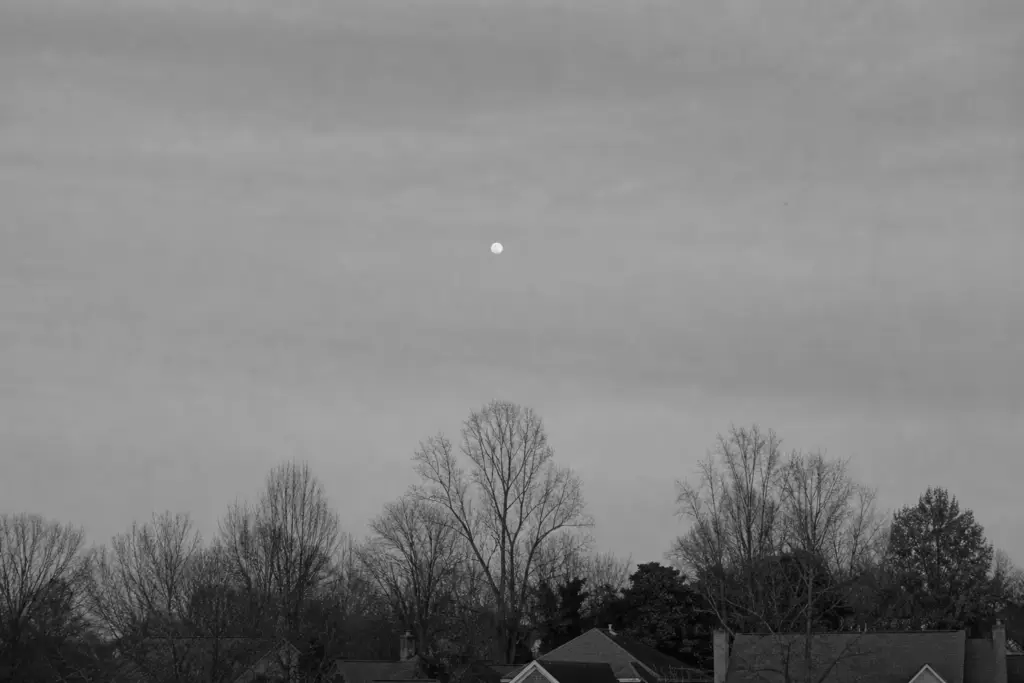
A reported observation near Greensboro on January 15, 2010 describes a spherical object that appeared to remain stationary. That is unusual enough to merit a careful look, but it is also a limited claim. “Spherical” records an observer’s impression of outline, not an established physical shape or size; a distant light, balloon, or object viewed head-on can produce a round-looking appearance. “Stationary” likewise describes apparent motion from one viewing position. It does not, by itself, show that an object was motionless, distant, or beyond ordinary identification.
This examination treats the Greensboro NC UFO sighting of January 15, 2010 as a historical case file rather than evidence of an extraordinary event. It will separate the wording of the reported observation from facts that can be independently established, beginning with the earliest surviving account and any associated time, location, duration, direction, or witness details. It will then ask what corroboration remains, such as additional witnesses, images, official records, or an investigation, and test ordinary possibilities against the date-specific weather, sky, and aviation context. A report can remain unidentified because its details are too thin to decide; that outcome is different from demonstrating an anomalous cause.
What Is Actually Being Claimed About the Greensboro Sighting
The claim under examination has a narrow scope: someone reportedly observed an object in the Greensboro area on January 15, 2010, described it as spherical, and perceived it as holding position. Those are the reported attributes, not measurements of its size, distance, altitude, material, or speed, and not an identification of what produced the appearance.
A sighting entry and a corroborated event are different things. An entry preserves an allegation, usually with whatever date, place, and description a submitter supplied. Corroboration would require independently traceable support: a second witness whose account was not copied from the first, original image or video files with usable metadata, a contemporaneous official record, or other evidence that can be compared with the observation. The existence of a report establishes only that the report was made.
The surviving claim, as presently framed, does not establish extraterrestrial, non-human, military, or government involvement. Nor does an unidentified description establish that a physical object with unusual capabilities was present. For this Greensboro UFO sighting in January 2010, the evidentiary question is therefore practical: what is the earliest available account, exactly what does it say, and which details can be independently tested?
That distinction sets a high but ordinary standard for the case file. Details that can be anchored to a time, direction, duration, and observation point can be compared with weather, astronomical objects, aircraft activity, and balloon behavior. A bare description without those anchors may remain unverified, not because it is disproved, but because the record cannot discriminate reliably among explanations.
Reconstructing the Report: Time, Place, Appearance, and Motion
The surviving material does not provide a retrievable original witness submission, database entry, submission date, edit history, or verbatim narrative. That absence fixes the reconstruction at a basic level: January 15, 2010 and the Greensboro-area reference are the only reported date-and-place anchors available here.

- Date: January 15, 2010, as reported.
- Time: unknown. There is no reported local time, and therefore no basis for classifying the observation as daytime, twilight, or nighttime.
- Place: “near Greensboro,” North Carolina. A street, neighborhood, observing point, and precise distance from Greensboro are unknown.
- Observers: unknown. The record does not establish whether one person or multiple people saw the object.
- Appearance: spherical or round-looking, as reported. Color, brightness, surface detail, lights, and any change in appearance are unknown.
- Apparent size: unknown. No angular-size comparison, such as coin-sized, star-sized, or Moon-sized, survives.
- Direction and elevation: unknown. There is no compass bearing or estimate of how high above the horizon it appeared.
- Duration: unknown. The account does not state whether the observation lasted seconds, minutes, or longer.
- Motion: the stationary spherical object near Greensboro, NC, was reportedly perceived as stationary; whether it held a fixed position against background landmarks, drifted too slowly to notice, or was observed only briefly is unknown.
Those omissions matter because “stationary” becomes more informative only when tied to a viewing interval and a fixed reference, such as a roofline, tree, or star field. A light that remains aligned with a chimney for ten minutes presents a different observational problem from one noticed for a few seconds in open sky. Likewise, “spherical” describes a visible outline, not a measured three-dimensional form: a distant point light, a sunlit balloon, or an object viewed nearly head-on can all look round.
On the available witness-report summary, there is no documented color, trajectory, scale, duration, direction, or independent observer account to test. The case file therefore preserves a narrow description of a stationary orb sighting near Greensboro, rather than a sufficiently detailed observation from which distance, speed, or identity can be inferred.
What Can Be Corroborated From the Surviving Record
Corroboration would require a second record that can be tied to the same event by date and at least some combination of location, time, direction, or appearance. Nothing in the surviving case material supplies that link. No independently attributable witness account, contemporaneous photograph, video file, or official case report accompanies the brief Greensboro-area description.
A photograph or video could strengthen a report only if its original file, capture time, location history, and unedited sequence were available. An isolated repost or image without provenance can show that an image exists, but cannot reliably establish where, when, or even whether it depicts the reported object. No such traceable media is preserved with this sighting database record.
Contemporaneous local-news coverage, police or emergency-call logs, airport observations, and formal aviation or military reports would serve different purposes. News and calls can establish that multiple people reported an unusual sight at roughly the same time; aviation records can sometimes place known aircraft activity in an area; an official investigation can preserve interviews and supporting material. None of those record types is currently substantiated for this Greensboro North Carolina UAP sighting in 2010.
The absence of those materials does not demonstrate that nobody saw anything. A brief personal observation may never be reported to authorities or journalists, and many reports leave no durable public trace. It does, however, set a firm evidentiary limit: the account cannot be independently timed, located, compared with another observer’s view, or tested against an instrumented record, limits consistent with the need for systematic, data-driven UAP study.
The corroboration status is therefore unverified, rather than confirmed or disproved. The surviving description remains a reported observation, not a documented incident with independently established circumstances.
Conditions Near Greensboro on January 15, 2010
Environmental comparisons require a time and line of sight that this case file does not preserve. The available material gives no observation hour, viewing direction, duration, or precise Greensboro-area location. As a result, weather conditions cannot be connected responsibly to the reported object rather than treated as general background for the date.
A useful weather test would begin with an archived airport observation, or METAR: a standardized report recording cloud cover or ceiling, prevailing visibility, wind direction and speed, and present weather such as rain or snow. Clear visibility would make a distant light or high balloon easier to see; a low cloud ceiling could conceal aircraft or create ambiguous illumination; wind is relevant because a free balloon can appear nearly fixed when it travels toward or away from an observer. No dated Greensboro-area METAR record is included in the surviving material supplied for this assessment, so none of those conditions can be stated as established here.
Sunset, civil twilight, Moon position, and bright planetary positions can also matter, but only when the observation time and compass bearing are known. A bright astronomical object in the same part of the sky at the documented moment could be a meaningful match; its mere presence somewhere above North Carolina would not be. Likewise, air-traffic context becomes useful only if a flight can be compared with a specific time, location, and direction.
For this January 15 2010 UFO sighting in North Carolina, those external checks remain non-dispositive. They can frame later explanation testing, but missing witness anchors prevent a reliable weather, astronomy, or aviation match.
Could It Have Been a Planet, Balloon, Aircraft, or Other Ordinary Object?
A bright planet or star is a plausible match only if it occupied the observer’s reported bearing and elevation at the reported time. Such a target can look fixed against buildings or trees and may appear round to the naked eye, especially when glare masks its point-like character. It would not, however, account for a documented change of position, structured surface, or close-range size cues, none of which survives in this report. An observation time, compass direction, and elevation above the horizon would allow an ephemeris comparison; without them, an astronomical identification is neither supported nor excluded.
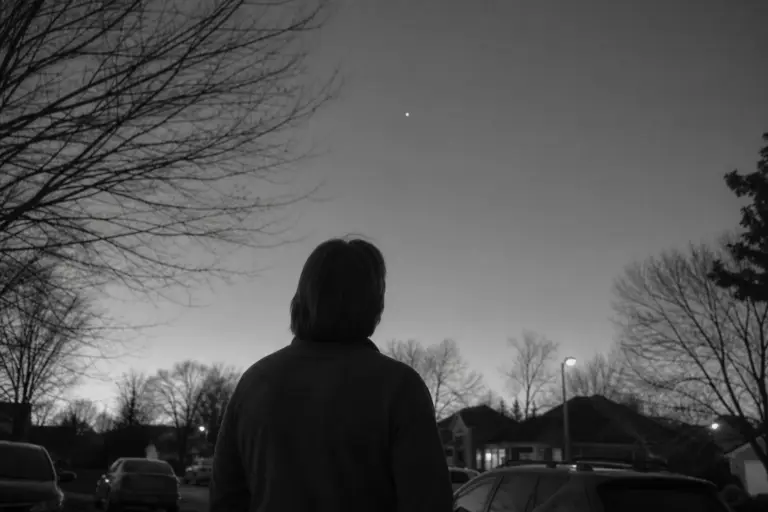
A balloon could present a circular or spherical outline and, at sufficient distance, drift so slowly or directly along the observer’s line of sight that it seemed stationary. That explanation depends on wind at the object’s altitude, not merely ground-level conditions, and on whether the observation occurred in daylight or involved a reflective or illuminated balloon. A reported sustained fixed position relative to a roofline would weaken a free-floating balloon explanation; a brief impression of stillness would not. Duration, apparent size, color, and any later movement are the missing discriminators, as unidentified balloon incidents illustrate.
An aircraft approaching nearly head-on can show little sideways motion while its landing or navigation lights merge into one bright, round-looking point. A helicopter may similarly appear to hover, although rotor noise, blinking lights, or later lateral movement would be useful distinguishing features. Flight-path information could test either possibility only against a time and viewing direction. Drones are also not ruled out merely by the word “stationary,” but the surviving description supplies no distance, sound, light pattern, or maneuver that would separate one from an aircraft or a balloon.
Lanterns generally suggest a warm, self-luminous point that rises or drifts with air currents; an optical effect, such as glare, reflection, or a bright light viewed through thin cloud, can also make an ordinary light seem larger and more spherical. Neither proposal can be linked to a known local release, event, light source, or sky condition here. Each remains a possible misidentification, but a balloon explanation should be tested against the evidence, since no ordinary explanation fits more strongly than the others because the report lacks the observational details needed to test it.
Assessment: Unverified, Probably Explainable, or Unresolved?
The decisive issue is whether the record can distinguish among the ordinary possibilities already considered. A probably explainable case contains enough fixed details, such as a January 15, 2010 observation time, a Greensboro-area location, a compass bearing, and later motion, to favor one conventional cause. A genuinely unresolved observation instead has credible, detailed evidence that remains unexplained after those comparisons. An unverified report lacks the information needed either to identify the stimulus or to establish an anomalous event.
This Greensboro NC UFO sighting of January 15, 2010 is best classified as unverified, not probably explainable and not genuinely unresolved. The surviving record supplies only the date, the Greensboro-area reference, and the reported impressions of a spherical object that appeared stationary. It supplies no retrievable original submission, witness name, observation hour, viewing direction, duration, color, scale, photograph, video, radar record, official report, or independently attributable second witness. A planet, balloon, aircraft, lantern, or optical effect remains consistent with parts of that sparse description, but no one explanation fits it better than the others.
The classification could change materially with an original report showing when it was submitted and when the observation occurred; a second independent account matching the same time, place, and bearing; or a photo or video accompanied by its original file, capture metadata, and unedited sequence. Those records could be compared against archived weather observations, astronomical positions, and flight activity. Until such evidence appears, the object is unidentified only because the observation cannot be reliably tested, not because the record establishes an unexplained aerial phenomenon.
How Historical UAP Reports Can Be Checked Responsibly
A responsible retrospective inquiry starts by ranking records rather than collecting repetitions. For the Greensboro report, an original submission with a date, author, and unaltered wording would outrank a later database summary; copied entries do not become independent corroboration. Preserve the observer’s exact description, then separate it from later labels or interpretations.
The useful anchors are a precise observation point, local time and time zone, compass direction, elevation above the horizon, duration, and any reference object used to judge motion. A report that an object stayed beside a roofline for ten minutes is testable in ways that “stationary sphere” is not. Those details permit a targeted comparison with archived METAR weather observations, astronomical positions, and flight paths or airport activity.
Independent reports must originate with different observers and agree on more than the date: matching time, bearing, and appearance make a common event more plausible. Original image files, unedited video, dispatch logs, and contemporaneous records can add context, but each must be tied to the same place and interval.
A documented unknown retains enough reliable detail to test ordinary causes without reaching an identification. The Greensboro account instead illustrates insufficient data: its surviving summary can be preserved as a report, but it cannot support a reconstructable event claim.
What the Greensboro Report Can, and Cannot, Establish
The durable conclusion is narrower than the striking description. The surviving record supports only that a Greensboro-area observation was reportedly associated with January 15, 2010 and later characterized as a stationary, spherical object. It does not preserve the original account needed to establish who observed it, where they stood, when they looked, or how long the appearance lasted.
No independent witness, original image or video, radar-related record, official report, or traceable investigation has been substantiated for the same time and place. That leaves no way to test whether the reported object aligned with a bright celestial body, a drifting balloon, an aircraft on a near-head-on course, or an ordinary light altered by distance, glare, or cloud.
Those possibilities are not identifications; they are competing explanations that remain consistent with a round-looking, apparently fixed object when distance, bearing, and duration are missing. Conversely, the absence of a firm conventional match does not establish an extraordinary craft. It shows that the event cannot be reconstructed well enough to discriminate among explanations.
The appropriate final classification remains unverified: unresolved due to insufficient data, rather than evidence of a confirmed anomaly. A stronger conclusion would require independently verifiable records that connect a specific observer, location, time, and observed behavior to the January 15 report.
Frequently Asked Questions
Was there a UFO sighting near Greensboro, NC, on January 15, 2010?
A reported observation near Greensboro was dated January 15, 2010 and described as a spherical object that appeared stationary. The surviving record confirms only that the report was made, not the object’s identity or physical characteristics.
What did witnesses report seeing near Greensboro in January 2010?
The available summary describes a round-looking or spherical object that appeared to remain stationary near Greensboro. It does not preserve the observation time, exact location, duration, color, brightness, direction, altitude, apparent size, or number of witnesses.
Was the Greensboro January 15, 2010 UFO sighting officially investigated?
No substantiated official investigation, police record, aviation report, military report, radar record, photograph, or video is preserved for the sighting. There is also no independently attributable second-witness account tied to the same time and place.
Could a stationary spherical UFO be a planet, star, balloon, or aircraft?
Yes. A bright planet can appear fixed, a balloon can drift slowly or toward the observer, and an aircraft approaching head-on can show little sideways motion while appearing as a round light. The missing time, compass bearing, duration, and apparent size prevent a reliable comparison with any one explanation.
What evidence is needed to verify a historical UAP sighting?
Useful evidence includes an original witness report, a precise location, local time and time zone, compass bearing, elevation, duration, and independent matching witness accounts. Original image or video files with metadata, unedited footage, weather records, astronomical positions, and flight activity can then be compared against the observation.