If you’ve been following the nonstop UFO or UAP news cycle, you’ve probably felt the whiplash: one week it’s “disclosure is imminent,” the next it’s a new clip, a new leak, a new thread insisting it’s all connected. The problem isn’t curiosity. It’s signal. When the loudest claims come packaged as anonymous sourcing or secondhand assertions, it’s hard to know what’s real, what’s misunderstood, and what’s just attention. Then NASA stepped into the conversation, and the credibility dynamics changed.
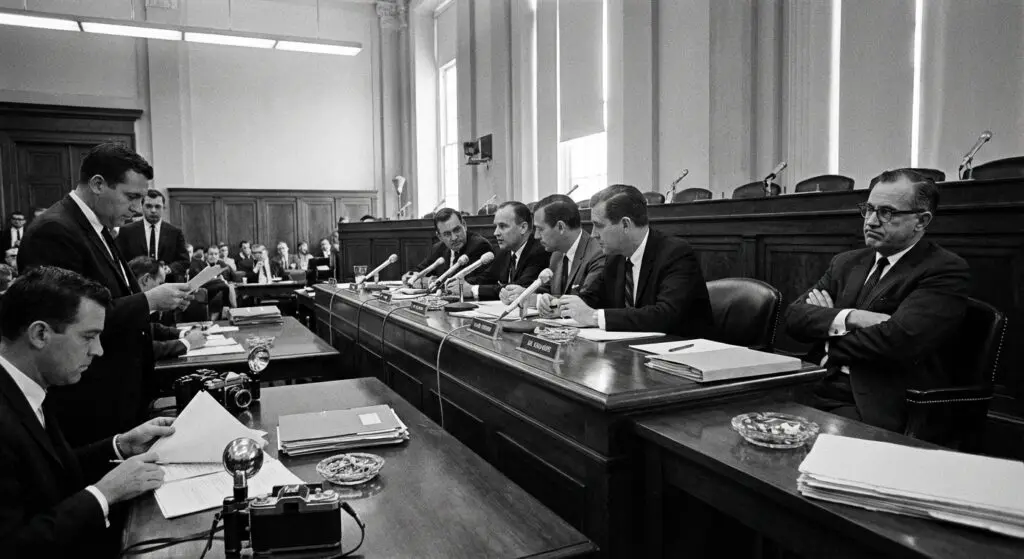
By 2022, public pressure wasn’t coming from “more weird stuff” alone. It was coming from institutions being forced to talk about UAPs in public, in plain language, on the record. The Office of the Director of National Intelligence (ODNI) assessed that the observed increase in UAP reporting was “partially attributable to increased awareness and reporting and a better understanding of potential airborne threats,” signaling a shift from treating sightings as fringe or purely mysterious. ODNI’s unclassified 2022 annual report kept the topic in the open and made it harder to dismiss as rumor. In May 2022 the House Intelligence Committee held a public hearing on UAP that amplified transparency concerns and kept the issue in public view (House Intelligence Committee public hearing, May 2022). Lawmakers repeatedly pointed to a lack of transparency from the Pentagon and the intelligence community as a primary concern, and that spotlight raised the stakes for any agency choosing to engage.
That’s why NASA entering the UAP debate mattered: it injected institutional scientific credibility and a public-facing transparency posture into a space dominated by defense and intelligence headlines. NASA isn’t built to communicate through classified briefings. It’s built to communicate through formal public affairs channels, with established rules for releasing information to the news media, which changes what “taking UAP seriously” can look like in public.
Just as important, NASA’s comfort with uncertainty is part of its brand of rigor. It frames its work as exploring the unknown, which pairs naturally with a standards-first approach: treat UAP claims as hypotheses competing against mundane explanations, and demand enough data to separate one from the other.
The takeaway you can carry forward is simple: use NASA’s involvement as an evidence-and-standards lens, not as a promise of “alien disclosure.” When a new sighting or “disclosure” claim lands, watch who is talking and what they can show. Science-forward claims come with methods, datasets, error bars, and explicit uncertainty. Intelligence-forward claims often come as assertions without public data. If it can’t be evaluated, it can’t be concluded.
What the 2022 Study Actually Was
NASA’s 2022 move on the “UFO” topic wasn’t a UFO hunt. It was a methods-first, data-focused independent study designed to raise the quality bar in a space where loud claims routinely outrun the evidence. And it was never positioned as a tribunal for classified cases or a case-by-case verdict machine.
What NASA actually commissioned in 2022 was an independent study team tasked with a practical question: if you wanted to study reports responsibly, what would that process look like? The emphasis was on how to evaluate incoming reports, what kinds of data would be useful for analysis, and what recommendations could improve future scientific work so the conversation isn’t driven by anecdotes and blurry clips.
That framing fits NASA’s broader posture of treating “unknowns” as an engineering and science problem: define the question, improve measurement, and tighten the feedback loop between data quality and conclusions. You don’t start by arguing about the most viral story. You start by making it harder for weak data to masquerade as strong evidence.
There’s also a straightforward “how independent is independent?” angle here. Independence, in this context, is about an outside group being commissioned to critique methods and data needs rather than NASA staff trying to grade their own homework. That doesn’t magically remove incentives or bias from the universe, but it does signal that the goal is standards-setting, not advocacy for a predetermined answer.
The team’s lane was shareable, public-facing work. NASA’s messaging around the effort emphasized scientific rigor and unclassified information rather than adjudicating specific classified cases. In plain terms: if the inputs can’t be discussed openly, they can’t be stress-tested openly, and this project was built for the kind of scrutiny that happens in the open.
You can see the public-facing intent in how NASA operates in general: the agency has formal rules for releasing information to news and information media, and it staffs public affairs professionals whose job is to communicate what NASA is doing and why. A study designed to be discussed publicly is a natural fit for that machinery.
That public emphasis also explains why “unclassified data” kept showing up as the practical boundary. Unclassified data is simply information that can be publicly analyzed, shared, and debated without running into national-security restrictions. That’s the only kind of dataset where you can realistically expect independent replication, peer critique, and method improvements that other researchers can adopt.
The release moment made this even clearer. NASA released the UAP Independent Study Team report on September 14, 2023, and NASA hosted a media briefing on Thursday, September 14, 2023, at 10 a.m. EDT to release and discuss the report.
NASA’s choice of language is another spot where headlines mislead people. NASA used “Unidentified Anomalous Phenomena (UAP)” rather than “UFO” to align with contemporary government terminology and to reduce stigma that can make pilots, operators, and scientists less willing to report odd observations. “UAP” is also a more practical umbrella for what’s being discussed: not just “objects,” but anomalous observations and sensor detections across domains that still need identification.
That’s not a culture-war signal. It’s communications hygiene and basic scientific pragmatism: if the label discourages reporting, you get less data; if you get less data, you get weaker analysis.
Here’s the rule you can use going forward: when a headline about the “NASA UAP study” implies classified revelations, alien disclosure, or a list of solved cases, it’s probably misframed. Read it instead as a standards-setting exercise: what evidence would actually move the needle, and what data would need to exist for serious analysis to be possible.
Spergel and the Credibility Signal
Choosing David N. Spergel to chair the team was a credibility signal aimed at discipline and process, not publicity. A chair sets the tone for how claims get handled: what counts as evidence, what gets parked as out-of-scope, and what language makes it into the final writeup. If you care about whether a UAP (unidentified observations) effort stays tethered to what can be checked, the chair matters as much as the member list.
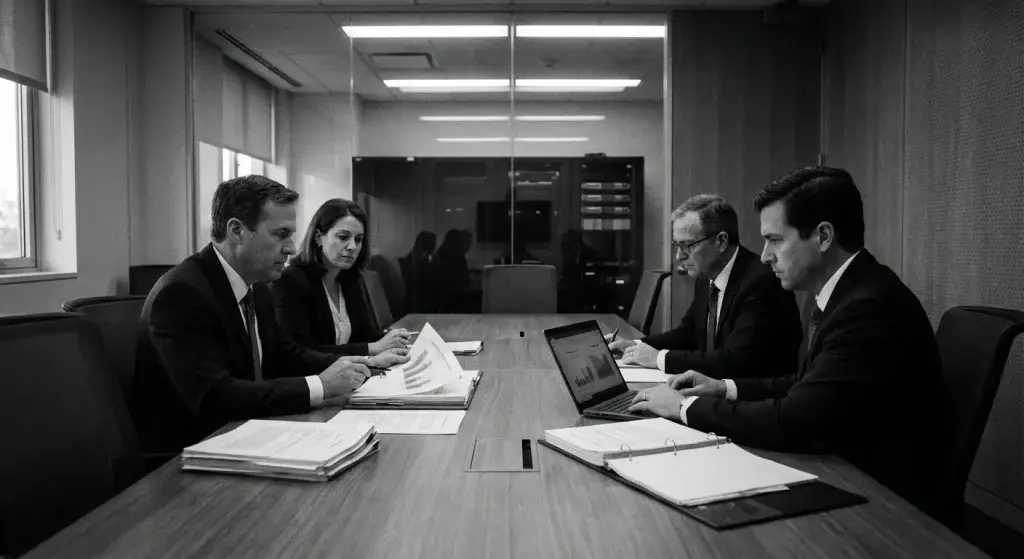
Independent panels don’t run on vibes. They run on a charge and a consensus process, and the chair is the person who makes both real. In practice, that means keeping the group aligned to the panel’s assigned questions, pushing for rigor when discussions drift toward speculation, and driving the hard work of turning disagreements into precise consensus language. When the panel is forced to say “we know X,” “we don’t know Y,” and “we can measure Z next,” that’s chair-led discipline showing up on the page.
Spergel’s background lines up with that kind of chair work. He is President of the Simons Foundation and the Charles Young Professor of Astronomy Emeritus at Princeton University. Simons Foundation bio and Princeton profiles document those roles and his prior leadership positions. He also has direct experience in high-stakes science governance and public-facing explanation. Spergel has served on the NASA Advisory Council and was chair of the National Academies’ Space Studies Board, providing him with background advising federal civilian space programs.
Here’s the nuance people miss: credibility doesn’t guarantee sensational answers. It usually produces the opposite: careful conclusions, explicit uncertainty statements, and a focus on what can actually be measured next. A chair with strong scientific instincts will resist turning “unexplained” into “explained by something extraordinary,” because the whole point is to protect the boundary between curiosity and conclusion.
So when you read the report and any future updates, separate two ideas that often get blended together. Credibility that improves methods and standards is real value: tighter scope, cleaner reasoning, clearer uncertainty. Credibility used as a proxy for extraordinary conclusions is marketing. The signal to look for isn’t the biggest name on the cover, it’s whether the work stays on-mandate and earns every claim with evidence-grade language.
How It Fit the Government UAP Push
The easiest way to make sense of NASA’s 2022 UAP study is to see where it landed: right in the middle of a broader U.S. government shift. Congress and the national security system started treating “UAP” less like a punchline and more like an identification and transparency problem, and NASA offered a parallel lane focused on public science, methods, and credibility.
The key institutional counterpart on the defense side is the All-domain Anomaly Resolution Office (AARO). The Department of Defense announced AARO’s establishment on July 20, 2022. In the DoD announcement the office is described as intended to “synchronize efforts across the Department of Defense and with other U.S. departments and agencies to detect, identify and attribute objects of interest,” with the goal of coordinating collection and identification across domains and bureaucracies. DoD announcement, July 20, 2022. In plain terms: AARO is built to coordinate collection and identification across domains and bureaucracies, while NASA’s posture is to set scientific standards and transparency norms in the open, without running an intelligence investigation.
This is where people get tripped up by the shared label. “UAP” can mean a sensor track that needs rapid defense-side identification, or it can mean a public-facing question about data quality and analysis methods. Those are different missions with different constraints, and AARO and NASA sit on opposite ends of that divide by design.
Congress turned the temperature up because “we don’t know what it is” stops being acceptable once the topic becomes a standing oversight issue. Public hearings and disclosure-policy proposals raised expectations for clearer answers, more consistent reporting, and serious record review, especially as public claims and counterclaims increased the pressure for something verifiable. That dynamic creates demand for approaches that can speak publicly and credibly, not just brief behind closed doors.
One recurring idea in hearing discussions and UAP disclosure proposals was a UAP Records Review Board, framed as an independent oversight mechanism to increase transparency, accountability, and public trust around what records exist and how they’re handled. The important point for readers is the direction of travel: oversight proposals were explicitly trying to separate “what can be responsibly disclosed” from “what remains operationally or legally protected,” instead of leaving the entire subject trapped in rumors and classified silos.
That government context is also why NASA’s choices-an independent team, a public-facing scope, and leadership built for consensus and precision-read as more than just a one-off announcement. NASA’s role fits that moment because it is not a security collection agency and it is not an investigative or intelligence body. It complements the defense and oversight lanes by pushing for disciplined terminology, better data practices, and scientific framing that can be discussed in public without implying access to classified holdings.
Here’s a practical rubric you can use the next time a “UAP disclosure” headline drops:
- Identify which lane it’s in: defense identification and coordination (AARO and related national security workflows), policy oversight (hearings and review-board style proposals), or public-science methods (NASA’s standards-and-transparency lane).
- Ask what kind of evidence the lane can plausibly produce: operational assessments and classified context on the defense side, record-control and accountability findings on the oversight side, and methodology and data-quality improvements on the science side.
- Judge the claim by the right yardstick: “Why wasn’t this identified?” is a defense question; “What records exist and who reviews them?” is an oversight question; “What data would settle this?” is a science question.
Sort the story first, and a lot of the confusion evaporates.
The Data Problem NASA Tried to Solve
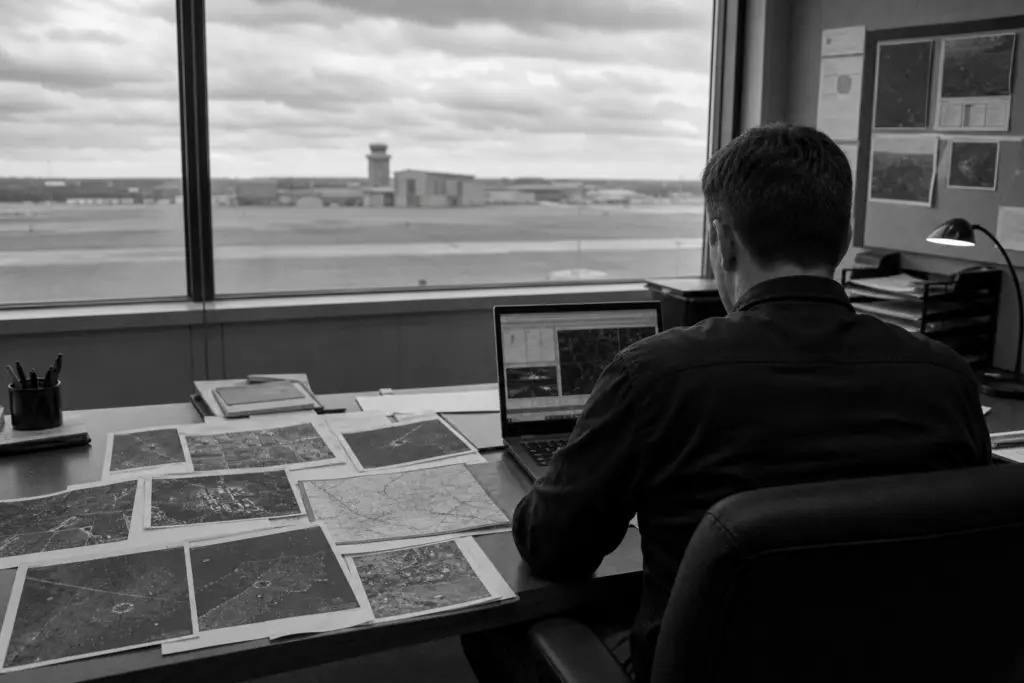
The biggest bottleneck in UAP research isn’t imagination. It’s that most UAP data isn’t analysis-ready, so even honest observers and serious analysts can’t reach confident conclusions. A clip can look dramatic and still be close to useless if you can’t answer basic questions like where it was recorded, what sensor captured it, what the camera was doing, and what else was happening in the sky at the time.
“Bad” or incomplete UAP data usually fails in a few predictable ways. First is inconsistent reporting: one witness writes “bright orb moving fast,” another says “stationary light,” and a third uploads a 12-second video with no description. Without standardized fields, you can’t compare cases cleanly, and you can’t aggregate them without smearing everything together.
Second is missing metadata, meaning the context that makes a sensor reading interpretable: timestamp, location, viewing direction, camera model, lens and zoom state, exposure settings, and even whether the footage is cropped or stabilized. A shaky phone video with no location and no time is basically impossible to validate because you can’t reconstruct geometry, you can’t match it to known aircraft tracks, and you can’t even rule out mundane lighting and perspective effects with confidence.
Third is single-sensor ambiguity. One sensor sees “something,” but you don’t have an independent line of evidence to confirm what it was. A lone video, a lone radar return, or a lone eyewitness account forces you to guess which interpretation fits best, and human perception is famously easy to fool when scale, speed, and distance are unknown.
Fourth is classification and access barriers. Even when high-quality sensing exists, the full context might not be shareable publicly, which means outside experts can’t reproduce the analysis or test alternate explanations. You’re left debating conclusions instead of inspecting inputs.
Finally, there’s reporting bias. People are more likely to report weird-looking events than normal ones, and they’re more likely to record after they’ve already been surprised. That skews the dataset toward the most confusing moments, which makes pattern-finding harder, not easier.
NASA’s 2023 UAP report frames the path forward as a data-first framework: collect higher-quality observations, standardize how they’re reported, and treat UAP as a measurement problem before it’s a mystery story. The panel’s bottom-line finding is blunt: there’s a lack of quality UAP data today, driven by inconsistent reporting and missing metadata that would allow reliable identification. The fix is not a single “perfect sensor,” it’s a process that makes cases comparable and analyzable across time and sources.
In practice, “better data” starts with a calibration mindset. You don’t just ask, “What did the sensor see?” You ask, “What are this sensor’s known limitations, and what do we need to record so others can interpret it the same way?” That’s why standardized reporting fields matter: if every report captures the same basics (time, location, direction of view, duration, sensor type, and key settings), you can do real filtering and cross-checking instead of relying on vibes.
It also means capturing context on purpose: weather, cloud cover, visibility, nearby airports or military operating areas, and any concurrent observations. Those aren’t “extras.” They’re the difference between “interesting footage” and “informative evidence.”
And it means multi-sensor fusion, combining independent sources (for example, optical plus infrared, or radar plus visual) to reduce single-sensor mistakes. When two or more sensors agree on timing and geometry, identification reliability jumps because the plausible explanations shrink fast. NASA’s report explicitly discusses multi-sensor approaches alongside standardized reporting as the route to more dependable classification.
NASA also leans into an open-science approach where possible: methods that are transparent, data that can be shared, and analyses that can be reproduced. NASA already operates with established data-release norms in much of its science work, and that posture is a practical way to build public trust when the topic is emotionally charged. Real limits still exist, especially around sensitive sources, but reproducibility is the benchmark when sharing is feasible.
NASA’s 2023 report also calls out AI and machine learning as useful tools, with a big condition attached: they only help when the inputs are good. ML can pattern-match at scale, flag outliers, and help sort large volumes of reports, but it can’t conjure missing metadata or turn a blurry, context-free clip into a measurement. Feed a model inconsistent reports and low-quality video, and you get confident-looking output built on noise. Feed it standardized records and multi-sensor data, and it becomes a force multiplier for triage and classification.
The scientific method here is unglamorous: define what you need to know, measure it consistently, preserve the context, and let independent checks do their job. That’s how you turn “unresolved” into “identified,” and how you isolate the small remainder that truly deserves deeper investigation.
So when a new UAP clip or claim starts circulating, including “UFO sightings 2025” or “UFO sightings 2026” chatter, treat it like a data audit before you treat it like a revelation. Ask yourself: Do we have an exact time and location? Do we know the sensor and settings, or is the metadata missing? Do we have viewing direction and duration, not just a cut-up edit? Do we have context like weather and nearby air traffic? And is there more than one source so multi-sensor fusion is even possible, or are we staring at a single ambiguous feed and trying to guess our way to certainty?
What NASA Could and Could Not Disclose
NASA’s contribution to “disclosure” is indirect. It can raise the bar for what counts as usable evidence and make transparent inquiry feel normal, but it can’t (and didn’t) deliver the classified, headline-grabbing revelations many people mean by “alien disclosure.” If you expected NASA to confirm non-human intelligence or unveil secret programs, you were always going to be disappointed, because that isn’t a public science advisory effort’s lane.
The real value NASA brings is procedural: it’s good at building public-facing scientific work that outsiders can interrogate. NASA has publicly pointed to its advisory relationships with the outside scientific community as exemplary and unique, and that posture matters here because it rewards repeatability and documentation over vibes.
That mindset shows up in the boring but decisive stuff that makes claims credible: conflicts-of-interest rules, disclosure requirements, and paper trails. NASA’s own Federal Register language around grants and cooperative agreements is explicit that recipients must have and enforce COI policies with disclosure requirements. Those norms don’t “prove aliens,” but they do improve the odds that whatever gets claimed can be checked, reproduced, and challenged in the open.
NASA also has a track record of publishing technical and organizational responses after major events, including making integrated documentation publicly available. In a UAP (unexplained observations) context, that translates into a simple expectation: if an explanation is real, it should survive sunlight and methodical review.
NASA even adopted the “Unidentified Anomalous Phenomena (UAP)” label to match NDAA-era government terminology. That change isn’t a revelation; it’s an interoperability move that reduces semantic drift across agencies and makes public discussion less slippery.
Here’s the boundary that actually settles a lot of online arguments: in the cited excerpts, there’s no affirmative statement that NASA’s independent study team accessed classified data. The public-facing framing centered on unclassified, rigorous analysis, not digging through intelligence case files or adjudicating whistleblower allegations.
NASA can influence methods, data practices, and transparency norms. It cannot credibly settle claims that rely on classified retrieval programs, authority-based testimony, or information the public can’t independently evaluate.
The forward-leaning part is still meaningful: the independent study team urged a more permanent role for NASA in UAP research. Read that as an institutional push for sustained, visible scientific process, not a promise of hidden answers.
Your “how to read the next headline” rule: treat NASA’s work as a credibility filter. Separate (a) improvements that make observations more testable and public from (b) extraordinary claims that demand extraordinary, independently checkable evidence. If the claim can’t be measured, replicated, or scrutinized without appeals to secrecy, it isn’t disclosure. It’s assertion.
A Practical Shift Toward Transparency
NASA’s 2022 decision mattered because it pulled the UAP conversation away from headline-chasing and toward evidence standards and public accountability, even if it didn’t deliver sensational answers. The independent study’s public findings emphasized that the team did not find conclusive evidence that UAP are of extraterrestrial origin; instead, the study highlighted that insufficient high-quality, publicly shareable data exists to support such conclusions and recommended improving data collection, metadata standards, multi-sensor approaches, and open analysis practices to reduce uncertainty and enable more definitive identification (NASA report and briefing, September 14, 2023).
That through-line matches what you’ve seen throughout this article: NASA entered a noisy space to improve the signal, launched something methods-first, put a real process stamp on it by having David Spergel chair, and stayed in NASA’s public-science lane while defense and policy lanes ran through AARO and Congress. The bottleneck wasn’t a lack of theories, it was data quality. Standardized, multi-sensor collection and open-science habits move the ball forward because they make claims testable. NASA’s broader posture already leans this way: communicate uncertainty while tightening data management and transparency practices.
Keep your footing as UFO sightings 2025 and UFO sightings 2026 stories cycle: reward better datasets and clearer methods, not louder claims. If NASA publishes updates, tools, or public datasets, that institutional follow-through is the real signal to watch.
Frequently Asked Questions
What did NASA launch in 2022 to study UAPs?
NASA commissioned an independent UAP study team in 2022 focused on scientific methods and data quality, not a case-by-case UFO investigation. The team’s job was to recommend how to evaluate reports responsibly and what data would be needed for serious analysis.
Who chaired NASA’s 2022 UAP Independent Study Team?
Astrophysicist David N. Spergel chaired the team. He is President of the Simons Foundation and the Charles Young Professor of Astronomy Emeritus at Princeton University.
When did NASA release the UAP independent study report and hold the media briefing?
NASA released the UAP Independent Study Team report on September 14, 2023. NASA also hosted a public media briefing on September 14, 2023, at 10 a.m. EDT to discuss the report.
Why does NASA use the term UAP instead of UFO?
NASA used “Unidentified Anomalous Phenomena (UAP)” to align with current U.S. government terminology and reduce stigma that can discourage reporting. The term also covers anomalous observations and sensor detections, not just “objects.”
What did NASA say is the biggest problem with UAP research today?
The report’s bottom-line finding is a lack of quality UAP data driven by inconsistent reporting and missing metadata. Without basics like timestamp, location, viewing direction, and sensor settings, many videos or sightings are not analysis-ready.
What specific data does NASA say a UAP report needs to be useful?
The article lists key metadata such as timestamp, location, viewing direction, camera model, lens/zoom state, exposure settings, and whether footage is cropped or stabilized. It also highlights the value of context like weather, cloud cover, visibility, and nearby air traffic.
How should you judge new “UAP disclosure” or “alien disclosure” headlines using NASA’s approach?
Treat NASA’s involvement as an evidence-and-standards filter: prioritize methods, datasets, metadata, and explicit uncertainty over assertions. If a claim can’t be evaluated with publicly analyzable inputs (especially unclassified data), it can’t be concluded.