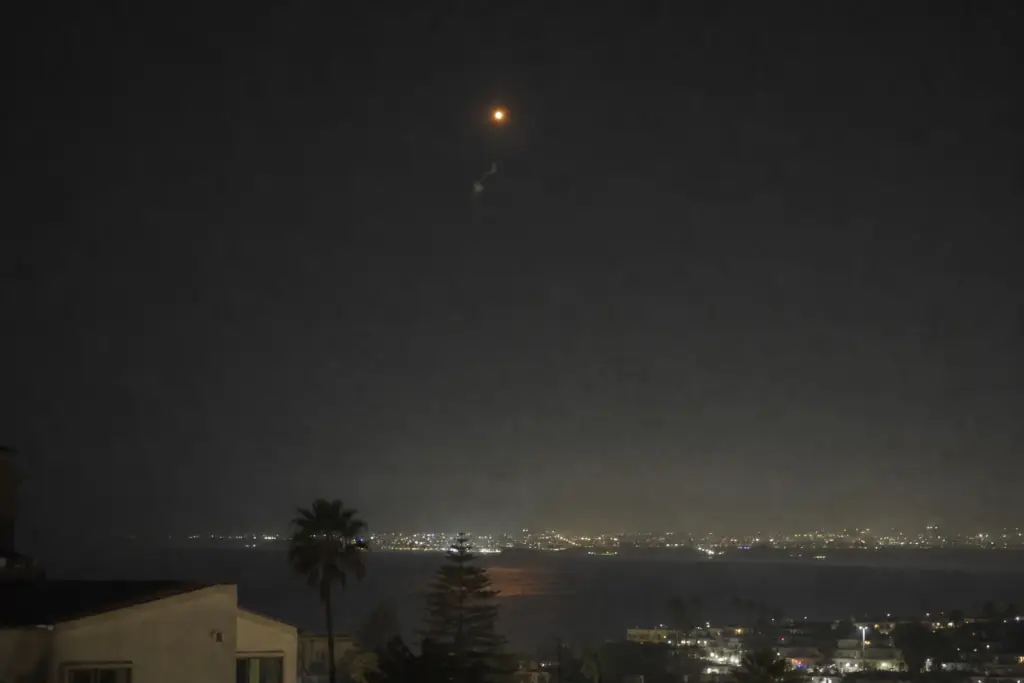
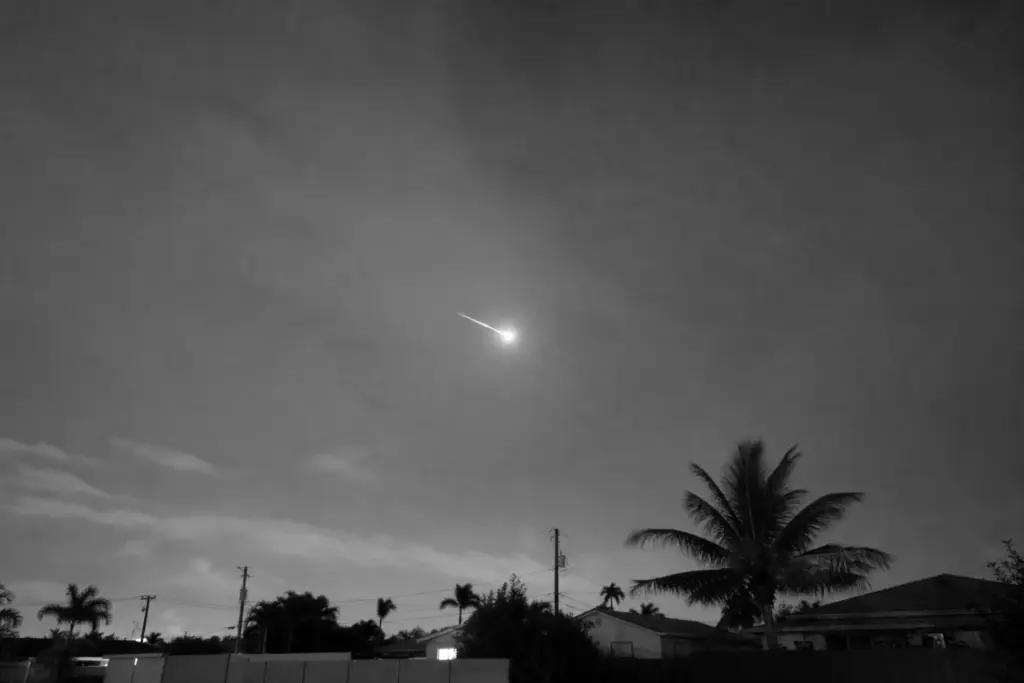
The Homestead Florida fireball February 26 2010 report concerns a bright, apparently slow-moving object with a visible tail seen over or near the south Florida community. That description is notable, but it is a description of an observation, not a verified identification of the object that produced it.
This review treats the incident as a historical sky-observation case. It separates the basic public report from details that can be independently traced, then asks what those details would mean for ordinary explanations. A meteor or bolide can produce a luminous trail; an orbital re-entry can also appear as a long-lasting, moving fireball; and distance, viewing angle, camera exposure, and missing timing data can distort impressions of speed and size.
The key distinction is evidentiary. “Unresolved” means the available record does not securely identify the object; it does not supply positive evidence for an extraordinary cause. The sections that follow assess the provenance and limits of the surviving material, identify the observations that would be most diagnostic, compare plausible explanations against the report, and state precisely what the record can, and cannot, support.
What Was Reported Over Homestead on February 26, 2010?
The surviving account is best reduced to a small set of reported observations: on February 26, 2010, an observer or observers placed a bright, fireball-like light over Homestead, described it as moving slowly, and noted a tail. Those are useful descriptors, but they do not establish an altitude, distance, direction of travel, duration, or physical size.
“Fireball” is witness language for an unusually bright, conspicuous object, not a built-in diagnosis. Likewise, a “tail” can mean a persistent luminous trail, a short glow extending behind an object, or an effect shaped by haze, motion, or camera exposure. The description is compatible with more than one ordinary aerial phenomenon; it does not, by itself, distinguish a meteor from re-entering debris or another source of light in the sky.
The word “slow-moving” should be handled with the same restraint. It records an impression of apparent motion across the observer’s field of view, rather than a measured speed. A distant object can appear to drift even when moving rapidly, while a nearby object can seem fast. Without a timestamp, a viewing direction, independent reports, or original media with reliable provenance, later labels such as “UFO” add interpretation rather than identification.
For this case, the defensible starting point is therefore a reported fireball sighting near Homestead, not a confirmed craft, meteor, or re-entry. The next question is whether the surviving record preserves enough detail to narrow that description responsibly.
What the Available Record Actually Documents
The record available for this review does not include an authenticated original video file, a traceable earliest upload, or a contemporaneous news report that can be tied securely to the Homestead observation. That absence matters because video provenance, the chain connecting a file to its creator, date, place, and unaltered form, is what turns an evocative clip into useful event evidence.
A strong visual record would identify the uploader, preserve the original posting date and caption, and ideally retain file metadata or corroborating landmarks, audio, and independent witnesses. It could establish that a camera recorded a light from a particular viewpoint. Even then, footage alone would not establish the object’s distance, size, altitude, or identity; exposure settings, focus, zoom, and camera movement can substantially alter the apparent shape and speed of a luminous target.
A dated witness report has a different value. It documents that a named or attributable person described an observation at a stated time and location. Its strength rises when separate accounts were recorded close to the event and agree on details that observers could report independently, such as direction of travel or duration. A later retelling, an undated comment, or a reposted clip may preserve the claim, but it is not a separate observation merely because it appears on another website.
Later UFO-database entries are best treated as indexes to a reported incident, not primary proof of its particulars. Their labels can make the Homestead Florida fireball sighting easier to find, yet they may also combine an asserted date, location, and interpretation from an earlier unverified submission. In the surviving material, no independently anchored combination of original media, contemporaneous local reporting, and precisely dated witness testimony establishes that the purported footage was filmed in Homestead on February 26, 2010. The case record therefore documents a reported observation, while leaving its underlying event details unconfirmed.
Which Reported Details Could Help Identify the Object?
The most useful missing datum is a precise observation time, ideally recorded as it happened rather than reconstructed later. Time allows comparison with the sky’s changing light, weather conditions, and other reports. Duration matters alongside it: an estimate of “a few seconds” describes a very different viewing experience from one lasting several minutes, but a recalled duration without a clock or video timestamp remains approximate.
Location in the sky is equally important. A witness can make an account far more testable by stating where the object first appeared and disappeared, such as over a particular road, coastline, building, compass direction, or near a recognizable star or planet, and how high it appeared above the horizon. Those reference points help distinguish a path across the sky from an object whose apparent motion was shaped by the observer’s viewpoint.
- Apparent speed: “Slow-moving” is useful witness language, but it is not a measured velocity. A distant object can appear to drift, while a nearer object may cross the same apparent span quickly; a fixed landmark or timed video provides a stronger comparison.
- Appearance and change: A luminous head, changing brightness, color, separate fragments, or a tail that remained visible after the head vanished would each narrow the description. A persistent train is a lingering illuminated trail, not simply the glowing tail seen while an object is moving.
- Context: Cloud cover, haze, wind-blown clouds, and twilight or dawn conditions affect what could be seen and how a camera rendered it. Reports of sound should include the delay after the light, if any.
- Independent agreement: Separate observers who place the fireball with tail seen over Homestead on a similar path and at a similar time provide a stronger checkpoint than repeated reposts of one account.
For the Homestead report, the surviving description preserves “slow-moving” and “with a tail,” but not the measurements and cross-checks needed to assess an aerial observation and make either feature diagnostic on its own.
Plausible Explanations for a Slow-Moving Fireball With a Tail
A meteor remains a plausible fit when the light was brief, moved on a single unbroken path, and had a compact bright head followed by a tapering luminous trail. A bolide is simply an exceptionally bright meteor. Its speed can look modest when its approach is directed partly toward the observer, when it is far away, or when the visible portion of its path is short. A sudden flare, a rapid disappearance, or a trail that fades without separate long-lived pieces would favor that interpretation; a multi-minute display would make it less comfortable.
Space debris re-entry describes an artificial object returning through the atmosphere. It can resemble a fireball, but it more often appears to progress steadily for longer and may divide into several glowing pieces traveling together. Repeated breakups, a broad field of fragments, or an extended visible passage would strengthen a space debris re-entry explanation. The surviving Homestead description does not preserve duration, fragmentation, or a track that could be compared with a published decay window, so it cannot select re-entry over a meteor.
Aircraft activity is another ordinary possibility, especially if the reported tail was a contrail, haze-lit exhaust plume, or a camera’s rendering of bright navigation or landing lights. An aircraft would be more credible if the object changed direction, maintained a level-looking course, blinked at intervals, or remained visible long enough to cross familiar landmarks. A sharply luminous head with no blinking pattern and a fast-ending path would weigh against that fit.
Optical and atmospheric conditions can also alter an otherwise familiar object. Thin cloud, humidity, twilight, lens flare, motion blur, and focus effects may elongate a light into a tail or make its movement seem smoother than it was. Those effects can explain part of an appearance, but they do not independently establish what produced the light. Here, “slow-moving” and “with a tail” leave meteor, atmospheric entry, aviation, and visual effects in contention rather than providing an exact match.
Why a Meteor Can Look Slow, and Why That Does Not Settle the Case
“Slow” is a judgment about apparent angular motion, the rate at which a light seems to cross the observer’s field of view, not a direct measurement of its physical speed. An object traveling partly toward the viewer can seem to creep across the sky, while a distant object covers little apparent distance even if it is moving rapidly. Brightness can also make a small light easier to follow, encouraging a longer-seeming impression of its passage. Without buildings, trees, stars, or a horizon feature close to the path, there is little visual scale against which to judge either distance or speed.
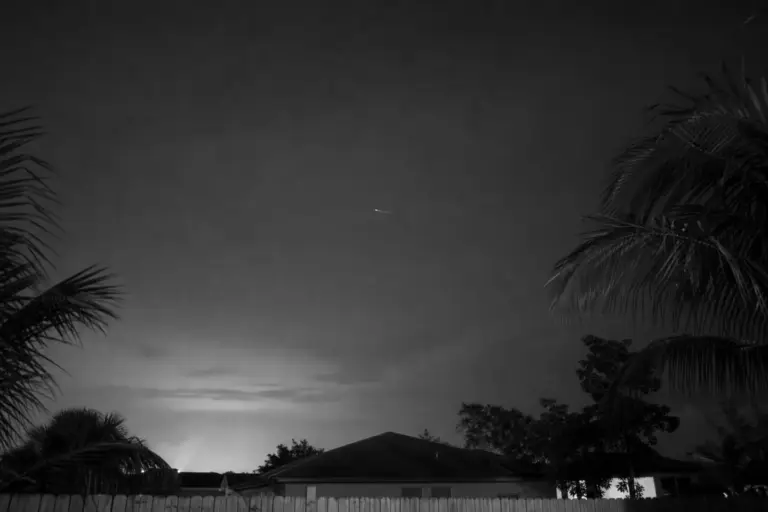
That ambiguity affects each ordinary candidate differently. A meteor may present as a compact light that appears briefly and follows a clean path; its apparent speed can be misleading when the geometry is unfavorable to a side-on view. A re-entry would be a stronger visual fit if the observation seemed prolonged and included several similarly moving luminous pieces. A distant aircraft may look slow when seen head-on or far away, particularly if its lights are bright against a dark or hazy sky; a stable, level-looking route or recurring flashes would make that possibility more persuasive.
For the February 26 2010 fireball Florida report, no reliable duration, viewing direction, reference landmarks, or motion record survives to distinguish those patterns. “Slow-moving” therefore remains a useful witness description, but not a diagnostic result: it can narrow what questions matter without determining whether the light was a meteor, re-entry, aircraft, or an altered visual impression.
Was It Confirmed as a UFO or UAP?
“UFO” and “UAP” are category labels for an unidentified object whose identity has not been established, not findings that an extraordinary object was present. A report can therefore appear in UFO sightings or UAP sightings archives because the observer could not name the light at the time. That indexing choice preserves a lead for later review; it does not convert the report into evidence of a craft.
The Homestead account has not been tied here to an attributable official investigation, scientific analysis, or primary record capable of separating a meteor, re-entry, aircraft-related light, or visual effect. Formal identification would require evidence that discriminates between those alternatives, such as a dependable time and direction, independent observers, original imagery with usable context, or a match to an external event. The available description does not provide that level of resolution.
It is consequently reasonable to call the observation unresolved, and reasonable for Florida UFO sightings indexes to retain it as an unclassified report. It is not reasonable to treat that unresolved status as support for alien disclosure, non-human intelligence, or government concealment. Those claims require independent, positive evidence; a missing identification supplies none.
Most Defensible Conclusion: A Reported Fireball, With Identity Unresolved
The appropriate case-file label is unresolved, rather than identified or probable. That classification retains the reported bright aerial light over or near Homestead, described as slow-moving and tailed, without treating those appearance details as a physical identification. They support “fireball-like” as witness language, but do not distinguish reliably among a meteor, re-entering debris, aircraft-related lighting, or an appearance altered by atmosphere or camera effects.
No secure identification follows from the surviving description. The object’s altitude, physical speed, path, duration, direction, origin, and even the precision of its reported place and date remain unestablished. A meteor is plausible but not demonstrated; re-entry and aviation-related explanations likewise cannot be ranked confidently. Nothing in the available record supports an extraterrestrial origin or a concealment claim.
The assessment could change if an original image or video file preserved creation metadata and visible landmarks; independently recorded witness accounts fixed the time and direction; or radar, flight-tracking, astronomical fireball, and orbital-reentry records produced a dated match. Until such material is located and connected to this specific report, unresolved remains the most defensible classification.
What Can Actually Be Concluded About the Homestead Fireball?
The distinction worth preserving is between a credible report of an unusual-looking light and a confirmed account of what produced it. The Homestead description clears the first threshold: it is specific enough to retain a bright, tailed, apparently slow-moving aerial phenomenon as the subject of the report. It does not clear the second. Identification requires details that discriminate among candidates, such as a timed path, duration, direction, independently fixed location, or a record that links the observation to a known event.
Neither of the two most memorable features resolves that gap. A visible tail may describe a meteor’s luminous trail, dispersed material from re-entering human-made debris, an illuminated contrail, or an effect of haze and imaging. Apparent slowness likewise describes how motion looked from one vantage point, not measured velocity. A brief, straight passage would be more consistent with one set of explanations; a sustained display with separate fragments would shift the comparison toward another. The surviving account does not preserve enough dependable detail to make that comparison decisive.
The final conclusion is therefore narrow: the event remains an unidentified reported fireball-like observation. That label preserves the witness description without converting missing evidence into support for any particular source, ordinary or extraordinary.
Frequently Asked Questions
What was the fireball seen over Homestead, Florida, on February 26, 2010?
It was reported as a bright, fireball-like light over or near Homestead that appeared to move slowly and had a visible tail. The available record does not establish its altitude, distance, direction, duration, size, or identity.
Was the Homestead 2010 fireball confirmed as a UFO or UAP?
No. The sighting remains unresolved because no attributable official investigation, authenticated original media, or primary record securely identifies the object.
Why can a meteor appear to move slowly across the sky?
Apparent slowness measures angular motion across a viewer’s field of view, not physical speed. A distant meteor or one traveling partly toward the observer can appear to drift despite moving rapidly.
Can a slow-moving fireball with a tail be space debris instead of a meteor?
Yes. Re-entering space debris can look like a fireball and is more likely to show a longer passage, repeated breakups, or multiple glowing fragments moving together, while meteors are often brief with a compact bright head and tapering trail.
What evidence is needed to identify a historical fireball sighting?
Useful evidence includes a precise time, duration, viewing direction, visible landmarks, independent witness reports, and original image or video files with creation metadata. Radar, flight-tracking, meteor records, and orbital re-entry data can identify the source when they match the documented time and path.