Ryan Graves Testifies to Congress in 2023 Hearing on UAP Encounters and Calls for Improved Military Reporting
Explore Ryan Graves UAP testimony to Congress in 2023, his aviation safety concerns, reporting gaps, and what his claims did not establish.
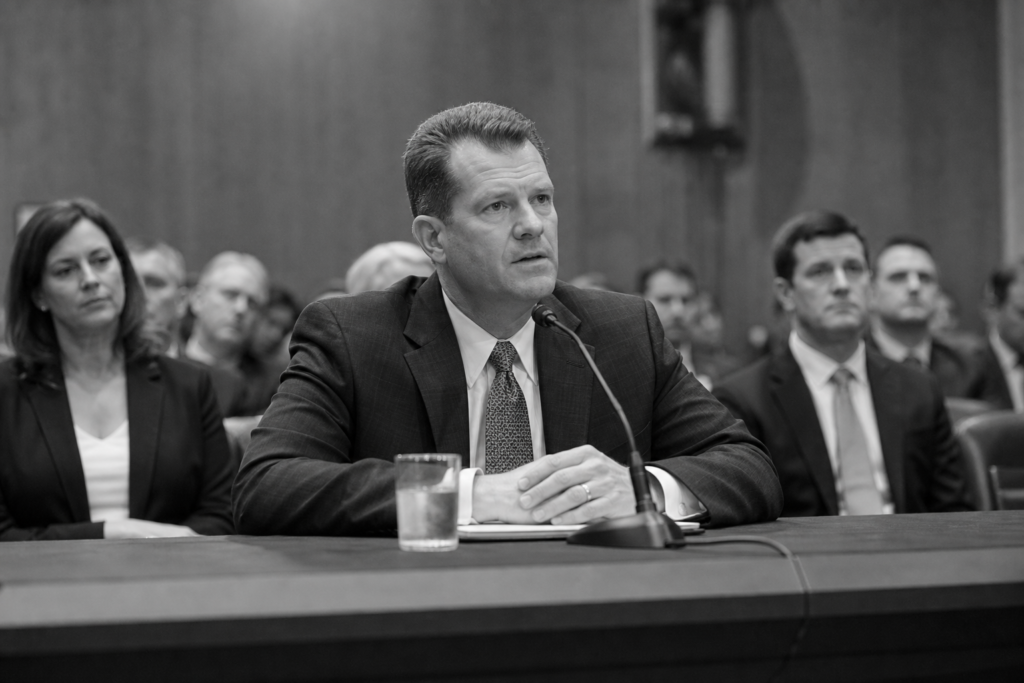
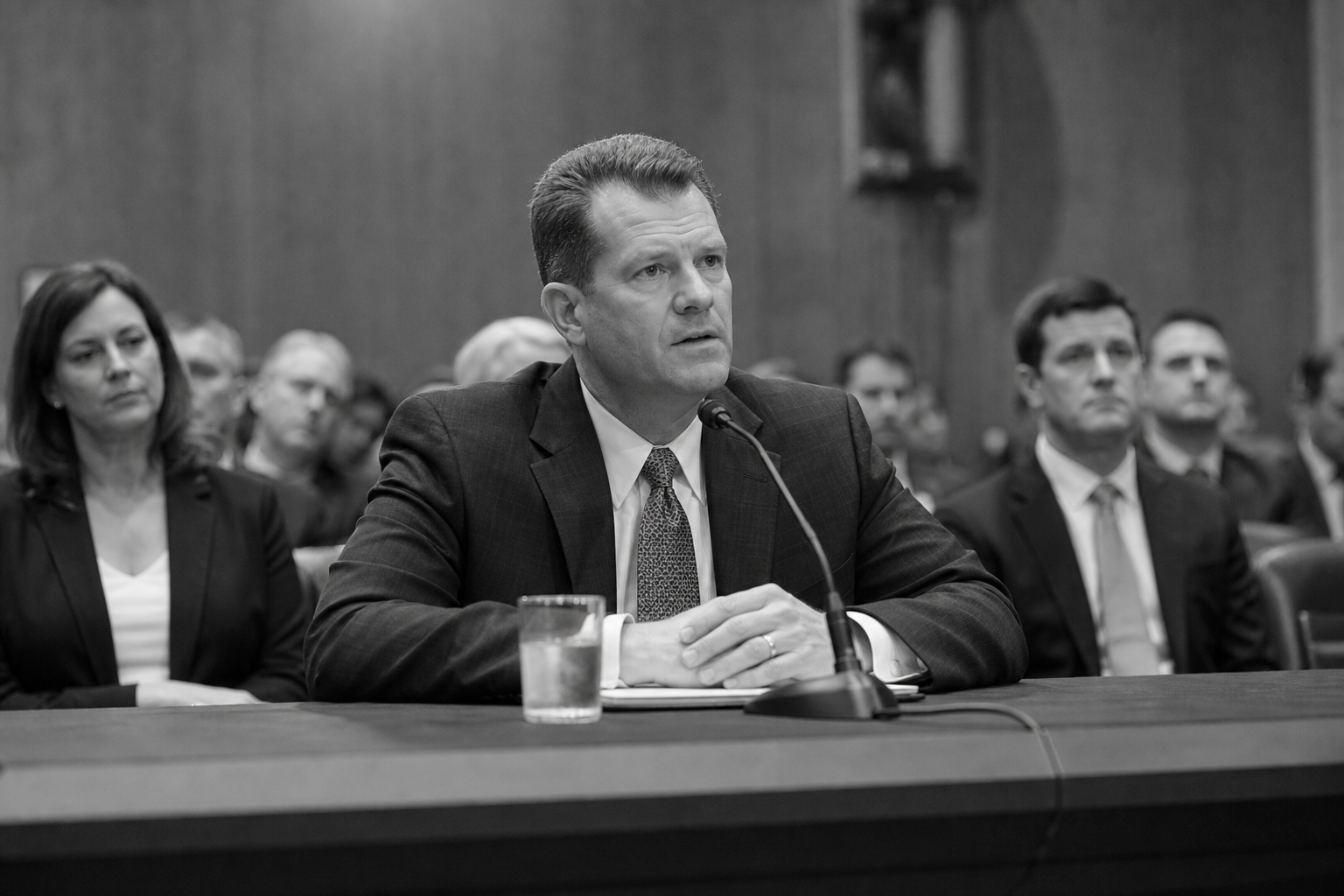
At the House Oversight Subcommittee on National Security, the Border, and Foreign Affairs hearing on July 26, 2023, Ryan Graves appeared as a former Navy F/A-18 pilot and aviation-safety advocate. His Ryan Graves UAP testimony was narrowly grounded in the operational problem posed by aircrew encounters with objects or phenomena that remained unidentified.
“UAP” describes an observation whose identity has not been determined; it does not establish an extraterrestrial origin, non-human intelligence, or any particular technology. Graves did not present such a conclusion. Instead, he described pilots encountering unusual objects in military operating areas and argued that recurring reports deserved a credible, standardized means of collection, analysis, and escalation.
His central concern was practical: an unidentified presence near aircraft can create a flight-safety issue regardless of what it ultimately proves to be. Graves also argued that stigma and weak reporting channels had discouraged aviators from raising observations that could hold safety or national-security significance. The point of stronger reporting, in his account, was to turn isolated, easily dismissed experiences into usable data, without asking pilots to speculate about an object’s origin.
The Hearing’s Oversight Context, and What Graves Was There to Address
Three witnesses appeared on July 26, 2023, but they addressed materially different questions. Formally titled “Unidentified Anomalous Phenomena: Implications on National Security, Public Safety, and Government Transparency,” the proceeding examined the distinct testimony of Graves, Fravor, and Grusch and whether the government was receiving, evaluating, and disclosing relevant information adequately.
Graves’s role in the House Oversight Committee UFO hearing was specific: he offered a pilot’s perspective on reported encounters and on the institutional conditions that can prevent those reports from becoming useful safety or intelligence information. His account concerned aviation operations, the handling of aircrew observations, and reporting systems personnel could use without professional stigma. That evidence differs from a claim about what any UAP ultimately is.
David Fravor likewise described his own military flying experience. David Grusch, often characterized in broader coverage as a UFO whistleblower, made allegations based on information he said he received from other current and former officials. Grusch did not present Graves as a firsthand witness to alleged retrieval or reverse-engineering programs, and Graves did not incorporate those allegations into his own account. Keeping those evidentiary lanes separate matters: the Ryan Graves Congress UAP hearing testimony supported closer treatment of recurring aircrew reports and reporting governance, not a conclusion about UAP origin or purported government programs.
The Recurring UAP Encounters Graves Described
Graves described a pattern rather than a single dramatic event: Navy aviators operating in the East Coast training range repeatedly encountered objects or phenomena they could not readily identify. In his account, the significance lay in persistence. Reports recurred over an extended period in airspace used for demanding military flight training, where crews depend on a reliable picture of nearby activity.
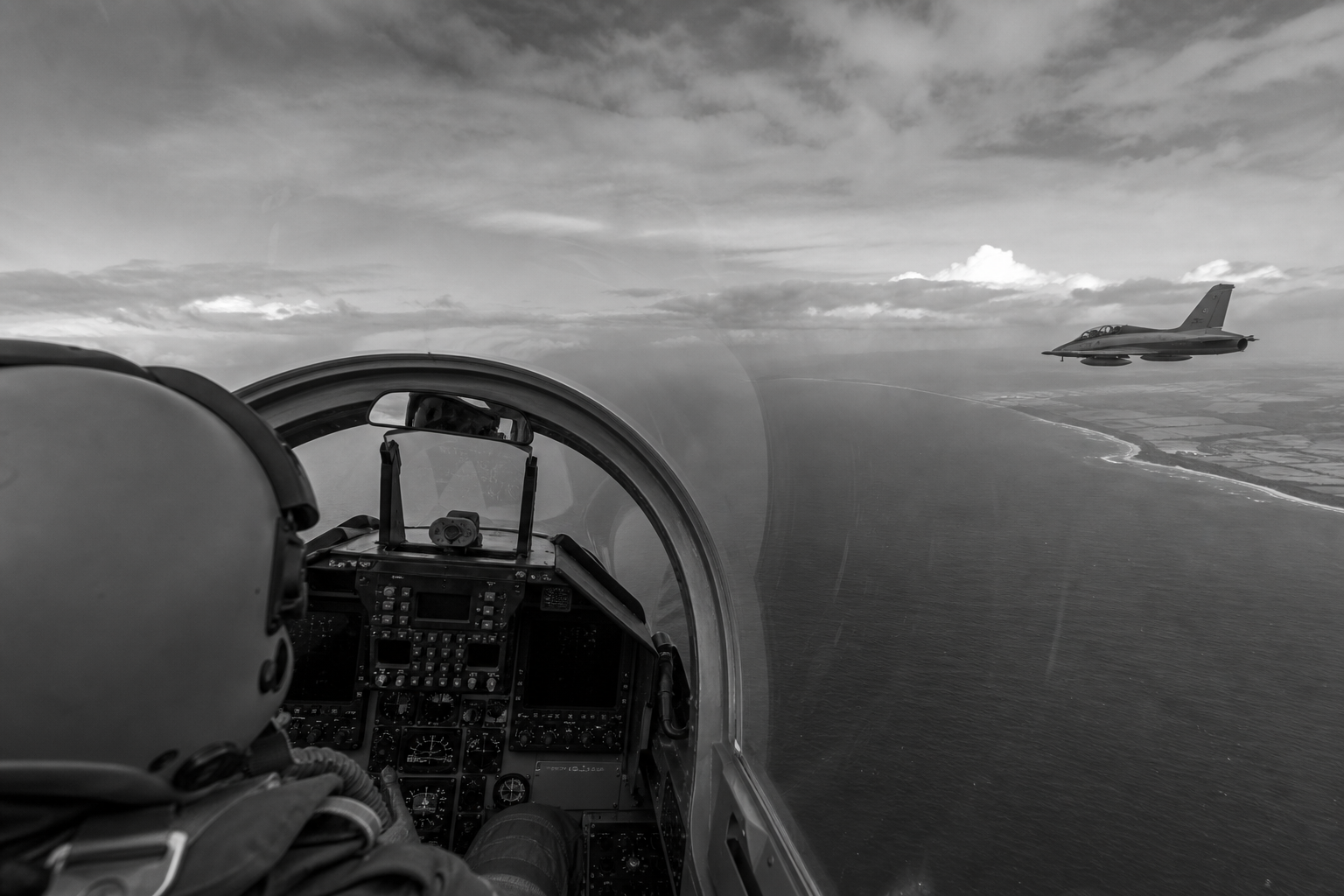
His testimony also distinguished between direct experience and the wider body of military UAP reports. Graves spoke from his own service background and from accounts shared by other aviators, rather than presenting every reported encounter as something he personally observed. That distinction matters. A firsthand observation can establish what one crew perceived in a particular flight; repeated accounts from multiple crews can indicate a reporting pattern, but they do not by themselves establish the object’s identity.
The reported UAP sightings involved observations that did not fit neatly into the information available to the crews at the time. Graves described the operational setting as one in which pilots may encounter aircraft, balloons, drones, sensor effects, or other unknowns. “Unidentified” is therefore a classification of an unresolved observation, not a finding that the object was extraordinary, foreign, or non-human.
Nor did the Ryan Graves UFO testimony claim to settle origin, ownership, or capability. Graves did not tell Congress that he had determined what the reported objects were or where they came from. His narrower point was that recurring unresolved encounters in a military training environment should be captured clearly enough to permit disciplined analysis. The frequency and duration he described made the absence of a credible explanation consequential; they did not convert the reports into proof of a particular explanation.
Why Graves Framed UAP as Aviation-Safety and National-Security Risks
For Graves, the immediate hazard was not an unresolved theory but an aircraft operating near something its crew could not identify or predict. In a training range, flight safety depends on separation: aviators need to know where other objects are, how they are moving, and whether their paths may intersect. An unknown object that appears without a clear identity, altitude, or intent leaves those questions open. The practical consequence can be a collision risk or a maneuver made with incomplete situational awareness.
He treated the same uncertainty as a national-security concern, but not as proof that a foreign system had entered U.S. airspace. The relevant intelligence question was more limited: if an observation cannot be matched to known friendly activity, ordinary aviation traffic, or a readily explained sensor effect, decision-makers cannot rule out surveillance, collection, or an unfamiliar foreign capability. Those possibilities require analysis; they are not conclusions established by an aircrew report.
That distinction shaped the value Graves placed on preserving information. A pilot’s account captures what the crew saw and how the encounter affected the flight. Sensor records can add timing, position, track, imagery, radar returns, or other technical context. Either category alone may be incomplete. Taken together, they give analysts a better basis to separate a physical object from an ambiguous detection, compare reports across flights, and determine whether a safety or intelligence response is warranted.
In that sense, Graves’s argument did not depend on assigning an extraordinary explanation to UAP sightings. A weak signal is an isolated anecdote with little retained context; a stronger one is an observation tied to contemporaneous aircrew and sensor information that can be assessed, compared, and, where possible, resolved, an approach underscored by UAP governance and reporting reforms.
Reporting Stigma: The Barrier Graves Said Military Aviators Faced
At the July 26, 2023 House hearing, Graves identified stigma as a practical break in the reporting chain: a pilot who expects ridicule or professional doubt may decide that an unresolved observation is not worth formally raising. He described the issue as one affecting military aviators’ willingness to report, not as evidence that every account had been suppressed or that any particular explanation for UAP had been established.
His distinction was between an informal mention and a usable operational record. A cockpit-room conversation can alert another crew, but a formal report can preserve concrete details: the date and time, training area, altitude, aircraft involved, witness accounts, and the location of any radar, imagery, or other sensor data. The first may circulate an anecdote; the second creates material that can be compared with other encounters.
Reporting stigma becomes operationally consequential when personnel do not know which channel receives an unusual-airspace report, whether it will reach analysts, or whether raising it could damage their credibility. Protections for personnel raising UAP-related concerns can help reduce those barriers. Silence, delay, or a partial account can leave separate crews’ observations disconnected. It can also make associated data harder to locate while the relevant flight context is still identifiable, weakening efforts to establish whether an encounter reflects a recurring hazard, ordinary activity, or a sensor-related ambiguity.
Ryan Graves military UAP reporting was therefore a governance argument rather than a claim about origin. He urged a process in which an aviator can report uncertainty without being expected to supply an answer first. Consistent intake, serious review, and preservation of the report’s operational context would make weak signals easier to dismiss on evidence, and stronger patterns easier to recognize before they place additional crews at risk.
What Stronger Military UAP Reporting Would Mean
A stronger system begins with a report format that turns an encounter into comparable information. Standardized reporting would give crews a common set of fields: time, location, altitude, weather, aircraft configuration, observed behavior, other witnesses, and the availability of recordings or radar tracks. That is materially different from a narrative alone. A narrative preserves the pilot’s account; a structured submission makes it easier to compare separate events and identify missing information.
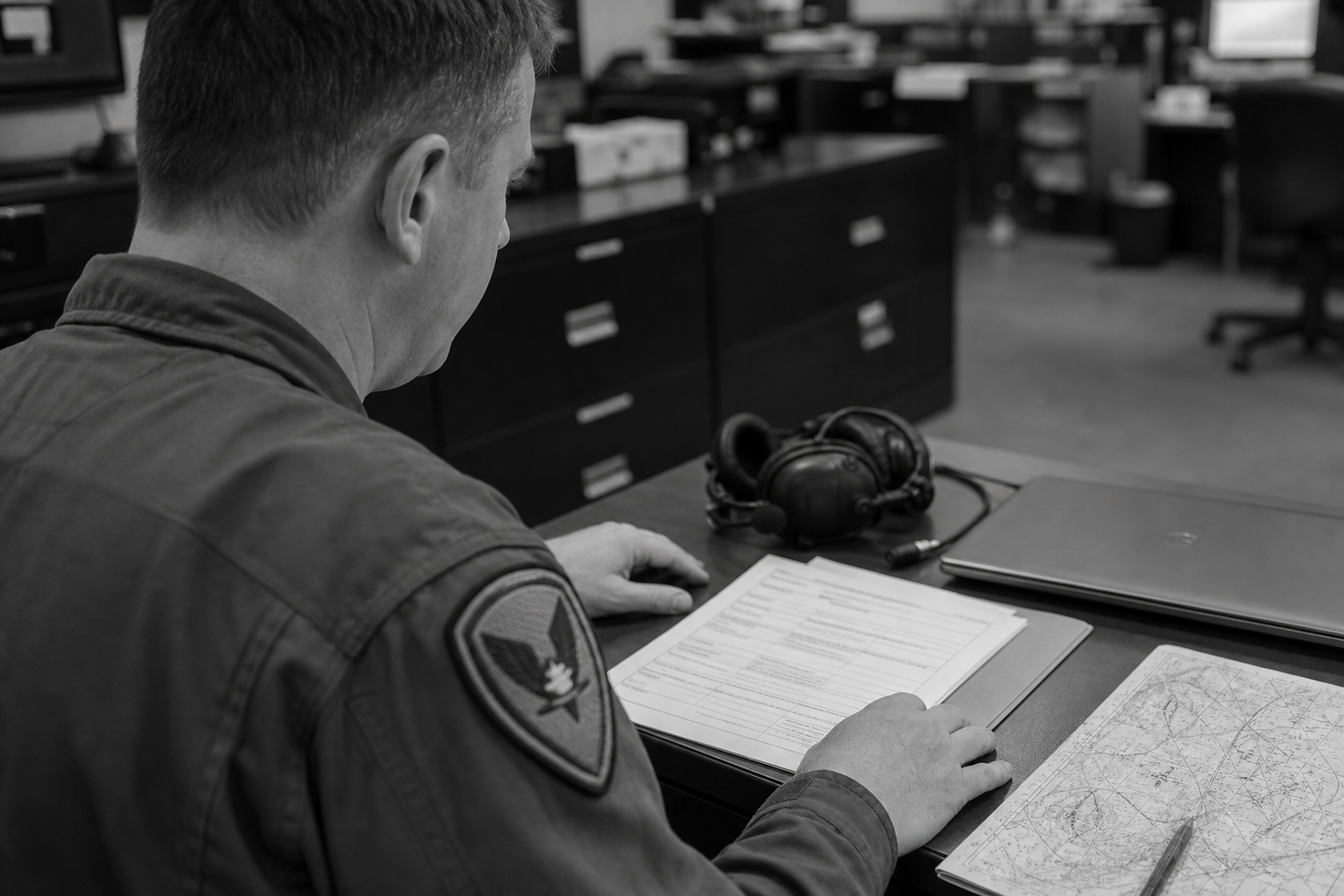
Accessibility matters as much as form. Aviators need a clearly designated formal UAP reporting pathway that can be used promptly, without having to determine which office may have an interest in the event. The route should also permit associated sensor data, such as cockpit video, radar returns, mission-system records, and communications logs, to be identified and retained while it can still be matched to the flight.
Graves’s concern about stigma points to another control: reporting should be treated as a professional safety and security function, not as an invitation to ridicule. Meaningful protection is not merely an assurance that a form exists; it is a process in which personnel can report in good faith, supervisors handle the account consistently, and the reporter is not penalized for acknowledging uncertainty.
Equally important, a report should not disappear into a one-way intake channel. A feedback loop can tell an aviator that the submission was received, whether follow-up details are needed, and whether investigators reached an ordinary identification, found insufficient data, or kept the matter open. That response encourages higher-quality future reporting without implying that every case has an extraordinary explanation.
The resulting model is one of governance: consistent collection, protected participation, disciplined analysis, and oversight of whether the system works. The July 2023 hearing itself did not automatically create a new military reporting program; Graves’s intervention was a case for making existing and future reporting arrangements more credible to the people expected to use them.
What Graves’s Testimony Established, and What It Did Not
The hearing’s lasting value lies in the boundary it drew between a credible reporting problem and claims the available testimony did not resolve. Graves offered firsthand operational perspective and relayed a pattern of aircrew concern sufficient to support a practical conclusion: repeated anomalous reports deserve professional collection, preservation, and analysis rather than reflexive dismissal.
That conclusion is narrower than a finding about the objects themselves. His account did not identify their origin, operator, technology, or intent. It did not establish that any reported UAP represented non-human intelligence, nor did it demonstrate that an unexplained observation necessarily involved extraordinary capabilities. An unresolved case can result from incomplete data as well as from a genuinely unknown object or phenomenon.
The same evidentiary distinction applies to wider UFO disclosure claims aired around the proceeding. Graves’s testimony did not prove allegations of a concealed government retrieval or reverse-engineering program; those allegations came from a different witness and rested on a different, largely secondhand basis. Treating all three witnesses’ statements as one body of proof obscures the hearing’s record.
Properly understood, the Ryan Graves UAP testimony made the case for institutional seriousness under uncertainty. Better records cannot guarantee an answer to every encounter, but they can separate ordinary identifications, data-poor reports, and cases that remain open, an essential threshold for informed oversight.
The Central Takeaway From Graves’s Testimony
The operational test Graves urged is straightforward: when aircrew encounter something they cannot promptly identify, the institution should capture the event as rigorously as any other potential hazard or intelligence indicator. In the July 26, 2023 hearing, his concern centered on recurring accounts from military aviators in East Coast training airspace and on the loss of useful information when personnel see reporting as unclear, futile, or professionally risky.
That makes stigma-free UAP reporting more than a communications goal. A credible process gives personnel a defined route to submit observations, preserves relevant sensor and flight-context data, and enables analysts to compare reports rather than leaving each crew with an isolated anecdote. The practical benefit is triage: some cases may be resolved through ordinary identification, while others may warrant further safety or security review.
Graves did not ask Congress to adopt a conclusion about an object’s identity, origin, or purpose. His case was for disciplined institutional handling of uncertainty. The central takeaway from the Ryan Graves UAP testimony is therefore measured but consequential: repeated unexplained observations near military operations merit professional reporting and systematic review, not speculation presented as fact.
Frequently Asked Questions
-
What did Ryan Graves say about UAP encounters in his 2023 testimony?
Graves described recurring reports from Navy aviators who encountered unidentified objects or phenomena in East Coast military training airspace. He emphasized that the reports showed an operational safety and reporting problem, not proof of any specific origin for the objects.
-
Did Ryan Graves claim that UAP were extraterrestrial?
No. Graves did not identify UAP as extraterrestrial, non-human, foreign, or associated with any particular technology. He treated UAP as unresolved observations that required better evidence collection and analysis.
-
What should a strong military UAP report include?
A standardized report should include the time, location, altitude, weather, aircraft configuration, observed behavior, witnesses, and available recordings or radar tracks. It should also identify related cockpit video, mission-system records, communications logs, and sensor data while they can still be matched to the flight.
-
How did Ryan Graves’s UAP testimony differ from David Grusch’s testimony?
Graves gave a pilot-focused account of recurring aircrew encounters, flight-safety risks, reporting stigma, and the need for stronger reporting systems. Grusch made separate allegations based largely on information from current and former officials concerning possible government retrieval or reverse-engineering programs, which Graves did not endorse or claim firsthand knowledge of.