Ryan Graves Testifies in 2023 House Hearing on UAPs, Calls for Better Military Reporting of Encountered Objects
Explore Ryan Graves UAP testimony at the 2023 House hearing, including military flight safety concerns and calls for clearer reporting.
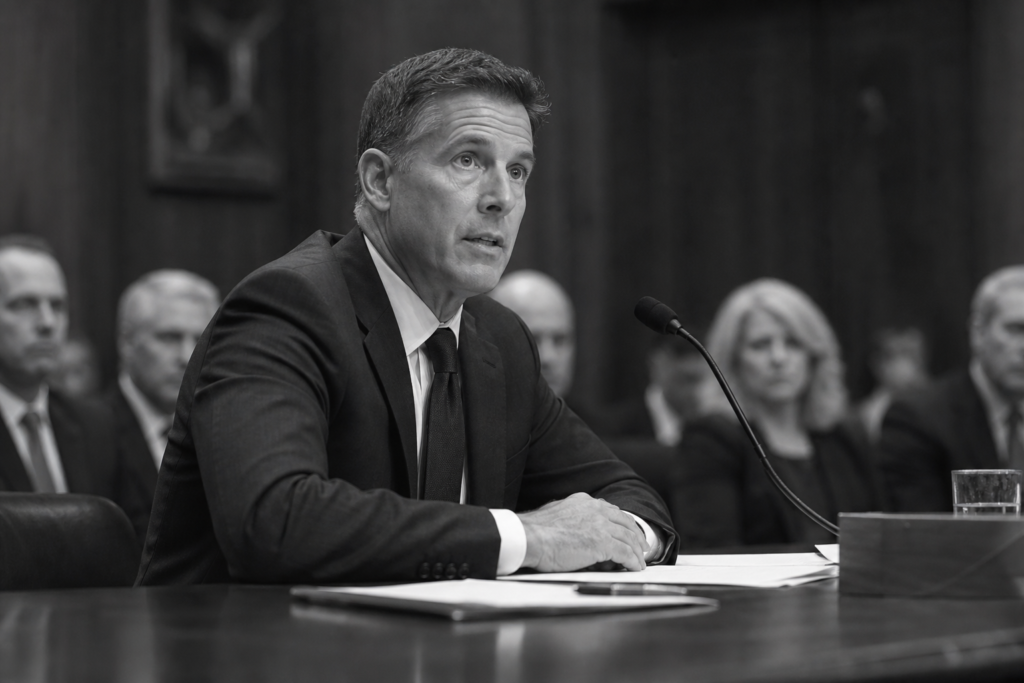
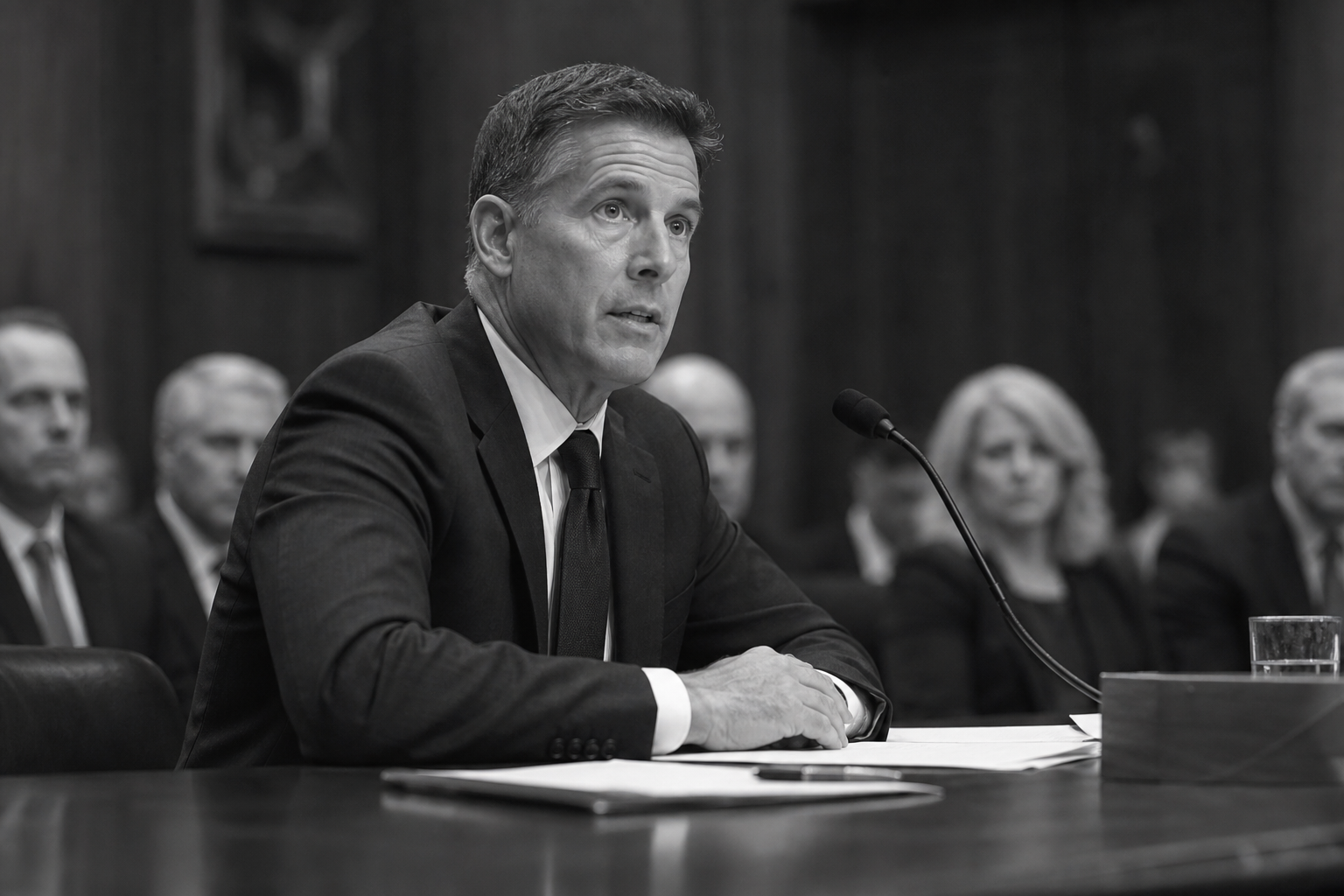
A pilot’s decision to file a report after an anomalous encounter can determine whether a possible hazard becomes usable operational information, or disappears as an anecdote. Ryan Graves brought that issue to the House on July 26, 2023: military personnel may encounter objects they cannot promptly identify, yet lack a consistently trusted way to record what happened. In his Ryan Graves UAP testimony, the former Navy F/A-18 pilot did not claim to establish the origin of any particular object. He argued that an unidentified encounter is itself important when it may affect aircrew safety, operational awareness, or intelligence assessment.
The hearing put that practical concern into focus. Graves spoke from his experience in naval aviation and from accounts shared by other aviators, while another witness, David Grusch, offered separate allegations that should not be treated as Graves’s firsthand account. The distinction matters: “unidentified” describes an observation whose identity has not been resolved, not proof of an extraordinary explanation. A clearer, less stigmatized reporting system could preserve observations, sensor information, and operational context, giving commanders and analysts better data to assess hazards and hold the institution accountable for acting on them.
What Happened at the July 2023 House Hearing on UAPs
Formally titled “Unidentified Anomalous Phenomena: Implications on National Security, Public Safety, and Government Transparency,” the July 26, 2023 proceeding was held by the House Oversight Committee’s Subcommittee on National Security, the Border, and Foreign Affairs. Its three witnesses were former Navy Lt. Ryan Graves, retired Navy Cmdr. David Fravor, and former intelligence official David Grusch. The House Oversight Committee UFO hearing placed different kinds of testimony in the same public forum: Graves and Fravor described aviation encounters and reporting concerns, while Grusch presented separate allegations based largely on information he said others had provided.
Graves’s role was therefore specific. A former naval aviator, he addressed what servicemembers can do when they encounter an object whose identity, behavior, or proximity creates uncertainty during operations. His public testimony emphasized the value of reports that retain details such as timing, location, observations, and available sensor context. That record can serve more than one purpose: it can help identify an immediate flight hazard, improve the quality of later intelligence analysis, and show whether the institution has recognized and addressed a recurring operational problem.
The Ryan Graves 2023 House hearing testimony did not establish that any reported object was extraterrestrial. It established why unresolved reports deserve a credible route into the military’s safety and assessment systems.
Who Ryan Graves Was and What He Described From Naval Aviation
Graves brought cockpit experience to the witness table as a former Navy F/A-18 pilot, but he was careful to distinguish his own knowledge from accounts shared by fellow aviators. His testimony drew on both: his service in naval aviation and the concerns relayed to him by personnel who had encountered unidentified objects while operating in military training areas.
His description centered on recurring reports rather than a single dramatic event. Aviators reported objects detected through aircraft sensor systems and, in some cases, observed near the airspace used for training. Sensors can supply information that a pilot’s unaided view cannot, such as track, altitude, speed, or persistence, but a detection alone does not settle what the object was. It establishes that something warranted assessment when its identity and behavior could not be promptly resolved.
That distinction matters in evaluating Ryan Graves’s aviation-related UAP accounts. Graves did not present every reported encounter as his personal visual observation, nor did he claim that an unresolved track established an extraordinary origin. He relayed a pattern described by naval aviators: objects or sensor returns appearing in operational areas where aircraft crews needed to know whether they represented another aircraft, a balloon, a drone, atmospheric effects, sensor error, or a potential hazard.
For a military pilot, uncertainty near a training route changes the operational picture even before an explanation is available. A reliable account preserves the difference between firsthand observation, sensor data, and later interpretation, an essential boundary for investigators trying to determine whether repeated UAP sightings reflect an air-safety issue, an intelligence concern, or an ordinary but initially unidentified cause.
Why Graves Framed Unidentified Objects as a Flight-Safety Problem
A pilot does not need to know an object’s origin before deciding that it could constrain a flight. If its position, altitude, direction, or speed is uncertain, the crew may have to devote attention to avoiding it, alter a route, preserve separation, or reassess the safety of the airspace ahead. That is the practical aviation hazard at the center of Graves’s account: uncertainty can affect decisions in real time.
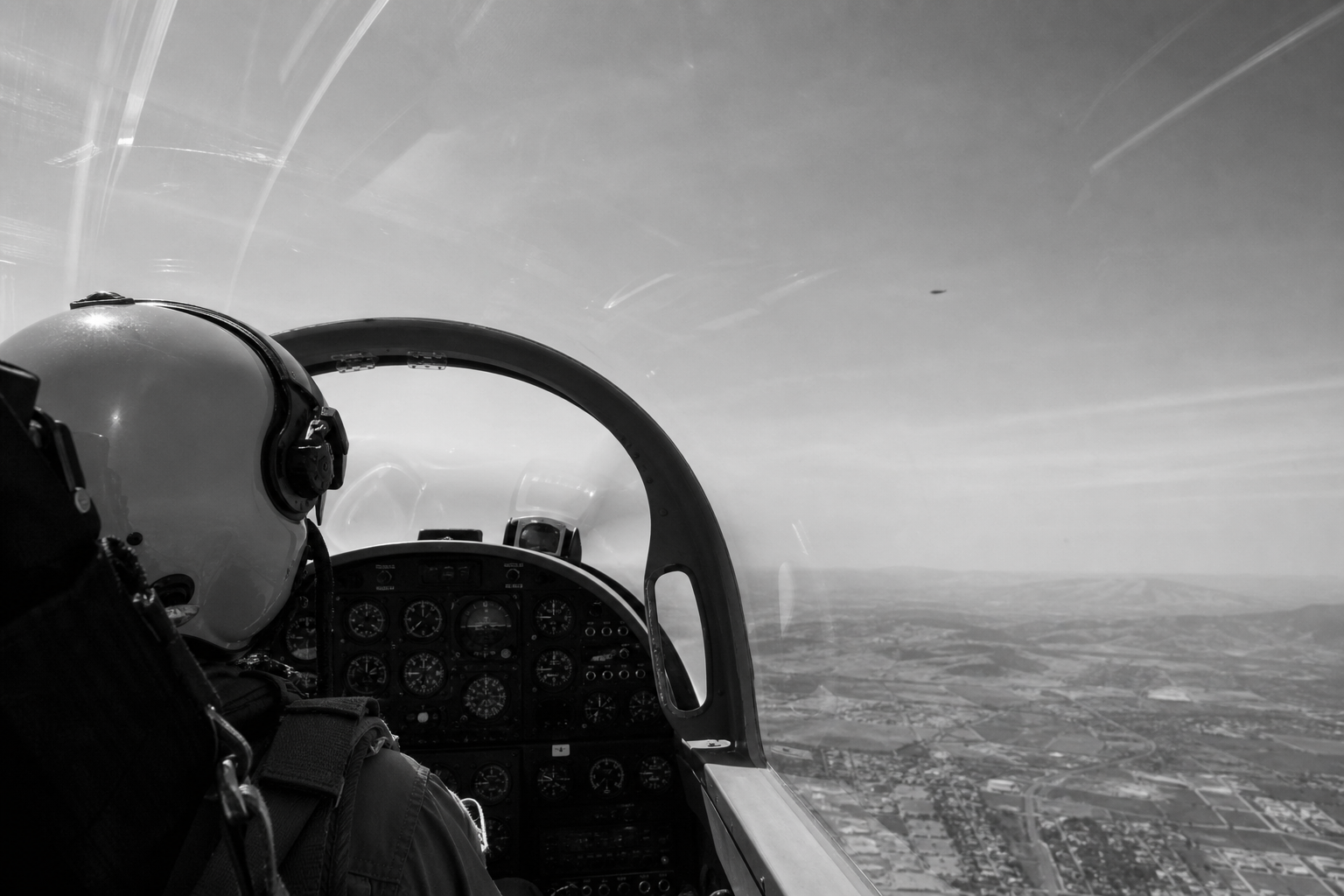
The distinction is straightforward. An object later identified as a balloon, drone, another aircraft, weather-related phenomenon, or a misleading sensor return may still have prompted a reasonable safety response when it first appeared. A confirmed track with known location and behavior can be incorporated into planning; an unresolved contact cannot be treated with the same confidence. The operational cost is not only a possible collision risk, but the distraction, uncertainty, and altered planning imposed on crews conducting demanding training or missions.
Graves’s flight-safety argument also extends beyond a single sortie. Repeated reports from the same operating area can reveal whether an encounter was isolated, whether a particular route or altitude deserves closer attention, and whether the military needs to assess a possible intelligence or security issue. Sparse, inconsistent accounts make those comparisons harder. Detailed reporting, separating what a person saw from what a sensor recorded and from later analysis, turns an anecdote into information that can be evaluated.
This is why the Ryan Graves UAP testimony did not depend on extraordinary conclusions. The relevant threshold was more modest: an encounter that creates uncertainty around aircraft merits a record that supports safety review and operational awareness. Better reporting does not presume that every unknown object is dangerous or unusual in origin; it ensures that personnel are not forced to ignore a potential aviation hazard simply because identification is incomplete.
The Reporting Gap: Stigma, Unclear Channels, and Missing Data
The first loss occurs before an investigator ever sees a report. Graves told lawmakers that the professional stigma surrounding unusual observations can make aviators reluctant to speak up, particularly when they expect ridicule, damage to their credibility, or no meaningful response. In that environment, an encounter may remain an informal squadron story rather than become a record available to safety officers, commanders, or analysts. Ryan Graves military UAP reporting was therefore as much about trust in the process as it was about the existence of a reporting form.
Clear channels matter because different reports serve different purposes. A routine aviation-safety report records an event that affected a flight; an intelligence or security report can flag a possible unknown presence in an operating area; classified reporting channels protect sensitive mission, aircraft, and sensor details. Those routes should complement one another, not leave a pilot guessing which office owns the issue. A weak signal is a process in which personnel are passed from one channel to another or receive no acknowledgement. A stronger one gives them a known point of entry, protects the relevant operational details, and makes clear that the report will be assessed rather than dismissed.
Reporting stigma has practical consequences for the quality of the evidence. A delayed or omitted account can mean that radar tracks, cockpit recordings, mission logs, and other sensor material are not identified and preserved while they remain readily available. It also makes recurring events look isolated: investigators cannot compare locations, times, weather conditions, aircraft systems, or descriptions across multiple crews when only a fraction of encounters enter the record. That gap does not demonstrate institutional concealment, nor does it establish what any object was. It does mean commanders have less information for hazard assessment and intelligence review. Graves’s point was that a credible reporting system should capture uncertainty early enough for ordinary explanations, safety concerns, and genuine security questions to be evaluated on the evidence.
What Better Military UAP Reporting Would Look Like
A usable system begins with a single, familiar entry point available soon after an encounter, rather than a process that requires personnel to decide which specialist office is responsible. A standardized initial report should capture the basics while memories are fresh: time and location, aircraft position and altitude, weather and visibility, the object’s observed movement and appearance, any operational effect, and the names of other crews or controllers who may have relevant observations.
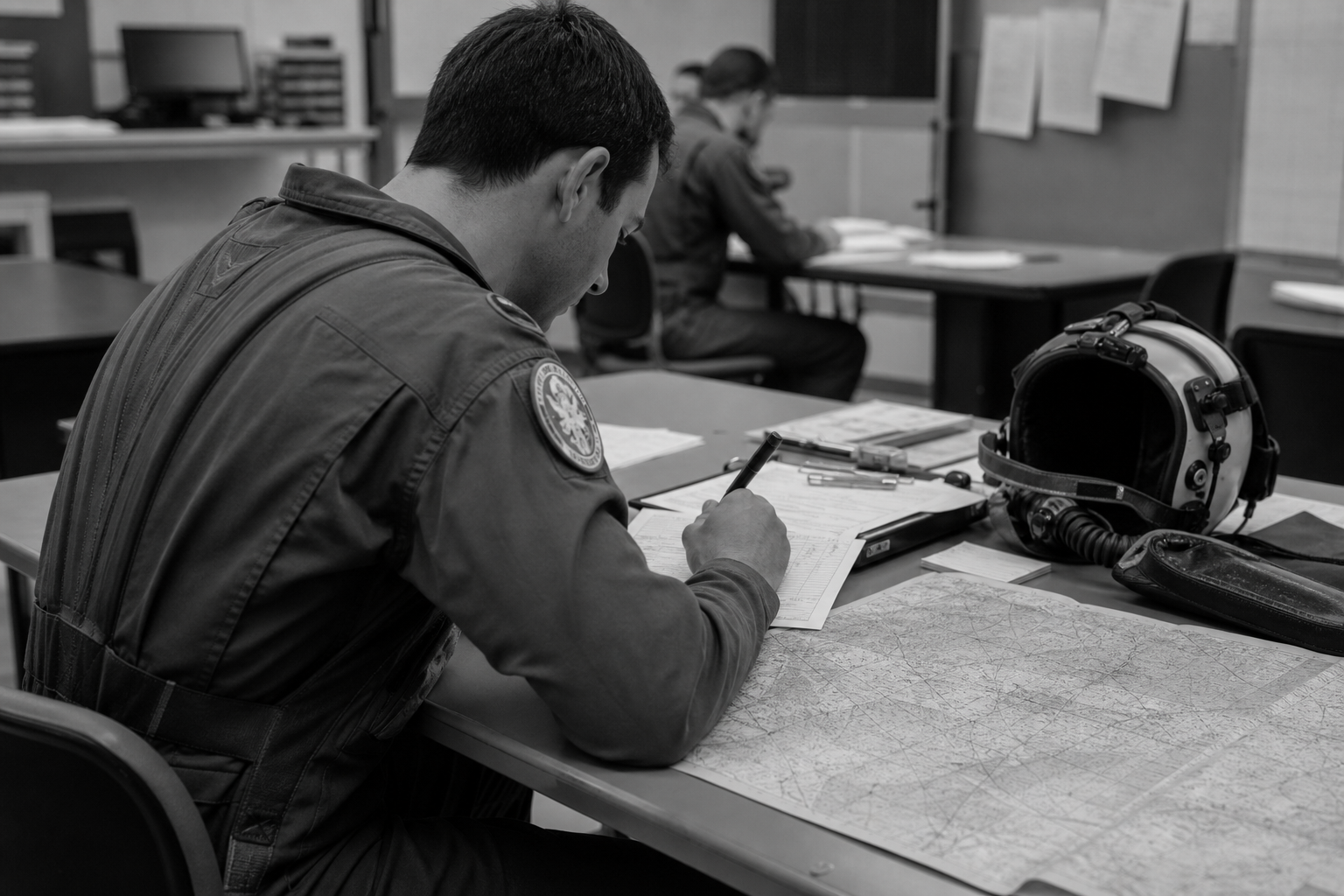
The report should also trigger preservation, not merely narrative collection. That means identifying potentially relevant cockpit audio, radar returns, electro-optical recordings, mission data, communications logs, and maintenance information before routine retention schedules overwrite or separate them. A written account is useful; a written account tied to contemporaneous data gives safety personnel and analysts a far stronger basis to test possible explanations.
- One standardized intake: personnel need a clear route that accepts good-faith reports even when the observer cannot classify the object or supply complete sensor data.
- Defined handoffs: operational commands can address immediate airspace or readiness concerns, while a designated UAP office can compare reports across units and assess broader patterns. The practical benefit is that a local event is not lost simply because it may have wider relevance.
- Non-punitive treatment: reporting an uncertain observation should not be treated as a claim to know what it was. The distinction encourages precise descriptions and permits later correction when ordinary causes emerge.
- Feedback where possible: an acknowledgement and a limited outcome, such as resolved, insufficient data, or still under review, shows that the report entered a real process. It also helps crews understand what details would improve future submissions.
In that model, the Pentagon UFO office, formally understood as the designated UAP assessment function, is not a substitute for command responsibility. It is a coordinating destination for information that may matter beyond one squadron or sortie, including through a designated reporting pathway for UAP-related information. The objective of Ryan Graves military UAP reporting is therefore disciplined evidence: better safety records, better intelligence assessment, and clearer institutional accountability whether an encounter is ultimately explained or remains unresolved.
How Graves’s Testimony Differed From David Grusch’s Allegations
The witnesses addressed different questions, and treating their statements as interchangeable distorts the record of the July 26, 2023 hearing. Graves discussed observations by military aviators, the operational consequences of unidentified objects in training airspace, and the need for a reporting process that produces usable evidence. His relevant evidentiary posture was cockpit experience and accounts relayed by other aviators, not a claim of access to a secret government program.
David Grusch, a former intelligence official, presented a separate category of allegation: that he had been told of purported U.S. programs involving recovered craft and related information withheld from Congress. He described those assertions as information provided by other people rather than as events he personally observed. That distinction matters because a firsthand flight encounter, a secondhand program allegation, and a policy proposal for better reporting each support different conclusions and require different forms of assessment.
Graves did not testify that the objects reported to him proved an extraterrestrial origin, non-human intelligence, crash-retrieval activity, or a government cover-up. His case did not depend on alien disclosure or UFO disclosure claims being true. It rested on the narrower proposition that personnel should be able to report anomalous encounters precisely, without stigma, so commanders and analysts can determine whether a report reflects an ordinary cause, an aviation hazard, an intelligence concern, or an unresolved event.
Why Graves’s Reporting Case Still Matters
A reporting system earns trust when it produces a visible, disciplined response. A prompt account paired with flight and sensor data can allow reviewers to test ordinary possibilities, such as aircraft, balloons, drones, weather effects, or sensor artifacts, before retaining a case for deeper analysis. That sequence improves aviation awareness and intelligence assessment without assigning an origin in advance.
For that reason, the practical legacy of Graves’s July 26, 2023 testimony is institutional: personnel need a clear route to report, confidence that candor will not invite ridicule, and review that separates evidence from speculation. Readers following later UFO news or UAP news should keep the timeline straight. Developments after the hearing may add context, but they do not alter what Graves actually presented to the House: a case for reliable reporting of encounters that military personnel cannot immediately identify.
The Takeaway: Reporting Is a Flight-Safety Requirement
The measure of success is not whether every case receives a dramatic explanation. It is whether an aviator who sees an object affecting a mission can make a timely report, preserve relevant details, and expect a professional review without being dismissed or penalized. That turns an unusual encounter from an isolated anecdote into information commanders can use.
In practical terms, standardized reporting creates a usable record of where and when an event occurred, what the crew observed, what sensors or controllers may corroborate it, and whether it altered the flight. Repeated reports can then reveal patterns; a single report can still identify a local hazard, intelligence gap, or weakness in airspace awareness. The operational value lies in disciplined collection and follow-up, not in attaching a preferred explanation to an object.
That boundary also keeps Graves’s account distinct from David Grusch’s separate allegations at the July 26, 2023 House hearing. Graves made a safety-and-data case grounded in military aviation reporting. He did not offer the reporting reforms as proof that any encounter involved extraterrestrial technology or a concealed retrieval program.
The enduring lesson is straightforward: readiness depends on personnel being able to report what they encounter candidly, consistently, and without stigma. A trusted process improves risk assessment, gives analysts better evidence to evaluate ordinary and unresolved causes, and makes institutions answerable for how credible reports are handled.
Frequently Asked Questions
-
What did Ryan Graves say in the July 26, 2023 House UAP hearing?
Former Navy F/A-18 pilot Ryan Graves said military aviators need a trusted, standardized way to report unidentified objects encountered during operations. He argued that unresolved encounters can affect flight safety, operational awareness, and intelligence assessment.
-
Did Ryan Graves say the UAP reported by military pilots were extraterrestrial?
No. Graves did not claim that reported objects were extraterrestrial, non-human technology, or evidence of a concealed government program. He emphasized that unidentified means the object’s identity has not yet been resolved.
-
Why did Ryan Graves consider unidentified objects a flight-safety problem?
An object with uncertain position, altitude, direction, or speed can force aircrews to alter routes, preserve separation, or reassess airspace during a mission. Even an object later identified as a balloon, drone, aircraft, weather effect, or sensor artifact can require an immediate safety response.
-
What information should a military UAP report include?
A standardized report should record the time, location, aircraft position and altitude, weather, visibility, observed movement and appearance, operational effects, and other relevant witnesses. It should also preserve cockpit audio, radar returns, electro-optical recordings, mission data, communications logs, and maintenance information.
-
What was the difference between Ryan Graves’s and David Grusch’s testimony?
Graves discussed aviation encounters, flight-safety risks, and better reporting based on his naval aviation experience and accounts from other aviators. Grusch presented separate secondhand allegations about purported U.S. recovered-craft programs and information allegedly withheld from Congress.