Ryan Graves Testifies at 2023 U.S. House Hearing on UAPs, Calls for Improved Military Reporting
Explore Ryan Graves UAP testimony at the 2023 House hearing, including military reporting barriers, aviation safety and oversight.
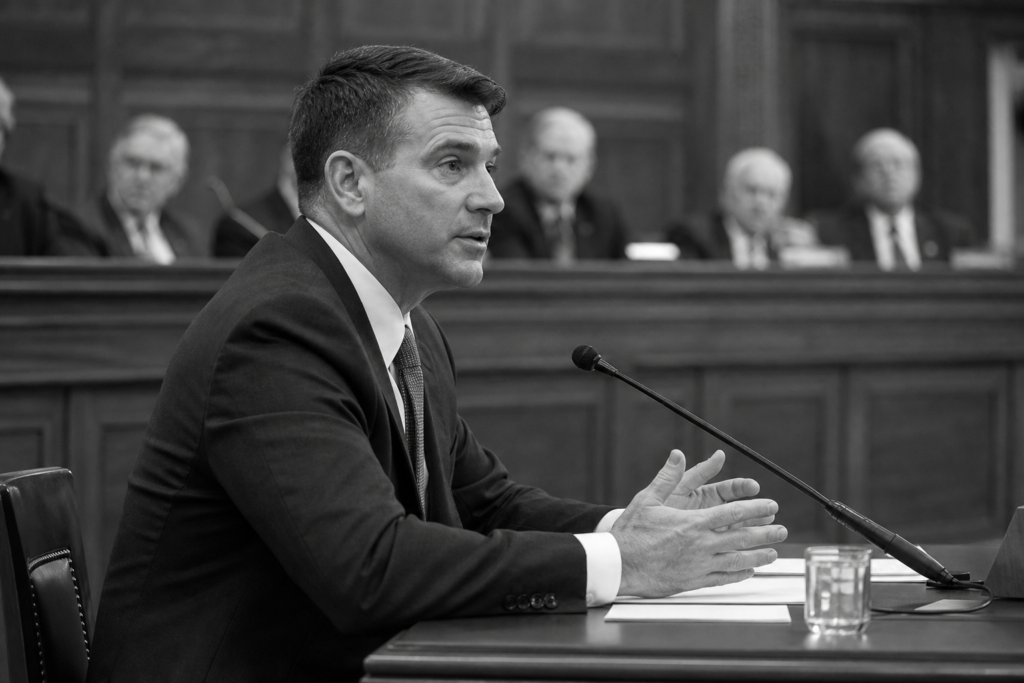
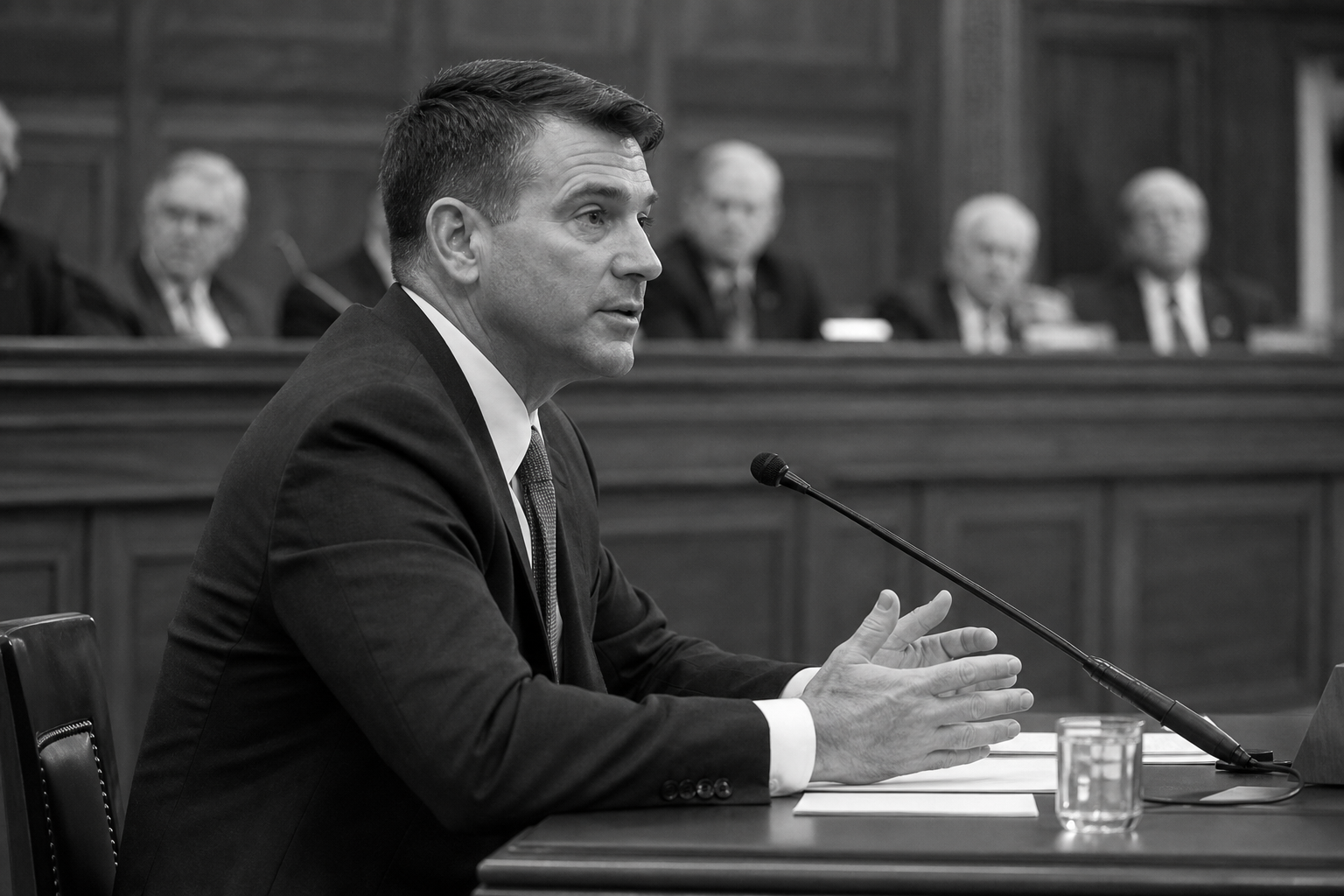
Ryan Graves’s UAP testimony brought a former Navy aviator’s operational perspective into a July 26, 2023, House Oversight hearing: not a claim that unexplained objects had a proven origin, but a warning that pilots can encounter anomalous events without a reporting system they fully trust.
Graves, then executive director of Americans for Safe Aerospace, described recurring reports from military aviators and argued that the issue belongs partly in the ordinary disciplines of aviation safety and national-security collection. A credible military UAP reporting process means a service member can record what was observed, where and when it occurred, and what sensors or other witnesses were involved without assuming the report settles what the object was. That distinction matters: a report can preserve potentially important safety information even when its explanation remains unknown.
The 2023 UAP hearing included more expansive allegations from another witness, David Grusch. Graves’s contribution was narrower and more immediately testable: reduce stigma, standardize reporting, and treat unexplained encounters in military operating areas as information worth capturing. This account follows that evidentiary line, what Graves testified to, why reporting culture mattered to him, and what the hearing did not establish about origin or intent.
Why Ryan Graves’s July 2023 House Testimony Mattered
On July 26, 2023, the House Committee on Oversight and Accountability convened its hearing, “Unidentified Anomalous Phenomena: Implications on National Security, Public Safety, and Government Transparency.” Graves appeared as a former U.S. Navy pilot and the executive director of Americans for Safe Aerospace, placing an operational aviation perspective in a congressional record that also included former Navy commander David Fravor and former intelligence officer David Grusch.
The importance of Graves’s appearance lay in the kind of problem he put before lawmakers. His account concerned recurring reports of unexplained encounters in military airspace, the reluctance of personnel to report them, and the loss of useful information when observations are treated as career risks or curiosities rather than operational data. For an aviator, an unidentified object or event is first a safety and situational-awareness question: its origin may be unresolved, but its location, movement, timing, witnesses, and sensor context can still matter.
That makes the Ryan Graves 2023 UAP hearing testimony distinct from broader claims aired that day. Graves did not present his observations as proof of extraterrestrial life, nor did his reporting-focused argument establish a government cover-up. Its concrete standard was more limited: military personnel need credible channels that capture unusual encounters consistently enough for safety officials, analysts, and congressional overseers to assess what happened, and what remains unknown.
What Ryan Graves Told the House Committee
Graves grounded his account in more than a decade as a U.S. Navy F/A-18 pilot, including service with an East Coast strike-fighter squadron. He told lawmakers that, after his unit received upgraded radar equipment in 2014, aircrew began detecting objects in military training areas off the Virginia coast that they could not readily identify. The reported events were not confined to one instrument: Graves described radar tracks, infrared-sensor observations and, at times, visual observations by aviators.
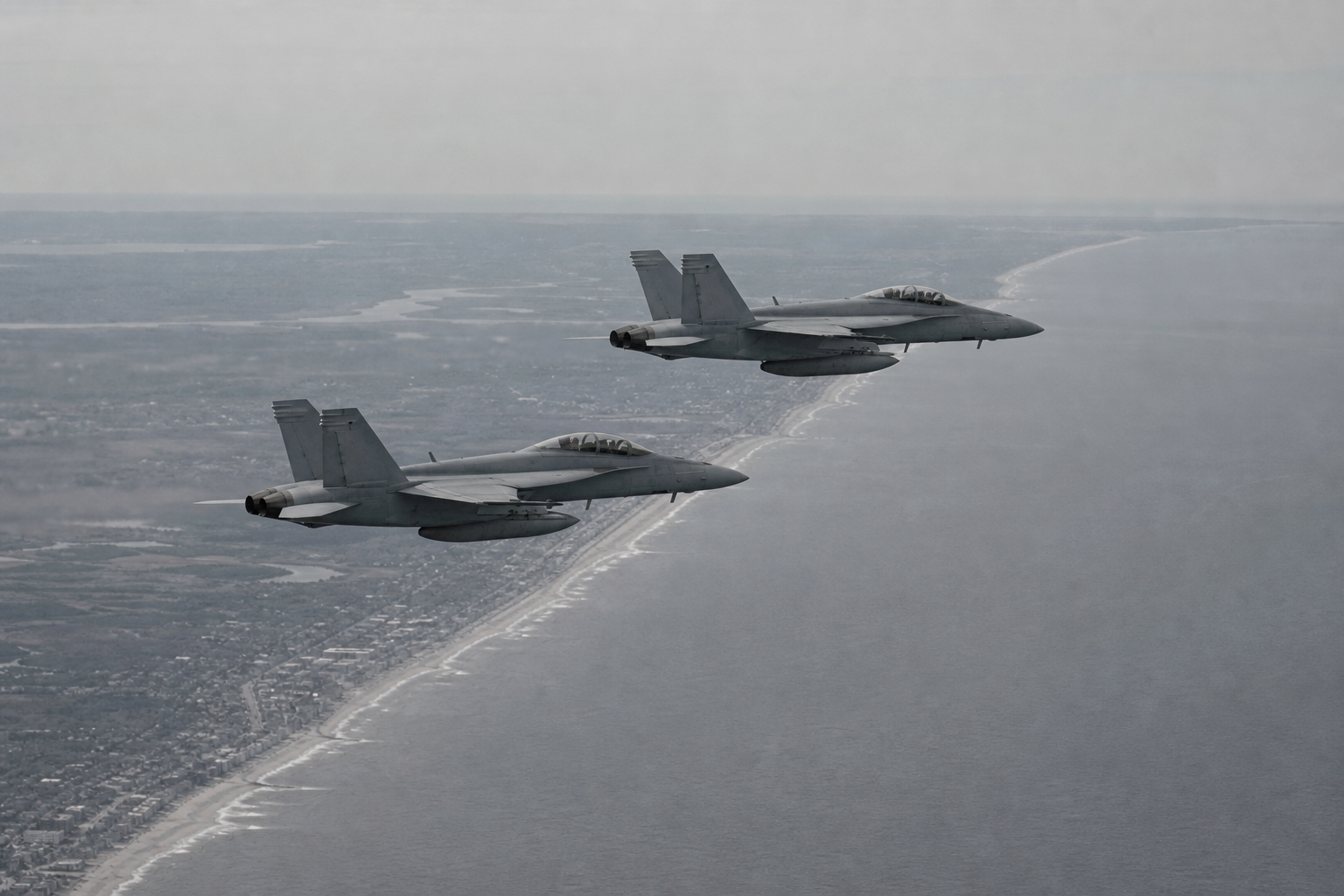
In his opening statement, Graves said, “UAP are in our airspace, but they are grossly underreported,” and characterized the encounters as routine rather than isolated. That wording mattered. He was not asking Congress to accept a conclusion about what the objects were; he was arguing that repeated unknowns in airspace used for demanding military flight operations deserve systematic collection and analysis.
Graves also drew an important line between his own experience and accounts he received from others. He testified that he personally witnessed UAP on multiple occasions while flying. But some of the hearing’s most vivid descriptions, including an object described by another aviator as a dark cube inside a transparent sphere, encountered during a training flight, were pilot reports relayed to Graves rather than events he claimed to have seen himself. Treating those categories separately preserves the evidentiary record: a firsthand observation is not the same as a secondhand report, even when both may warrant investigation.
His Ryan Graves House hearing testimony further described crews encountering objects that appeared to remain in an operational area for extended periods and were reported across flights. Recurrence was the central concern. A one-off ambiguous sighting may have many possible explanations; patterns reported by multiple crews create a stronger reason to preserve flight details, sensor context and witness accounts rather than dismissing the event as a curiosity.
Graves’s conclusion was deliberately practical. Unidentified observations alone did not establish an object’s origin, intent or non-human character. They did, in his view, establish that aviators needed a credible way to raise concerns without stigma, and that Congress should treat the resulting information gap as a serious aviation and national-security issue.
Graves’s Central Argument: Military UAP Reporting Needs More Credibility
Credibility begins at the point of intake. Graves’s concern was not simply whether a pilot could file a report after an unusual encounter; it was whether personnel would believe that reporting was expected, taken seriously and protected from the career-cost concerns he described. A reporting stigma can turn an operational observation into an unrecorded anecdote, particularly when the observer expects ridicule, doubts that anyone will act on the information, or cannot identify a clear recipient.
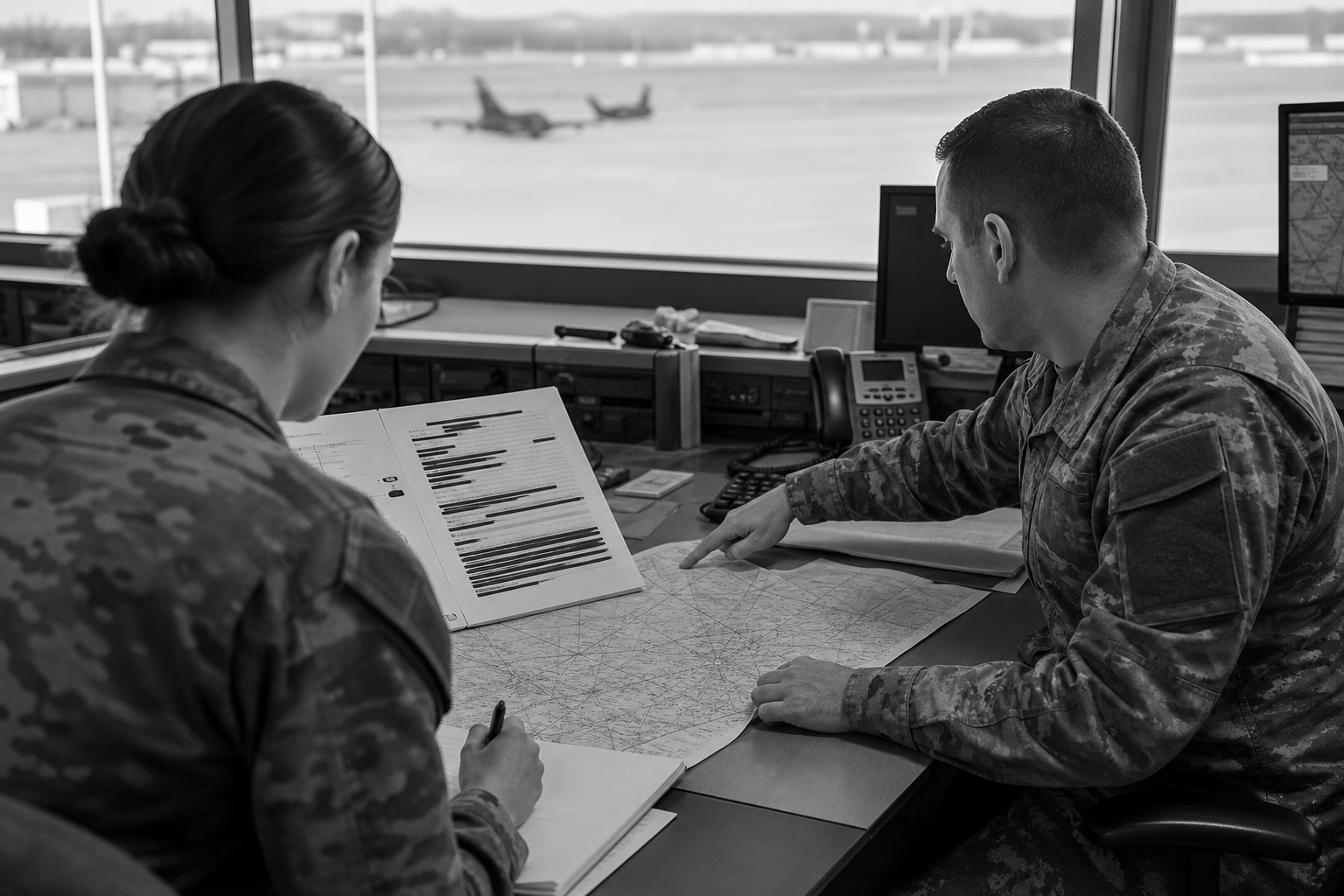
That makes a trusted channel more than an administrative form. It needs to give an aviator a defined path from an initial observation to the people able to assess it. An initial report should reach the relevant command and safety functions; a report with potentially useful technical evidence should also be capable of being routed for analytical review. The practical difference is between a report that merely records that “something was seen” and one that can trigger preservation of information while memories and system data are still available.
Graves’s military UAP reporting argument therefore favored consistency. Personnel should not have to improvise a different route for each unexplained event or decide, on their own, whether an observation is sufficiently extraordinary to mention. A clear escalation path does not presume that every report reflects an unusual object. It provides a way to sort ordinary explanations, unresolved events and possible flight hazards using the same basic institutional discipline.
Context is what makes a report useful. A bare visual description may be important, but it is stronger when paired with the time, location, aircraft mission, altitude, weather, nearby traffic, witness accounts and any available radar, infrared or other sensor information. Flight-safety details also matter: whether crews changed course, lost separation margin, altered training or faced another operational consequence. Those elements allow reviewers to compare independent reports and test possible explanations rather than treating every account as self-validating.
For aviation safety, the immediate question is not an object’s ultimate origin. It is whether an unknown or poorly understood presence affected safe operations and whether the available evidence can help identify the risk. Graves’s emphasis on reducing reporting stigma placed responsibility on the system as well as the individual pilot: a credible process must make reporting routine, preserve what can be assessed and distinguish unresolved observations from conclusions that the evidence does not support.
Why Better UAP Reporting Matters for Safety, Intelligence and Oversight
The quality of the record determines whether an encounter can be treated as a safety case rather than remain an isolated story. A standardized report can capture the operational facts needed to assess a potential near-miss risk: where the aircraft and object were, their respective altitude and direction, whether separation changed, what maneuver the crew made, and whether the event disrupted a mission. That information lets safety personnel look for repeat locations, times, routes or flight profiles instead of judging each account in isolation.
Speed matters because key evidence can disappear or degrade. A prompt, structured submission gives analysts a better chance to align a pilot’s account with radar returns, infrared imagery, cockpit recordings, mission-system logs, air-traffic information and weather conditions. The useful distinction is between a report that preserves enough detail to test competing explanations and one that arrives after the relevant data have been overwritten, memories have blurred or the flight context cannot be reconstructed.
That analytical discipline also improves the handling of UAP sightings that turn out to have conventional explanations. Known aircraft, balloons, drones, sensor artifacts and atmospheric effects should be separated from cases that remain unresolved because the available information is incomplete or conflicting. “Unresolved” is a description of the evidentiary record, not a finding about origin, capability or intent. Better inputs can reduce that unresolved category while making the remaining cases clearer about what is, and is not, known.
For national security, the value is similarly practical: recurring observations in training or operating areas may reveal an airspace-management problem, a collection gap or activity that warrants further assessment. Congress, in turn, needs usable aggregate information to ask whether reports are reaching the right offices, whether classification prevents appropriate sharing, and whether resources match the problem being described. The Ryan Graves UAP testimony thus pointed toward oversight built on traceable military UAP reports and analytical results, rather than on assumptions that unidentified observations themselves prove non-human intelligence.
How Graves’s Testimony Differed From David Fravor’s and David Grusch’s
Putting the three witnesses side by side is essential because they addressed different evidentiary questions at the July 26, 2023 hearing. Graves concentrated on recurring reports from military aviators, the reluctance to file them, and the operational consequences when observations are not captured in a dependable system. His testimony was principally about how the military receives, preserves and evaluates airspace-safety information.
David Fravor offered a different kind of account: his personal recollection of the 2004 Nimitz encounter while serving as a Navy commander. That made his appearance an eyewitness narrative centered on a particular mission and event. Graves, by contrast, described both his own experience and patterns reported by other aviators; the practical question he put before the House Oversight Committee UFO hearing was whether those reports could be gathered consistently enough to identify risks and assess explanations.
David Grusch’s testimony occupied another category. The former intelligence officer alleged that information had been withheld from Congress and described alleged crash-retrieval and reverse-engineering programs based on information he said he had received from others. Those claims were distinct from Graves’s pilot-reporting testimony and were not established merely because the witnesses appeared at the same hearing. Graves did not present his observations, or the accounts relayed to him by aviators, as proof of Grusch’s allegations.
The distinction matters for evaluating the record. A firsthand encounter, recurring operational reports and secondhand allegations can each warrant scrutiny, but they do not carry the same evidentiary basis or answer the same question. Graves’s contribution remains most concrete where it began: improving the conditions under which service members can report unusual events without stigma and with enough detail for later analysis.
What the 2023 UAP Hearing Established, and What It Did Not
The key evidentiary boundary is straightforward: an unresolved observation describes the status of an explanation, not the origin of the object or event. The July 26, 2023 hearing placed aviators’ accounts of unusual observations and obstacles to reporting them before Congress. It did not establish extraterrestrial visitation, non-human intelligence, or a government UFO cover-up.
That limit also applies to the separate crash-retrieval allegations raised by David Grusch. Allegations, firsthand recollections and recurring pilot reports are different forms of evidence; placing them in one hearing does not convert any of them into verified conclusions. UAP disclosure, in the meaningful sense of releasing or evaluating information, cannot substitute for corroboration.
Graves’s contribution is consequently the hearing’s most immediate testable takeaway. A report that identifies the crew, location, timing, flight conditions, sensor information and operational effect can be assessed, compared with other cases and elevated when warranted. An unreported encounter cannot. His Ryan Graves UAP testimony therefore kept the focus on a practical obligation: make reporting credible enough that aviation-safety and oversight authorities receive usable information before speculation outruns the record.
The Lasting Takeaway From Graves’s UAP Testimony
The enduring value of Graves’s appearance is a standard Congress and the military can apply regardless of what any individual case ultimately proves: personnel who encounter an aerial anomaly should be able to report it promptly, without ridicule, through a channel designed to preserve operationally useful facts.
That is a reporting-reform proposition, not an extraordinary-origin conclusion. An eyewitness account can identify what a crew perceived; sensor data can add time, position or track information; an unresolved case means the available record did not support a confident explanation. None of those categories alone establishes intent, technology or non-human origin. Their value lies in creating a record that can be tested against other evidence.
For pilots, credible UAP reporting means potential hazards are less likely to disappear into informal conversation. For national-security analysts, it creates a fuller basis for recognizing patterns and assessing airspace activity. For congressional oversight, it supplies measurable questions: whether reports are reaching the right offices, whether evidence is retained, and whether recurring concerns receive a reasoned institutional response. That practical chain, from encounter to report to analysis to accountability, is the lasting takeaway from Ryan Graves’s UAP testimony.
Frequently Asked Questions
-
What did Ryan Graves say at the 2023 UAP hearing?
Ryan Graves told the House Oversight Committee on July 26, 2023, that UAP were present in military airspace but were “grossly underreported.” He urged the military to treat unusual aerial encounters as aviation-safety and national-security information that requires consistent reporting and analysis.
-
Was Ryan Graves a military pilot when he encountered UAPs?
Yes. Graves was a U.S. Navy F/A-18 pilot who served with an East Coast strike-fighter squadron and said he personally witnessed UAP on multiple occasions. He described recurring detections after his unit received upgraded radar equipment in 2014.
-
What information should a military UAP report include?
A useful report should document the time, location, aircraft mission, altitude, weather, nearby traffic, witness accounts, and available radar, infrared, or other sensor data. It should also record operational effects, such as course changes, reduced separation margins, or mission disruption.
-
What should pilots look for in a credible military UAP reporting system?
Pilots need a clear reporting route that reaches command, aviation-safety personnel, and technical analysts when evidence warrants review. The system should reduce stigma, protect personnel from career-related concerns, and preserve sensor and flight data before it is overwritten or degraded.
-
What was the difference between Ryan Graves’s and David Grusch’s testimony?
Graves focused on recurring aviator reports, reporting stigma, and the need for reliable systems to document possible airspace hazards. Grusch made separate secondhand allegations about withheld information and alleged crash-retrieval programs, which Graves’s testimony did not verify.