ODNI’s Landmark 2021 UAP Report: 144 Incidents, Unexplained Flight Safety Risks
Explore the ODNI 2021 UAP report: 144 military incidents, data limits, 11 near misses, flight safety risks, and what the assessment did not prove.
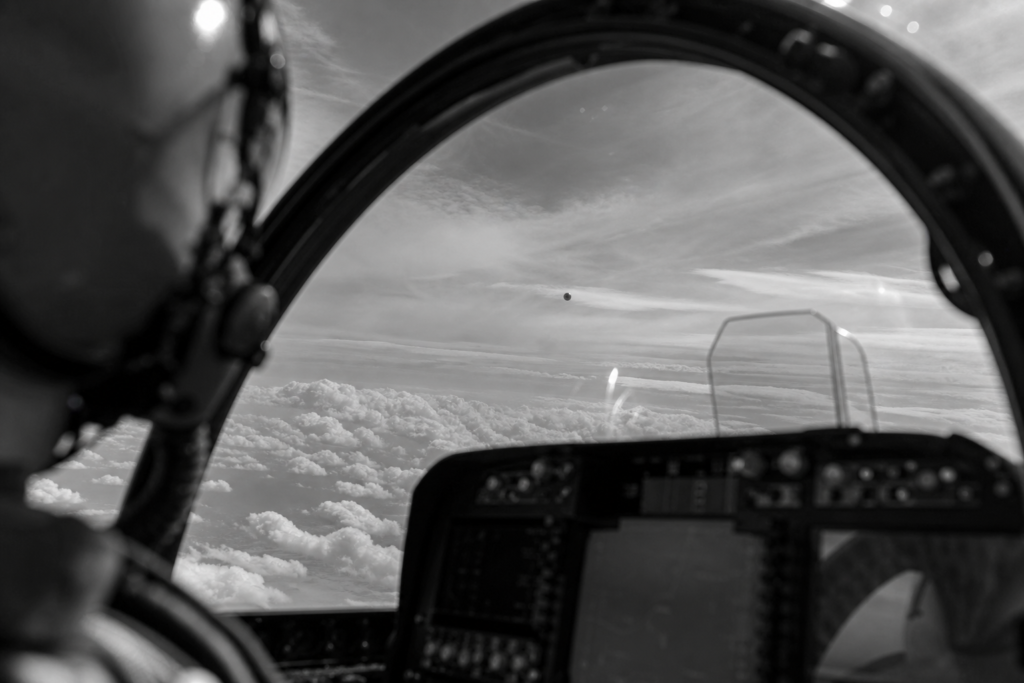
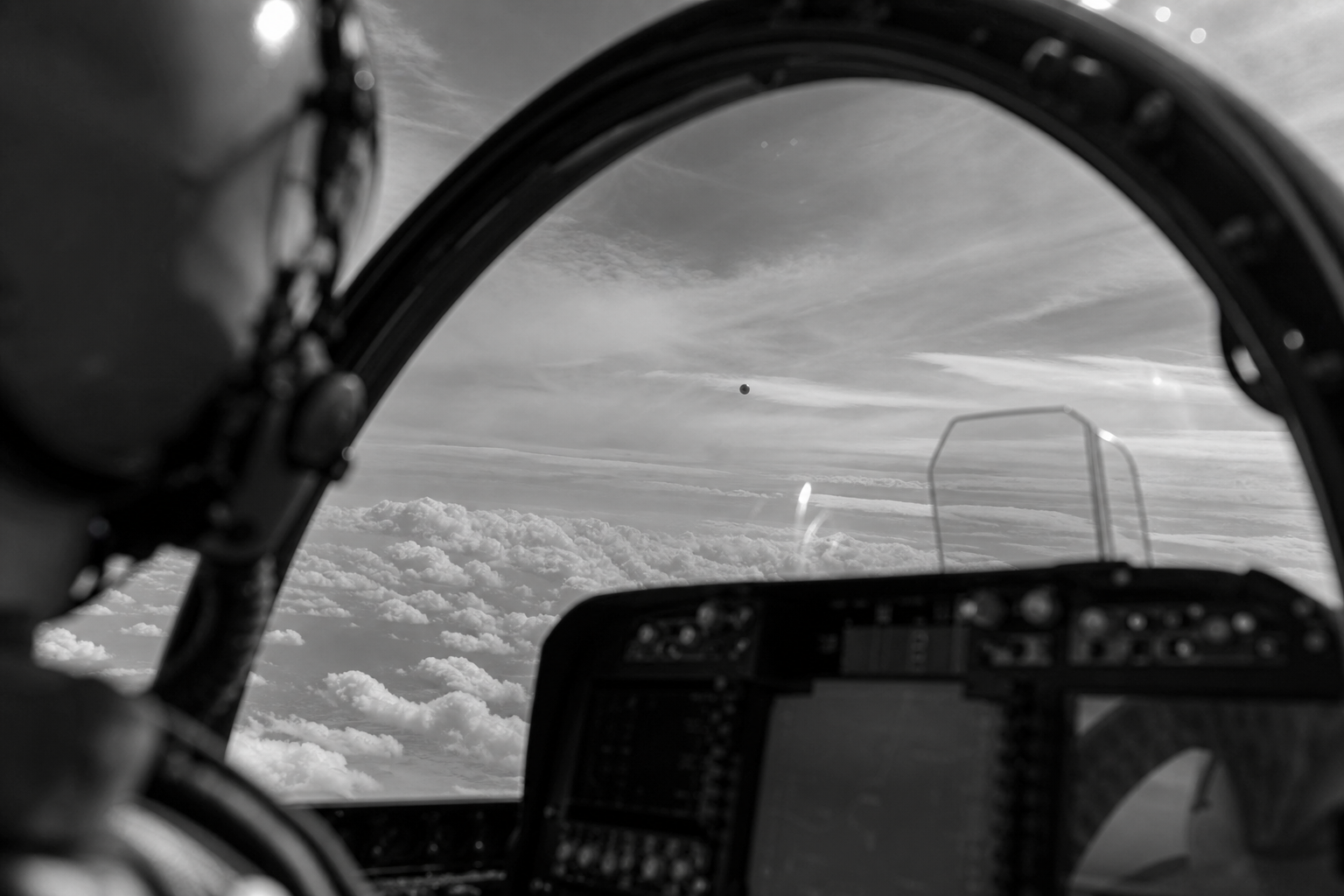
The ODNI 2021 UAP report was significant not because it endorsed an extraordinary explanation, but because it publicly acknowledged a persistent military reporting and analysis problem. Prepared with the UAP Task Force, the June 2021 preliminary assessment reviewed 144 U.S. Government reports from 2004 through 2021. It identified one object as a large, deflating balloon; it did not conclusively characterize the other 143. “Unresolved” therefore meant the available information was inadequate for a firm determination, not that the reports proved extraterrestrial or non-human activity.
The assessment also treated unidentified objects as a practical aviation issue. It recorded 11 reports in which pilots described near misses, a concrete reason to improve collection and reporting even when an object’s origin remains unknown. Its uncertainty reflected inconsistent reporting, incomplete sensor coverage, and fleeting observations, not a single shared set of unusual characteristics. The analysis ahead separates those limits from speculation, explains the report’s five broad working categories, from airborne clutter and natural phenomena to possible foreign systems, and shows why an unidentified report can warrant flight-safety attention without establishing hostile or exotic intent.
What ODNI’s June 2021 UAP Assessment Was, and Was Not
The document’s date and remit are the first checkpoints for reading it accurately. Issued on June 25, 2021, Preliminary Assessment: Unidentified Aerial Phenomena was the Office of the Director of National Intelligence’s public submission, prepared in coordination with a Pentagon-led review effort. Its purpose was bounded: summarize the reports then available, identify weaknesses in the information collected, and consider potential operational or intelligence concerns.
“Preliminary” mattered. This was an initial assessment built from a limited reporting set, not a final adjudication of every observation or a comprehensive history of government UAP knowledge. It did not claim that all 144 reports described the same kind of object or event. One report could be characterized as a large, deflating balloon; the remaining cases lacked enough information for a conclusive characterization.
That distinction sets the proper reading of an unidentified report. It describes an observation whose available data did not support a reliable identification at that point, not a confirmed origin, technology, or intent. The assessment therefore left room for ordinary explanations, classified U.S. activity, foreign systems, and genuinely insufficient data. It neither announced extraterrestrial evidence nor substantiated a disclosure narrative; it documented an analytical gap the government considered worth addressing.
The 144 Military-Related Reports: What the Headline Number Actually Means
The headline figure is a count of reports, not a finding that 144 distinct objects shared a single origin or capability. The assessment considered 144 U.S. Government reports made between 2004 and 2021, most involving military aviators. It was a working sample defined by the material available for review, rather than a census of every unusual aerial observation made during those years.
Its numerical result has an essential qualification. Analysts characterized one report with high confidence as a large, deflating balloon. For the other 143, the available material did not permit a conclusive characterization at the time of the assessment. Thus, “143 uncharacterized reports” is the more precise description: it records an unresolved analytical status, not a conclusion that each case was anomalous, technologically advanced, or extraordinary.
This difference matters because a report can remain uncharacterized for mundane reasons, including incomplete observations or data that cannot support a confident match, without becoming evidence for a particular explanation. The assessment did identify an operational reason to take the sample seriously: 11 reports included pilots’ accounts of near misses. Those accounts supported better awareness of objects near military operations; they did not establish what the objects were or who, if anyone, controlled them.
Why the UAP Task Force Could Not Characterize Most Cases
Brief, moving observations are especially difficult to resolve after the fact. Collection was often inconsistent: reporting practices varied across services and missions, sensor coverage was limited, and an encounter could end before analysts obtained the details needed to compare it reliably with known aircraft, balloons, atmospheric effects, or other possibilities.
Many reports were not based on a single eyewitness account. The assessment noted that 80 reports involved observation with multiple sensors, including combinations of radar, infrared, electro-optical systems, weapon-system sensors, and visual observation. But multiple sensor streams do not automatically produce a conclusive identification. Analysts need the readings’ timing, location, settings, calibration, operating conditions, and relationship to one another. A video clip or radar track without that context can show that something was detected while still leaving its range, size, speed, or behavior uncertain.
The practical distinction is between data presence and data quality. A strong case preserves enough synchronized, contextualized information to test competing explanations; a weak case may contain imagery or sensor data that cannot be interpreted confidently. The UAP Task Force assessment therefore called for more rigorous collection, analysis, and reporting processes. That push for improved official reporting and analytical transparency was a meaningful form of UAP disclosure, but it was not a finding that the unresolved observations demonstrated advanced technology or non-human origin.
The Five Explanatory Categories, and Why They Were Not Final Answers
The assessment offered five explanatory categories as an analytical map for sorting future cases, not as a set of findings assigned to the 143 reports that remained uncharacterized. The categories were: airborne clutter; natural atmospheric phenomena; U.S. Government or industry developmental programs; foreign adversary systems; and a residual “other” category.
Airborne clutter covers objects such as birds, balloons, or airborne debris that can be difficult to identify under particular viewing or sensor conditions. Natural atmospheric phenomena encompasses weather-related effects and other environmental conditions that may produce unusual visual or sensor returns. The developmental-program category allowed analysts to consider classified or sensitive U.S. work without publicly exposing it; the foreign-adversary category addressed the possibility of another nation’s surveillance or aviation technology. “Other” was the place for cases that did not yet fit the preceding bins, not a label for alien craft, non-human intelligence, or a demonstrated break with known physics.
The distinction matters because a category is a hypothesis to test. It tells investigators what comparisons, technical analysis, and contextual information may be useful; it does not establish that a particular explanation has been proved. The preliminary assessment noted that some reports appeared to show unusual movement patterns or flight characteristics and that some involved unusual signatures. Yet it also warned that those impressions could arise from sensor artifacts, spoofing, or observer misperception. A striking track on a display is therefore a lead for analysis, not by itself a reliable measurement of an object’s speed, maneuvering, or origin.
Read this way, the five explanatory categories preserve competing possibilities rather than collapsing uncertainty into a dramatic conclusion. Their purpose was to make later collection and analysis more systematic: distinguish a mundane object from an atmospheric effect, assess whether a signature reflects a sensor problem, and investigate potentially sensitive U.S. or foreign systems without assuming any one answer in advance.
Why ODNI Treated Some UAP Reports as Flight-Safety Concerns
For an aircrew, the immediate problem is not whether an object fits an analytical category; it is the need to make safe decisions before its identity, position, and behavior are known. An unidentified object in or near a military operating area can force pilots to alter course, increase separation, or break attention from a mission. Those are practical flight safety risks even if later analysis identifies the object as ordinary.
The June 2021 preliminary assessment recorded 11 reports of documented near misses in which pilots reported coming close to a UAP. That figure did not establish that all 11 involved collisions narrowly avoided, hostile systems, or extraordinary technology. It established something more limited and operationally important: uncertainty around an object’s presence and movement had entered the cockpit decision-making environment.
The assessment treated this aviation issue separately from its intelligence concern. An unknown object operating in restricted airspace could potentially be collecting information about U.S. capabilities or operations, or could reflect foreign technology. Those possibilities create a counterintelligence and national-security question because an adversary’s surveillance platform and an innocuous object may initially look similarly unresolved when the available data are thin.
Neither concern supplied an explanation for a particular report. The relevant distinction is between risk and attribution: an object can warrant reporting and analysis because it may interfere with safe operations, while its origin, operator, and intent remain undetermined. Better reporting therefore served both purposes, reducing avoidable aviation uncertainty and preserving the information needed to assess a possible intelligence threat.
What the 2021 Report Did Not Establish About Aliens or a Cover-Up
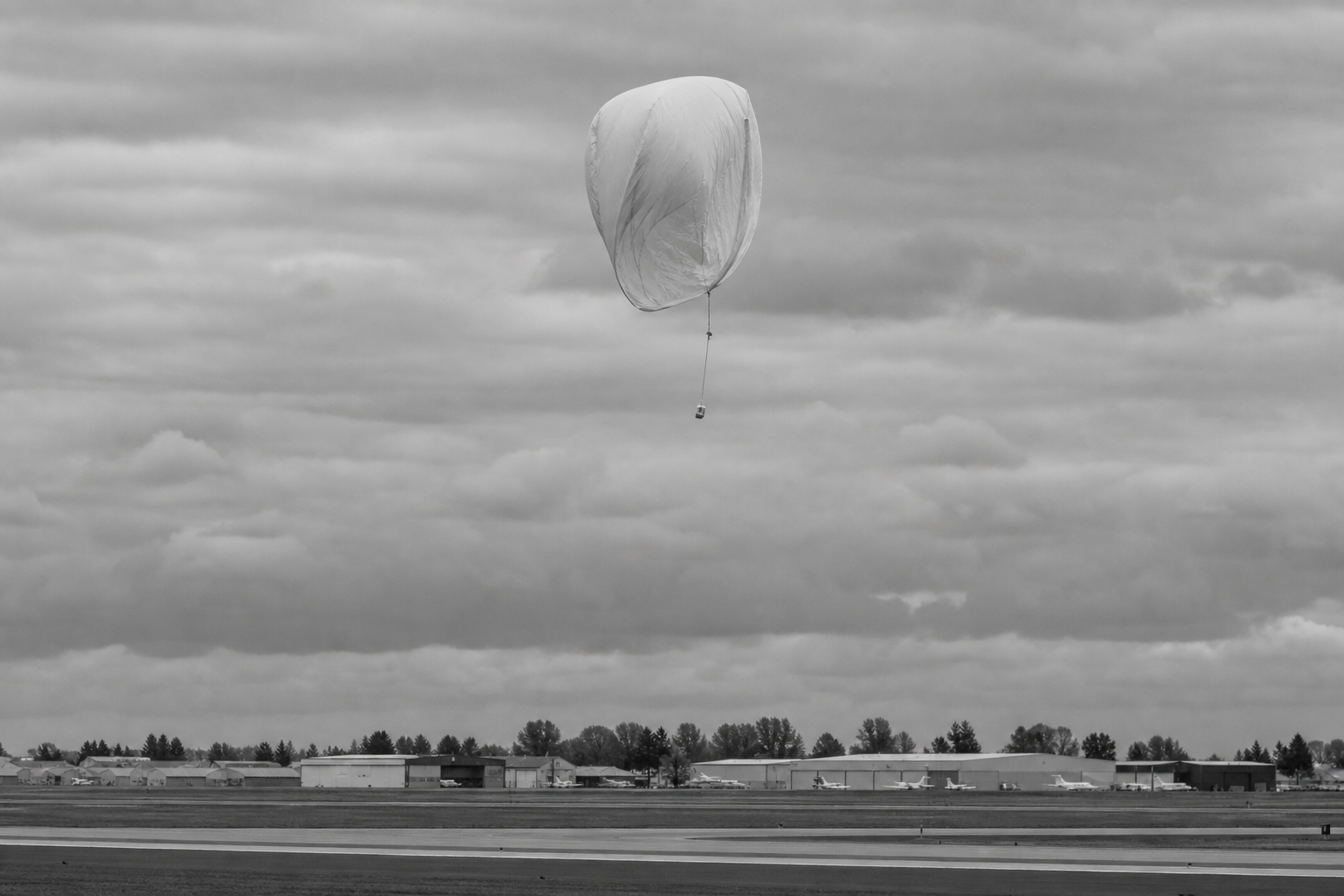
Of the 144 reports reviewed, the assessment characterized only one, a large, deflating balloon, and left the other 143 without a conclusive explanation. It made no finding that any reported object was an alien spacecraft, evidence of non-human intelligence, or the product of a crash-retrieval program. Nor did it find a government UFO cover-up. Those propositions require affirmative evidence addressing origin, custody, official knowledge, or concealment; the assessment presented none and reached none of those conclusions.
The logical error is to treat an unresolved report as though it had eliminated every ordinary explanation and thereby become extraordinary. “Not conclusively characterized” described the state of the analysis for 143 reports: the available information did not support a reliable assignment. “Affirmatively identified as extraordinary,” by contrast, would require evidence that positively distinguishes an object from known or plausible alternatives. The report’s five explanatory categories, including airborne clutter, atmospheric phenomena, U.S. programs, and foreign systems, showed that alternatives remained open rather than ruled out.
A practical reading standard has three checkpoints. First, isolate the document’s actual findings: 144 reports, one balloon characterization, and 11 documented near-miss reports. Second, retain its stated uncertainty, including inconsistent reporting and limited sensor data. Third, separate those findings from later commentary. A claim of alien disclosure, recovered craft, or concealed knowledge is an additional interpretation; it is not a conclusion supplied by the 2021 assessment.
How the 2021 Assessment Shaped Later UAP Reporting
The assessment’s practical legacy was to make UAP reporting a continuing operational function rather than an occasional collection of unusual anecdotes. Its framework connected three distinct needs: aviation reporting when an object may affect an aircrew’s decisions, intelligence review when its identity or capability is uncertain, and better data practices when the existing record cannot support a reliable conclusion. Those needs point to different questions, safe separation, possible surveillance or intrusion, and evidentiary quality, but all depend on timely, structured information.
Institutionally, later UAP work moved beyond the UAP Task Force to the All-domain Anomaly Resolution Office, or AARO. That change matters because an all-domain office is designed to assess reports across more than the air domain and to consolidate collection, analysis, and reporting processes. It does not retroactively expand the scope of ODNI’s June 2021 preliminary assessment, which remained a limited review of the reports then available to the task force.
Later ODNI reporting, AARO reports, congressional testimony, and search-driven coverage of UFO sightings 2025 or 2026 are separate records with their own dates, evidence, and conclusions. They should not be read back into the 2021 document. The ODNI preliminary assessment on UAP left a durable lesson: uncertainty is a reason to improve reporting, preserve sensor context, and test explanations more rigorously. It is not, by itself, evidence that an extraordinary explanation has been established.
The Lasting Meaning of the 2021 UAP Assessment
A stronger final checkpoint is whether the record can separate one explanation from another. One case could be characterized as a large, deflating balloon; in 143 others, the available information did not support a firm conclusion. That result did not make the remaining cases a single kind of mystery, much less establish an extraordinary origin. It showed that the evidence often could not discriminate among plausible explanations. The five categories functioned as investigative pathways, testing clutter, atmospheric effects, domestic programs, foreign systems, or residual possibilities, not as conclusions assigned to unresolved reports.
The practical lesson is equally durable. The 11 documented near-miss reports meant unidentified aerial phenomena could matter to aviation safety before analysts knew what an object was; uncertainty can require operational attention without proving hostile intent. Incomplete identification could also carry intelligence implications when a possible surveillance or intrusion question could not be answered. The ODNI 2021 UAP report is therefore best read as an argument for disciplined collection: preserve sensor context, record pilot observations promptly, compare competing explanations, and distinguish an evidentiary gap from evidence for a preferred claim. That restraint is what makes the assessment consequential rather than sensational.
Frequently Asked Questions
-
What did the ODNI 2021 UAP report say about the 144 incidents?
The June 25, 2021 ODNI preliminary assessment reviewed 144 U.S. Government UAP reports from 2004 through 2021. It identified one as a large, deflating balloon and could not conclusively characterize the other 143.
-
Did the 2021 ODNI UAP report confirm alien spacecraft?
No. The report made no finding that any object was an alien spacecraft, evidence of non-human intelligence, or proof of a government cover-up. Unresolved cases reflected insufficient information for a reliable identification.
-
Why could the UAP Task Force not explain most reported incidents?
The task force cited inconsistent reporting, limited sensor coverage, incomplete observations, and brief encounters. Although 80 reports involved multiple sensors, missing timing, calibration, location, and operating-context data often prevented conclusive analysis.
-
What flight safety risks did ODNI identify in its 2021 UAP report?
ODNI recorded 11 pilot reports of near misses involving UAP. An unidentified object near military operations can require aircrews to alter course, increase separation, or divert attention from their mission before its identity or behavior is known.
-
What is the difference between the 2021 ODNI UAP report and later AARO reports?
The 2021 ODNI assessment was a limited preliminary review of 144 reports available to the UAP Task Force. Later AARO reporting covers an ongoing all-domain process for collecting, analyzing, and resolving reports beyond the original air-focused sample.