ODNI Preliminary Assessment on UAPs: 144 Military Reports Mostly Unexplained (2021)
Explore the ODNI UAP preliminary assessment 2021: why 143 military reports remained unresolved, its data gaps, and security implications.
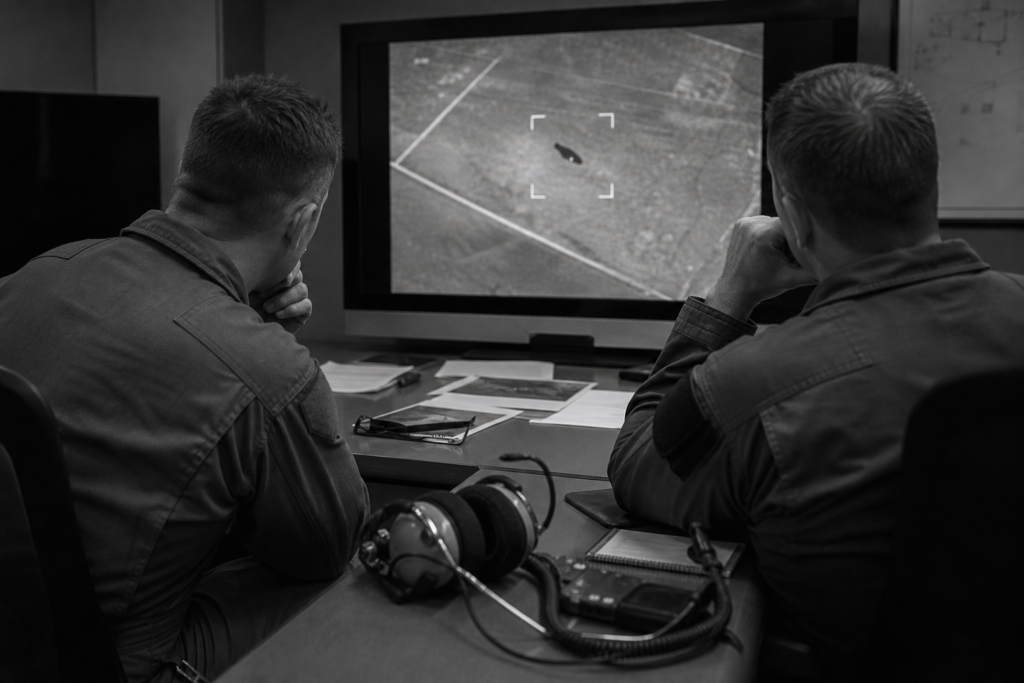
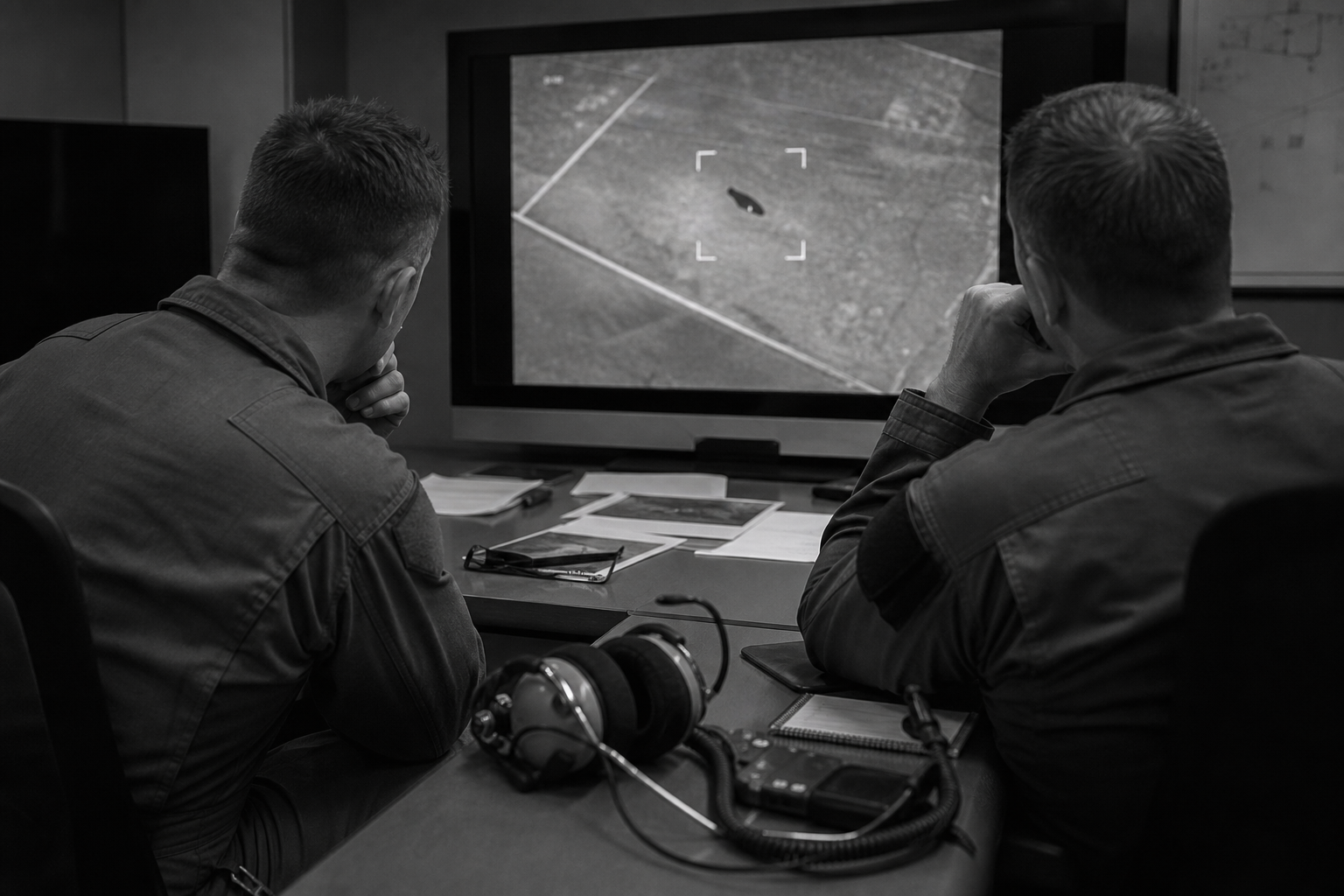
When the Office of the Director of National Intelligence released its preliminary UAP assessment on June 25, 2021, public attention quickly fixed on a striking number: 144 military-origin reports had been reviewed, and nearly all remained unexplained. The ODNI UAP preliminary assessment 2021, however, was more cautious than the headlines that followed.
“Unexplained” did not mean the government had identified extraordinary craft, much less extraterrestrial visitors. The Department of Defense’s Unidentified Aerial Phenomena Task Force examined 144 reports from U.S. government sources; it identified one with high confidence as a large, deflating balloon. It did not characterize the other 143 because the available information was limited or inconsistent, often insufficient for a confident conclusion about what had been observed.
UAP was the report’s working term for an observed aerial phenomenon not immediately identified, not a label for a confirmed object or origin. The assessment considered possible explanations ranging from airborne clutter and natural phenomena to U.S. programs, foreign systems, and an “other” category. It also treated encounters as potential flight-safety and national-security concerns. The pages that follow separate those documented findings and data gaps from speculation the report did not support.
What the June 2021 ODNI UAP Assessment Was, and Was Not
Congress’s reporting mandate set a narrow evidentiary boundary: this was an intelligence-oversight assessment, not a scientific investigation of every alleged UFO encounter. Its purpose was to summarize a defined body of government reporting and identify where collection and analysis needed improvement.
Released in unclassified form on June 25, 2021, the preliminary assessment was prepared by the Office of the Director of National Intelligence with the Department of Defense’s Unidentified Aerial Phenomena Task Force (UAPTF), then the Pentagon body responsible for consolidating and evaluating relevant military reports. Its review window ran from 2004 through 2021.
More importantly, the underlying material came from U.S. government reporting, principally observations in military operational contexts and, in some cases, pilot accounts, radar, infrared imagery, or other sensor information. That is a much narrower evidentiary universe than the public commonly associates with “UFO” reports.
The document was therefore not a census of every unusual light, photograph, or claimed encounter reported by civilians. A public sighting may lack the provenance, sensor records, location data, or operational context available to the UAPTF; a military-origin report could contain some of those elements while still falling short of identification. “Preliminary” signaled an initial congressionally requested account of a defined set of reports, not a final explanation for aerial phenomena in general.
What Happened to the 144 Military UAP Reports
The number was a case count, not an inventory of 144 physical objects. Each entry represented a military-origin report reviewed by the UAPTF, potentially drawing on one or more observations and available supporting records. Treating the figure as 144 confirmed craft would turn an administrative and analytic dataset into a conclusion the assessment did not reach.
Of those 144 reports, the task force identified one with high confidence: a large, deflating balloon. That result is important because it shows the review could reach a conventional identification when the available information supported one. It also supplies the proper baseline for interpreting the rest of the count: identification depended on the quality and sufficiency of evidence attached to an individual report, not on the fact that an event had initially been logged as a UAP.
The remaining 143 reports were not conclusively characterized at the time of the June 2021 assessment. In the report’s careful formulation, the available information was insufficient for specific attribution. “Unexplained” therefore described an unresolved analytic status, not a finding that the observations were anomalous craft, technologically advanced vehicles, or extraterrestrial in origin.
Nor did the 2021 ODNI UAP report assign the 143 cases a common cause. A report could remain unresolved for different reasons: incomplete sensor coverage, uncertain context, limited duration, or evidence that did not permit analysts to distinguish among ordinary and less familiar possibilities. The headline that 144 UAP reports were unexplained obscures this case-by-case reality. One identified balloon and 143 not-conclusively-characterized reports describe the outcome of a preliminary review, not a single phenomenon with 143 identical instances.
Why Most Cases Were Unresolved: Data Gaps, Not an Alien Conclusion
A sighting becomes easier to assess when analysts can place it in context: where the platform was, what its instruments recorded, how long the event lasted, and whether independent systems captured the same target at compatible times and locations. Detection is the initial indication on a sensor or by an observer; observation is the resulting record; attribution is the stronger conclusion that identifies what produced it. The assessment often had enough to establish that something had been reported, but not enough consistent information to make that last step.

The UAP Task Force described reporting as inconsistent and noted that the Department of Defense had lacked a standardized mechanism for collecting and organizing these encounters. That matters because a pilot account, radar track, infrared image, and aircraft-position record answer different questions. A single visual observation may be affected by distance, viewing angle, weather, or brief duration. Sensor data can add measurements, but only if analysts can align the records across platforms, reconstruct the timing, and rule out gaps or mismatches in coverage. Incomplete collection can therefore leave several ordinary explanations plausible without supplying enough evidence to select one confidently.
Multi-sensor observation improved the evidentiary starting point but did not settle every case. The assessment reported that 80 of the 144 reports involved observations from multiple sensors, including combinations of radar, infrared, electro-optical, weapon-seeker, and visual systems. Multiple instruments can corroborate that an event occurred and provide more than one kind of measurement; they do not automatically reveal an object’s identity, intent, or origin. A useful record requires the separate streams to be sufficiently complete and correlatable, rather than merely numerous.
For that reason, the ODNI UAP preliminary assessment 2021 treated better collection and analysis as the practical response. It called for standardized reporting, more consistent data gathering, and resources to deepen analysis. An evidentiary gap is not affirmative evidence of non-human intelligence: it means the available material did not support a defensible attribution. The distinction preserves what the assessment actually showed, an intelligence and data-quality problem requiring a more rigorous process.
The Five Explanatory Categories the Report Considered
Rather than posit a single cause, the UAP Task Force set out five analytical buckets to organize future assessment. These were possibilities to test against available records, not labels it had conclusively assigned across the case set. The framework mattered because the same apparent event can demand very different kinds of evidence before analysts can determine whether it was a mundane object, an environmental effect, protected U.S. activity, or a potential foreign capability.
- Airborne clutter covered ordinary objects aloft, including birds, balloons, and debris such as plastic bags. Analysts would need position, altitude, imagery, wind information, and sensor behavior consistent with such an object; a brief track without that context may not distinguish a balloon from another slow-moving return.
- Natural atmospheric phenomena referred to effects produced by weather or the atmosphere. Here, the useful evidence differs: meteorological conditions, visibility, temperature layers, and an understanding of how particular sensors can respond to those conditions help determine whether an apparent target was an object at all.
- U.S. government or industry developmental programs addressed the possibility that a report involved a domestic technology or test activity. Attribution in this category depends on securely matching the event’s time, location, and characteristics with protected operational information, not simply noting that an observation looked unusual.
- Foreign adversary systems captured the intelligence question of whether a reported phenomenon could represent technology fielded by another state. That possibility requires evidence capable of supporting an origin and capability assessment, rather than an inference drawn solely from an unfamiliar sensor signature.
- Other was the residual category for cases that did not fit the preceding explanations and required additional scientific knowledge or better analysis. It did not establish an extraterrestrial or non-human origin; it marked an analytic shortfall, not a finding about what produced the report.
The categories therefore separated competing lines of inquiry instead of supplying a menu of confirmed answers. A bird, a weather-related effect, a classified domestic program, and foreign adversary systems each leave different traces and require different corroboration. The June 2021 assessment proposed using improved collection and analysis to sort among them, preserving uncertainty where the available record could not justify a narrower conclusion.
Why the Assessment Treated UAPs as a Flight-Safety and National-Security Issue
For military aviators, an unidentified presence in or near operating airspace is an operational problem before it is an interpretive one. The June 25, 2021 assessment noted 11 reports documenting near misses between UAP and military aircraft. A near miss does not establish what the reported phenomenon was, but it does identify a potential flight-safety risk: crews may have to react to an object or sensor return whose position, trajectory, and behavior are not yet understood.
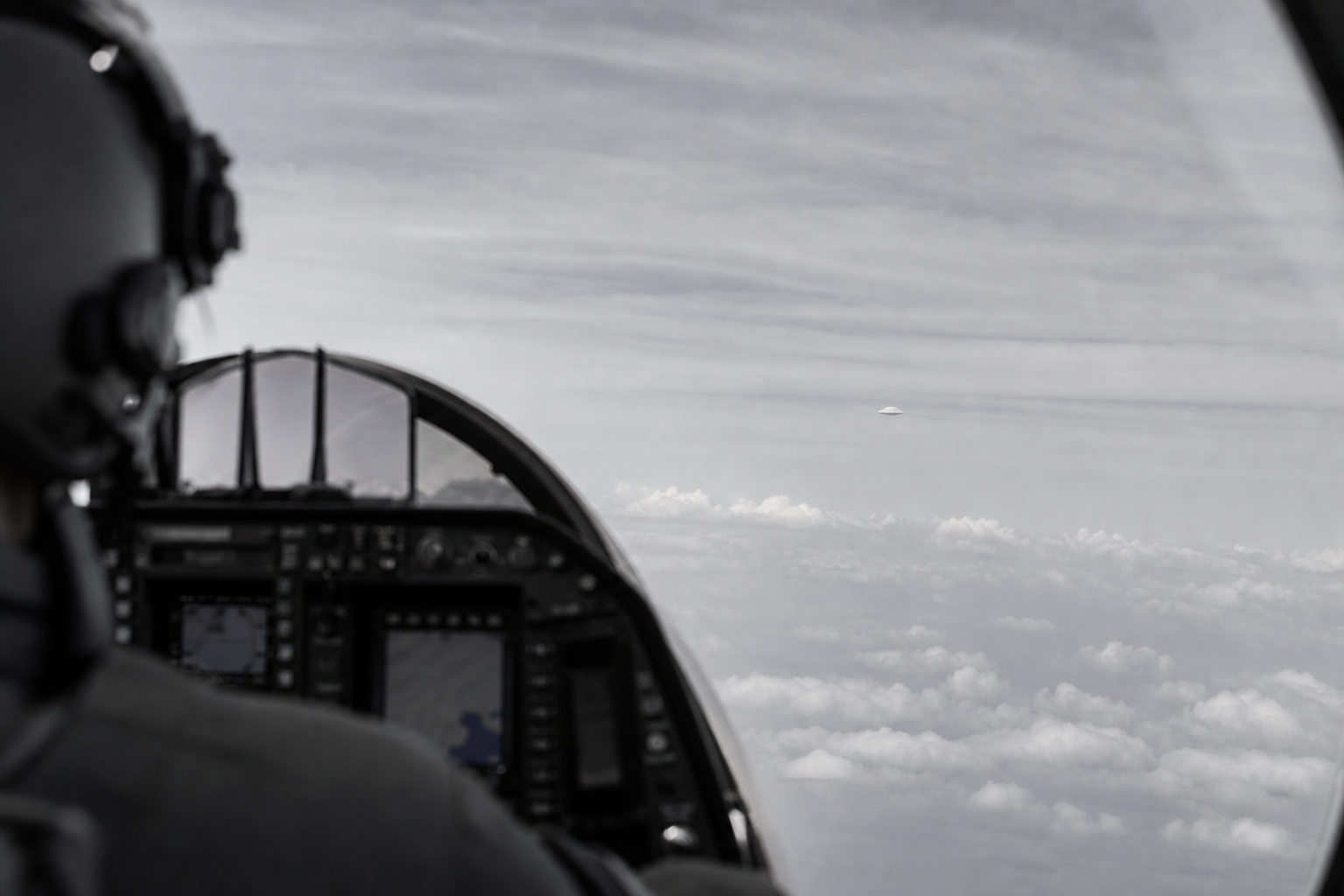
The same uncertainty created a national-security question. The UAP Task Force considered whether some reports could involve foreign adversary systems, either an intelligence-collection platform operating near U.S. training activity or an advanced aerospace capability unfamiliar to U.S. forces. Those are distinct concerns: collection focuses on what an adversary might learn by observing operations, while an advanced system could indicate a capability gap. Neither possibility could be inferred merely because a report was unresolved; it required attribution-quality evidence.
The assessment also recorded that some reports appeared to show unusual movement patterns or flight characteristics, and it raised the possibility of signature-management features that could complicate detection. “Appeared” is crucial. The document did not determine that any observation involved a particular technology, propulsion method, nation, or source, and it did not treat these characteristics as proof of non-human origin. Its practical conclusion was narrower: better reporting and analysis were needed because unidentified encounters could affect both aircrew safety and the ability to assess potential foreign activity.
What the 2021 Report Changed, and What It Did Not Prove
The report’s most durable effect was procedural rather than revelatory. It called for standardized reporting, more consistent collection, and additional analytical resources, measures intended to turn scattered military encounters into records that could be compared, corroborated, and, where possible, attributed. The immediate post-assessment response included a formal coordination office for UAP identification and analysis. That is a meaningful change: an unresolved report can remain uncertain, while a better reporting system improves the odds that later cases contain the sensor, timing, and contextual data needed to reach an answer.
Subsequent context: the UAP Task Force-era effort was later consolidated into the All-domain Anomaly Resolution Office (AARO), established by the Department of Defense in 2022. AARO became the Pentagon UFO office commonly associated with centralized anomaly reporting and analysis across domains. Its creation reflects an institutional response to the collection problem identified in 2021; it was not a finding contained in the June 25 assessment.
That distinction is essential to reading the ODNI UAP preliminary assessment 2021 accurately. It did not constitute UAP disclosure, announce alien visitation, present crash-retrieval evidence, or establish a government UFO cover-up. It recorded 144 military-origin reports, identified one as a balloon, and left 143 uncharacterized because the available information did not support a confident conclusion. The original ODNI assessment remains the clearest guide to the limits of what was actually established.
The 2021 Assessment’s Real Takeaway
The disciplined reading of this record is about the boundary between observation and conclusion. The assessment reviewed 144 military-origin reports, reached a high-confidence identification in one case, airborne clutter, described as a large deflating balloon, and did not characterize the other 143 because the information available did not permit reliable attribution.
That outcome does not elevate any one explanation. The five categories, airborne clutter, natural atmospheric phenomena, U.S. government or industry programs, foreign adversary systems, and “other”, were analytical pathways for sorting evidence. They differ because each calls for different corroboration: a balloon may be resolved through tracking and imagery, while a possible foreign system raises questions about capability, intent, and access to restricted airspace. An unresolved file simply means the available record could not distinguish decisively among such possibilities.
The ODNI UAP preliminary assessment 2021 therefore matters less as a catalogue of mysteries than as a case for evidentiary discipline. Its practical legacy was to press for continued, more systematic UAP reporting and review where uncertainty can carry flight-safety and national-security consequences. The appropriate conclusion remains measured: improve the quality of the record before drawing conclusions from its gaps.
Frequently Asked Questions
-
What did the 2021 ODNI UAP preliminary assessment actually say?
The June 25, 2021 assessment reviewed 144 military-origin UAP reports collected from 2004 through 2021. It identified one report as a large, deflating balloon and found insufficient information to characterize the other 143.
-
Were 143 of the 144 UAP reports unexplained?
Yes, 143 reports were not conclusively characterized, but that meant the available data was insufficient for specific attribution. It did not mean the reports were confirmed anomalous craft, advanced vehicles, or extraterrestrial objects.
-
Did the ODNI report confirm that UFOs were alien spacecraft?
No. The report did not identify extraterrestrial or non-human spacecraft, announce alien visitation, present crash-retrieval evidence, or establish a government cover-up.
-
Why could the UAP Task Force not identify most of the 144 reports?
The task force cited inconsistent reporting and incomplete or mismatched data, including gaps in sensor coverage, timing, context, and corroborating records. Although 80 of the 144 reports involved multiple sensors, multi-sensor data did not automatically establish an object’s identity, origin, or intent.
-
What should analysts look for when deciding whether a UAP report can be identified?
Analysts need correlatable records such as platform position, duration, radar or infrared data, imagery, weather conditions, and independent observations at compatible times and locations. These details help distinguish among airborne clutter, atmospheric effects, U.S. programs, foreign systems, and cases needing further analysis.