ODNI Preliminary Assessment on UAPs (2021): Summary of 144 Military Reports and Unexplained Cases
Explore the ODNI Preliminary Assessment UAP 2021: 144 military reports, one balloon case, data gaps, and what unresolved cases meant.


Released publicly in June 2021, the ODNI Preliminary Assessment: Unidentified Aerial Phenomena brought an unusually narrow but consequential government review into view: 144 reports from U.S. government sources, primarily Navy personnel. Its significance lay less in a dramatic conclusion than in the opposite, a formal acknowledgment that the available information often could not support a firm identification.
The ODNI Preliminary Assessment UAP 2021 did not establish that the reported objects were extraterrestrial, non-human, or based on breakthrough technology. “Unresolved” describes an evidentiary outcome: the report lacked sufficient, consistent data to characterize most cases conclusively. It did identify one report with high confidence as a large, deflating balloon, while leaving the others open for further analysis rather than assigning them an extraordinary cause.
This article examines what those 144 military reports covered, what the assessment actually found, and why the result was so indeterminate. It also separates stronger multi-sensor observations from reports with thinner records, explains the report’s analytical categories without mistaking them for answers, and shows why shortcomings in reporting and data collection helped make UAP an enduring aviation-safety, intelligence, and policy concern.
What the June 2021 ODNI UAP Assessment Was, and Was Not
The document ran to nine pages, a useful limit on what its findings can bear. Its task was to assess reports that could present flight-safety hazards or national-security challenges, rather than to investigate every historical UFO claim or allegation.
Published in June 2021 following a statutory intelligence-reporting mandate, Preliminary Assessment: Unidentified Aerial Phenomena was prepared by the Office of the Director of National Intelligence in consultation with the Department of Defense and the Unidentified Aerial Phenomena Task Force. The word preliminary describes both its purpose and its limits: uneven reporting and incomplete data constrained the review, rather than supporting a final account of reported phenomena.
The ODNI UAP report 2021 treated the subject as an operational concern. An object near military training activity whose identity, location, or intent could not be promptly determined could pose a safety or counterintelligence problem. That focus supported better collection, reporting, and analysis; it was not a finding about extraterrestrial life, non-human intelligence, or alleged U.S. government concealment.
For later analysis, the review set out five possible explanatory categories: airborne clutter; natural atmospheric phenomena; U.S. government or industry developmental programs; foreign adversary systems; and an “other” category. These were evidence-sorting paths, not conclusions assigned to individual reports. Airborne clutter could include ordinary objects such as balloons, while the foreign-adversary category addressed the possibility of an unfamiliar surveillance platform or technology. “Other” meant the available information did not fit the preceding categories well enough for characterization; it did not designate a confirmed extraordinary origin.
What the Review Covered: 144 Military Reports From 2004 to 2021
November 2004 to March 2021 is the review window behind the number 144. Those 144 UAP reports were selected for analysis; they did not represent 144 separately verified vehicles or physical objects. Most originated with U.S. Navy personnel, and the underlying incidents occurred primarily between 2019 and 2021.
That distinction changes how the figure should be read. A report can combine a pilot’s visual observation with radar data, infrared imagery, or another sensor record; it can also describe an event for which only part of that information was available. Conversely, multiple reports can concern related observations of the same apparent event. The total therefore measures the review’s case material, what personnel and systems recorded, not a census of independently established craft.
The reports also did not represent a random sample of activity over the United States or the world. Collection was concentrated around U.S. military training and testing ranges, where military aviators, aircraft, and sensors were operating. This setting made the observations operationally significant: an unidentified presence near restricted training activity could affect flight safety, mission planning, and the protection of sensitive capabilities before its nature was known.
It also limits broader inferences. The concentration in these areas may reflect where personnel trained, where sensors were available, and where reporting channels existed, rather than a demonstrated concentration of any particular kind of object. The 2021 UAP preliminary assessment therefore examined a bounded military reporting set, shaped by when and where observations were collected, rather than attempting to catalogue every public UFO sighting.
What ODNI Found: One Likely Balloon Case, 143 Still Unresolved
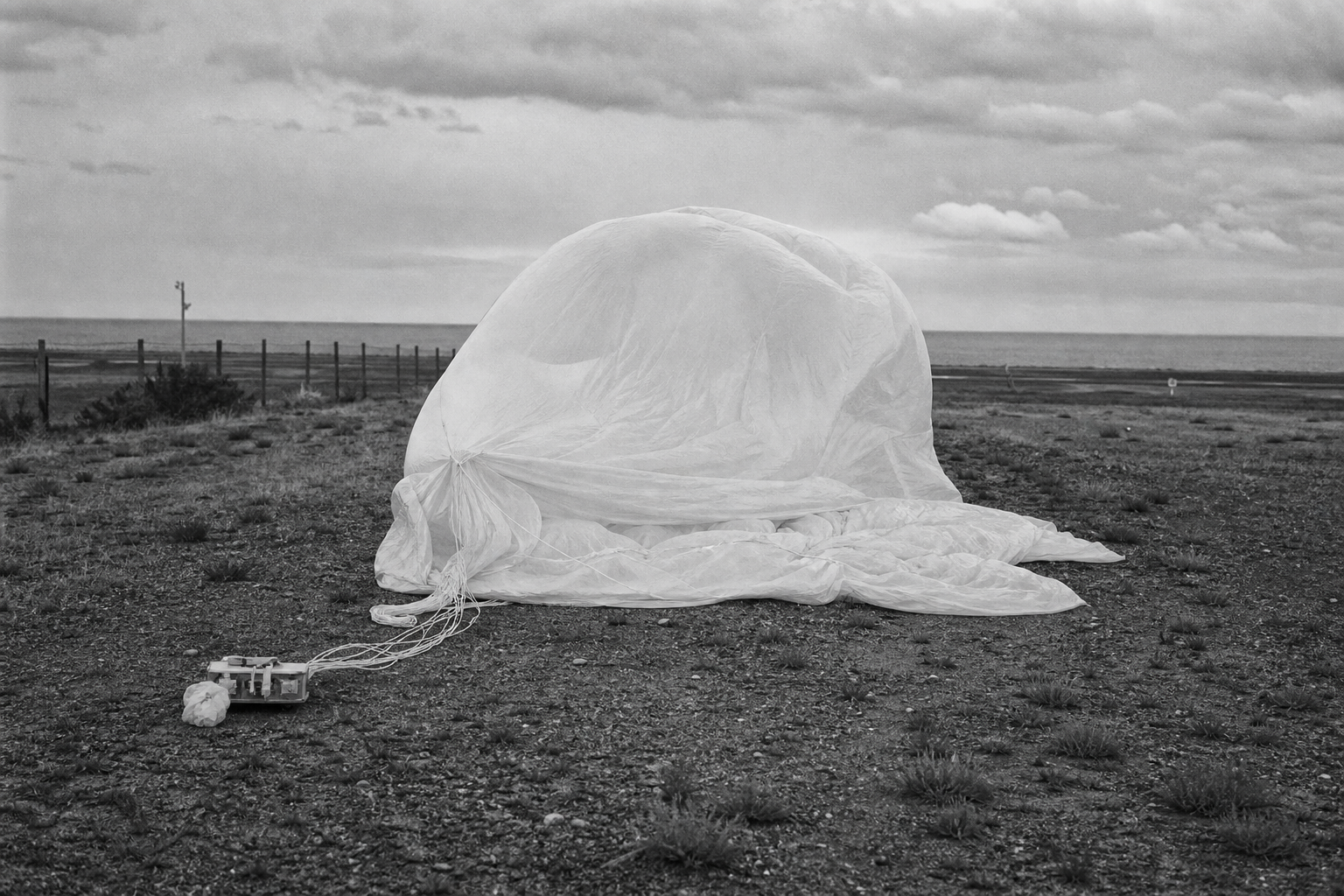
The assessment’s only high-confidence identification was comparatively ordinary: analysts determined that one reported UAP was a large, deflating balloon. That result is important because it shows the review could reach a specific conclusion when the available information supported one; the report was not treating every observation as inherently mysterious.
For the other 143 reports, ODNI and the UAP Task Force said the information available at the time was insufficient for confident characterization or attribution. A characterization describes what the observed object or phenomenon most likely was; attribution goes further by connecting it to a particular source or actor. The assessment could do neither reliably for most of the remaining cases, so it called for additional information and analysis rather than selecting a preferred explanation.
“Unidentified” therefore described the status of the evidence, not a demonstrated property of an object. It meant that the records did not allow analysts to resolve a report into one of the possible explanatory paths already outlined, such as airborne clutter, a natural phenomenon, a U.S. program, a foreign system, or another category. An unresolved case could potentially become identifiable if later analysis added clearer sensor data, contextual information, or a better baseline for comparison.
The 2021 Pentagon UAP report did note that 80 reports involved observations from multiple sensors, which can provide a stronger basis for analysis than a single account alone. It also flagged 21 reports covering 18 incidents that appeared to involve unusual movement or flight characteristics. Neither point amounted to a conclusion about origin or technology. The ODNI Preliminary Assessment UAP 2021 did not confirm extraterrestrial activity, non-human intelligence, or recovered technology; it documented a substantial set of military reports that remained uncharacterized on the evidence then available.
Why Most Cases Remained Unresolved: Data Gaps, Collection Bias, and Inconsistent Reporting
A firm identification depends on more than an observation that something was present. Analysts need enough context to compare what was seen with ordinary aircraft, balloons, weather effects, known operations, and sensor artifacts. The assessment found that most reports lacked the detailed information needed to make that comparison decisively. A track without reliable range, altitude, timing, or environmental context leaves far less to analyze than a record that joins those elements.
Reporting was also uneven. Before the more recent reporting mechanisms referenced in the assessment, personnel did not use a consistently standardized process for documenting UAP encounters. That can produce records of differing quality: one report may preserve imagery and associated sensor data, while another may chiefly preserve an observer’s account. Multiple sensors can strengthen a case by allowing analysts to compare observations across systems, but they do not automatically supply every missing measurement or establish an object’s identity.
The review likewise had limited baseline information, reference data showing what normally operates in a particular training area, at a particular time, and under particular conditions. Without that baseline, an unusual reading is harder to distinguish from an unfamiliar but conventional activity, a weather-related effect, or a limitation in how a sensor interpreted its environment. Sensor coverage was not uniform across military ranges, so the available record could be detailed in one instance and sparse in another.
Its review period also constrained what analysts could reconstruct from older encounters. The assessment noted a collection bias: reporting increased after the Navy established processes for personnel to report UAP near military training ranges. That increase can reflect greater attention and a clearer route for submitting reports, rather than a measured rise in the underlying number of phenomena.
These limitations explain why unresolved was an evidentiary outcome, not a positive finding for any particular theory. An incomplete record may be insufficient to rule in a balloon, atmospheric effect, domestic program, foreign platform, or another possibility; it does not thereby support the most extraordinary option. Better collection narrows uncertainty by preserving the details needed to test competing explanations.
What “Unusual Flight Characteristics” Meant in the Report
The phrase “unusual flight characteristics” described reported appearances, not verified aircraft performance. In 21 reports involving 18 incidents, the assessment identified observations that appeared to show unusual movement patterns or flight characteristics. The examples were objects reported as remaining stationary in winds aloft, moving against the wind, maneuvering abruptly, or traveling at considerable speed without discernible means of propulsion. Each description is potentially significant, but each depends on reliable measurements of position, range, speed, wind, viewing angle, and sensor behavior. An apparent hover or abrupt turn, for example, is not by itself a demonstrated capability if those variables remain uncertain.
ODNI did not treat this subset as proof that the incidents involved advanced technology. It said the reports required additional rigorous analysis to determine whether the apparent characteristics reflected breakthrough systems, sensor error, spoofing, or observer misperception. That qualification is central. The 21 reports were a priority group for further examination because their available information appeared noteworthy, not a set of cases that the assessment had solved as extraordinary.
The report’s five categories provided a structured way to test explanations. Airborne clutter covered objects such as balloons, birds, or debris that can be difficult to identify at range. Natural atmospheric phenomena covered weather-related or environmental effects. U.S. government or industry developmental programs allowed for authorized but unfamiliar activity, while foreign adversary systems addressed the counterintelligence possibility that another country’s platform or collection capability was involved. The final “other” category was a residual bin for cases not fitting the first four routes after analysis. These were investigative buckets, not labels assigned to every incident, and “other” did not mean extraterrestrial, non-human, or technologically unprecedented.
Why the 2021 Assessment Mattered, and How It Differs From Later UAP Reporting
The assessment’s institutional importance lay in the problems it put on the record. An unidentified presence in a military operating area could create a flight-safety risk, complicate training and operations, or indicate foreign surveillance or an advanced foreign system. Those are distinct concerns: safety focuses on avoiding hazardous encounters, counterintelligence asks whether an observer is being monitored or exploited, and collection asks whether the government has the sensors and reporting needed to determine what occurred.
ODNI therefore called for a more comprehensive process that would standardize reporting, consolidate relevant data, improve analysis, and provide appropriate resources. The practical shift was from scattered, uneven observations toward a repeatable analytic pipeline: capture the event consistently, combine sensor and observer information, establish operational context, and assess competing explanations. That recommendation mattered more than any single unresolved case because it treated uncertainty as a collection and governance gap that could be reduced over time, amid contemporaneous DoD oversight concerns about UAP reporting.
Later context should not be read backward into the June 2021 findings. AARO, the All-domain Anomaly Resolution Office, represents a later institutional framework with a broader, continuing reporting and analytic role than the UAP Task Force-era preliminary assessment. Later AARO reports, congressional hearings, and legislative developments may describe subsequent processes, records, or policy debates; they do not revise the evidentiary conclusions ODNI reached from its 144-report review.
For readers interested in UAP disclosure or UFO disclosure, the distinction is decisive. The ODNI Preliminary Assessment UAP 2021 was not a confirmation document. It was an early public account of an operational problem, paired with a request for the systematic information needed to resolve more cases.
The Bottom Line on the 2021 ODNI UAP Assessment
The most accurate reading is therefore procedural rather than sensational: the 2021 assessment recorded a substantial unresolved workload, not a demonstrated answer to what the phenomena were. Its 144 reports produced one high-confidence identification, a large, deflating balloon, while the other 143 did not contain enough information for confident characterization or attribution.
That outcome should be read as a limit on the available evidence. Inconsistent reporting, uneven sensor context, and incomplete baseline information made it difficult to distinguish among ordinary airborne clutter, atmospheric effects, domestic developmental activity, foreign systems, and cases that did not yet fit a category. Those possibilities were competing analytic paths, not conclusions assigned across the report set.
The stronger records were not automatically decisive. Multiple-sensor observations can make an event more useful for analysis because they allow comparison among separate data streams, but the assessment still needed reliable timing, location, environmental conditions, and sensor interpretation to establish what occurred. Likewise, reports of unusual apparent movement warranted further examination rather than a finding of extraordinary performance.
Later UAP reporting belongs to a continuing institutional effort, not to the evidentiary record of this preliminary review. The practical legacy of the ODNI Preliminary Assessment UAP 2021 was its call for better collection: standardized reports, consolidated data, fuller operational context, and analysis capable of testing explanations consistently. Unresolved military reports are a reason to improve that process, not confirmation of extraterrestrial, non-human, or otherwise extraordinary origins.
Frequently Asked Questions
-
What did the 2021 ODNI UAP report find about the 144 military reports?
The June 2021 ODNI assessment reviewed 144 UAP reports from November 2004 through March 2021, primarily from U.S. Navy personnel. It identified one report as a large, deflating balloon and found the other 143 lacked enough information for confident characterization or attribution.
-
Did the 2021 ODNI UAP report confirm extraterrestrial activity?
No. The assessment did not confirm extraterrestrial activity, non-human intelligence, recovered technology, or breakthrough aircraft systems. “Unresolved” meant the evidence was insufficient to identify most reports, not that an extraordinary explanation had been established.
-
What was the one explained case in the 2021 ODNI UAP report?
The only high-confidence identification was a large, deflating balloon. This showed that analysts could reach a specific conclusion when a report contained sufficient supporting information.
-
What did unusual UAP flight characteristics mean in the ODNI assessment?
The assessment identified 21 reports covering 18 incidents with apparent unusual movement, including objects that seemed stationary in winds, moved against the wind, maneuvered abruptly, or traveled quickly without visible propulsion. These were reported appearances requiring further analysis of range, speed, wind, viewing angle, and sensor behavior, not verified advanced capabilities.
-
What should analysts look for to identify unresolved UAP reports more reliably?
Analysts need standardized reports that preserve reliable timing, location, altitude, range, environmental conditions, operational context, and sensor data. Multi-sensor records can strengthen analysis, but they must be compared with baseline information about normal aircraft, balloons, weather effects, known operations, and possible sensor artifacts.