The Condon Committee UFO study is a turning point because it gave the U.S. Air Force an external scientific assessment on which to base a change already under consideration: ending Project Blue Book, its public, centralized program for receiving and evaluating UFO reports. Led by physicist Edward U. Condon at the University of Colorado, the study did not resolve every reported sighting. Its policy significance lay in its broader judgment that another large-scale scientific effort was unlikely to produce meaningful scientific advances.
The sequence matters. The Colorado team completed its report in 1968; the National Academy of Sciences reviewed its central conclusion; and the Air Force subsequently used that finding, alongside its own review, to justify closing Project Blue Book. The program’s closure was announced in December 1969 and took effect in January 1970, not as a declaration that unexplained aerial observations could never merit attention, but as the end of this particular Air Force research operation.
That narrower distinction frames the history. This article examines what the report concluded, how scientific review translated into institutional policy, and why criticism of the study’s reasoning and individual cases did not prevent its general conclusion from carrying administrative weight. It also separates the end of Blue Book from the much broader, and historically inaccurate, claim that the U.S. government permanently stopped taking interest in anomalous reports.
What the 1968 Condon Study Changed, and What It Did Not
In January 1969, the Air Force’s announcement drew a line around a particular institution: its public, centralized system for receiving, evaluating, and accounting for UFO reports. The decision did not convert every unresolved file into an explained event, nor did it create a permanent rule requiring every federal office to disregard unusual aerial observations.
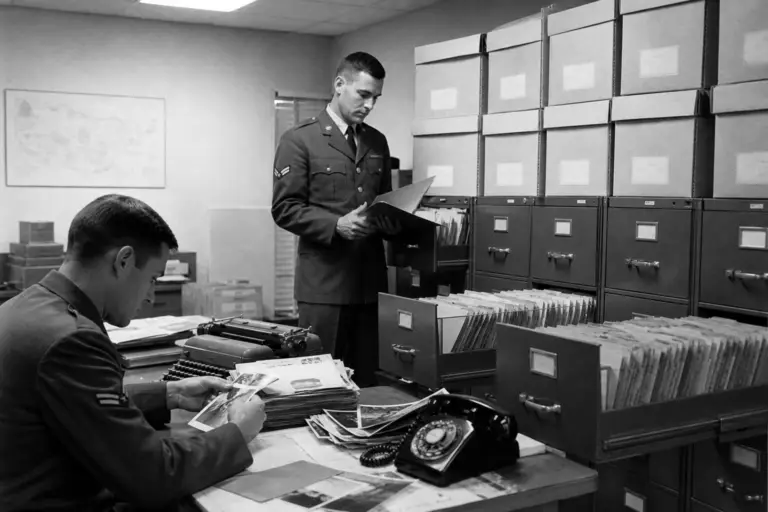
That limit follows from the scope of the Colorado report itself. Its conclusion addressed the expected scientific return from further extensive study; it judged that another broad research effort was unlikely to advance science, rather than finding that all reports had mundane solutions. The National Academy of Sciences’ review gave that general assessment additional institutional force, allowing the Air Force to treat continued operation of Project Blue Book as no longer justified.
Critics could therefore dispute the treatment of particular cases without changing the immediate administrative result. A disputed case bears on the report’s reasoning; the Air Force decision bears on UFO research policy. Keeping those questions separate prevents a larger mistake: treating the closure of one named Air Force project as proof that all later government interest in anomalous reports ceased with it.
Why the Air Force Turned to the University of Colorado
By 1966, the Air Force needed more than its own reassurances that Project Blue Book was handling reports responsibly. The program’s methods and public credibility had drawn sustained criticism, including doubts about whether an in-house military office could both investigate unusual reports and impartially judge the scientific value of investigating them. An external review offered a different kind of answer: not a new reporting system, but an academic assessment of whether the subject warranted a major continuing research effort.
The Air Force therefore sponsored a contract with the University of Colorado, creating what became known as the University of Colorado UFO Project. Physicist Edward U. Condon directed the work. Its institutional design mattered: the Air Force supplied the commission and access to case material, while a university-based team was expected to conduct the scientific inquiry and publish its conclusions. That arrangement gave the eventual findings greater independence than another internal Air Force UFO investigation could have claimed, even though the study was commissioned in response to an Air Force policy problem.
The project’s assignment was not to declare that witnesses were dishonest, that every sighting had an ordinary explanation, or that no unusual event could occur. It was to examine reports and assess the prospects for scientific progress from further study. Those are importantly different questions. A case could remain insufficiently explained while still failing to demonstrate that a large, standing research program would yield useful scientific results. The distinction would later allow the report to become relevant to program policy even as particular investigations, and the study’s treatment of them, remained open to criticism.
What the Condon Report Actually Concluded
The decisive language appeared in the conclusion to Scientific Study of Unidentified Flying Objects, published in 1968. Edward U. Condon wrote that the preceding 21 years of UFO study had added nothing to scientific knowledge and that “further extensive study of UFOs probably cannot be justified in the expectation that science will be advanced thereby.” This was a judgment about expected research return: whether assigning substantial, continuing scientific resources to the subject was likely to produce worthwhile new knowledge.
That formulation matters because it was narrower than the claims often attached to the Condon Report UFOs. It did not establish that every reported object had been identified, that every witness was mistaken, or that unusual aerial phenomena were impossible. Nor did it purport to prove that UFOs, as a category of reports, were nonexistent. Its policy-relevant conclusion was instead that the accumulated record did not justify another major, open-ended scientific program.
The body of the 1968 Condon Report did not read like a catalogue in which every entry ended with a conventional explanation. It presented individual case analyses with different evidentiary quality and different degrees of resolution. Some reports could not be conclusively explained from the available information. “Unexplained,” however, functioned as a description of an evidentiary result, insufficient data for a firm identification, not as affirmative proof of an extraordinary cause.
This distinction explains both the report’s durability and the criticism it attracted. A critic could argue that a particular case deserved closer treatment, or that unresolved material weakened the report’s confidence, without disproving its central forecast about the limited scientific value of a large continuing program. For officials deciding whether to sustain a centralized research operation, that forecast, not a declaration that every sighting had been solved, was the conclusion with immediate administrative force.
From Scientific Review to Policy: Why Project Blue Book Closed in 1969
The next step was institutional validation, not an automatic consequence of the Colorado report. A National Academy of Sciences review examined the study and endorsed its general judgment that the available record did not warrant a further broad scientific investigation of UFOs. That endorsement mattered because it separated the recommendation from the Air Force office that had operated Project Blue Book: an independent scientific body accepted the report’s central assessment of research value.
The chronology also requires a date correction often lost in abbreviated accounts. January 1969 marks the public release period for the Colorado study, rather than the Air Force closure of Project Blue Book. After the report and the National Academy review had supplied the scientific basis for a change, the Air Force made its own administrative decision. On December 17, 1969, it announced that Project Blue Book would be discontinued; the program’s operations ended on January 30, 1970.
The Air Force did not present that action as a finding that every report had been explained. Its announcement rested on two policy criteria: its investigations had found no indication that reported UFOs posed a national-security threat, and the accumulated material, including the Colorado study, provided no basis to expect further scientific advances from continuing the program. Those are distinct tests. The first concerned defense relevance; the second concerned whether a centralized public research effort justified continued resources.
That sequence explains the Condon Committee UFO study’s influence precisely. The University of Colorado supplied the assessment, the National Academy of Sciences gave the assessment external scientific support, and the Air Force translated those inputs into a decision about one of its programs. Debate over particular cases could continue, but it no longer prevented the institution from ending Project Blue Book.
The Policy Shift Ended a Public Program, Not Every Government Inquiry
The practical change can be understood by separating a standing research program from an operational reporting responsibility. A standing program has a defined public mission, dedicated personnel, accumulated case files, and a recognizable point of contact for civilian reports. An operational responsibility is narrower: a military organization may need to assess an unusual observation when it bears on flying safety, air-defense identification, base security, or national security.
Project Blue Book had performed the first function. Its discontinuance removed the Air Force’s centralized and publicly visible machinery for receiving and evaluating UFO reports as a continuing subject of inquiry. It also ended the expectation that the service would maintain a public program devoted to explaining the broader phenomenon. That is a substantial retreat from government UFO research as it had been organized during the Cold War, but it is not the same thing as directing every military office to disregard unusual aerial events.
The distinction matters most in a concrete scenario. A pilot’s report of an unidentified object near an aircraft, a restricted area, or a sensitive installation can raise an immediate operational question: what was present, did it create a hazard, and does it require a defensive response? Addressing such a report serves the mission at hand. It does not by itself revive a nationwide scientific project intended to collect civilian accounts, publish case evaluations, and determine whether UFOs merited sustained research.
Historical records therefore support a limited conclusion: the post-1969 policy ended Blue Book’s particular public function, rather than establishing a permanent, government-wide ban on attention to anomalous reports. The Air Force’s rationale focused on the lack of an identified national-security threat and on the low expected scientific return from continuing that program. Neither proposition requires an institution to ignore information relevant to its operations.
This boundary also clarifies the limits of a government UFO cover-up claim based solely on Blue Book’s closure. Ending a public reporting and research office can reduce public visibility and centralized recordkeeping; it does not, without further evidence, demonstrate universal or permanent suppression. The policy record establishes what the Air Force stopped funding and operating, not every inquiry that another office might later undertake for a different purpose.
How the Condon Era Differs From Modern UAP Investigations
Contemporary UAP work is organized around a different set of questions from the one posed to the University of Colorado. The Condon-era inquiry asked whether a broad, continuing scientific study of UFO reports was likely to yield new scientific knowledge. Modern assessment programs instead commonly distinguish among reporting, data integration, identification, and the handling of potential operational concerns. That difference in mandate changes what counts as a useful outcome: identifying a balloon, drone, sensor artifact, or unfamiliar aircraft can matter to an operational office even when it contributes nothing to a general scientific theory of anomalous phenomena.
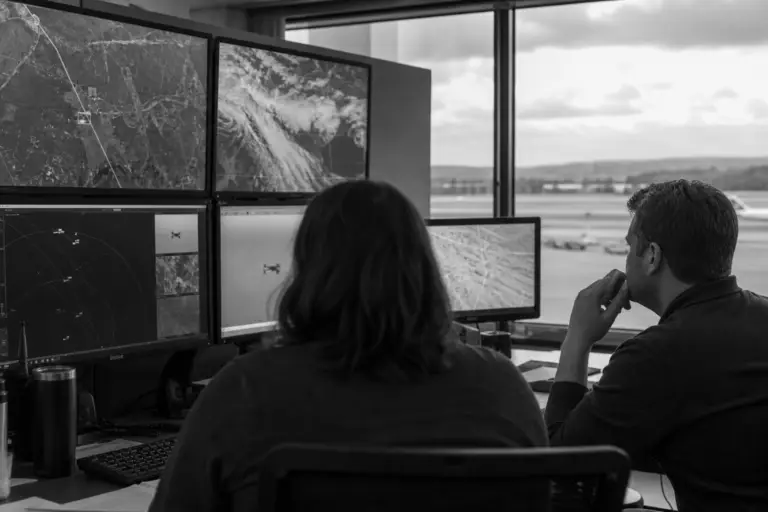
The contemporary Pentagon UAP office mandate is therefore not a successor to Project Blue Book in any simple institutional sense. A public research program built around case investigation and a centralized archive has a different purpose from an office that receives reports through military and intelligence channels, compares sensor and witness information, and produces UAP reporting for specified government audiences. The latter model draws on forms of data that were not the organizing premise of the Colorado study, including operational observations and multi-source records. Debates over UAP disclosure concern what such offices should release and explain; they do not recreate the 1960s decision about whether to fund a sweeping civilian-facing scientific research project.
AARO’s UAP reporting illustrates the distinction without settling any larger question about anomalous observations. A contemporary office can assess reports for identification, safety, security, or intelligence relevance while leaving open whether a separate, long-term scientific program would be worthwhile. Conversely, the Condon Committee UFO study did not establish that every later report would lack operational significance; it supplied a basis for judging the expected return of the particular research enterprise then under review.
The historical inference should remain proportionate. The Colorado report’s conclusion, the National Academy of Sciences review, and the Air Force’s January 1969 closure decision document a chain leading to the end of Project Blue Book. Later formal public UAP oversight and reporting shows why that chain cannot fairly be recast as a permanent abandonment of all governmental inquiry, or, in the opposite direction, as proof that the earlier public program continued under another name.
The Condon Study Closed One Chapter, Not the Entire UFO Question
What changed in January 1969 was the Air Force’s willingness to maintain a public, centralized UFO research office. The 1968 Colorado report had forecast that another extensive scientific effort was unlikely to produce substantial new knowledge, and its outside scientific assessment gave senior officials support for treating that forecast as a basis for ending the program rather than as an internal administrative preference.
That sequence did not make every unexplained report unimportant, nor did it turn disputed judgments in the report into uncontested scientific fact. Critics could challenge the treatment of particular cases or the confidence of its broad conclusion. The policy test, however, was narrower: whether the Air Force should continue operating Project Blue Book as a public program devoted to broad UFO investigation. On that administrative question, the Condon Committee UFO study proved consequential.
The distinction remains essential when later UAP investigations are discussed. A later office may collect reports or assess observations for identification, safety, security, or intelligence purposes without restoring the civilian-facing research enterprise that ended in 1969. Blue Book’s closure therefore marks the end of one defined public program, not a final answer to anomalous aerial reports, and not evidence that every future government inquiry was foreclosed.
Frequently Asked Questions
What was the Condon Committee’s conclusion about UFOs?
The 1968 Condon Report concluded that 21 years of UFO study had added nothing to scientific knowledge and that further extensive study was unlikely to advance science. It did not claim that every UFO report had been explained or that unusual aerial events were impossible.
Did the Condon Report end Project Blue Book?
The Condon Report did not automatically end Project Blue Book, but it supplied the central scientific rationale for closing it. After the National Academy of Sciences endorsed its general conclusion, the Air Force announced Blue Book’s discontinuation on December 17, 1969, and ended operations on January 30, 1970.
Why did the Air Force close Project Blue Book in 1969?
The Air Force closed Project Blue Book because its investigations found no evidence that UFO reports posed a national-security threat and no reason to expect further scientific advances from continuing the program. The University of Colorado study and National Academy of Sciences review gave external scientific support to that decision.
Did the U.S. government stop investigating UFOs after Project Blue Book closed?
No. Blue Book’s closure ended the Air Force’s public, centralized UFO research and civilian reporting program, not every government response to unusual aerial observations. Military and government offices can still assess reports involving flight safety, air defense, base security, intelligence, or national security.
How do modern UAP investigations differ from the Condon Report and Project Blue Book?
The Condon study evaluated whether a broad, long-term scientific UFO research program would produce meaningful new knowledge. Modern UAP offices focus more on reporting, sensor and witness data integration, identification, safety, security, and intelligence concerns, including possible balloons, drones, aircraft, or sensor artifacts.