High-Altitude Object Sightings and Shootdowns in 2023 Across the Americas
Explore 2023 high-altitude object sightings and shootdowns, separating the Chinese balloon from unresolved Alaska, Yukon and Lake Huron cases.
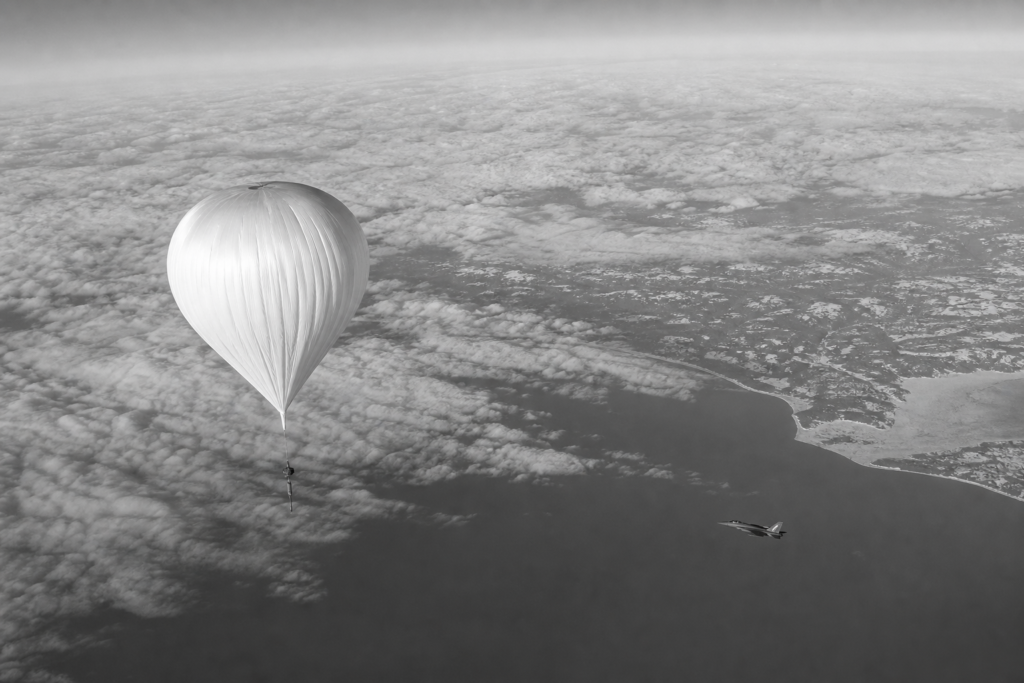
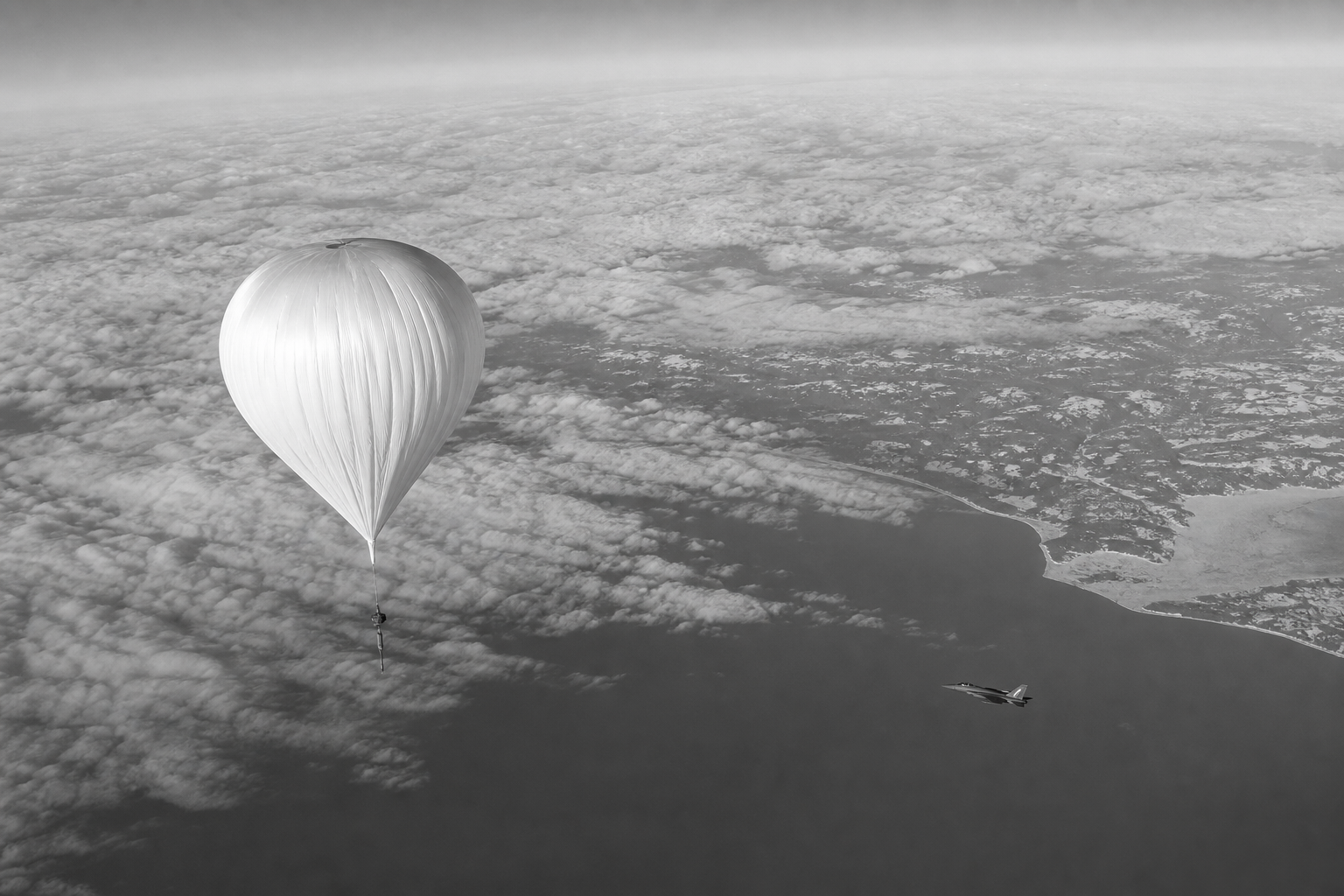
The 2023 high-altitude object sightings and shootdowns were not one uniform event. On February 4, the United States downed a Chinese surveillance balloon off South Carolina after it crossed the country; U.S. officials publicly attributed that platform to the People’s Republic of China and recovered material from it. Three days later, a different sequence began: U.S. and Canadian forces shot down separate objects over Alaska on February 10, Yukon on February 11, and Lake Huron on February 12.
That distinction matters. The first craft had a publicly established national attribution and a defined surveillance context. The later objects were initially described by officials in more limited terms, objects whose identity, purpose, and origin had not been publicly determined. Recovery conditions and the evidence ultimately available did not produce the same public identification for them.
The episode therefore turned on a disciplined question: what could authorities establish from tracking, imagery, debris, and intelligence, and what remained unknown? It also redirected attention to high-altitude airspace, where smaller or slower-moving objects could be difficult to classify quickly. “UAP” in this setting denotes an object not yet identified; it is not evidence of extraterrestrial or non-human origin.
A Four-Day Airspace-Security Episode That Drew Global Attention
Between February 4 and February 12, air-defense decisions unfolded in rapid succession across the United States and Canada: a balloon was brought down off South Carolina, followed by objects over Alaska, Yukon, and Lake Huron. The geographic spread made the events a North American security matter, involving U.S. forces, NORAD’s binational command structure, and Canadian authorization for the Yukon operation.
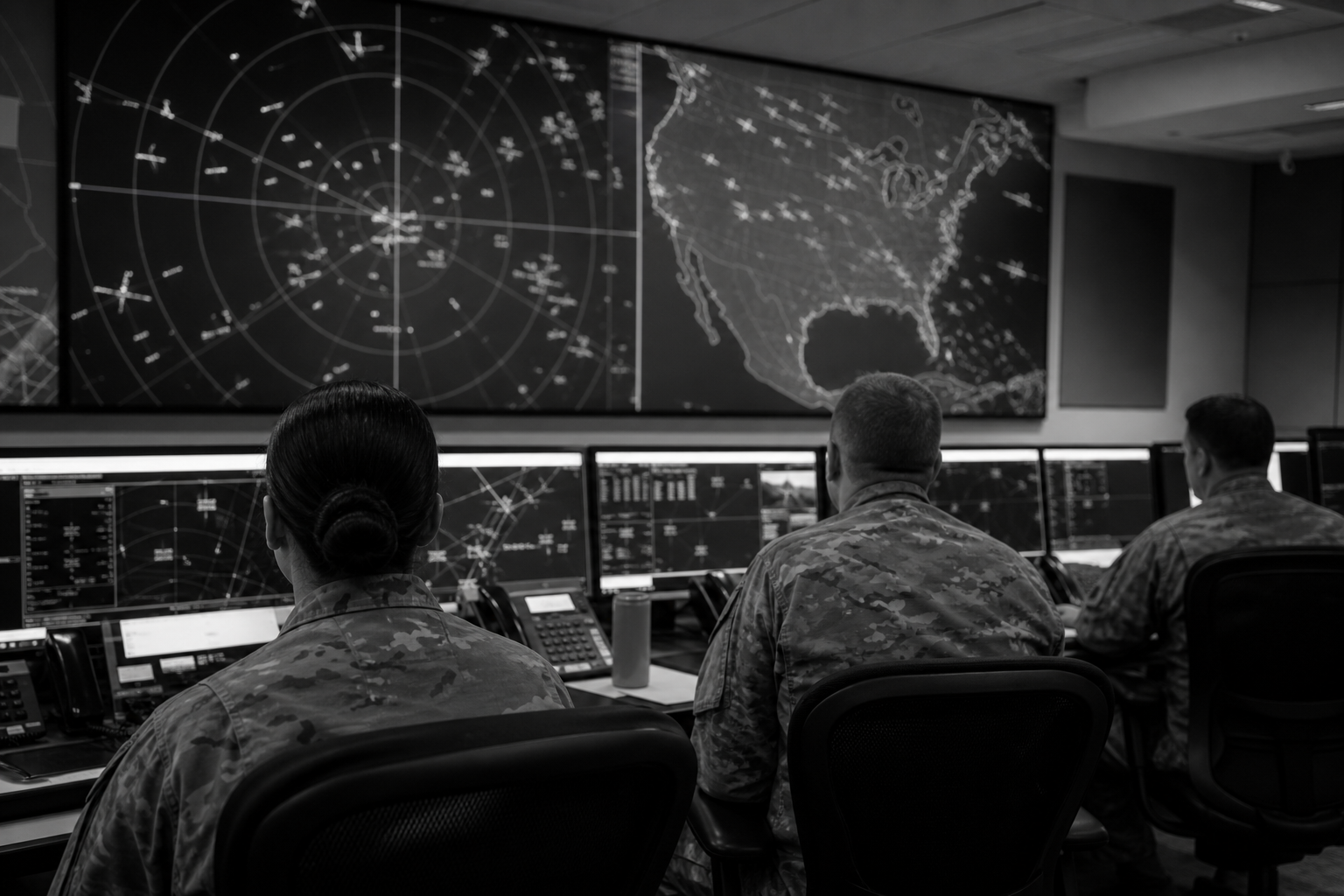
The short interval, military response, and sparse initial descriptions drove intense UAP sightings and UFO news coverage. But an unidentified object is a status of incomplete identification, not a finding about its technology or origin. Limited public detail can reflect the constraints of tracking, intelligence protection, weather, and recovery, not affirmative evidence of extraterrestrial or non-human involvement.
The key comparison for the events that follow is straightforward. The February 4 craft was publicly identified by U.S. authorities as a Chinese high-altitude surveillance balloon, allowing officials to connect the shootdown to a known state-linked program. The February 10–12 objects were downed after authorities assessed airspace and safety concerns, yet their identity and purpose were not publicly resolved in the same way. Treating those different evidentiary outcomes as equivalent obscures what the episode actually established.
February 4: The Confirmed Chinese High-Altitude Surveillance Balloon
On February 4, the operation ended over the Atlantic rather than above populated land. An F-22 fighter jet shot down the balloon off the coast of South Carolina with an AIM-9X missile after U.S. forces had tracked its transit across the continental United States. Choosing an offshore location reduced the risk posed by falling debris while preserving the opportunity to recover the craft and its equipment.
Recovery made this case unusually well documented. U.S. Navy, Coast Guard, FBI, and Defense Department personnel retrieved debris from the ocean, including material from the balloon’s payload. U.S. officials identified it as a People’s Republic of China high-altitude surveillance balloon equipped for aerial surveillance, not merely an object whose purpose could not be determined at the time of engagement. The recovered material also gave analysts physical evidence to examine alongside tracking data and intelligence assessments.
That evidentiary record is the essential dividing line for the February 4 incident. Authorities could publicly connect a known platform, a state attribution, a long observed flight path, and a recovered payload. The Alaska, Yukon, and Lake Huron shootdowns involved separate objects whose public identification did not reach that standard. Their proximity in time explains why they were often discussed together; it does not make them four examples of the same craft, mission, or origin.
February 10–12: Alaska, Yukon, and Lake Huron Objects
February 10, Alaska. U.S. Northern Command described the first later object as roughly car-sized and cylindrical, detected at about 40,000 feet over Alaska’s north coast. Officials said it was moving slowly, appeared unmanned, and lacked identifiable propulsion or control systems. That altitude mattered because it placed the object within the operating range of civilian aircraft rather than far above it. After assessing its unknown purpose and the potential flight-safety risk, U.S. forces shot it down over frozen waters with an F-22.
February 11, Yukon. NORAD tracked another unidentified aerial object as it crossed into Canadian airspace. Canadian Prime Minister Justin Trudeau authorized its destruction after Canadian and U.S. officials assessed it as a potential threat to civilian aviation. Public descriptions remained limited: officials characterized it as a small, cylindrical object flying at roughly 40,000 feet, without assigning it a country, operator, or mission. A U.S. F-22 acting under NORAD coordination downed it over the remote Yukon. The joint response showed how Canadian airspace is defended through a binational command structure, but it did not supply a public identification of the object itself.
February 12, Lake Huron. The final object had first been tracked over Montana, passed through Canadian airspace, and returned over the United States before it was engaged above Lake Huron. Pentagon officials described it as octagonal, with strings hanging from it and no discernible payload; it was flying at about 20,000 feet when an F-16 destroyed it with an AIM-9X missile. Its lower altitude increased concern about civil aviation, while its route near sensitive U.S. military locations added a security consideration. Those were reasons for action, not proof that officials knew what the object was.
These three 2023 unidentified object shootdowns therefore shared an operational pattern, tracking, risk assessment, and destruction in remote or offshore areas, but not a confirmed common identity. The shape, altitude, and apparent behavior reported at the time were preliminary observations made before recovery and analysis. Unlike the February 4 balloon, none of the Alaska, Yukon, or Lake Huron objects received a publicly confirmed state attribution, platform identification, or demonstrated purpose.
Why the Three Later Objects Remained Unresolved
The decisive gap was not the decision to fire, but the absence of material that could be publicly examined and tied to an operator. Debris recovery is what can turn radar tracks and cockpit observations into an identification: components, serial markings, communications equipment, or payload hardware can distinguish a research balloon or other civilian platform from a purpose-built surveillance system.
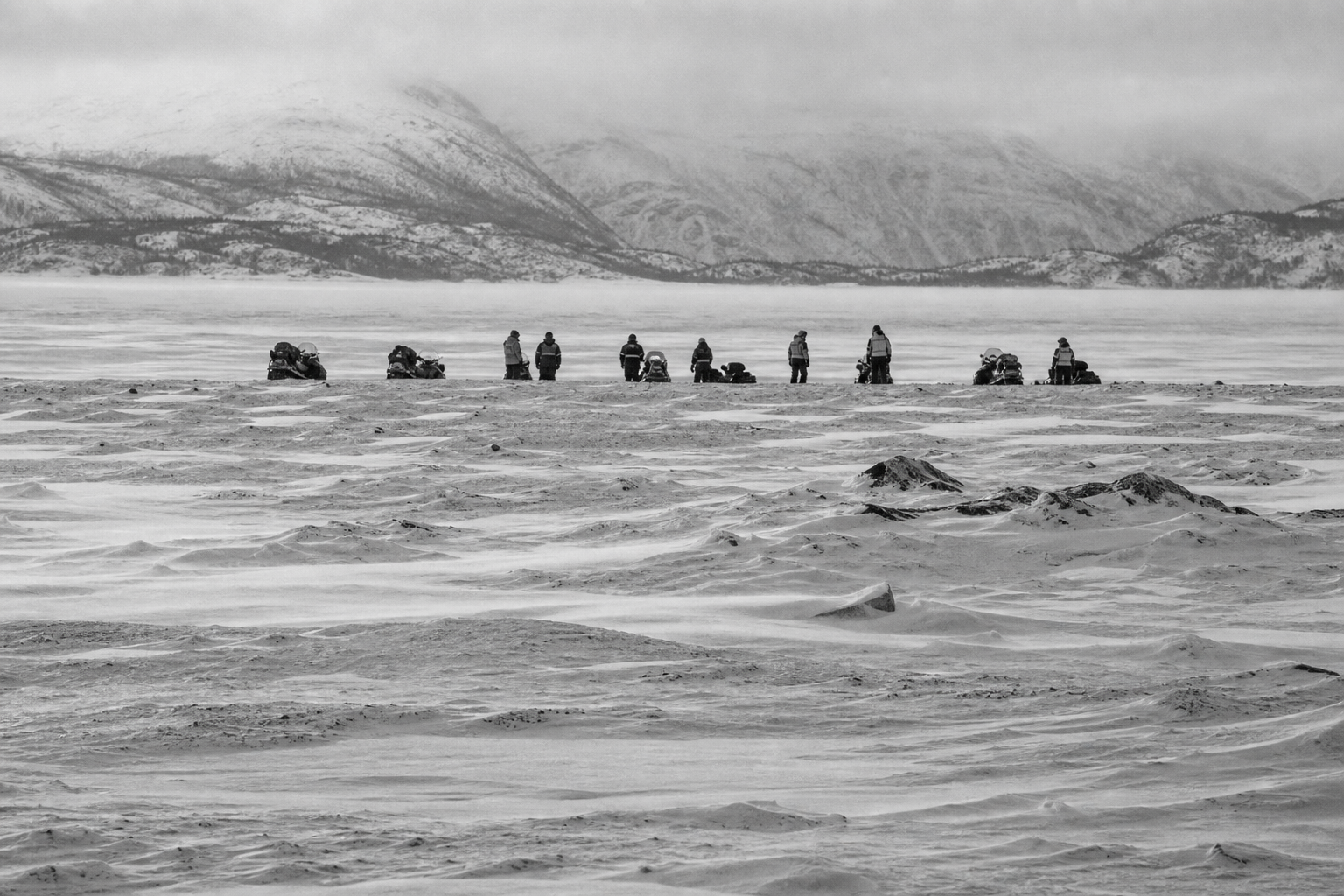
That standard was difficult to meet in Alaska and the Yukon. The Alaska object came down in an isolated Arctic area of frozen water and sea ice, while the Yukon wreckage was believed to be scattered across remote, mountainous terrain. Severe weather, snow, ice, limited visibility, and the size of the potential search areas constrained crews’ ability to locate small fragments. Search efforts were ultimately ended without a public announcement that recoverable debris had established either object’s identity.
Lake Huron presented a different recovery problem: a large, cold body of water rather than land or ice. U.S. and Canadian personnel mounted a search for the remains, but the public record did not produce a definitive evidence-backed identification or a disclosed analysis linking the object to a specific operator. An attempted recovery is not the same as a completed recovery, and a completed recovery is not the same as a publicly demonstrated attribution.
Reports that one or more objects might have been civilian and commercial balloons, or a research balloon, remained possible explanations rather than confirmed conclusions. The reverse inference is equally unsound. A public identification that remains unresolved does not establish an extraordinary origin; it records an evidentiary limit after objects were destroyed in places where finding and preserving fragments was unusually difficult.
Why More Objects Appeared in 2023, and What Later Officials Said
Detection practices changed as well as public attention. Radar filters are settings that help operators separate potentially relevant tracks from background returns such as weather, birds, debris, or slow-moving objects. After the Chinese balloon was detected, the North American Aerospace Defense Command and U.S. defense authorities adjusted those parameters to look more closely at smaller, slower-moving objects at high altitude. That could reveal tracks that earlier settings had treated as clutter; it did not establish that every newly noticed object was harmless, hostile, or related.
President Biden addressed that distinction on February 16, 2023. He said the intelligence community’s leading assessment was that the Alaska, Yukon, and Lake Huron objects were most likely balloons connected to private companies, recreational activity, or research institutions, including weather and other scientific work. He also said there was no indication that the three objects were connected to China’s surveillance-balloon program or to another foreign country’s intelligence collection.
That was an intelligence assessment: a reasoned judgment drawn from the information available, rather than a confirmed identification supported by recovered, publicly analyzed material. A probable civilian explanation differs from proof that a particular object belonged to a named company, research group, or operator. The recovery limits described earlier meant that final step was not publicly demonstrated for each shootdown.
The practical lesson is therefore narrower than many headlines implied. Radar-filter adjustments help explain why more high-altitude tracks received scrutiny in February 2023, while the later official assessment helps explain why officials did not treat the three objects as established foreign surveillance platforms. Neither point converts an unresolved object into evidence of an extraordinary origin.
What the 2023 Shootdowns Did, and Did Not, Establish
Its clearest institutional lesson was that airspace awareness is not a fixed capability: what operators detect, classify, and prioritize depends on sensor coverage, filtering, available imagery, and the time available to assess a track. The episode also showed the operational importance of the U.S.-Canadian NORAD framework, which links warning, tracking, and defensive decision-making across North American airspace.
The evidentiary lesson is equally important. The February 4 shootdown produced a confirmed Chinese surveillance-balloon case because authorities recovered and analyzed the platform and payload. The Alaska, Yukon, and Lake Huron incidents produced confirmed shootdowns of real objects, but not publicly settled identities: incomplete or unsuccessful recovery left their operators and purposes unresolved. “Unresolved” describes an evidentiary limit; it is not positive evidence of extraterrestrial visitation, non-human intelligence, or a government UFO cover-up.
Continuing interest in UAPs is therefore understandable, particularly where official descriptions remained limited. But UAP is an initial identification category, not a conclusion about origin. The 2023 high-altitude object sightings and shootdowns added useful questions about surveillance, detection, and transparency; they did not amount to UFO disclosure or alien disclosure, nor did they supply a single explanation for every later object.
The Lasting Lesson of the 2023 Airspace Episode
Physical recovery is the key checkpoint for weighing certainty. The February 4 case rests on a recovered platform and a public attribution; the three later shootdowns rest on confirmed military engagements but incomplete identification. Those are not interchangeable levels of certainty. Remote terrain, ice, weather, and deep water can prevent a recovery operation from producing the physical evidence needed to establish an object’s owner, equipment, or purpose.
The same discipline applies to the apparent surge in tracks. Adjusted radar filters can make smaller or slower-moving objects more likely to receive attention, changing what reaches operators without demonstrating a matching rise in hostile activity. For readers assessing the 2023 high-altitude object sightings and shootdowns, the strongest signal is not the number of interceptions or the mystery surrounding individual objects; it is the quality of evidence available for each one. The episode revealed genuine challenges in detection, classification, recovery, and rapid decision-making across North American airspace. It did not establish that every object belonged to a single confirmed campaign.
Frequently Asked Questions
-
What objects were shot down over North America in February 2023?
The United States shot down a Chinese high-altitude surveillance balloon off South Carolina on February 4. Separate unidentified objects were downed over Alaska on February 10, Yukon on February 11, and Lake Huron on February 12.
-
Was the Chinese balloon the same as the Alaska, Yukon, and Lake Huron objects?
No. U.S. authorities recovered debris from the February 4 balloon and publicly identified it as a People’s Republic of China surveillance platform, while the three later objects had no publicly confirmed operator, mission, or national attribution.
-
What were the reported size, shape, and altitude of the later 2023 objects?
The Alaska and Yukon objects were described as small or roughly car-sized, cylindrical objects flying near 40,000 feet. The Lake Huron object was described as octagonal with strings hanging from it, no discernible payload, and an altitude of about 20,000 feet when it was shot down.
-
Did the United States recover debris from all of the 2023 objects?
No. U.S. personnel recovered the February 4 balloon and its payload from the Atlantic, but searches for the Alaska, Yukon, and Lake Huron objects did not produce a publicly confirmed evidence-based identification. Arctic ice, mountainous terrain, severe weather, and deep water complicated recovery efforts.
-
What should you look for when judging whether a 2023 shootdown involved foreign surveillance or an unidentified object?
Look for recovered physical evidence, a publicly confirmed platform identification, and attribution to a specific operator or country. The Chinese balloon met that standard, while the Alaska, Yukon, and Lake Huron objects remained unresolved despite later assessments that they were most likely civilian, recreational, or research balloons.