Two Motorists Report a Red Light Elongating and Vanishing Near Houston’s Loop 610 on January 1, 2000
Examine the Houston UFO sighting January 1 2000, a Loop 610 South bright flash report, including evidence, corroboration and possible causes.
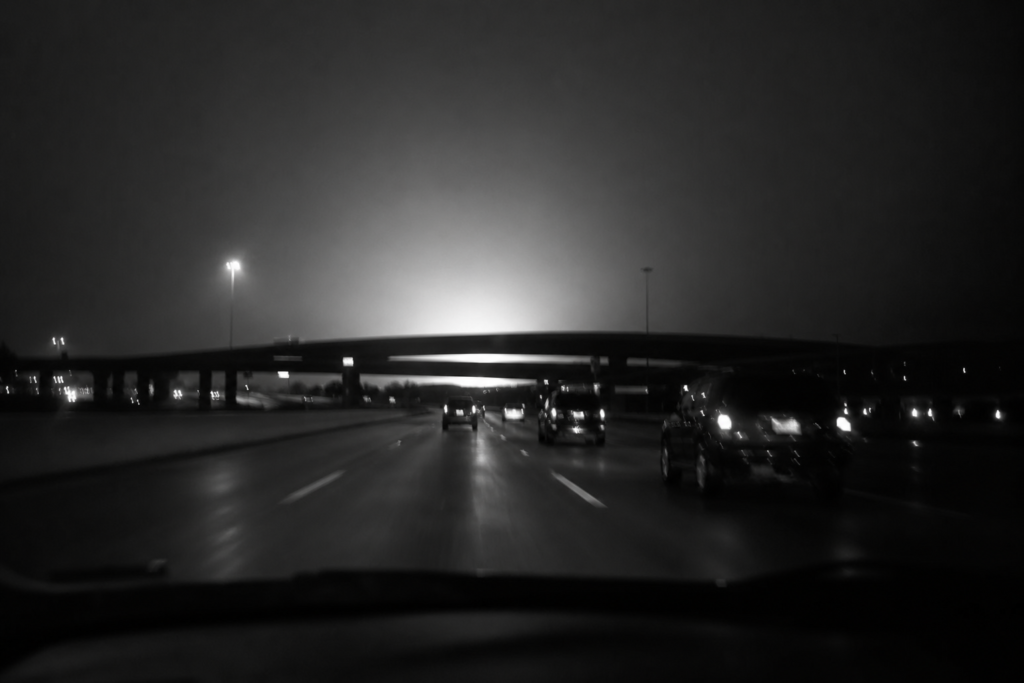
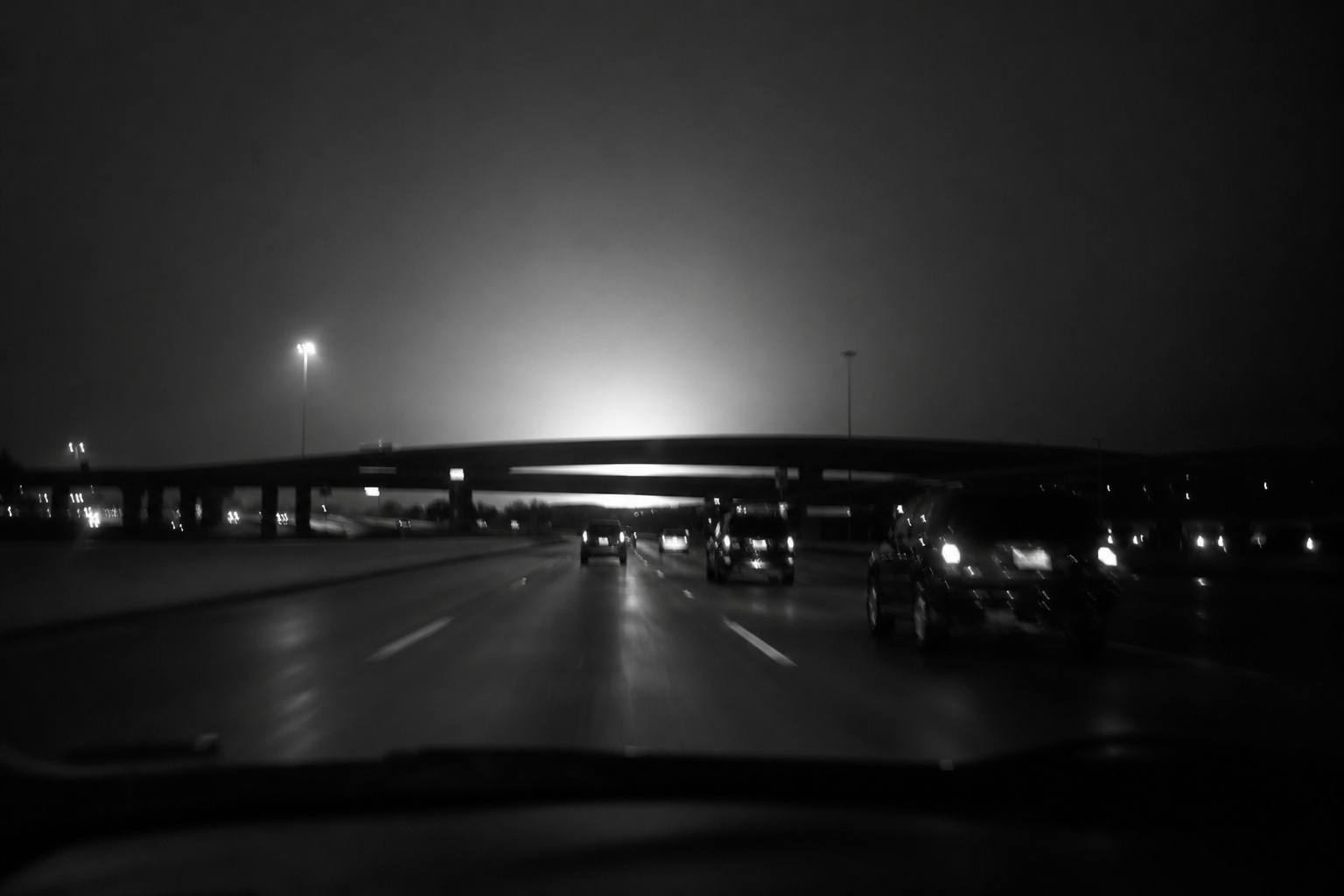
The first checkpoint is scope: the surviving account attributes an unexpected bright flash to motorists in Houston on January 1, 2000, with Loop 610 South as the location wording. It does not, on that description alone, identify an object, a flight path, a duration, a physical source, or an extraordinary cause.
This article treats the reported Loop 610 South flash as a historical observation rather than a confirmed event. It separates three questions that are often blurred together: what the underlying account records, whether independent material corroborates it, and which ordinary events could produce a brief intense light. A meteor, aircraft light or reflection, electrical flash, and other transient sources can each appear sudden to people in moving vehicles; their fit turns on timing, direction, persistence, sound, weather, and additional witnesses.
“Unidentified” describes the limits of available information. It means the record does not permit a confident identification; it does not show that the observation was extraordinary. The sections that follow examine the Houston UFO sighting January 1 2000 at that level of precision, separating reported testimony from archival confirmation and reasoned possibilities from speculation.
What Is Known About the Reported Loop 610 South Flash
The usable starting point is the report label itself: a January 1, 2000 observation in Houston associated with Loop 610 South and described as a bright flash seen by motorists. That is a location-and-appearance claim, not a finding that a vehicle, craft, or other discrete object was present.
Its wording matters. “Motorists” indicates that the account presents the observers as people traveling on or near the roadway; it does not, without fuller underlying text, establish their number, their exact positions, or whether they compared what they saw at the time. Likewise, “flash” describes a brief visual impression. It does not reliably supply shape, altitude, direction, color, duration, sound, or motion.
This distinction sets the evidentiary boundary for the Loop 610 South bright flash sighting. A strong case record would preserve specific fields, time, travel direction, viewing angle, duration, weather, and any follow-up, so that independent records could be compared against it. A weak record preserves only a memorable description and broad place.
The Houston bright flash report 2000 should therefore be read narrowly until the earliest traceable entry can be examined field by field. Later retellings may add detail, but added detail is not automatically witness testimony or archival confirmation.
The Case File: What the Underlying Account Actually Says
The available account can be reduced to a short set of fields without adding characteristics that the record does not preserve. Its reported observation date is January 1, 2000; its place is Houston, linked to Loop 610 South; its observers are described collectively as motorists; and its visual description is an unexpected bright flash.

| Case-file field | What the account preserves | What remains unrecorded |
|---|---|---|
| Date | January 1, 2000 | Time of day and time zone |
| Location | Houston, associated with Loop 610 South | Lane, travel direction, exit, interchange, mile point, and viewing position |
| Observers | Motorists | Number of people, whether they were in one or several vehicles, and whether their accounts were independently recorded |
| Appearance | A bright flash | Color, shape, size, brightness comparison, and whether a distinct object was seen |
| Behavior | No motion characteristic is preserved | Direction, speed, elevation, trajectory, and duration |
| Other observations | No sound or follow-up is preserved | Noise, physical effects, photographs, reports to authorities, and later witness interviews |
“Loop 610 South” is useful as a general geographic reference, but it is not a pinpoint. Without an exit, cross street, direction of travel, or approximate time, it cannot establish where a motorist was positioned or which part of the sky or horizon was visible. Those missing details matter because the same flash can look materially different from different stretches of a roadway.
The absence of a field in this case file should not be read as evidence that the feature was absent in real time. It means only that the surviving motorist report does not preserve it. A later account that supplies a color, object shape, or rapid movement would need a traceable link to an original witness account before it could be treated as part of the January 1 observation rather than later embellishment.
Corroboration: Are There Independent Witnesses or Official Records?
Independent corroboration would require a record created separately from the surviving motorist account. Reposts, database mirrors, and later discussions of UFO sightings may preserve the claim, but they do not add witnesses or establish that anyone else observed the same event.
The strongest supporting match would pair an approximate time with a location and description: for example, a contemporaneous Houston news item describing a sudden flash seen from the same part of Loop 610, or independently recorded motorists reporting a similar direction and duration. The material available for this reconstruction does not supply such a match, so the report remains a single, broadly worded observation rather than a multi-witness case with separately documented testimony.
Several record types could narrow the possibilities, but each answers a different question. Police, fire, and emergency dispatch records could reveal whether a visible incident, collision, explosion, or power-related hazard prompted calls. Utility outage or incident logs could bear on a local electrical flash. Aviation information could help only if the time, viewing direction, and relevant aircraft activity can be compared. Meteor and fireball reports are most useful when multiple observers preserve a time and sky direction; archived weather observations can indicate visibility conditions but cannot identify a flash by themselves.
A conventional event is not supported merely because one of these categories exists in principle. A utility record with no matching time or area would be weak corroboration; a fireball report from the same period but without a compatible direction would likewise be insufficient. Conversely, a matching, independently dated record could strengthen an ordinary explanation without proving every detail of what motorists perceived.
An unavailable archive, missing dispatch entry, or absence of a located news item is neutral rather than dispositive. Records may not have been retained, indexed in searchable form, or generated for a brief event that caused no reported damage. On the present record, corroboration is limited: the account documents a reported flash, not an independently verified source.
Could an Ordinary Event Produce a Sudden Bright Flash?
A flash is an appearance rather than a diagnostic signature, so the useful test is whether a proposed cause would be expected to look sudden from a moving vehicle and whether a time-and-place match could be found.
- Meteor or fireball: A bright meteoroid can produce a brief, high-contrast streak or terminal flare that is visible over a wide area. This possibility would fit better if independent observers reported a light crossing the sky at roughly the same time and in a broadly consistent direction. A report describing only a stationary-looking burst, or records pointing to a strictly local source, would fit it less well.
- Aircraft lights or reflections: Landing lights, anti-collision strobes, and sunlight or ground-light reflections can seem to appear abruptly when a vehicle changes position, a view opens between structures, or an aircraft turns. A known aircraft track aligned with the reported viewing direction would strengthen this explanation; a truly instantaneous flash with no sustained light before or after would make it less persuasive.
- Re-entry debris: A re-entering artificial object generally presents a longer-moving, fragmenting display rather than a single isolated flash. Matching reports from a broad region, a lasting track, or a documented orbital event would make re-entry more compatible. Without those features, it remains a comparatively weak fit for the surviving description.
- Electrical infrastructure: An arc fault, transformer failure, or line flash can create an intense local illumination, sometimes accompanied by a visible glow, noise, outage, or emergency response. A contemporaneous utility incident, dispatch call, or reports of power loss near Loop 610 South would be meaningful support. Their absence from the available account does not rule the category out.
- Lightning and weather illumination: Cloud-to-cloud lightning may brighten an entire sky area without a clearly visible bolt, while distant lightning can be mistaken for an unexplained flash in the sky. A matching thunderstorm, lightning record, or cloud conditions consistent with obscured flashes would favor this explanation; clear conditions and a sharply localized light would weigh against it.
- Ground-based sources: Vehicle headlights, illuminated signs, industrial activity, emergency vehicles, and reflections from wet pavement or glass can create brief flashes along an urban roadway. A repeatable sightline, nearby incident, or evidence that the light changed as motorists moved would make this category more consistent.
None of these possibilities can be selected from the retained wording alone. The report preserves too little about time, direction, duration, weather, and accompanying effects to rank one ordinary explanation decisively over another, consistent with an evidence-led evaluation of conventional explanations.
Why the Report May Remain Unidentified
Retrospective identification depends on observations that allow an event to be compared against a candidate cause. A reasonably precise time permits comparison with weather, aviation, astronomical, utility, and emergency records. Viewing direction, elevation, and duration establish geometry: a light low on the horizon has a different set of possible sources from one that crossed overhead, while a split-second burst is not equivalent to a light visible for several minutes. Those fields are not preserved here.
Visual or instrumental material can supply the missing constraints. A photograph or video may retain a horizon, sequence, and exposure information; radar or a recorded aircraft track may establish whether an aircraft was in a relevant corridor; and an official incident record may tie a local flash to a specific outage or response. Such material is useful only when its time and location can be connected to the observation. The surviving account does not provide that level of evidence.
The collective description “motorists” also cannot establish how many people saw the flash, whether they were in separate vehicles, or whether their accounts were independently recorded. Several observers who separately report the same direction and timing can narrow an event’s apparent location. Multiple retellings derived from one original account cannot do the same work.
An unidentified aerial phenomenon classification, used descriptively, would mean that the reported appearance has not been matched to a particular cause on the available record. It does not elevate a brief flash into evidence of an aircraft, a physical object, or an extraordinary agency. Conversely, “explained” requires more than a plausible category: it requires evidence connecting a specific event to the reported time and place.
The proportionate status is therefore unresolved because of insufficient information. Ordinary explanations remain possible, but the record lacks the discriminating details needed to choose among them; speculation beyond that boundary would add confidence without adding evidence.
Assessment of the January 1, 2000 Houston Flash Report
The most defensible verdict is narrow: the surviving record supports a report that motorists observed an unexpected bright flash in the broad Loop 610 South area of Houston on January 1, 2000. It does not independently establish the precise time, viewing geometry, duration, number of observers, or physical origin of that appearance. The wording and provenance of the underlying entry remain central to how much weight the report can bear.
This January 1 2000 UFO sighting in Houston is therefore unresolved, not identified. A transient astronomical event, aircraft-related light or reflection, electrical activity, and other ordinary causes remain possible categories, but none can be tied to this observation from the retained details. Equally, the account does not support a verified craft, alien disclosure, non-human intelligence, or a government UFO cover-up. An unexplained report is not affirmative evidence for any of those conclusions.
The assessment could materially change only with contemporaneous evidence that adds independent, time-and-place-specific constraints, such as:
- an original witness statement giving a time, direction, duration, and separate observer accounts;
- a dated Houston broadcast or newspaper archive describing the same flash;
- timestamped photographs, video, radar, or aircraft-track material linked to the location; or
- an official utility, emergency-response, weather, or astronomical incident record that matches the observation.
Until such material emerges, the appropriate classification is a limited historical report with insufficient information for a confirmed explanation.
What the Houston Flash Report Can, and Cannot, Establish
A historical case file can preserve an observation without preserving the information needed to solve it. Here, the retained account supports only that motorists reportedly noticed an unusual bright flash in the Loop 610 South area on January 1, 2000; it does not provide the timing, line of sight, duration, or independently recorded physical effects that would connect the appearance to a particular event.
That gap matters when weighing ordinary possibilities. A meteor or fireball can present as a sudden skyward burst, while an aircraft light, reflected illumination, or an electrical flash can also appear abruptly to drivers. Those categories differ in expected direction, persistence, sound, weather context, and whether a local incident record might exist. Because those comparison points are absent, none is a demonstrated match, and none is ruled out.
Likewise, later repetition of the account does not turn it into independent corroboration. The Houston UFO sighting January 1 2000 is best retained as an unidentified observation: a reported flash with plausible conventional explanations but insufficient surviving evidence to select one. It establishes neither a UFO nor an extraterrestrial cause, and it does not justify a single definitive explanation.
Frequently Asked Questions
-
Was there a UFO sighting in Houston on January 1, 2000?
Motorists reportedly saw an unexpected bright flash near Loop 610 South in Houston on January 1, 2000. The surviving report does not confirm that a UFO, aircraft, or physical object was involved.
-
What did motorists report seeing on Loop 610 South?
The report preserves only that motorists observed a bright flash in the broad Loop 610 South area. It does not record the time, color, shape, duration, direction, altitude, sound, or movement of the light.
-
Is the Loop 610 South flash supported by multiple witnesses or official records?
No independently documented witnesses, official records, news reports, utility logs, or emergency dispatch records are linked to the flash in the available case file. The description of “motorists” does not establish how many people saw it or whether they were in separate vehicles.
-
Could a meteor or fireball explain the Houston bright flash?
A meteor or fireball can produce a sudden bright streak or terminal flare visible across a wide area. Confirming that explanation would require a matching time, sky direction, and independent reports, none of which are preserved for the Houston observation.
-
What evidence would be needed to identify the Loop 610 South flash?
Useful evidence would include an original witness statement with a precise time, travel direction, viewing angle, and duration, plus separately recorded witness accounts. Timestamped photos, video, aircraft tracks, weather data, utility incidents, or emergency records matching the location and time could also connect the flash to a specific cause.