DoD Establishes All-domain Anomaly Resolution Office (AARO) to Coordinate UAP Efforts in 2022
Learn why the Pentagon established AARO UAP in 2022, its all-domain mission, how it replaced earlier programs, and what it did not confirm.
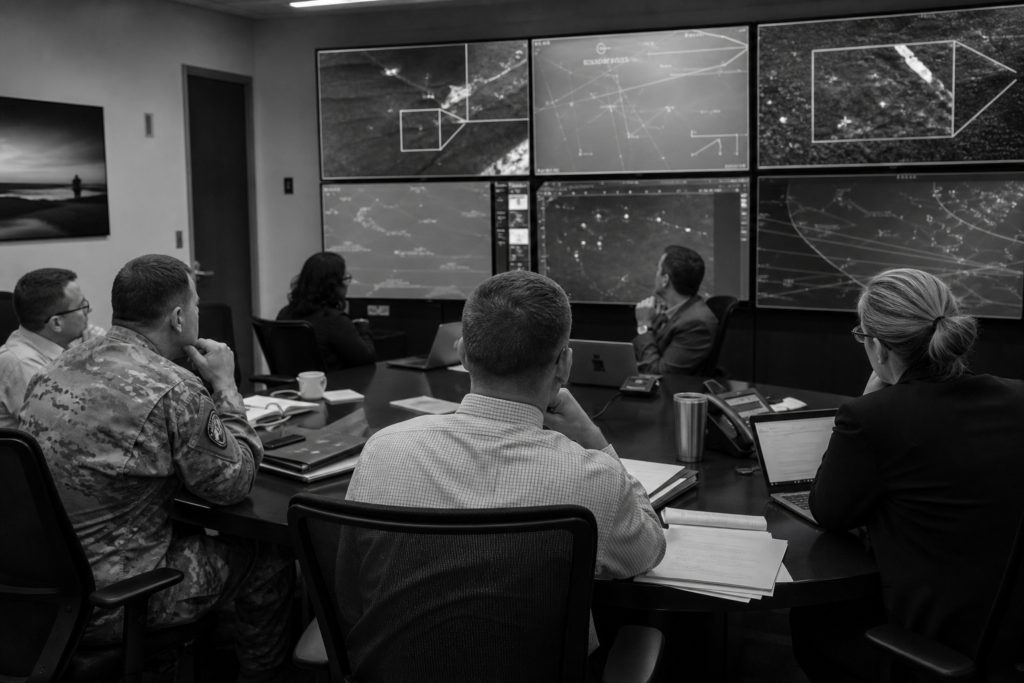
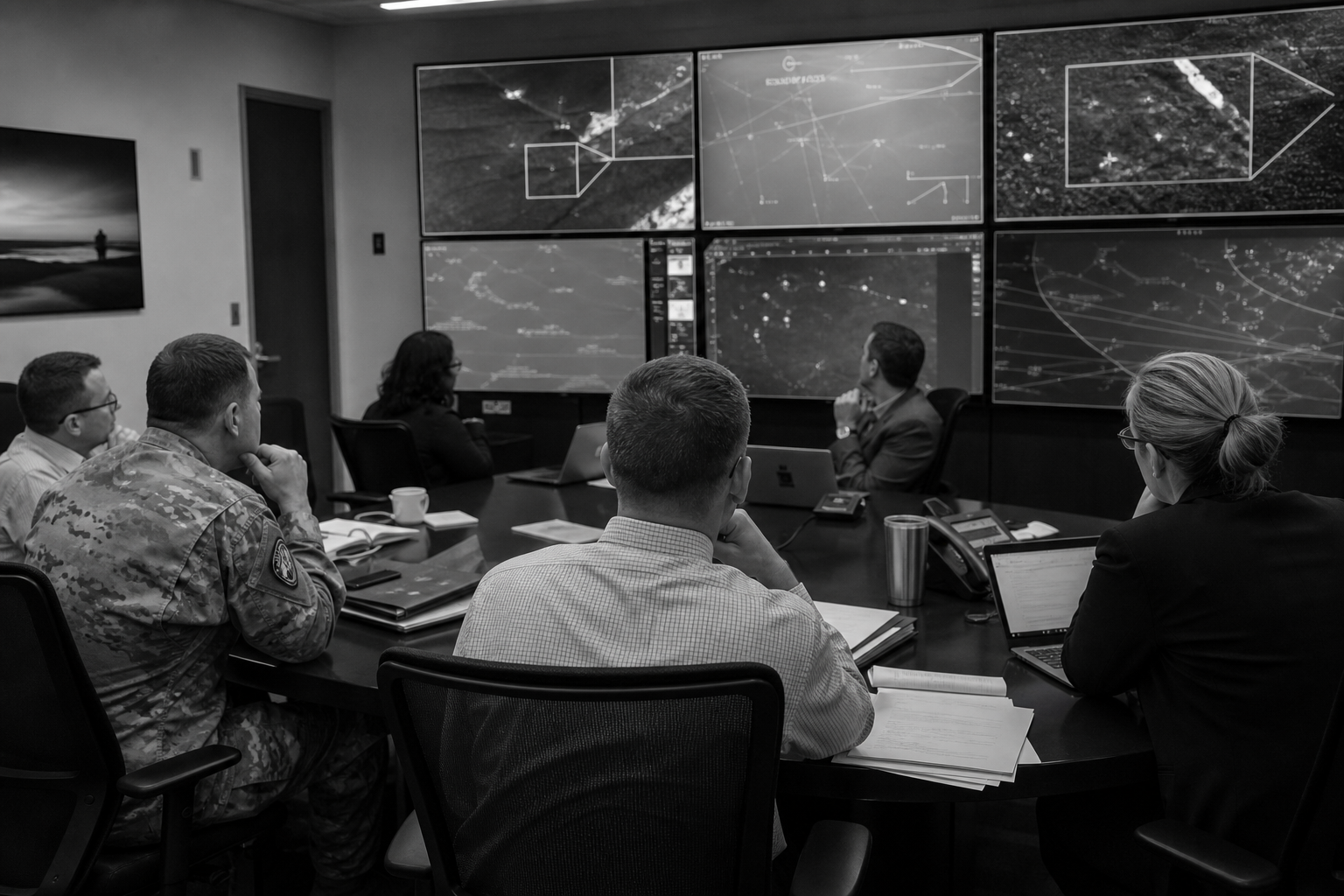
On July 15, 2022, the Pentagon created the All-domain Anomaly Resolution Office, or AARO, giving the federal government a dedicated focal point for reports of unidentified anomalous phenomena. The move mattered less as a declaration about what any reported object or event was than as an organizational decision: UAP-related information that had been handled through narrower or separate efforts would now be coordinated across defense and intelligence institutions.
AARO UAP work was designed to collect, analyze, and help resolve reports involving air, sea, space, and transmedium activity, events observed moving between domains, such as air and water. That breadth reflected practical national-security questions: an unexplained observation may involve a safety hazard, foreign surveillance or technology, an intelligence gap, or an ordinary object that needs better data to identify.
This article traces why the Department of Defense centralized that work, how AARO followed the Unidentified Aerial Phenomena Task Force and the Airborne Object Identification and Management Synchronization Group, and what the new office changed in reporting and oversight. It also draws an essential boundary: establishing an investigative office demonstrated that the government treated unresolved reports as a coordination problem; it did not validate extraterrestrial, non-human, crash-retrieval, or reverse-engineering claims.
What the DoD Announced in July 2022
The July 15, 2022, Pentagon announcement set a formal checkpoint: unidentified-anomalous-phenomena work would have one designated Department of Defense focal point rather than remain distributed among narrower arrangements. That organizational change concentrated responsibility for receiving, analyzing, and coordinating relevant reporting.
The office was formally named the All-domain Anomaly Resolution Office, or AARO. DoD established it amid congressional direction for a more durable structure and operational concerns that unresolved observations can implicate national security, intelligence collection, and flight safety. Centralization did not assign a single explanation to every report; it created a common channel through which potentially relevant information could reach the appropriate defense and intelligence participants.
AARO was not simply a new label for the earlier Unidentified Aerial Phenomena Task Force or the Airborne Object Identification and Management Synchronization Group. It succeeded those more limited arrangements while broadening the Pentagon UAP office’s remit beyond aerial observations. Its all-domain scope encompassed air, sea, space, and observations that cross between domains.
Most importantly, the July action was an administrative and oversight development. It created an office to investigate and coordinate unresolved reports; it did not announce that any phenomenon had been identified as extraterrestrial, non-human, recovered technology, or evidence of a secret reverse-engineering program.
Why the Pentagon Created AARO
The immediate rationale for the July 2022 establishment was that an unresolved report could be split among organizations holding different parts of the record: military sensor data, pilot or aircrew observations, flight records, and intelligence holdings. A centralized process gave those participants a designated route for combining evidence and determining whether an incident required a safety, intelligence, or technical assessment.

The decisive statutory context was Section 1683 of the Fiscal Year 2022 National Defense Authorization Act, enacted on December 27, 2021. Congress directed the establishment of an Unidentified Aerial Phenomena Office within the Department of Defense, in coordination with the Office of the Director of National Intelligence. The law called for synchronized collection, reporting, and analysis; a system for receiving reports; annual reports to Congress; and classified briefings. Those requirements turned UAP work from a limited initiative into a recurring oversight function with defined reporting obligations.
The mandate addressed more than the identity of unusual objects. An observation near a military installation or operating area can present a flight-safety issue if it affects aircraft operations. It can also raise a counterintelligence question if the event reflects surveillance, collection against U.S. capabilities, or a platform operated by an adversarial foreign government, another foreign actor, or a nonstate actor. These are different analytical questions: safety asks whether personnel or operations faced a hazard, while intelligence analysis examines capability, attribution, and intent.
Making investigation and reporting systematic was therefore the practical objective of the DoD UAP office: preserve relevant information, compare reports across components, assign analytical responsibility, and provide Congress with regular assessments. The formal structure increased oversight and created clearer institutional accountability. It did not validate claims of a government UFO cover-up, nor did it make UAP disclosure a confirmation of extraterrestrial, non-human, crash-retrieval, or reverse-engineering allegations.
How AARO Fit Into Earlier UAP Efforts
The sequence matters because each organization changed the scope and ownership of the work rather than merely adopting a new acronym.
- The Navy-led Unidentified Aerial Phenomena Task Force, commonly shortened to UAPTF, was an earlier DoD effort. Its role centered on improving the collection, standardization, and reporting of observations involving unidentified aerial phenomena, creating a more consistent basis for assessment than isolated reports handled in separate channels.
- On November 23, 2021, the Department of Defense announced the Airborne Object Identification and Management Synchronization Group, or AOIMSG. Its “airborne object” name reflected a focus on objects in airspace, while its synchronization function signaled an effort to coordinate identification and management work across relevant defense and intelligence organizations.
- In July 2022, AARO superseded AOIMSG. The change was substantive: the All-domain Anomaly Resolution Office was designed to address reports across air, sea, space, and transmedium settings, rather than framing the problem only as airborne-object identification. “Transmedium” refers to an observation or object reported as moving between domains, such as air and water.
Thus, the UAPTF, AOIMSG, and AARO describe successive stages in the Pentagon’s organizational approach. The task force emphasized more disciplined aerial-report collection; AOIMSG introduced a synchronizing group; and AARO became the broader, centralized office. Treating them as interchangeable obscures why the 2022 change mattered: the remit expanded alongside the institutional structure.
They also should not be conflated with Project Blue Book, the historical U.S. Air Force program that investigated unidentified flying-object reports and ended in 1969. Project Blue Book belonged to a different period, terminology, and organizational context. AARO’s creation did not revive that program; it established a contemporary defense-and-intelligence coordination structure for unresolved anomalous reports.
AARO’s Original Mission: Resolve Anomalies Across Domains
AARO’s remit was designed as a working system, not merely a place to receive unusual-sighting accounts. At its July 2022 launch, the office was assigned to synchronize Department of Defense and broader federal efforts involving unidentified anomalous phenomena: gather reports and associated data, analyze them, seek resolutions, and coordinate the results with the Office of the Director of National Intelligence and other relevant agencies.
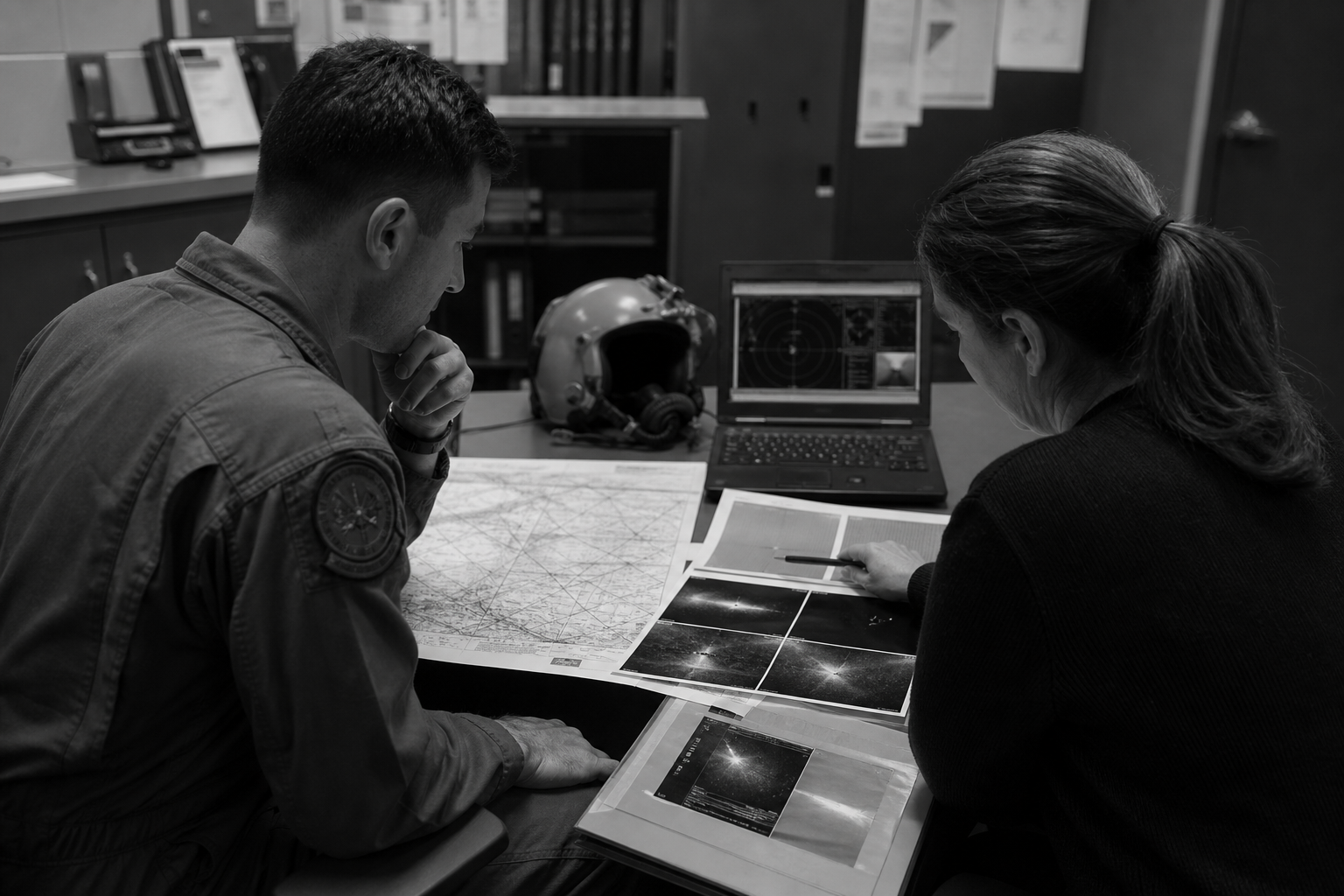
That mission included building more standardized reporting and analysis processes. A useful report is more than a witness description; it can pair the observation with time, location, platform, sensor information, operational context, and any available corroborating data. Standardization makes reports from different military services and intelligence components more comparable, while centralized review helps determine whether an event can be identified, requires additional technical analysis, or presents a potential safety, intelligence, or security concern. An unresolved report meant that the available information did not permit identification, not that it established an extraordinary origin.
“All-domain” marked the principal expansion in scope. The office’s assignment was not confined to aerial observations. It covered anomalies reported in airspace, maritime settings, and space, as well as transmedium or cross-domain objects, reports involving apparent movement or detection across boundaries such as air and water. This matters because the relevant evidence, responsibilities, and possible explanations can differ by domain: an airborne sensor track, an undersea observation, and a space-based detection may sit in different institutional systems even when they appear related.
The mandate also joined operational handling to oversight. AARO was expected to support identification, classification, scientific and technical assessment, and mitigation where warranted, while coordinating information held across defense and intelligence organizations. Some underlying material necessarily remained classified because it could reveal sources, methods, sensor capabilities, or military operations. At the same time, the structure supported public-facing reporting within those limits, creating a channel for unclassified summaries without treating public disclosure as a substitute for protected analysis. The AARO UAP mission therefore formalized how the government would handle uncertainty; it did not determine in advance what any particular anomaly was.
What AARO Changed in the Federal Handling of UAP Reports
The practical change was a more defined route from report to responsibility. When the DoD established AARO in July 2022, it gave UAP work a named office expected to bring together information that could otherwise remain divided among military services, intelligence entities, and operational commands. Those organizations could retain the original sensor data and local context, but AARO provided a focal point for connecting records, assigning follow-up, and coordinating an assessment across institutional boundaries.
That structure strengthened accountability as well as analysis. The Fiscal Year 2022 National Defense Authorization Act had directed a more formal office-and-reporting framework; AARO was the Department’s implementation of that direction, rather than merely another temporary working group. A designated office gave Congress, senior defense officials, and participating agencies a clearer place to seek answers about whether reports were received, retained, assessed, and referred for further action. Recurring reports could describe aggregate findings, analytical progress, and unresolved categories even when a particular incident could not be publicly detailed.
Standardized intake was central to the practical value of the informal “AARO Pentagon UFO office” label, although the official term remained UAP. A useful common record captures such fields as the observing platform, time and location, sensor source, operational conditions, and corroborating information. Consistent fields allow analysts to compare reports, spot possible duplicates, identify missing evidence, and separate an incident requiring additional work from one that cannot be assessed on the available record. A cautious “unresolved” result therefore indicates an evidentiary limit, not a conclusion about origin.
Transparency had firm limits. Public reporting could provide unclassified totals, trends, and findings, while details that could expose intelligence sources and methods, sensor capabilities, or military operations could remain classified. Congressional reporting expectations created a recurring oversight channel, not an automatic mechanism for immediate release of every case record associated with UFO disclosure.
Implementation followed the establishment decision: on July 20, 2022, the DoD announced Sean Kirkpatrick as AARO’s director. His selection supplied an early operational lead; it was not part of the July 15 announcement that created the office.
What AARO’s Creation Did, and Did Not, Establish
The existence of a dedicated office is evidence of an institutional judgment about the reports, not evidence that any particular explanation has been proved. AARO’s creation showed that the Department of Defense regarded unidentified observations as matters requiring organized collection, analysis, interagency coordination, and oversight across operating domains. An unresolved case can reflect incomplete data, conflicting sensor information, classification limits, or an explanation that has not yet been established; “unidentified” is a status of assessment, not a finding about origin.
For the same reason, the July 2022 action did not itself confirm alien spacecraft, extraterrestrial visitors, crash-retrieval or reverse-engineering programs, or non-human intelligence. Claims of alien disclosure or UFO disclosure require evidence that addresses those specific claims. Creating an office to examine reports establishes a process for evaluating information; it does not supply the missing proof or convert allegations into official findings.
Readers can follow the public record through AARO’s website, reports, case-resolution materials, and public-facing historical reviews; Department of Defense and Office of the Director of National Intelligence releases; and congressional legislation and hearing records. The National Archives’ UAP Records Collection is another avenue for released government material, but it is distinct from AARO’s 2022 establishment: it is an archival-access mechanism created under separate statutory direction, not evidence that AARO’s formation confirmed the contents or conclusions of every record held there.
AARO Marked a Structural Shift, Not a Final Answer
The lasting significance lies in the change in institutional design. AARO brought work that had passed through the UAP Task Force and AOIMSG into a standing all-domain framework: one intended to link reporting, analysis, intelligence coordination, technical assessment, and oversight rather than treat each activity as a separate effort.
That framework changed the federal handling of uncertainty. A report could be examined for operational risk, possible intelligence value, flight or maritime safety implications, and scientific or technical questions at the same time. “Resolution” meant reaching the best supportable assessment from available information, not selecting an extraordinary explanation because an initial report remained unresolved.
For readers assessing later claims about the AARO UAP effort, the crucial distinction remains between an office’s mission and a case’s conclusion. A centralized investigative structure demonstrates a commitment to organize and evaluate anomaly reports; it does not establish the origin of any anomaly or validate broader allegations. Subsequent developments are best read through dated DoD, ODNI, AARO, congressional, and National Archives records, with each release considered for what it specifically documents.
Frequently Asked Questions
-
When was AARO established and what does it stand for?
The Department of Defense established the All-domain Anomaly Resolution Office, or AARO, on July 15, 2022. It became the Pentagon’s designated focal point for coordinating reports of unidentified anomalous phenomena.
-
What does AARO investigate?
AARO investigates and coordinates reports involving anomalies in air, sea, space, and transmedium settings, including apparent movement between air and water. Its work includes collecting sensor and witness data, analyzing incidents, and assessing safety, intelligence, security, and technical concerns.
-
Why did the Pentagon create AARO in 2022?
The Pentagon created AARO to centralize UAP reporting and analysis that had been divided among military services, intelligence agencies, and operational commands. Section 1683 of the Fiscal Year 2022 National Defense Authorization Act required synchronized collection, reporting, analysis, annual reports to Congress, and classified briefings.
-
What information should be included in a useful UAP report?
A useful UAP report includes the time, location, observing platform, sensor source, operational conditions, and corroborating evidence. Standardized fields help analysts compare incidents, find duplicate reports, identify missing data, and determine whether further assessment is needed.
-
How is AARO different from the UAP Task Force and AOIMSG, and did it confirm alien spacecraft?
AARO succeeded the Navy-led UAP Task Force and the Airborne Object Identification and Management Synchronization Group, or AOIMSG, after expanding the mission from primarily airborne observations to all-domain reporting. Its creation did not confirm alien spacecraft, non-human intelligence, crash-retrieval programs, or reverse-engineering claims.