Every week there’s a new “bombshell” in the UFO disclosure cycle: alien disclosure teases, whistleblower clips, and a fresh government UFO cover-up headline that claims everything’s about to break open. But if you’re trying to track what actually changed in the real world, the noise is the story’s biggest obstacle.
The tension is simple: public curiosity moves at internet speed, while defense and intelligence oversight moves through paperwork, reporting requirements, and systems that can survive leadership changes. If you want to separate meaningful signals from hype, you have to watch the parts of government that leave an audit trail.
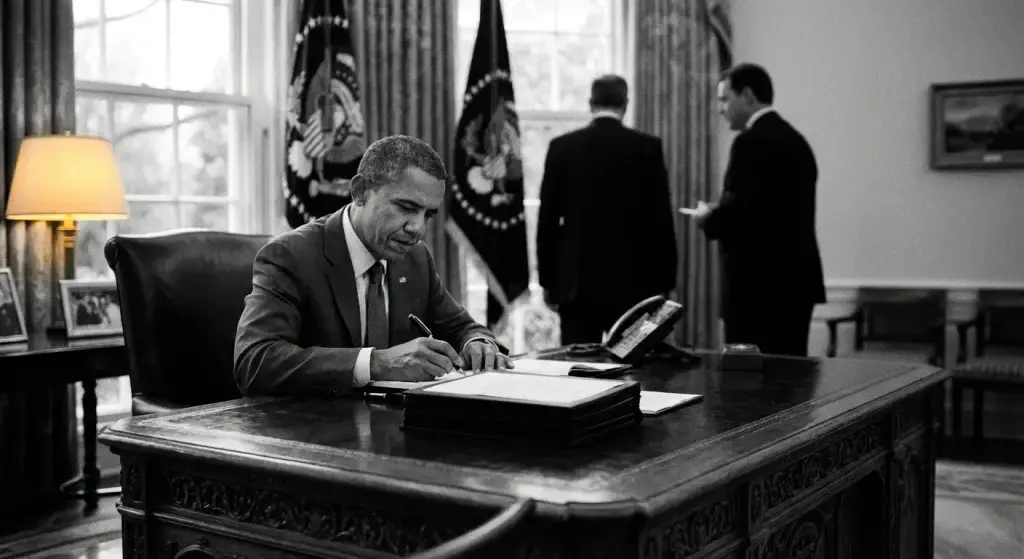
Legally precise: Senator Kirsten Gillibrand’s amendment, as incorporated into the National Defense Authorization Act for Fiscal Year 2022 (the FY2022 NDAA; see the enacted bill text on Congress.gov: https://www.congress.gov/bill/117th-congress/house-bill/4350/text), helped standardize reporting and coordination requirements for unidentified aerial phenomena (UAP). That statutory standardization contributed to the institutional path that led the Department of Defense to organize and publicize the All-domain Anomaly Resolution Office (AARO) administratively; it is more accurate to say the FY2022 NDAA helped establish the legal framework and reporting expectations that enabled AARO than to say a single amendment “created AARO” out of whole cloth.
You can see that institutional backbone in today’s concrete touchpoints. The Department of Defense announced and maintains an official public presence for AARO (see AARO’s public website at https://aaro.mil/ and the DoD announcement of the office), and AARO, the Department of Defense’s designated office for coordinating the intake, analysis, and reporting of UAP-related information across domains, now has an official front door the public can verify. On that site, AARO states it will announce when a reporting mechanism is available to the public. And DefenseScoop reported on May 21, 2025 that AARO was exploring a case management system (CMS) to track UAP reports and meet records requirements.
Track those law-driven outputs, and you’ll be able to tell what counts as meaningful disclosure from what’s just loud speculation.
What Gillibrand Put Into Law
This was an oversight fix masquerading as a UFO story. Gillibrand’s move wasn’t written to “prove aliens.” It was written to solve a very boring, very real government problem: if sightings and sensor anomalies get reported through different channels, evaluated by different shops, and briefed inconsistently, Congress can’t tell what’s noise, what’s adversary tech, and what’s a genuine gap in U.S. awareness.
Congress doesn’t need a press conference to force coordination; it needs statutory requirements. The National Defense Authorization Act (NDAA) is the annual defense authorization law, and that’s exactly why lawmakers use it to create offices, direct priorities, and hard-wire reporting duties that agencies must fulfill, not optional “updates” that drift with leadership interest.
That’s a core Article I power move: Congress can create and structure federal offices and require information to flow in a way that makes oversight possible. When people talk about “disclosure,” this is the part that actually matters, because law changes incentives inside the bureaucracy.
The problem statement was practical: inconsistent reporting channels, uneven analysis, and unclear accountability. If one unit logs an incident as an aviation hazard, another treats it as an intel curiosity, and a third never forwards it outside a classified pocket, you don’t end up with a single “truth.” You end up with fragments. Fragments don’t stack into trendlines, and trendlines are what oversight runs on.
So the amendment pushed for one durable structure that could receive, coordinate, and evaluate UAP-related information across the defense and intelligence ecosystem, instead of letting it stay trapped in stovepipes. Reporting and research summaries (see, for example, Congressional Research Service, “Unidentified Aerial Phenomena: Background and Issues for Congress”) describe the enacted provision as explicitly using the term “unidentified aerial phenomena (UAP)” while Congress was trying to standardize how the government labels and handles these cases. For readers, consult the enacted NDAA text on Congress.gov to see the statutory language that established reporting and coordination duties: https://www.congress.gov/bill/117th-congress/house-bill/4350/text.
Just as important, the intended target set wasn’t limited to “things in the sky.” In the same reporting and research sources (see the CRS report cited above and subsequent DoD/AARO materials linked on AARO’s public site: https://aaro.mil/), the scope is framed broadly: anomalous or unidentified objects and events across space, airborne, submerged, and “transmedium” contexts (meaning they appear to move between domains, like air to water). That breadth tells you what Congress was really doing: building a cross-domain lens so a Navy incident and a space-based detection can be assessed inside one oversight frame.
Here’s why that matters for the public narrative. Gaps in oversight are rocket fuel for “government UFO cover-up” storylines, because when reporting is fragmented, the absence of a clear answer looks like intentional secrecy. Tightening the collection and reporting structure doesn’t validate any specific claim. It makes the system auditable, which is the only way to separate lore-driven “UFO disclosure” expectations from the concrete outputs lawmakers can demand under “UAP disclosure.”
The takeaway is a clean filter you can use on every headline: what, exactly, did the NDAA require the government to collect and report, and what decisions become possible once that information is centralized?
AARO’s Mandate and Reporting Pipeline
The law’s intent becomes easier to see when you translate it from policy language into the day-to-day mechanics of a working office. In practice, AARO lives or dies by whether it can turn scattered anecdotes into a process Congress can inspect.
Here’s what the office is supposed to do: turn messy UAP information into a repeatable workflow that forces documentation, cross-domain coordination, and formal outputs to Congress. The amendment’s real impact is procedural. It takes the conversation out of vibes and into intake logs, data fields, case status, and deliverables that congressional oversight committees can actually audit.
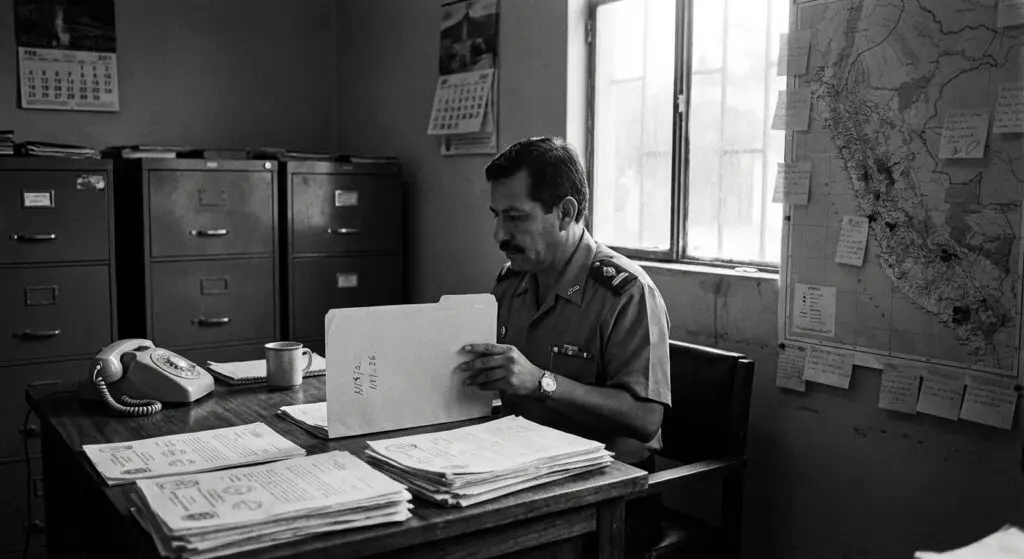
Central intake is the first mandate with teeth. If reports stay trapped in separate inboxes across the DoD and Intelligence Community, you never get a coherent picture, you get anecdotes. The point of a single front door is that a report from a pilot, a ship, a space sensor, or a range safety office lands in the same pipeline, with the same minimum info captured, and a trackable case number. That’s how “UAP sightings” stop being campfire stories and start becoming comparable records.
The friction is cultural as much as technical. Units protect operational details. Intel shops protect sources and methods. Safety offices focus on immediate hazard mitigation, not long-term pattern analysis. Central intake only works if the office can accept reports at multiple classification levels and still create a “this exists, it’s logged, it’s assigned” record even when the underlying details can’t move freely.
A case can’t be managed if it can’t be found. That’s why a case management system (CMS) matters: it’s the difference between a report that lives in an email thread and a report that moves from intake to triage to disposition with an audit trail. DefenseScoop reported on May 21, 2025 that AARO was exploring a CMS to track UAP reports and meet records requirements. That’s an operationalization signal, not a branding exercise, because a CMS enforces basic discipline: required fields, status states, assignments, attachments, and timestamps.
A CMS also prevents a very specific failure mode: reports “disappearing” during handoffs. When a case crosses organizations, the handoff itself becomes an event in the record. If a question comes later from congressional oversight committees, the office can answer with artifacts: when it was received, who touched it, what analysis occurred, and what closed it out.
The analytical design is less about chasing one big answer and more about separating buckets consistently. A practical triage flow screens for the obvious before it escalates the exotic: misidentification, foreign technology, natural phenomena, sensor error, and gaps in data quality all live near the top of the funnel. A disciplined process doesn’t assume the conclusion; it forces every case to earn its category based on what’s actually in the file.
The complication is that “unknown” isn’t a single thing. Some cases are unknown because the data is thin. Some are unknown because the data is sensitive. Some are unknown because the sensors disagree. A standardized triage framework keeps those very different situations from being lumped together, which is exactly how the public narrative of a “government UFO cover-up” thrives: ambiguity plus silence looks like intent. The workflow is designed to replace that with documented reasons, even when the reason is simply “insufficient data to resolve.”
Multi-domain cases are where a centralized office earns its keep. If an event touches air and maritime operations, or involves space-based sensing and local tactical sensors, no single component owns the whole picture. Cross-organizational collaboration is the only way to correlate timelines, reconcile sensor signatures, and check whether the “same object” is actually multiple unrelated tracks.
Coordination is also where bureaucracy fights back. Different systems store data in different formats. Different organizations label the same thing differently. Different classification rules govern what can be shared and with whom. The mandate’s quiet power is that it normalizes coordination as the default: you don’t just investigate within a silo, you build a case file designed to survive handoffs.
Reporting is the visible output, but it’s also where people misread the process. Public-facing summaries are meant to show Congress and the public that the pipeline is functioning: number of cases received, broad category outcomes, and process updates. Classified detail travels through separate pathways, often via a classified annex, so congressional oversight committees can see specifics without exposing sources, methods, or operational vulnerabilities.
Classification is the central constraint, not a convenient excuse. Persons authorized access to classified information typically sign the Standard Form 312 (SF-312) nondisclosure agreement as a condition of that access; see a sample/SF-312 explanation for the instrument commonly used by executive branch agencies. That legal reality creates a predictable gap: investigators can learn more than they can publicly say, even when something is actively investigated and competently resolved. AARO’s public website also states it will announce when a public reporting mechanism is available, which is another process signal: it’s an acknowledgment that intake and reporting aren’t just internal functions, they have a public interface that needs rules.
Congress didn’t demand a vibe. It demanded a machine. A repeatable process gives congressional oversight committees leverage because it produces consistent artifacts: the same intake fields, the same status definitions, and the same reporting structure across time. That consistency is what makes trends visible and what makes it obvious when something is being slow-walked or left unaddressed.
Actionable takeaway: read future AARO releases like process documents, not like full case files. Public products should contain summaries, counts, and category-level conclusions. The specifics that would answer “exactly what sensor,” “exactly what platform,” and “exactly what capability” often belong in a classified annex. The real progress markers to watch are operational: a working public reporting mechanism, clearer data standards, and infrastructure like a CMS that proves cases are being tracked from intake to closure.
From UAPTF to AARO
That “machine” didn’t appear out of nowhere; it replaced a string of earlier efforts that could be reshuffled whenever priorities shifted. The acronyms matter less than the fact that Congress eventually stopped treating this like a temporary project.
Codifying the mission changed the incentives. Earlier UAP efforts lived or died by internal attention spans, which is a fancy way of saying they could be quietly downgraded when headlines moved on. AARO (DoD’s UAP office) is different because Congress locked the job into law, creating durability and accountability that a memo-built task force never really has.
The non-obvious complication is that DoD reorganizes constantly. A task force can be stood up fast, renamed fast, and absorbed fast, all without the public seeing much change except a new acronym. That’s basically the story of the pre-AARO lineage: UAPTF came first, then it shifted into AOIMSG, described in contemporary reporting and analysis as a DoD-sanctioned office for investigating anomalous aerial phenomena. Each step signaled intent, but the structure remained fundamentally administrative: created by leadership direction, sustained by leadership interest.
Once Congress moved from administrative tasking to a statutory office, the center of gravity shifted. Statutes don’t just “encourage” reporting and coordination; they create formal expectations that agencies have to plan around, the same basic dynamic the Congressional Research Service highlights when discussing how statutory mechanisms shape and reinforce reporting requirements (see CRS, “Unidentified Aerial Phenomena: Background and Issues for Congress”). In practice, that means clearer mission boundaries, more formal deliverables, and a public posture that is constrained but observable over time.
Here’s the tight lineage, without the date-dump: UAPTF was the early organized push; AOIMSG followed as a DoD-sanctioned office focused on anomalous aerial phenomena; and AARO became the consolidated, congressionally backed successor with an all-domain remit. The point isn’t the acronyms, it’s the change in how hard the mission is to shelve.
AARO’s own outputs read like an institution trying to be legible without promising fireworks. In the “AARO Mission Brief 2025,” the opening line starts: “MISSION: Minimize technical…” That fragment is revealing by itself: it frames the job like risk reduction and technical resolution, not a promise of cinematic revelation. Same vibe with the existence of a 63-page document titled “Report on the Historical Record of U.S. Government Involvement with Unidentified Anomalous Phenomena (UAP)” as an AARO-era product: formal, careful, built to sit in an official record.
So set your expectations with the boundaries in mind. AARO can investigate hazards and threats, coordinate across stakeholders, and report. It cannot realistically guarantee instant “alien disclosure,” full declassification, or frictionless access to everything everywhere. If your yardstick for UAP disclosure is “confess everything, immediately,” you’ll misread even genuine institutional movement as failure.
- Real progress looks like sustained, mandated outputs and consistent mission language.
- A rebrand accusation sticks when the acronym changes but the observable work product doesn’t.
Hearings and Whistleblowers Raise the Stakes
Once you have a standing office, the next question is what forces it-and the broader executive branch-to stay responsive. That’s where hearings and protected disclosures matter: not as instant proof, but as pressure that creates more records, more follow-up, and more oversight leverage.
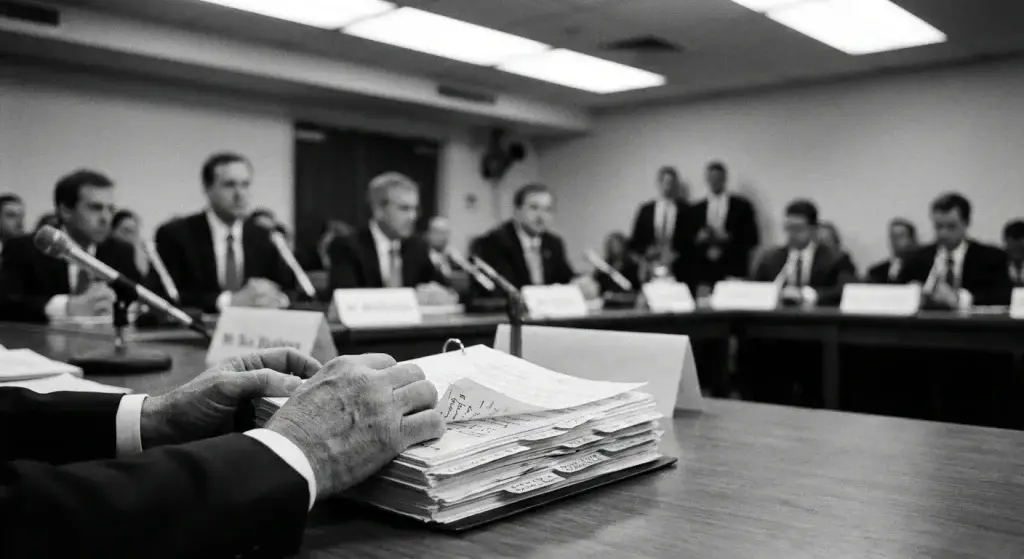
The oversight temperature rose fast. Public hearings and whistleblower allegations didn’t “prove” extraordinary claims on their own, but they did something more practical: they raised the political cost of shrugging off UAP questions. Once members of Congress could point to sworn testimony, video clips, and on-the-record agency answers (or non-answers), the executive branch faced a different kind of pressure: not “believe this,” but “explain your process, show your documentation, and brief us.” That shift is why hearings mattered even when they didn’t resolve the underlying mysteries.
Closed briefings can be brushed aside as inside baseball. A public hearing is harder to ignore because it forces named officials and witnesses to speak on the record, under questioning, in a setting where follow-up requests are inevitable. That’s the oversight function: create a public record, lock in what agencies say today, and then use that record to justify tighter reporting requirements tomorrow. The complication is that the public often treats a hearing as a verdict. Congress uses it more like scaffolding: a way to build a case for stronger standards, clearer lines of responsibility, and better documentation expectations.
May 17, 2022 is the “paper trail” moment. The House Permanent Select Committee on Intelligence’s subcommittee held a public hearing on UAP; an official transcript PDF is posted on Congress.gov (see the committee transcript page and PDF on Congress.gov: https://www.congress.gov/117/chrg/CHRG-117hhrg35292/CHRG-117hhrg35292.pdf). That matters because it turns a topic that thrives on clips and summaries into a citable oversight record with questions, answers, and carefully worded agency positions.
July 26, 2023 is the “attention escalation” moment. A House Oversight Committee task force held a public UAP hearing where David Grusch testified. This is the kind of event that spikes UAP news and hardens incentives inside Congress: members get constituent pressure, media pressure, and an immediate reason to demand briefings, document production, and clearer explanations of what was reviewed and what was not.
Media narratives move fast. An ICIG whistleblower complaint is different because it’s a protected disclosure path inside the Intelligence Community that can trigger review, referral, and congressional notification steps, even when the underlying material is classified. For an official overview of the whistleblower process and the Intelligence Community Whistleblower Protection Act (ICWPA) procedures, see the Intelligence Community Inspector General and Office of the Director of National Intelligence guidance pages that describe how such complaints are handled. Reporting and public summaries note that David Grusch filed a whistleblower complaint in 2022, which is why his name didn’t only live in interviews and headlines; it also intersected with formal oversight plumbing.
The catch is procedural compartmentalization. A cited committee document describing the process rules notes that Armed Services Committees are not allowed to interview Grusch about matters covered by the intelligence community whistleblower process. That’s not a judgment on the claims; it’s a real-world constraint that shapes what can be asked, who can ask it, and what can be answered in public. See committee rules and public statements on the interaction between Armed Services Committees and intelligence whistleblower processes for the formal ground rules.
Use hearing moments and formal complaints as indicators of oversight pressure and procedural movement, not as standalone proof. If you want to track what’s changing, watch for what Congress demands afterward: briefings requested, reporting standards tightened, and expectations for written documentation raised.
How Later Bills Expanded Disclosure
Those demands didn’t stop at “tell us what you’re seeing.” Once a reporting office existed, the obvious next target was the backlog-whatever might already be sitting in files spread across agencies, commands, and contractors.
Once AARO existed, the legislative fight stopped being about creating “an office that reports” and shifted to building something closer to a records regime: a system that can surface documents across government, push them through review, and force public release where possible. That’s what most modern “UAP disclosure” and “alien disclosure” headlines are really describing. Not sci-fi confirmations, but paperwork power: who has records, who must hand them over, who reviews them, and what the public gets to see.
The office-and-reporting model has a built-in ceiling: an office can summarize what it learns, but summaries don’t satisfy people who think the story is locked in filing systems spread across agencies, commands, and contractors. So later proposals aimed higher. They tried to create a single place to collect UAP-related records, plus a process that forces those records into a review lane where declassification decisions happen on a clock, not whenever someone gets around to it.
That’s a very different kind of “disclosure.” It’s not primarily about compelling new testimony. It’s about forcing legacy material into a common definition and a common workflow so Congress and the public aren’t stuck arguing over vibes and anecdotes.
The recurring add-ons after Gillibrand clustered into four buckets, each designed to turn scattered holdings into a predictable pipeline.
Records collection and a repository concept. Instead of relying on agency-by-agency responsiveness, proposals pushed for centralized collection: gather UAP records across government and house releasable material in one place so the public isn’t chasing PDFs across a dozen sites.
Review and processing mechanisms. The big idea here was speed and consistency: create a formal review structure (often described as a board-like process) that can take custody of records, apply declassification standards, and drive decisions toward release rather than indefinite deferral.
Transparency mandates. Many disclosure bills aren’t “tell us what it is.” They’re “publish what you can, on a schedule, in a public-facing collection.” That’s why you see deadlines, publication requirements, and reporting about what was withheld and why.
Whistleblower pathway expansions and protections. Separate from personalities, the common legislative move has been to widen the lanes for people with relevant knowledge to provide information through protected channels, with clearer rules about where disclosures can go and what retaliation protections apply.
On the House side, that same energy showed up in standalone efforts like the UAP Transparency Act, introduced by Congressman Burchett and other members of the UAP Caucus. Whatever you think of the branding, it signals a real political dynamic: members want something more concrete than “we asked and got a briefing.”
Here’s the behind-the-scenes civics problem: introduced text is an opening bid, not the finish line. UAP-disclosure provisions often arrive attached to must-pass defense spending and NDAA vehicles, and that’s where reconciliation and conference negotiations can quietly sand down the sharp edges. Some introduced UAP-disclosure provisions were removed during reconciliation of the defense spending and NDAA process, leaving a final product that can be narrower than the headlines that first circulated.
The clearest “survived” example to anchor expectations is the conference agreement requirement to establish a government-wide UAP records collection, described in reporting as a repository where declassified UAP documents would be housed. That’s the legislative tell: when lawmakers can’t get everything, they still try to lock in the records backbone.
Some reporting has used phrasing like a “final version” being “signed into law.” Treat that as reporting language, then immediately ask what specific tools actually made it through conference and into enacted text.
- Verify the status: introduced, passed one chamber, or enacted.
- Scan for what got removed: did the final law keep records-collection and public-repository language, or did it strip the enforcement and review machinery?
What to Expect Next
The throughline from Gillibrand’s amendment to later disclosure bills is that Congress keeps pushing on process: how reports enter the system, how cases are tracked, and how records get reviewed. That’s a slower kind of progress than viral headlines promise, but it’s also the kind that leaves receipts.
If you’re watching for “UFO sightings 2025” headlines to force a big government reveal, calibrate your expectations: AARO’s creation improves consistency and accountability, not certainty. You’re more likely to get cleaner process and better documentation than a single, definitive answer that settles every viral clip.
Progress looks like intake that doesn’t disappear into inboxes. AARO gives reports a home, a tracking path, and a way to keep cases from becoming one-off anecdotes. The practical win is continuity: the same kinds of events get logged the same way, so patterns (or the lack of them) are easier to defend publicly.
Progress also looks like standardized analysis. When the same office is responsible for triage and follow-up, you get fewer ad hoc explanations and more comparable outcomes across cases. That doesn’t guarantee “answers,” but it does tighten the quality control around what gets labeled unresolved versus explained.
Progress looks like a clearer accountability channel. AARO is set up to communicate outward, including public-facing updates, instead of leaving the public to infer everything from leaks and hearing soundbites. AARO’s public website says it will announce when a public reporting mechanism is available, which is the kind of concrete milestone you can actually verify (see AARO public site: https://aaro.mil/).
The catch is that “disclosure” stays bounded by classification rules and law. DoD policy in DoDM 5200.01 sets oversight for reporting and investigating known or suspected unauthorized disclosure, which is exactly why the department can’t publicly release sensitive material on demand just because interest spikes. For the departmental policy text, consult the DoD Issuances and Directives library and the official DoDM 5200.01 document.
Access is the other hard limit. Some relevant information can sit outside AARO’s practical reach or be tightly compartmented, which means even a well-run office can be blocked from full visibility in specific cases.
Use congressional and DoD documents as your anchor: read the enacted NDAA text on Congress.gov for the statutory requirements, the CRS overviews for congressional context, the public hearing transcripts for the oversight record (for example, the May 17, 2022 transcript on Congress.gov), and AARO’s official website for the office’s public-facing statements and updates.
Conclusion
The Gillibrand amendment’s lasting legacy is simple: it helped make UAP oversight more permanent by embedding reporting and coordination expectations into statute, creating a mandated structure that contributed to the institutional path culminating in AARO, even though it did not and could not by itself guarantee “alien disclosure.”
In the body of the NDAA, Gillibrand’s language functioned as the structural pivot: it forced a repeatable oversight loop instead of an ad hoc, optional effort. The catch is that the workflow you get from that loop isn’t a single “reveal” moment, it’s an ongoing pipeline of outputs that split cleanly between what can be published and what has to stay classified.
That’s also why the concrete touchpoints from the beginning-AARO’s public website, an eventual public reporting mechanism, and the kinds of records discipline a CMS would enforce-matter more than the weekly “bombshell” cycle. They’re the audit-trail version of disclosure: slower, less cinematic, and much harder to wave away once it exists.
If you want to follow this like an adult, here’s where to look: Congress.gov for official hearing records and transcripts (for example, the May 17, 2022 House Intelligence subcommittee hearing transcript PDF on Congress.gov), the Congressional Research Service for overview reports (see CRS, “Unidentified Aerial Phenomena: Background and Issues for Congress”), and AARO’s official public web presence announced by the Department of Defense as the canonical hub for public releases (https://aaro.mil/). Read the primary documents first, then treat headlines as unverified summaries you have to audit.
Frequently Asked Questions
What did Gillibrand’s 2021 NDAA amendment do for UFO/UAP oversight?
It put a durable coordination and reporting structure for UAP into federal law, instead of relying on temporary task forces. That statutory structure is what created the framework that still governs what gets collected, analyzed, and reported to Congress.
What is AARO and what is its job according to the article?
AARO is the Department of Defense’s designated office for coordinating the intake, analysis, and reporting of UAP-related information across domains. Its core job is to turn scattered reports into a repeatable workflow with documentation, triage, and formal reporting outputs that Congress can audit.
What does “all-domain” UAP mean in the Gillibrand amendment’s scope?
The scope is broader than “things in the sky” and includes anomalous or unidentified objects and events across space, airborne, submerged, and “transmedium” contexts. “Transmedium” means the event appears to move between domains, such as air to water.
How is AARO supposed to track UAP reports from intake to closure?
The article describes a centralized intake pipeline that assigns cases and preserves an audit trail across handoffs. DefenseScoop reported on May 21, 2025 that AARO was exploring a case management system (CMS) to track UAP reports and meet records requirements.
Why doesn’t AARO just publish full details of every UAP case it investigates?
Public-facing products are meant to provide summaries, counts, and category-level outcomes, while sensitive specifics often go through classified channels such as a classified annex. The article notes that authorized personnel sign nondisclosure agreements, which legally constrains what can be released publicly.
What’s the difference between UAPTF, AOIMSG, and AARO?
UAPTF was an earlier organized effort, AOIMSG followed as a DoD-sanctioned office focused on anomalous aerial phenomena, and AARO became the consolidated successor with an all-domain remit. The key difference is that AARO is congressionally backed in statute, making it harder to shelve than memo-created task forces.
What should I look for to tell real UAP disclosure progress from hype?
Watch for law-driven, auditable outputs such as a working public reporting mechanism, consistent public reporting over time, and infrastructure like a CMS that proves cases are tracked from intake to disposition. The article also points to concrete touchpoints like AARO’s official public website and Congress.gov hearing transcripts as verifiable signals.
Primary records
Use these original records to verify the dates, language, and institutional actions discussed above.